Best All Terrain Tires For Jeep Wrangler Jk
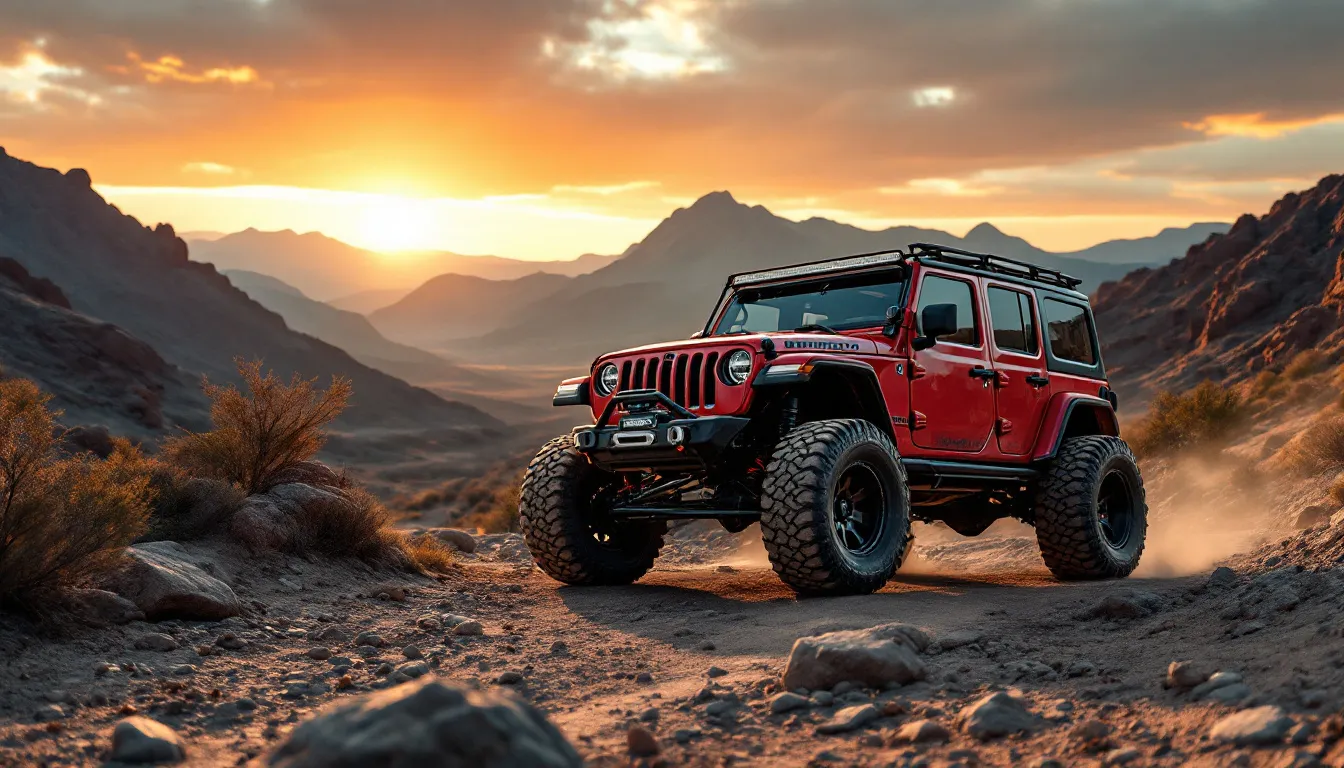
Best All Terrain Tires for Jeep Wrangler JK (2007–2018)
All terrain tires are tires designed to balance on-road ride quality with off-road traction, using an open tread pattern that handles dirt, gravel, and moderate mud without the excessive noise of a dedicated mud terrain tire. For the 2007–2018 Jeep Wrangler JK, the top all terrain tire picks are the BF Goodrich KO2, Falken Wildpeak AT3W, Cooper Discoverer AT3, Nitto Terra Grappler G2, and Goodyear Wrangler DuraTrac. The KO2 and Wildpeak AT3W consistently lead community rankings for durability and all-weather performance.
When I picked up my 2014 JKU, tires were the first thing on the upgrade list — the stock rubber made the capability gap between what the JK promises and what it actually delivers embarrassingly obvious.
For a full comparison with more aggressive options, see our guide to the best mud terrain tires for the JK. And if you’re still evaluating whether a JK is the right rig, the JK Buyers Guide covers everything you need to know before you buy.
What Makes a Great All Terrain Tire for the JK Wrangler?
A great AT tire for the JK handles both the morning commute and the weekend trail — and that dual-purpose demand is exactly what separates a good AT tire from a mediocre one. Four criteria matter most when you’re shopping for the 2007–2018 Wrangler.
Tread Design and Siping The tread pattern determines how the tire grips off-road and how it behaves in rain and snow. Look for an aggressive-but-not-extreme lug pattern with siping across the tread blocks — the sipes bite into packed dirt and create water channels on wet pavement. Tires without siping tend to struggle in rain and light snow.
Sidewall Strength JK owners air down for the trail, and that puts enormous stress on the sidewall. Reinforced sidewalls with two or three-ply construction resist punctures from rocks and stumps. The BF Goodrich KO2, for example, uses a CoreGard sidewall technology that outright addresses this. Thinner sidewalls are a liability on rocky trails.
Load Rating The JK adds accessories fast — bumpers, roof racks, winches. Choose at minimum a Load Range C tire; Load Range D or E is worth considering if you run a heavy steel bumper and winch setup. Under-rated tires degrade faster and run hotter under load.
Noise and On-Road Manners AT tires are louder than OEM all-season tires. The difference between a quiet AT and a loud one is real, especially on highway drives. Tires with noise-damping tread sequences (offset or variable lug spacing) are noticeably quieter at highway speeds. The Falken Wildpeak AT3W is well-regarded in owner forums for keeping road noise reasonable.
For context on why tire size affects more than just clearance, read our breakdown of the best gear ratio for larger JK tires and the Rubicon vs Sport vs Sahara axle differences — both directly affect which tire size makes sense for your build.
Which All Terrain Tire Size Fits Your JK? (33, 35, or 37 Inch)
Tire size is the single most impactful decision you’ll make for your JK — it affects clearance, gearing, fuel economy, and how the rig feels on and off road. The right size depends on your lift, your axles, and whether you’re running a 2-door JK or a 4-door JKU.
33-Inch Tires
33-inch tires (typically 285/70R17 or 285/75R16) fit a stock JK with minimal or no lift, though a 1–2 inch lift eliminates any rubbing risk. This is the most popular upgrade for daily-driven JKs that see occasional trail use. Both the 2-door JK and JKU handle 33s without drama at a mild lift.
For dedicated buying advice, see best 33 inch tires for the JK.
35-Inch Tires
35-inch tires require a minimum 2.5–3.5 inch lift on most JK trims. At this size, rubbing on the front lower control arm skid and the fender flares is a real concern without a proper lift and potentially a small trim. On the JKU (4-door), the longer wheelbase and slightly different front-end geometry can make fitment marginally easier, but a lift is still required. Rubicon-trim JKs have larger Dana 44 axles with better break-away angles, which helps.
For a full breakdown, see best 35 inch tires for the JK.
37-Inch Tires
37-inch tires require at minimum a 4–4.5 inch lift, and often a long-arm suspension system. You’ll also need fender flares trimmed or replaced, and almost certainly a re-gear to keep the JK driveable. On a 2-door JK, fitting 37s cleanly takes more work than on a JKU due to the shorter wheelbase creating steeper flex angles. This is a committed build, not a bolt-on upgrade.
See the best 37 inch tires for the JK for a detailed guide.
Best All Terrain Tires for Jeep Wrangler JK: Quick Comparison
If you want to cut straight to the comparison, here are five of the most respected AT tires for the JK side by side. These picks represent the consistent front-runners across owner forums, off-road clubs, and tire retailer data in 2026.
| Tire Model | Best For | Size Range | Load Rating | Noise Level | Price Range | Our Rating |
|---|---|---|---|---|---|---|
| BF Goodrich KO2 | Trail durability + all-weather | 30”–37” | C–E | Moderate | $$$$ | 9.5/10 |
| Falken Wildpeak AT3W | Daily driving + winter use | 30”–37” | SL–E | Low-Moderate | $$$ | 9.2/10 |
| Cooper Discoverer AT3 XLT | Budget-friendly trail performance | 30”–37” | C–E | Moderate | $$–$$$ | 8.7/10 |
| Nitto Terra Grappler G2 | Highway comfort + mild off-road | 31”–37” | C–E | Low | $$$$ | 8.5/10 |
| Goodyear Wrangler DuraTrac | Mud + snow traction | 30”–35” | SL–E | Moderate-High | $$$ | 8.4/10 |
Note: Verified affiliate product cards are not available for these tires in this article’s product database, so no affiliate CTAs are shown in this table. For purchasing options, visit the size-specific guides linked in the section above — each includes current buying options.
Top All Terrain Tire Picks for the JK Wrangler (Detailed Reviews)
The five tires below represent the best AT options for 2007–2018 Jeep Wrangler JK owners based on real-world community knowledge, not just spec sheets. My research philosophy has always been to cross-reference owner forums, off-road club feedback, and long-term durability reports — specs on paper only tell half the story.
Affiliate product cards are not available for these tires in this article’s verified database. No CTAs are shown. For current pricing and sizing, use the size-specific guides linked throughout this article.
Before choosing a tire, also consider best wheels for the Jeep Wrangler JK and the JK wheel backspacing and offset guide — the wrong backspacing will cause rubbing regardless of tire quality.
1. BF Goodrich KO2 — Best Overall AT Tire for the JK
Best For: Owners who split time equally between trails and pavement and need a tire that handles both without compromise.
Key Specs:
- Sizes available: LT215/75R15 through LT315/70R17
- Load ratings: C through E
- Tread depth: approx. 15/32” (varies by size)
- Severe snow rated (3PMSF symbol)
Pros:
- CoreGard sidewall technology significantly reduces sidewall punctures on rocky trails
- Outstanding wet and snow traction for an AT tire
- Long tread life, with many JK owners reporting 50,000+ miles of mixed use
Cons:
- Price premium over comparable AT tires
- Moderate road noise at highway speeds — not silent
Verdict: The KO2 is the benchmark AT tire for the JK — if you only research one tire, make it this one.
2. Falken Wildpeak AT3W — Best for Daily Driving + Winter
Best For: JK owners who drive daily in cold or wet climates and need genuine winter capability alongside trail performance.
Key Specs:
- Sizes available: LT215/65R16 through LT325/65R18
- Load ratings: SL through E
- Heat diffuser technology in the lower sidewall
- Three-peak mountain snowflake (3PMSF) certified
Pros:
- Among the quietest AT tires available — genuinely comfortable on the highway
- Exceptional wet and snow grip for an AT category tire
- Competitive pricing relative to the KO2
Cons:
- Slightly less aggressive tread than the KO2 — modest trail limitation in deep mud
- Heat diffuser sidewall, while innovative, adds some sidewall bulk
Verdict: If you daily drive your JK in a snowy region, the Wildpeak AT3W is arguably the smarter choice over the KO2.
3. Cooper Discoverer AT3 XLT — Best Value Pick
Best For: JK owners on a budget who still want genuine trail capability and a Load Range E option.
Key Specs:
- Sizes available: LT235/75R15 through LT325/65R18
- Load ratings: C through E
- Silica compound for improved wet traction
- 3PMSF rated in select sizes
Pros:
- Noticeably less expensive than BFG and Falken at equivalent sizes
- Solid off-road grip for the price point
- Good tread life for a value-positioned tire
Cons:
- Road noise is higher than the Wildpeak AT3W — evident on longer highway stretches
- Sidewall protection is less robust than KO2 or Wildpeak in sharp rock environments
Verdict: The Cooper Discoverer AT3 XLT punches well above its price — a smart buy for JK owners who trail ride casually and drive daily.
4. Nitto Terra Grappler G2 — Best for Highway Comfort
Best For: JK owners who prioritize a smooth, quiet highway ride but still want respectable trail manners.
Key Specs:
- Sizes available: LT265/70R16 through LT325/60R20
- Load ratings: C through E
- Dual-tread compound for wear and traction balance
- Available in a wide range of sizes
Pros:
- Genuinely low road noise — one of the quietest ATs in the category
- Strong highway wet grip
- Durable tread life on mixed use
Cons:
- Not the most aggressive AT tire for serious rock crawling
- Less sidewall protection than the KO2 at equivalent price
Verdict: For JK owners who drive 80% pavement and 20% trail, the Terra Grappler G2 delivers the most comfortable daily driving experience in this group.
5. Goodyear Wrangler DuraTrac — Best for Snow and Mud
Best For: JK owners in snowy states or owners who frequently encounter mud alongside rock and dirt.
Key Specs:
- Sizes available: LT225/75R16 through LT285/70R17
- Load ratings: SL through E
- TractiveGroove Technology for mud and snow
- 3PMSF certified
Pros:
- Exceptional snow and mud traction — among the best in the AT class
- Aggressive look that suits lifted JKs aesthetically
- Self-cleaning tread design sheds mud efficiently
Cons:
- More road noise than the Wildpeak or Terra Grappler
- Smaller size range than competitors — limits options for 35”+ fitments
Verdict: If your JK sees regular winter driving or muddy trails, the DuraTrac’s snow and mud performance justifies its slightly higher noise level.
AT Tire Fitment Tips for the JK: Avoid These Common Mistakes
Getting the right AT tire on paper is only half the job. Fitment errors cause rubbing, uneven wear, and premature failure. Here are the mistakes to avoid:
Common Fitment Mistakes:
- Skipping a re-gear after going to 35s or larger — the JK’s factory 3.21 or 3.73 gears become painfully inadequate and strain the drivetrain
- Ignoring wheel backspacing — running incorrect backspacing can cause tire-to-fender rubbing on full lock even with a lift
- Buying a tire size that maxes out your lift — leave some margin; a 35” tire on a 2.5” lift will rub under flex
- Overlooking TPMS sensor compatibility — new wheels sometimes require new TPMS sensors or adapters
- Skipping hub-centric wheel spacers when widening the stance — lug-centric spacers can introduce vibration; hub-centric designs center the load properly
On the topic of fitment width: if you need to push your tires outward slightly for clearance or aesthetics, hub-centric wheel spacers are the correct approach. Hub-centric means the spacer’s center bore matches the hub diameter exactly, centering the load on the hub rather than relying solely on the lug nuts — unlike lug-centric spacers, which can develop vibration at speed.

Orion Motor Tech 5x5 Wheel Spacers Compatible with Jeep Wrangler JK Grand Cherokee Commander, 1.5" W
$102.99
Check Price on Amazon →The Orion Motor Tech 5x5 hub-centric wheel spacers are a well-regarded option for the JK platform, with a 71.5mm hub bore that matches Wrangler JK specs and 1/2x20 studs. They’re sold as a set of four at 1.5” per side.
See also JK wheel backspacing and offset explained for the full numbers before you order.
First 50 Miles After Install — Checklist:
- Torque lug nuts to spec (typically 95–100 ft-lbs on JK) immediately after install
- Drive 25–50 miles, then re-torque lug nuts — new tires and wheels settle
- Check for rubbing at full steering lock in both directions on flat ground
- Verify TPMS sensors are reading correctly on the dash
- Inspect sidewalls for any contact marks after the first trail run
- Schedule a wheel alignment within the first week — especially after a lift install
Keep these steps on your radar with the Jeep JK maintenance schedule as your broader reference.
Upgrades to Consider After Your AT Tire Install
Installing AT tires is rarely the end of the story. Three follow-on upgrades make a significant difference to how your JK performs with the new rubber.
Suspension Lift If you’re moving from stock to 33s, a modest lift is a smart pairing — it improves approach angle and prevents rubbing under flex. For 35s and above, a lift isn’t optional. The Rough Country 2.5” Lift Kit for 2007–2018 Jeep Wrangler JK Unlimited is a popular entry point — it’s a bolt-on kit that works on both 2-door and 4-door JKU models and pairs well with 33” AT tires without requiring major driveline changes.

Re-Gearing Your Axles Going to 35s or larger without re-gearing leaves power on the table and accelerates wear on your transmission and axles. The standard re-gear recommendation for 35” tires on the JK is 4.56:1 gearing; for 37s, many builders go to 4.88:1. See the full breakdown in re-gearing your JK after upsizing tires.
Gear Oil Change Any time you touch the axles — whether re-gearing or just running larger tires that increase axle stress — a fresh gear oil fill is cheap insurance. Valvoline FlexFill Advanced Full Synthetic 75W-90 Gear Oil is compatible with Dana 30/44 axles (the standard JK front and rear setup), and the flexible pouch makes filling without a pump significantly easier.
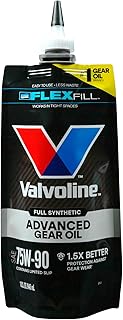
Valvoline FlexFill Advanced Full Synthetic 75W-90 Gear Oil 1 Quart Pouch
Check Current Price
Check Price on Amazon →For more suspension work that complements larger tires, the guide to best control arms for the JK is worth reading before your next build stage.
Frequently Asked Questions: AT Tires for Jeep Wrangler JK
These questions are drawn from common JK owner community forums and represent the questions owners actually ask — not verified Google PAA data, but highly representative of real-world concerns.
Q: What size AT tires fit a stock Jeep Wrangler JK without a lift? A: A 33-inch tire (typically 285/70R17 or 285/75R16) is the largest size that fits a completely stock JK without modification, though minor rubbing is possible at full steering lock on some trim levels. A 1-inch body lift or leveling kit eliminates that risk. Anything larger than 33 inches on a stock JK will rub.
Q: Do I need to re-gear my JK for 35-inch tires? A: Yes — re-gearing is strongly recommended when moving to 35-inch tires, especially if your JK has the factory 3.21:1 gear ratio (common on Sport trims). Most builders re-gear to 4.56:1 for 35s. JKs with factory 3.73 gears (Rubicon and some Sahara trims) will manage 35s better, but still benefit from a re-gear for optimal power and fuel economy.
Q: How long do all terrain tires last on a Jeep Wrangler JK? A: Tread life varies widely depending on driving habits, inflation habits, and how much off-road use the tires see, but many JK owners report 40,000–60,000 miles of mixed use from quality AT tires like the BF Goodrich KO2 or Falken Wildpeak AT3W. Frequent off-road use, airing down, and improper alignment will reduce that figure significantly.
Q: Are all terrain tires good in snow on the JK? A: AT tires with the Three-Peak Mountain Snowflake (3PMSF) rating — like the Wildpeak AT3W, KO2, and DuraTrac — perform genuinely well in snow, well beyond a standard all-season tire. Non-rated AT tires offer limited snow grip. If you regularly drive in snow, prioritize tires with the 3PMSF certification over tires that merely look aggressive.
Q: What is the best all terrain tire for a daily-driven Jeep Wrangler JK? A: For a daily-driven JK that also sees weekend trails, the Falken Wildpeak AT3W is the top pick — it combines low road noise, strong wet traction, and genuine 3PMSF winter capability. The BF Goodrich KO2 is the best choice if durability and trail performance edge out ride comfort as priorities.
Final Thoughts: Choosing the Right AT Tires for Your JK
The best all terrain tires for your Jeep Wrangler JK come down to three questions: how big a tire fits your current lift, how much time you spend on pavement versus trail, and whether winter traction matters where you live.
For most JK owners, 33-inch tires on a mild lift is the sweet spot — maximum daily drivability with meaningful trail capability. The BF Goodrich KO2 and Falken Wildpeak AT3W sit at the top of the category for good reason and are the two picks we’d confidently recommend to any JK owner.
After install, don’t skip the post-install torque check, wheel alignment, and — if you’ve jumped to 35s or larger — a re-gear. Those steps are what separate a clean build from one that wears out prematurely.
For deeper guidance by size, use these:
Get the Free JK Build Planner
Complete PDF with mod checklists, gear ratios, tire sizing charts, and budget worksheets. Everything you need to plan your JK build.
No spam. Unsubscribe anytime. By subscribing, you agree to our Privacy Policy.
Allan
I'm Allan. I bought a 2014 Jeep Wrangler JKU and I research the hell out of every mod before I touch it. Everything here is tested or deeply researched on my own rig - no sponsored fluff, just honest findings.
Learn more about me →Get the JK Build Planner
Free PDF with complete build checklists, gear ratios, and tire fitment guides.
By subscribing, you agree to our Privacy Policy.
Related Articles
Best Exhaust for Jeep JK 3.6: Pentastar-Specific Performance Systems
The best exhaust for 2012-2018 Jeep JK 3.6L Pentastar: cat-back systems from Borla, MBRP, and Gibson offering 5-10 HP gains, improved sound without drone, and bolt-on installation.
Best Axle Back Exhaust for Jeep JK: Budget-Friendly Sound Upgrades
Best axle back exhaust for Jeep JK delivers 70-80% of the sound improvement at 30-40% of the cost. Our top picks balance aggressive tone with zero drone and bolt-on installation.
Best Sounding Exhaust for Jeep JK: 8 Aggressive Options Ranked
Find the best sounding exhaust for Jeep JK with our ranked guide. Compare 8 aggressive cat-back and axle-back systems for tone, drone, and value.