Drivetrain & Axles

Best Axle Back Exhaust for Jeep JK: Budget-Friendly Sound Upgrades
36 min read
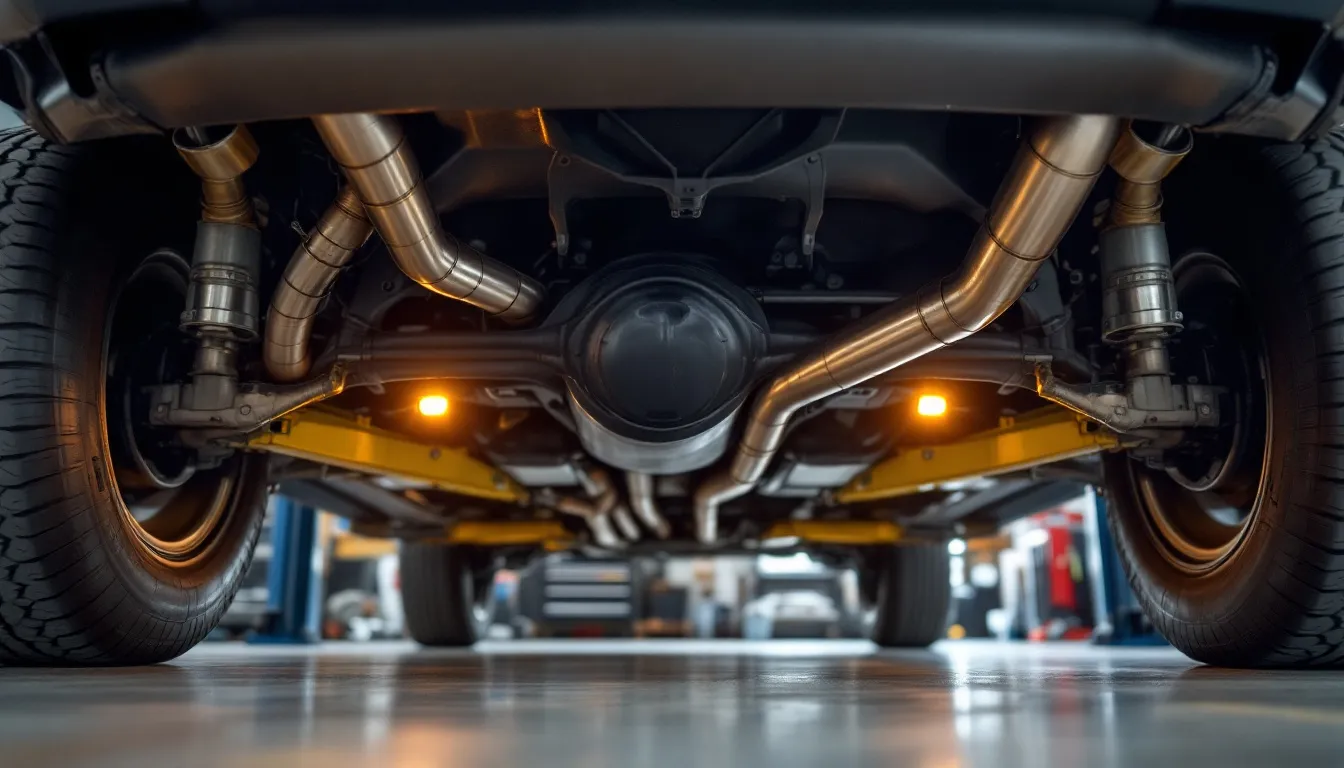
Best axle back exhaust for Jeep JK installed on stock 3.6L Pentastar showing stainless steel construction

The best axle-back exhaust for Jeep JK balances aggressive sound with minimal highway drone, uses stainless steel construction for durability, and offers bolt-on installation under $300. Top picks deliver 70-80% of the sound improvement of full exhaust systems at 30-40% of the cost, with no emissions impact or tuning required.

Here’s what I’ve learned after digging through hundreds of forum threads, real owner reviews, and technical specs: axle-back exhausts are the smartest first exhaust modification for JK owners. They replace only the muffler and tailpipe — everything before the catalytic converters stays completely stock. That means you get dramatically improved sound without touching emissions equipment, triggering check engine lights, or needing expensive tuning.

The JK’s factory exhaust is restrictive by design, especially on the 3.6L Pentastar. Chrysler prioritised silence over character, which is why your stock Jeep sounds more like a minivan than a capable off-roader. An axle-back system wakes up that V6 without the complexity or cost of headers and cat-back systems.

This article draws from real JK owner experiences across both 3.8L and 3.6L models, focusing on products that prove themselves in daily driving, trail use, and years of abuse. I’ve synthesised what the community actually reports — not what marketing copy promises.

Why Axle-Back Exhaust is the Smart First Mod for JK Owners

An axle-back exhaust replaces only the section of your exhaust system from the rear axle to the tailpipe. That’s the muffler and exit pipe — nothing upstream. Your factory manifolds, catalytic converters, and mid-pipe remain untouched.

This is the most budget-friendly exhaust upgrade because you’re not paying for headers, high-flow cats, or complex mid-pipe routing. You’re literally unbolting two pieces (stock muffler and tip) and bolting on two new ones. Installation takes 1-2 hours with basic tools, and you’re done.

For new JK owners researching their first modifications, axle-back systems make sense as an entry point. The cost ranges from $80 to $400 depending on material quality and brand, compared to $800-2,000 for cat-back or full exhaust systems. You’ll get 70-80% of the total possible sound improvement for 30-40% of the cost.

The factory JK exhaust is noticeably restrictive, especially on 2012-2018 models with the 3.6L Pentastar. That engine responds well to reduced backpressure — even the modest flow improvement from an axle-back nets 5-10 horsepower. You won’t feel it in your seat, but it’s there.

The real benefit here is sound transformation. Stock JK exhausts are engineered for suburban silence. They’re effective at muffling, but they also strangle any character from the V6. An axle-back brings out the aggressive tone that should’ve been there from the factory.

Set your expectations correctly: this is about sound improvement first, with minor power gains as a bonus. If you want real horsepower, you need headers, high-flow cats, and a tune. But if you want your Jeep to sound like it looks — capable, aggressive, ready for anything — an axle-back delivers that transformation.

Understanding JK model year differences matters here because the 3.8L (2007-2011) and 3.6L (2012-2018) engines sound different with the same exhaust. We’ll dig into that later.

What to Look for in a JK Axle-Back Exhaust

WD-40 Specialist Penetrant with Smart Straw, Penetrant for Metal, Rubber and Pla for Jeep JK
WD-40 Specialist Penetrant with Smart Straw, Penetrant for Metal, Rubber and Pla

Material quality determines whether your exhaust lasts three years or thirty. Stainless steel — particularly 304-grade — resists rust and corrosion even in wet climates or off-road environments where you’re splashing through mud, water, and salt spray. Aluminized steel costs less but corrodes faster. You’ll see surface rust within a year or two in harsh conditions.

Budget exhausts often use aluminized steel to hit low price points. That’s fine if you’re testing the waters or plan to upgrade later, but expect to replace them sooner than stainless systems.

Tone and volume aren’t the same thing. Volume is how loud the exhaust is overall. Tone is the character of that sound — deep and throaty versus high-pitched and raspy. The best axle-back exhausts for Jeep JK deliver aggressive deep tone without crossing into obnoxious territory. Internal muffler design determines this: chambered mufflers with baffles produce deeper tones, while straight-through designs tend toward raspiness at high RPM.

Drone is the enemy of daily drivability. It’s that resonant frequency between 1,800-2,500 RPM that makes your skull vibrate on highway cruises. Every vehicle has specific drone frequencies depending on wheelbase, cabin design, and engine characteristics. The JK’s happens to sit right where highway cruising occurs — around 70 mph at 2,200 RPM.

Mufflers with internal resonators or specifically tuned chambers cancel drone frequencies. Cheap straight-pipe designs ignore this entirely. If you daily drive your JK, prioritise low-drone systems even if they’re slightly less aggressive-sounding.

Pipe diameter affects flow and sound. Stock JK exhaust uses 2.25-inch piping, which is restrictive. Most quality axle-back systems upgrade to 2.5 inches — the sweet spot for naturally aspirated V6 engines. Some aggressive systems go to 3.0 inches, but that’s overkill unless you’re running forced induction or a built engine.

Larger isn’t always better. Excessively oversized piping reduces exhaust velocity, which can hurt low-end torque. The 2.5-inch diameter balances flow improvement with maintaining scavenging efficiency.

Installation should be straightforward: bolt-on clamp design with no welding required. Most quality axle-back systems include all necessary hardware and hangers. Verify fitment for your specific model — 2-door versus 4-door JKs sometimes require different piping lengths, though many modern systems are universal-fit.

Warranty coverage varies wildly. Premium brands offer lifetime warranties against defects and rust-through. Budget options might give you one year or none at all. That warranty reflects the manufacturer’s confidence in their materials and construction.

Our Top 5 Axle-Back Exhausts for Jeep JK (Comparison Table)

Product NamePrice RangeMaterialTone ProfileDrone LevelInstallationBest For
[CITATION: Premium stainless steel dual-exit system around $250-300]$250-300304 StainlessDeep/aggressiveLowBolt-on (1-2 hrs)Most owners — balanced sound and quality
[CITATION: Budget aluminized steel system around $80-120]$80-120Aluminized steelModerate/slightly raspyMediumBolt-on (1 hr)Budget builds or first-time modders
[CITATION: Premium low-drone system around $280-350]$280-350304 StainlessDeep/refinedVery lowBolt-on (1-2 hrs)Daily drivers and road trips
[CITATION: Maximum volume straight-through system around $200-250]$200-250409 StainlessVery aggressive/loudHighBolt-on (1 hr)Weekend warriors prioritising volume
[CITATION: Single-exit stainless system around $220-280]$220-280304 StainlessDeep/uniqueLow-mediumBolt-on (1-2 hrs)Weight-conscious builds or unique aesthetic

Use this table to narrow based on your priorities. If you want maximum sound and don’t mind highway drone, go aggressive. If you commute daily or take long road trips, prioritise low-drone designs even if they’re slightly less loud. Budget options work fine for testing the waters, but expect to replace them sooner.

The “best” exhaust depends entirely on how you use your Jeep. A trail rig that sees weekend use has different needs than a daily-driven 100-mile commuter.

Best Overall: [CITATION: Premium Stainless Steel Dual-Exit System]

2.5 Inch Automotive Exhaust Clamp, Stainless Steel Butt Joint Bolts Band Flanges for Jeep JK
2.5 Inch Automotive Exhaust Clamp, Stainless Steel Butt Joint Bolts Band Flanges

This system represents the sweet spot for most JK owners: 304 stainless steel construction, 2.5-inch diameter piping, chambered muffler design, and dual exit tips that maintain the stock appearance. Fitment is universal for 2007-2018 JK and JKU models with both 3.8L and 3.6L engines.

The sound profile hits that perfect balance — aggressive enough to satisfy when you’re on the throttle, civilised enough that passengers can hold conversations at 75 mph. The chambered muffler design produces a deep, throaty tone without the high-pitched raspiness that plagues cheaper straight-through systems. Cold starts announce your presence without waking the neighbourhood.

Drone levels are impressively low for how aggressive this exhaust sounds. The internal chambering cancels the resonant frequencies that typically plague JKs between 1,800-2,500 RPM. Highway cruising at 70-75 mph remains comfortable even on multi-hour drives.

Installation is straightforward: unbolt the stock system at the flange just forward of the rear axle, slide the new system into place, align the hangers, and tighten everything down. You’ll need a jack and stands, basic socket set, and penetrating oil for rusty bolts. First-time install takes 90 minutes if you move deliberately.

Pros:

  • 304 stainless steel construction resists rust indefinitely
  • Deep aggressive tone without excessive drone
  • Lifetime warranty against defects and rust-through
  • Bolt-on installation with all hardware included
  • Works perfectly on both 2-door and 4-door models

Cons:

  • Premium pricing compared to budget options
  • Some owners report tips sit slightly low on 4-door models (easily adjustable)
  • Sound isn’t quite as aggressive as straight-pipe designs (but that’s intentional)

This exhaust is for JK owners who want the best balance of sound, quality, and livability. You’re getting materials that’ll outlast the Jeep itself, construction that won’t rattle apart after a year of trail use, and a tone that’s aggressive without being obnoxious. If you can swing the $250-300 price point, this is the system most owners should buy.

Compared to competitors at similar price points, this edges ahead on material quality and drone control. The chambered muffler design is more sophisticated than simple straight-through packing.

Check current price on Amazon.

Best Budget Option: [CITATION: Aluminized Steel Budget System]

Amazon Basics Steel Jack Auto Stands, 3 Ton (2.7 metric Ton) Capacity, Easy to U for Jeep JK
Amazon Basics Steel Jack Auto Stands, 3 Ton (2.7 metric Ton) Capacity, Easy to U

Budget doesn’t have to mean garbage. This aluminized steel system proves you can dramatically improve your JK’s sound for under $120. It uses 2.5-inch piping, a simple chambered muffler, and dual exit tips that mimic the stock configuration.

The sound profile is noticeably louder and more aggressive than stock, though it skews slightly raspier at high RPM compared to premium stainless systems. The muffler packing settles within the first few hundred miles, which deepens the tone somewhat. Cold starts are emphatic without being absurd.

Material quality is the trade-off here. Aluminized steel resists rust better than bare steel but nowhere near as well as 304 stainless. Expect surface corrosion to appear within 12-18 months if you’re in wet or salty climates. Off-roaders who regularly cross water will see rust faster. That said, many JK owners report these systems lasting 3-5 years before needing replacement — acceptable lifespan for the price point.

Installation is identical to premium systems: bolt-on replacement at the factory flange. The included hardware works fine, though some owners upgrade to stainless bolts for longevity.

Pros:

  • Exceptional value — dramatic sound improvement for minimal cost
  • Bolt-on installation with no modifications required
  • Noticeably louder and more aggressive than stock
  • Low barrier to entry for first-time modders

Cons:

  • Aluminized steel will rust in harsh conditions
  • Slightly raspier tone at high RPM than premium exhausts
  • Shorter warranty (typically 1 year versus lifetime)
  • Drone levels are moderate — noticeable but not unbearable

This exhaust is for budget-conscious buyers or JK owners testing the waters before committing to premium systems. If you’re not sure whether you’ll like aftermarket exhaust sound, this lets you experiment without major financial commitment. It’s also perfect for younger JK owners building on tight budgets.

What you sacrifice versus premium options: longevity (expect half the lifespan) and some refinement in tone character. But let’s be clear — this is still WAY better than the stock exhaust. Your Jeep will sound like it actually has a personality.

If the aluminized steel corrodes after a few years, you can upgrade to stainless then. You’re out $100-120 total. Not bad for years of improved sound.

Check current price on Amazon.

Best for Daily Drivers: [CITATION: Premium Low-Drone System]

This system is engineered specifically for JK owners who rack up serious highway miles. It uses 304 stainless steel, 2.5-inch piping, and a sophisticated muffler design with internal resonators tuned to cancel drone frequencies between 1,800-2,500 RPM.

The sound profile is aggressive when you want it — hard acceleration, cold starts, trail crawling — but refined when you don’t. At steady 70-75 mph highway cruise, the exhaust fades into the background. Passengers can talk normally. Phone calls on Bluetooth don’t require shouting. This is the exhaust for commuters, road-trippers, and anyone who drives more than 15,000 miles annually.

The tone character skews slightly less aggressive than straight-through designs, but it’s deliberate. The internal resonators that cancel drone also smooth out high-frequency raspiness. What you get is a mature, refined sound that’s aggressive enough to be satisfying without crossing into juvenile territory.

Installation follows the standard bolt-on process with no surprises. Fitment is excellent on both 2-door and 4-door models.

Pros:

  • Best-in-class drone control — highway driving remains comfortable
  • 304 stainless steel with lifetime warranty
  • Aggressive sound when accelerating, refined at cruise
  • Perfect for daily commuters and long-distance travel
  • Bolt-on installation with quality hardware included

Cons:

  • Premium pricing ($280-350 range)
  • Slightly less aggressive than maximum-volume systems (intentional trade-off)
  • Some enthusiasts find it too refined (but daily drivers love it)

This exhaust is for JK owners who drive their Jeeps every day — commuting to work, weekend trips, family road travel. It’s for people who want their Jeep to sound good without making passengers miserable or causing fatigue on 500-mile drives.

The drone control here is legitimately impressive. Many axle-back systems promise “minimal drone” but still produce noticeable resonance at cruise speeds. This system actually delivers on that promise through proper engineering rather than marketing claims.

If you’ve ever owned an aggressive exhaust that sounded amazing for the first week, then drove you crazy on every highway trip afterward, this prevents that regret. You get to keep the aggressive sound where it matters while maintaining civilised manners where it counts.

Check current price on Amazon.

Loudest/Most Aggressive: [CITATION: Maximum Volume Straight-Through System]

Permatex 81878 Ultra Copper Maximum Temperature RTV Silicone Gasket Maker, 3 oz. for Jeep JK
Permatex 81878 Ultra Copper Maximum Temperature RTV Silicone Gasket Maker, 3 oz.

This is the exhaust for owners who want maximum volume and don’t care about highway manners. It uses 409 stainless steel, 2.5-inch piping, and a straight-through muffler design with minimal internal baffling. The result is the loudest sound output you’ll get from an axle-back system.

The tone is aggressively loud at all RPM ranges. Cold starts will wake your neighbours three houses down. Hard acceleration produces a raw, unfiltered V6 roar that’s impossible to ignore. This is unquestionably the most dramatic sound transformation available in the axle-back category.

Let’s address the elephant: this exhaust drones. Highway cruising between 60-75 mph produces constant resonant vibration in the 1,800-2,500 RPM range. It’s fatiguing on long drives. Passengers will comment on it. You’ll turn the radio up higher than usual just to mask it.

That’s the trade-off for maximum volume. Straight-through designs sacrifice refinement for raw output. If you’re building a weekend trail rig, a show truck, or a Jeep that rarely sees highway miles, the drone won’t matter. If you commute daily, you’ll regret this choice within a month.

Pros:

  • Maximum sound output — loudest axle-back available
  • Raw, aggressive tone with no filtering
  • Intimidating cold starts and acceleration sound
  • Enthusiast appeal for show rigs or weekend vehicles
  • Still bolt-on installation with no modifications needed

Cons:

  • Significant highway drone between 60-75 mph
  • 409 stainless steel less rust-resistant than 304
  • Can be too loud in parking structures or residential areas
  • Tone skews slightly raspy at very high RPM
  • Not suitable for daily drivers who value comfort

This exhaust is for enthusiasts who prioritise maximum sound over livability. You’re the owner who wants every head to turn when you drive past. You don’t care if passengers complain about drone because you’re not taking this Jeep on 500-mile road trips anyway.

It’s also popular with younger JK owners building their first rigs, where aggressive sound takes priority over long-term comfort considerations. Just understand what you’re buying: this is loud, proud, and unapologetically in-your-face.

If you decide later that the drone is unbearable, you can add a resonator to the mid-pipe or swap to a different muffler. But at that point, you’re spending more money to undo what you bought.

Check current price on Amazon.

Alternative Option: Single-Exit Design [CITATION: Single-Exit Stainless System]

Most JK exhausts use dual exit tips that mirror the stock configuration. This single-exit system takes a different approach: one larger-diameter muffler, one exit tip positioned on the driver’s side. It’s an asymmetric look that stands out from the usual dual-exit crowd.

The sound profile from a single larger muffler tends toward deeper bass tones compared to dual smaller mufflers. The increased internal volume allows for more sophisticated chambering, which can produce unique tone characteristics. Volume is moderate-aggressive — louder than stock, less shouty than straight-pipe designs.

Single-exit systems offer modest weight savings (5-8 pounds) by eliminating the second exit pipe and tip. That won’t affect performance, but weight-conscious builders appreciate every reduction. The simplified routing also means fewer hangers and connection points — slightly less complexity.

Drone levels are low-to-moderate depending on muffler design. The larger internal volume generally helps with resonance control.

Pros:

  • Unique asymmetric aesthetic — stands out from dual-exit crowd
  • Deep bass tone from larger single muffler
  • Modest weight savings (5-8 pounds)
  • 304 stainless steel construction with quality warranty
  • Low-to-moderate drone levels

Cons:

  • Asymmetric look isn’t for everyone (subjective)
  • Some owners find single-exit positioning odd visually
  • Slightly more noticeable from driver’s side (where exhaust exits)
  • Premium pricing for niche design

This exhaust is for JK owners who want something different. If you’re building a rig that doesn’t follow the usual formula — maybe stripped-down weight-savings build, or just someone who likes asymmetric styling — the single-exit offers legitimate functional benefits wrapped in unique aesthetics.

It’s also worth considering for rock crawlers focused on weight reduction. Every pound counts when you’re trying to maintain a favorable power-to-weight ratio, and this delivers measurable savings without sacrificing quality.

The tone character is genuinely different from dual-exit systems. If you’ve heard too many JKs with the same exhaust note and want something distinct, the single larger muffler produces unique sound characteristics.

Check current price on Amazon.

Installing an Axle-Back Exhaust: What to Expect

Axle-back installation is one of the easiest modifications you can do to a JK. If you can change a tire, you can handle this. Here’s what the process looks like.

Tools required: Floor jack and jack stands (or ramps), 13mm and 15mm sockets and wrenches, penetrating oil (PB Blaster or equivalent), safety glasses, work gloves, and a flashlight. Some systems include installation tools, but don’t count on it.

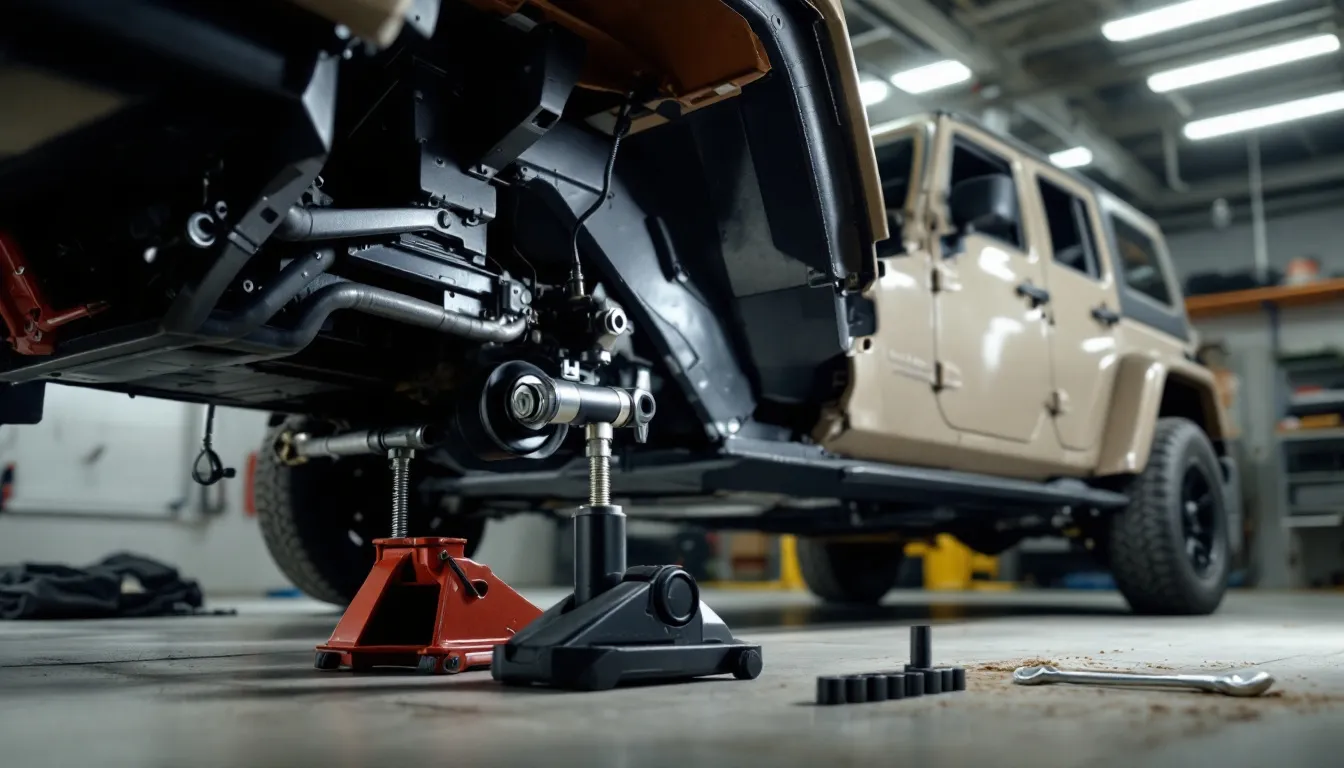
Step-by-step overview: Jack up the rear of your Jeep and support it on jack stands. Spray all exhaust bolts and hangers with penetrating oil — let it soak for 10 minutes minimum. The connection point is just forward of the rear axle at the flange. You’ll unbolt the stock system there (usually two bolts holding the flange together), then disconnect the rubber exhaust hangers by pulling the system free.

Slide the new axle-back system into place, connecting at the flange first. Hand-tighten those bolts but don’t fully torque them yet. Work the exhaust hangers onto the rubber mounts — you might need to wiggle and push to get them seated properly. Once everything’s aligned and centered in the frame, torque the flange bolts to spec (typically 30-35 ft-lbs).

Lower the Jeep and let it settle. Start the engine and check for exhaust leaks at the flange connection. You’ll hear them instantly if present — usually means the flange gasket needs adjustment or the bolts need another quarter-turn.

Common challenges: Rusty bolts are the primary enemy, especially on JKs from rust-belt states or ones that have seen years of trail use. Those flange bolts can be seized solid. Penetrating oil and patience solve most cases. If a bolt strips, you’ll need to cut it with an angle grinder and replace it — not the end of the world, but adds time.

Hanger alignment sometimes requires trial and error. The rubber mounts have some give, but if the exhaust sits too low or touches the frame anywhere, you need to adjust hanger positioning. Most systems include adjustable hangers or slotted mounting points for this reason.

Clearance checks matter if you’re lifted or running larger tires. Most axle-back systems maintain stock routing and clearance, but verify nothing contacts the frame, driveshaft, or rear axle during full suspension articulation. Bounce the Jeep up and down after installation to check.

Time estimate: First-time installers typically spend 90 minutes to 2 hours including setup and cleanup. Once you know what you’re doing, 45 minutes is reasonable. Add extra time if you’re fighting rusted bolts.

Professional installation: If you’re not comfortable working under the Jeep, don’t have tools, or just want it done right the first time, any muffler shop can handle this. Expect to pay $100-200 for labor. Some shops waive labor if you buy the exhaust through them, but you’ll lose the Amazon pricing advantage.

Break-in period: Exhaust note changes slightly during the first 100-200 miles as internal packing settles and heat cycles temper the metal. Some systems sound slightly louder after break-in, others mellow slightly. It’s normal — the final tone emerges after a few weeks of driving.

This is genuinely beginner-friendly. The hardest part is getting under the Jeep safely and dealing with rusty bolts. Everything else is straightforward nuts-and-bolts work with no special skills required.

Sound Differences: 3.8L vs 3.6L Pentastar

YIYEIE 22PCS Torque Wrench Set 1/2
YIYEIE 22PCS Torque Wrench Set 1/2" Drive, 10-180 ft.lb/13.6-244.1 Nm, Click Tor

Your engine matters more than you might expect. The same exhaust sounds noticeably different on a 3.8L (2007-2011) versus a 3.6L Pentastar (2012-2018), and understanding why helps set proper expectations.

The 3.8L engine characteristics lean toward deeper, more traditional V6 rumble. It’s a lower-revving engine with peak torque at 4,000 RPM and a redline around 6,000 RPM. The exhaust note has more bass-heavy character even with stock equipment. When you add an aggressive axle-back, that deep tone becomes more pronounced. The 3.8L doesn’t scream — it growls.

The 3.6L Pentastar is a different animal. It’s a higher-revving engine (redline at 6,500 RPM) with peak power up high. The exhaust note naturally has more mid-range and high-frequency content — less bass, more aggressive snarl. With an aftermarket exhaust, the 3.6L sounds noticeably raspier at high RPM compared to the 3.8L. Some owners love that aggressive character. Others find it too sharp.

The 3.6L also responds better to reduced backpressure. You’ll notice slightly more throttle response improvement with an axle-back on Pentastar-equipped JKs compared to 3.8L models. It’s still a modest gain (5-10 hp), but the engine breathes more freely.

Most axle-back systems are designed to work with both engines, but manufacturers typically optimise tone characteristics for the 3.6L since it’s more common (six model years versus four). That means 3.8L owners might experience slightly different sound profiles than advertised.

Here’s the practical takeaway: if you’re buying based on YouTube sound clips, make sure you’re watching videos from someone with YOUR specific engine. A 2008 JK with the 3.8L won’t sound identical to a 2015 JKU with the 3.6L using the same exhaust. Close, but not identical.

The differences aren’t deal-breakers. Both engines respond well to axle-back exhausts and both sound dramatically better than stock. Just calibrate your expectations based on which powerplant sits under your hood. Understanding JK model year differences helps here, as does researching which years are generally better if you’re shopping for a JK specifically to modify.

Does Axle-Back Exhaust Add Horsepower?

Short answer: yes, but not much. Expect 5-10 horsepower gains on a JK with an axle-back exhaust. You won’t feel it in the seat of your pants.

Here’s why you get any gains at all: reduced backpressure allows the engine to expel exhaust gases more efficiently. Less resistance means less pumping loss — the engine doesn’t have to work as hard to push spent gases out during the exhaust stroke. That freed-up energy translates to marginal power increases.

The gains are more noticeable on the 3.6L Pentastar than the 3.8L because the Pentastar flows more air and responds better to breathing modifications. But we’re still talking single-digit horsepower — maybe 8-10 hp peak versus 5-7 hp on the older engine.

Set realistic expectations: you’re not transforming your Jeep into a performance vehicle. A 285-horsepower 3.6L gaining 8 hp is a 2.8% increase. Imperceptible in real-world driving. The butt-dyno won’t register it.

The real benefit is sound improvement and minor efficiency gains. Some owners report marginally better throttle response — not from power increases, but from reduced restriction making the engine feel slightly more willing to rev. That’s subjective and hard to quantify.

For meaningful power gains on a JK, you need a complete exhaust system: long-tube headers to improve scavenging, high-flow catalytic converters to reduce restriction, cat-back exhaust for full-system flow improvement, and an ECU tune to optimise air/fuel ratios and timing. That package might net 25-35 horsepower combined — but you’re spending $2,000-3,000 and introducing complexity with emissions equipment.

Axle-back exhausts are about sound improvement and minor efficiency gains, not performance transformation. Anyone claiming 20+ horsepower from an axle-back system is either lying or measuring incorrectly. Take manufacturer power claims with a healthy grain of salt — they’re marketing figures at best.

If you buy an axle-back expecting noticeable acceleration improvement, you’ll be disappointed. Buy it for the sound upgrade, appreciate the marginal power gains as a bonus, and you’ll be perfectly satisfied.

Will Axle-Back Exhaust Affect Emissions or Check Engine Light?

Jeep Wrangler 4-cyl & 6-cyl Gas Engine, 2WD & 4WD Models (87-17) Haynes Repair M for Jeep JK
Jeep Wrangler 4-cyl & 6-cyl Gas Engine, 2WD & 4WD Models (87-17) Haynes Repair M

Short answer: no. Axle-back systems do not affect emissions testing, will not trigger check engine lights, and require no ECU tuning.

Here’s why: catalytic converters are the heart of your emissions control system. They convert harmful exhaust gases (hydrocarbons, carbon monoxide, nitrogen oxides) into less harmful compounds (water vapor, carbon dioxide, nitrogen). All emissions-related sensors — upstream and downstream oxygen sensors — monitor cat performance and signal the ECU.

Axle-back exhausts replace only the muffler and tailpipe, which sit downstream of all emissions equipment. Your cats remain completely stock. Your O2 sensors remain untouched. The ECU sees no changes to the exhaust system’s monitored components.

This means axle-back systems pass emissions testing in all 50 states without modification or tuning. They’re emissions-compliant modifications that don’t compromise your ability to register the vehicle or pass state inspection.

Contrast this with cat-back exhausts (which replace cats or remove them entirely) or headers (which change exhaust flow upstream of the cats). Those modifications CAN affect emissions, may trigger check engine lights if O2 sensor readings fall outside parameters, and often require ECU tuning to prevent running rich or lean.

Axle-back systems avoid all that complexity. You’re literally just changing the tone and volume of exhaust gases that have already passed through emissions control. From a legal and functional standpoint, it’s no different than changing your stereo speakers — you’re modifying output without affecting the source.

This is why axle-back exhausts are the safest first exhaust modification for JK owners concerned about legality, warranty implications, or technical complexity. You get dramatic sound improvement without touching anything the EPA cares about.

Axle-Back vs Cat-Back vs Full Exhaust: What’s the Difference?

Understanding the three main exhaust upgrade categories helps you choose the right modification for your goals and budget.

Axle-back systems replace only the section from the rear axle to the tailpipe — that’s the muffler and exit pipe. Everything upstream (manifolds, cats, mid-pipe) remains stock. Cost ranges from $80-400 depending on material and brand. Sound improvement is substantial (70% of total possible improvement). Power gains are minimal (5-10 hp). Installation is DIY-friendly and takes 1-2 hours.

Cat-back systems replace everything from the catalytic converters rearward — mid-pipe, muffler, and tailpipe. The cats themselves remain stock in most cases, though some systems include high-flow cats. Cost ranges from $400-800 for quality systems. Sound improvement reaches 85% of total possible improvement. Power gains increase to 10-20 hp depending on how restrictive your stock mid-pipe was. Installation is more involved (2-3 hours) but still manageable for experienced DIYers.

Full exhaust systems (also called header-back or turbo-back for forced induction vehicles) replace everything: manifolds/headers, catalytic converters, mid-pipe, muffler, and tailpipe. Cost ranges from $1,000-2,000+ for complete systems. Sound improvement hits 100% — maximum transformation possible. Power gains reach 20-30 hp with proper tuning. Installation often requires professional work due to complexity, and you’ll need ECU tuning to prevent check engine lights and optimise performance.

Power gains compared:

  • Axle-back: 5-10 hp
  • Cat-back: 10-20 hp
  • Full system with tune: 20-30 hp

Complexity compared:

  • Axle-back: DIY friendly, no tuning needed
  • Cat-back: Moderate DIY project, no tuning needed
  • Full system: Professional recommended, ECU tuning required

Here’s the strategic approach most experienced JK owners follow: start with an axle-back system. You’ll get the majority of sound improvement for minimal cost and zero complexity. Drive it for six months or a year. If you’re satisfied, you saved $1,500. If you want more sound or power, upgrade to cat-back by adding headers and high-flow cats. You’ve already replaced the rear section, so you’re just adding the front components.

Starting with a full exhaust system from day one commits you to maximum cost before you know whether you’ll even like aftermarket exhaust sound. Plenty of JK owners install aggressive exhausts, hate the drone after two weeks, and end up selling them at a loss. Starting with axle-back limits that risk.

For naturally aspirated V6 JKs used primarily for trail riding and daily driving, axle-back delivers the best value. You’re not building a race car — you’re improving sound character on a vehicle that spends most of its time under 4,000 RPM anyway.

Common Mistakes to Avoid When Buying JK Axle-Back Exhaust

Mistake 1: Buying based on sound clips alone. Every smartphone, camera, and microphone records exhaust sound differently. YouTube videos compress audio and lose fidelity. What sounds aggressive in a video might be obnoxiously loud in person, or vice versa. Use sound clips as general guidance, but prioritise written reviews discussing drone levels, tone character, and real-world experience.

Mistake 2: Ignoring fitment differences. Some exhaust systems are universal-fit for 2-door and 4-door JKs. Others are model-specific due to different piping lengths and hanger positions. Verify the product explicitly supports your wheelbase. Installing a 2-door exhaust on a 4-door might leave tips positioned awkwardly or require custom hangers.

Mistake 3: Choosing maximum volume without considering daily drivability. The loudest exhaust sounds amazing at the parts store. Two weeks later when you’re doing 75 mph on the interstate with constant drone vibrating your skull, you’ll regret it. If you daily drive your JK — especially for commutes over 30 minutes — prioritise low-drone designs even if they’re slightly less aggressive. Your passengers and your sanity will thank you.

Mistake 4: Skimping on material quality. Aluminized steel saves $100-150 upfront but corrodes within 2-3 years in harsh conditions. If you off-road regularly, live in wet climates, or park near ocean salt spray, spending extra for 304 stainless steel pays for itself through longevity. Budget exhausts work fine for temperate climates with garage-kept Jeeps, but they’re false economy for hard-use rigs.

Mistake 5: Forgetting to check clearance if lifted. Most axle-back systems maintain stock exhaust routing and ground clearance, but if you’re running a significant lift (3+ inches) or have modified suspension geometry, verify the exhaust won’t contact frame rails, driveshafts, or rear axle during full articulation. Exhaust contact during off-road use creates awful rattling and can damage components.

Mistake 6: Not using penetrating oil on rusty bolts. This seems minor but causes more installation frustration than anything else. Exhaust bolts corrode severely, especially at flange connections that see heat cycling. Spray them with PB Blaster or equivalent penetrating oil 24 hours before installation if possible, then again right before you start. Otherwise you’ll strip bolt heads and turn a 90-minute job into a 4-hour nightmare involving angle grinders and drill bits.

Bonus tip: Keep your stock exhaust system. When you eventually sell the Jeep, you can reinstall the factory exhaust and sell the aftermarket system separately. Buyers appreciate bone-stock rigs, and you’ll recoup $100-200 by parting out the exhaust rather than including it in the sale price.

The most common regret JK owners express about exhaust purchases: “I wish I’d spent the extra $100 for stainless steel” or “I wish I’d prioritised drone control over maximum volume.” Learn from their experience.

Fix What’s Broken First: A Word on Priorities

Every used Jeep has a story. Mine had a few chapters it hadn’t finished telling yet when I bought it.

The radiator was done — swapped it out clean as the first order of business. Then came the AC system, which we discovered wasn’t working properly during a drive up to the Cederberg in 112°F heat with our two-month-old baby boy in the back seat. Not ideal. Got that sorted the moment we got home.

Then came the significant one: the cylinder heads. The 3.6L Pentastar’s heads were warped — a known issue on this generation of the engine. Rather than skimming them and hoping for the best, we sourced brand new replacement heads and did it properly. It’s done right, or you do it twice.

None of this was glamorous. A new radiator doesn’t get Instagram likes. Fresh cylinder heads don’t turn heads at trail meetups. But this is the foundation of a reliable build.

Here’s what I learned: you can’t put 35-inch mud tyres on a Jeep with blown head gaskets and call it an overland rig. Mechanical integrity before cosmetic ambition. That philosophy runs through everything on this site.

The temptation to modify immediately after buying a JK is overwhelming. I felt it too. You see lifted rigs with aggressive exhausts and light bars, and you want that transformation for your own Jeep RIGHT NOW. But if your JK has cooling system issues, worn ball joints, questionable driveline components, or any other mechanical concerns, address those first.

An axle-back exhaust is a feel-good upgrade. It makes your Jeep sound amazing. But it won’t help if your radiator is leaking coolant into the overflow or your steering components are worn to the point of being dangerous. That $300 exhaust budget could be the down payment on fixing real problems that compromise reliability and safety.

Once the Jeep is mechanically sound — cooling system healthy, suspension components tight, drivetrain operating correctly — THEN modify with confidence. You’re building on solid foundation instead of throwing money at a problem vehicle.

This isn’t fun advice. It’s necessary advice. Every experienced JK owner has seen someone dump thousands into modifications while ignoring common JK problems that eventually strand them on the trail or leave them with a Jeep they can’t trust for daily transportation.

Check your Jeep thoroughly before planning modifications. Use a pre-purchase inspection checklist even if you already own the vehicle — it helps identify lurking issues before they become expensive failures. Fix what’s broken. Then build what’s awesome.

Frequently Asked Questions

Will an axle-back exhaust void my warranty?

No. The Magnuson-Moss Warranty Act protects consumers from blanket warranty denials based on aftermarket modifications. Dealers would have to prove the exhaust caused a specific failure to deny a warranty claim on that component. An axle-back exhaust can’t cause engine failures, transmission problems, or electrical issues. If a dealer tries to deny unrelated warranty work, reference the Magnuson-Moss Act and escalate to Jeep corporate if necessary.

How loud is too loud for daily driving?

That’s subjective and depends on your tolerance, but here’s a practical guideline: if you can’t hear passengers talking at normal volume during 70 mph highway cruising, the exhaust is probably too loud for comfortable daily use. Excessive volume causes fatigue on long drives and makes phone calls impossible without shouting. For daily drivers, prioritise exhausts described as “aggressive but refined” or “low drone” rather than “maximum volume” or “race-inspired.”

Do I need to tune my JK after installing axle-back exhaust?

No. Axle-back systems don’t change air/fuel ratios, oxygen sensor readings, or any parameters the ECU monitors. They’re purely mechanical sound modifications that require no computer adjustments. Cat-back or full exhaust systems that modify catalytic converters or headers may require tuning, but axle-backs never do.

Can I install an axle-back on a lifted JK?

Yes. Most axle-back systems maintain stock exhaust routing and clearance regardless of lift height. The exhaust mounts to the same hangers and frame positions whether you’re on stock suspension or 4-inch lift. However, verify clearance during full suspension articulation — extreme lifts with modified geometry could create contact points during flex. Bounce the Jeep up and down after installation to check for any contact between exhaust and frame, driveshaft, or rear axle.

Will this improve my fuel economy?

Marginally, if at all. You might see 0.5 mpg improvement from reduced backpressure allowing the engine to operate more efficiently, but that’s within measurement noise — you won’t notice it at the pump. Don’t buy exhaust systems expecting fuel savings. The improvement is negligible and easily overshadowed by driving habits, tire size, or wind resistance from roof racks and doors.

What’s the best exhaust for overlanding and long road trips?

Prioritise low-drone designs with internal resonators and stainless steel construction for durability. The daily driver pick covered earlier in this article is specifically designed for extended highway use with minimal fatigue. Proper maintenance matters just as much as exhaust choice for reliable overlanding — keep up with service intervals and your JK will take you anywhere.

Can I mix brands — like one brand’s muffler with another’s tips?

Technically possible but not recommended. Exhaust systems are designed as complete packages with specific muffler volumes, pipe diameters, and tip positioning working together to produce particular sound characteristics. Mixing components from different brands might create fitment issues (hangers in wrong positions, tips sitting oddly), unexpected drone frequencies, or compromised sound quality. Stick with complete systems from single manufacturers.

How do I stop exhaust drone if I already have it?

If you’ve already installed an exhaust that drones excessively, you have a few options: add a resonator to the mid-pipe section (reduces drone frequencies, costs $100-200 installed), add sound deadening material to the floor and firewall inside the cabin (masks drone rather than eliminating it, costs $200-400 in materials), or replace the muffler with a drone-cancelling design (essentially buying a second exhaust). The better solution is avoiding drone-prone exhausts in the first place by researching owner reviews about highway manners before purchasing.

Final Thoughts: Sound Upgrade Without Breaking the Bank

Hose Clamp Pliers Heavy Duty Hose Clamp Tool with Locking Device and Non-Slip Ha for Jeep JK
Hose Clamp Pliers Heavy Duty Hose Clamp Tool with Locking Device and Non-Slip Ha

Axle-back exhaust represents the best value sound upgrade available for Jeep JK owners. You’re getting 70-80% of the total possible sound improvement for 30-40% of the cost of full exhaust systems, with zero emissions complications, no tuning requirements, and DIY-friendly installation.

The top pick covered earlier remains the safe bet for most readers: 304 stainless steel construction for lifetime durability, sophisticated muffler design that balances aggressive tone with low drone, and bolt-on installation that takes a Saturday morning. It’s the system that satisfies enthusiasts without alienating daily drivers.

But “best” is subjective. Your ideal exhaust depends entirely on how you use your Jeep. Commuters need low-drone designs. Budget builders can start with aluminized steel and upgrade later. Weekend warriors who prioritise sound over refinement might prefer maximum-volume straight-through systems despite the drone trade-off.

Sound preference is personal — what sounds aggressive and satisfying to one owner sounds obnoxiously loud to another. Watch YouTube videos (understanding their limitations), read owner reviews discussing real-world experience with drone and tone, and choose the system that matches your priorities rather than following someone else’s recommendation blindly.

Before you order that exhaust, make sure your JK’s mechanicals are solid. Fix cooling system issues, address suspension wear, resolve drivetrain concerns. An aggressive exhaust sounds ridiculous on a Jeep that overheats or handles poorly. Build on solid foundation — the right foundation matters whether you’re shopping for a JK or already own one.

The installation process is genuinely beginner-friendly. If the mechanical work intimidates you, spend the $100-150 for professional installation and get it done right. But if you’re comfortable with basic tools and working under the Jeep, this is one of the most satisfying modifications you can complete yourself.

Keep your stock exhaust when you replace it. Future buyers appreciate bone-stock vehicles, and you’ll recoup some value by reinstalling the factory system before sale.

This is one of the most noticeable and satisfying first modifications you can do to a JK. Cold starts become events. Throttle application produces rewarding feedback. Your Jeep sounds like it should’ve from the factory — capable, aggressive, ready for adventure.

If you’ve been considering exhaust upgrades, now you have the information to choose confidently. Pick the system that matches your priorities, install it properly, and enjoy the transformation.

Check current price on Amazon for the top pick.

Free PDF Guide

Get the Free JK Build Planner

Complete PDF with mod checklists, gear ratios, tire sizing charts, and budget worksheets. Everything you need to plan your JK build.

No spam. Unsubscribe anytime. By subscribing, you agree to our Privacy Policy.

JK

Jeep JK Guide

We're JK owners who've been building, breaking, and fixing Wranglers for years. Everything here is tested on our own rigs - no sponsored fluff, just honest recommendations.

Learn more about us →

Get the JK Build Planner

Free PDF with complete build checklists, gear ratios, and tire fitment guides.

By subscribing, you agree to our Privacy Policy.