Best Gear Ratio For Jeep Jk With 33 Inch Tires
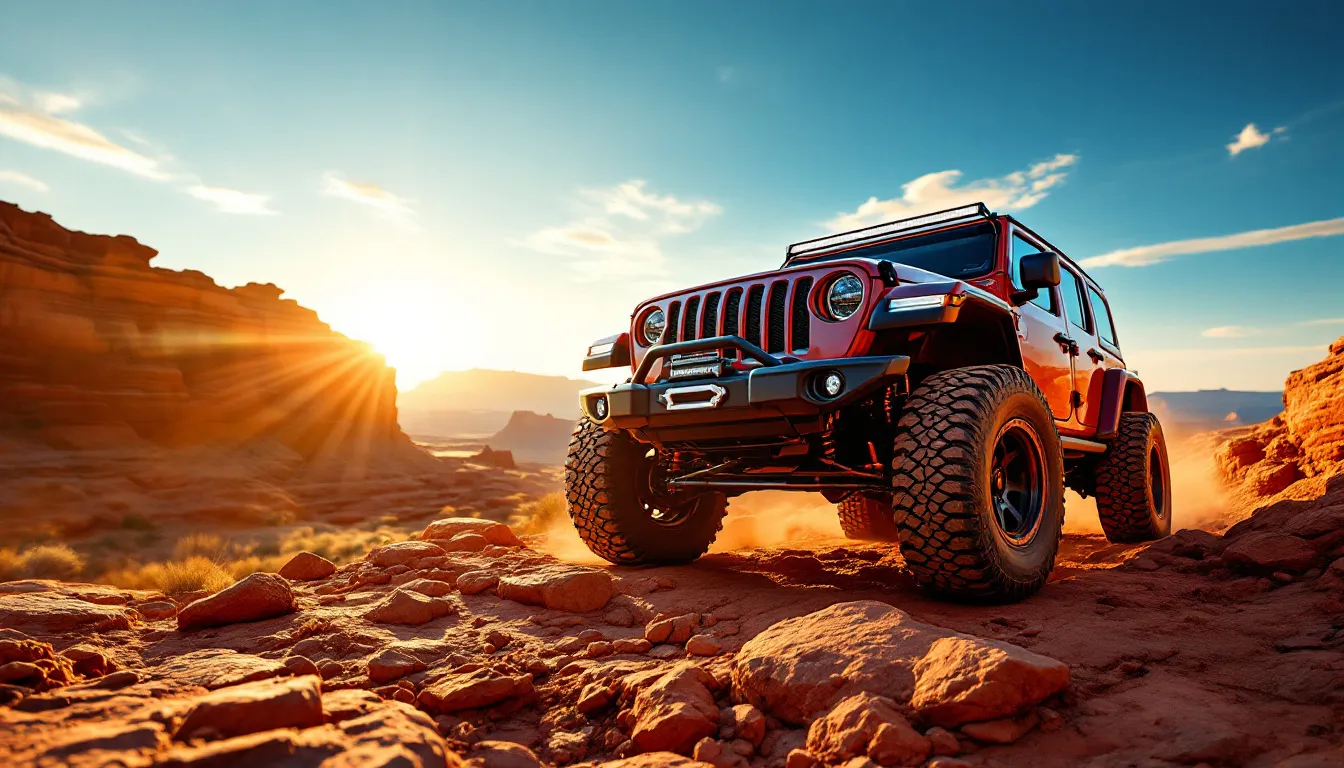
Best Gear Ratio for Jeep JK with 33 Inch Tires
The best gear ratio for a Jeep JK with 33-inch tires is 4.10:1 for most builds — it restores the power curve, improves fuel economy over stock gearing with bigger tires, and doesn’t over-speed your differential on the highway. If you’re running a manual transmission or plan to wheel hard, 4.56 is worth the extra cost.
Finding the right answer depends on which JK trim you started with, which transmission you have, and where you actually drive. The JK model year differences (2007–2018) matter here too — factory axle packages changed across the production run.
Why Gear Ratio Matters When You Lift and Tire Up
Think of your gear ratio as the multiplier between your engine’s output and your wheels. Go up in tire diameter, and you’ve effectively changed that multiplier — without touching the gears. Your engine now works harder to spin a larger rolling mass.
Here’s the basic formula that makes this concrete:
Effective Gear Ratio = (Stock Tire Diameter ÷ New Tire Diameter) × Axle Ratio
Example: Stock 31-inch tires at 3.73 axle ratio, upgraded to 33-inch tires.
(31 ÷ 33) × 3.73 = 3.50
Your 3.73 gears now perform like 3.50 gears — and you feel every bit of that loss.
That gap sounds small on paper, but real-world driving tells the story fast. Within a week of mounting 33s on stock 3.21 gears, you’ll notice:
- Sluggish acceleration from a stop, especially loaded or towing
- High RPM required just to maintain highway speed
- Excessive heat buildup in the transmission and transfer case under load
These aren’t cosmetic problems. Over time, running overtired gearing accelerates wear on your drivetrain. The Rubicon vs Sport vs Sahara trim comparison is relevant here too — different trims shipped with different stock ratios, so the urgency of regearing depends heavily on your starting point.
The fix is straightforward: regear to a numerically higher ratio that compensates for the larger tire diameter. Your engine gets its torque multiplication back, your transmission runs cooler, and your JK drives like it should.
Stock Gear Ratios for the JK: What Came From the Factory
Not every JK left the factory with the same axles. Here’s what Jeep installed across the trim lineup for the 2007–2018 production run:
| Trim | Front Axle | Rear Axle | Stock Ratio |
|---|---|---|---|
| Sport (2-door & JKU) | Dana 30 | Dana 44 | 3.21:1 |
| Sahara (2-door & JKU) | Dana 30 | Dana 44 | 3.21:1 |
| Rubicon (2-door & JKU) | Dana 44 | Dana 44 | 4.10:1 |
| X Package (early Sport) | Dana 30 | Dana 44 | 3.73:1 |
The 3.73 ratio appeared selectively on early production years and certain option packages — it’s the exception, not the rule. Most Sport and Sahara owners are working from a 3.21 baseline, which means their effective gear loss with 33s is significant.
Rubicon owners are already sitting in a good position. The factory 4.10 gears and Dana 44 front axle mean you’re already at the commonly recommended ratio for 33-inch tires. If you’re a Rubicon owner running 33s stock-height or with a mild lift, you may not need to regear at all — just run them and monitor your transmission temps.
Sport and Sahara owners with 3.21 gears, however, will feel the performance gap almost immediately after mounting 33s. Check the JK common problems by year if you’re also seeing related drivetrain issues alongside your tire upgrade — sometimes a regear is just one piece of a larger puzzle.
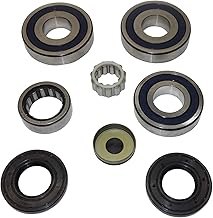
USA Standard Manual Transmission Bearing Kit NSG370 2005-2014 Jeep
- Fits NSG370 5-speed manual transmission
- Direct replacement for 2005-2014 JK models
- Includes all bearing components
- Pairs perfectly with regear jobs
✓ Precision-fit bearings ✓ Cost-effective bundled with regear ✓ Prevents future manual trans noise
✗ Installation requires differential expertise
Check Price on Amazon →Used and OEM options
Rubicon Dana 44 front axle
Ask for the gear ratio (Rubicons are 4.10) and whether the locker engages. Complete axles with brakes typically list well under a new aftermarket housing.
See current listings on eBay →Best Gear Ratio for 33-Inch Tires on a Jeep JK
For a Jeep JK with 33-inch tires, 4.10:1 is the sweet spot for most drivers. It compensates accurately for the tire diameter increase over stock 31s or 32s, keeps your RPM range healthy at highway speeds, and works well with both the 3.6L Pentastar and the older 3.8L engine found in pre-2012 JKs.
The case for 4.10 is especially strong if you drive a mix of highway and light trail. Your cruising RPM stays reasonable — typically in the 1,800–2,200 range at 65 mph depending on your transfer case ratio — and fuel economy stabilizes closer to stock numbers after the regear.
Here’s where firsthand experience matters. I’ve watched more than a few JK owners ignore the gearing situation after bolting on 35-inch tires, and the transformation after finally regearing to 4.56 is always the same: it’s dramatic. Throttle response comes back. The transmission stops hunting for gears on hills. The whole truck feels like one coherent package again instead of a car being dragged along by oversized shoes. The same principle applies moving from 3.21 gears to 4.10 on 33s — you notice it immediately on the highway on-ramp.
If you plan to wheel hard or run a manual transmission, step up to 4.56. The manual NSG370 transmission benefits from the extra gear multiplication on technical trails, and if there’s any chance you’ll move to 35s down the road, 4.56 future-proofs your build without another regear.
Automatic vs manual feel tells different stories here. Automatic JKs tend to mask the effects of incorrect gearing slightly through transmission programming, but they compensate with heat and constant downshifting. Manual drivers feel the wrong gear ratio immediately in clutch engagement and low-speed control — there’s nowhere to hide.
While you’re optimizing the drivetrain, it’s also worth considering best lockers for Jeep JK — a regear is the ideal time to bundle a locker install since you’re already in the axle.
4.10 vs 4.56 vs 3.73: Which Ratio Fits Your Build?
| Gear Ratio | Best For | Highway RPM | Trail Performance | Future Tire Size |
|---|---|---|---|---|
| 3.73 | Stock 31–32” tires, light use | Low | Poor with 33s | No room to grow |
| 4.10 | 33–34” tires, mixed use | Moderate | Good | Limited (35s push it) |
| 4.56 | 33–35” tires, heavy wheeling | Moderate-high | Excellent | Works with 35s |
| 4.88 | 35–37” tires | Higher | Best | Built for bigger rubber |
For most JK owners with 33s and no immediate plan to go larger, 4.10 is the call. It’s cost-effective, widely available, and doesn’t sacrifice highway manners. If you’re a Sport or Sahara owner starting from 3.21, the jump to 4.10 will feel transformative.
The 4.56 makes sense if you’re an aggressive wheeler, run a manual trans, or know that 35s are in your near future. The incremental cost over 4.10 is modest, and you avoid a second regear in 18 months.
The Yukon Gear & Axle kit below features a 4.88 ratio — which is the correct choice for 35-inch and larger builds, not 33s. We’re including it here because Yukon makes some of the most trusted JK regear kits available, and if you’re reading this while sizing up your full build path, it’s worth knowing what the 35” version looks like. Don’t order 4.88 for a 33-inch build.
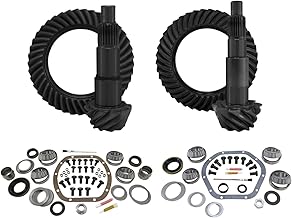
Yukon Gear & Axle - Gear & Install Kit for Jeep JK non-Rubicon 4.88 Ratio
- 4.88:1 gear ratio for 35"+ tires
- Ring and pinion set included
- Fits Dana 44 rear axles (non-Rubicon)
- Full install kit with gaskets and hardware
✓ Yukon's reputation for precision ✓ Complete kit, nothing extra to buy ✓ Best ratio for 35-inch tires
✗ NOT for 33-inch builds (too tall) ✗ Professional install recommended
Check Price on Amazon →For the full picture on your build’s starting point, check the JK buyers guide to confirm your trim’s axle specs before ordering any gear kit.
What to Replace While You’re In There: Don’t Pay Labor Twice
Here’s the single most important piece of advice for anyone planning a regear: bundle your parts now. Differential labor runs $300–$600 per axle. If a bearing or seal fails six months later, you’re paying that again for a job that would have cost $20 in parts during the original regear. It’s a mistake that costs real money.
Pull the axle shafts, replace the bearings and seals, swap the gear oil, and button it up correctly the first time. Here’s what to bundle:
Axle Bearings & Seals — Do These Every Time
The rear axle bearing and seal kit is a straightforward add-on that fits all 2007–2017 JK and JKU models. These bearings take the brunt of lateral loads under the new tire weight, and worn seals will leak gear oil onto your brake shoes. Upgrading your rear axle bearing and seal kit during your regear eliminates future labor costs.
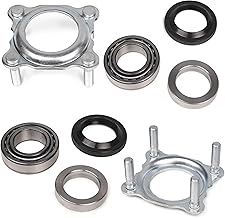
2pcs Rear Axle Bearing and Seal Kit Compatible with Jeep Wrangler JK/JKU 2007-2018
- Fits all JK and JKU model years 2007-2018
- Two kits for front and rear differential seals
- OEM-quality bearing materials
- Direct bolt-in, no modifications required
✓ Essential regear addition ✓ Prevents future seal leaks ✓ Affordable insurance against labor costs ✓ Works with any gear ratio
✗ Installation required during regear (not standalone)
Check Price on Amazon →Gear Oil — Fresh Fill After Every Regear
After setting your new ring and pinion, you’ll need a fresh fill of gear oil. The JK manual’s spec is SAE 80W-90 API GL-5 (synthetic 75W-140 for towing); any bottle labelled with both meets it.

Valvoline Daily Protection SAE 80W-90 GL-5 Gear Oil, 1 Quart
- SAE 80W-90, API GL-5: the JK owner's manual spec
- API GL-5 specification compliant
- Easy-pour pouch design
- Works with limited-slip and open differentials
✓ Dana axle approved ✓ Pouch format reduces mess ✓ Widely available ✓ Good heat tolerance
✗ Always add friction modifier with limited-slip differentials
Check Price on Amazon →Transmission Cooler — Especially for Automatic JKs
Automatic transmission JKs (particularly 2012–2017 and 2018 JK models with the 3.6L) run hotter with larger tires during the break-in period after a regear. Adding an upgraded transmission oil cooler gives you a buffer against excessive heat and extends transmission life.
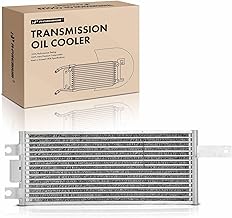
A-Premium Transmission Oil Cooler Compatible with Jeep Wrangler 2012-2017, JK 2018, 3.6L
- Fits 2012-2017 JK and 2018 JK models
- Works with 3.6L Pentastar engine
- Direct replacement fitment
- Aluminum tube construction
✓ Affordable heat management ✓ Easy drop-in replacement ✓ Prevents transmission limp mode ✓ Worth adding during regear downtime
✗ Only needed for automatic transmissions ✗ DIY installation requires some mechanical comfort
Check Price on Amazon →While you have everything apart, it’s also the ideal moment to upgrade to a thicker diff cover. A quality cover adds fluid capacity and protects the housing on the trail — see best diff covers for Jeep JK for vetted options.
Used and OEM options
Rubicon Dana 44 rear axle
Confirm the ratio matches the front and that the locker wiring is intact. Freight is the hidden cost; check the shipping line.
See current listings on eBay →Regear Cost Breakdown: DIY vs Shop Install
Before you commit, know what you’re spending. Here’s a realistic breakdown:
Shop Install (both axles):
- Gear kit (ring & pinion, both axles): $400–$700
- Bearings, seals, gear oil: $100–$150
- Labor (per axle, typical shop rate): $300–$500
- Total: $800–$1,350
DIY Install:
- Gear kit: $400–$700
- Bearings, seals, gear oil: $100–$150
- Specialty tools (pinion depth gauge, inch-pound torque wrench): $100–$200 if you don’t own them
- Total: $600–$1,050
DIY saves money, but regearing is a precision job. Pattern setting on a ring and pinion requires real knowledge — a wrong preload setting on the pinion bearings causes whining and premature failure. Most first-timers are better off at a shop unless they’ve had their hands in differentials before.
If you have a manual transmission NSG370, replace the transmission bearing kit at the same time. It’s another $150–$200 in parts, but you’re already paying the labor. Doing it later costs you another visit and another shop bill.
For a broader look at how the JK’s drivetrain compares to its successor, see the JK vs JL comparison — useful context if you’re deciding whether to invest in regearing an older JK or moving on.
Running 33s: The Full Picture Beyond Gear Ratio
Gear ratio is foundational, but 33-inch tires also need adequate lift to clear. Most JKs need at least 2.5 inches of lift to run 33s without rubbing the fender liner at full steering lock — more on a JKU (4-door) with its longer wheelbase and different control arm geometry.
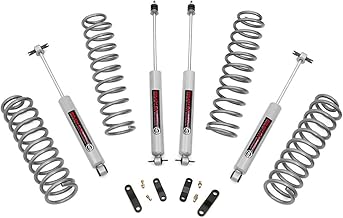
2.5" Lift Kit for 2007-2018 Jeep Wrangler JK Unlimited - 67930
- 2.5-inch height increase for JK and JKU
- Fits 2007-2018 Wrangler JK models
- Includes coils, shocks, and hardware
- Works with stock Dana 30/44 axles
✓ Adequate clearance for 33-inch tires ✓ Minimal driveline angle issues ✓ Keeps ride quality reasonable ✓ Good value for the height gain
✗ Verify fitment for 2-door vs JKU ✗ Some bump steer possible with aggressive geometry
Check Price on Amazon →The Rough Country 2.5” lift kit fits both 2-door and 4-door (Unlimited) JK models across the full 2007–2018 production run. Verify fitment for your specific configuration — 2-door and JKU have different front track widths that affect spacer and bracket sizing.
If you’re still deciding which trim to build from, the article on whether the Rubicon is worth the premium is worth reading before you buy any lift or gear kit. The Rubicon’s Dana 44 front axle changes what upgrades actually make sense — you’re starting from a better position than a Sport owner.
Frequently Asked Questions: Gear Ratio for JK with 33-Inch Tires
Do I need to regear my Jeep JK for 33-inch tires?
It depends on your starting gear ratio. If you have a Sport or Sahara JK with stock 3.21 gears, yes — you’ll notice sluggish acceleration, high RPM at highway speed, and increased transmission heat with 33s within the first week. A Rubicon starting at 4.10 gears is already well-matched for 33s and can often skip the regear entirely. Check the JK model year differences guide to confirm what your specific model year came with.
What gear ratio does a stock Jeep JK Rubicon have?
The Jeep JK Rubicon came from the factory with 4.10:1 axle gears in both the front Dana 44 and rear Dana 44 axles. This ratio was consistent across the entire Rubicon production run from 2007 through 2018. It’s also the commonly recommended ratio for 33-inch tires, which is why Rubicon owners often need no regear when moving to 33s.
Can I run 4.56 gears with 33-inch tires?
Yes, and many aggressive owners prefer it. 4.56 gears with 33-inch tires give you strong trail performance, better low-speed control with a manual transmission, and headroom to run 35s later without regearing again. The tradeoff is slightly higher cruising RPM on the highway compared to 4.10 — maybe 200–300 more RPM at 70 mph. It’s not the optimal match on paper, but real-world driveability is excellent, especially for wheelers.
What differential gear oil should I use after a regear?
Use the gear oil the JK owner’s manual specifies: SAE 80W-90 API GL-5, or synthetic 75W-140 if you tow. Add the 4 oz limited-slip additive only if the axle is a Trac-Lok (without it, a Trac-Lok chatters in corners); Rubicon e-lockers do not take it. Fill to the bottom edge of the fill plug opening and check for leaks after the first 500 miles. Upgrading your diff cover also adds fluid capacity — see the JK differential covers guide for options.
How much does it cost to regear a Jeep JK?
A full regear on both axles at a shop typically runs $800–$1,350 including parts and labor. DIY drops the total to $600–$1,050 if you already own specialty tools. The gear kit itself (ring and pinion for both axles) usually costs $400–$700 depending on brand and ratio. Bundling bearings, seals, and gear oil adds roughly $100–$150 — money well spent to avoid paying labor twice if a seal fails later.
What’s the difference between 4.10 and 4.56 gears on the highway?
At 70 mph, a JK with 4.10 gears typically cruises around 2,000–2,200 RPM, while 4.56 gears will run 2,300–2,500 RPM. The difference is noticeable but not dramatic. Fuel economy drops slightly with 4.56, maybe 1–2 MPG on the highway depending on driving style. Many owners find the tradeoff worth it for the improved trail feel and future-proofing, especially if they plan to upgrade to 35s eventually.
Get new guides by email
One email when we publish something worth reading. Unsubscribe anytime.
Final Verdict: Gear Ratio for Your JK on 33s
For most JK owners on 33s, 4.10 is the right answer. Sport and Sahara owners with 3.21 stock gears will feel an immediate transformation — it’s not subtle. Rubicon owners with factory 4.10s can usually skip the regear entirely and save the money. If you wheel hard or see 35s in your future, step to 4.56 and be done with it.
Gear ratio decisions are best made with real-world JK community knowledge, not just spec sheets — the numbers make sense when paired with experience from owners who’ve done the work. While you’re in there, consider adding lockers at the same time. It’s the same labor, and it turns a good build into a great one.
The regear itself is an investment, but it’s also the foundation that every other drivetrain upgrade depends on. Get it right the first time.
Free: JK Fluids at a Glance
Every fluid, spec and capacity for the 2007-2018 Wrangler JK on one page, plus a cut-out glovebox card. Checked against the owner's manuals. From the JK Service Kit.
Email me the download and new guides when they are published. Unsubscribe anytime. Privacy Policy.
Allan
I'm Allan. I own a 2014 Jeep Wrangler JKU and I research the hell out of every mod before I touch it. When I've fitted something to my own Jeep, I say so. Everything else is researched from manufacturer specs and other owners' reports. No sponsored fluff.
Learn more about me →Free: JK Fluids at a Glance
Every fluid, spec and capacity for the 2007-2018 JK on one page, plus a glovebox card.
Email me the download and new guides when they are published. Unsubscribe anytime. Privacy Policy.
Related Articles
Jeep JK Regear vs Locker: Which Upgrade Comes First?
Ask ten JK owners which comes first — a regear or a locker — and you'll get the same answer from nine of them: regear first, locker second.

Jeep JK Towing Capacity: What Can Your Wrangler Actually Pull?
Your Jeep JK can tow more than you might think — but probably less than you want to. The factory ratings are straightforward: 2,000 lbs for the 2-door...
How to Choose Tire Size for Jeep Jk Lift Kit Compatibility
Lift kit and tire size compatibility is straightforward in concept but trips up a lot of JK owners in practice: the amount of suspension height you add...