JK Model Year Differences (2007-2018): Complete Year-by-Year Changes
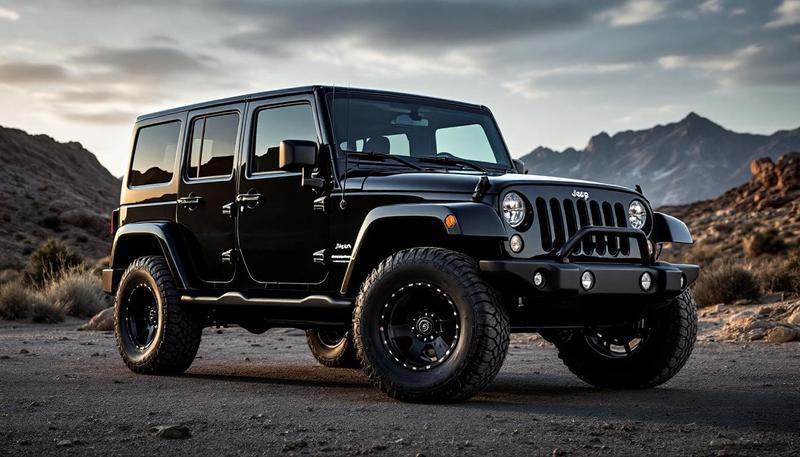
The Jeep Wrangler JK ran for 12 model years from 2007 to 2018. While the basic design stayed consistent, Jeep made numerous changes throughout the production run. Understanding these differences helps you find the right year for your needs and budget.
This guide breaks down exactly what changed each model year so you know what you’re getting.
JK Timeline Overview
Before diving into specifics, here’s the high-level view of major changes:
| Year | Major Changes |
|---|---|
| 2007 | All-new JK platform launches with 2-door and 4-door |
| 2008 | Minor refinements to first-year issues |
| 2009 | Interior improvements, electrical fixes |
| 2010 | New colors, improved build quality |
| 2011 | Final year of 3.8L engine, Mojave edition |
| 2012 | Major update: 3.6L Pentastar, 5-speed auto, new interior |
| 2013 | Pentastar refinements, new trim packages |
| 2014 | Willys Wheeler introduced, Sport S trim added |
| 2015 | Standard connectivity updates, refined features |
| 2016 | 75th Anniversary Edition, Black Bear Pass Edition |
| 2017 | Final year improvements, special editions |
| 2018 | Last JK year, overlapped with JL production |
Get new guides by email
One email when we publish something worth reading. Unsubscribe anytime.
2007: The Beginning
The 2007 model year marked a complete redesign from the TJ generation. Everything was new.
What Was Introduced
Platform and Body:
- All-new unibody-on-frame design
- First-ever factory 4-door Wrangler (JKU Unlimited)
- Wider track and longer wheelbase than TJ
- Coil springs front and rear (TJ had leaf springs in rear)
- New interior with modern amenities
Engine and Drivetrain:
- 3.8L V6 (202 hp, 237 lb-ft)
- 6-speed NSG370 manual transmission
- 4-speed 42RLE automatic transmission
- Command-Trac (Sport/Sahara) and Rock-Trac (Rubicon) transfer cases
Trim Levels:
- X (base model)
- Sahara
- Rubicon
2007 Known Issues
First-year production brought predictable growing pains:
- TIPM (Totally Integrated Power Module) failures causing electrical gremlins
- Clutch problems on some manual transmissions
- Differential issues reported on early builds
- Build quality inconsistencies
- Some head gasket failures
2007 Verdict: Avoid unless the price is exceptional and you’ve thoroughly inspected the vehicle. See our common problems by year guide for more details on what to watch for.
2008: First Refinements
Jeep addressed some initial concerns while keeping the same basic formula.
What Changed
Improvements:
- Revised TIPM programming to reduce electrical issues
- Improved clutch calibration on manual transmissions
- Better build quality consistency
- Updated software for various systems
New Features:
- Available satellite radio
- Improved Mopar accessory availability
Trim Changes:
- X trim renamed to “Sport” partway through the year
2008 Known Issues
Many 2007 issues continued:
- TIPM failures still occurred
- 3.8L oil consumption at higher mileages
- Exhaust manifold cracking on some engines
2008 Verdict: Slightly better than 2007 but still early production. Budget-conscious buyers may find deals here.
2009: Maturation Begins
By 2009, Jeep had worked out most significant bugs.
What Changed
Improvements:
- More reliable TIPM modules
- Improved interior material quality
- Better fit and finish overall
- Revised instrument cluster
New Features:
- Uconnect phone connectivity option
- Hill Start Assist on automatic models
- Electronic Stability Control standard
- New wheel options
Interior Updates:
- Redesigned center console
- Improved HVAC controls
- Better quality switches and buttons
2009 Known Issues
Problems became less common:
- 3.8L oil consumption remained a concern on high-mileage examples
- Exhaust manifold cracking still occurred
- Death wobble could develop (track bar, ball joints)
2009 Verdict: First year we’d recommend for budget buyers seeking a 3.8L JK.
2010: Refined 3.8L
The 2010 model continued evolutionary improvements.
What Changed
Updates:
- New exterior colors including Rescue Green
- Refined transmission calibration
- Improved overall build quality
Features:
- New premium soft top option
- Updated audio systems
- Enhanced Mopar accessory integration
Special Editions:
- Islander Edition introduced
- Mountain Edition available
2010 Known Issues
Generally reliable year with typical 3.8L concerns:
- Oil consumption possible at high mileage
- Same exhaust manifold susceptibility
- Standard wear items (track bar, ball joints)
2010 Verdict: Solid 3.8L year. Good choice for budget buyers.
2011: Final 3.8L Year
The last year of the original JK engine was also the most refined.
What Changed
Updates:
- Final refinements to 3.8L engine
- Improved transmission programming
- Body-color hardtop available on more trims
Features:
- New interior colors
- Updated Uconnect system
- Premium audio improvements
Special Editions:
- Mojave Edition (desert-themed)
- 70th Anniversary Edition
- Call of Duty: Black Ops Edition
2011 Advantages
As the final 3.8L year:
- Most developed version of the engine
- All production issues resolved
- Best build quality of 3.8L era
- Typically cheaper than 2012+ models
2011 Known Issues
Same 3.8L concerns:
- Oil consumption possible with age
- Exhaust manifold cracking
- Underpowered compared to Pentastar
2011 Verdict: Best 3.8L year to buy. Recommended for budget shoppers.
2012: The Big Update
The 2012 model year brought the most significant mid-cycle changes in JK history. It’s a critical year to understand when buying a used JK.
What Changed
New Engine - 3.6L Pentastar V6:
- 285 horsepower (up from 202)
- 260 lb-ft torque (up from 237)
- Better fuel economy (17-21 mpg vs 15-16)
- Smoother, quieter operation
- More power for larger tires
New Transmission:
- 5-speed W5A580 automatic replaced 4-speed 42RLE
- Improved shift quality and fuel economy
- Better suited to new engine’s power
Interior Redesign:
- All-new instrument cluster
- Redesigned center console
- Updated switches and controls
- Improved materials throughout
Other Updates:
- Revised hood with new scoops
- Updated grille design
- New wheel designs
The 2012 Build Date Issue
Early 2012 production had problems with the new Pentastar engine:
Cylinder Head Tick:
- Left cylinder head ticking noise
- Caused by manufacturing issue
- Fixed in later production
How to Check:
- Open driver’s door
- Find the door jamb sticker
- Look for build date
- Vehicles built after April/May 2012 are generally fine
- Earlier builds may have issues
2012 Known Issues
- Cylinder head tick (early builds only)
- Oil filter housing leaks
- First-year Pentastar learning curve for shops
2012 Verdict: Great year if you verify the build date. Later 2012 builds are excellent.
2013: Pentastar Refinement
With the first-year Pentastar bugs worked out, 2013 delivered a refined product. This is one of the best years to buy when considering reliability and pricing together.
What Changed
Engine Updates:
- Cylinder head issue resolved
- Improved oil consumption
- Better cold-start programming
New Features:
- Standard tire pressure monitoring
- Improved Uconnect options
- New wheel choices
Trim Updates:
- Sport, Sahara, and Rubicon continued
- New appearance packages available
Special Editions:
- Moab Edition (rock-crawling focused)
- Sport, Sahara, Rubicon trims refined
2013 Advantages
- First full year of refined Pentastar
- No first-year engine issues
- Improved build quality
- Lower prices than 2014+ (used market)
2013 Known Issues
Generally very reliable:
- Standard maintenance items
- Death wobble prevention (track bar, ball joints)
- Minor oil filter housing leaks possible
2013 Verdict: Excellent year. Top recommendation for value buyers.
2014: New Trim Options
Jeep expanded the lineup with new trims and packages.
What Changed
New Trims:
- Willys Wheeler Edition: Sport-based with limited-slip rear differential, rock rails, 32-inch tires, Willys badging. Best value for off-road capability below Rubicon.
- Sport S: Sport with power convenience group standard (power windows, locks, mirrors)
Features:
- Available 6.5-inch Uconnect touchscreen
- Backup camera available
- Improved connectivity options
Other Updates:
- New exterior colors
- Refined interior materials
- Better standard equipment
2014 Advantages
- Willys Wheeler offers great value
- Sport S simplifies option selection
- Fully refined Pentastar
- Modern connectivity available
2014 Known Issues
Pros:
- Purpose-built for JK Wrangler ensures proper fitment and function
- Durable construction handles trail abuse and daily driving
- Backed by positive community reviews and trail-tested results
Cons:
- Premium pricing compared to generic aftermarket options
- May require longer lead times for specialty or popular items
- Some products require professional installation for best results
Very reliable:
- Standard wear items
- Routine maintenance
- Typical JK concerns (death wobble prevention)
2014 Verdict: Excellent year. Willys Wheeler is underrated for value.
2015: Technology Updates
The 2015 model brought standard connectivity improvements.
What Changed
Technology:
- Standard USB port
- Improved Uconnect systems
- Better audio integration
- Enhanced smartphone connectivity
Equipment:
- Standard features increased across trims
- New wheel designs
- Interior material improvements
Special Editions:
- Wrangler X Edition
- Various appearance packages
2015 Advantages
Pros:
- Purpose-built for JK Wrangler ensures proper fitment and function
- Durable construction handles trail abuse and daily driving
- Backed by positive community reviews and trail-tested results
Cons:
-
Premium pricing compared to generic aftermarket options
-
May require longer lead times for specialty or popular items
-
Some products require professional installation for best results
-
Modern connectivity standard
-
Well-sorted platform
-
Excellent reliability
-
Good availability on used market
2015 Known Issues
Minimal concerns:
- Standard wear items
- Routine maintenance only
2015 Verdict: Great year with modern features. Reliable and refined.
2016: Anniversary Editions
Jeep celebrated its heritage with special editions.
What Changed
Special Editions:
- 75th Anniversary Edition: Unique paint (Sarge Green), heritage badging, bronze accents, special interior
- Black Bear Pass Edition: Trail-focused accessories and styling
Standard Updates:
- New wheel options
- Refined interior details
- Improved standard equipment
Features:
- Enhanced Uconnect systems
- Better Bluetooth integration
- New color options
2016 Advantages
- Special editions add unique value
- Mature, reliable platform
- Good used market availability
- Excellent parts support
2016 Known Issues
Very few concerns:
- Standard maintenance items
- Typical JK wear points
2016 Verdict: Excellent choice. Anniversary editions hold value well.
2017: Peak Refinement
The second-to-last year represented peak JK development.
What Changed
Updates:
- Final refinements to all systems
- Improved fit and finish
- Enhanced standard features
Special Editions:
- Rubicon Recon (enhanced Rubicon)
- Various appearance packages
- Limited special colors
Features:
- Standard LED headlights on some trims
- Improved interior materials
- Better standard connectivity
2017 Advantages
- Most refined JK year overall
- All issues long resolved
- Excellent reliability
- Better pricing than 2018 (used)
2017 Known Issues
Essentially none beyond normal wear:
- Standard maintenance
- Routine wear items
2017 Verdict: Top recommendation if budget allows. Best overall JK quality.
2018: The Final Year
The last JK overlapped with JL production.
What Changed
Production Notes:
- JK production ran January to April 2018
- JL production began alongside
- Some dealers had both generations on lot
- Final opportunity for JK new
Features:
- Carried over from 2017
- Some late-production updates
- Final special editions
Special Considerations:
- Many buyers chose 2018 JK knowing it was the last
- Some premium commanded for “last year” status
- Lower production numbers than typical year
2018 Advantages
- Lowest miles on used market
- “Final year” collector appeal to some
- All features and refinements included
- Most modern JK available
2018 Disadvantages
- Highest prices
- Premium doesn’t always justify cost
- 2017 usually better value
2018 Known Issues
None specific to 2018:
- Standard maintenance
- Normal wear items
2018 Verdict: Best JK built, but 2016-2017 usually better value.
Choosing the Right Year
Best Value Years
2013-2014 offer the best combination:
- Refined Pentastar engine
- All bugs worked out
- Modern features
- Reasonable used prices
- Good availability
Best Budget Years
2010-2011 for 3.8L buyers:
- Mature, refined 3.8L
- Significantly lower prices
- Reliable if maintained
- Accept lower power output
Best Quality Years
2016-2017 for those prioritizing quality:
- Peak refinement
- Excellent reliability
- Modern features
- Better prices than 2018
Years to Avoid
2007-2008 unless exceptional deal:
- First-year issues
- TIPM problems
- Build quality concerns
Early 2012 without verifying build date:
- Cylinder head tick issue
- Verify build date on door jamb
Production Numbers and Availability
Understanding production helps with used shopping. Higher production years typically have better selection and pricing on the used market—consult our best year JK to buy guide for year-specific recommendations.
| Year | Approximate Production |
|---|---|
| 2007 | 170,000 |
| 2008 | 134,000 |
| 2009 | 107,000 |
| 2010 | 136,000 |
| 2011 | 133,000 |
| 2012 | 141,000 |
| 2013 | 159,000 |
| 2014 | 175,000 |
| 2015 | 203,000 |
| 2016 | 191,000 |
| 2017 | 190,000 |
| 2018 | ~50,000 (partial year) |
Higher production years (2013-2017) offer more selection on the used market.
Popular Upgrades Available for All JK Years
Regardless of which model year you choose, these upgrades are popular across the entire JK generation and help modernize your vehicle’s capability and appearance.
Lift your JK and improve ground clearance with quality suspension:
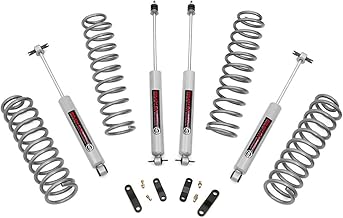
Rough Country 2.5" Lift Kit
Check Price on Amazon →Protect your wheel wells and add aggressive styling with quality fender flares:
Maximize your engine’s potential with a quality performance tuner:
Used and OEM options
Factory fender flares
Take-off sets from owners going to aftermarket flares are cheap. Check the retaining clips and for sun fade.
See current listings on eBay →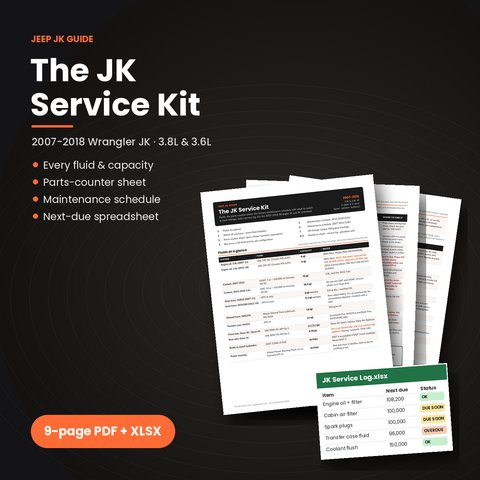
Own a JK? The JK Service Kit
Which fluids, filters and specs your model year and engine take (they changed in 2012, 2013 and 2014), the factory maintenance schedule with what to check at each mileage, and a spreadsheet that tells you what is due next. 9-page PDF plus Excel/Google Sheets tracker, $12.
Get the JK Service KitThe Bottom Line
The JK evolved significantly over its 12-year run:
- 2007-2008: Avoid unless price is exceptional
- 2009-2011: Good budget options with 3.8L
- 2012: Verify build date, then excellent
- 2013-2014: Best value years
- 2015-2017: Best quality years
- 2018: Premium prices for final year
Focus your search on 2012+ models for the Pentastar engine unless budget dictates otherwise. Within the Pentastar years, 2013-2014 offer the best value while 2016-2017 offer the best overall quality. Before purchasing, use our buying used JK checklist to thoroughly inspect any vehicle.
For a complete guide to buying any JK year, see our JK Buyer’s Guide.
Related Articles
- JK Buyer’s Guide: Complete Buying Guide - Everything you need to know
- Best Year JK to Buy - Our top recommendations
- JK Common Problems by Year - What to watch for
- Rubicon vs Sport vs Sahara - Trim comparison
- Buying Used JK Checklist - Inspection guide
Related Guides
Explore more JK upgrade guides to complement your build:
- JK Buyers Guide — our complete JK buying overview
- What to Look For — key inspection points
- JK vs JL Comparison — comparing JK to newer JL
- Best JK Hardtops — hardtop replacement options
- Best JK Soft Tops — soft top options
- Best JK Lift Kits — first modification most owners make
- Maintenance Guide — keeping your JK running strong
Free: JK Fluids at a Glance
Every fluid, spec and capacity for the 2007-2018 Wrangler JK on one page, plus a cut-out glovebox card. Checked against the owner's manuals. From the JK Service Kit.
Email me the download and new guides when they are published. Unsubscribe anytime. Privacy Policy.
Frequently Asked Questions
What year did the JK get the Pentastar engine?
The 3.6L Pentastar V6 was introduced in 2012, replacing the 3.8L V6. This upgrade added 83 horsepower (202 to 285 hp) and improved fuel economy by 2-3 mpg.
When did Jeep start offering the 4-door JK Unlimited?
The 4-door JKU Unlimited was available from the very first JK model year in 2007. It was the first factory 4-door Wrangler ever produced.
What changed between 2011 and 2012 JK models?
The 2012 model received the new 3.6L Pentastar engine (replacing the 3.8L), a new 5-speed automatic transmission (replacing the 4-speed), and revised interior with new gauges and controls.
Are there any JK years to avoid?
Avoid 2007-2008 models due to first-year production issues. Early 2012 models (built before May) had cylinder head problems. Check the door jamb sticker for build date on 2012 models.
What was the last year of the Jeep JK?
2018 was the final model year for the JK generation. Production continued into early 2018 alongside the new JL until JK production ended in April 2018.
Allan
I'm Allan. I own a 2014 Jeep Wrangler JKU and I research the hell out of every mod before I touch it. When I've fitted something to my own Jeep, I say so. Everything else is researched from manufacturer specs and other owners' reports. No sponsored fluff.
Learn more about me →Free: JK Fluids at a Glance
Every fluid, spec and capacity for the 2007-2018 JK on one page, plus a glovebox card.
Email me the download and new guides when they are published. Unsubscribe anytime. Privacy Policy.
Related Articles
Jeep JK Rubicon Off-Road Capability: What the Factory Locker & Rock-Trac Package Actually Does
The Jeep Wrangler JK Rubicon is the factory-built, trail-ready variant of the 2007–2018 Wrangler. What separates it from every other JK trim is four...
Best Jeep JK Mods for Every Budget: From $50 Bolt-Ons to Full Builds
Jeep JK mods are aftermarket upgrades — from bolt-on accessories to full mechanical builds — that improve the capability, comfort, protection, or...
Best Jeep JK Accessories in 2026: The 15 Upgrades Every Wrangler Owner Actually Buys
Walk into any JK forum and you'll see the same pattern repeating. Someone buys a used 2014 JKU, gets excited about the possibilities, and immediately...