Rubicon vs Sport vs Sahara in 2026: Is the Rubicon Worth the Premium?
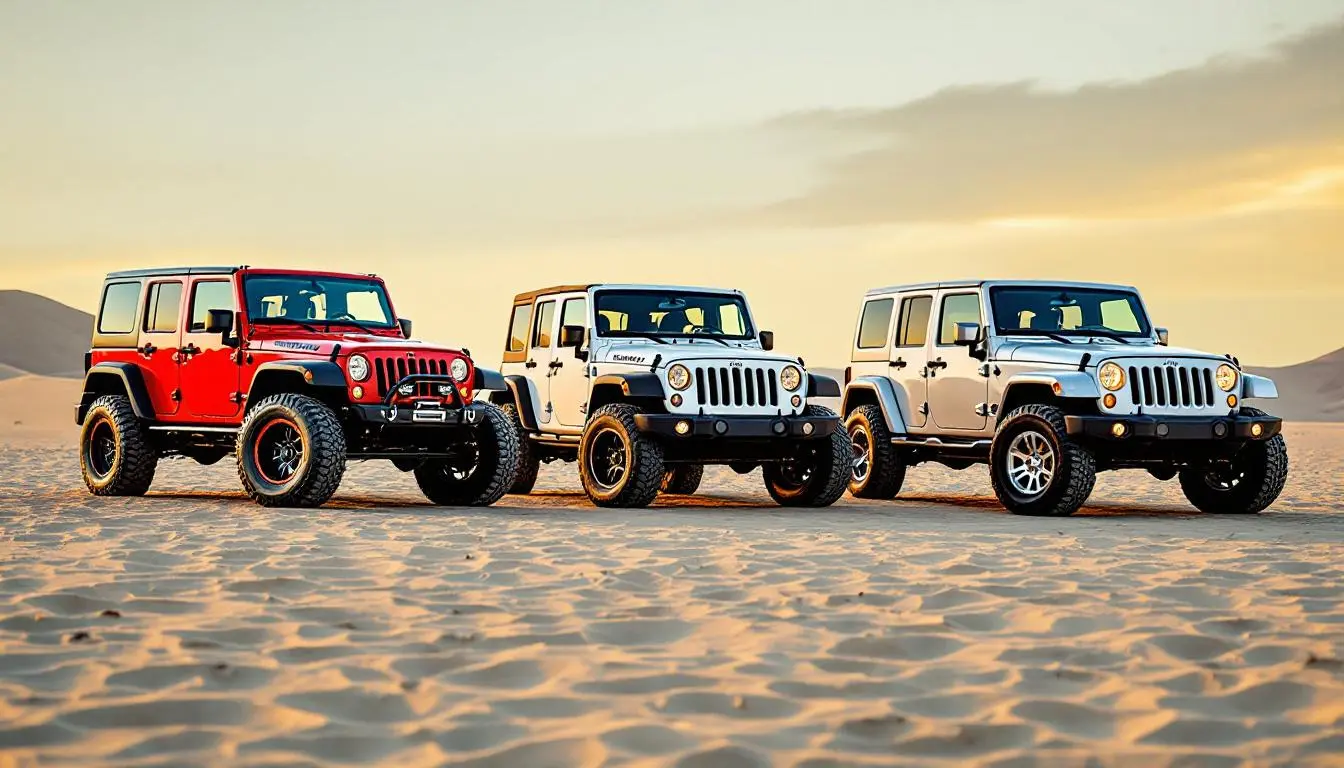
The Jeep Wrangler JK came in three core trims: Sport, Sahara, and Rubicon. The rubicon vs sport vs sahara comparison matters because the price gap between a base Sport and a fully-equipped Rubicon can exceed $10,000 on the used market—but that gap narrows fast once you start adding the parts to make a Sport match Rubicon capability.
The Rubicon gets you factory Dana 44 axles front and rear, electronic locking differentials, disconnecting sway bars, and 4:1 low-range gearing. The Sport? Clean platform, lowest entry price. The Sahara splits the difference with premium comfort features but the same drivetrain as the Sport.
Understanding the equation means looking past sticker prices. Factor in axle swaps, locker installations, regearing costs if you plan serious off-road use. On the flip side, if you’re building a mild overlander or daily driver with occasional trail duty, a Sport with selective upgrades often beats a Rubicon loaded with features you’ll never touch.
This guide breaks down every meaningful difference between these three JK Wrangler trims—axle ratios, transfer case gearing, interior amenities, real-world ownership costs. You’ll get scenario-based recommendations, total cost comparisons for Sport-plus-mods versus factory Rubicon, and clear guidance on which trim matches your use case in 2026’s used Jeep market.
Quick Comparison: Sport vs Sahara vs Rubicon at a Glance
The rubicon vs sport vs sahara comparison starts with understanding each trim’s core DNA. The Sport is your base JK platform. Dana 30 front axle, Dana 35 rear on four-cylinder models or Dana 44 rear on six-cylinder versions, open differentials, 2.72:1 low-range transfer case, steel wheels. Interior? Basic. Vinyl seats, manual windows and locks on early models, no creature comforts beyond air conditioning and a simple radio.
The Sahara adds body-color fenders, 18-inch aluminum wheels, upgraded cloth seats, power windows and locks, automatic climate control, premium interior trim. The drivetrain stays identical to the Sport: same axles, same transfer case ratios, same open differentials. Think “Sport with luxury upgrades but zero capability improvements.”
The Rubicon transforms everything. Dana 44 axles front and rear regardless of engine choice. Electronic locking front and rear differentials—dashboard switches. 4:1 low-range NV241OR transfer case versus the Sport’s 2.72:1 ratio. Electronic disconnecting front sway bar for maximum wheel articulation. Rock rails, aggressive BFGoodrich KM2 tires (KO2s on later years), red tow hooks.
| Feature | Sport | Sahara | Rubicon |
|---|---|---|---|
| Front Axle | Dana 30 | Dana 30 | Dana 44 |
| Rear Axle | Dana 35/44* | Dana 35/44* | Dana 44 |
| Differentials | Open | Open | Electronic Lockers |
| Transfer Case | NV241 (2.72:1) | NV241 (2.72:1) | NV241OR (4:1) |
| Sway Bar | Fixed | Fixed | Electronic Disconnect |
| Base Price Range (2026 Used) | $18K-$24K | $22K-$28K | $26K-$34K |
*Dana 44 rear on V6 models, Dana 35 on I4 models
Here’s what matters: The Sport requires full axle swaps, locker installations, and transfer case regearing to match Rubicon off-road performance. The Sahara needs the same modifications—its premium price buys comfort, not capability. The Rubicon delivers trail-ready performance without modification, though plenty of owners still upgrade bumpers, lighting, and suspension.
Sport buyers typically plan mild builds (leveling kit, 33-inch tires, recovery gear) or budget-conscious daily drivers. Sahara buyers want Wrangler styling with car-like comfort for highway commutes and beach trips. Rubicon buyers need factory-backed off-road capability for technical trails, rock crawling, or the peace of mind knowing the drivetrain can handle whatever shows up.
Get new guides by email
One email when we publish something worth reading. Unsubscribe anytime.
What Makes the Rubicon Different (And Why It Costs More)
The Rubicon’s Dana 44 front axle uses thicker tubes and larger ring-and-pinion gears than the Sport’s Dana 30. Higher torque capacity before you see ring gear failures or bent tubes. The front Dana 44 becomes critical when you run tires 35 inches and larger—the size where Dana 30 axle shafts frequently twist or snap under load. [CITATION: Dana 44 torque capacity specifications vs Dana 30]
Both front and rear differentials get Eaton electronic lockers. Flip a dashboard switch and the differential locks both wheels together, forcing equal power to each side regardless of traction. On a stock Sport with open differentials, lift one wheel off the ground and all power goes to that unloaded wheel. You stop moving. With lockers, the grounded wheel keeps receiving power and you maintain forward progress. This single feature transforms capability on rocks, mud, steep inclines.
The NV241OR transfer case provides 4:1 low-range gearing versus 2.72:1 in Sport and Sahara models. In first gear with the 3.73 axle ratio, the Rubicon achieves a 44.6:1 crawl ratio compared to 30.4:1 in a Sport. Slower crawling speeds mean better rock navigation, more precise throttle control on technical obstacles, reduced clutch wear on manual transmission models during steep climbs.
The electronic disconnecting sway bar liberates front axle articulation. On the trail, press a button and the front sway bar disconnects, allowing each front wheel to cycle independently through its full suspension travel. A stock Sport or Sahara with connected sway bar forces both front wheels to work against each other—when the left tire drops into a hole, the sway bar pulls the right tire off the ground. Disconnect the bar and both tires stay planted on uneven terrain.
Rubicon-specific components include rock rails that bolt directly to the frame (not bolt-on nerf bars), a 4.10 axle ratio standard on most model years, higher approach and departure angles from different bumper designs, skid plates protecting the transfer case and fuel tank. The BFGoodrich tires that come factory on Rubicons cost $1,200-$1,400 for a set of five—they’re legitimate off-road tires, not highway all-seasons dressed up to look aggressive.
From a financial perspective, building a Sport to Rubicon capability requires approximately $8,500 in parts and labor: $3,500 for a front Dana 44 swap, $2,000 for front and rear lockers with installation, $1,500 for transfer case swap or 4:1 gears, $800 for sway bar disconnect system, $700 for miscellaneous components. That doesn’t include the value of your time if you’re wrenching yourself, or shop labor rates if you’re not.
The Rubicon’s premium over a Sport on the used market typically runs $5,000-$8,000 for comparable mileage and condition. You’re getting expensive drivetrain components installed at the factory with full engineering integration, warranty coverage when new, professional assembly. The math favors buying the Rubicon if you need those capabilities.
Why Rubicons Hold Value Better:
- Factory engineering eliminates compatibility questions
- Buyer confidence in OEM component quality
- Documented service history vs. unknown modification quality
- Broader buyer appeal for resale
- Lower insurance rates for stock configurations vs. heavily modified vehicles
Sport: The Budget-Friendly Blank Canvas
The Sport appeals to three buyer types: budget-conscious first-time Jeep owners, experienced builders who plan complete drivetrain swaps anyway, and casual owners who’ll never venture beyond gravel roads and want the lowest possible entry price.
For a new Jeep owner learning the platform, the Sport provides essential Wrangler character—removable doors and top, solid front axle, body-on-frame construction—without expensive features you’re still learning to use. You can run 33-inch tires on the stock Dana 30 front axle if you’re conservative with the throttle and avoid bouncing off rocks. This gives you improved ground clearance, better looks, moderate capability upgrades for under $1,500 in tires and a small lift.
The Sport’s open differentials teach throttle control and line selection. Without lockers, you learn to maintain momentum, choose routes that keep wheels planted, use proper recovery techniques when you inevitably get stuck. These skills transfer directly to more capable rigs later. Plenty of experienced off-roaders argue that starting with a limited vehicle makes you a better driver than starting with a Rubicon and using electronics to compensate for poor technique.
From a modification perspective, the Sport starts as a blank slate. You’re not paying for factory features you plan to replace. If your build includes one-ton axle swaps, long-arm suspension, 37-inch tires, and full armor, you’d waste money buying a Rubicon only to tear out the Dana 44s and factory equipment. The Sport lets you allocate budget directly to your end-state goals.
The Sport’s interior simplicity reduces complexity and repair costs. Manual windows have no regulators to fail. Vinyl seats clean easily and resist staining. Basic climate controls rarely malfunction. Less equipment means fewer things to break, diagnose, or fix—particularly relevant for 10-15 year old vehicles in 2026.
Sport limitations become apparent on technical terrain. The Dana 30 front axle restricts you to 33-inch tires safely, maybe 35s if you install chromoly axle shafts and accept higher failure risk. The 2.72:1 low-range feels inadequate on steep climbs—you’ll ride the clutch more on manual transmissions, work the brakes harder on automatics. Open differentials mean you get stuck in situations where a Rubicon drives through effortlessly.
The Sport works perfectly for mall crawlers, beach cruisers, light trail users who prioritize doors-off summer driving over rock crawling. Also works for builders with specific visions and the skills to execute them. Does not work well for buyers who want moderate to serious off-road capability without extensive modifications—that buyer should skip straight to the Rubicon.
Sahara: Premium Comfort for Daily Drivers
The Sahara targets buyers who want Wrangler style with SUV-like comfort. Body-color fenders and grille look more refined than the Sport’s black plastic. Leather seats, premium audio systems, automatic climate control, available navigation make highway miles more pleasant. The 18-inch wheels and lower-profile tires deliver quieter road noise and better on-pavement handling than the Rubicon’s aggressive setup.
Interior appointments include color-matched dash trim, upgraded door panels, chrome accents. Some model years offered heated seats and remote start—unusual features in the traditionally spartan Wrangler lineup. The Sahara feels more like a traditional SUV when you’re running errands or commuting to work.
The problem? Mismatch between appearance and capability. The body-color fenders and premium wheels suggest a higher trim level, but the drivetrain remains identical to the base Sport. Same Dana 30 front axle, same open differentials, same 2.72:1 transfer case. The Sahara doesn’t go anywhere a Sport can’t go—it just looks better and rides more comfortably getting there.
Sahara pricing on the used market often runs $2,000-$4,000 higher than comparable Sport models but $3,000-$6,000 lower than Rubicons. You’re paying a premium for comfort and appearance without gaining capability. This makes financial sense only if you value those comfort features for daily driving and have no plans for serious off-road use.
Plenty of Sahara owners eventually wish they’d bought a Sport and added the specific comfort features they actually wanted, or spent more for the Rubicon’s capability. The Sahara occupies an awkward middle ground—too expensive for budget-focused buyers, too limited for capability-focused buyers, too plain for luxury-focused buyers who might prefer a Grand Cherokee.
The Sahara works for owners who want weekend trail rides on maintained forest roads, beach access, camping trips on gravel paths, a distinctive daily driver. It’s the Wrangler for people who bought it for the lifestyle and aesthetic rather than the off-road capability. That’s a legitimate use case, just not one that requires the Sahara specifically—a well-optioned Sport delivers nearly identical capability with lower purchase price.
Sahara’s 18-inch wheels create tire replacement complications. The lower sidewall profiles offer less puncture protection and harsher ride quality on rough terrain compared to 17-inch setups. Aftermarket tire selection is more limited in 18-inch sizes. Most serious off-roaders immediately replace the 18s with 17-inch wheels to access better tire options, negating part of the Sahara’s premium.
Axle & Drivetrain Differences: Why It Matters
The Dana 30 front axle found in Sport and Sahara models uses a ring gear approximately 8.5 inches in diameter. The Dana 44 front in the Rubicon steps up to a 9.75-inch ring gear. Larger ring gear diameter spreads load across more gear teeth, reducing stress per tooth and increasing strength. The Dana 44’s tubes measure thicker wall sections that resist bending under high torque loads.
Axle shaft diameter increases from 27-spline (Dana 30) to 30-spline (Dana 44 rear) or 32-spline (Rubicon Dana 44 front). More splines mean more metal engaging the differential, distributing torque across a larger contact area. Critical with larger tires—the longer lever arm created by 35-inch or 37-inch tires multiplies stress on axle shafts during hard acceleration or sudden impacts.
In practical terms, a Dana 30 typically survives 33-inch tires with cautious driving. Wheel hop during aggressive starts, bouncing off rocks at speed, shock loading from dropping into holes can break Dana 30 inner or outer axle shafts. Upgrading to chromoly axle shafts (roughly $600-$800 installed) extends the Dana 30’s capability, but the housing tubes and ring gear remain weak points.
The Dana 44 safely handles 35-inch tires in most situations and 37-inch tires with upgraded axle shafts and careful driving. Beyond 37s, even the Dana 44 becomes a liability—serious rock crawlers step up to Dana 60 front axles or aftermarket housings like Dynatrac ProRock variants.
Transfer case gearing affects more than just crawling speed. The 4:1 low-range in the Rubicon means engine RPM stays lower while covering the same ground speed compared to a 2.72:1 Sport. Lower RPM translates to better cooling on long climbs, reduced wear on clutches and torque converters, more precise throttle control. You can creep over rocks at walking speed without slipping the clutch or overheating the transmission.
The Sport’s 2.72:1 ratio forces higher engine speeds for the same ground speed. On a steep technical climb, your engine might be screaming at 3,500 RPM in first gear to maintain a walking pace. The Rubicon achieves that same speed at 2,000 RPM. Less engine speed means less heat generation and more sustainable operation in low-speed high-load conditions.
Upgrading a Sport’s transfer case to 4:1 gearing costs approximately $1,200-$1,500 for the NV241OR swap including labor, or $600-$800 for aftermarket 4:1 gear sets installed in the existing case. Either modification requires drivetrain disassembly and precise gear shimming—not a beginner-level job.
Differential lockers transform capability more dramatically than any other single modification. In a two-wheel-drive situation (one front wheel lifted, one rear wheel lifted), an unlocked Jeep stops moving. Power follows the path of least resistance to the two lifted wheels, which spin uselessly in the air. Lock the rear differential and the grounded rear wheel pulls you forward even with a lifted front wheel. Lock both differentials and you need only one grounded wheel to maintain forward motion.
The Rubicon’s electronic lockers activate at the push of a button. Aftermarket lockers for Sport or Sahara models cost $900-$1,200 per axle for ARB air lockers (requiring compressor installation at additional cost) or $700-$900 per axle for electric lockers. Installation adds another $500-$800 per axle at typical shop rates. This makes locker installation one of the most expensive common upgrades, quickly justifying the Rubicon’s premium.
Interior & Comfort Differences
Sport interiors prioritize function over form. Early model years came with vinyl seats that withstand mud, water, and abuse but offer minimal comfort on long highway drives. The dashboard is straightforward—basic HVAC controls, simple radio, minimal switchgear. Door panels are hard plastic that clean easily but feel cheap compared to modern SUVs.
Later Sport models offered cloth seat upgrades and more features, but the base experience remains utilitarian. Manual windows and locks persist on many Sports through 2018. The steering wheel is basic rubber or urethane. Sound deadening is minimal—expect significant wind noise at highway speeds, especially with the hard top installed.
Sahara transforms the interior experience. Leather seats with contrast stitching look upscale and offer better long-distance comfort. Power windows and locks become standard. Automatic climate control replaces manual HVAC knobs. Premium audio systems include satellite radio, upgraded speakers, better head units. Some Sahara models featured navigation systems and touchscreen interfaces.
The Sahara’s interior materials feel softer—less hard plastic, more padded surfaces. Door panels get cloth or leather inserts. The dashboard includes chrome or silver accents. Still clearly a Wrangler interior with the durability and removable-door practicality that requires, but refinement increases noticeably.
Rubicon interiors match Sport-level appointments in base form—the Rubicon’s price premium goes into drivetrain, not interior comfort. However, plenty of Rubicons sold with optional packages that added Sahara-level features. You can find used Rubicons with leather seats, premium audio, navigation. These represent the best of both worlds: serious capability with comfortable daily driving.
The practical differences matter most on long trips. A Sport with vinyl seats becomes uncomfortable after 3-4 hours of highway driving. The Sahara’s leather seats support longer journeys more comfortably. Both suffer from typical Wrangler weaknesses—upright seating position, bouncy ride quality, excessive wind noise—but the Sahara reduces these annoyances slightly.
Interior visibility remains excellent across all trims thanks to the upright windshield and large windows. The removable doors and fold-down windshield functionality stays consistent whether you’re in a Sport or Sahara. These core Wrangler characteristics matter more to most owners than leather versus vinyl seats.
Storage space is limited in all JK Wranglers. The two-door models offer minimal rear cargo area. Four-door Unlimited versions provide adequate space but nothing exceptional. The rear seats fold for additional cargo capacity, though the folding mechanism and final floor height vary by model year and interior package.
Sound systems show the clearest difference between trims. Base Sport radios provide AM/FM and auxiliary input, nothing more. Sahara premium systems include satellite radio, upgraded speakers, subwoofers, multi-speaker setups. The Rubicon’s standard audio falls between these extremes—better than base Sport but not matching Sahara premium systems unless optioned.
Total Cost of Ownership: Sport + Mods vs Rubicon
Let’s compare two realistic scenarios using 2026 used market pricing. Scenario A: Buy a 2015 Sport with 80,000 miles for $22,000, then modify for serious trail capability. Scenario B: Buy a 2015 Rubicon with 80,000 miles for $28,500 and run it stock or with minor upgrades.
Sport Modification Path to Match Rubicon Capability:
| Component | Cost (Parts + Labor) |
|---|---|
| Base vehicle | $22,000 |
| Front Dana 44 axle swap with installation | $3,500 |
| Front and rear ARB air lockers with compressor and installation | $3,200 |
| NV241OR transfer case swap with installation | $1,500 |
| Electronic sway bar disconnect kit with installation | $800 |
| 4.10 or 4.56 regearing front and rear | $1,800 |
| Rock rails | $600 |
| Total Investment | $33,400 |
This assumes you’re doing none of the work yourself. DIY installation cuts costs significantly—maybe $8,000-$10,000 in labor savings if you have the tools, skills, and time. But it adds weeks or months to the timeline, requires specialty tools like bearing pullers and torque wrenches, risks expensive mistakes if you’ve never swapped axles or set up gears.
The Sport-plus-mods approach costs $4,900 more than buying the Rubicon outright, and you still end up with a modified Sport rather than a factory Rubicon. The Rubicon holds resale value better—buyers pay premiums for unmolested factory capability versus modified Sports with unknown installation quality.
However, the Sport modification path offers flexibility. Maybe you only need lockers and skip the Dana 44 swap. Cost drops to $25,200 total investment—$3,300 less than the Rubicon. Or you install a winch, bumpers, and lighting instead of axle upgrades for a different capability profile. The Sport lets you allocate budget to your specific priorities rather than accepting the Rubicon’s predetermined package.
Rubicon Advantages Beyond Initial Cost:
The Rubicon’s advantage compounds when you consider reliability and warranty implications. Factory-installed components undergo engineering validation. Jeep designed the electronic locker wiring, transfer case shifter linkage, and sway bar disconnect systems to work together. Aftermarket installations require custom wiring, modified brackets, adaptation that introduces potential failure points.
A 2015 Rubicon purchased in 2026 likely has no remaining factory warranty, but the original engineering integrity remains. A 2015 Sport heavily modified in 2024-2026 carries the risk of poor installation quality, incompatible parts, shortcuts taken by previous owners. Verifying modification quality on a used Sport requires expertise most buyers lack.
Insurance and financing considerations favor the Rubicon. Lenders often restrict loans on heavily modified vehicles. Agreed-value insurance for a built Sport requires documentation, appraisals, higher premiums. The Rubicon qualifies for standard auto insurance and financing at favorable rates because it’s a factory configuration.
When the Sport Wins:
The Sport wins if you’re building a mild-use Jeep. For occasional trail rides on easy terrain, you might only install a 2.5-inch lift and 33-inch tires—total cost around $2,000. Combined with the lower Sport purchase price, you’re into a capable weekend warrior for $24,000 versus $28,500 for the Rubicon. The Rubicon’s advanced features become overkill for this use case.
The calculation shifts dramatically for serious off-road use. If your goal includes technical rock crawling, challenging trails, multiday backcountry trips where reliability matters, the Rubicon’s factory engineering and integrated systems justify the premium. You’re buying peace of mind that all components work together as designed.
For reference on component specifications, manufacturers like Quadratec and Extreme Terrain publish detailed JK upgrade guides that show retail pricing for common modifications.
Which Trim for Which Buyer: Scenarios & Recommendations
Buy the Sport if you’re a budget-focused first-time buyer planning mild use. Your typical weekend involves beach trips, forest service roads, maybe some easy trails. You want removable doors and the Jeep lifestyle without serious rock crawling. Spend $20,000-$23,000 on a clean Sport, add a 2-inch lift and 33-inch tires for $1,800, install a basic winch and recovery gear for $1,200. You’re all-in under $26,000 with a capable light-duty Wrangler.
Buy the Sport if you’re an experienced builder with a specific vision. You plan one-ton axle swaps, aftermarket lockers from your preferred manufacturer, suspension components the factory never offered. The Rubicon’s Dana 44s and electronic lockers become parts you’ll remove and sell, wasting the premium you paid for them. Start with the clean platform and build exactly what you want.
Buy the Sahara if you’re a daily driver who values comfort over capability. You want a Wrangler for the aesthetic and open-air experience but spend 90% of your time on pavement. The leather seats, premium audio, refined interior make your commute more pleasant. You occasionally drive on gravel roads or through snow, situations where the Sport-level drivetrain remains adequate. Expect to pay $24,000-$27,000 for a clean used Sahara.
Don’t buy the Sahara if you plan significant off-road use. The comfort features don’t justify the premium over a Sport when you’re rebuilding the entire drivetrain anyway. And if you need real capability, the Rubicon costs only slightly more while delivering exponentially better performance.
Buy the Rubicon if you want serious trail capability without extensive modifications. You plan to tackle challenging terrain—Black Bear Pass, Moab trails, technical rock gardens—where lockers and 4:1 gearing transform from nice-to-have to essential. The Rubicon delivers this capability immediately with factory reliability and integration. Expect to pay $27,000-$32,000 for a clean used Rubicon depending on mileage and options.
Buy the Rubicon if you value reliability and simplicity. You want to install a lift, tires, bumpers, and lighting, then hit the trails without worrying about custom wiring or homemade locker installations. The Rubicon’s factory foundation lets you focus on bolt-on upgrades rather than fundamental drivetrain modifications.
Buy the Rubicon if you plan to resell in 3-5 years. Rubicons hold value better than modified Sports. A stock Rubicon with 100,000 miles commands strong prices because buyers trust factory components. A Sport with 100,000 miles and extensive modifications raises questions about installation quality and component compatibility. The Rubicon provides better exit strategy.
Consider the Rubicon even if you’re budget-conscious, when you factor in total cost of ownership. That $6,000-$8,000 premium over a Sport disappears quickly once you start matching its capabilities through modifications. The Rubicon represents better value unless you genuinely don’t need its features or you’re building a custom rig from the ground up.
Scenario Quick Reference:
| Your Priority | Best Trim | Typical Investment |
|---|---|---|
| Weekend beach/forest roads | Sport + mild mods | $24K-$26K |
| Daily comfort + occasional trails | Sahara | $24K-$28K |
| Serious rock crawling | Rubicon | $28K-$34K |
| Custom one-ton build | Sport (platform) | $22K + build cost |
| Resale value protection | Rubicon | $28K-$34K |
| Learning platform | Sport (stock) | $20K-$24K |
For most buyers reading this guide, the decision splits cleanly: Buy a Sport if you’re staying mild or building custom. Buy a Rubicon if you want capable off-road performance with minimal modification. Skip the Sahara unless comfort dramatically outweighs capability in your priority list.
2026 Used Market Considerations
The JK Wrangler production run ended in 2018, making 2026 a sweet spot for used purchases. The newest JKs are 8 years old, clearing the steep initial depreciation but not yet old enough for major component failures. Prices stabilized after the COVID-era spike, though Wranglers retain value better than most vehicles.
Mileage matters less on Wranglers than on typical used vehicles. A well-maintained 2012 with 120,000 miles often represents a better buy than a neglected 2015 with 60,000 miles. Look for service records, evidence of regular oil changes, signs of proper maintenance. The 3.6L Pentastar engine introduced in 2012 regularly exceeds 200,000 miles with basic maintenance.
Rust and frame damage deserve more attention than mileage. JKs driven in salt belt states show corrosion on frame rails, control arm mounts, exhaust systems. Crawl under any used Wrangler and inspect the frame thoroughly. Surface rust is normal, but flaking scale, soft metal, or holes indicate advancing corrosion that will only worsen.
Modified Wranglers dominate the used market. Finding a stock Rubicon proves easier than finding a stock Sport, since Sport owners modify aggressively while Rubicon owners often leave drivetrain components alone. Modifications aren’t automatically negative—quality upgrades from reputable manufacturers add value. But poorly installed lifts, cheap components, hack jobs cause problems.
Verify modification quality before buying a built Sport. Are the lift components name-brand or no-name? Did they regear after installing larger tires, or are they running 35s on stock 3.73 gears? Are the steering components upgraded to match the lift height? Does the wiring look professional or like a rat’s nest? Poor modifications can cost thousands to correct or replace.
Carfax and vehicle history reports help identify accident damage, title issues, ownership history. Multiple owners in short timeframes raise red flags. A single-owner Jeep with consistent service records inspires confidence. But don’t rely solely on history reports—plenty of Wrangler modifications and damage go unreported.
Automatic versus manual transmission affects value and desirability. Manual Rubicons command premiums due to rarity and enthusiast preference. Automatic Sports sell faster to casual buyers. The NSG370 six-speed manual behind the 3.6L engine is robust and desirable. The W5A580 five-speed automatic is reliable but less efficient. The 42RLE four-speed automatic behind the 3.8L engine is adequate but dated.
Two-door versus four-door Unlimited models serve different purposes. Two-doors excel on tight trails with better breakover angles and shorter wheelbase. Four-doors provide more interior space and comfort for daily driving. Unlimited models outsold two-doors roughly 3:1, making two-doors slightly rarer on the used market. Neither configuration is definitively better—depends on your specific needs.
Hard top versus soft top affects value modestly. Hard tops seal better, insulate better, last longer. Soft tops provide the quintessential Jeep experience but deteriorate over time. Plenty of used Wranglers include both hard and soft tops, adding value. Dual-top packages make year-round ownership more practical in variable climates.
The 2012-2018 JKs with 3.6L engines represent the best used buys in 2026. The 2007-2011 3.8L models run reliably but lack power and fuel efficiency. The 3.6L Pentastar delivers 285 horsepower versus the 3.8L’s 202 horsepower—that 83-horsepower difference is immediately noticeable with heavy tires and armor.
Expect to pay $18,000-$24,000 for clean 2012-2015 Sports with 80,000-120,000 miles. Saharas run $22,000-$28,000 in the same mileage range. Rubicons command $26,000-$34,000 depending on options and modifications. Unlimited models add roughly $2,000-$4,000 versus two-door equivalents. Manual transmissions add $1,000-$2,000 to manual-equipped Rubicons.
Frequently Asked Questions
Is the Rubicon worth the extra money over a Sport?
Yes, if you plan serious off-road use. The Rubicon includes $8,000-$10,000 worth of drivetrain upgrades that cost more to install aftermarket. Dana 44 front axle, electronic lockers, and 4:1 transfer case transform capability on technical terrain. For mild trail use or custom builds, a Sport offers better value.
Can you add Rubicon features to a Sport?
Yes, but expect $8,000-$12,000 in parts and labor for Dana 44 axles, lockers, 4:1 transfer case, and sway bar disconnect. You’ll spend more building a Sport to Rubicon specs than buying a Rubicon, with lower resale value than factory equipment.
What’s the difference between Sahara and Rubicon?
Sahara offers premium interior and styling with Sport-level drivetrain. Rubicon provides serious off-road capability (Dana 44 axles, lockers, 4:1 gearing) with basic interior unless optioned. Sahara prioritizes comfort, Rubicon prioritizes capability.
Which JK holds value best?
Rubicon retains value better than Sport or Sahara models. Factory off-road capability appeals to buyers wanting turnkey trail performance. Clean stock Rubicons command strong prices even at high mileage. Modified Sports sell for less due to modification quality concerns.
Can a Sport handle 35-inch tires?
Physically yes with lift and modifications, but Dana 30 front axle becomes weak under 35-inch tires. Install chromoly axle shafts minimum, expect eventual failures with aggressive driving. Most Sport owners running 35s plan for Dana 44 front axle swaps. Rubicon’s Dana 44 handles 35s safely with upgraded shafts.
Should I buy a modified Wrangler?
Depends on modification quality. Professional installations using quality components add value. DIY builds with documentation can be excellent. Cheap lifts and unknown components create problems. Always inspect modifications thoroughly and request installation documentation before buying.
What is the best year JK to buy?
The 2012-2018 models with 3.6L Pentastar engine offer best power, efficiency, and features. Within this range, 2013-2014 models hit a value sweet spot—depreciated significantly but not yet high-mileage issues. 2015-2018 models include updated electronics but cost more.
Final Verdict: Which JK Trim Should You Buy?
The Rubicon justifies its premium for most serious off-road enthusiasts. You’re buying factory-engineered capability that costs more to replicate aftermarket, retains value better at resale, works reliably from day one. The Dana 44 axles, electronic lockers, and 4:1 transfer case transform the Wrangler from a competent trail vehicle into a confident rock crawler.
The Sport serves two distinct buyer profiles perfectly. Budget-conscious casual users who need basic Wrangler capability for beach trips, forest roads, occasional light trails. And experienced builders planning extensive custom modifications who view factory components as temporary placeholders anyway. For both groups, the Sport’s lower entry price makes financial sense.
The Sahara occupies an awkward position between these extremes. Costs more than a Sport without adding capability, costs less than a Rubicon while lacking the Rubicon’s trail performance. The Sahara makes sense only if you prioritize daily-driving comfort over off-road ability and want Wrangler styling with SUV-like amenities.
Recommendation for most readers: Buy the newest Rubicon you can afford within your budget. The capability allows you to grow into more challenging terrain as your skills develop. The factory integration eliminates modification headaches and compatibility issues. The resale value protects your investment when you eventually sell or trade.
If budget absolutely constrains you to a Sport, embrace it as a learning platform. Run 33-inch tires on the stock drivetrain, develop your driving skills, identify which upgrades matter most for your specific use case. Plenty of the best wheelers started with base-model Wranglers and learned to navigate difficult terrain through skill rather than equipment.
Avoid the Sahara unless you’re certain you’ll never need more than Sport-level capability. The comfort features don’t justify the premium when the underlying drivetrain remains identical to the base model. You’re paying for appearance and amenities that matter on the highway but disappear once you hit dirt.
The Decision Framework:
The rubicon vs sport vs sahara decision ultimately reflects your intended use and modification plans. Be honest about where you’ll actually drive, how much wrenching you’re willing to do, whether factory reliability matters more than custom capability. The right trim delivers years of satisfying ownership. The wrong trim creates frustration and financial regret.
Choose the Rubicon for capability. Choose the Sport for value or customization. Question whether you need the Sahara at all.
For additional research on JK trim comparisons and specifications, manufacturer resources at Jeep.com provide original equipment specifications, while aftermarket suppliers like Warn Industries and Smittybilt offer detailed upgrade guides for each trim level.
Free: JK Fluids at a Glance
Every fluid, spec and capacity for the 2007-2018 Wrangler JK on one page, plus a cut-out glovebox card. Checked against the owner's manuals. From the JK Service Kit.
Email me the download and new guides when they are published. Unsubscribe anytime. Privacy Policy.
Allan
I'm Allan. I own a 2014 Jeep Wrangler JKU and I research the hell out of every mod before I touch it. When I've fitted something to my own Jeep, I say so. Everything else is researched from manufacturer specs and other owners' reports. No sponsored fluff.
Learn more about me →Free: JK Fluids at a Glance
Every fluid, spec and capacity for the 2007-2018 JK on one page, plus a glovebox card.
Email me the download and new guides when they are published. Unsubscribe anytime. Privacy Policy.
Related Articles
Jeep JK Rubicon Off-Road Capability: What the Factory Locker & Rock-Trac Package Actually Does
The Jeep Wrangler JK Rubicon is the factory-built, trail-ready variant of the 2007–2018 Wrangler. What separates it from every other JK trim is four...
Best Jeep JK Mods for Every Budget: From $50 Bolt-Ons to Full Builds
Jeep JK mods are aftermarket upgrades — from bolt-on accessories to full mechanical builds — that improve the capability, comfort, protection, or...
Best Jeep JK Accessories in 2026: The 15 Upgrades Every Wrangler Owner Actually Buys
Walk into any JK forum and you'll see the same pattern repeating. Someone buys a used 2014 JKU, gets excited about the possibilities, and immediately...