JK vs JL: Which Wrangler Should You Buy in 2026?
Last updated: January 30, 2026
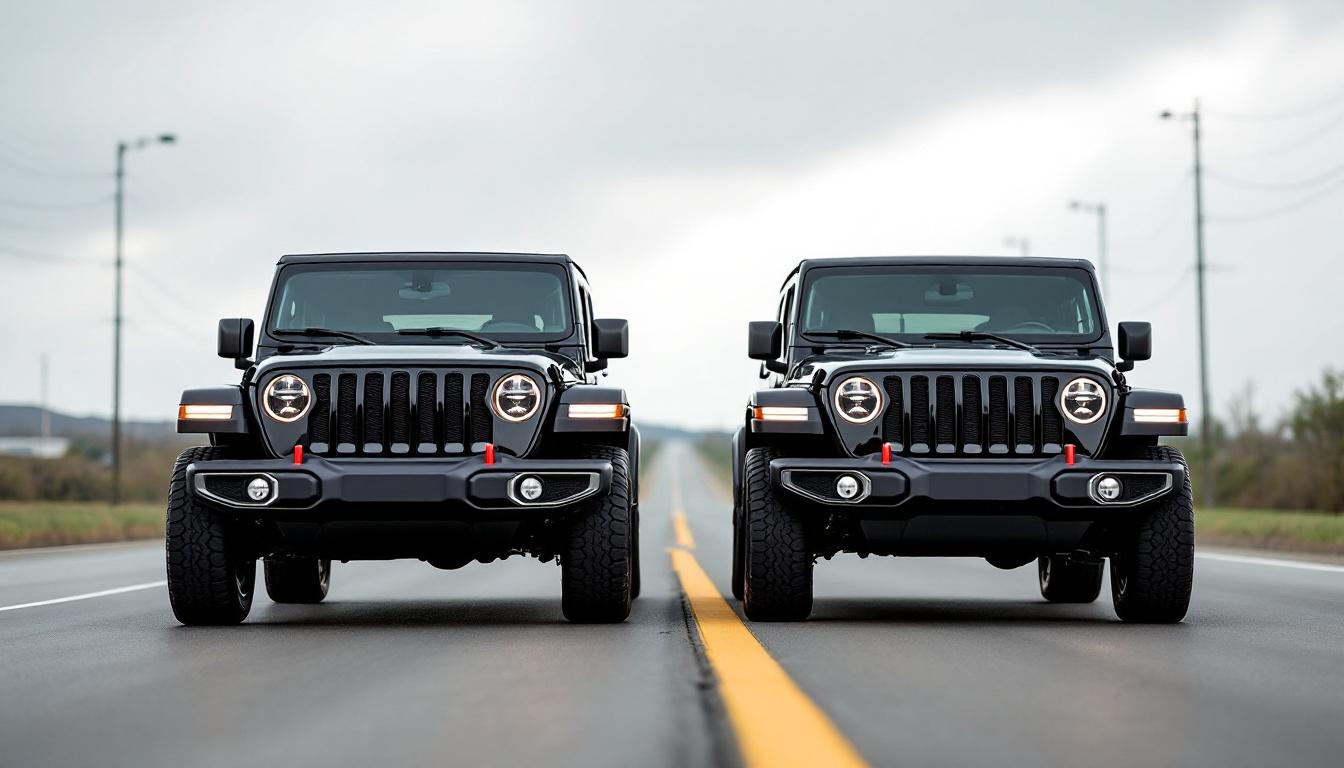
The JL replaced the JK in 2018. It’s newer, more refined, and more capable from the factory.
So why would anyone buy a JK in 2026?
The answer comes down to value, simplicity, and what you actually need.
Quick Comparison
| Feature | JK (2007-2018) | JL (2018+) |
|---|---|---|
| Base engine | 3.6L V6 (285 hp) | 3.6L V6 (285 hp) |
| Optional engines | None | 2.0L Turbo, 3.0L Diesel, 6.4L V8 |
| Transmission | 6-speed manual / 5-speed auto | 6-speed manual / 8-speed auto |
| Frame | Boxed steel | Lighter high-strength steel |
| Axles | Dana 30/44 (Dana 44/44 Rubicon) | Dana 30/35 or Dana 44/44 |
| Transfer case (Rubicon) | 4:1 Rock-Trac | 4:1 Rock-Trac |
| Curb weight (4-door) | ~4,400 lbs | ~4,200 lbs |
| Towing capacity | 3,500 lbs | 3,500 lbs |
| Used price range | $12,000-38,000 | $28,000-55,000+ |
Get new guides by email
One email when we publish something worth reading. Unsubscribe anytime.
Where the JL Wins
1. On-Road Manners
The JL is a significantly better daily driver:
- Quieter cabin (better insulation)
- Smoother ride (revised suspension geometry)
- Less wind noise (improved aerodynamics)
- Better steering feel
If you commute in your Wrangler, the JL is noticeably more comfortable.
2. Technology
The JL has modern tech:
- Uconnect 4 or 5 touchscreen
- Apple CarPlay / Android Auto (standard on most trims)
- Blind spot monitoring (available)
- Forward collision warning (available)
- LED headlights (standard on most trims)
The JK’s tech feels dated by comparison, though some owners prefer the simplicity.
3. Engine Options
The JL offers choices:
- 2.0L Turbo: Better fuel economy, strong low-end torque
- 3.0L EcoDiesel: Excellent torque and fuel economy for overlanding
- 6.4L V8 (392): 470 hp for those who want serious power
The JK only offered the 3.6L (and the weaker 3.8L in 2007-2011).
4. Transmission
The JL’s 8-speed automatic is excellent:
- Smoother shifts
- Better fuel economy
- More responsive
The JK’s 5-speed auto is fine, but feels dated by comparison.
5. Safety
The JL has modern safety features:
- Better crash structure
- More airbags
- Available advanced safety tech
The JK meets 2018 safety standards but lacks modern driver assists.
6. Folding Windshield
The JL windshield folds down much easier than the JK’s. If you actually fold your windshield, this matters.
7. Factory Lift Options (Xtreme Recon Package)
The JL Rubicon Xtreme Recon comes from the factory with:
- 35” tires
- 4.88 gears
- 1.5” factory lift
- Beadlock-capable wheels
You can’t get this from the factory on a JK.
Where the JK Wins
1. Price
This is the big one.
A 2014 JK Rubicon: $24,000-28,000 A 2020 JL Rubicon: $38,000-45,000
That’s $15,000+ difference for similar capability. The JK offers far more value per dollar.
2. Simplicity
The JK has:
- Fewer computers
- Simpler electrical system
- More mechanical components
This means:
- Easier to work on
- Fewer things to break
- Less expensive sensors and modules to replace
3. Parts Availability
The JK has been around since 2007. The aftermarket is massive:
- More lift kit options
- More bumper choices
- More armor options
- Cheaper prices due to competition
- More tire options at competitive prices
JL parts are catching up but still more expensive.
4. Depreciation
JK values have stabilized. You won’t lose much if you sell in a few years.
JLs are still depreciating. A 2020 JL loses value faster than a 2015 JK at this point.
5. Insurance Costs
Older vehicle = lower insurance premiums. The JK typically costs less to insure than a comparable JL.
6. Known Reliability
The JK’s issues are well-documented and understood:
- Death wobble: known causes and fixes
- TIPM issues: replacement available
- Pentastar quirks: documented solutions
- See common problems by year for comprehensive details
The JL is reliable so far, but it’s still accumulating real-world data.
Off-Road Capability Comparison
Stock vs Stock
Approach angle: JL wins slightly Departure angle: Similar Breakover angle: Similar Ground clearance: JL wins slightly (0.4”)
The JL has marginally better geometry from the factory, but the difference is negligible in practice.
Rubicon vs Rubicon
Both have:
- Dana 44 front and rear
- 4:1 transfer case
- Electronic lockers
- Electronic sway bar disconnect
The JL Rubicon adds:
- Wider track width
- Better approach angle
- Available 35” tires from factory
On the trail, a JK Rubicon and JL Rubicon perform similarly. The JL has refinement advantages, not capability advantages.
Reliability Comparison
JK Known Issues
- Death wobble: Worn steering/suspension components
- TIPM failures: Electrical module (2007-2013 mainly)
- 3.8L oil consumption: (2007-2011)
- Pentastar tick: (Early 2012)
All well-documented with known fixes and details. Also check our model year differences to understand which years are most susceptible.
Pros:
- Purpose-built for JK Wrangler ensures proper fitment and function
- Durable construction handles trail abuse and daily driving
- Backed by positive community reviews and trail-tested results
Cons:
- Premium pricing compared to generic aftermarket options
- May require longer lead times for specialty or popular items
- Some products require professional installation for best results
JL Known Issues
- ESS (Auto Start-Stop) complaints: Many owners disable it
- Clutch issues: Some manual transmission complaints
- Electrical gremlins: Complex systems can have glitches
- Weld quality: Some early 2018 models had weld concerns
The JL seems reliable overall, but the JK has a longer track record.
Daily Driver Comparison
Choose the JL if:
- Long highway commutes
- Noise bothers you
- You want modern tech
- Towing frequently
Choose the JK if:
- Short commutes or city driving
- You don’t mind some road noise
- Tech isn’t important
- Budget is a priority
Which Should You Buy?
Buy the JK If:
Budget is limited A well-sorted JK offers 90% of the capability at 60% of the price.
Pros:
- Purpose-built for JK Wrangler ensures proper fitment and function
- Durable construction handles trail abuse and daily driving
- Backed by positive community reviews and trail-tested results
Cons:
- Premium pricing compared to generic aftermarket options
- May require longer lead times for specialty or popular items
- Some products require professional installation for best results
You’re building a dedicated trail rig More affordable platform + cheaper parts = better build budget. See our lift kit guide for the best options for your build.
You prefer simplicity Fewer electronics, easier maintenance, more DIY-friendly.
You want maximum value Dollar-for-dollar, the JK is hard to beat.
Buy the JL If:
You can afford it The JL is objectively better in most measurable ways.
It’s your daily driver The improved comfort is worth paying for.
You want the latest safety features Modern crash structure and available driver aids.
You want a diesel or V8 Only available on the JL.
You plan to keep it 10+ years The JL will age better as a modern platform.
Best Value JK Mods That Bridge the Gap
If you choose the JK for value, these upgrades help close the capability gap with the JL while keeping your total investment reasonable.
Improve your suspension capability with a quality lift kit:
Upgrade to quality wheels that improve both appearance and capability:
Add recovery and trail capability with a quality winch system:

Smittybilt X2O 10K Winch
Check Price on Amazon →The Value Sweet Spot
Best JK value: 2013-2015 Rubicon with the 3.6L
- Pentastar engine bugs fixed
- Still reasonable prices
- Excellent capability
Best JL value: 2020-2021 Sport S or Willys
- Initial depreciation absorbed
- Modern features
- Good base for building
Real Talk
The JL is the better vehicle. It’s more refined, more capable, and more comfortable.
But “better” doesn’t always mean “smarter buy.”
If you have $40,000 and want a Wrangler, you can get:
- An OK JL Sport
- A pristine JK Rubicon with money left for mods
For many buyers, the JK makes more financial sense. Check our best year JK to buy guide to find exactly the right JK for your budget, and use our buying used JK checklist to evaluate any vehicle you’re considering.
The Bottom Line
JK: Best value, proven reliability, simpler ownership. Buy if budget matters or you’re building. See our trim comparison guide for which JK trim best suits your needs.
JL: Better in every way except price. Buy if you can afford it and want the best.
Both are real Wranglers. Both are extremely capable. Buy whichever fits your budget and needs.
Related Articles
- The Complete JK Buyer’s Guide - Everything you need to know before buying a JK
- Best Year JK to Buy - Which JK model years to target
- Rubicon vs Sport vs Sahara - Comparing JK trim levels
- JK Common Problems by Year - What to watch for on each model year
Frequently Asked Questions
Is the JK or JL better for off-roading?
They’re nearly identical in capability. Both Rubicon models have Dana 44 axles, 4:1 transfer case, and electronic lockers. The JL has slightly better approach angles and available factory 35” tires, but in real-world trail use, you won’t notice much difference. The JK’s cheaper price means more budget for upgrades.
How much cheaper is a JK than a JL?
Significantly cheaper. A 2014 JK Rubicon costs around $24,000-28,000, while a 2020 JL Rubicon costs $38,000-45,000. That’s $15,000+ difference for similar trail capability. Even comparing base models, JKs are roughly 40-50% cheaper than equivalent JLs.
Will JK parts become harder to find?
Unlikely anytime soon. The JK sold in huge numbers for 12 years, and the aftermarket is massive. Parts availability will remain excellent for decades. The JL aftermarket is catching up but parts are still more expensive than JK equivalents.
Is the JL more reliable than the JK?
It’s too early to say definitively. The JK’s issues are well-documented with known fixes after 15+ years of real-world data. The JL seems reliable so far, but complex modern electronics could develop issues as vehicles age. Both use the same proven 3.6L Pentastar engine.
Should I wait for JL prices to drop?
JL prices are dropping but slowly. A low-mileage JL will still cost significantly more than a comparable JK for years. If you want the JL’s modern features, buy now. If value matters more, the JK remains the better buy.
Can I daily drive a JK?
Yes, millions of people do. The JK is noisier and less refined than the JL, but it’s perfectly adequate for daily driving. If you have a short commute and don’t mind some road noise, the JK works fine. Long highway commutes favor the quieter JL. See our soft top vs hard top guide for tips on managing noise and comfort on daily commutes.
Free: JK Fluids at a Glance
Every fluid, spec and capacity for the 2007-2018 Wrangler JK on one page, plus a cut-out glovebox card. Checked against the owner's manuals. From the JK Service Kit.
Email me the download and new guides when they are published. Unsubscribe anytime. Privacy Policy.
Frequently Asked Questions
Should I buy a Jeep JK or JL in 2026?
Buy the JK if you want value and plan to modify heavily - parts are cheaper and more available. Buy the JL if you want the best daily driver experience, better fuel economy, and modern tech. The JL costs $10,000-15,000 more for similar condition and mileage.
Is the JL more reliable than the JK?
Both are reliable when maintained. The JL has a better 8-speed automatic transmission and improved build quality. The JK's 5-speed auto is the weak point, but the 6-speed manual is bulletproof in both generations.
Do JK parts fit a JL?
Some parts interchange but most don't. Soft tops, bumpers, wheels, and suspension components are different. The JL has a wider track and different mounting points. Always verify fitment before purchasing.
Which is better off-road, JK or JL?
The JL Rubicon has slightly better approach/departure angles and the same 4:1 transfer case. However, both are extremely capable. The JK's simpler electronics make it easier to modify, and aftermarket support is more mature.
Is a JK a better value than a JL for off-roading in 2026?
For pure off-road value, the JK wins — a 2015 JKU Rubicon costs $22,000-28,000 while an equivalent JL Rubicon is $38,000-45,000. The JK's aftermarket is more mature with more budget options. The JL has a nicer interior and better on-road manners, but for building a dedicated trail rig on a budget, the JK delivers more capability per dollar.
Allan
I'm Allan. I own a 2014 Jeep Wrangler JKU and I research the hell out of every mod before I touch it. When I've fitted something to my own Jeep, I say so. Everything else is researched from manufacturer specs and other owners' reports. No sponsored fluff.
Learn more about me →Free: JK Fluids at a Glance
Every fluid, spec and capacity for the 2007-2018 JK on one page, plus a glovebox card.
Email me the download and new guides when they are published. Unsubscribe anytime. Privacy Policy.
Related Articles
Jeep JK Rubicon Off-Road Capability: What the Factory Locker & Rock-Trac Package Actually Does
The Jeep Wrangler JK Rubicon is the factory-built, trail-ready variant of the 2007–2018 Wrangler. What separates it from every other JK trim is four...
Best Jeep JK Mods for Every Budget: From $50 Bolt-Ons to Full Builds
Jeep JK mods are aftermarket upgrades — from bolt-on accessories to full mechanical builds — that improve the capability, comfort, protection, or...
Best Jeep JK Accessories in 2026: The 15 Upgrades Every Wrangler Owner Actually Buys
Walk into any JK forum and you'll see the same pattern repeating. Someone buys a used 2014 JKU, gets excited about the possibilities, and immediately...