17 Inch vs 18 Inch Wheels Jeep Jk Fuel Economy Difference
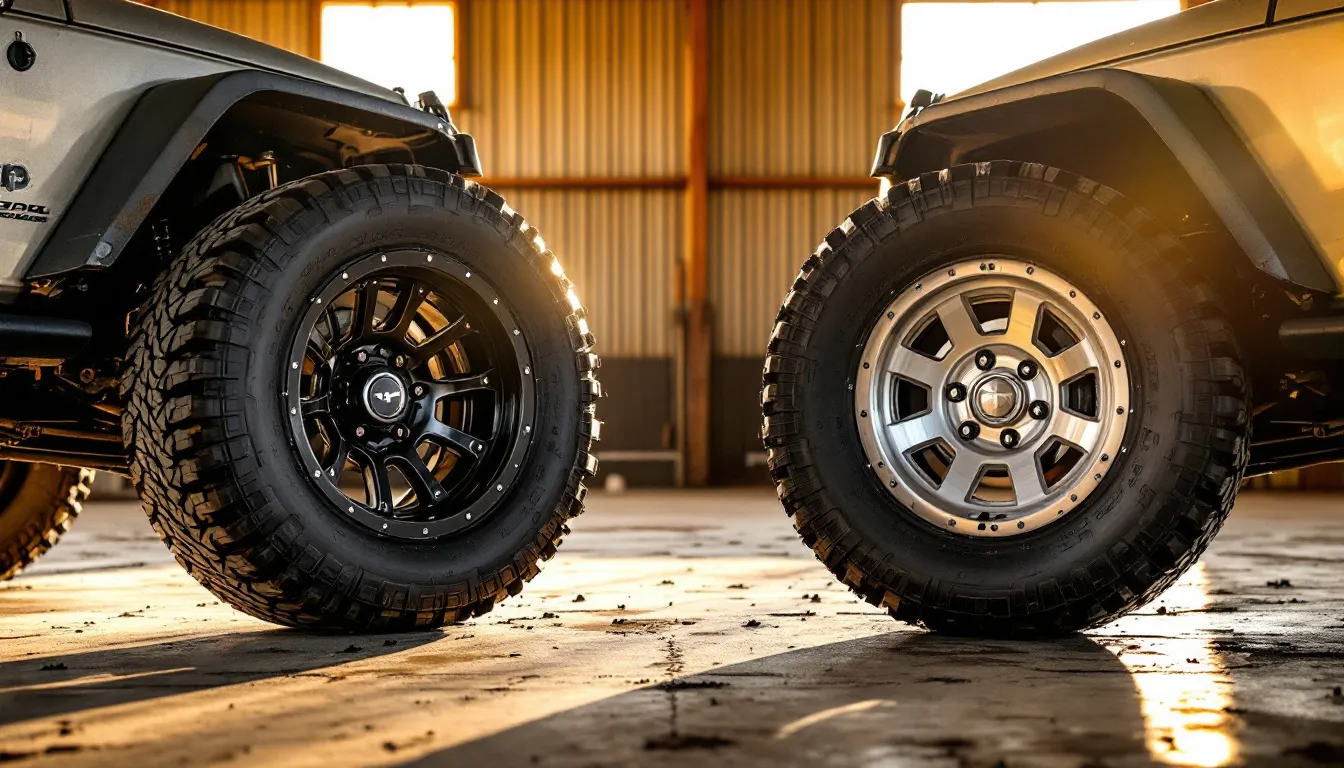
17 Inch vs 18 Inch Wheels Jeep JK Fuel Economy Difference
The question hits different depending on who’s asking. If you’re trying to squeeze another mile per gallon out of your JK during your daily commute, wheel diameter matters — but probably not the way you think it does. The 17 inch vs 18 inch wheels Jeep JK fuel economy difference is real but smaller than most owners expect — the tire you mount matters far more than the rim diameter itself.
Here’s the reality: on a 2007–2018 Jeep JK Wrangler, moving from a 17-inch to an 18-inch wheel of the same overall tire diameter adds rotational mass at the rim while reducing sidewall height. That extra unsprung weight costs you MPG, but community reports suggest the penalty is typically modest — often less than half a mile per gallon — when tire weight is held equal. The real fuel economy hit compounds when you pair a larger rim with a heavier mud-terrain tire and skip re-gearing your axles.
This guide pulls from real-world Jeep JK community knowledge rather than spec-sheet theory. Manufacturers don’t publish MPG data for every wheel-and-tire combo, so the most honest data comes from forum aggregation and owner-reported observations. No fabricated lab results here — just patterns that consistently emerge across thousands of JK builds.
Before digging in, check out our guides on choosing the right tire size for your Jeep JK and best tires for Jeep Wrangler JK for the full picture.
Get new guides by email
One email when we publish something worth reading. Unsubscribe anytime.
How Wheel Diameter Directly Affects Jeep JK Fuel Economy
Switching from 17-inch to 18-inch wheels on a Jeep JK affects fuel economy primarily through increased rotational mass and changed tire geometry — not through aerodynamics or gearing. Larger-diameter aluminum rims weigh more than smaller ones in the same material, and that extra weight sits at the worst possible location: the outermost rotating point of the drivetrain.
Here’s why that matters in practice. Your JK’s engine has to accelerate and decelerate every ounce of wheel and tire mass with every change in vehicle speed. A typical 17-inch aftermarket steel wheel weighs roughly 22–26 lbs; a comparable 18-inch wheel in aluminum might weigh 28–34 lbs. That’s 6–8 lbs more per corner — and you have four corners.
Heavier rotational mass at the wheel means your engine burns more fuel on every acceleration, even when the difference feels invisible on flat highway cruising. Community reports suggest most JK owners don’t notice the change on a steady-speed drive, but city driving — with its constant stop-and-go — is where the penalty shows up on the fuel gauge. The engine’s working harder to spin up those heavier wheels every time you step on the throttle.
The 18-inch wheel also forces a lower aspect ratio tire (say, 285/35R18 vs 285/70R17). Less sidewall means less air-cushion compliance, which can actually help slightly at highway speeds by reducing flex losses. But it eliminates the sidewall flex that off-road JK owners prize. The net fuel-economy difference between 17 and 18-inch rims, all other things equal, is small — but “all other things equal” rarely applies in real JK builds.
For owners prioritizing weight savings, lightweight aluminum wheels for Jeep JK are worth comparing carefully before committing to either diameter.
Tire Choice Matters More Than Rim Size for MPG
Here’s the hard truth: if you’re trying to minimize fuel economy loss on your Jeep JK, the tire you mount is a bigger variable than whether you choose 17-inch or 18-inch rims. A heavy mud-terrain tire on a 17-inch wheel will hurt your MPG more than a lighter all-terrain tire on an 18-inch wheel — every time.
Tire weight beats rim diameter as the dominant fuel economy factor in any JK wheel-and-tire combination.
Consider a tire like the Atturo Trail Blade MTS mud-terrain radial in 37X12.50R17LT. It’s a beefy 8-ply load-range D mud-terrain that — by its nature — carries significant mass. Mounting it on a 17-inch rim doesn’t give you a MPG advantage over a lighter 18-inch setup; the tire’s rotational weight more than cancels any rim savings. That’s the trap many JK owners fall into: they assume staying at 17 inches protects their fuel economy, then mount the heaviest tire on the market and wonder why the pump bill climbed.
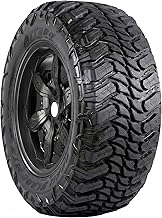
Atturo Trail Blade MTS M/T Mud Off-Road Light Truck Radial Tire-37X12.50R17LT
Check Price on Amazon →Tread pattern also plays a real role. Aggressive mud-terrain lugs generate rolling resistance that costs MPG regardless of rim size. Community reports — not controlled testing — consistently show that switching from a highway-terrain or all-terrain tire to a mud-terrain costs more MPG than any rim diameter swap. It’s not close.
The practical takeaway: if fuel economy is a real priority, focus your budget on a lighter all-terrain tire rather than agonizing over 17 vs 18 inches. Check the best rock crawling tires for Jeep JK and best all-terrain tires for Jeep Wrangler JK to compare weight specs before you buy.
17-Inch vs 18-Inch Wheels on Jeep JK: Side-by-Side Comparison
When choosing between 17 and 18-inch wheels for a Jeep JK, the differences in fuel economy, off-road capability, and cost are meaningful but not dramatic — with re-gearing being the single biggest factor that can swing the outcome either way.
| Feature | 17-Inch Wheel | 18-Inch Wheel |
|---|---|---|
| Typical wheel weight (aluminum) | 20–26 lbs | 26–34 lbs |
| Common aspect ratio (35” tire) | 70–75 series | 35–45 series |
| Estimated MPG impact vs stock | -0.5 to -1.5 MPG | -1.0 to -2.0 MPG |
| Sidewall flex (off-road) | Higher — better for crawling | Lower — less trail compliance |
| Off-road tire selection | Wider — more options at 17” | Narrowing — fewer M/T choices |
| Price range (aftermarket) | $100–$250/wheel | $150–$350/wheel |
| Re-gear typically required? | At 35”+ tires, yes | At 35”+ tires, yes |
The most fuel-economy-critical row is the estimated MPG impact. Neither wheel size avoids a fuel penalty once you move past stock tire dimensions — the 18-inch setup tends to run slightly heavier and costs a bit more at the pump, but the gap is narrow. Re-gearing, covered next, is the intervention that actually recovers MPG regardless of which diameter you choose.
For guidance on the right axle ratio, see best gear ratio for larger tires on Jeep JK.
How Gearing and Lift Kits Compound the Fuel Economy Penalty
Wheel size doesn’t operate in isolation — the real fuel economy hit on a Jeep JK comes when larger wheels combine with a stock gear ratio and a suspension lift. Together, these three variables multiply each other’s penalties rather than simply adding.
When you run taller tires, your effective gear ratio goes numerically lower, meaning the engine works harder at any given speed. JK owners consistently report that this is the modification that finally makes the fuel penalty noticeable — not the wheels alone. Stock Sport and Sahara models run a 3.21:1 or 3.73:1 axle ratio; the Rubicon comes better positioned at 4.10:1. Either way, fitting 35-inch or larger tires without re-gearing leaves the engine lugging at highway speeds, spinning faster for the same distance traveled.
Re-gearing to 4.88:1 (for 35-inch tires) or 5.13:1 (for 37-inch tires) is the single most effective countermeasure for recovering lost fuel economy after a wheel and tire upgrade. I’ve watched this play out across countless build threads — the re-gear is where the real MPG recovery happens.
A kit like the Yukon Gear & Axle 4.88 ratio set for non-Rubicon JKs addresses the root cause directly — restoring the engine’s operating RPM at highway speed to something close to the stock configuration.
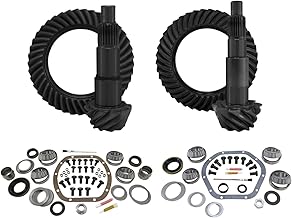
Yukon Gear & Axle - Gear & Install Kit for Jeep JK non-Rubicon 4.88 Ratio
Check Price on Amazon →Lift kits add another layer of complexity. A suspension lift raises the body, increases aerodynamic profile slightly, and often comes with heavier control arms and hardware — all factors that compound the rotational mass problem. A 2.5” Rough Country lift kit for 2007–2018 JK and JKU (part 67930) is a popular option for best lift kits for daily driving a Jeep JK and is a reasonable starting point — but expect a modest additional MPG cost from the increased frontal area and component mass.
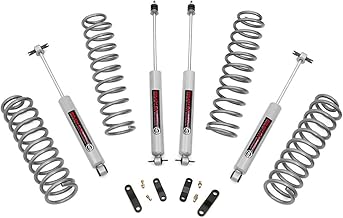
2.5" Lift Kit for 2007-2018 Jeep Wrangler JK Unlimited - 67930
Check Price on Amazon →For the full installation process, the how to install a lift kit on your Jeep JK guide walks through what’s involved. And if you’re pushing heavier loads through your axles, a Dana 44 axle upgrade for Jeep JK may become relevant as a durability investment alongside the gear swap.
Real-World MPG Expectations: What Jeep JK Owners Actually Report
The honest answer to “how much MPG will I lose?” is: it depends on too many variables for a single number to be reliable. But forum consensus gives you a useful ballpark to work with.
Most JK owners report that a stock 2-door JK with a 3.8L or 3.6L Pentastar gets somewhere in the mid-to-high teens on the highway and low-to-mid teens in city driving. When you add 35-inch tires (either 17 or 18-inch), community data suggests a drop of roughly 1–2 MPG compared to stock. Add mud-terrain tires and skip the re-gear, and some owners report losses closer to 3–4 MPG. These figures come from aggregating Jeep forums rather than controlled testing — an honest acknowledgment that aligns with how this site approaches research: community knowledge over spec-sheet fiction.
Forum consensus suggests that 4-door JKU models (heavier, longer) experience slightly more pronounced MPG drops than 2-door JKs under the same tire and wheel changes, simply because the drivetrain is already working harder at stock. It makes sense if you think about it — more mass to move means less margin before losses become noticeable.
Drivetrain maintenance also plays a quiet role that gets overlooked. Running a well-maintained transmission cooler and fresh gear oil keeps the drivetrain operating efficiently regardless of wheel diameter — small savings that add up over time and miles.
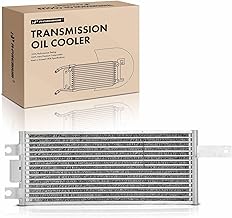
A-Premium Transmission Oil Cooler Compatible with Jeep Wrangler JK 2012-2018, 3.6L
Check Price on Amazon →For size-specific context, our best 35-inch tires for Jeep JK guide compares tire weights directly, and 33-inch tire options for stock and lifted JKs covers the sweet spot for owners who want capability without a steep MPG penalty.
Wheel Spacers, Fitment, and Other Variables That Affect MPG
Wheel spacers are often overlooked in the fuel economy conversation, but they add unsprung rotational mass at the worst possible location — right at the hub — and that compounds the penalty already introduced by a larger rim.
Hub-centric spacers add mass at the outermost rotating point of the drivetrain, compounding the rotational weight penalty already introduced by a larger rim. Think of it this way: every fraction of a pound sitting at the wheel’s outer edge works against you harder than the same weight would at the center.
Spacers are common on Jeep JK builds for fitment clearance, especially when running wider aftermarket wheels. A set of 1.5-inch hub-centric spacers like the Orion Motor Tech 5x5 kit — compatible with JK, Grand Cherokee, and Commander applications — weighs several pounds per corner. Multiply that across four wheels and you’ve added meaningful rotating mass even before you factor in the new rim and tire.
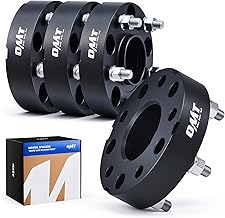
Orion Motor Tech 5x5 Wheel Spacers Compatible with Jeep JK, Grand Cherokee, Commander - 1.5"
Check Price on Amazon →Trim level also matters more than people realize. The Rubicon’s factory 4.10:1 axle ratio gives it a head start over the Sport (3.21:1) and Sahara (3.73:1) when absorbing the penalty of larger tires. If you’re on a non-Rubicon JK and considering 18-inch wheels with 35-inch tires, the gearing gap is wider and the fuel economy impact will be more noticeable until you re-gear. The math is straightforward — lower ratios mean more RPM at speed, which means more fuel burn.
For fitment guidance, see safe wheel spacer options for Jeep JK fitment. If you’re exploring beadlock-capable wheels (which add significant weight), beadlock wheels for Jeep JK covers the trade-offs honestly.
Frequently Asked Questions: 17 vs 18 Inch Wheels and Jeep JK Fuel Economy
These are the questions Jeep JK owners search most often when weighing wheel size against daily drivability. Answers draw on community consensus rather than controlled lab data — the most honest source available for real-world builds.
Q: Do 18-inch wheels always get worse fuel economy than 17-inch on a JK?
Not automatically. The 18-inch wheel is typically heavier, which adds rotational mass and a modest fuel penalty — but the tire choice matters more. A lightweight all-terrain tire on an 18-inch rim can outperform a heavy mud-terrain tire on a 17-inch rim in MPG terms. Community data suggests the rim diameter difference alone is worth less than 0.5 MPG when tire weight is comparable. The tire is doing most of the work in this equation.
Q: How much MPG will I lose going from stock 17-inch to aftermarket 18-inch wheels with 35-inch tires?
Forum consensus suggests most owners see a 1–2 MPG drop on the highway when moving to 35-inch tires, regardless of whether the rim is 17 or 18 inches. The bigger variable is whether you re-gear. Without a gear ratio correction, the penalty can climb higher — particularly in stop-and-go driving. No controlled test data exists for this specific swap; these figures come from aggregated owner reports across dozens of forum threads.
Q: Does re-gearing fully offset the fuel economy loss from larger wheels on a Jeep JK?
Re-gearing to the correct ratio (typically 4.88:1 for 35-inch tires on non-Rubicon JKs) recovers most of the highway MPG loss by restoring the engine’s operating RPM range. Most JK owners report that a proper re-gear gets them close to — but not exactly at — their pre-upgrade fuel economy. Tire weight and rolling resistance still play a role that gearing alone can’t fix. For axle durability alongside re-gearing, see axle shaft upgrades for Jeep JK.
Q: Are 17-inch wheels better for off-road on a Jeep JK?
Generally, yes. The taller sidewall of a 17-inch tire setup provides more sidewall flex for low-pressure crawling, better rock-climbing compliance, and more tire-selection options in aggressive tread patterns. The 18-inch wheel’s lower aspect ratio reduces that compliance — you’ll feel the difference in rocky terrain. For trail use, 17 inches is the stronger choice — fuel economy just isn’t the deciding factor there.
Q: What is the best tire and wheel combo to minimize fuel economy loss on a JK?
The lightest possible aluminum 17-inch wheel paired with an all-terrain tire in the 33–35 inch range, combined with a correct axle re-gear, gives the best balance of capability and MPG. Avoid mud-terrain tires on daily drivers if fuel economy matters to you — the rolling resistance penalty is real and consistent across community reports. You’re fighting physics; this combo lets you lose the least ground doing it.
The Bottom Line: Which Wheel Size Is Right for Your Jeep JK?
For most 2007–2018 Jeep JK owners, 17-inch wheels offer better off-road tire selection, more sidewall compliance, and slightly lower rotational mass — making them the practical default for builds that see both trail and street use.
Eighteen-inch wheels aren’t a mistake, but they come with a narrower tire selection, typically higher wheel weight, and a marginally larger fuel economy penalty. If aesthetics or a specific wheel style drives the choice, go for it — just budget for re-gearing and choose your tire wisely.
Whatever diameter you choose, re-gearing your axles to match your new tire size is the single most impactful step you can take to recover lost fuel economy. Don’t skip it, and don’t budget low — this is where the real efficiency gains happen.
Trail preparedness matters too. Running larger wheels on a JK means leaning on your kit when things go wrong. An inline flat tire repair kit like the AUTOWN 54-piece set with integrated air compressor is good insurance for any build, and a rear axle bearing and seal kit covering all 2007–2017 JK and JKU model years is worth keeping in the garage before problems surface.
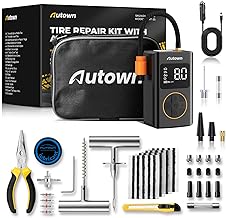
AUTOWN Flat Tire Repair Kit with Air Compressor 54 Pieces for Car, Motorcycle, ATV, Jeep, Truck
Check Price on Amazon →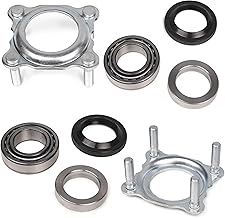
2pcs Rear Axle Bearing and Seal Kit Compatible with Jeep Wrangler JK/JKU 2007-2017
Check Price on Amazon →Your next step: head to the selecting the right gear ratio for your JK tire upgrade guide, then circle back to look at other performance mods that affect Jeep JK fuel economy before finalizing your build plan.
Free: JK Fluids at a Glance
Every fluid, spec and capacity for the 2007-2018 Wrangler JK on one page, plus a cut-out glovebox card. Checked against the owner's manuals. From the JK Service Kit.
Email me the download and new guides when they are published. Unsubscribe anytime. Privacy Policy.
Allan
I'm Allan. I own a 2014 Jeep Wrangler JKU and I research the hell out of every mod before I touch it. When I've fitted something to my own Jeep, I say so. Everything else is researched from manufacturer specs and other owners' reports. No sponsored fluff.
Learn more about me →Free: JK Fluids at a Glance
Every fluid, spec and capacity for the 2007-2018 JK on one page, plus a glovebox card.
Email me the download and new guides when they are published. Unsubscribe anytime. Privacy Policy.
Related Articles
Jeep JK Regear vs Locker: Which Upgrade Comes First?
Ask ten JK owners which comes first — a regear or a locker — and you'll get the same answer from nine of them: regear first, locker second.

Jeep JK Towing Capacity: What Can Your Wrangler Actually Pull?
Your Jeep JK can tow more than you might think — but probably less than you want to. The factory ratings are straightforward: 2,000 lbs for the 2-door...
How to Choose Tire Size for Jeep Jk Lift Kit Compatibility
Lift kit and tire size compatibility is straightforward in concept but trips up a lot of JK owners in practice: the amount of suspension height you add...