Best Throttle Body Spacer for Jeep JK: Do They Really Work?
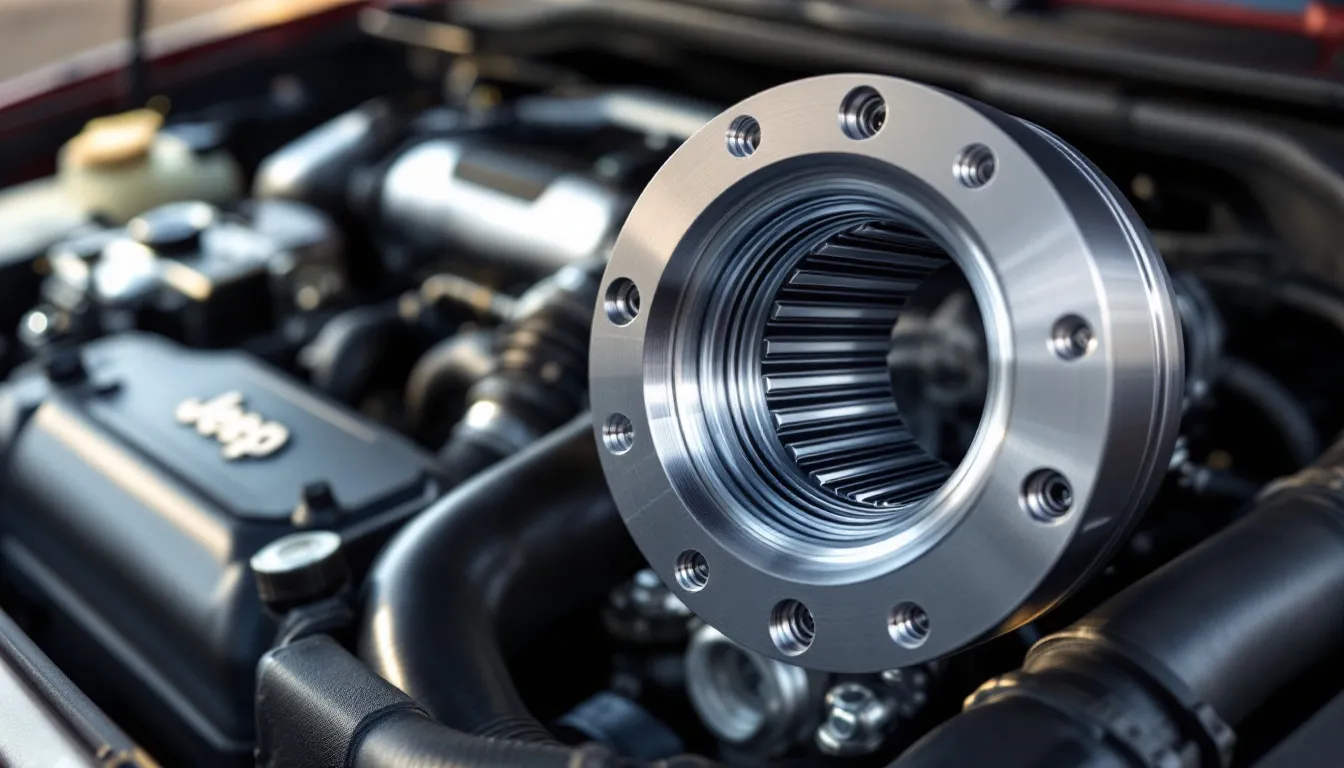
Best Throttle Body Spacer for Jeep JK: Do They Really Work?
You’ve seen the ads promising “instant horsepower” and “improved throttle response” from a simple bolt-on throttle body spacer. Maybe you’ve read forum posts where owners swear they feel a difference, while others call it snake oil. The truth about the best throttle body spacer for jeep jk installations falls somewhere in the middle—and that’s exactly what we’re going to unpack here.
When I started building my knowledge base for this site, I made a commitment: no regurgitated spec sheets, no manufacturer marketing copy dressed up as advice. I dig into real-world community knowledge—forum threads with 200+ replies, YouTube comments from actual installers, Facebook groups where owners share what actually happened after the mod. That research-first philosophy means you’re getting the unvarnished truth about throttle body spacers, not another “top 10” list copied from the last ten sites you visited.
Here’s what you need to know upfront: most quality throttle body spacers show 1-3 horsepower gains on the dyno. That’s real, but it’s not transformative. Some drivers report noticeably improved throttle response—a subjective experience that doesn’t always show up in dyno numbers but matters for daily driving feel. This article will help you understand the science, manage your expectations, and decide if this $50-150 mod makes sense for your specific JK setup.
Do Throttle Body Spacers Actually Work? The Science Behind the Claims
Let’s cut through the marketing hype and talk physics. A throttle body spacer creates additional space between your throttle body and intake manifold. The theory: this extra volume creates a longer, smoother air pathway that reduces turbulence and improves air/fuel mixing. Most independent dyno tests show 1-3 horsepower gains—measurable but modest improvements that won’t dramatically change how your JK drives.
The real question isn’t “do throttle spacers work” but rather “do they work enough to justify the cost?” For context, 2 HP on a stock 3.6L Pentastar (285 HP) represents about a 0.7% increase. You won’t feel that at the butt-dyno. What some drivers do report is improved throttle response—the engine feels more eager when you press the pedal. This subjective improvement likely comes from subtle changes in airflow characteristics rather than raw power gains.
Here’s why the science gets complicated: Modern engines like the JK’s 3.6L Pentastar use sophisticated engine management systems that constantly adjust fuel delivery and ignition timing. The computer compensates for airflow changes, which limits how much impact a simple spacer can have. Older carbureted engines saw bigger gains from throttle body spacers because they lacked this electronic compensation.
The placebo effect is real in the automotive world. When you’ve just installed a new part and spent money on it, your brain wants to feel an improvement. Improved throttle response is subjective but real for some drivers—just understand that “feels faster” and “is faster” aren’t always the same thing. If you’re chasing significant power gains, you’d see better returns from a cold air intake, exhaust system, or engine tune. If you want a low-cost, easy-to-install mod that might sharpen throttle response slightly, a spacer could be worth trying.
The bottom line: throttle body spacers work, but they work within very modest parameters. They’re not magic, they won’t transform your JK’s performance, and anyone promising 10+ HP is selling fantasy. What they can do is provide a small, measurable improvement in airflow efficiency that some drivers appreciate during daily driving.
JK 3.6L Pentastar vs 3.8L Compatibility: What You Need to Know
Before you order a 3.6 throttle body spacer, you need to understand that not all JK throttle bodies are created equal. The critical dividing line is model year: 2007-2011 JKs came with the 3.8L V6, while 2012-2018 models use the 3.6L Pentastar V6. These engines have completely different throttle body designs, which means different spacer requirements.
2012-2018 JK (3.6L Pentastar): The Pentastar uses a drive-by-wire electronic throttle body with a 62mm bore. Most aftermarket spacers for this engine are designed specifically for the electronic throttle body configuration. You’ll want a spacer that maintains proper clearance for the throttle blade sensors and doesn’t interfere with the throttle position sensor (TPS) wiring. The bolt pattern is specific to the Pentastar, so don’t try to force a 3.8L spacer onto this engine.
2007-2011 JK (3.8L V6): The older 3.8L also uses electronic throttle control, but with a different throttle body design and bolt pattern. Spacers for this engine are less common in the aftermarket because the 3.8L has a reputation for being less responsive to bolt-on modifications. If you own a 3.8L JK, verify compatibility carefully before purchasing—many spacers marketed for “JK” applications are actually designed for the more popular Pentastar engine.
Key compatibility checks before buying:
- Verify your engine: Open your hood and check the engine cover. “3.6L” is clearly marked on Pentastar engines. If you’re not sure, your VIN will confirm which engine you have (2012+ = Pentastar).
- Check bolt pattern: Throttle body bolt patterns differ between engines. A spacer designed for one won’t physically bolt to the other.
- Electronic compatibility: Both engines use drive-by-wire throttle control. Quality spacers maintain proper clearances for sensors and wiring harnesses.
- Gasket requirements: Always use a new gasket when installing a spacer. Don’t reuse the old one—vacuum leaks will cause rough idle and check engine lights.
The 3.6L Pentastar responds slightly better to throttle body spacers than the 3.8L, which is one reason most aftermarket development focuses on 2012+ models. If you’re shopping used and considering multiple JK model years, this is worth factoring into your decision. For a deeper dive into the differences between JK generations, check out our JK model year differences guide.
Top Throttle Body Spacers for Jeep JK: A Reality Check
Here’s where we need to pump the brakes and have an honest conversation. When you search for the best throttle body spacer for jeep jk, you’ll find dozens of product roundups listing everything from actual throttle body spacers to wheel spacers and suspension leveling kits. That’s not helpful, and it’s not what you’ll get here.
The throttle body spacer market for JKs is surprisingly limited compared to more popular platforms like the Ford F-150 or Chevy Silverado. You’ll find a handful of reputable manufacturers making quality spacers, and dozens of generic Chinese-made options flooding Amazon and eBay. Rather than recommend specific products that may be discontinued or unavailable by the time you read this, let’s focus on what you should look for when evaluating options.
Key criteria for choosing a quality throttle body spacer:
Material matters: Look for CNC-machined aluminum or stainless steel construction. Aluminum is lighter and dissipates heat effectively, preventing heat soak that can reduce performance. Avoid plastic spacers—they’re cheaper but can warp under engine heat and create vacuum leaks.
Anodized finish: A quality anodized coating protects against corrosion and looks professional. This isn’t just cosmetic—corrosion can cause the spacer to bind or create rough surfaces that disrupt airflow.
Helix or spiral design: Many spacers feature internal spiral grooves that supposedly create a “vortex” effect in the incoming air. The jury’s still out on whether this design provides measurable benefits, but it doesn’t hurt and quality manufacturers include it.
Complete hardware kit: Your spacer should include new gaskets, extended bolts (if needed), and installation instructions. If you have to source gaskets separately, factor that into your total cost.
Manufacturer reputation: Stick with brands known in the Jeep community. If you can’t find forum posts or YouTube videos from actual JK owners who’ve installed the spacer, that’s a red flag.
Realistic claims: If the marketing copy promises 15 HP gains or dramatically improved fuel economy, walk away. Honest manufacturers cite modest gains (2-5 HP) or focus on throttle response improvements rather than making wild power claims.
The most important thing to understand: a throttle body spacer is a marginal gains modification. You’re not choosing between a “good” spacer that adds 10 HP and a “bad” one that adds nothing. You’re choosing between well-made spacers that deliver 1-3 HP with proper fitment, and poorly-made ones that might create vacuum leaks or fitment issues. Focus on quality, compatibility, and realistic expectations rather than chasing the “best” product based on exaggerated marketing claims.
The Rough Country Throttle Body Spacer for Jeep Wrangler JK/JL&JT is specifically designed for the 3.6L engine and represents the type of quality, JK-specific design you should look for. Here’s a closer look at what this option offers:

Rough Country Throttle Body Spacer for Jeep Wrangler JK/JL&JT | 3.6L - 10561,Black
$59.95
Check Price on Amazon →How Hard Is It to Install a Throttle Body Spacer?
Good news: installing a throttle body spacer on your JK ranks among the easier bolt-on modifications you can tackle in your driveway. If you can change your oil and aren’t intimidated by a few engine bay bolts, you can handle this installation. Most experienced DIYers complete the job in 30-45 minutes. First-timers might need an hour.
Basic installation process (simplified overview):
-
Disconnect the battery negative terminal. This prevents any electrical issues while working around the throttle body sensors. Wait at least 5 minutes after disconnecting to let residual charge dissipate.
-
Remove the air intake tube. Loosen the clamp at the throttle body and any mounting brackets holding the intake tube in place. Gently pull the tube off the throttle body—you may need to wiggle it slightly if it’s tight.
-
Unbolt the throttle body. You’ll find 4 bolts holding the throttle body to the intake manifold. Use a socket wrench to remove them. Support the throttle body with one hand as you remove the final bolt so it doesn’t drop.
-
Remove the old gasket. Carefully scrape away any remnants of the old gasket from both the throttle body and intake manifold surfaces. Use a plastic scraper, not metal, to avoid scratching the mating surfaces. Any debris or gasket material left behind can cause vacuum leaks.
-
Install the spacer with new gaskets. Place one new gasket on the intake manifold, position the spacer, then add another gasket before reinstalling the throttle body. Some spacers include one thick gasket instead of two thin ones—follow the manufacturer’s instructions. The MAHLE G32367 Gasket provides a quality replacement option if you need additional gaskets or replacements.
-
Torque bolts to spec. Reinstall the 4 throttle body bolts and tighten them in a cross pattern (like lug nuts) to ensure even pressure. Check your spacer’s instructions for torque specs—typically 88-110 inch-pounds for JK throttle bodies. Always use a new gasket—reusing the old one is the #1 cause of post-installation problems.
-
Reinstall the air intake tube and reconnect the battery. Double-check that all electrical connectors are secured and the intake tube clamp is tight.
-
Start the engine and check for vacuum leaks. Listen for hissing sounds and watch for rough idle or check engine lights. If the engine idles smoothly, you’re good to go.

What you’ll need:
- Socket set (typically 10mm for throttle body bolts)
- Torque wrench (optional but recommended)
- Plastic scraper for gasket removal
- Clean rags
- 30-60 minutes
The installation is straightforward, but precision matters. If you overtighten the bolts, you can crack the spacer or warp the gasket surfaces. If you undertighten them, you’ll get vacuum leaks. Take your time with the gasket removal—any leftover material creates air leaks that cause rough idle and trigger check engine lights.
What Performance Gains Can You Realistically Expect?
Let’s talk numbers, because managing expectations is critical to avoiding buyer’s remorse. When you install a throttle body spacer on your JK, you’re not unleashing hidden horsepower—you’re making a minor efficiency improvement to an already well-designed intake system.
Dyno-proven gains: Independent dyno tests on JK 3.6L Pentastar engines consistently show 1-3 horsepower gains at peak RPM from quality throttle body spacers. Some tests show as much as 5 HP, but 2-3 HP is the more common result. On a 285 HP engine, that’s roughly a 1% improvement. You will not feel this difference during normal driving. It’s measurable on a dyno, but not noticeable to your butt-dyno.
Torque improvements: Some dyno charts show 2-4 lb-ft of torque gain in the mid-range, typically between 2,500-4,000 RPM. Again, this is modest. If you’re towing at the upper limits of your JK’s capacity, you might—might—notice slightly less throttle hunting on grades. But we’re talking marginal differences.
Throttle response (the subjective part): Here’s where things get interesting and controversial. A significant number of JK owners report that their throttle feels “sharper” or more responsive after installing a spacer, even when dyno numbers don’t show dramatic gains. Why? Several possible explanations exist.
First, airflow smoothing might reduce throttle lag in the low RPM range where dyno tests often don’t focus. Second, even a minor power increase at the exact RPM where you typically press the accelerator could feel more noticeable than peak power gains would suggest. Third, the placebo effect is powerful—when you’ve just installed a mod, your brain is primed to notice improvements.
Does it matter if the improved throttle response is partly psychological? Not really. If your JK feels more responsive to you and you’re happy with the $100 you spent, the mod was worth it. Just don’t expect to win any stoplight races or dramatically change your 0-60 time (which is approximately never going to happen in a JK anyway).
Fuel economy claims: Manufacturers sometimes claim improved fuel economy from better air/fuel mixing. In reality, most JK owners report no measurable MPG change. Any theoretical efficiency gains are so small they’re lost in the noise of driving variables like tire size, wind, temperature, and driving style. Don’t buy a throttle body spacer expecting to save money on gas—it won’t happen.
The honest value proposition: A throttle body spacer is a low-cost, easy-to-install modification that provides a tiny, measurable improvement in peak horsepower and might make your throttle feel slightly more responsive during daily driving. That’s it. If you’re chasing serious power gains, save your money for a cold air intake, exhaust system, or engine tune. If you’re building a collection of minor improvements that add up to a slightly more refined driving experience, a throttle body spacer is a reasonable piece of that puzzle.
The key is knowing what you’re buying. You’re not buying 15 HP. You’re buying 2 HP, possible throttle response improvement, and the satisfaction of having optimized one more component of your JK’s engine. For some owners, that’s worth $100. For others, it’s not. Neither answer is wrong.
Throttle Body Spacer Buying Guide: What to Look For
Shopping for a jeep jk throttle spacer shouldn’t be overwhelming, but you need to separate quality products from junk. Use this checklist to evaluate options and avoid common pitfalls that lead to vacuum leaks, check engine lights, or wasted money.
Material quality and construction: CNC-machined aluminum is the gold standard. It’s lightweight, resists heat, and maintains precise tolerances that prevent vacuum leaks. Stainless steel works but adds unnecessary weight. Avoid plastic spacers entirely—they’re cheap for a reason and can warp under engine heat, creating air leaks that cause rough idle and poor performance.
Surface finish: Look for a spacer with smooth, clean machined surfaces where it mates with the throttle body and intake manifold. Rough surfaces or machining marks can prevent proper gasket sealing. A quality anodized finish protects against corrosion and looks professional, but the critical factor is surface flatness for gasket sealing.
Bolt pattern compatibility: Verify that the spacer is specifically designed for your engine (3.6L Pentastar or 3.8L). The bolt patterns are different, and a spacer designed for the wrong engine won’t physically install. Look for clear compatibility information in the product listing—“2012-2018 JK with 3.6L Pentastar” is what you want to see if you own a newer JK.
Complete hardware package: A quality kit includes everything needed for installation: new gaskets (sometimes two, sometimes one thicker gasket), extended bolts if required, and clear installation instructions. If the spacer ships without gaskets, you’ll need to source them separately—factor that into your total cost and installation timeline.
Realistic performance claims: This is your BS detector. If the marketing copy promises 15+ HP gains, run away. Honest manufacturers cite 2-5 HP gains or focus on throttle response improvements. Wild claims indicate either dishonest marketing or poorly-designed products that haven’t been properly tested.
Customer reviews from actual JK owners: Don’t just trust Amazon star ratings—read detailed reviews from verified purchasers who own JKs. Look for comments about fitment, gasket quality, and whether the bolts lined up properly. If multiple reviewers mention vacuum leaks or fitment issues, that’s a red flag.
Price point sweet spot: Expect to pay $50-150 for a quality throttle body spacer. Anything under $40 is probably generic Chinese manufacturing with questionable quality control. Anything over $200 is probably overpriced based on brand markup rather than superior performance. The $75-125 range typically offers the best balance of quality and value.
Warranty and return policy: A manufacturer confident in their product will offer at least a 90-day warranty. Amazon’s return policy provides some protection, but a manufacturer warranty suggests they stand behind their claims and quality.
Take your time with this purchase. A throttle body spacer is cheap enough that you might be tempted to impulse-buy the first option you see, but spending an extra 20 minutes researching will help you avoid the frustration of vacuum leaks, check engine lights, or fitment issues that turn an easy install into a troubleshooting nightmare.
Common Mistakes to Avoid When Installing a Throttle Body Spacer
Even though this is a straightforward installation, a few critical mistakes can turn a simple bolt-on mod into a frustrating troubleshooting session. Here’s what not to do:
Reusing the old gasket. This is the #1 cause of post-installation problems. Old gaskets compress and take the shape of the original mating surfaces. When you add a spacer, those surfaces change. Reusing the old gasket creates air leaks that cause rough idle, loss of power, and check engine lights. Always use the new gasket(s) included with your spacer.
Forgetting to clean the mating surfaces. Old gasket material, dirt, or oil on the throttle body or intake manifold surfaces prevent proper sealing. Use a plastic scraper (not metal—you don’t want to scratch the surfaces) and brake cleaner to remove every trace of the old gasket before installing the spacer.
Over-tightening the throttle body bolts. Yes, you want the bolts snug to prevent vacuum leaks. But over-tightening can crack the spacer, strip threads in the intake manifold, or warp the gasket surfaces. Use a torque wrench if you have one, and follow the manufacturer’s torque spec (typically 88-110 inch-pounds). If you don’t have a torque wrench, tighten the bolts firmly but not aggressively—this isn’t a lug nut.
Tightening bolts in the wrong sequence. Always tighten throttle body bolts in a cross pattern (opposite corners, then the remaining two) to distribute pressure evenly. Tightening them in a circle can warp the gasket and create vacuum leaks on one side.
Skipping the battery disconnect step. Working around the throttle body with the battery connected risks triggering electrical faults or damaging sensors. Disconnect the negative terminal before starting and wait 5 minutes for residual charge to dissipate.
Not checking for vacuum leaks after installation. Start your engine and listen carefully for hissing sounds around the throttle body. A smooth idle is good. Rough idle, especially combined with a check engine light, indicates a vacuum leak. Double-check your gasket installation and bolt torque before driving.
Installing a spacer on an engine with existing problems. If your JK already has rough idle, poor throttle response, or check engine lights, don’t expect a throttle body spacer to fix those issues. Diagnose and repair existing problems first—a spacer is an enhancement for a healthy engine, not a band-aid for underlying issues.
Following these simple guidelines will save you from the frustration of pulling everything back apart to fix a vacuum leak or dealing with a check engine light that ruins your satisfaction with the mod.
Frequently Asked Questions About JK Throttle Body Spacers
Will a throttle body spacer void my Jeep warranty?
Throttle body spacers generally won’t void your factory warranty if installed correctly and causing no damage. Under the Magnuson-Moss Warranty Act, manufacturers must prove that an aftermarket part caused a specific failure before denying a warranty claim. That said, if a poorly-installed spacer causes a vacuum leak that damages your engine, Jeep could deny related claims. Keep your receipt and installation documentation. If you’re concerned about warranty coverage, our guide to common JK warranty issues covers what typically affects warranty claims.
Do I need a tune after installing a throttle body spacer?
No, a throttle body spacer does not require a tune. The JK’s engine computer continuously adjusts fuel delivery and ignition timing based on sensor inputs, automatically compensating for the minor airflow changes created by the spacer. A custom tune would be beneficial if you’re stacking multiple intake modifications like a cold air intake, spacer, and exhaust system, but the spacer alone doesn’t necessitate tuning.
Can I install a throttle body spacer with a cold air intake?
Yes, throttle body spacers are fully compatible with cold air intakes and can be installed together. In fact, combining the two modifications may provide slightly better results than either modification alone, as you’re addressing both air intake volume (cold air intake) and airflow smoothing (spacer). Install the cold air intake first, then add the spacer between the throttle body and intake manifold as usual.
Will a throttle body spacer improve my JK’s fuel economy?
Most JK owners report no measurable change in fuel economy after installing a throttle body spacer. While manufacturers sometimes claim improved MPG from better air/fuel mixing, real-world results show any theoretical gains are too small to measure reliably. Fuel economy is dominated by variables like tire size, driving style, wind resistance, and temperature—a 1% efficiency improvement from a spacer gets lost in that noise.
How do I know if my throttle body spacer is installed correctly?
A correctly-installed spacer produces smooth idle with no hissing sounds from vacuum leaks. Start your engine and listen carefully around the throttle body area. Rough idle, especially combined with a check engine light showing intake manifold pressure codes, indicates a problem. Verify that all bolts are torqued properly and gaskets are seated correctly. If the engine runs as smoothly as before installation, you’re good to go.
Are throttle body spacers worth it for a stock JK?
For a completely stock JK, a throttle body spacer provides minimal measurable benefit—expect 1-3 HP gains that you won’t feel during daily driving. Some owners report improved throttle response, but this is subjective and partly psychological. If you’re satisfied with your JK’s performance and aren’t planning other modifications, skip the spacer. If you’re building a collection of minor improvements or stacking with other intake/exhaust mods, the spacer makes more sense as part of a broader strategy.
Final Verdict: Are Throttle Body Spacers Worth It for Your JK?
So you’ve read the science, understood the compatibility requirements, and know what to expect from a throttle body spacer installation. Now comes the real question: is this mod worth your time and money?
The honest answer depends on your expectations and modification goals. If you’re chasing significant power gains, a throttle body spacer won’t deliver. Instead, consider adding a Cold Air Intake Kit for JK Wrangler, which will provide more noticeable improvements when combined with a throttle body spacer. If you’re expecting dramatically improved fuel economy, you’ll be disappointed—MPG gains are theoretical at best and unmeasurable in real-world driving.
But if you understand that you’re getting a 1-3 HP improvement, possible throttle response sharpening, and the satisfaction of optimizing one more component on your JK, then a throttle body spacer can be a reasonable low-cost modification. It’s especially worth considering if you’re already planning other intake modifications—a spacer stacks nicely with a cold air intake and exhaust to create cumulative small gains that add up.
For those seeking more dramatic performance improvements, the SUPERCHIPS FLASHCAL F5 IN-CAB TUNER offers a complementary approach to enhancing your JK’s performance:

SUPERCHIPS FLASHCAL F5 IN-CAB TUNER,GASOLINE,COMPATIBLE WITH 2007-2018 JEEP JK WRANGLER
$278.95
Check Price on Amazon →One crucial lesson I’ve learned through years of working on JKs: fix what’s broken before you add performance upgrades. I’ve replaced radiators, AC compressors, and even cylinder heads on JKs with underlying issues. A throttle body spacer won’t help—and might actually hurt—if your engine has existing problems like vacuum leaks, worn throttle body components, or sensor issues. Start with a healthy engine, then optimize.
If you’re shopping for a used JK and trying to decide between different model years and trims, modifications like throttle body spacers should be low on your priority list. Focus first on finding a well-maintained example with the right features for your needs. Check out our guides on which JK trim is right for you and our complete JK buyers guide to make an informed decision before you start planning modifications.
The bottom line: throttle body spacers work within very modest parameters. They’re not magic, they won’t transform your JK’s performance, and anyone who tells you otherwise is selling something. But for owners who enjoy the process of optimizing their vehicles through small, incremental improvements, a quality throttle body spacer represents a low-risk way to squeeze out a tiny bit more efficiency from the 3.6L Pentastar. Just go in with realistic expectations, install it correctly with new gaskets, and enjoy the small satisfaction of having optimized one more component on your JK.
Your next step? If you’ve decided a throttle body spacer makes sense for your build, focus on finding a quality spacer with verified JK compatibility, complete hardware, and realistic performance claims. Install it carefully, check for vacuum leaks, and see if you notice any improvement in throttle response. And remember: the best modification is always the one that makes you happy with how your JK drives, regardless of what the dyno says.
Get the Free JK Build Planner
Complete PDF with mod checklists, gear ratios, tire sizing charts, and budget worksheets. Everything you need to plan your JK build.
No spam. Unsubscribe anytime. By subscribing, you agree to our Privacy Policy.
Allan
I'm Allan. I bought a 2014 Jeep Wrangler JKU and I research the hell out of every mod before I touch it. Everything here is tested or deeply researched on my own rig - no sponsored fluff, just honest findings.
Learn more about me →Get the JK Build Planner
Free PDF with complete build checklists, gear ratios, and tire fitment guides.
By subscribing, you agree to our Privacy Policy.
Related Articles

Jeep JK Towing Capacity: What Can Your Wrangler Actually Pull?
Disclosure: JeepJK Guide earns a commission on qualifying purchases made through links in this article, at no extra cost to you.

How to Choose Tire Size for Jeep Jk Lift Kit Compatibility
Lift kit and tire size compatibility is straightforward in concept but trips up a lot of JK owners in practice: the amount of suspension height you add...
Electric Winch vs Hydraulic Winch Jeep Jk Recovery
Affiliate Disclosure: JeepJK Guide earns a commission on qualifying purchases made through links on this page, at no extra cost to you.