Best Tires For Jeep Wrangler Jk
This article contains affiliate links. We may earn a commission at no extra cost to you.
Best Tires For Jeep Wrangler JK: Expert Guide to All-Terrain & Mud-Terrain Options
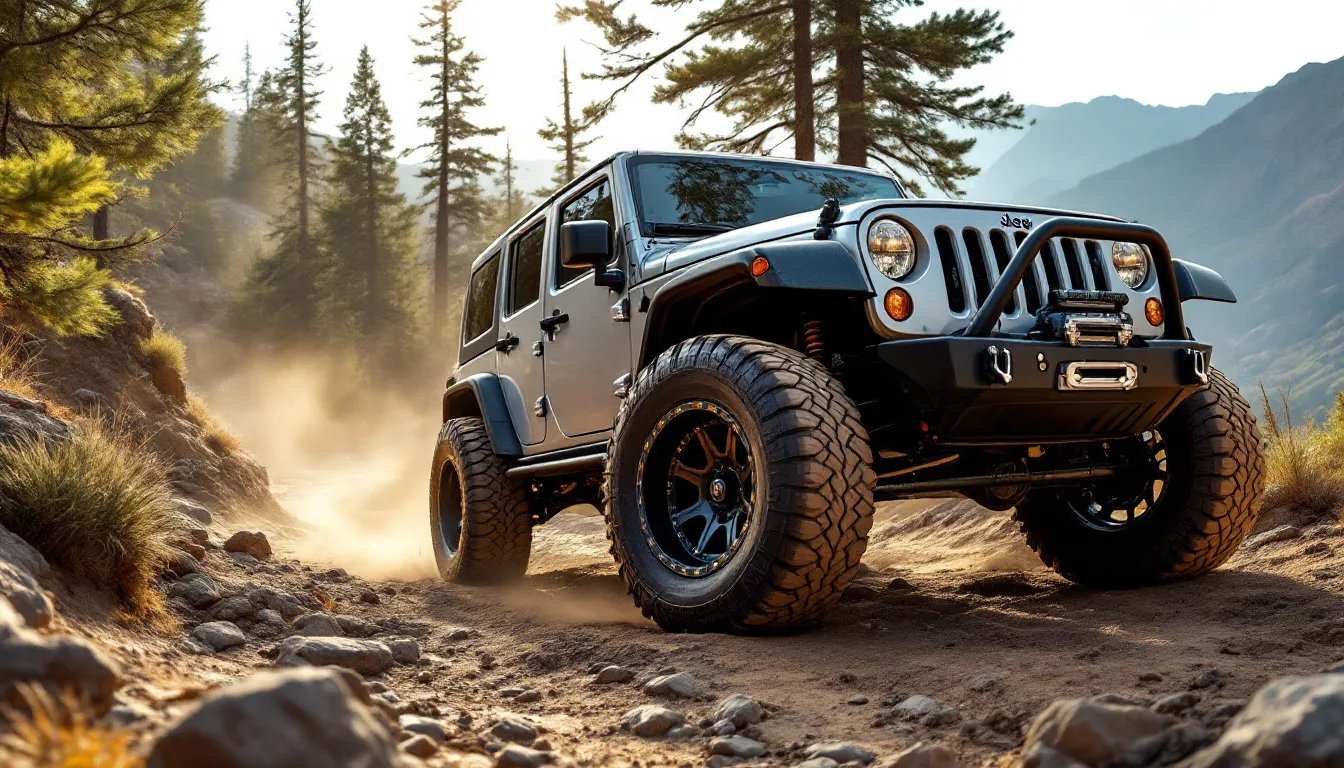
Choosing the best tires for jeep wrangler jk shouldn’t feel like studying for an engineering exam. Yet most tire guides throw endless spec sheets at you without addressing the real question: which tire actually fits your driving style and your specific JK?
My research philosophy cuts through the marketing noise. I rely on community-validated experience from thousands of JK owners who’ve tested these tires in real conditions — not lab results from manufacturer white papers. This guide focuses on the tires that consistently perform across different terrain types, weather conditions, and daily driving scenarios for the 2007-2018 Wrangler JK.
You’ll find specific sizing recommendations for stock and lifted JKs, clear trade-offs between all-terrain and mud-terrain options, and honest assessments of what each tire type delivers in real-world use. Whether you’re running a stock Sport on 32s or a lifted Rubicon on 35s, you’ll walk away knowing exactly which tire suits your JK and how you actually drive it. For deeper technical details on wheel fitment and backspacing, check out our comprehensive JK wheels and tires guide.
All-Terrain vs Mud-Terrain: Which Tire Type for Your JK?
The choice between all-terrain and mud-terrain tires comes down to three critical factors: your driving split, terrain priorities, and fuel economy tolerance.
All-terrain tires feature moderate tread depth (typically 13-16/32”) with smaller, tightly spaced tread blocks that balance on-road manners with off-road capability. They deliver quieter highway cruising, longer tread life (40,000-60,000 miles), and better wet-weather traction on pavement. Most all-terrain tires carry the Three-Peak Mountain Snowflake rating for winter driving. Expect a fuel economy penalty of 1-2 MPG compared to stock highway tires.
Mud-terrain tires use aggressive tread patterns with larger, widely spaced lugs and deeper voids (16-20/32”) designed to self-clean in mud, snow, and loose terrain. They excel in serious off-road conditions but sacrifice on-road comfort with noticeable road noise (typically 5-8 decibels louder than all-terrains) and reduced tread life (30,000-40,000 miles). Fuel economy drops 2-4 MPG compared to stock tires due to increased rolling resistance and weight.
Choose all-terrain tires if you drive 70% or more on pavement, daily-drive your JK year-round, prioritize highway comfort, or frequently encounter rain and snow on paved roads. They’re the practical choice for most JK owners who occasionally hit trails.
Choose mud-terrain tires if you regularly tackle mud, deep snow, rock crawling, or loose terrain, don’t mind highway noise and rougher ride quality, or your JK serves primarily as a weekend off-road vehicle. The aggressive tread pattern justifies the trade-offs only if you actually use that capability.
For detailed comparisons within each category, explore our detailed all-terrain tire comparison or dedicated mud-terrain tire guide.
JK Tire Sizing: What Fits on Stock vs Lifted Wranglers
Understanding what tire sizes fit your JK depends on your current suspension setup and willingness to modify fender wells. Here’s the reality of JK tire fitment by lift level:
31-32 inch tires: Stock fit — All 2007-2018 JK models accommodate 31x10.5R15 or 255/75R17 tires with zero modifications. The factory wheels provide adequate clearance at full lock and full compression. This maintains factory ride quality, gear ratios, and speedometer accuracy.
33 inch tires: 2.5-inch lift required — A 33x10.5R15 or 285/75R17 tire needs a minimum 2.5-inch suspension lift to prevent rubbing during articulation. Some JK owners run 33s on stock suspension with aggressive trimming, but you’ll scrub fenders during off-road articulation. A budget-friendly lift option enables proper clearance without breaking the bank:
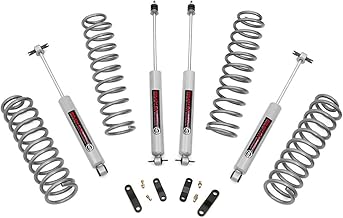
Rough Country 2.5" Lift Kit for 2007-2018 Jeep Wrangler JK Unlimited - 67930
$299.95
Check Price on Amazon35 inch tires: 3.5-inch lift + possible trimming — A 35x12.5R17 tire requires a 3.5-inch or taller lift plus fender trimming or aftermarket fender flares. Even with adequate lift height, the wider 12.5” section width demands attention to backspacing and offset. Many JK owners add wheel spacers to push the tire outboard and prevent rubbing on suspension components:
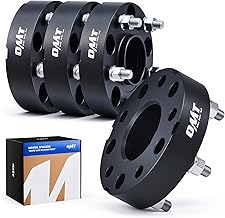
Orion Motor Tech 5x5 Wheel Spacers Compatible with Jeep Wrangler JK Grand Cherokee Commander, 1.5" Wheel Spacers with 1/2x20 Studs, 5x127 71.5 mm Hub Centric Wheel Spacer Kit, Set of 4, Black
$102.99
Check Price on Amazon4-door JKU considerations — The longer wheelbase of the 4-door JK Unlimited provides slightly more clearance in the rear wheel wells but the same front-end constraints. When I found and bought my 2014 JKU in Cape Town, the previous owner had installed 33s on a 2.5-inch lift with minimal trimming — a popular setup that balances capability with daily drivability.
37 inch tires and larger — Tires 37 inches and up require 4.5+ inch lifts, significant fender modification, and often aftermarket bumpers. You’ll also need to address steering geometry with a drag link flip or adjustable track bars. At this size, regearing becomes mandatory rather than optional.
For technical details on wheel backspacing and how it affects tire fitment, see our detailed backspacing and offset guide. Different model years also have minor body and suspension variations covered in our year-by-year JK changes article.
What to Consider When Buying JK Tires
Before you click “add to cart,” understand these factors that separate satisfied JK owners from those dealing with buyer’s remorse:
Load range matters more than treadwear warranty — JK tires need Load Range C minimum (6-ply) for adequate sidewall strength during off-road use. Load Range E (10-ply) provides extra puncture resistance for rock crawling but rides rougher on pavement. That 50,000-mile treadwear warranty from the manufacturer? It typically excludes off-road use, making it meaningless for most JK owners.
Budget $800-1,400 for a quality set — Expect to spend $200-350 per tire for reputable all-terrain brands in common JK sizes. Mud-terrains typically run $250-400 each. Budget an additional $100-150 for mounting, balancing, and disposal fees. Cheap off-brand tires might save $300 up front but deliver poor traction, uneven wear, and shorter lifespan.
Axle strength limits tire size — Your JK’s axle type determines safe tire size limits. Sport and Sahara models with Dana 30 front and Dana 44 rear axles safely handle 35-inch tires with proper gearing. Rubicon models with Dana 44 front and rear can push to 37s without immediate axle concerns. Larger tires create exponentially more stress on axle shafts, ball joints, and unit bearings. For detailed differences between trim levels and their components, check our Rubicon vs Sport comparison.
Regearing costs add $1,200-2,000 — Installing 35-inch tires on stock 3.21 or 3.73 gears creates sluggish acceleration and transmission hunting on highways. Proper 4.56 or 4.88 gears restore drivability but require professional installation in both differentials. Factor this into your total tire upgrade budget.
Spare tire planning — That full-size spare on your tailgate needs to match your new tire size. A 35-inch spare often requires a relocation bracket or aftermarket tire carrier. Some JK owners temporarily run their old stock tire as a spare to avoid this expense, accepting that it’s a “get you home” solution rather than a true replacement.
TPMS compatibility — All 2007-2018 JKs include Tire Pressure Monitoring System sensors. When buying new tires, you’ll need to transfer your existing TPMS sensors to the new wheels or purchase replacements at $40-60 each. Most tire shops charge $10-15 per sensor to transfer and reprogram.
Year-Round Performance: Daily Driving Your JK in All Conditions
Real-world tire performance varies dramatically across different weather and road conditions. Here’s what to expect if you daily-drive your JK through all four seasons:
Winter and snow performance — All-terrain tires with Three-Peak Mountain Snowflake certification deliver surprisingly capable snow traction, handling 4-8 inches of fresh snow without drama. The tighter tread pattern packs snow less than mud-terrains. In my experience with both tire types in winter conditions, all-terrains inspire more confidence on icy pavement while mud-terrains excel in deeper, unplowed snow. Neither tire type replaces dedicated winter tires for extreme cold climates, but they’re adequate for moderate winter regions.
Wet pavement and hydroplaning — All-terrain tires evacuate water effectively through siped tread blocks, maintaining grip in heavy rain at highway speeds. Mud-terrains with their wider tread voids tend to hydroplane at lower speeds (typically above 55-60 mph in standing water). Run proper tire pressure (32-35 PSI for street driving) to maximize contact patch and wet traction.
Summer heat and highway driving — Extended highway driving in summer heat (85°F+) exposes tire quality differences. Budget tires show accelerated center-tread wear and reduced fuel economy. Quality all-terrains maintain even wear patterns and stable handling. Mud-terrains generate more heat from increased rolling resistance — expect them to run 10-15°F hotter than all-terrains in sustained highway use.
Road noise levels — All-terrain tires produce 68-72 decibels of cabin noise at 70 mph, similar to holding a conversation in a busy restaurant. Mud-terrains jump to 75-80 decibels, comparable to a vacuum cleaner running. The constant drone on long highway trips fatigues passengers more than most buyers anticipate. Test-drive a friend’s JK with similar tires before committing.
Vibration and balance issues — Aggressive tires amplify any wheel balance problems. Mud-terrains often require road-force balancing ($25-35 per tire) instead of standard spin balancing to eliminate vibrations at highway speeds. Some JK owners experience persistent vibration with certain mud-terrain models regardless of balancing method — a known issue worth researching before purchase.
For reliability considerations that affect tire choice and long-term ownership, review our guide to common JK issues by model year.
Installation & Maintenance: What JK Owners Need to Know
Proper installation and ongoing maintenance determine whether your new tires deliver their full lifespan and performance potential:
TPMS sensor transfer and programming — Your existing TPMS sensors must be carefully removed from old tires, inspected for damage, and reinstalled in new tires. Replace the valve stems and sensor grommets during transfer ($5-10 per wheel). After installation, the shop must reprogram the JK’s TPMS system using a dealer-level scan tool to recognize the sensors. Budget 15-20 minutes for this process.
Road-force balancing for aggressive treads — Standard spin balancing measures weight distribution but ignores tire runout and stiffness variations. Road-force balancing applies pressure while spinning the tire, identifying the optimal wheel-to-tire orientation. This costs $10-15 more per tire but eliminates 90% of highway vibration issues with aggressive tread patterns. Insist on this service for mud-terrain tires.
Break-in period expectations — New tires need 50-100 miles of varied driving to allow tread lugs to flex and seat properly. Avoid hard cornering and aggressive braking during this period. Many JK owners report improved road noise and ride quality after the break-in period as tread blocks wear into their final shape.
Rotation schedule by tire type — All-terrain tires should be rotated every 5,000-6,000 miles to prevent uneven wear. Mud-terrains benefit from rotation every 3,000-4,000 miles due to their softer compound. Most JK owners rotate tires with every other oil change. Include your spare tire in the rotation pattern to ensure all five tires age at the same rate.
Spare tire matching and maintenance — Mount your best used tire as the spare when rotating to keep all five tires in similar condition. Store the spare with the same pressure as your street tires (32-35 PSI) rather than the excessive 60 PSI some owners use. Check spare tire pressure monthly — many JK owners discover a flat spare only when they need it most.
Pressure adjustments for terrain — Street driving requires 32-35 PSI for proper contact patch and fuel economy. Air down to 18-25 PSI for trails to increase footprint and improve traction. Invest in a quality tire pressure gauge and portable air compressor (budget $100-150) rather than relying on gas station air. Under-inflated tires on pavement cause excessive shoulder wear and poor fuel economy.
Frequently Asked Questions About JK Tires
What size tires fit a stock Jeep Wrangler JK?
Stock 2007-2018 Jeep Wrangler JK models accommodate up to 32-inch tires without modifications. Sport and Sahara trims typically came with 29-30 inch tires from the factory, while Rubicon models included 32-inch BFGoodrich Mud-Terrains. A 255/75R17 (32x10”) or 31x10.5R15 fits all JK models with stock suspension and factory wheels without rubbing at full lock or compression.
Do I need to regear my JK with 35-inch tires?
Regearing becomes highly recommended with 35-inch tires, especially if your JK has stock 3.21 or 3.73 gears. The increased tire diameter creates sluggish acceleration, transmission hunting on hills, and reduced fuel economy. Most JK owners with 35s regear to 4.88 or 5.13 ratios to restore factory-like drivability. Rubicon models with factory 4.10 gears can sometimes defer regearing but still experience performance loss.
Are all-terrain or mud-terrain tires better for daily driving?
All-terrain tires deliver better daily driving performance for most JK owners. They run quieter (68-72 decibels vs 75-80 for mud-terrains), last longer (40,000-60,000 miles vs 30,000-40,000), and maintain better fuel economy. Choose mud-terrain tires only if you regularly drive in mud, deep snow, or technical rock crawling where the aggressive tread pattern justifies the on-road compromises.
What do tire load range letters mean?
Load range indicates tire ply rating and maximum weight capacity. Load Range C (6-ply) suits most JK street and light off-road use. Load Range D (8-ply) provides extra sidewall strength for heavier loads. Load Range E (10-ply) delivers maximum puncture resistance for rock crawling but rides noticeably stiffer on pavement. Higher load ranges increase tire weight and reduce fuel economy.
What tire pressure should I run on my JK?
Run 32-35 PSI for daily street driving to maximize tire life, fuel economy, and handling. Air down to 18-25 PSI for off-road trails to increase footprint and improve traction over rocks and in sand. Lower pressures risk bead separation or tire damage on sharp obstacles. Always re-inflate to street pressure before returning to pavement. The door jamb sticker shows factory pressure for stock tires but doesn’t apply to aftermarket sizes.
Does the JK Wrangler have TPMS?
Yes, all 2007-2018 Jeep Wrangler JK models include Tire Pressure Monitoring System sensors in each wheel. The system alerts you when pressure drops below the programmed threshold (typically 25-26 PSI). When installing new tires or wheels, you must transfer the existing sensors or purchase new ones. The TPMS light illuminates when sensors malfunction, batteries die (7-10 year lifespan), or when deliberately running aired-down off-road pressures. For more differences between the JK generation and its successor, see our JK vs JL comparison.
Choosing the Right Tires for Your JK
The best tires for your Jeep Wrangler JK match your actual driving patterns, not your aspirations for weekend adventures that rarely happen. If you drive primarily on pavement with occasional trail use, all-terrain tires deliver the right balance of capability and daily comfort. If you genuinely spend most weekends in mud, snow, or rock gardens, mud-terrain tires justify their on-road compromises.
Pay attention to fitment specifics for your model year and suspension setup. A 2-door JK has different clearance than a 4-door JKU, and what fits on a Rubicon may rub on a Sport. Start with conservative sizing on stock suspension, or budget properly for the lift, wheels, and gearing that larger tires demand.
For category-specific recommendations and detailed tire reviews, explore our all-terrain tire recommendations and mud-terrain options guides. When you’re ready to address wheels and proper fitment specifications, our wheel fitment guide covers backspacing and offset in detail. Choose tires based on real-world testing from the JK community, and you’ll make a decision you’re still happy with 40,000 miles down the road.
This article contains affiliate links. If you purchase through these links, we may earn a small commission at no extra cost to you. This helps support the site and allows us to continue creating content for the Jeep JK community.
Get the Free JK Build Planner
Complete PDF with mod checklists, gear ratios, tire sizing charts, and budget worksheets. Everything you need to plan your JK build.
No spam. Unsubscribe anytime. By subscribing, you agree to our Privacy Policy.
Allan
I'm Allan. I bought a 2014 Jeep Wrangler JKU and I research the hell out of every mod before I touch it. Everything here is tested or deeply researched on my own rig - no sponsored fluff, just honest findings.
Learn more about me →Get the JK Build Planner
Free PDF with complete build checklists, gear ratios, and tire fitment guides.
By subscribing, you agree to our Privacy Policy.
Related Articles

Jeep JK Towing Capacity: What Can Your Wrangler Actually Pull?
Disclosure: JeepJK Guide earns a commission on qualifying purchases made through links in this article, at no extra cost to you.
How to Choose Tire Size for Jeep Jk Lift Kit Compatibility
Lift kit and tire size compatibility is straightforward in concept but trips up a lot of JK owners in practice: the amount of suspension height you add...
Electric Winch vs Hydraulic Winch Jeep Jk Recovery
Affiliate Disclosure: JeepJK Guide earns a commission on qualifying purchases made through links on this page, at no extra cost to you.