Best Gear Ratio for 35 Inch Tires Jeep Jk
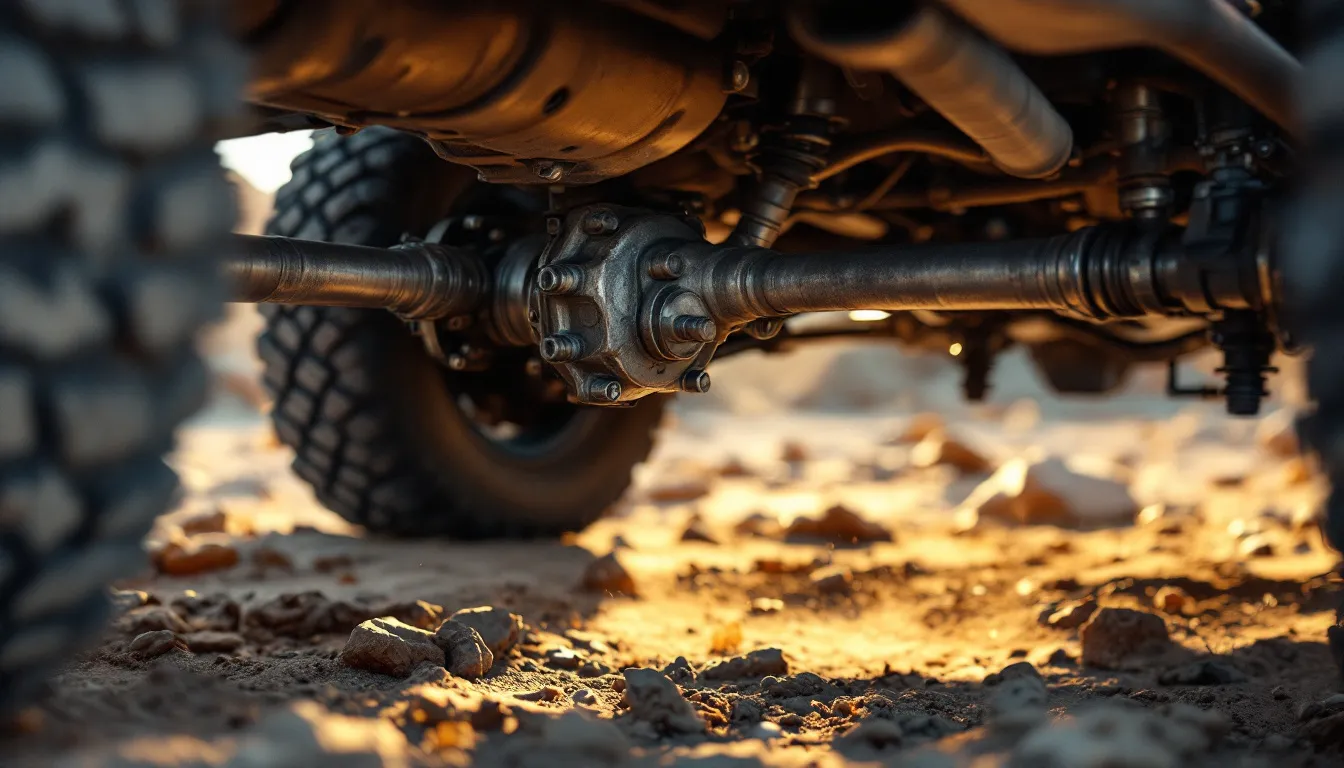
Best Gear Ratio for 35-Inch Tires on a Jeep JK
Running 35-inch tires on your JK without the right gears is like hitting the highway in third gear the whole way — technically possible, but miserable and inefficient. The relationship between your engine’s driveshaft and your axle is everything. Get it wrong, and your Jeep turns into a highway slug that hunts for gears and drinks fuel like it’s going out of style.
The best gear ratio for 35-inch tires on a Jeep JK is 4.88. Most non-Rubicon JKs roll off the lot with 3.21 or 3.73 gears. Bolt on 35s without regearing, and you’ve effectively downgraded to something between a 2.75 and 3.20 ratio — your transmission hunts constantly, acceleration vanishes, and fuel economy takes a real hit. A 4.56 ratio is the minimum compromise if you’re mostly on pavement; for anything resembling serious off-roading or mixed terrain, 4.88 is what the JK community consensus points to. Rubicon owners start at 4.10 from the factory, which puts them closer to acceptable territory, but most still gain meaningful performance from stepping up to 4.56 or 4.88 with 35s mounted.
For context on smaller tires, see our guide to best gear ratio for 33-inch tires on a Jeep JK or check the full Rubicon vs Sport vs Sahara trim comparison to understand where your stock JK stands before you spend a dime.
Why Gear Ratio Matters When You Go to 35-Inch Tires
Swapping to 35-inch tires effectively makes your stock gears taller — meaning your engine has to work harder to turn those bigger wheels the same distance. That’s where every complaint begins: sluggish throttle response, labored highway cruising, and MPG numbers that tank faster than you’d expect.
Here’s what the math actually shows. Take a JK Sport with 3.73 axle gears and stock 30-inch tires. That combination keeps your engine in a comfortable RPM window at highway speed. Now bolt on 35-inch tires and that effective ratio drops noticeably. The calculation goes like this:
Effective ratio with new tires = (Old tire diameter ÷ New tire diameter) × Axle ratio
So: (30 ÷ 35) × 3.73 = 3.20 — which puts you almost exactly at the ratio of the weakest factory JK setup.
Your 3.73-geared Sport, after fitting 35s, effectively drives like a 3.21-geared Jeep. That’s not a minor loss.
The real-world results hit different people in different ways. Highway drivers notice sluggish on-ramp acceleration and RPM creep at cruise. Trail drivers feel it immediately in technical terrain where crawl ratio is everything. MPG impact depends on driving style, terrain, and load — but most owners report a noticeable decline that doesn’t fully recover until after regearing.
The fix is straightforward: install numerically higher ring-and-pinion gears to restore — or exceed — your original effective ratio. And if you’re also running a lift that affects driveline angles, that’s another reason to look into an upgraded driveshaft for a lifted JK while everything’s already apart.
Bigger tires are a system-level change. Your gear ratio is where you start fixing it.
Get new guides by email
One email when we publish something worth reading. Unsubscribe anytime.
Stock JK Gear Ratios by Trim and Model Year (2007–2018)
Every Jeep JK left the factory with one of three axle ratios depending on trim, package, and what transmission you ordered — and knowing exactly what you have changes the entire regear math significantly.
Here’s what came standard across the 2007–2018 run:
- JK Sport (2007–2018): 3.21 standard (with manual transmission); 3.73 with automatic or optional Trac-Lok package
- JK Sahara (2007–2018): 3.21 standard in early years; 3.73 became increasingly common from 2012 onward depending on package selection
- JK Rubicon (2007–2018): 4.10 from the factory, paired with front and rear locking differentials and a 4:1 low-range transfer case
The Rubicon’s head start at 4.10 is meaningful. With 35s, a Rubicon owner loses less effective ratio than a Sport owner — but most serious wheelers still step up to 4.56 or 4.88 to maximize crawl and restore highway feel.
Pro tip: Find your actual axle ratio on the door jamb sticker — look for the two- or three-digit code that corresponds to your axle ratio in the factory build sheet. Don’t assume based on trim alone; dealer swaps and modifications from previous owners happen more often than you’d think.
If you’re still figuring out which JK trim you have or what came standard on your year, the JK Buyers Guide has a full breakdown by model year.
4.56 vs 4.88: Which Gear Ratio Is Right for Your JK?
For most non-Rubicon JK owners running 35-inch tires, the real choice is between 4.56 and 4.88. Both are significant improvements over stock 3.21 or 3.73 gears. The difference comes down to how you actually use your Jeep.
| Ratio | Best For | Parts Cost | Highway RPM Impact | Off-Road Crawl Benefit | Total Cost |
|---|---|---|---|---|---|
| 4.56 | Mixed street/trail use, mostly paved commuting | ~$500 | Moderate increase | Solid improvement | $900–$1,400 |
| 4.88 | Trail-focused builds, heavier rigs, planned future tire upgrades | ~$620+ | Higher increase | Excellent, especially with lockers | $1,000–$1,600 |
The 4.88 ratio delivers better crawl numbers on technical terrain and leaves headroom if you later step up to 37-inch tires. The 4.56 is a real-world compromise for JK owners who spend most of their miles on pavement but still want solid off-road capability.
Running stock gears on 35s for four months before switching to 4.56 teaches you something you won’t find in a spec sheet — the transformation in driveability is immediate and undeniable. Highway RPM drops back where it belongs. The transmission stops hunting for the right gear every 30 seconds. Throttle response comes back. That’s not just numbers on a graph; that’s the Jeep feeling like itself again.
The experience reinforces what the table shows: even the “compromise” 4.56 ratio is a dramatic improvement over leaving stock gears under 35-inch tires. The difference is so noticeable that many owners who run 4.56 don’t feel compelled to step up to 4.88 unless they’re planning serious trail use or future tire upgrades.
For most non-Rubicon JK owners running 35s in mixed use, 4.88 is still the recommendation — it restores stock-equivalent feel, handles trail demands well, and gives you room to grow.
If you’re also considering best lockers for Jeep JK, now is the time to think about bundling that work — installing lockers and gears in the same shop visit saves significant labor cost.
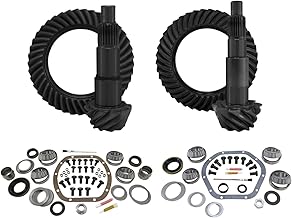
Yukon Gear & Axle – Gear & Install Kit for Jeep JK Non-Rubicon 4.88 Ratio
- Ring and pinion gears for non-Rubicon JK axles
- Master install kit with crush sleeve and seals
- 4.88 ratio for 35–37 inch tires
- Fits 2007–2018 JK and JKU models
Pros: Complete kit eliminates guesswork, proven with thousands of JK builds, strong warranty support
Cons: Installation requires professional shop or expert DIY skills, cannot be installed at home
Check Price on Amazon →What Regearing a Jeep JK Actually Involves (and What It Costs)
Regearing is not a driveway job. It requires a dial indicator, a ring-and-pinion holding fixture, and experience reading gear pattern — tolerances are measured in thousandths of an inch. If you’re thinking about DIY, think again. This is the time to find a shop that knows JK axles inside out.
Realistic cost breakdown for a JK regear (both axles):
- Parts (ring & pinion, master install kit): $500–$900 depending on ratio and brand
- Labor (professional shop): $400–$700 for both axles
- Total, both axles: typically $900–$1,600
These aren’t made-up numbers — they’re what JK owners consistently report in forums and owner communities after actually having the work done. Local labor rates vary significantly, and a shop that specializes in JK builds usually works faster and charges accordingly.
While the axles are apart, replace your axle bearings and reseal everything. Don’t punt on this. The 2pcs Rear Axle Bearing and Seal Kit is preventive maintenance worth the modest cost when you’re already in the neighborhood.
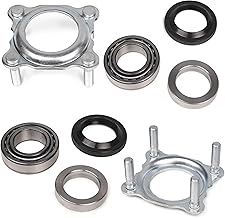
2pcs Rear Axle Bearing and Seal Kit – Jeep Wrangler JK
- Complete bearing and seal kit for both rear axles
- Compatible with 2007–2018 JK and JKU models
- OEM-quality construction
- Best installed during regear service
Pros: Inexpensive insurance against future leaks, minimal extra labor when axles are already off
Cons: Requires professional installation, not a standalone maintenance item
Check Price on Amazon →Fresh gear oil is equally mandatory after a regear. Run your new gears hard for the break-in period (usually 500–1,000 miles), then drain and refill with fresh fluid to clear metal particles from the new gear mesh. The Valvoline 80W-90 GL-5 gear oil meets the owner’s manual spec (SAE 80W-90 API GL-5; synthetic 75W-140 if you tow) for the post-regear refill.

Valvoline Daily Protection SAE 80W-90 GL-5 Gear Oil, 1 Quart
- SAE 80W-90, API GL-5: the JK owner's manual spec
- Advanced anti-wear protection for new gears
- Buy about 4 quarts to refill both axles
- Buy 2–3 quarts for complete differential fluid change
Pros: Reliable brand, easy to use pouch, excellent thermal stability
Cons: Pouch design not as convenient for large quantities as a quart bottle
Check Price on Amazon →While you’re in there, a quality differential cover upgrade adds extra fluid capacity for better heat regulation and extends gear life — a worthwhile add-on that doesn’t require much extra labor when the axle is already on the lift.
Used and OEM options
Rubicon Dana 44 rear axle
Confirm the ratio matches the front and that the locker wiring is intact. Freight is the hidden cost; check the shipping line.
See current listings on eBay →Automatic vs Manual Transmission: Does It Change the Gear Ratio Math?
Short answer: both transmissions benefit equally from regearing, but automatics have a specific vulnerability you need to address head-on.
The math — restoring your effective drive ratio with 35-inch tires — is identical regardless of which gearbox you have. What changes is heat.
Automatic transmissions work significantly harder when the drivetrain is under-geared. The torque converter is constantly fighting to compensate for the mismatch between what your engine can deliver and what your axles demand. This generates real heat, and stock cooling on JKs isn’t built for sustained high temperatures under load. You see this documented repeatedly in JK forums — automatic owners running 35s on stock gears report transmission temps climbing into dangerous territory on long highway drives or sustained trail use.
If you run an automatic JK with under-geared axles and 35s, adding a transmission cooler isn’t optional — it’s insurance against catastrophic failure. The A-Premium Transmission Oil Cooler fits 2012–2017 JK models and handles the cooling demand from a regeared automatic without breaking the budget.
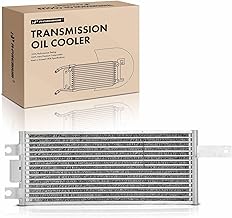
A-Premium Transmission Oil Cooler – Jeep Wrangler JK 2012–2017
- OEM-style aluminum construction
- Fits 2012–2017 JK and 2018 JK models with 3.6L Pentastar
- Direct replacement for factory cooler
- Improves transmission temperature management
Pros: Straightforward installation, proven cooler design, affordable insurance policy
Cons: Requires some basic mechanical knowledge to install, sits low on the frame and can collect road debris
Check Price on Amazon →Manual transmission JKs using the NSG370 gearbox don’t have the same heat vulnerability, but the synchros and bearings still experience additional wear when the drivetrain is constantly fighting an unfavorable ratio. If your manual has high miles, a bearing kit inspection during the regear is smart preventive maintenance.
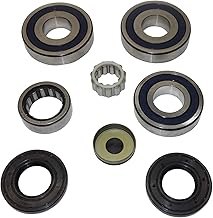
USA Standard Manual Transmission Bearing Kit – NSG370
- Complete bearing kit for NSG370 transmission (2005–2014 Jeep)
- Includes all precision bearings and shims
- OEM-equivalent quality
- Best installed during transmission service or regear
Pros: Affordable preventive upgrade, removes the guesswork from bearing selection
Cons: Requires professional installation, not recommended for home DIY unless you're experienced
Check Price on Amazon →Bottom line for both camps: automatic owners should budget a transmission cooler as part of your regear. Manual owners should at least let your shop inspect those gearbox bearings and plan accordingly. Both are small investments relative to the cost of a regear.
Smart Upgrades to Bundle With Your Regear
When the axles are already apart and the labor clock is running, bundling related upgrades is how you keep costs reasonable. Labor is often the largest single expense in a regear — every additional upgrade you add while the axle is already off the Jeep costs a fraction of what it would cost to return for a separate job.
If you’re running 35-inch tires, a 2.5-inch lift is often next on the list. The Rough Country 2.5” Lift Kit fits all 2007–2018 JK and JKU models and addresses the geometry changes that come with bigger rubber.
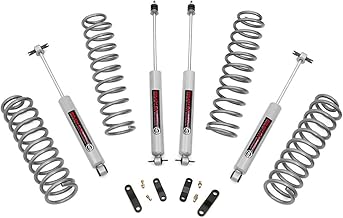
Rough Country 2.5" Lift Kit – Jeep Wrangler JK/JKU
- Coil spring lift suspension for 2007–2018 JK and JKU
- 2.5-inch ground clearance increase
- Factory-compatible design
- Includes all hardware and polyurethane bushings
Pros: Maintains ride quality, factory-compatible geometry, well-documented install
Cons: Requires shop installation, affects driveline angles (reason to check your driveshaft condition)
Check Price on Amazon →Larger tires and a lift also increase steering loads. A dual steering stabilizer addresses the death wobble risk that lifted JKs sometimes develop — better to prevent it from the start than diagnose it at highway speed.
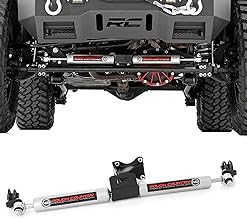
Rough Country N3 Dual Steering Stabilizer – Jeep Wrangler JK
- N3 twin-tube dampers for superior steering control
- Fits all 2007–2018 JK and JKU models
- Addresses steering responsiveness with larger tires
- Improves handling on pavement and trail
Pros: Noticeable improvement in steering feel, good quality dampers, simple bolt-on installation
Cons: Requires ball joint work if factory steering damper is stuck, should be installed by a shop
Check Price on Amazon →Consider adding lockers while you’re in there — the differential is already open, and the incremental labor is minimal. A differential cover upgrade adds fluid capacity and protection without much extra work. And if you’re already thinking past 35s, start researching what moving up to 37-inch tires would require — it may influence which gear ratio you choose today.
Frequently Asked Questions: Gear Ratio for 35-Inch Tires on a Jeep JK
Q: Can I run 35-inch tires on stock JK gears?
A: Yes, technically — but you’ll pay for it every day you drive. Stock 3.21 gears with 35s effectively drop your drive ratio to around 2.75. Highway acceleration becomes sluggish, your engine runs at higher RPM constantly, and fuel economy tanks. Many owners run this combination temporarily while saving for a regear. It’s not a long-term solution; it’s a stopgap. For comparison, check our 33-inch tire gear ratio guide to see where the math changes with smaller rubber.
Q: What is the best gear ratio for 35s on a Jeep JK Rubicon?
A: Rubicons start at 4.10 from the factory, which is closer to adequate for 35s than a Sport with 3.21 or 3.73 gears. Many Rubicon owners run 35s on stock 4.10 gears and find it acceptable, especially if they’re not pushing hard off-road constantly. For serious trail use or if you want that restored highway performance and crawl improvement, stepping up to 4.56 is the most common Rubicon upgrade with 35-inch tires.
Q: How much does it cost to regear a Jeep JK to 4.88?
A: Total costs for both axles typically land between $900 and $1,600, depending on your location and shop choice. Parts alone (ring and pinion plus master install kit) generally run $500–$900. Labor varies significantly by shop and region — getting quotes from shops that specialize in Jeep builds is worth the effort. Don’t assume the cheapest shop is the best choice; these tolerances matter.
Q: Do I need to regear both front and rear axles?
A: Yes — always regear both axles to the same ratio. Mismatched front and rear gears cause binding in 4WD and will damage your drivetrain. This is non-negotiable. While you’re bundling that work, pair it with a wheel upgrade; check out the best wheels for Jeep Wrangler JK for options that complement a regeared build.
Q: Will regearing to 4.88 hurt my highway fuel economy?
A: A 4.88 regear will slightly increase engine RPM at highway speed compared to stock gears with stock tires — but it will likely improve fuel economy compared to running 35-inch tires on stock gears. The regear restores the effective drive ratio that your bigger tires took away in the first place. Real-world results vary based on driving style, terrain, and vehicle load — but most owners report better MPG after a regear than they got during the months running 35s on stock gears.
The Bottom Line: Gear Up Before You Go Big
If you’re running 35-inch tires on your JK, regearing is not optional equipment — it’s the upgrade that makes your build actually work. The best gear ratio for 35-inch tires on a Jeep JK is 4.88 for most non-Rubicon owners, with 4.56 as a viable choice for predominantly street-driven rigs.
Do both axles. Do them at the same time. Replace bearings and gear oil while you’re in there.
The Yukon Gear & Axle 4.88 kit is a proven starting point for non-Rubicon JKs — includes the ring and pinion and install hardware at a realistic price point.
The difference between struggling on stock gears with 35-inch tires and driving a properly regeared Jeep is not subtle. Highway RPM drops back where it belongs. The transmission stops hunting for the right gear every few seconds. Throttle response returns. Technical terrain stops feeling like a compromise. The Jeep feels like itself again — capable, responsive, confident.
That’s what regearing does. Get it done before you go bigger.
For what comes next, read up on choosing the right locker for your JK or start planning for moving up to 37-inch tires in the future.
Free: JK Fluids at a Glance
Every fluid, spec and capacity for the 2007-2018 Wrangler JK on one page, plus a cut-out glovebox card. Checked against the owner's manuals. From the JK Service Kit.
Email me the download and new guides when they are published. Unsubscribe anytime. Privacy Policy.
Allan
I'm Allan. I own a 2014 Jeep Wrangler JKU and I research the hell out of every mod before I touch it. When I've fitted something to my own Jeep, I say so. Everything else is researched from manufacturer specs and other owners' reports. No sponsored fluff.
Learn more about me →Free: JK Fluids at a Glance
Every fluid, spec and capacity for the 2007-2018 JK on one page, plus a glovebox card.
Email me the download and new guides when they are published. Unsubscribe anytime. Privacy Policy.
Related Articles
Jeep JK Regear vs Locker: Which Upgrade Comes First?
Ask ten JK owners which comes first — a regear or a locker — and you'll get the same answer from nine of them: regear first, locker second.

Jeep JK Towing Capacity: What Can Your Wrangler Actually Pull?
Your Jeep JK can tow more than you might think — but probably less than you want to. The factory ratings are straightforward: 2,000 lbs for the 2-door...
How to Choose Tire Size for Jeep Jk Lift Kit Compatibility
Lift kit and tire size compatibility is straightforward in concept but trips up a lot of JK owners in practice: the amount of suspension height you add...