Best Exhaust For Jeep Jk
This article contains affiliate links. We may earn a commission at no extra cost to you.
Best Exhaust For Jeep JK: Complete 2024 Guide
The best exhaust for Jeep JK is a cat-back system that balances sound improvement with modest performance gains—typically delivering 5-10 additional horsepower while producing an aggressive exhaust note between 85-95 decibels. Cat-back systems replace everything from the catalytic converter to the tailpipe, offering the best combination of value, legality, and installation ease for most JK owners.
When I started researching exhaust upgrades for the JK community, I quickly learned that manufacturer spec sheets tell only half the story. Real-world experience from thousands of Jeep owners reveals what actually matters: which systems develop drone at highway speeds, which brands rust out after two winters, and which exhausts sound great on video but disappointingly quiet in person. My research philosophy focuses on community knowledge over marketing claims, which is why every recommendation here comes from verified owner feedback and hands-on installation experience.
Before diving into specific product recommendations, understanding the three main exhaust types will help you choose the right system for your JK’s configuration and your performance goals. Some JK owners face unique challenges due to common JK problems by year, making exhaust selection even more critical.
Understanding Exhaust System Types for Your JK
Choosing the right exhaust system starts with understanding what each type replaces and how that affects your JK’s sound, performance, and legal status. Cat-back systems replace everything from the catalytic converter to the tailpipe and represent the most popular choice among JK owners. They deliver noticeable sound improvement, minor power gains, and remain 50-state legal since they preserve the factory catalytic converter. Expect to spend $300-800 and invest 2-3 hours for installation.
Axle-back systems replace only the muffler and tailpipe section behind the rear axle. They’re the budget-friendly option at $150-400 and install in under an hour, but they deliver the least dramatic sound change and minimal performance benefit. Think of axle-backs as a good starting point if you’re budget-conscious or unsure how aggressive you want your JK to sound.
Header and full exhaust systems replace everything from the engine manifold to the tailpipe, including high-flow catalytic converters or cat-delete pipes. These deliver the most aggressive sound and maximum performance gains (10-20 HP when paired with tuning), but they cost $800-1,500 and may not pass emissions testing in CARB states. Installation complexity jumps significantly—plan for 4-6 hours and potential clearance issues with lifted suspensions.
The engine under your hood matters when shopping for exhaust systems. JK Wranglers switched from the 3.8L V6 to the 3.6L Pentastar in 2012, and exhaust systems are not interchangeable between these engines. Always verify the product listing specifies your exact engine and model year range. For detailed information about what changed between model years, check our guide on JK model year differences.
Door count rarely affects exhaust fitment, but wheelbase does matter for longer piping runs. Two-door JKs and four-door JKUs typically use the same exhaust systems, though some manufacturers offer wheelbase-specific kits to eliminate the need for pipe trimming during installation.
Sound Improvement vs. Performance Gains: What to Expect
Let’s be honest about what an aftermarket exhaust actually delivers for your JK: improved sound quality is guaranteed, but performance gains will be modest unless you stack multiple modifications. A cat-back exhaust typically adds 5-10 horsepower and 5-8 lb-ft of torque—you won’t feel it in the seat of your pants, but you will notice slightly improved throttle response during acceleration and passing maneuvers.
Sound improvement is where exhaust upgrades shine. Factory JK exhaust systems are engineered for silence, with restrictive mufflers that choke out the naturally aggressive V6 rumble. An aftermarket exhaust opens up that sound character, delivering an 85-95 decibel exhaust note that ranges from a deep burble at idle to an aggressive roar under acceleration. For context, normal conversation registers around 60 dB, while a factory JK measures about 70 dB at idle.
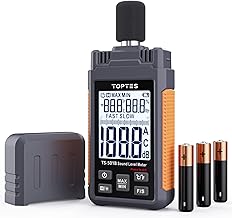
Decibel Meter, TopTes TS-501B Sound Level Meter with 2.25” Backlit LCD Screen, Portable SPL Tester with A/C Weighted, Range 30-130dB, MAX/MIN, Data Hold, Use for Home, Noisy Neighbor, Factory - Orange
$26.99
Check Price on AmazonIf you want to verify sound levels before and after installation, an affordable decibel meter can help you stay within local noise limits. Many municipalities enforce noise ordinances between 95-100 dB, so measuring your exhaust output ensures you won’t attract unwanted attention from law enforcement during your daily commute.
The power gains from an exhaust upgrade alone won’t transform your JK into a performance vehicle. The 3.6L Pentastar produces 285 HP stock, so adding 7 HP represents less than a 3% increase. Where you’ll notice the difference is in reduced backpressure during sustained highway driving and when towing—your engine breathes easier, runs slightly cooler, and maintains power better under load.
Want to maximize performance from your exhaust investment? Stack it with a cold air intake and throttle body spacer for cumulative gains of 15-25 HP. These are separate purchases and installations, but together they deliver noticeable improvements in throttle response and mid-range power. We’ll cover these complementary upgrades in detail later in this guide.
Realistic expectations matter here: don’t upgrade your exhaust expecting to shave seconds off your 0-60 time. Upgrade it because you want your JK to sound as aggressive as it looks, with the added benefit of modest performance improvements and reduced engine heat during demanding conditions.
Tools and Supplies You’ll Need for DIY Installation
DIY exhaust installation saves $200-400 in shop labor costs, but success depends on having the right tools before you slide under your JK. The two most critical investments are quality jack stands and a torque wrench—these aren’t negotiable if you want a safe, secure installation.
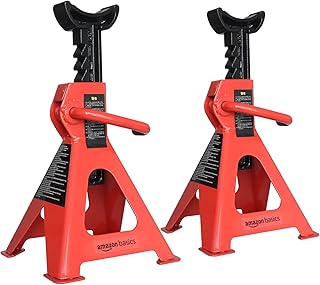
Amazon Basics Steel Jack Auto Stands, 3 Ton (2.7 metric Ton) Capacity, Easy to Use, Adjustable Height, 6,000 lb, 1 Pair, Black and Red
$28.88
Check Price on AmazonNever trust a floor jack alone to support your JK during exhaust work. Jack stands provide the stable, secure platform you need to work safely underneath a 4,000-pound vehicle. Position stands under the frame rails, not the axles, and verify they’re rated for at least 3 tons per stand.
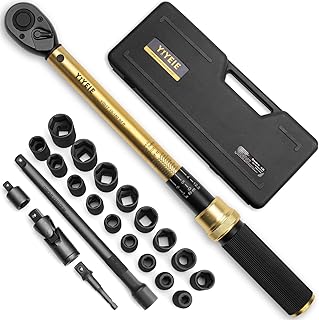
YIYEIE 22PCS Torque Wrench Set 1/2" Drive, 10-180 ft.lb/13.6-244.1 Nm, Click Torque Wrench with Impact Sockets, 1 ft.lbs Micro, 72-Tooth Ratchet, Quick Release Head, Master Torque Tool for Car Repair
$59.97
Check Price on AmazonExhaust hangers and clamps require specific torque values—typically 25-35 ft-lbs—to prevent leaks without crushing pipes. A torque wrench ensures proper tightness and prevents the frustration of retightening loose clamps after your first test drive.
Beyond jack stands and a torque wrench, here’s what belongs in your exhaust installation toolkit:
- Penetrating oil: Spray all hanger bolts and clamp nuts 24 hours before installation to break rust bonds
- Socket set with extensions: 13mm, 14mm, and 15mm sockets handle most JK exhaust hardware
- Exhaust clamps: Keep 2-3 spare clamps on hand if you need to reposition components for clearance
- High-temp RTV silicone: Seal connection points to prevent exhaust leaks at flanges
- Heat wrap or tape: Protect heat-sensitive components near the exhaust routing path
- Shop manual: Reference torque specs and routing diagrams specific to your model year
The WD-40 Specialist Penetrant works exceptionally well on rusted exhaust hangers—apply it generously and let it soak overnight for easiest removal. Budget exhaust clamps provide backup options if factory clamps are corroded beyond reuse. High-temp RTV silicone creates gas-tight seals at flange connections where gaskets may not be included. Heat wrap protects wiring harnesses and brake lines that run near exhaust pipes, particularly important on lifted JKs with aftermarket suspension components. A Haynes repair manual provides model-specific torque values and routing diagrams that eliminate guesswork during installation.
These tools represent a one-time investment that you’ll use for future maintenance projects. Quality jack stands and a torque wrench will serve you through countless brake jobs, suspension upgrades, and underbody work over your JK ownership.
Common installation mistakes to avoid:
- Forgetting to support the exhaust midpoint during removal—it’s heavier than it looks
- Over-torquing clamps and crushing pipes, creating exhaust leaks
- Ignoring clearance checks after installation, leading to rattles against the frame or crossmember
- Skipping the 50-100 mile re-torque, which allows clamps to loosen as components heat-cycle
JK Model Year and Configuration Compatibility
Not all exhaust systems fit all JK Wranglers—three critical variables determine whether a product listing will bolt to your specific configuration. Door count, engine year, and lift height form the compatibility trifecta you must verify before clicking “add to cart.”
Two-door vs. four-door (JKU) compatibility matters less than you’d think for exhaust fitment. Most cat-back systems accommodate both wheelbases because manufacturers include longer mid-pipes that you trim to length during installation. A few budget-oriented kits sell separate two-door and four-door versions, so always check the product description and verify your wheelbase measurement against the listed compatibility.
Engine year makes the biggest difference. The 2007-2011 JKs with 3.8L engines use completely different exhaust routing than 2012-2018 models with 3.6L Pentastar engines. The catalytic converter position changed, outlet pipe diameter increased, and hanger locations shifted. An exhaust designed for the 3.8L will not fit the 3.6L, period. Always confirm the product listing explicitly states your engine designation.
Lift height affects clearance but rarely prevents fitment. Stock-height JKs, those with 2.5-3.5” lifts, and even 4”+ lifted rigs typically use the same exhaust systems. However, lifted JKs may require slight adjustments to hanger positioning or the addition of exhaust spacers to maintain proper ground clearance. Some aggressive rock crawling suspensions (6”+ lifts with dropped crossmembers) may need custom exhaust fabrication.
Trim level—Rubicon vs Sport vs Sahara—doesn’t affect exhaust compatibility. These trims differ in axle ratios, transfer cases, and suspension components, but they share identical exhaust routing from the factory. A system that fits a Sport will bolt to a Rubicon without modification. Learn more about these differences in our Rubicon vs Sport vs Sahara trim differences guide.
Before purchasing any exhaust system, double-check the Amazon product listing for these specific compatibility indicators:
- Exact model years (e.g., “2012-2018” not “JK all years”)
- Engine designation (3.6L or 3.8L explicitly stated)
- Door count compatibility if the listing separates two-door and four-door options
When in doubt, contact the manufacturer directly with your VIN to verify fitment. Five minutes of pre-purchase research prevents hours of frustration in your driveway with an exhaust that doesn’t fit.
Complementary Upgrades: Cold Air Intakes and Tuners
An aftermarket exhaust improves your JK’s ability to expel spent gases, but pairing it with a cold air intake creates a complete breathing system that maximizes the performance gains from both upgrades. Think of it as opening both the intake and exhaust valves wider—your engine breathes deeper and more efficiently.
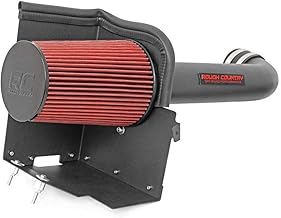
Rough Country Cold Air Intake for 2012-2018 Jeep Wrangler JK | 3.6L - 10550A
$129.95
Check Price on AmazonCold air intakes replace the restrictive factory airbox with a high-flow filter and larger diameter tubing that draws cooler, denser air into your engine. Cooler air contains more oxygen molecules per cubic inch, improving combustion efficiency. When combined with a free-flowing exhaust, expect cumulative gains of 15-20 HP and noticeably improved throttle response, particularly in the 2,000-4,000 RPM range where JK owners spend most of their driving time.
The NextGen system represents the premium end of cold air intake options, with heat-shielded tubing and a washable cotton filter that pays for itself over time by eliminating disposable filter replacements. Installation takes 30-45 minutes with basic hand tools.
Throttle body spacers create a small plenum between your throttle body and intake manifold, theoretically improving air/fuel atomization. Real-world gains are modest (2-4 HP), but many owners report improved throttle response during low-speed crawling and city driving. At $60, it’s an affordable experiment if you’re already removing your intake components for a cold air intake installation.
Performance tuners reprogram your JK’s engine control unit to optimize fuel delivery, ignition timing, and shift points for your specific modifications. Without tuning, your ECU still operates on factory parameters designed for the restrictive stock exhaust and airbox. A quality tuner like the Superchips Flashcal extracts an additional 5-10 HP from your upgraded exhaust and intake while improving transmission behavior and adjusting for larger tires.
Here’s the realistic performance progression:
- Exhaust alone: +5-10 HP, improved sound
- Exhaust + cold air intake: +15-20 HP, sharper throttle response
- Exhaust + intake + tuner: +20-30 HP, optimized power delivery across RPM range
These are separate purchases and installations—don’t expect one product to deliver combined results. Budget $130-420 for a quality cold air intake, $60-100 for a throttle body spacer, and $280-400 for a comprehensive tuner. Installation for all three takes 3-5 hours total if you tackle them in a single weekend session.
The most important point: performance gains manifest as improved throttle response and mid-range power, not drag strip speed. Your JK will feel more eager to accelerate, maintain highway speeds more easily while towing, and operate with slightly better fuel efficiency during steady-state cruising. Don’t expect to transform your 4,000-pound Wrangler into a sports car, but these upgrades meaningfully improve daily drivability.
Step-by-Step Installation Tips and Common Pitfalls
Professional exhaust installation typically costs $200-300, but DIY installation saves that money while giving you valuable mechanical experience with your JK. Follow this sequence to ensure proper fitment and eliminate common frustration points.
Installation sequence:
-
Park on level ground and set your parking brake. Chock the front wheels before lifting the rear of your JK. Never work under a vehicle supported only by a floor jack.
-
Spray penetrating oil on all exhaust hangers and clamp bolts. Focus on the connection points where rust accumulates—hanger brackets welded to the frame and the band clamps at the catalytic converter connection. Let it soak for 15 minutes minimum while you gather tools.
-
Lift the rear of your JK and position jack stands under the frame rails. The exhaust system is heavier than it appears—expect 40-60 pounds of dead weight when you remove it. Have a helper or a transmission jack ready to support the system during removal.
-
Remove exhaust from rear to front, starting with the tailpipe section. Use hose clamp pliers to compress spring-loaded hangers without fighting them. Work methodically through each hanger point, supporting the exhaust system as you disconnect each section to prevent sudden drops.
-
Clean all mounting surfaces and inspect hanger rubber bushings. Replace any torn or severely deteriorated rubber bushings before installing the new system—they’re inexpensive insurance against rattles and misalignment. Wire-brush the catalytic converter outlet to ensure a clean mating surface for the new gasket.
-
Test-fit the new exhaust system before final tightening. Start at the catalytic converter and work backward, inserting hangers loosely into their brackets. Verify clearance at all points—the exhaust should have 1-2 inches of clearance from the frame, crossmembers, fuel tank, and suspension components at all points. Adjust hanger positions as needed.
-
Tighten all clamps and hangers in a star pattern from front to back. Use your torque wrench to apply 25-35 ft-lbs at band clamps and 15-20 ft-lbs at hanger bolts. This ensures even pressure distribution and prevents leaks or stress concentrations.
-
Perform a thorough clearance check with full suspension articulation. Have a helper turn the steering wheel lock-to-lock while you watch for contact between the exhaust and any moving components. Cycle the suspension through full droop and compression if you have a lift kit installed.
-
Start the engine and check for leaks at all connection points. Look for visible exhaust gas escaping from joints and listen for hissing sounds indicating a poor seal. Minor seepage at brand-new gaskets is normal for the first few heat cycles.
-
Test drive and re-torque after 50-100 miles. Heat cycling causes exhaust components to expand and settle, which can loosen clamps slightly. Plan to crawl back under your JK after the first week of driving to verify all fasteners maintain proper torque.
Critical technique: the clearance check. After installation but before final tightening, grab the exhaust pipe and move it through its full range of motion. It should have freedom to expand and contract with temperature changes without binding against chassis components. If any section touches the frame or crossmember, loosen the nearest hangers and rotate the entire assembly until clearance is achieved.
Post-install verification involves more than just listening for leaks. Take your JK through its typical driving conditions—highway cruising, low-speed crawling, hard acceleration—and note any new vibrations, rattles, or drone frequencies. A properly installed exhaust should be silent except for the intentional exhaust note, with no mechanical contact sounds or resonance at specific RPM ranges.
Frequently Asked Questions About JK Exhaust Upgrades
Will an aftermarket exhaust void my Jeep warranty?
No, an aftermarket exhaust cannot void your entire warranty under the Magnuson-Moss Warranty Act. Dealerships must prove that your exhaust modification directly caused a warranty claim failure. Your 5-year/60,000-mile powertrain warranty remains valid for unrelated components like your transmission or transfer case. However, if your aftermarket exhaust causes catalytic converter damage or emissions system faults, those specific repairs won’t be covered.
How much louder will my JK be with an aftermarket exhaust?
Expect a 10-20 decibel increase depending on your exhaust type. Cat-back systems typically measure 85-92 dB at idle and 95-100 dB under full throttle, compared to the factory system’s 70-75 dB range. That translates to noticeably more aggressive sound character without being obnoxiously loud during normal driving. Full exhaust systems with high-flow catalytic converters can push 100-105 dB, which approaches or exceeds noise ordinances in many jurisdictions.
Do I need to tune my JK after installing a cat-back exhaust?
No, tuning is not required after installing a cat-back exhaust. Your JK’s factory engine programming will adapt automatically to the slightly reduced backpressure. You’ll see the modest power gains (5-10 HP) without any computer modifications. However, if you stack your exhaust with a cold air intake and other performance modifications, a tune will optimize fuel delivery and ignition timing to extract maximum performance from all upgrades combined.
Will an aftermarket exhaust pass emissions testing?
Any 50-state legal cat-back system will pass emissions testing because it retains your factory catalytic converters. These systems modify only the components downstream of the cats, so they don’t affect the chemical conversion of exhaust gases that emissions tests measure. Systems with high-flow catalytic converters or cat-delete pipes may fail visual inspections and sniffer tests, particularly in CARB states (California, Colorado, Maine, Maryland, Massachusetts, New Jersey, New Mexico, New York, Oregon, Pennsylvania, Rhode Island, Vermont, Washington, and D.C.).
How long does exhaust installation take?
Plan for 2-3 hours for a cat-back system installation if you have basic mechanical skills and proper tools. Axle-back systems install in under an hour since you’re only replacing the rear section. Full exhaust systems with headers require 4-6 hours due to the complexity of accessing manifold bolts and routing pipes around steering components and crossmembers. Rusted hangers and seized bolts can add significant time—apply penetrating oil 24 hours before starting.
Can I install an exhaust on a lifted JK?
Yes, most aftermarket exhausts fit lifted JKs with 2.5”-4” suspension lifts without modification. Exhaust manufacturers design their systems with adjustable hangers that accommodate the slight geometry changes from suspension lifts. Extreme lifts (6”+) with dropped crossmembers may require custom exhaust fabrication or exhaust spacers to maintain proper ground clearance and prevent contact with the altered frame geometry.
Final Thoughts on Choosing the Best JK Exhaust
The best exhaust for Jeep JK remains a cat-back system for most owners—it delivers meaningful sound improvement, modest performance gains, and maintains 50-state legal status while respecting your 5-year/60,000-mile powertrain warranty coverage. Before purchasing, verify three critical compatibility factors: your engine year (3.6L or 3.8L), your door count (two-door or four-door JKU), and any suspension modifications that might affect clearance during installation.
Set realistic expectations about performance gains. An exhaust upgrade alone delivers 5-10 HP and noticeably improved sound character, but it won’t transform your JK’s acceleration. Stack it with a cold air intake and tuner if you want cumulative gains approaching 20-30 HP with improved throttle response across your daily driving range.
DIY installation saves $200-400 in shop labor and requires only basic tools, with jack stands and a torque wrench being the critical safety investments. Allow 2-3 hours for installation, apply penetrating oil to rusted fasteners 24 hours in advance, and plan for a 50-100 mile re-torque to ensure all clamps maintain proper tightness after initial heat cycling.
The exhaust upgrade often marks the beginning of a deeper journey into JK modifications. If you’re still researching whether a JK is right for you, check out our complete JK buyers guide for comprehensive ownership insights. Already considering an upgrade to a newer platform? Our JK vs JL comparison breaks down what changed between generations and whether the jump makes sense for your needs.
Your JK deserves to sound as capable as it looks on the trail. An aftermarket exhaust delivers that aggressive V6 rumble that turns heads at stoplights and announces your arrival at the trailhead—without breaking the bank or requiring advanced mechanical expertise.
This article contains affiliate links. If you purchase through these links, we may earn a small commission at no extra cost to you. This helps support the site and allows us to continue creating content for the Jeep JK community.
Get the Free JK Build Planner
Complete PDF with mod checklists, gear ratios, tire sizing charts, and budget worksheets. Everything you need to plan your JK build.
No spam. Unsubscribe anytime. By subscribing, you agree to our Privacy Policy.
Allan
I'm Allan. I bought a 2014 Jeep Wrangler JKU and I research the hell out of every mod before I touch it. Everything here is tested or deeply researched on my own rig - no sponsored fluff, just honest findings.
Learn more about me →Get the JK Build Planner
Free PDF with complete build checklists, gear ratios, and tire fitment guides.
By subscribing, you agree to our Privacy Policy.
Related Articles

Jeep JK Towing Capacity: What Can Your Wrangler Actually Pull?
Disclosure: JeepJK Guide earns a commission on qualifying purchases made through links in this article, at no extra cost to you.
How to Choose Tire Size for Jeep Jk Lift Kit Compatibility
Lift kit and tire size compatibility is straightforward in concept but trips up a lot of JK owners in practice: the amount of suspension height you add...
Electric Winch vs Hydraulic Winch Jeep Jk Recovery
Affiliate Disclosure: JeepJK Guide earns a commission on qualifying purchases made through links on this page, at no extra cost to you.