Best Gears For 35 Inch Tires Jeep Jk: Complete Regearing Guide
This article contains affiliate links. We may earn a commission at no extra cost to you.
Best Gears For 35 Inch Tires Jeep Jk: Complete Regearing Guide
For 35-inch tires on a Jeep JK, the best gear ratio is 4.88 for manual transmissions and mixed driving, or 5.13 for automatics and primarily highway use. These ratios restore the power-to-weight balance that stock gears (3.73 or 4.10) can’t maintain with the 17% increase in tire circumference. Without proper regearing, you’ll experience sluggish acceleration, transmission hunting, reduced MPG, and potential drivetrain wear.
I’ve spent years synthesizing feedback from the JK community rather than just repeating manufacturer specifications. Real-world owner experience consistently points to these two ratios as the sweet spot — not because they’re theoretical ideals, but because thousands of JK owners have tested them on trails, highways, and daily commutes. This guide cuts through the confusion with specific recommendations based on your transmission type, door configuration, and driving priorities.
Understanding which JK model year differences affect your regearing decision matters less than understanding your actual driving needs and transmission type.
Understanding Gear Ratios: Why 35s Change Everything
When you install 35-inch tires on a JK that rolled off the assembly line with 32-inch tires, you fundamentally alter the relationship between your engine’s power band and your wheels. Gear ratios determine how many times your driveshaft must rotate to turn your wheels once. Stock JK gears range from 3.21 (base models) to 4.10 (Rubicons with manual transmissions), calibrated perfectly for stock tire size.
Here’s the core problem: 35-inch tires have 17% more circumference than stock 32s. Imagine your engine spinning at 2000 RPM on the highway with stock tires. With 35s and stock gears, your engine drops to roughly 1700 RPM at the same speed — well below its optimal power band. The result? Sluggish throttle response, constant transmission hunting between gears, and an overworked engine struggling to move the heavier rotating mass.
The math is straightforward: If you multiply your tire size increase by your current gear ratio, you get your effective new ratio. With stock 3.73 gears and 35s, your effective ratio drops to about 3.21. That’s why 4.88 and 5.13 ratios restore proper engine RPM across your driving range — they compensate for the larger tire diameter and bring your engine back into its power band.
Different Rubicon vs Sport vs Sahara differences include factory gear ratios, with Rubicons typically coming with 4.10 gears and Sport models often equipped with 3.73s or even 3.21s in base configurations. These starting points matter when calculating your regearing budget, but the destination ratio remains the same regardless of where you start.
The transmission also factors into engine loading. Automatics tend to lug harder at low RPMs, making them more sensitive to undergearing. Manual transmissions give you more control but still suffer from the power loss. Either way, 35s without appropriate gearing means your engine works harder, runs hotter, and delivers less performance.
Best Gear Ratios for 35-Inch Tires: 4.88 vs 5.13
The decision between 4.88 and 5.13 gear ratios comes down to three primary variables: transmission type, vehicle weight, and driving environment. Here’s the decision tree:
Choose 4.88 gears if:
- You have a manual transmission (NSG370 or AX15)
- You drive a 2-door JK (lighter curb weight)
- You split time between highway cruising and trail driving
- You want lower highway RPMs for road trips
Choose 5.13 gears if:
- You have an automatic transmission (42RLE or W5A580)
- You drive a 4-door JKU (heavier by 400+ lbs)
- You prioritize off-road performance and low-speed crawling
- You frequently tow or carry heavy loads
- Highway cruising above 70 mph is minimal in your driving pattern
RPM comparison at highway speeds:
- With 4.88 gears: 60 mph ≈ 2400 RPM | 70 mph ≈ 2800 RPM | 75 mph ≈ 3000 RPM
- With 5.13 gears: 60 mph ≈ 2550 RPM | 70 mph ≈ 2975 RPM | 75 mph ≈ 3175 RPM
The difference seems minor on paper — roughly 150-200 RPM — but it’s noticeable on long highway drives. With 4.88s, your engine sits comfortably in its midrange power without screaming. With 5.13s, you gain more grunt at low speeds but sacrifice some highway refinement.
For most JK owners running 35s, 4.88 is the sweet spot. It restores power without making highway driving buzzy. Automatic transmission owners, however, should lean toward 5.13 because autos need that extra gear multiplication to avoid constant downshifting on hills and during acceleration.
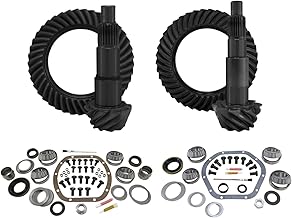
Yukon Gear & Axle - Gear & Install Kit for Jeep JK non-Rubicon 4.88 Ratio - includes ring and pinion (4.88 ratio) - YGK013
$620
Check Price on AmazonThe Yukon Gear kit includes everything except the carrier (which you reuse if your new ratio doesn’t require a different carrier break). This is critical: Front Dana 30 axles have a carrier break at 3.92, and rear Dana 44s break at 4.56. Moving from 3.73 to 4.88 means you’ll need new carriers on both axles, adding $300-500 to your parts cost.
Real-World Performance: What Changes After Regearing
Before regearing with 35s and stock 3.73 gears, merging onto the highway feels sluggish. The transmission hunts between third and fourth gear on mild inclines. Passing requires a full throttle stomp and a two-gear downshift. Trail performance suffers too — first gear doesn’t deliver the crawl ratio you need for technical rock sections.
After installing 4.88 gears, the transformation is immediate:
Your JK feels like it did with stock tires. Throttle response returns to factory sharpness. The engine sits comfortably at 2500 RPM at 70 mph instead of lugging at 2000 RPM. Passing power comes back — you can accelerate from 60 to 75 mph without the transmission kicking down multiple gears. On the trail, first gear in 4-Low delivers true crawling ability, letting you ease over obstacles with precise throttle modulation.
Fuel economy changes are nuanced. Many owners report highway MPG staying roughly the same or improving slightly because the engine isn’t constantly overworking to maintain speed. City MPG typically drops 1-2 mpg due to higher RPMs during acceleration. The net effect: you’ll likely see 1 mpg less overall, but you gain that back in improved drivability and reduced transmission wear.
Automatic transmissions benefit most dramatically from regearing. The 42RLE and W5A580 automatics in JKs are torque-converter designs that rely on proper engine RPM to build hydraulic pressure. Undergeared with 35s, they overheat, slip, and hunt constantly. Properly geared, they shift crisply and stay cool even under load.
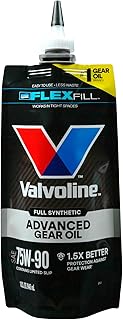
Valvoline FlexFill Advanced Full Synthetic 75W-90 Gear Oil 1 Quart Pouch
$15.48
Check Price on AmazonYou’ll need quality gear oil like this Valvoline synthetic 75W-90 for the differential service that accompanies regearing. Plan on four quarts for a complete front and rear service, plus extra for the inevitable spills during installation.
Trail performance improves across the board. Your effective crawl ratio in 4-Low first gear jumps significantly. With stock 3.73 gears and 35s, your crawl ratio drops to roughly 38:1. With 4.88 gears, it climbs back to about 50:1. This means better rock crawling control, less clutch slipping (manual), and reduced brake heating on steep descents.
Many owners regear and install lockers simultaneously since both upgrades require opening the differential. This combination transforms your JK’s off-road capability, giving you both the gearing to maintain momentum and the traction to power through obstacles.
Regearing Your JK: Cost, Complexity & What to Expect
Cost Breakdown:
- Parts (ring and pinion sets for both axles): $600-900
- Master install kits (bearings, seals, shims): $200-300
- Professional labor (front and rear): $800-1200
- Total professional regear: $1600-2400
The wide cost range depends on your starting gear ratio and whether you need new carriers. Moving from 3.73 to 4.88 crosses carrier breaks on both axles, adding $400-600 in additional parts.
DIY vs Professional: Regearing differentials is advanced-level wrenching. You need specialized tools (dial indicator, inch-pound torque wrench, bearing race drivers), precise shim selection skills, and the ability to diagnose gear pattern issues. Setup time for one axle runs 6-10 hours for experienced DIYers. Most JK owners — even mechanically inclined ones — opt for professional installation. A bad gear setup leads to whine, premature wear, or catastrophic failure.
Timeline: Professional shops typically need 1-3 days for both axles, depending on backlog and parts availability. Some shops require you to source your own gear sets, while full-service shops handle parts procurement.
Both Axles Are Mandatory: Never regear just one axle. Mismatched front and rear ratios cause transfer case binding, especially in 4-High. Both differentials must spin at the same rate relative to driveshaft input.
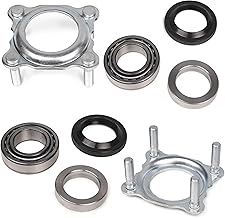
2pcs Rear Axle Bearing and Seal Kit Compatible with Jeep Wrangler JK/JKU 2007 2008 2009 2010 2011 2012 2013 2014 2015 2016 2017 Replaces 68008523AA 68003270AA 83503077 68499023AA
$77.88
Check Price on AmazonAxle bearings often get replaced during regearing since the differential is already torn down. If your JK has 60,000+ miles, factor these into your parts budget.
Locker Timing: If you’re considering adding lockers to your JK, do it during the regearing process. You’re already paying labor to open both diffs, set up new gears, and shim everything. Adding lockers at the same time saves $600-800 in duplicate labor costs. Many owners regear from 3.73 to 4.88 while simultaneously installing an ARB Air Locker in the rear and a lunchbox locker in the front.
Break-In Procedure: Drive conservatively for the first 500 miles. Avoid heavy towing, prolonged highway speeds, and aggressive acceleration. After 500 miles, drain and replace the gear oil to flush out break-in debris and metal particles. This initial oil change is critical for long-term gear life.
Consider upgrading your diff covers to heavy-duty units with increased fluid capacity and magnetic drain plugs during regearing. The added cooling and debris capture help protect your investment.
Supporting Upgrades for 35-Inch Tire Setups
Running 35-inch tires successfully requires more than just regearing. Three supporting upgrades make the difference between a compromised setup and a properly integrated system.
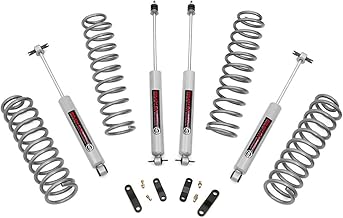
Rough Country 2.5" Lift Kit for 2007-2018 Jeep Wrangler JK Unlimited - 67930
$299.95
Check Price on AmazonLift Height Matters: 2.5 inches of lift is the minimum for fitting 35s without extensive trimming on JKs. This Rough Country kit provides just enough clearance for full suspension articulation without rubbing at full steering lock. Shorter lifts require cutting fender liners, pinch seams, and potentially portions of the frame. Taller lifts (3.5-4 inches) provide more clearance but introduce driveline geometry issues that require adjustable control arms to correct.
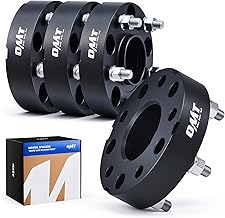
Orion Motor Tech 5x5 Wheel Spacers Compatible with Jeep Wrangler JK Grand Cherokee Commander, 1.5" Wheel Spacers with 1/2x20 Studs, 5x127 71.5 mm Hub Centric Wheel Spacer Kit, Set of 4, Black
$102.99
Check Price on AmazonWheel Spacers for Rubicon Wheels: Factory Rubicon wheels have a 6.25-inch backspacing that causes 35-inch tires to rub against front control arms during tight turns. These 1.5-inch wheel spacers push the tire outward, eliminating the contact while maintaining a stable track width. Spacers are a cost-effective solution if you’re keeping stock wheels rather than upgrading to aftermarket wheels with proper backspacing (typically 4.5-5 inches for 35s).
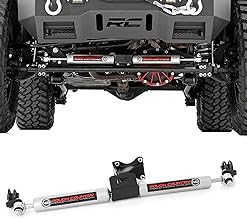
Rough Country N3 Dual Steering Stabilizer for 07-18 Jeep Wrangler JK - 8734930
$149.95
Check Price on AmazonSteering Stabilizer Upgrade: 35-inch tires triple the rotational inertia compared to stock tires, and they’re more susceptible to bump steer and death wobble. A dual steering stabilizer setup like this Rough Country kit helps dampen the increased steering effort and road feedback. The dual-shock configuration provides better control during aggressive off-road driving and reduces vibration transmitted to the steering wheel on washboard trails.
These three upgrades work synergistically with proper gearing to create a balanced 35-inch tire setup. Skipping any of them leaves performance or capability on the table.
Frequently Asked Questions
Can you run 35 inch tires without regearing?
Yes, you can physically run 35-inch tires with stock gears, but you’ll experience sluggish acceleration, constant transmission downshifting, reduced fuel economy, and increased wear on your clutch (manual) or torque converter (automatic). The engine operates below its optimal power band, making highway merging and hill climbing frustrating. Many owners try to “live with it” initially but regear within 6-12 months due to poor drivability.
What happens if I don’t regear with 35s?
Without regearing, your transmission works overtime to compensate for the larger tires. Automatics overheat more frequently and experience premature wear on clutch packs and the torque converter. Manual transmissions require excessive clutch slipping in first and second gear. You’ll also notice increased engine temperatures during highway driving as the motor lugs at low RPM under load. Long-term, you’re accelerating wear on expensive drivetrain components.
Is 4.56 gear ratio enough for 35 inch tires?
4.56 gears are a compromise — better than stock 3.73 or 4.10, but not ideal for 35-inch tires. You’ll regain some power and reduce transmission hunting, but throttle response still feels slightly sluggish compared to 4.88 or 5.13. Some owners choose 4.56 if they plan to return to smaller tires eventually or if they primarily drive highways at 75+ mph where lower RPM matters. For dedicated 35-inch setups, 4.88 or 5.13 is the better investment.
Do I need to regear front and rear axles?
Yes, absolutely. Both front and rear axles must have matching gear ratios. Mismatched gears cause the transfer case to bind because the front and rear driveshafts rotate at different speeds relative to wheel speed. This binding damages the transfer case, creates driveline vibration, and causes premature component failure. Always regear both axles simultaneously with identical ratios.
How much does it cost to regear a Jeep JK?
Professional regearing for both front and rear axles typically costs $1,600-2,400 total. This includes parts (ring and pinion sets, master install kits) and labor. The cost varies based on whether you need new carriers (adds $400-600), your geographic location, and shop rates. DIY regearing can save $800-1,200 in labor but requires specialized tools and expertise. Factor in common JK transmission issues that can arise from prolonged undergearing with oversized tires.
What gear ratio is best for 35s with automatic transmission?
5.13 gears are generally best for automatic transmission JKs running 35-inch tires, especially 4-door JKU models. The automatic transmission’s torque converter needs higher engine RPM to build hydraulic pressure and operate efficiently. 5.13 gears provide crisper shifts, better throttle response, and reduced transmission heat compared to 4.88. If you do extensive highway driving above 70 mph, 4.88 is still viable, but 5.13 delivers better all-around performance for mixed driving and off-road use.
Final Recommendations: Getting the Most from 35-Inch Tires
The bottom line: 4.88 gears for manual transmissions and mixed driving, 5.13 for automatics and off-road-focused builds. These ratios restore the power-to-weight balance that made your JK enjoyable to drive with stock tires. The investment of $1,600-2,400 for professional regearing transforms your JK’s drivability, protects your transmission from premature wear, and unlocks the true potential of 35-inch tires both on-road and off-road.
Don’t cut corners by running 4.56 gears or skipping regearing entirely. The compromises in performance and long-term reliability aren’t worth the temporary cost savings. Budget for both axles, plan the work around a locker installation if you’re considering that upgrade, and use a reputable differential shop with JK-specific experience.
If you’re still in the research phase of JK ownership, our JK Buyers Guide covers model year considerations and what to look for when shopping. For deeper dives into axle upgrades, lockers, and differential modifications, explore our drivetrain and axle upgrades pillar page.
Properly geared with 35-inch tires, your JK delivers the perfect balance of highway comfort and trail capability. The engine sings instead of lugs. The transmission shifts cleanly instead of hunting. And you’ll wonder why you waited so long to make the upgrade.
This article contains affiliate links. If you purchase through these links, we may earn a small commission at no extra cost to you. This helps support the site and allows us to continue creating content for the Jeep JK community.
Get the Free JK Build Planner
Complete PDF with mod checklists, gear ratios, tire sizing charts, and budget worksheets. Everything you need to plan your JK build.
No spam. Unsubscribe anytime. By subscribing, you agree to our Privacy Policy.
Allan
I'm Allan. I bought a 2014 Jeep Wrangler JKU and I research the hell out of every mod before I touch it. Everything here is tested or deeply researched on my own rig - no sponsored fluff, just honest findings.
Learn more about me →Get the JK Build Planner
Free PDF with complete build checklists, gear ratios, and tire fitment guides.
By subscribing, you agree to our Privacy Policy.
Related Articles

Jeep JK Towing Capacity: What Can Your Wrangler Actually Pull?
Disclosure: JeepJK Guide earns a commission on qualifying purchases made through links in this article, at no extra cost to you.
How to Choose Tire Size for Jeep Jk Lift Kit Compatibility
Lift kit and tire size compatibility is straightforward in concept but trips up a lot of JK owners in practice: the amount of suspension height you add...
Electric Winch vs Hydraulic Winch Jeep Jk Recovery
Affiliate Disclosure: JeepJK Guide earns a commission on qualifying purchases made through links on this page, at no extra cost to you.