Best Winch For Jeep Wrangler Jk
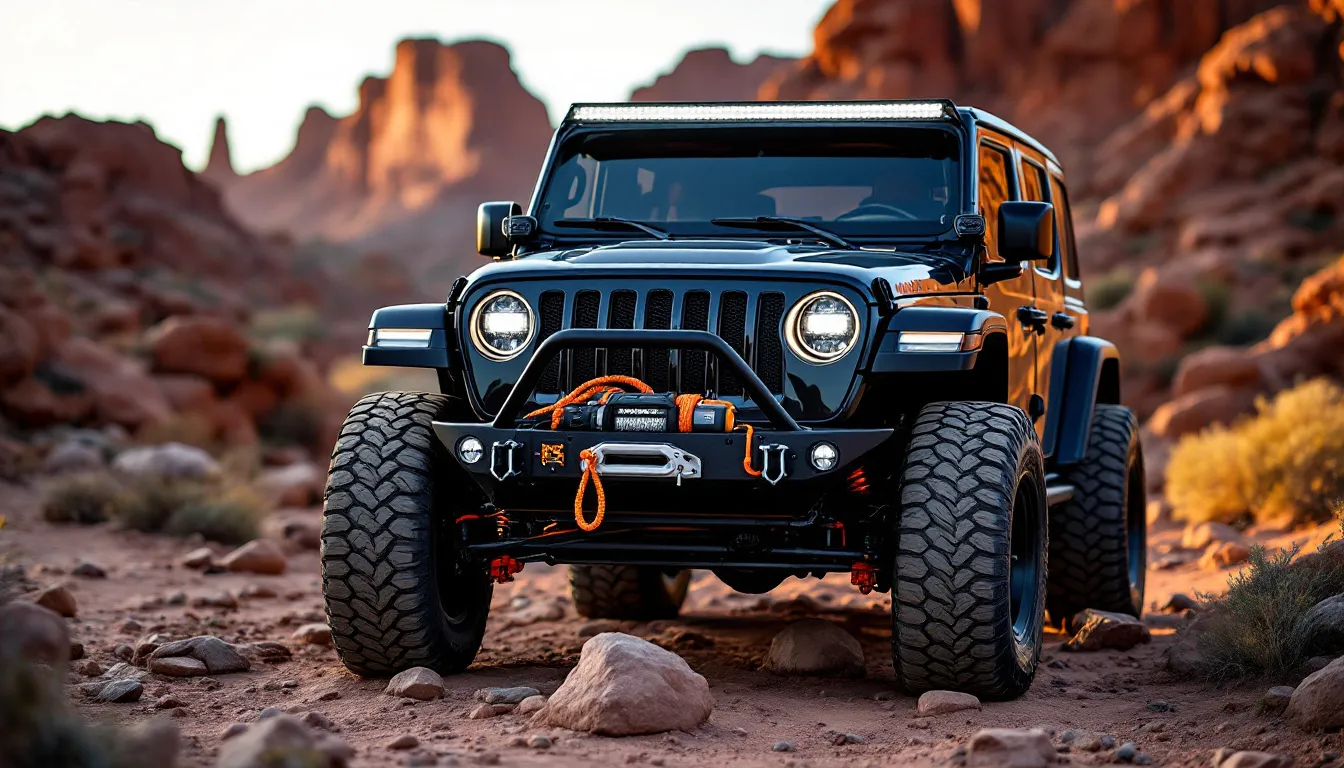
Best Winch For Jeep Wrangler JK: Sizing, Installation & Real-World Testing
I learned the most important lesson about winch sizing on a Saturday afternoon with a socket wrench in one hand and a bottle of PB Blaster in the other. My steel bumper install took the entire weekend — corroded bolts fought me every step, and the weight difference in steering was immediately noticeable once I finally got everything torqued down. But that first real winch recovery, pulling a stuck XJ out of a mud bog two months later, validated every frustrating hour of installation. The winch did its job without complaint.
Here’s the sizing formula that actually matters: multiply your Jeep’s curb weight by 1.5 to get minimum winch capacity. For a 2-door JK at 3,760 lbs, that’s 5,640 lbs minimum — but you’ll want 8,000-10,000 lbs to handle loaded trail weight and steep angles. A 4-door JKU at 4,129 lbs needs at least 6,193 lbs capacity, making 10,000-12,000 lb winches the practical choice.
You’re probably stuck between three winch decisions: capacity size, rope type, and whether your electrical system needs upgrading. By section three, you’ll have clear answers on all three. The Rubicon models with factory rock rails and upgraded axles carry extra weight that pushes you toward the higher capacity range, but every JK benefits from understanding the real-world scenarios where winch capacity makes the difference between self-recovery and waiting for a tow truck.
How to Size a Winch for Your Jeep JK (2-Door vs 4-Door)
The 1.5x multiplier exists for physics, not marketing. When your Jeep’s stuck in mud at a 30-degree angle, friction and grade resistance create loads far exceeding your vehicle weight. That’s when undersized winches overheat, stall, or fail completely.
Here’s your JK weight baseline for winch sizing:
- 2-door Sport (stock): 3,760 lbs curb weight → 5,640 lbs minimum winch capacity
- 2-door Rubicon (loaded): ~4,100 lbs with hard top, skid plates, full tank → 10,000 lb winch recommended
- 4-door Sport (stock): 4,129 lbs curb weight → 6,193 lbs minimum winch capacity
- 4-door Rubicon (trail ready): ~4,600 lbs with armor, roof rack, recovery gear → 12,000 lb winch recommended
The “bigger is better” myth costs you money and capability. A 15,000 lb winch on a 2-door JK adds unnecessary weight to your front axle, decreases approach angle with larger fairleads, and draws more amperage your alternator may not comfortably supply during extended pulls. Match your winch to your actual vehicle weight plus realistic cargo load.
JK model year weight variations from 2007-2018 show the 2012+ JKs run about 80-120 lbs heavier than early models due to structural reinforcements and safety equipment. If you’re running 35-inch tires, steel bumpers, and a full complement of recovery gear, add 300-500 lbs to your base calculation. That’s when a 4-door owner moves from “maybe 10,000 lbs is enough” to “definitely need 12,000 lbs.”
The practical sweet spot for most JK owners: 10,000 lb winch for 2-doors, 12,000 lb for 4-doors. This gives you comfortable overhead for loaded trail trips, helps friends in heavier rigs, and won’t leave you maxing out your winch motor on routine recoveries.
Steel Cable vs Synthetic Rope: What JK Owners Need to Know
Your rope choice affects every aspect of winching: how you handle it during recovery, what happens if it fails under load, and how much maintenance you’ll actually do.
Safety under failure: Steel cable stores energy like a spring under tension. When it snaps, it whips with enough force to break bones or shatter windshields. Synthetic rope goes limp when it breaks — it falls to the ground rather than whipping back. That first real winch recovery I mentioned earlier used synthetic rope, and handling it without gloves was possible because it doesn’t fray into metal splinters like steel cable does.
Weight and handling: A 100-foot steel cable weighs 18-22 lbs and feels like wrestling a python when you’re respooling. The synthetic equivalent weighs 4-6 lbs and coils easily with one hand. When you’re winching alone in 95-degree heat, that weight difference matters more than any spec sheet suggests.
Durability and environment: Steel cable handles abrasion over rocks better than synthetic — it’ll drag across sharp sandstone without immediate damage. Synthetic rope deteriorates from UV exposure, requires inspection for broken fibers, and can’t touch hot exhaust manifolds during recovery operations. If you wheel in the desert where rope touches hot rocks, steel’s heat resistance becomes relevant.
Cost and replacement: Steel cable runs $40-80 for quality replacements. Synthetic rope costs $120-200 for equivalent length and strength rating. But synthetic rope lasts 5-7 years with proper care, while steel cable often needs replacement after 3-4 years due to fraying and kinking from repeated use.
Use-case recommendations: Choose synthetic rope if you’re trail riding in typical dirt, mud, and forest conditions where you might handle the rope frequently and want the safety margin under failure. Choose steel cable if you’re rock crawling in extreme heat, dragging the rope over sharp basalt regularly, or winching in sub-zero temperatures where synthetic rope becomes stiff and harder to manage.
For most JK owners who wheel a few times per month in varied terrain, synthetic rope delivers better real-world usability despite the higher upfront cost.
Electrical System Requirements: Will Your JK’s Alternator Handle It?
The electrical question stops more JK owners from installing winches than any other concern. Here’s what actually matters.
Your stock 160-amp alternator (2012+ JK) handles typical winching fine. A 10,000 lb winch pulls 400-450 amps under maximum load, but that’s only during the hardest part of the pull when the winch is working against maximum resistance. Most of your recovery happens at 150-250 amp draw. Your battery supplies the surge current, and your alternator replenishes it over the next 10-15 minutes of driving.
2007-2011 JKs came with 136-amp alternators. These still work for winching, but you’ll want to let your battery recover between consecutive pulls. If you’re the group’s designated recovery vehicle doing 3-4 back-to-back recoveries, consider an alternator upgrade to a 200-amp unit.
Real-world scenario: You’re winching your loaded 4-door up a muddy slope. The winch draws 300 amps for 45 seconds during the hardest pull. Your battery voltage drops from 12.6V to 11.8V. You drive for 10 minutes to the next obstacle, and your alternator brings battery voltage back to 12.4V. This is normal operation — no upgrade needed.
When you DO need electrical upgrades: If you’re running dual batteries, a high-output sound system, auxiliary LED light bars, and an onboard air compressor, your alternator’s already working hard before the winch enters the equation. Add all your accessories’ amp draw together. If you’re exceeding 100 amps with lights and accessories before winching, a 200-250 amp alternator upgrade makes sense.
Installation requirements are straightforward: positive cable to battery positive terminal (2-gauge wire minimum), negative cable to frame ground (clean metal contact, not painted surface), and a waterproof solenoid mount. Most winches include the wiring harness and installation hardware. Budget 2-3 hours for first-time installation.
The key reassurance: your stock JK electrical system is engineered to handle occasional high-load accessories like winches. Jeep knew buyers would add recovery equipment. You’re not pushing the system beyond its design limits.
Winch-Rated Bumper Requirements for JK Installation
You cannot mount a winch to your factory plastic bumper. The factory bumper cover is cosmetic — it’ll rip off under winch load. You need a steel bumper with a winch mounting plate rated for your winch’s capacity.
That steel bumper install I mentioned at the start taught me what “winch-rated” actually means in practice. The mounting plate spans the frame rails and distributes winch pull force across the entire front frame structure. Cheap bumpers mount to the frame with two bolts per side. Quality winch bumpers use 6-8 mounting points with backing plates behind the frame. When you’re pulling 8,000 lbs through mud, those extra mounting points prevent frame damage.
Bumper style options break down to three categories:
- Stubby bumpers: Cut back from the frame horns, maximum approach angle (improved from ~25° to ~32°), winch-rated but minimal front-end protection
- Mid-width bumpers: Cover most of the front end, balance approach angle (~28-30°) with protection, most popular choice for mixed street/trail use
- Full-width bumpers: Maximum protection, accommodate fog lights and auxiliary equipment, reduce approach angle to ~26-27°
Those corroded bolts during my install? That’s real-world JK ownership. The factory frame bolts corrode from road salt and mud. Budget an extra 3-4 hours beyond advertised install time for penetrating oil soaks, breaker bars, and possibly drilling out seized bolts. This is a weekend project that requires metric socket set, torque wrench, and patience.
The steering weight difference is noticeable immediately. Adding 80-100 lbs to your front bumper moves your center of gravity forward. At parking lot speeds, steering feels heavier. At highway speeds, it’s neutral. This is normal — not a problem, just a characteristic of steel bumpers. Your factory steering components handle it fine as long as you’re not stacking a steel bumper, winch, auxiliary lights, and a 1/4-inch steel skid plate all at once without considering ball joint and tie rod condition.
Expect to spend $400-800 on a quality winch-rated bumper for a JK. The $250 options from unknown brands use thinner steel and fewer mounting points. This isn’t the component to cheap out on — it’s the foundation for your entire recovery system.
Wireless vs Wired Remote: Control Options for JK Winching
Picture this scenario: You’re stuck on a 25-degree off-camber slope, driver-side wheels in a rut, winching to a tree uphill and to your right. With a wired remote, you’re standing at your front bumper feeding cable and watching the hook — but you can’t see if your Jeep’s tracking straight or sliding sideways into the deeper rut. With a wireless remote, you’re 40 feet away with clear sight lines to all four wheels and the winch hook.
Positioning advantage: Wireless remotes let you stand where you can see the entire recovery situation. You can watch for rope snags on your bumper, monitor tire placement, and stop the winch instantly if something starts going wrong. Wired remotes limit you to a 10-12 foot radius from your bumper — often the worst possible position to assess a recovery.
Reliability trade-off: Wired remotes work every time, regardless of mud, water, or interference. The cable provides both control signal and visual confirmation that you’re connected. Wireless remotes depend on battery charge, signal transmission, and electronic components that can fail when wet or impacted. Most wireless failures happen because the remote’s been sitting in a console for months with dead batteries.
Safety considerations: Both systems require a minimum safe distance during pulls. You should never stand in line with the rope whether you’re holding a wired or wireless remote. The positioning advantage of wireless matters most for complex recoveries where you need multiple pull angles or you’re working alone without a spotter.
The practical recommendation: Buy a winch with a wired remote standard, then add a wireless remote upgrade ($80-150) if you find yourself doing frequent solo recoveries or complex multi-angle pulls. Having both options means you’re covered when wireless batteries die or when you want the security of a hardwired connection during sketchy recoveries.
Most modern winches offer wireless remotes as accessories compatible with their wired systems. You’re not locked into one or the other — you’re choosing your default setup with the option to expand later based on actual trail experience.
Winch Maintenance: Keeping Your Recovery Gear Ready
Winches fail from neglect, not use. Counterintuitively, a winch that sits unused for six months is more likely to fail than one used monthly. Seals dry out, contacts corrode, and grease hardens when winches sit idle.
Monthly maintenance (10 minutes):
- Power out 15-20 feet of rope, inspect for fraying (steel cable) or broken fibers (synthetic rope)
- Cycle the winch in and out under no load to keep the motor contacts clean
- Check battery terminal connections on solenoid wires — corrosion here causes most “winch won’t work” field failures
- Spray silicone lubricant on clutch lever and engagement mechanism
Post-recovery maintenance (after every use):
- Clean mud and debris from fairlead, rope, and winch drum before it dries and hardens
- Re-spool rope under light tension (20-30 lbs) to prevent loose wraps that bind under load
- Inspect rope anchor point on drum — this is where synthetic rope shows damage first
- Check for any unusual sounds or grinding during retrieval that indicates gear damage
Yearly deep maintenance:
- Remove winch from bumper, open housing, inspect gear teeth and bearings
- Re-grease gears with marine-grade lithium grease (not automotive grease — it doesn’t handle moisture)
- Replace worn or damaged bushings before they cause shaft wobble
- Test amp draw under load to establish baseline performance for future comparison
Winter storage for seasonal wheelers:
- Spray corrosion inhibitor (Fluid Film or Boeshield T-9) on all metal components
- Store wireless remotes inside the vehicle with batteries removed
- Power rope fully in, then out six feet to prevent drum compression set
- Disconnect battery terminal if vehicle sits unused for months — parasitic draw from winch solenoid will drain your battery
The maintenance window that catches most JK owners: that 2-3 year mark when you haven’t actually needed the winch yet. You assume it’s fine because it worked great during installation testing. Then you need it on the trail, hit the power button, and nothing happens. It’s usually corroded contacts in the solenoid or a degraded ground connection — both preventable with quarterly inspection.
Treat your winch like insurance: you maintain it hoping you never need it, but you’re grateful it works perfectly when the situation demands it.
Frequently Asked Questions
What size winch for Jeep JK 2-door?
A 10,000 lb capacity winch is the recommended size for a 2-door JK. The 2-door JK weighs 3,760-4,100 lbs depending on trim and modifications. Using the 1.5x safety multiplier, that puts you at 5,640-6,150 lbs minimum capacity, but real-world trail weight with gear, full tank, and passengers pushes you toward 10,000 lbs for comfortable overhead.
What size winch for Jeep JK 4-door?
A 12,000 lb capacity winch is ideal for a 4-door JKU. The 4-door weighs 4,129-4,600 lbs loaded, requiring 6,193-6,900 lbs minimum capacity by the 1.5x formula. The 12,000 lb capacity gives you enough power for loaded trail trips and steep angle recoveries without maxing out your winch motor.
Can I install a winch without replacing my bumper?
No, you cannot safely mount a winch to the factory plastic JK bumper. The factory bumper is a cosmetic cover with no structural load capacity. You need a steel winch-rated bumper with a mounting plate that distributes load across the frame rails. Budget $400-800 for the bumper in addition to winch cost.
Do I need to upgrade my alternator for a winch?
Most JK owners do not need alternator upgrades for winching. The 2012+ JK’s 160-amp alternator handles typical recovery scenarios where your battery supplies surge current and your alternator replenishes it during driving between pulls. Upgrade to 200+ amps only if you’re running dual batteries and multiple high-draw accessories simultaneously.
Steel cable or synthetic rope for desert wheeling?
Synthetic rope works well for desert wheeling despite conventional wisdom favoring steel. Modern synthetic rope handles heat up to 200°F, and desert recoveries rarely involve the rope touching hot surfaces for extended periods. The weight savings and safety under failure make synthetic the better choice unless you’re specifically dragging rope over sharp basalt or through campfire rings.
How often should I service my winch?
Monthly quick checks plus post-recovery cleaning plus yearly deep maintenance. The monthly check takes 10 minutes and involves cycling the winch, inspecting rope, and checking electrical connections. Full yearly service requires removing the winch and re-greasing gears. JK buying guide for model year specifications covers the electrical system differences between early and late model JKs that affect maintenance requirements.
Final Thoughts: Choosing the Right Winch for Your JK
You now have the framework to choose your winch with confidence: 10,000 lbs for 2-doors, 12,000 lbs for 4-doors, synthetic rope for most users, and no electrical upgrades needed for stock JKs. The winch-rated bumper is non-negotiable. The wireless remote is nice but not essential for your first setup.
Here’s what I wish someone had told me before that steel bumper install weekend: get it done now, not after your first stuck situation. My 2025 build plan includes a lift, bumpers, 35s, Raptor coat, and overland gear — but the winch came first because recovery capability enables everything else. You can’t confidently tackle harder trails without reliable self-recovery equipment.
The JK platform makes winch installation straightforward compared to newer vehicles with integrated plastic bumper systems and sensor arrays. Comparing JK vs JL platforms for recovery gear compatibility shows the JK’s simpler front-end structure actually works in your favor here — fewer components to relocate, more aftermarket bumper options, and no sensor recalibration needed.
Match your winch to your actual wheeling style, not aspirational scenarios. If you’re weekend trail riding with a group, a 10,000 lb winch with synthetic rope covers 95% of realistic recovery situations. If you’re solo expedition building for remote trails, step up to 12,000 lbs and add the wireless remote from day one.
The capability you gain from proper recovery equipment transforms your relationship with difficult terrain. You’ll take the optional line that used to look too sketchy. You’ll help other wheelers instead of driving past stuck vehicles. And when you inevitably misjudge that mud bog depth, you’ll winch out in 10 minutes instead of waiting hours for a tow truck. Start with other essential JK upgrades after you’ve got recovery capability sorted — but sort it first.
Get the Free JK Build Planner
Complete PDF with mod checklists, gear ratios, tire sizing charts, and budget worksheets. Everything you need to plan your JK build.
No spam. Unsubscribe anytime. By subscribing, you agree to our Privacy Policy.
Allan
I'm Allan. I bought a 2014 Jeep Wrangler JKU and I research the hell out of every mod before I touch it. Everything here is tested or deeply researched on my own rig - no sponsored fluff, just honest findings.
Learn more about me →Get the JK Build Planner
Free PDF with complete build checklists, gear ratios, and tire fitment guides.
By subscribing, you agree to our Privacy Policy.
Related Articles

Jeep JK Towing Capacity: What Can Your Wrangler Actually Pull?
Disclosure: JeepJK Guide earns a commission on qualifying purchases made through links in this article, at no extra cost to you.
How to Choose Tire Size for Jeep Jk Lift Kit Compatibility
Lift kit and tire size compatibility is straightforward in concept but trips up a lot of JK owners in practice: the amount of suspension height you add...
Electric Winch vs Hydraulic Winch Jeep Jk Recovery
Affiliate Disclosure: JeepJK Guide earns a commission on qualifying purchases made through links on this page, at no extra cost to you.