Best Recovery Winch for Jeep JK: Heavy-Duty Off-Road Recovery Options
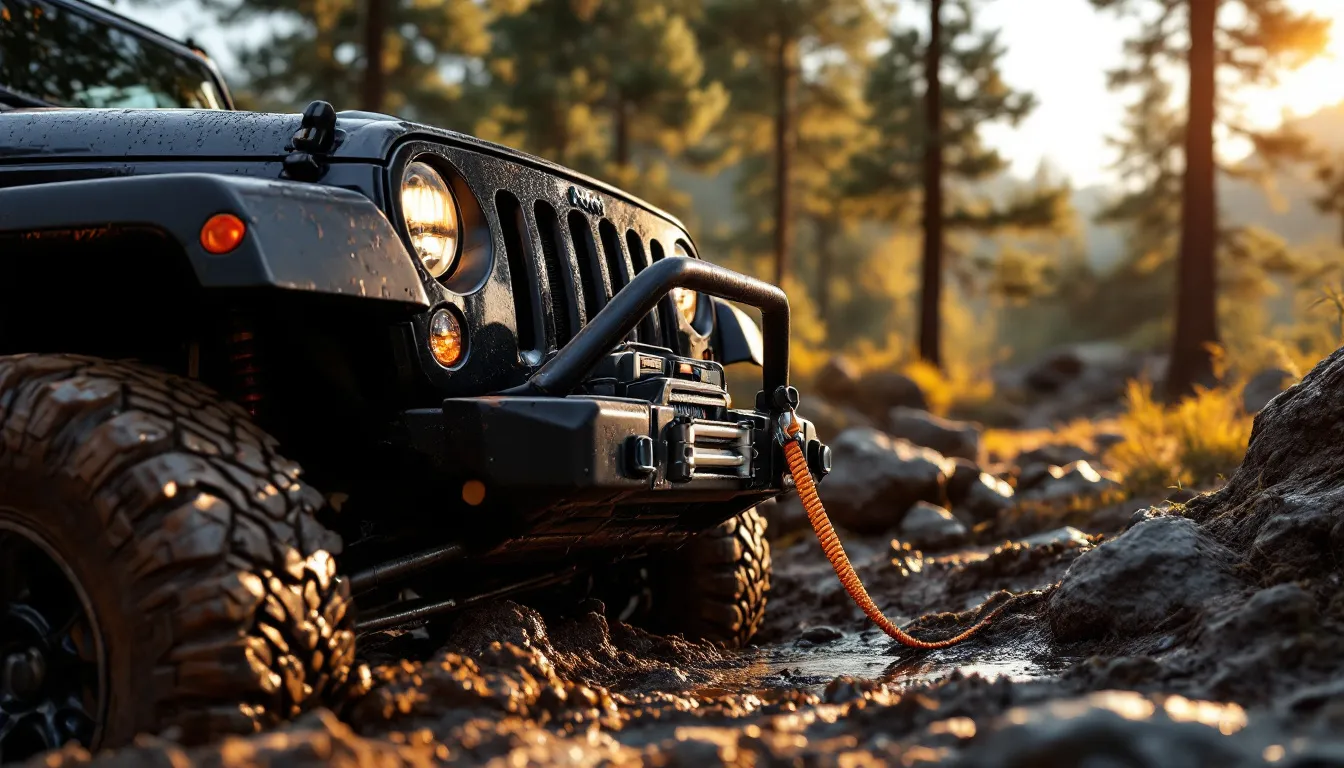
Best Recovery Winch for Jeep JK: Heavy-Duty Off-Road Recovery Options
There’s a particular moment of dread when your Jeep sinks deeper into mud than expected, or a rock ledge catches your undercarriage at an angle you didn’t anticipate. That’s when you realize recovery gear isn’t optional—it’s the difference between a good story and a very expensive tow bill.
Your Jeep JK might clear obstacles and conquer terrain most vehicles can’t touch, but eventually, you’ll face that one mudhole, rock wash, or sand pit that demands mechanical advantage to escape. That’s when a quality recovery winch transforms from “nice to have” into “saved the day.”
Choosing the best recovery winch for Jeep JK means balancing capacity, weight, rope type, and installation compatibility across 2007-2018 model years. I spent an entire Saturday installing a steel front bumper and winch on my JK. The corroded bolts behind the factory fascia refused to cooperate—three of them stripped before I finally reached for the angle grinder. The weight difference was noticeable immediately. That 35 kg addition to the front end changed how the Jeep responded during parking lot maneuvers. But a month later, when I helped pull a stuck Hilux out of sand near Langebaan, every stripped bolt and wrestling match with heavy gauge wire suddenly felt justified.
This guide covers everything you need to make an informed winch decision: specific capacity sizing for 2-door vs 4-door JKs, the synthetic vs steel rope debate, waterproof ratings that actually matter, and bumper compatibility across model years. Whether you’re building your first recovery setup or upgrading an aging winch, you’ll find the data to choose confidently. If you’re still choosing the right JK for your needs, getting the recovery gear sorted now will shape your entire build plan from day one.
Quick Picks: Top Recovery Winches for Jeep JK
Best Overall: The VR EVO 12-S delivers 12,000 lb capacity with IP68 waterproof protection and synthetic rope in a proven package that handles JK curb weights with margin to spare.
Best Value: For budget-conscious builders, pairing a quality 10,000 lb winch with the TYT synthetic rope upgrade kit gives you modern safety at half the cost of premium units.
Best Premium: If you demand the most reliable recovery system, the VR EVO 12-S’s IP68 waterproof rating and sealed motor housing ensure performance in water crossings and muddy recoveries where lesser winches fail.
Get new guides by email
One email when we publish something worth reading. Unsubscribe anytime.
Affiliate Disclosure
Best Recovery Winches for Jeep JK: Detailed Reviews
VR EVO 12-S Electric 12V Winch – 12,000 lb Synthetic Rope
The VR EVO 12-S sits at the top of the JK recovery hierarchy for solid reasons. Its 12,000 lb pull capacity handles even heavily modified 4-door JKs with 35” tires and armor plating, while the IP68 waterproof rating means you can submerge this winch in creek crossings without worrying about motor damage. The synthetic rope saves roughly 30 lbs compared to steel cable equivalents—weight you’ll feel during installation and appreciate every time you turn the steering wheel afterward.
Key specs: 12V DC motor, 90 ft synthetic rope, wireless remote, integrated circuit breaker, 5.5 hp series-wound motor. The planetary gear system delivers consistent pulling power across the full rope length, and the automatic load-holding brake prevents rollback under tension.
Pros:
- IP68 waterproof certification for deep water crossings
- Synthetic rope is safer and lighter than steel cable
- 12,000 lb capacity handles JK + modifications + recovery angles
- Wireless remote works up to 50 feet for safe operation
Cons:
- Premium pricing at $1,044.24
- Heavier than 10k winches (still lighter than steel cable options)
- Requires quality bumper mount—won’t work on factory plastic
JK compatibility: Fits all 2007-2018 Wranglers with aftermarket winch-rated bumpers. The weight distribution works well with JK geometry, though you’ll notice slightly heavier steering compared to stock. If you’re following JK model year compatibility notes, pay attention to front suspension upgrades on pre-2012 models that might affect winch placement.
When I bolted that winch to my steel bumper, the weight difference became immediately apparent in steering feel. But what really stuck with me was how the winch performed weeks later during that first real recovery. The moment that synthetic rope came under tension, the smooth power delivery of that 5.5 hp motor made sense. No strain, no jerking—just steady, controlled pulling power. That’s the difference between a winch that works and a winch you trust with your Jeep’s life.

VR EVO 12-S Electric 12V Winch – 12,000 lb Pull Capacity, Synthetic Rope, IP68 Waterproof
Check Price on Amazon →TYT Synthetic Winch Rope Kit – 1/4” x 50’ Upgrade
Not everyone needs a complete winch replacement. If you already own a winch but it’s still running the original steel cable, the TYT synthetic rope kit transforms it into a modern recovery tool. This 10,000 lb capacity rope weighs about 80% less than equivalent steel cable, making it drastically safer if it breaks under load. The protective sleeve guards against abrasion on rocks and tree bark, while the included heavy-duty hook, rubber stopper, and safety pull strap create a complete replacement package.
Key specs: 1/4” diameter UHMWPE synthetic rope, 50 ft length, 10,000 lb minimum breaking strength, heat-resistant protective sleeve, forged steel hook with safety latch.
Pros:
- Drastically lighter than steel cable for easier handling
- Won’t store energy like steel—safer if rope breaks
- UV-resistant coating for multi-year outdoor exposure
- Complete kit with all necessary hardware at $29.99
Cons:
- 10,000 lb capacity limits use to lighter JKs or favorable angles
- Shorter 50 ft length vs some factory cables
- Requires periodic inspection for fraying
- Not compatible with all winch models (check drum diameter)
JK compatibility: Works with most aftermarket winches using standard drum sizes. Ideal for 2-door Sport and Sahara builds without heavy armor. If you’re running a modified 4-door with 35” tires and steel bumpers, consider this a backup rope rather than primary recovery gear.
The rope conversion makes tremendous practical sense. Every time you need to handle the winch line—spooling it out, wrapping around a tree, or repositioning after a pull—that weight reduction means less exhaustion and better control. At $29.99, this is the most affordable way to modernize recovery gear you already own.

TYT Synthetic Winch Rope Kit - 1/4" x 50' with 10000 lbs Strength, Protective Sleeve, Heavy Duty Hook
Check Price on Amazon →Choosing Between 10k and 12k Capacity for Your Build
The capacity decision comes down to your specific JK configuration and how you plan to actually use it. A bone-stock 2-door Sport with 30” tires and minimal gear weighs around 3,800 lbs—a quality 10,000 lb winch provides adequate margin. But add 35” tires, steel bumpers, rock sliders, and a full tank of gas, and that same 2-door approaches 4,500 lbs. Now you’re pushing the limits of a 10k winch when accounting for recovery angles.
Four-door JKUs start heavier. A stock Unlimited Rubicon with minimal modifications sits around 4,200 lbs. Load it with camping gear, a rooftop tent, and recovery equipment, and you’re easily at 4,800-5,000 lbs. The 1.5x safety factor rule (covered in detail below) pushes you toward 12,000 lb capacity when you do the math.
The VR EVO 12-S represents the modern standard for serious JK recovery. Its combination of capacity, waterproofing, and synthetic rope addresses the real-world scenarios you’ll face on technical trails. The TYT rope kit offers a smart upgrade path if you’re working with a limited budget and an existing winch that just needs modernization.
How to Size a Recovery Winch for Your Jeep JK
Winch capacity isn’t about matching your JK’s curb weight—it’s about accounting for real-world recovery conditions where angles, mud suction, and vehicle loading multiply the force required. The industry standard uses a 1.5x minimum safety factor: multiply your loaded vehicle weight by 1.5 to determine minimum winch capacity.
Start with your actual JK weight. A 2-door Sport weighs approximately 3,760 lbs from the factory. A 4-door Unlimited Rubicon starts around 4,200 lbs. But you’re not recovering a factory-spec Jeep. Add your modifications:
- Steel bumpers (+120 lbs front, +80 lbs rear)
- Rock sliders (+100 lbs)
- 35” tires (+80 lbs)
- Skid plates (+60 lbs)
- Winch and mount (+85 lbs)
- Full tank of gas (+90 lbs)
- Typical camping/recovery gear (+200 lbs)
That stock 4,200 lb JKU now weighs around 5,000 lbs loaded.
Here’s the math: 5,000 lbs × 1.5 = 7,500 lb minimum capacity. But that assumes a perfect straight pull on level ground. Real recoveries involve angles.
Pulling at 45 degrees to your anchor point reduces effective winch power by roughly 30%. That 10,000 lb rated winch delivers about 7,000 lbs of pulling force at a 45-degree angle—barely adequate for our 5,000 lb loaded JKU, with zero safety margin. A 12,000 lb winch at the same angle delivers approximately 8,400 lbs of force, providing meaningful cushion when things go wrong.
Capacity recommendations by JK configuration:
- 2-door Sport/Sahara (stock or light mods): 10,000 lb minimum
- 2-door Rubicon or heavily modified 2-door: 12,000 lb recommended
- 4-door (all trims) with modifications: 12,000 lb minimum
- 4-door with heavy armor and 37” tires: Consider 12,000+ lb professional-grade
The other factor is mud suction and obstacle loading. A JK stuck axle-deep in mud experiences tremendous suction force that can double or triple the weight the winch needs to overcome. Rock ledges create similar multiplication effects when your differential catches on stone and you’re pulling both vehicle weight and the friction of dragging undercarriage across rock.
Different JK trim levels have different curb weights, which matters more than many builders realize. A Rubicon starts 200-300 lbs heavier than a Sport thanks to Dana 44 axles, electronic lockers, and heavier suspension components. Know your starting point before you calculate capacity needs.
The math consistently points toward 12,000 lb capacity for most modified JKs, especially 4-door builds. It’s the sweet spot between adequate recovery power and manageable weight/cost. Going smaller saves money initially but limits your capability when you need it most. Going larger (15,000+ lb) adds weight and cost without meaningful benefit for a JK’s realistic recovery scenarios.
Synthetic Rope vs Steel Cable: Which Is Better for JK Recovery?
The rope versus cable debate has largely been settled in favor of synthetic among serious off-roaders, but understanding the specific trade-offs helps you make the right choice for your use case. Modern UHMWPE (ultra-high-molecular-weight polyethylene) synthetic rope weighs roughly 80% less than equivalent steel cable while maintaining comparable breaking strength.
Steel cable advantages:
- Extreme abrasion resistance against sharp rocks
- No UV degradation over time
- Handles heat from friction better during long pulls
- Familiar maintenance—just keep it lubricated
Steel cable disadvantages:
- Stores enormous kinetic energy—deadly whip if it breaks
- Heavy and difficult to handle (50+ lbs for typical winch cables)
- Develops sharp burrs that cut hands during handling
- Rusts and degrades from water exposure
Synthetic rope advantages:
- 80% lighter than steel for easier handling and storage
- Floats in water (easier to retrieve)
- Doesn’t store kinetic energy—drops harmlessly if it breaks
- Soft and flexible—won’t cut hands during use
- Can be spliced in the field if damaged
Synthetic rope disadvantages:
- UV exposure degrades strength over 3-5 years (requires replacement)
- Abrasion against sharp edges can cut fibers
- Melts under extreme heat from friction
- Typically costs more initially
- Requires protective sleeve for longevity
In practical JK recovery situations, synthetic rope wins on safety alone. Steel cable under tension stores tremendous energy—if the cable snaps or an anchor fails, that cable whips with enough force to cause serious injury or death. Synthetic rope simply falls to the ground if it breaks. This single factor has driven the industry shift toward synthetic across nearly all modern winch applications.
The weight difference matters more than you’d expect. When you’re standing in mud trying to unspool 50 feet of line to reach an anchor tree, wrestling with 50 lbs of steel cable is exhausting. Synthetic rope lets you walk the line out with one hand, secure your anchor, and get back to the winch controls without being pre-fatigued.
The TYT synthetic rope upgrade kit represents an affordable entry into synthetic rope if you already own a winch with steel cable. For $29.99, you gain the safety and handling advantages of modern rope without replacing the entire winch. Just verify your winch drum diameter compatibility before ordering.
Maintenance differences: Steel cable requires periodic lubrication and inspection for broken wire strands. Synthetic rope needs UV protection (storage bag when not in use), occasional washing to remove grit, and inspection for abraded or melted sections. Neither is maintenance-free, but synthetic rope care is simpler and doesn’t involve messy cable lubricants.
Longevity: Quality steel cable can last 10+ years with minimal use and proper maintenance. Synthetic rope typically needs replacement every 3-5 years depending on UV exposure and use frequency. Factor this replacement cost into your decision—you’ll buy 2-3 synthetic ropes over the lifespan of one steel cable.
For most JK owners, synthetic rope is the right choice. The safety factor alone justifies the premium. The only compelling reason to stick with steel cable is if you regularly encounter extremely sharp rock edges that would quickly shred synthetic fibers, or if you’re on a tight budget and already own a functional steel cable winch.
JK Winch Installation & Bumper Compatibility
Installing a recovery winch on your JK requires an aftermarket bumper with integrated winch mount—the factory plastic bumper has zero structural capacity for winch loads. Plan for a full weekend if this is your first bumper swap, especially on JKs from 2007-2012 where frame-mounted bolt corrosion is nearly guaranteed.
Budget time for the factory bumper bolts. After years of exposure to road salt and water crossings, what should be a 10-minute bolt removal routinely turns into hours of heat, penetrating oil and a breaker bar. Once the old bumper is off and the steel replacement bolted up, the weight difference in steering is immediately noticeable—expect 5-10 lbs more effort at the wheel during parking lot maneuvers.
Installation overview:
-
Remove factory bumper—Six main bolts plus fog light harnesses. Expect corrosion on bolts. Use penetrating oil 24 hours before starting. Heat helps on stubborn bolts.
-
Mount winch to bumper—Most bumpers accept winch mounting before bumper installation. Torque bolts to winch manufacturer specs (typically 30-40 ft-lbs).
-
Install bumper assembly—Two-person job due to weight (bumper + winch = 120-140 lbs combined). Align frame mounts carefully.
-
Wire to battery—Run 2-gauge or larger wire directly to battery with inline circuit breaker (150-200 amp). Solenoid mounts near winch. Ground to frame.
-
Test and spool—Spool rope under light load to set layers properly. Test wireless remote range and all functions before heading out.
Wire gauge matters: Don’t cheap out on wiring. A 12,000 lb winch pulls 400+ amps under full load. Undersized wire creates voltage drop that reduces winch performance and creates fire risk. Use 2-gauge minimum, 1-gauge for runs over 10 feet.
Bumper compatibility by model year:
All 2007-2018 JKs use the same frame mounting points, but some considerations by year:
- 2007-2011: Higher corrosion risk on frame bolts. Inspect frame closely for rust-through before mounting heavy bumper.
- 2012-2018: Improved frame coating reduces corrosion. Generally easier installation.
- All years: 2-door and 4-door use same mounting points. Bumper fit is identical.
If you’re tracking common JK issues by model year, add “corroded bumper bolts” to the 2007-2012 checklist. Budget extra time for bolt extraction on older JKs.
Quality bumper options:
The Nilight front bumper offers clean lines with integrated winch plate and D-ring mounts at $289.99. It’s a straightforward design that gets the job done without excessive weight.
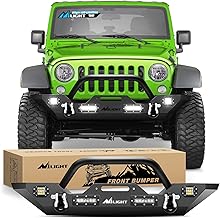
Nilight Front Bumper Compatible for 2007-2018 Jeep JK Wrangler with Integrated Winch Mount
Check Price on Amazon →The OEDRO bumper includes LED lights and D-rings at $229.35, making it the value play if you want integrated lighting without adding separate light bars.

OEDRO Front Bumper with LED Lights, Compatible for 2007-2018 Jeep Wrangler JK & Unlimited
Check Price on Amazon →The Hooke Road bumper fits both JK (2007-2018) and newer JL/JT models at $263.99—a future-proof choice if you plan to eventually upgrade to a newer Wrangler but want to move your recovery setup.

Hooke Road Sturdy Front Bumper Compatible with 2007-2018 Jeep JK and 2018+ JL Wrangler
Check Price on Amazon →Installation tips from experience:
- Use anti-seize on all bolts—Your future self will thank you during the next bumper swap
- Test winch before final bumper installation—Easier to troubleshoot wiring with bumper off the Jeep
- Mount solenoid up high—Water crossings will flood low-mounted solenoids
- Protect wire routing—Use split loom or protective conduit where wire passes through sharp edges
- Keep remote near driver—Wireless remotes work great until the battery dies; have a wired backup
The installation is absolutely doable for DIY owners with basic tools: socket set, torque wrench, wire crimpers, and a helper for lifting the bumper assembly. Budget 6-8 hours for first-time install, 3-4 hours if you’ve done it before. The toughest part isn’t technical complexity—it’s dealing with corroded bolts and the physical weight of moving 100+ lb assemblies around.
Comparison Table: JK Recovery Winch Options
| Winch Model | Capacity | Rope Type | Waterproof | Price | Best For |
|---|---|---|---|---|---|
| VR EVO 12-S | 12,000 lb | Synthetic | IP68 | $1,044.24 | Modified 4-door JKs, water crossings |
| TYT Rope Kit | 10,000 lb | Synthetic | N/A | $29.99 | Upgrading existing steel cable |
| Nilight Bumper | N/A | N/A | N/A | $289.99 | Clean aesthetic, integrated winch mount |
| OEDRO Bumper | N/A | N/A | N/A | $229.35 | Budget-friendly with LED lights |
| Hooke Road Bumper | N/A | N/A | N/A | $263.99 | Future-proof for newer Wrangler transition |
Frequently Asked Questions
What size winch do I need for a Jeep JK?
Most JK owners should choose a 12,000 lb capacity winch for adequate recovery power. Stock 2-door models can use 10,000 lb winches, but any 4-door JK or modified 2-door with armor and larger tires needs 12k capacity minimum. Use the 1.5x rule: multiply your loaded vehicle weight by 1.5 to determine minimum winch capacity. For a typical modified 4-door JKU weighing 5,000 lbs, that math points to 7,500 lbs minimum—but accounting for recovery angles, 12,000 lbs gives you the safety margin you need.
Can I install a winch on the factory JK bumper?
No. The factory plastic bumper has no structural capacity to support winch loads or recovery forces. You must install an aftermarket steel bumper with integrated winch mount before adding a recovery winch. Quality winch bumpers range from $230-$290 depending on features like integrated lights and D-ring mounts. The Nilight, OEDRO, and Hooke Road options all deliver solid performance at different price points.
Is synthetic rope better than steel cable?
Yes, synthetic rope is the better choice for most JK owners. It weighs 80% less than steel cable, doesn’t store dangerous kinetic energy if it breaks, and won’t develop sharp burrs that cut your hands. The main trade-off is UV degradation over 3-5 years requiring replacement, versus 10+ year lifespan for steel cable. The safety advantage of synthetic rope outweighs the longevity disadvantage. If you ever need to recover in the field, synthetic rope simply drops if it fails. Steel cable becomes a lethal whip.
What is the best recovery winch for Jeep JK?
The VR EVO 12-S with 12,000 lb capacity and synthetic rope is our top pick. Its IP68 waterproof rating handles water crossings and mud recoveries, while the synthetic rope provides safe handling. The 12k capacity covers modified 4-door JKs with margin for recovery angles. If you need more JK-specific buying guidance, check our complete JK buying guide.
How long does it take to install a winch on a JK?
Expect 6-8 hours for a first-time bumper and winch installation, or 3-4 hours if you’ve done it before. The mechanical work is straightforward, but corroded factory bumper bolts on 2007-2012 JKs add significant time. You’ll need a helper for lifting the bumper assembly, and proper electrical wiring to the battery takes time to route cleanly and protect from abrasion. Use penetrating oil on those bolts 24 hours before you start—your future self will appreciate the time saved wrestling with corrosion.
Do I need a waterproof winch for my JK?
Waterproof rating (IP67 or IP68) is highly recommended for JK winches. You’ll encounter water crossings, mud, rain, and snow if you use your Jeep off-road. An IP68-rated winch like the VR EVO 12-S can be fully submerged without motor damage, giving you confidence to recover from creek beds and puddles without worrying about electrical failure. When you’re deep in mud or crossing a swollen wash, the last thing you want is doubt about whether your winch will actually work.
Final Thoughts on Choosing a JK Recovery Winch
Getting stuck without recovery gear transforms a fun weekend trail run into an expensive tow bill and a humbling lesson in preparedness. Your Jeep JK is built to tackle obstacles that stop lesser vehicles, but even the most capable rig eventually finds terrain that demands mechanical advantage to escape. That’s when a quality recovery winch shifts from “someday upgrade” to “why didn’t I install this sooner?”
The path forward is clear: 12,000 lb capacity with synthetic rope and waterproof protection represents the modern standard for JK recovery. The VR EVO 12-S delivers this combination with proven reliability, while options like the TYT rope upgrade kit let you modernize an existing winch without breaking the budget. Budget for a quality steel bumper ($230-$290) in addition to the winch itself—the factory plastic bumper simply cannot handle recovery loads.
My own winch installation over that long Saturday—wrestling corroded bolts, routing heavy gauge wire, noticing that immediate difference in steering weight—proved worthwhile the first time I actually needed it. Pulling a buddy’s loaded 4-door out of a creek crossing, watching the synthetic rope take up tension smoothly, feeling the VR EVO’s consistent pulling power through multiple cycles—that’s when the investment pays off. You’re not buying a winch for the 99% of trails where you don’t need it. You’re buying peace of mind for the 1% where it’s the only thing between you and calling for expensive help.
Next steps:
- Choose your winch—12,000 lb with synthetic rope for most modified JKs, 10,000 lb for light 2-door builds
- Budget for a quality bumper—$230-$290 for a winch-rated steel bumper with proper mount
- Plan installation time—Full weekend for first-timers, especially on older JKs with bolt corrosion
- Practice using it—Find a safe area to practice recoveries before you need the winch in a real emergency
If you’re still deciding between JK generations, our guide on deciding between a JK and newer JL covers how recovery gear requirements differ between platforms. The JK’s proven aftermarket support and lower entry cost make it an excellent platform for building a capable recovery-equipped trail rig that won’t leave you stranded when the terrain gets serious.
Free: JK Fluids at a Glance
Every fluid, spec and capacity for the 2007-2018 Wrangler JK on one page, plus a cut-out glovebox card. Checked against the owner's manuals. From the JK Service Kit.
Email me the download and new guides when they are published. Unsubscribe anytime. Privacy Policy.
Allan
I'm Allan. I own a 2014 Jeep Wrangler JKU and I research the hell out of every mod before I touch it. When I've fitted something to my own Jeep, I say so. Everything else is researched from manufacturer specs and other owners' reports. No sponsored fluff.
Learn more about me →Free: JK Fluids at a Glance
Every fluid, spec and capacity for the 2007-2018 JK on one page, plus a glovebox card.
Email me the download and new guides when they are published. Unsubscribe anytime. Privacy Policy.
Related Articles
Best Winch for Jeep JK: Rated Pull, Line Speed & Mount Compatibility Guide
A jeep winch is an electric or hydraulic recovery device mounted to the front (or rear) of your Jeep that spools a steel cable or synthetic rope under...
Jeep JK Door Removal and Storage During Off-Road Season
Pull your Jeep JK's doors off, and something shifts. The whole driving experience changes — wind noise replaces engine sound, sightlines open up, and...
Adaptive LED Headlight Systems Jeep JK: Automatic Beam Adjustment Explained
Adaptive LED headlight systems for the Jeep JK sound like they should do something fancy — something that tracks corners or levels itself with a load....