Jeep JK Soft Top vs Hardtop MPG and Weather Protection
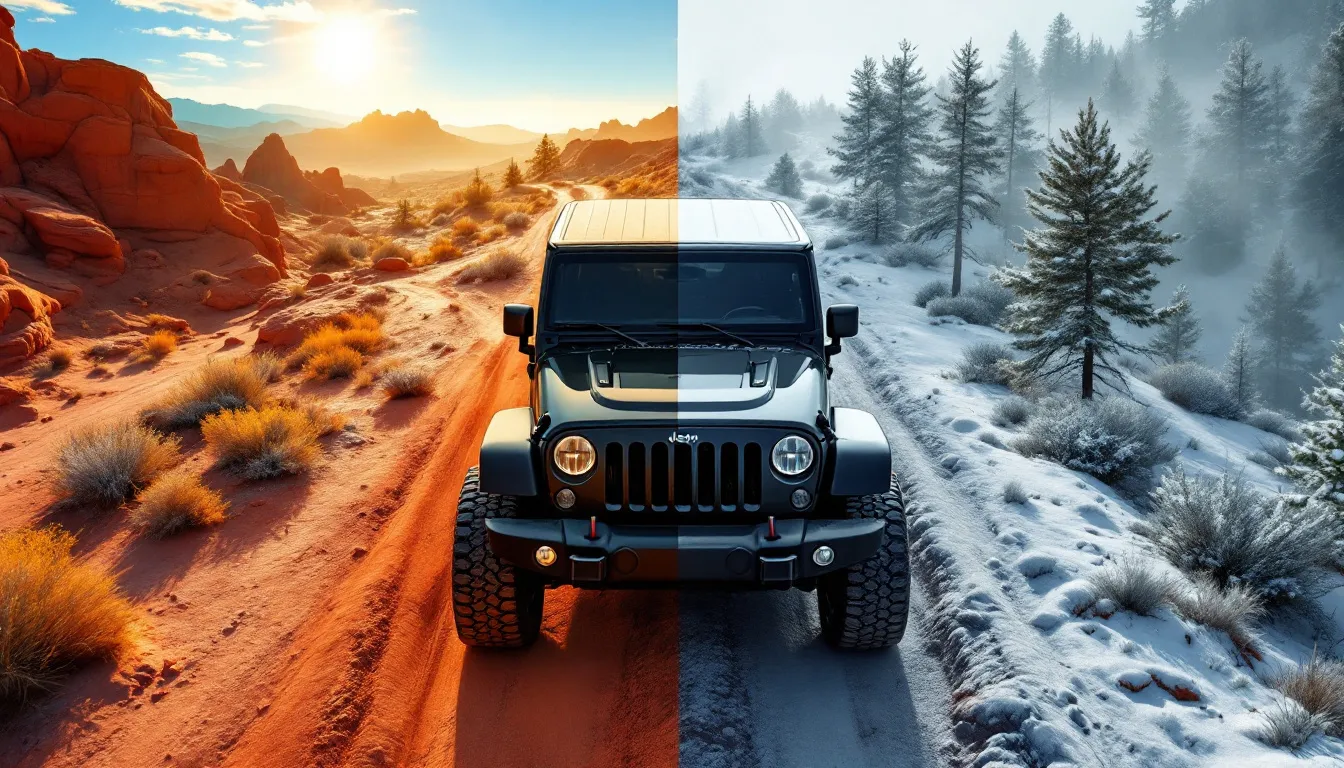
Jeep JK Soft Top vs Hardtop MPG and Weather Protection
Introduction
The soft top vs hardtop debate is something every 2007-2018 Wrangler owner grapples with — and honestly, there’s no universal winner. Both have legitimate trade-offs worth understanding.
A hardtop locks down weather protection, quiets the cabin on the highway, and provides security. A soft top gives you that open-air feel, weighs less, and costs significantly less to buy. On fuel economy? The difference is smaller than the hype suggests — your tire size and gearing matter far more than which top is bolted on top.
Both the 2-door JK and 4-door JKU can run either setup, though the specs shift between body styles. Before you commit, check our complete JK soft top vs hard top comparison guide or the broader JK Buyers Guide to see how the top choice fits into your full build plan.
Get new guides by email
One email when we publish something worth reading. Unsubscribe anytime.
Soft Top vs Hardtop MPG: What the Numbers Actually Tell You
Here’s the uncomfortable truth: the fuel economy difference between a soft top and a hardtop is real, but it’s small — community reports consistently point to less than 1 MPG variation that you can actually pin on the top itself. Everything else in your setup (tire diameter, gearing, weight) drowns out that difference.
The reason this matters is that most of us aren’t driving stock JKs anymore. A lifted JK with oversized tires is a completely different animal from the EPA baseline, and a real-world example from a JKU owner daily-driving a built rig in Cape Town illustrates the point. He was running 35-inch tires with a lift kit, swapping between soft and hardtops for different seasons. The fuel consumption hit he was seeing? Nearly all of it came from the tire size and the gear ratio fighting each other — switching between tops produced no measurable change at the pump. The soft top flapping in the wind is audible at highway speed, but it’s not the fuel economy killer people assume.
Engineers will tell you the hardtop is marginally more efficient on the highway because it creates cleaner airflow separation than a soft top at speed. That’s technically true. But “marginal” is doing a lot of work in that sentence. If you’re already running 37-inch tires, you’ve already taken a bigger fuel economy hit from rolling resistance and aerodynamic frontal area than any top swap will recover. Similarly, if your 33s are on a stock 3.73 ratio, your engine is working harder at every speed. See our gear ratio guide for 33-inch tires on JK for the full breakdown on why this matters more than your top choice.
The takeaway is simple: don’t choose your top based on MPG. The gains are too small to measure without instrumented testing on identical vehicles. Choose based on how and where you actually drive — then optimize your fuel economy by addressing tires and gearing first. That’s where the real improvements live.
Weather Protection: Where the Hardtop Wins and Where It Doesn’t
The hardtop is the clear winner for weather protection in almost every condition — but a well-maintained soft top is tougher than its reputation suggests, and knowing where it really struggles helps you plan around the weaknesses.
Heavy rain is where the soft top shows its limits. Your zipper is the first point of failure, especially on older JKs (2007-2011) that have been UV-soaked for a decade or more. The coil teeth develop microscopic splits that let water seep in during sustained rain. A hardtop eliminates that entirely — rubber gaskets compressed against rigid panels don’t have a zipper failure mode.
Snow and cold add a second problem. Soft top fabric can crack if you manipulate it below roughly 40°F (4°C). Hardtops don’t care about temperature swings. In the Sun Belt, that’s irrelevant. Anywhere with genuine winter weather, it’s a real operational constraint.
Where the soft top closes the gap is in moderate rain with a quality replacement. An OEM-spec top like the OEM Replacement Soft Top with Tinted Windows – Black Diamond (10-18 JKU) — designed specifically for the 2010-2018 JKU — uses multi-layer Black Diamond fabric that resists water intrusion far better than worn OEM material. Pair it with fresh hardware, and your weak point becomes the zipper sliders, not the fabric. Keep a set of Zipper Replacement Sliders #10 Coil on hand — they’re heavy-duty replacements that cost under $12. Swap them before a zipper failure becomes a leak.
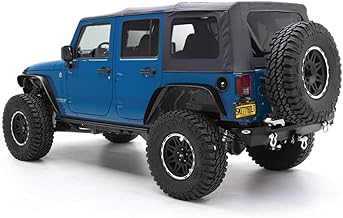
OEM Replacement Soft Top with Tinted Windows – Black Diamond (10-18 JKU) - SB9085235
Check Price on Amazon →Here’s the most important weather protection lesson for soft top owners: the fabric rarely fails first — the zippers do. Replace them proactively and you’ve solved 80% of the rain complaints that give soft tops a bad name.
For a complete breakdown of the best soft top options for your JKU, see best soft top options for JK Unlimited.
Soft Top vs Hardtop: Head-to-Head Comparison Table
Choosing between a soft top and a hardtop comes down to which trade-offs matter most for your specific situation. This table covers every major factor.
| Factor | Soft Top | Hardtop |
|---|---|---|
| MPG Impact | Minimal; slightly worse at highway speed | Marginally better aerodynamics at highway speed |
| Rain Protection | Good when maintained; zippers are failure point | Excellent; rigid seals eliminate zipper risk |
| Snow/Ice Protection | Poor; fabric can crack below ~40°F | Excellent; unaffected by temperature extremes |
| Road Noise (NVH) | Noticeable wind and flutter above 55 mph | Significantly quieter; car-like cabin experience |
| Summer Heat | Vents quickly; cabin cools fast | Retains heat; requires active ventilation to cool |
| Installation Effort | One person, 20-30 minutes | Two people minimum; 45-90+ minutes |
| Entry-Level Cost | Lower ($200-$500 quality replacement) | Higher ($1,000-$1,500+ OEM or aftermarket) |
| Open-Air Access | Full removal in minutes | Not designed for frequent removal |
| Weight | 30-50 lbs (JKU soft top) | 140-200 lbs (JKU hardtop panels) |
| Winter Cracking Risk | High if manipulated in freezing temps | None |
For most JK owners, noise reduction is the deciding factor. Drivers who spend real highway time in their Jeeps consistently report that soft top wind noise is the biggest daily frustration with the platform.
If you’re running a 2-door JK, check our best soft top options for 2-door JK — fitment and weight specs are notably different from the JKU.
The Seasonal Swap Strategy: Best of Both Worlds
Running a hardtop in winter and a soft top in summer is the strategy that maximizes both weather protection and open-air access — and it’s more practical than most new JK owners assume.
The trick is treating each top correctly when it goes into storage. A soft top that gets folded up dirty will emerge next summer cracked, with stiff zippers and UV damage baked into the material. A few minutes of prep work before storage makes a huge difference over the long run.
Before storing your soft top for winter, clean the fabric properly and apply 303 Products Marine Aerospace Protectant — the UV-blocking formula prevents the surface oxidation that turns older soft tops chalky and brittle. Apply it again before you reinstall in spring. A freshly treated top seals minor porosity and sheds the first spring rains better than an untreated one.
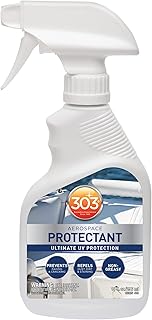
303 Products Marine Aerospace Protectant – UV Protection – Repels Dust, Dirt, & Staining
Check Price on Amazon →Swapping a hardtop on for winter is straightforward with two people, but the JKU’s three-piece setup (two freedom panels plus the rear tub) means you’re managing heavy, awkward pieces. Store each panel flat, not standing on edge — that prevents warping of the ABS shell over a full winter.
Keep your seasonal swap on a maintenance schedule alongside your other JK upkeep. Check our JK maintenance schedule to make sure the soft top prep doesn’t become something you forget until you’re pulling it out of storage and discovering it’s cracked.
If you want open-air driving without full top removal during summer, a JK bikini top or sun shade setup is worth exploring — both work equally well on the 2-door JK and JKU.
Keeping Your Soft Top in Peak Condition: The Real Maintenance You Need
A soft top that’s maintained gets years more life than a neglected one — and the maintenance routine is straightforward enough that most owners can handle it without any special skills.
The 2007-2009 JK soft tops used a slightly different rear seam design compared to the revised 2012-2018 versions. That earlier seam is more prone to delamination at the corners because the bonding method was changed mid-generation. If you’re running a pre-2010 top, inspect those corner seams every season and catch any separation early.
Your quarterly maintenance checklist is simple:
- Clean the fabric with a soft brush and mild soap — never petroleum-based cleaners, which degrade the waterproof coating
- Inspect zippers for bent coil teeth, fraying tape, or sluggish movement
- Replace zipper sliders at the first sign of skipping or catching — don’t wait for a full failure
- Apply UV protectant to exposed vinyl and fabric surfaces
- Check window clarity — cloudy vinyl windows can be polished back to transparency with dedicated plastic polish
- Test door seals for compression — a gap at the top corner of a door seal causes most in-cab drips that people blame on the top
For zippers, keep heavy-duty replacement sliders on hand. After every cleaning, follow up with 303 Protectant — it works on both fabric and vinyl windows, making it a one-pass solution for your entire soft top.
Which Top Should You Choose? A Decision Framework
The right top for your JK depends on your climate, how you actually use the vehicle, and what drives your daily experience. Real-world community knowledge beats spec sheets every time.
One experienced JK owner’s philosophy — prioritizing what the community has learned through real-world use over manufacturer marketing — consistently produces better decisions than comparing feature lists. The JK community has tens of thousands of hours logged on how each top performs in salt air corrosion, desert dust infiltration, and freeze-thaw cycling. That’s data you can trust more than any marketing material.
Choose a hardtop if:
- You live where winter weather is real (snow, ice, sustained temps below 40°F)
- You drive highway miles regularly and road noise bothers you
- You rarely remove the top for open-air driving
- You have a JKU with regular passengers who expect a quiet, weatherproof cabin
- Security matters — soft tops can be cut
Choose a soft top if:
- You’re in a warm climate and want open-air access frequently
- Budget is a real constraint — quality soft tops cost a fraction of a hardtop
- You have a 2-door JK and want the classic Jeep open-air experience
- You’re not driving in heavy winter conditions
- Weight matters (especially if you’ve already added armor and a lift)
For 2-door JK owners, the soft top almost always wins as your primary setup. The vehicle’s character suits open-air driving, and the weight savings are proportionally more meaningful on a shorter wheelbase. For JKU owners with families or regular highway commutes, a hardtop is the more practical long-term choice.
See how the top choice works with your trim level in our Rubicon vs Sport vs Sahara breakdown, and check the full JK soft top vs hard top guide for detailed aftermarket options.
The single most actionable takeaway: match your top to your worst-case driving condition, not your best-case scenario. That decision will save you from frustration down the road.
Frequently Asked Questions
These are the questions JK owners ask most when deciding between soft and hardtops — answered directly because the choice affects how you use the vehicle every single day.
Does a hardtop improve MPG on a Jeep JK?
Marginally, and only at highway speeds. Community reports show the aerodynamic difference between soft and hardtops produces less than 1 MPG improvement in most driving conditions. If fuel economy is a priority, your tire size and gear ratio will have a far bigger impact than which top you run. See our best soft tops for JK Unlimited for options that fit your current setup.
Are Jeep JK soft tops waterproof?
A new or well-maintained soft top is highly water resistant, not technically waterproof — and that distinction matters in heavy rain. The fabric itself usually performs well; the zippers and door seal interfaces are where water enters. An OEM-spec replacement like the OEM Replacement Soft Top with Tinted Windows – Black Diamond (10-18 JKU) uses quality multi-layer fabric that resists penetration, but even this top requires zipper maintenance to stay watertight. Inspect and lubricate zippers every season.
How hard is it to swap a soft top and hardtop on a JK?
A soft top swap is a one-person job that takes most owners 20-30 minutes once they’ve done it a few times. A JKU hardtop requires two people minimum because the panels are heavy and awkward — the full tub section alone weighs over 100 lbs. If you plan to swap seasonally, a hardtop hoist or storage cart makes the process repeatable without help. Check options for 2-door owners in our best soft tops for 2-door JK roundup.
Does a soft top or hardtop handle highway noise better on a JK?
The hardtop is significantly quieter. Soft top fabric generates wind noise and flutter at speeds above 55-60 mph, which many owners find fatiguing on long drives. A hardtop brings road noise closer to what you’d expect in a conventional SUV. No aftermarket soft top eliminates this entirely — thicker fabric helps, but the physics of a flexible top at speed work against noise reduction.
Can I use a soft top in winter on a Jeep JK?
Yes, but with precautions. Soft top fabric becomes brittle in sustained cold and can crack if you manipulate it below roughly 40°F. The bigger concern is your zippers — ice buildup in the coil can damage sliders and the zipper tape itself. If you’re in a cold climate running a soft top through winter, warm the vehicle before opening the top, and never force a frozen zipper. Many JK owners in cold climates keep a hardtop for winter and swap to soft top once temperatures reliably stay above freezing.
What’s the real-world experience of daily-driving a lifted JK with oversized tires?
A JKU with a lift kit and 35-inch tires is a completely different animal from stock. Fuel consumption in mixed driving settles around 14 liters per 100 km with that setup — not great by modern standards, but expected for a 2-tonne body-on-frame vehicle. The turning circle gets noticeably worse with bigger tires, which matters more in tight urban driving than on the trail. Road noise from aggressive tread compounds is significant, which is why many owners add sound deadening to the floor and rear wheel wells. The practical lesson: build your JK for the driving you actually do, not the specifications you think you need.
Free: JK Fluids at a Glance
Every fluid, spec and capacity for the 2007-2018 Wrangler JK on one page, plus a cut-out glovebox card. Checked against the owner's manuals. From the JK Service Kit.
Email me the download and new guides when they are published. Unsubscribe anytime. Privacy Policy.
Allan
I'm Allan. I own a 2014 Jeep Wrangler JKU and I research the hell out of every mod before I touch it. When I've fitted something to my own Jeep, I say so. Everything else is researched from manufacturer specs and other owners' reports. No sponsored fluff.
Learn more about me →Free: JK Fluids at a Glance
Every fluid, spec and capacity for the 2007-2018 JK on one page, plus a glovebox card.
Email me the download and new guides when they are published. Unsubscribe anytime. Privacy Policy.
Related Articles
Best Winch for Jeep JK: Rated Pull, Line Speed & Mount Compatibility Guide
A jeep winch is an electric or hydraulic recovery device mounted to the front (or rear) of your Jeep that spools a steel cable or synthetic rope under...
Jeep JK Door Removal and Storage During Off-Road Season
Pull your Jeep JK's doors off, and something shifts. The whole driving experience changes — wind noise replaces engine sound, sightlines open up, and...
Adaptive LED Headlight Systems Jeep JK: Automatic Beam Adjustment Explained
Adaptive LED headlight systems for the Jeep JK sound like they should do something fancy — something that tracks corners or levels itself with a load....