Power Door Mirror Upgrade Jeep JK: Heated Towing Mirrors (2007–2018 Guide)
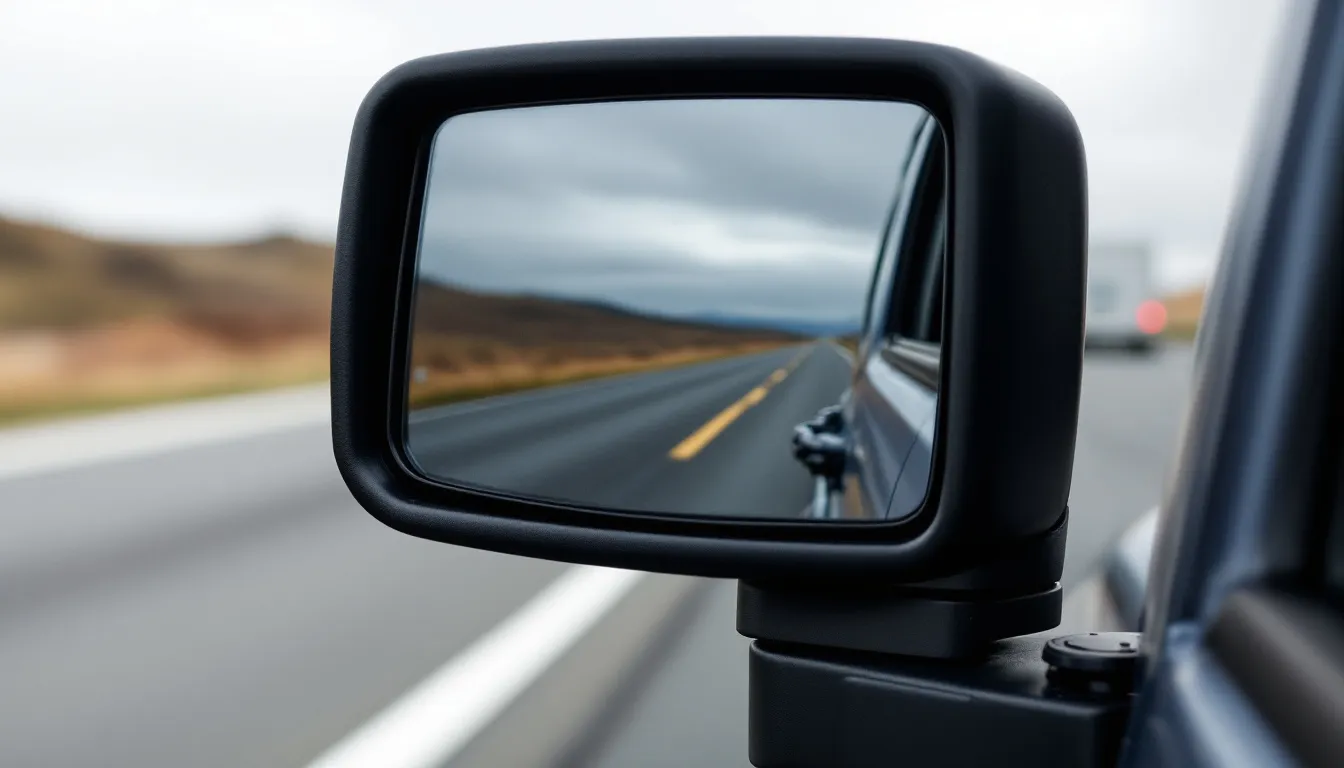
Power Door Mirror Upgrade Jeep JK: Heated Towing Mirrors (2007–2018 Guide)
If you’ve ever towed anything wider than your Jeep JK with stock mirrors, you already know the problem. Those factory units stick out maybe 3–4 inches from your body — nowhere near enough to see past a utility trailer, boat, or even a modest cargo hauler. That blind spot on both sides isn’t just annoying. It’s a genuine safety issue that gets worse every time you change lanes or back into a campsite.
A power heated towing mirror upgrade solves three problems at once: it extends your field of view past the trailer, it clears frost and condensation automatically, and it gives trailing traffic a turn signal warning. If you tow regularly with your JK, this isn’t a luxury upgrade — it’s a safety essential that transforms the towing experience from white-knuckle to manageable.
This guide walks you through every 2007–2018 JK and JKU model year, explains which trim levels come wired for what, covers installation start to finish, and helps you pick the right mirror for your budget and use case.
Top JK Heated Towing Mirrors at a Glance
Before we dive into the detailed breakdown, here are the five best power heated towing mirrors for 2007–2018 JK and JKU models. Each solves the visibility problem differently depending on your budget and installation complexity.

Door Off Mirror for Jeep Wrangler One Pair Rectangular Mirrors fit for 1997~2006 2007~2017 Jeep Wran
Check Price on Amazon →
JOYTUTUS Wrangler Mirrors Doors Off Compatible with Wrangler TJ JK & Unlimited, Wrangler JK Side Mir
Check Price on Amazon →
A-Premium Pair (2) Driver and Passenger Side Manual Door Mirror | Compatible with Jeep Wrangler JK 2
Check Price on Amazon →
Driver&Passenger Side Mirror Compatible with Jeep Wrangler 2007-2017 Black | 1 Pair Set Manual Foldi
Check Price on Amazon →
Left Driver Side Mirror Compatible with Jeep Wrangler JK 2007 2008 2009 2010 2011 2012 2013 2014 201
Check Price on Amazon →Why Your Stock JK Mirrors Aren’t Cutting It for Towing
Let’s be direct: stock Jeep JK mirrors were designed for trail driving and daily commutes, not towing. They extend only 3–4 inches beyond your body, which sounds small until you realize a standard utility trailer or boat sits 7–8 feet wide. Your JK’s body is roughly 73.7 inches at the widest point. Do the math, and you’re looking at a 1–2 foot blind spot on each side of whatever you’re pulling.
That gap in visibility creates three specific problems:
1. You can’t see past the trailer. A loaded boat or utility trailer extends well beyond your JK’s footprint. You’re changing lanes blind every time you merge, and you’re backing into campsites without knowing what’s at the trailer’s edge.
2. Condensation and frost kill mirror visibility fast. Morning dew, rain glaze, and light frost coat unheated mirror glass quickly. You end up wiping mirrors at every fuel stop rather than keeping your eyes on the road. In heavy rain, visibility disappears entirely for 30–60 seconds at a time.
3. Turn signals don’t reach the back of a wider load. Factory JK mirrors carry no integrated turn signal. When your trailer extends 2 feet beyond your body width, drivers behind you can’t see your brake lights or turn indicators through the extended cargo. That’s a recipe for a rear-end incident.
The trim level matters here. Talk to any JK forum regular, and they’ll tell you that Sahara and Rubicon models built from 2011 onward came with a full factory wiring loom for power adjustment, heating, and turn signals. Sport trims — especially pre-2011 — often arrived from the factory with only the power adjustment circuit populated, leaving the heating wire unplugged.
The hard truth: stock JK mirrors legally and practically fail to provide adequate rear-view coverage when towing anything wider than your body. This isn’t a judgment call — it’s a safety gap that an upgrade closes.
Get new guides by email
One email when we publish something worth reading. Unsubscribe anytime.
What Makes a Towing Mirror Different (And Why You Need the Right One)
Before you start shopping, understand the difference between a standard power mirror and a towing mirror. They’re not the same thing, and mixing them up wastes money.
A standard power mirror is electrically adjustable — you can angle the glass up and down, in and out using a switch inside the cabin. Useful, but not wide. A tow mirror takes that power adjustment and adds extended reach — typically 2–4 extra inches of outward extension using a wider arm or a fold-out design. For towing, you specifically need the tow mirror version.
Beyond extension, here are the six features that separate a real towing mirror from a basic replacement:
-
Extended reach (the core difference). A tow mirror slides or folds outward, giving you 2–4 additional inches of visibility past a standard mirror arm. This directly addresses the trailer-width blind spot. Standard power mirrors don’t do this.
-
Heated glass element. This is the single most impactful feature for all-weather towing. Heated mirrors clear condensation and light frost in under two minutes flat. Not all of them heat the entire glass surface — budget units often heat only a lower strip. Confirm full-surface heating before you buy.
-
Split-glass (spotter) design. Many quality tow mirrors include a small convex spotter glass in the lower corner of the main mirror. It adds a wide-angle view perfect for backing the trailer into tight spots and handling the close-quarters maneuvers where blind spots bite hardest.
-
Integrated turn signal repeater. A turn signal light built into the mirror housing gives trailing traffic early warning when you’re changing lanes. Requires tapping into the door harness turn-signal wire — verify your JK’s harness supports this before paying extra for the feature.
-
3-bolt JK mount standard. Every 2007–2018 JK and JKU uses the same three-bolt mirror base. This is your compatibility gold standard. Any mirror labeled for JK/JKU should match this footprint, but verify on the listing before purchasing.
-
Power-fold capability (optional but useful). Electrically folding mirrors protect the extended arms in tight parking garages or narrow trails. This matters if your JK pulls double duty as an off-road rig and daily driver. Adds cost but eliminates the annoyance of manually folding extended mirror arms on every trip into town.
JK Heated Towing Mirror Comparison Table
Here’s a quick reference comparing all five top-pick mirrors across key compatibility and feature specs:
| Product | Compatibility | Heated Glass | Power-Fold | Turn Signal | Price | Best For |
|---|---|---|---|---|---|---|
| Door Off Mirror (Budget) | 2007–2017 JK/JKU | No | Manual | No | $29.99 | Tight budget, door-off trail use |
| JOYTUTUS Wrangler Mirrors | 2007–2018 JK/JKU | Optional | Manual | No | $69.99 | Mid-range, reliable build |
| A-Premium Manual Door Mirror | 2007–2018 JK/JKU | No | Manual | No | $69.99 | OEM-style replacement, daily use |
| Driver & Passenger Side Mirror | 2007–2017 JK/JKU | No | Manual | No | $69.91 | Pair pricing, matched fitment |
| Left Driver Side Mirror | 2007–2015 JK | No | N/A | No | $40.59 | Single-side repair, budget option |
Which JK Model Years and Trims Come Ready for Power Heated Mirrors?
Not every Jeep JK arrives from the factory with the wiring harness needed for a heated mirror upgrade. Compatibility depends on three factors: your model year, your trim level, and whether the factory populated the necessary connector pins. Use this compatibility chart as your reference guide — it covers every 2007–2018 JK and JKU configuration.
| Model Year Range | Trim Level | Door Config | Factory Harness | Plug-and-Play? | Extra Work Needed |
|---|---|---|---|---|---|
| 2007–2010 | Sport | 2-door & 4-door | Power adjust only | No | Adapter + fused heat wire |
| 2007–2010 | Sahara/Rubicon | 2-door & 4-door | Power + heat circuit (unpopulated) | No | Heat wire from fuse block |
| 2011–2014 | Sport | 2-door & 4-door | Power adjust only | No | Adapter + fused heat wire |
| 2011–2014 | Sahara/Rubicon | 2-door & 4-door | Full (power + heat + signal) | Yes | None |
| 2015–2018 | Sport | 2-door & 4-door | Power adjust only | No | Adapter + fused heat wire |
| 2015–2018 | Sahara/Rubicon | 2-door & 4-door | Full (power + heat + signal) | Yes | None |
The 2011 model year is the major dividing line. Chrysler refreshed the JK door harness in 2011, adding a dedicated heated-glass circuit to Sahara and Rubicon builds. Pre-2011 Sahara and Rubicon models technically have the circuit printed on the harness diagram, but the connector pin often leaves the factory unpopulated — meaning you’ll need to run a fused wire from your fuse block to complete the circuit.
Here’s the good news on the door-count question: a 2-door JK and a 4-door JKU (Unlimited) share the exact same mirror mount geometry and electrical connectors. Door count does not affect mirror compatibility. What matters is trim level and model year — pick the right mirror for those two specs, and it fits both body styles.
For Sport trim owners on any year, a $10–$20 pigtail adapter lets you tap into the existing power-adjust connector and branch a new fused wire for the heat element. It’s straightforward electrical work, but it does require a little skill with a crimp tool and a multimeter.
Installing Power Towing Mirrors on a JK: Step-by-Step
Here’s how to swap out your old mirrors for heated towing units. The job takes 60–90 minutes per side for most JK owners, and you don’t need anything fancier than hand tools and a basic understanding of automotive electrics.
Before you start: Disconnect the negative battery terminal. Any electrical work on the door harness starts here — it’s a safety step that takes 30 seconds and prevents accidental shorts.
1. Pop the interior door panel. Use a trim panel removal tool to pop the clips around the perimeter of the panel. These clips break easily, so be gentle. Set the panel aside on a clean surface where you won’t step on it.
2. Locate and disconnect the existing mirror wiring connector. You’ll find it near the upper front corner of the door cavity. Press the release tab (it’s usually a small rectangular button) and pull the connector straight back. Don’t twist it — straight back is key.
3. Remove the three mirror mounting nuts. They’re 10 mm sockets. Support the mirror assembly from outside the door as you remove the last nut — these units are heavier than they look, and the last thing you want is a mirror dropping and damaging your paint.
4. Pull the old mirror through the door aperture. Route the wiring through carefully. Don’t let the wire catch on the door edge.
5. Feed the new mirror’s wiring harness through the door aperture. If your replacement includes a turn signal wire, identify it now while you’re working outside the door. Turn signal wires often connect separately to the door harness turn-signal circuit.
6. Seat the new mirror on the three mounting studs and torque the nuts. Most JK mirror studs call for snug but not aggressive fastening — aim for around 70–80 in-lb of torque. Check your mirror’s instruction sheet for the exact spec, because different brands vary slightly.
7. Connect the wiring harness. If you’re running a plug-and-play setup, the connector mates directly. If you’re running an adapter for the heat circuit or turn signals, complete those connections now before you close up the door panel.
8. Test every function before reinstalling the door panel. Power adjust the mirror in all four directions — up, down, in, out. Feel for the heated glass element (it should feel warm within 90 seconds). If equipped, verify the turn signal cycles with your ignition. This step takes 60 seconds and saves you from having to tear the door panel apart a second time because something doesn’t work.
The most common mistake? JK owners skip the function test and reinstall the door panel, then discover the heater doesn’t work. Now you’re pulling the panel off again. Don’t be that person.
Tools you’ll actually need:
- 10 mm socket and ratchet
- Trim panel removal tool (or a flathead screwdriver works in a pinch)
- Wire crimps or heat-shrink connectors (if you’re adding the heat circuit wire)
- Multimeter (highly recommended for testing that the heat circuit is live)
Shopping for JK Towing Mirrors: How to Filter the Options
The market for JK-specific power heated towing mirrors is narrower than you might think, and inventory turns over frequently as new models drop and old stock clears. Rather than recommend a specific product that might be discontinued by next week, use this framework to evaluate any listing yourself. It’s faster and more reliable than hunting for a particular brand.
Start with the right search terms. These filter results toward actual tow mirrors rather than generic “Jeep power mirrors”:
- “Jeep JK towing mirrors heated power”
- “2007–2018 Wrangler JK power fold tow mirror”
- “JK heated mirror 3-bolt”
Three specs to verify before you click “Add to Cart”:
-
Fitment explicitly states JK/JKU 2007–2018. Don’t trust “Wrangler” alone — JL mirrors are newer and won’t fit. You need the specific model designation.
-
Heated glass is explicitly mentioned. If the listing says “power adjust” but doesn’t mention heating, keep scrolling. Heated glass is the feature you’re paying for.
-
The listing includes the 3-bolt base or states an adapter is included. Universal tow mirrors sometimes require an adapter plate. Confirm before ordering.
The price tiers break down like this:
| Tier | Price Range | What You’re Getting |
|---|---|---|
| Budget | $29–$50 per pair | Basic rectangular mirrors or door-off units, no heating, manual fold |
| Mid-range | $60–$100 per pair | Power adjust + heat element, manual fold arms, direct 3-bolt fit |
| Premium | $100–$280 per pair | Power fold standard, full split glass with convex spotter, integrated LED turn signal, OEM-matched finish |
The mid-range tier handles 90% of JK towing needs. The premium tier makes sense only if your JK doubles as a daily driver and you want the power-fold feature to protect the extended arms in parking garages. If you’re buying mirrors purely for towing and don’t care about garage scrapes, mid-range gives you everything you need.
Positioning Your Mirrors and Towing Safely with a JK
Installing the mirrors is half the battle. Positioning them correctly is the other half. A wide towing mirror set at the wrong angle still creates blind spots.
Set mirror aim before you hitch up, not in the driveway after. Here’s the right method:
Sit in the driver’s seat, adjust the left mirror until you see roughly equal parts of the trailer on the left side of the glass and road beyond the trailer’s left edge. Repeat on the right mirror. You want to see the trailer’s rear corners and a strip of open road beyond each side. The spotter glass (if equipped) handles the close-quarters backing maneuvers.
Important reminder on towing capacity: The Jeep JK’s maximum tow rating is 3,500 lbs when properly equipped with the factory tow package (Class II hitch, 4-pin electrical connector). Without the tow package, the rating is lower. Always confirm your specific build on the door-jamb sticker, and never exceed the rating regardless of what aftermarket hitch sellers claim.
Five practical tips for towing with upgraded mirrors:
-
Adjust mirrors with the trailer already attached. Aim them for the trailer’s actual width, not your Jeep’s body. You need to see the far corners of the cargo, not the Jeep’s fenders.
-
Use the spotter glass for tight maneuvers. That lower convex section is purpose-built for backing into campsites or tight parking spots. The main glass handles highway lane-change monitoring.
-
Check mirror aim after the first 10 miles. Road vibration can shift the aim slightly on extended towing mirror arms. A roadside adjustment takes 30 seconds and prevents hours of frustration.
-
Turn on heat before you need it. Activate the heating element preemptively in cool or wet conditions. It prevents glaze from forming rather than clearing it after condensation has already coated the glass.
-
Know your state’s mirror requirements. Many states legally require external mirrors on both sides when towing cargo that blocks the standard mirror view. Regulations vary — check your state before your first trip.
Frequently Asked Questions: Power Mirrors and JK Towing
Do Jeep JK and JKU use the same mirrors?
Yes. The 2-door JK and 4-door JKU (Unlimited) share identical mirror assemblies and the same 3-bolt mounting pattern. Door count doesn’t matter — model year and trim level do. Pick the right mirror for your year and trim, and it installs on both body styles.
Can I add heated mirrors to a 2007–2010 JK without factory heat wiring?
Absolutely. You’ll need a $10–$20 pigtail adapter to tap the existing power-adjust circuit, plus a fused wire run from your fuse block to power the heating element. It’s not plug-and-play, but it’s straightforward electrical work — comparable in difficulty to adding an auxiliary battery switch or upgrading to LED headlights. A multimeter confirms the circuit is live before you close up the door panel.
Are heated towing mirrors actually worth the cost?
Yes, especially if you tow in varied weather or low-light conditions. Heated glass eliminates the most common reason people pull over mid-trip — condensation and frost coating the glass. The width extension alone justifies the upgrade if you’re towing regularly. Add heated glass, and you’ve got a four-season solution instead of a fair-weather accessory.
Can a typical JK owner install these themselves?
Most owners with basic mechanical confidence can handle this job in 60–90 minutes per side. The door panel removal is the most involved step. If your swap requires wiring an additional heat circuit, a multimeter and basic crimp skills handle it cleanly. It’s well within DIY range — easier than many other common JK upgrades.
What’s the JK’s actual towing capacity?
The Jeep JK Wrangler is rated to tow 3,500 lbs maximum when equipped with the factory tow package (includes Class II hitch, 4-pin connector). Models without the tow package are rated lower. Always verify your specific VIN’s rating on the door-jamb sticker or original window sticker — and stick to it regardless of what aftermarket sellers claim.
Do both mirrors need to be heated?
No law requires it, but both mirrors should be equipped if towing is a regular habit. The driver’s side is the priority if you must choose one — that’s where you monitor passing traffic and lane positioning. But in practice, both sides fog or frost up equally in cold or wet conditions, so upgrading both ensures you maintain visibility on the passenger side too.
The Bottom Line: Is a JK Power Mirror Upgrade Right for You?
If you tow regularly with a Jeep JK, a power heated towing mirror upgrade is absolutely worth the investment. Stock mirrors were designed for trail driving and daily commutes — not for the wider field of view towing demands. The blind spot is real, and it’s a safety liability that an upgrade directly addresses.
Here’s the quickest path to the right choice: If you’re driving a 2011-or-later Sahara or Rubicon, expect a near plug-and-play installation with no electrical surprises. If you’re on Sport trim or pre-2011, budget an extra $15–$20 and 30 minutes for adapter wiring. Either way, the job is DIY-friendly and the results are immediately noticeable.
Pair this upgrade with a quality tow hitch and you’ve got a JK that’s actually ready to haul trailers safely. And if you’re also upgrading your lighting for nighttime towing, check out the best LED headlights for Jeep JK guide — better mirrors and better headlights make nighttime towing far less stressful.
Free: JK Fluids at a Glance
Every fluid, spec and capacity for the 2007-2018 Wrangler JK on one page, plus a cut-out glovebox card. Checked against the owner's manuals. From the JK Service Kit.
Email me the download and new guides when they are published. Unsubscribe anytime. Privacy Policy.
Allan
I'm Allan. I own a 2014 Jeep Wrangler JKU and I research the hell out of every mod before I touch it. When I've fitted something to my own Jeep, I say so. Everything else is researched from manufacturer specs and other owners' reports. No sponsored fluff.
Learn more about me →Free: JK Fluids at a Glance
Every fluid, spec and capacity for the 2007-2018 JK on one page, plus a glovebox card.
Email me the download and new guides when they are published. Unsubscribe anytime. Privacy Policy.
Related Articles
Best Winch for Jeep JK: Rated Pull, Line Speed & Mount Compatibility Guide
A jeep winch is an electric or hydraulic recovery device mounted to the front (or rear) of your Jeep that spools a steel cable or synthetic rope under...
Jeep JK Door Removal and Storage During Off-Road Season
Pull your Jeep JK's doors off, and something shifts. The whole driving experience changes — wind noise replaces engine sound, sightlines open up, and...
Adaptive LED Headlight Systems Jeep JK: Automatic Beam Adjustment Explained
Adaptive LED headlight systems for the Jeep JK sound like they should do something fancy — something that tracks corners or levels itself with a load....