Roof Rack vs Cargo Basket Jeep Jk Weight Capacity

Roof Rack vs Cargo Basket for the Jeep JK: Weight Capacity Explained
A roof rack bolts to your JK’s hard top (or roll bar) and spreads lighter gear across the roofline. A cargo basket hangs off your hitch receiver and sits low, close to the axles. Understanding the weight capacity difference between these two — and why it matters — is the single most important factor in choosing the right storage solution for your build.
The short answer: Jeep rates the JK’s roof at approximately 150 lbs static load. Most aftermarket roof racks are designed to work within that ceiling. A Class III hitch-mounted cargo basket, by contrast, can handle 400–500 lbs depending on your receiver rating and basket construction — often three times the capacity at a lower center of gravity. If you’re hauling heavy recovery gear, water, or camp kit, the cargo basket wins on raw capacity. If you need to keep the rear hitch free and distribute lighter loads (camping chairs, a rooftop tent, lightweight storage), a roof rack makes sense. For organizing what goes inside the cab itself, check out best cargo organizers for the Jeep JK.
Understanding Weight Ratings: Dynamic vs Static Load
Weight ratings come in two flavors — static and dynamic — and most people confuse them, which is exactly how rigs get overloaded.
Static load is what a rack can support when you’re parked. Dynamic load is the reduced rating that applies while you’re actually moving — and it’s almost always lower, sometimes by a lot. A rack rated at 165 lbs static might carry only 110–120 lbs dynamically, especially over washboard dirt roads or rocky trails where impact forces multiply the effective load by two or three times.
The critical rule: always build your cargo plan around the dynamic rating, not the static one. Manufacturers sometimes list only static figures in their marketing copy, burying the dynamic limit somewhere in the fine print. When in doubt, call the manufacturer and ask for both numbers. Don’t guess.
For the Jeep JK, you’re working within Jeep’s factory roof load limit of approximately 150 lbs — and that’s a combined figure. Your rack itself has weight. Add the rack’s own mass to whatever you’re placing on it, and your usable cargo allowance shrinks fast. A steel roof rack can weigh 40–60 lbs on its own, leaving you 90–110 lbs of actual payload before you hit the factory limit.
Hitch-mounted cargo baskets work differently. The limiting factor there is your hitch receiver’s tongue weight rating, not the vehicle’s roof. A stock JK with a Class III hitch is typically rated for 350–500 lbs of tongue weight depending on the year and configuration — and the basket sits low, close to the vehicle’s center of gravity.
If you’re evaluating your full JK build from the ground up, the JK Buyers Guide covers how tires, armor, and accessories compound weight budgets in ways most owners don’t anticipate.
Get new guides by email
One email when we publish something worth reading. Unsubscribe anytime.
Roof Racks for the Jeep JK: Capability, Limits, and Best Use Cases
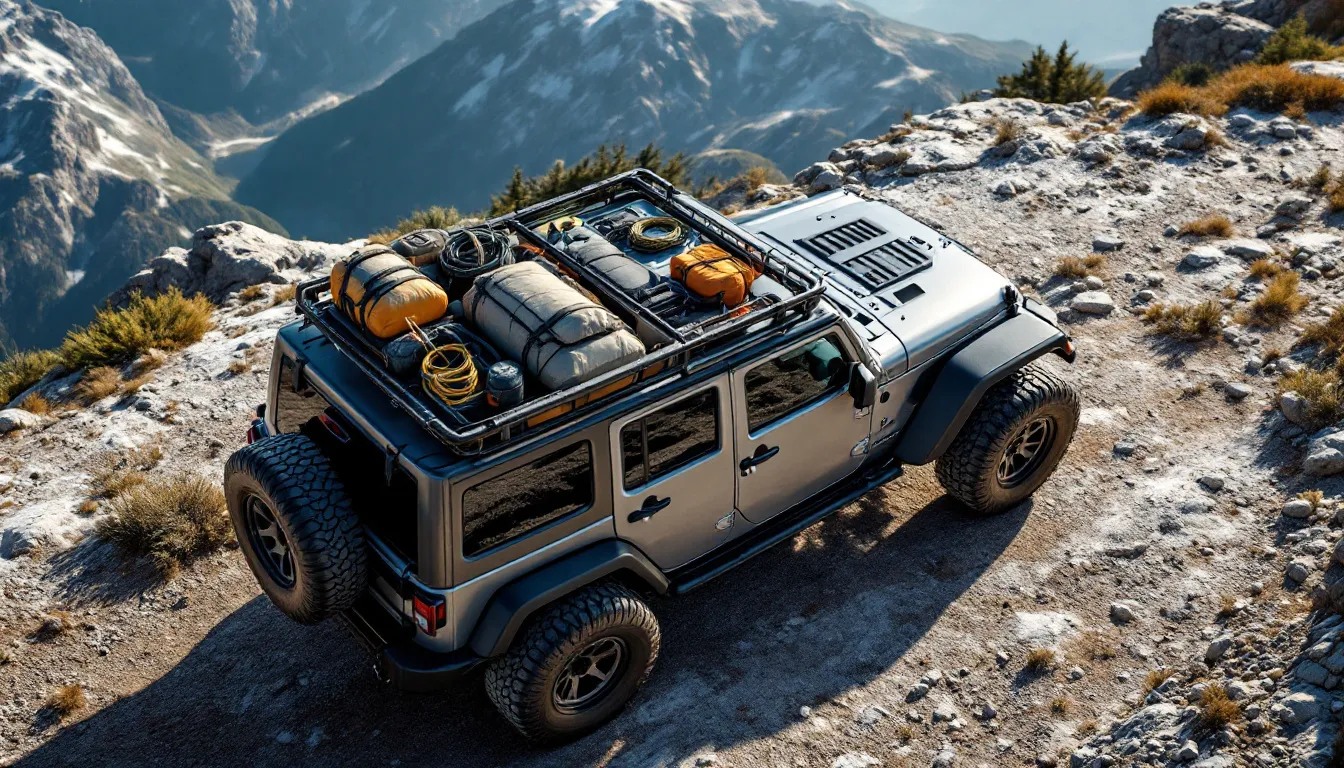
A roof rack on the JK is genuinely useful for lighter loads and gear distribution, but it has hard limits — the factory roof rating of 150 lbs applies regardless of what any aftermarket rack brand claims about its own construction strength.
The rack itself may be engineered to handle 300 lbs. The JK’s roof is not. This distinction matters enormously. Overload the roof and you’re not just risking cosmetic damage — you’re raising the vehicle’s center of gravity and creating real rollover risk, especially when you’re parked on side slopes or navigating off-camber terrain. A loaded roof on an already-lifted JK is one of the highest rollover risk factors you can introduce to your build. It’s not theoretical; it changes how the vehicle responds.
Pros of roof racks on the JK:
- Keeps the rear hitch free for a tire carrier, bike rack, or tow connection
- Spreads lighter cargo (bags, recovery boards, fishing rods) across the roof surface
- Works well with a rooftop tent — though a rooftop tent alone can weigh 100–130 lbs, leaving almost no margin for additional gear
- Compatible with 4-door JKU’s longer roofline, which gives more mounting real estate
Cons of roof racks on the JK:
- Hard 150 lb ceiling shared between rack weight and cargo
- Incompatible with soft tops without significant modification — the rack needs a solid mounting surface
- Increases wind resistance noticeably above highway speeds
- Adds height, which can be a trail obstacle in tight tree cover
Best use cases: lightweight overlanding setups on 4-door JKUs, rooftop tent installs (weight-permitting), or gear that needs to stay out of the cab but doesn’t need to be accessed frequently. If you’re on a soft top, review your options carefully — the JK soft top vs hard top comparison breaks down the structural differences that affect rack compatibility. The best soft tops for the JK Unlimited is also worth reading before you commit to a rack system.
Cargo Baskets for the Jeep JK: High Capacity, Rear-Mounted Versatility
A cargo basket beats a roof rack for heavy loads on the JK because it mounts at hitch height — lower center of gravity, higher tongue weight rating, and zero dependency on your roof’s structural limit.
Hitch-mounted cargo baskets for the JK typically accommodate 400–500 lbs, subject to your specific hitch receiver’s tongue weight rating. That’s a meaningful difference from the 150 lb roof ceiling. Always verify your JK’s hitch tongue weight rating before loading a basket — not all JK configurations are rated identically.
The rear-mounted position also means you can grab what you need without climbing on the vehicle, which matters when you’re breaking camp in the dark or pulling recovery gear out in a hurry.
Pros of cargo baskets:
- Far higher weight capacity than any roof solution
- Lower mounting position preserves center of gravity
- Accessible without a ladder or step
- Spare tire carrier compatibility — many baskets are designed to integrate with a swing-away tire carrier, or mount alongside one
- Works with both hard tops and soft tops (mounting is hitch-based, not roof-based)
Spare tire note: if you run a rear swing-out tire carrier, confirm the basket and carrier are compatible before purchasing — some designs conflict with each other or require a dedicated dual-arm carrier.
The trade-off is that a rear basket limits rear visibility, can affect approach angle when reversing, and occupies the same real estate as a bike rack or hitch receiver for towing.
Real-world gear planning makes this trade-off obvious. Packing a JKU for a two-week overland trip forces a complete rethink of storage strategy. Four-door Wranglers look spacious until you start loading water, recovery gear, camping equipment, tools, and food for two adults and a toddler. Most owners try two or three cargo systems before the answer becomes clear: a modular drawer system in the rear combined with MOLLE panels on the rear seat backs for quick-access items. Recovery straps, first aid kit, and the portable compressor go on the MOLLE panels. Everything else goes in the drawers with clear labels. But even that system had limits. The roof rack became essential, not for weight capacity, but for the lesson it taught about center of gravity — anything up top affects how the vehicle handles, and it matters more when you’re loading 200+ kg of total cargo across the entire rig.
For organizing what lives inside the cab alongside either system, cargo organizers for the Jeep JK interior is a useful companion read.
Roof Rack vs Cargo Basket: Head-to-Head Comparison
Here’s how roof racks and cargo baskets stack up across every key spec — use this table as a quick reference when making your decision.
| Feature | Roof Rack | Cargo Basket |
|---|---|---|
| Weight capacity | ~150 lbs (factory roof limit) | 400–500 lbs (hitch-dependent) |
| Load type | Lightweight, distributed | Heavy, consolidated |
| Center of gravity effect | Raises CG significantly | Minimal CG impact |
| Soft top compatibility | Generally incompatible | Fully compatible |
| Cargo access | Requires ladder or step | Ground-level access |
| Trail obstacle risk | Adds height in tree cover | Extends rear overhang |
| Install complexity | Moderate (requires hard top) | Low (hitch receiver mount) |
| MPG impact | Noticeable drag increase | Minor, mainly added weight |
| Price range | $300–$900+ | $80–$400 |
| Best for | Rooftop tents, light gear, 4-door JKU | Heavy overland kit, overlanding, camping |
The 4-door JKU has a distinct advantage with roof racks — the longer roofline gives you meaningfully more mounting surface and distributes weight more effectively. On the 2-door JK, the shorter roof makes rack mounting less practical and the weight math tighter. For more on trim-level differences that affect accessory choices, see the Rubicon vs Sport vs Sahara trim comparison.
How Added Weight Affects Jeep JK Handling On and Off Road
Where you put the weight on a JK matters more than how much weight you add — roof-mounted loads raise the center of gravity and amplify body roll, while rear-mounted loads affect steering feel and rear-axle load distribution.
Roof-mounted weight moves the JK’s center of gravity upward. In practical terms, this translates to more body roll in corners, slower recovery from off-camber situations, and increased rollover risk on side slopes. The JK is already a tall vehicle with a higher CG than most road cars. Add 100+ lbs to the roof and you’ve compounded that. Exact CG numbers vary by lift height, tire size, and armor configuration — anyone quoting a precise figure without knowing your specific build is guessing.
Rear-mounted cargo baskets affect a different dynamic: they add weight behind the rear axle, which can lighten steering feel and alter how the front end responds. The effect is more noticeable when combined with other rear-mounted additions like a swing-out tire carrier or heavy steel bumper.
This cumulative effect became very clear during a steel front bumper and winch install — an entire Saturday that started simple and got complicated fast. The stock plastic bumper had corroded bolts behind the fascia that refused to come out. Three stripped bolts later, the angle grinder came out. But the real lesson came after: the weight difference was noticeable immediately. Stock plastic to steel added roughly 35 kg to the front end. You could feel it in the steering on the drive home. That’s when the forums’ consistent recommendation to upgrade the steering stabilizer at the same time made sense. The weight wasn’t just added; it changed how the vehicle behaved, especially when recovery work actually happened — a month later, pulling a stuck Hilux out of sand near Langebaan justified every stripped bolt, but it also drove home that a full steel bumper and winch setup adds 100–150 lbs to the front of the vehicle. Layer a loaded cargo basket at the rear and a rack on top, and the JK is handling a substantially different weight distribution than stock.
Heavier, better-suited tires and wheels can help restore handling balance — 37-inch tires for the Jeep JK and best wheels for the Jeep Wrangler JK are worth reading in this context.
Which Option Is Right for Your Jeep JK Build?
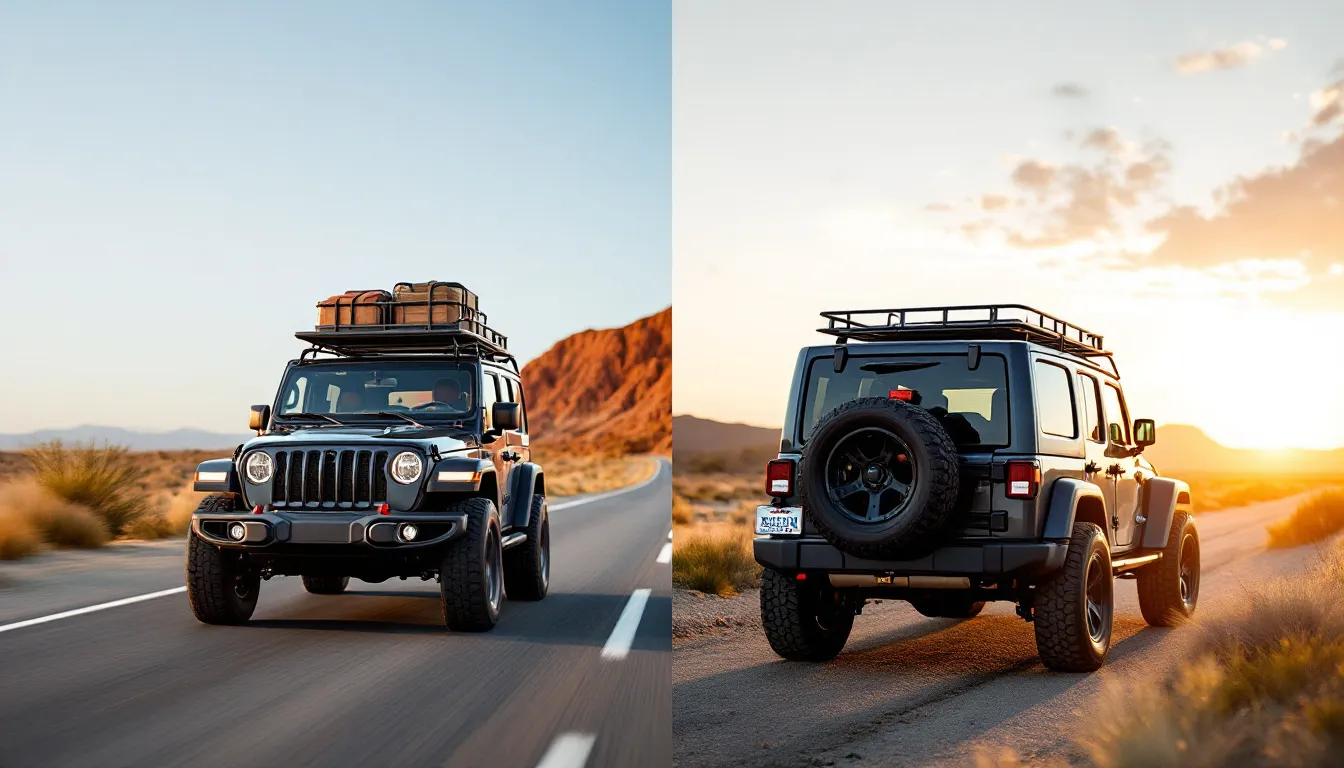
Choose a roof rack if you have a hard top, need the rear hitch clear, and your loads stay under 100 lbs net (after rack weight). Choose a cargo basket if you’re carrying heavy gear, have a soft top, or want the lowest possible impact on center of gravity.
The decision framework is straightforward once you know your use case:
- Light overlander, hard top JKU, rooftop tent: Roof rack is viable — budget carefully for the tent’s weight and leave minimal margin for additional roof cargo.
- Heavy expedition loadout, any top type: Cargo basket wins on capacity and CG every time.
- Daily driver with weekend trail use: Cargo basket is more practical — easier to load, easier to remove, no aerodynamic drag when empty.
- Soft top JK: Roof rack is essentially off the table. Cargo basket is your option.
Can you run both a roof rack and a rear cargo basket? Yes — and many serious overland builds do exactly that. The key is budgeting total weight across both systems and staying within both the roof limit and the hitch tongue weight rating simultaneously.
When running both, you’re also stacking the handling effects described in the previous section. If you’re going this route with a lifted JK running larger tires, re-gearing becomes a real consideration — re-gearing your Jeep JK for added weight explains why gear ratio selection matters when overall vehicle weight climbs.
Installation Tips and Compatibility Notes for JK Roof Racks and Cargo Baskets
Before buying either system, check two things first: your top type (for racks) and your hitch class (for baskets) — everything else follows from those two facts.
For roof racks: The top type is non-negotiable. Roof racks designed for the JK require a hard top with the factory mounting points or a roll bar adapter. A soft top JK cannot safely support a conventional roof rack — the soft top has no structural capacity to anchor the load, and attempting to do so is a safety hazard. If you have a hard top, verify the rack is designed for your specific JK year (2007–2018) and door count — mounting points differ between the 2-door JK and the 4-door JKU.
For cargo baskets: Confirm your hitch receiver class before ordering a basket. Most JKs leave the factory with a Class III 2-inch receiver, but verify this on your specific vehicle. The basket’s weight rating must not exceed the receiver’s tongue weight rating. Also check rear clearance — if you run a swing-out spare tire carrier, confirm the basket and carrier are compatible or designed to work together.
Soft top owners should also look at JK bikini tops and sun shades for roof coverage options that don’t require structural roof mounting.
Frequently Asked Questions
JK owners ask a consistent set of questions about roof racks vs cargo baskets — here are the most common, answered directly.
What is the weight limit for a Jeep JK roof rack?
The Jeep JK factory roof is rated for approximately 150 lbs static load — and that figure includes the weight of the rack itself. A steel roof rack can weigh 40–60 lbs on its own, which means your usable cargo capacity may be as low as 90–110 lbs. Always check both the rack’s dynamic load rating and the factory roof limit, and design your load around whichever is lower.
Can I put a cargo basket on a soft top Jeep JK?
Yes — a hitch-mounted cargo basket works with any JK regardless of top type, because it mounts to the hitch receiver, not the roof. Soft top compatibility is one of the cargo basket’s biggest advantages over a roof rack. If you’re running a soft top and need exterior cargo storage, a rear-mounted basket is the practical solution.
How much weight can a Jeep JK hitch carry?
Most JKs equipped with a factory or aftermarket Class III 2-inch hitch receiver have a tongue weight rating in the range of 350–500 lbs, but this varies by year, configuration, and hitch brand. Check your specific hitch’s documentation for the confirmed tongue weight rating before loading a cargo basket. Don’t exceed that figure, even if the basket itself is rated higher.
Will a roof rack affect my Jeep JK’s gas mileage?
Yes, though the impact varies. An empty roof rack adds wind resistance and increases aerodynamic drag, which affects highway fuel economy more than city driving. A loaded rack adds both drag and weight. The JK’s MPG is already modest by most standards — a roof rack typically makes it modestly worse, particularly at highway speeds. A rear-mounted cargo basket has less aerodynamic effect but still adds rolling weight.
Can I run both a roof rack and a rear cargo basket on my Jeep JK?
Yes, and many overland-focused JK builds do exactly this. The key is managing cumulative weight: stay within the 150 lb roof limit (including rack weight) and within your hitch tongue weight rating simultaneously. Running both also compounds the center of gravity and handling effects described above. Plan your full weight budget across all systems before committing to both. Considering LED headlight upgrades while you’re building out your JK? LED headlight upgrades for the Jeep JK is worth a look as part of a broader build plan.
What’s the best storage solution for a heavily loaded Jeep JK?
For the majority of owners carrying serious gear, a cargo basket is the better choice — it carries more weight, sits lower, works with any top, and is easier to load and unload. If you need to keep the rear hitch open for towing or a tire carrier, or if you’re running a rooftop tent on a hard-top JKU, then a roof rack earns its place. But you’re working within tight weight margins, and the center of gravity trade-off is real.
Final Verdict: Roof Rack vs Cargo Basket for the Jeep JK
For most JK owners, a rear-mounted cargo basket is the better choice — it carries more weight, sits lower, works with any top, and is easier to load and unload than anything mounted to the roof.
Roof racks earn their place on hard-top JKUs where you need to keep the rear hitch open, or where a rooftop tent is part of the plan. But you’re working within tight weight margins, and the center of gravity trade-off is real. For heavy loads, the cargo basket wins on every practical metric.
One thing worth emphasizing: don’t take weight capacity figures from marketing copy at face value. Manufacturer spec sheets sometimes lead with static ratings without clarifying the dynamic load limit, and the factory roof rating isn’t always prominently mentioned. The JK community — forums, model-year-specific groups, owner build threads — is consistently more reliable for real-world load testing and compatibility confirmation than product listing pages. That’s a research habit worth building into every purchasing decision on your JK, not just this one.
For what goes inside the cab alongside either system, best cargo organizers for Jeep JK is the logical next step. And if you’re refining the exterior of your build more broadly, JK grill inserts and exterior accessories is worth a read.
Free: JK Fluids at a Glance
Every fluid, spec and capacity for the 2007-2018 Wrangler JK on one page, plus a cut-out glovebox card. Checked against the owner's manuals. From the JK Service Kit.
Email me the download and new guides when they are published. Unsubscribe anytime. Privacy Policy.
Allan
I'm Allan. I own a 2014 Jeep Wrangler JKU and I research the hell out of every mod before I touch it. When I've fitted something to my own Jeep, I say so. Everything else is researched from manufacturer specs and other owners' reports. No sponsored fluff.
Learn more about me →Free: JK Fluids at a Glance
Every fluid, spec and capacity for the 2007-2018 JK on one page, plus a glovebox card.
Email me the download and new guides when they are published. Unsubscribe anytime. Privacy Policy.
Related Articles
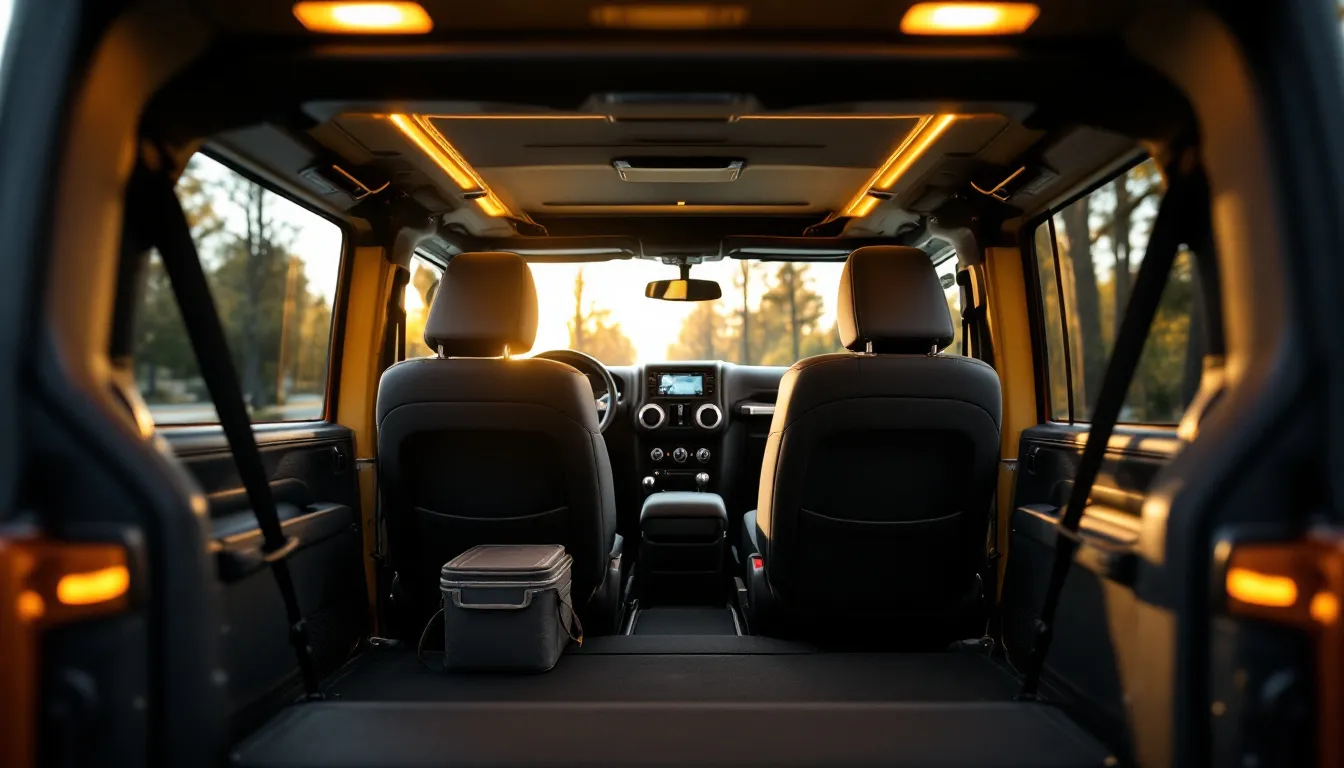
Jeep JK Interior Upgrades: The 12 Mods That Actually Improve Daily Comfort
The Jeep Wrangler JK interior is a purpose-built, trail-focused cabin that trades luxury for capability — and a handful of affordable upgrades can...
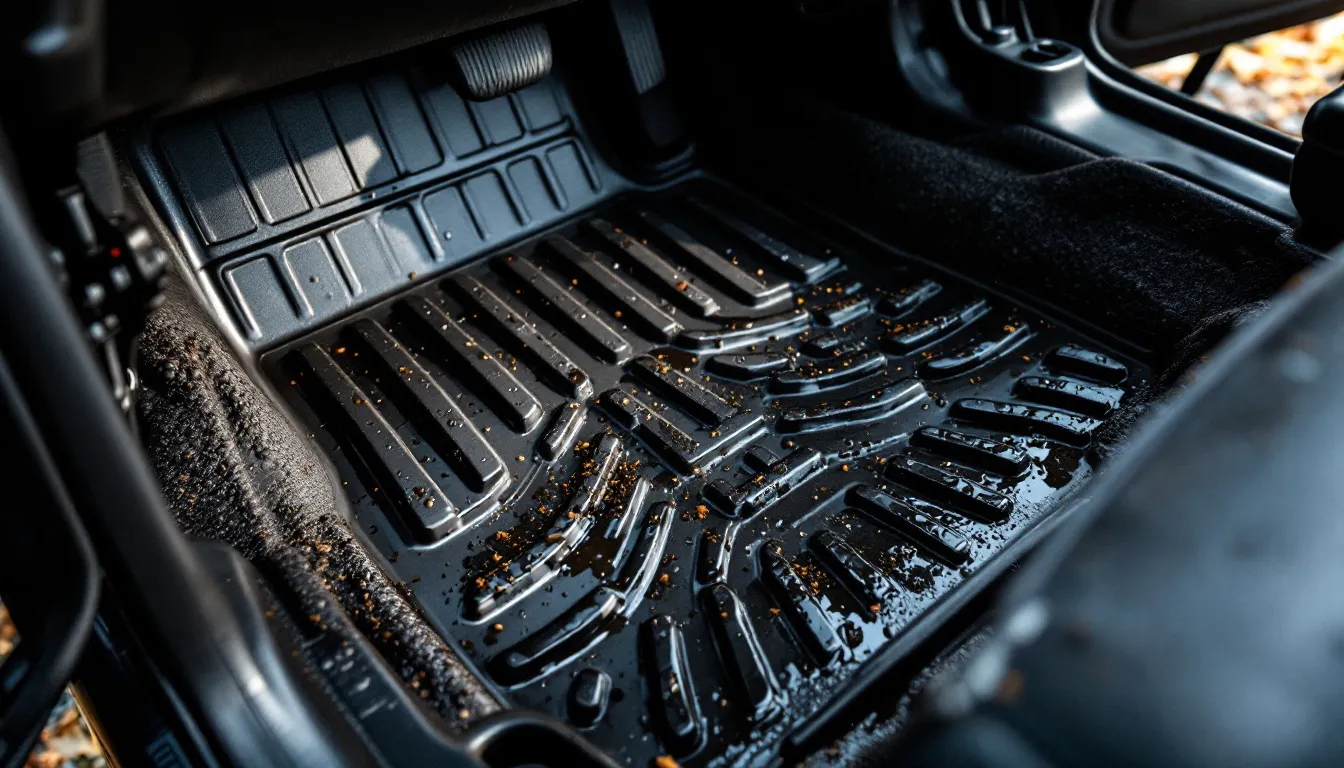
Best Floor Mats for Jeep Jk All Weather Protection
All-weather floor mats for Jeep JK are custom-fit or universal protective liners made from rubber or thermoplastic materials designed to contain mud,...
Jeep JK Seat Cover Materials: Leather vs Neoprene Durability
Jeep JK seat cover materials are the protective fabrics fitted over OEM seats to guard against moisture, UV exposure, mud, and daily wear — and for the...