Teraflex vs Rock Krawler JK Lift Kit: Which is Better?
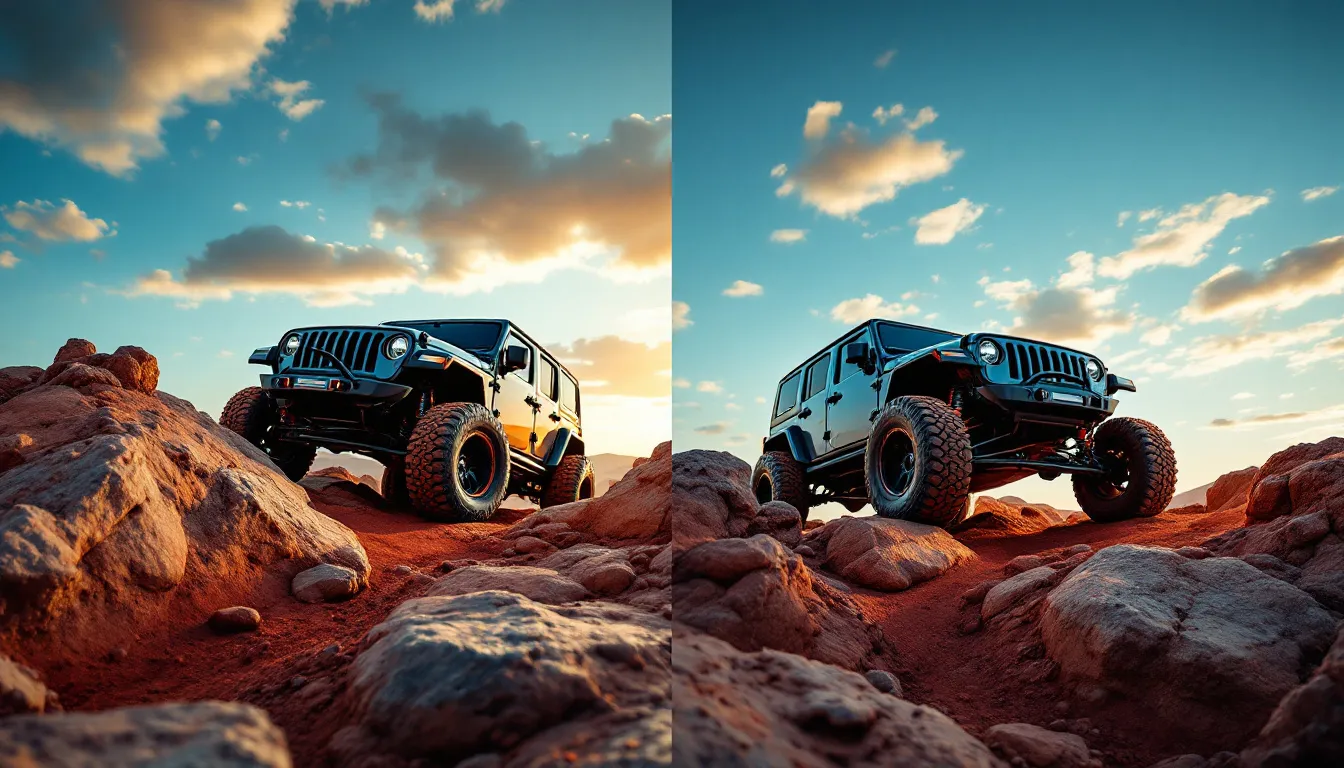
TeraFlex vs Rock Krawler JK Lift Kit: Which One Wins?
A JK lift kit raises your 2007–2018 Jeep Wrangler JK or JKU, creating clearance for bigger tires and better off-road articulation. But here’s the thing: TeraFlex delivers real capability at a price point that won’t empty your bank account, while Rock Krawler engineers suspension systems that reward serious trail builders with performance those extra dollars actually buy you.
The short version is easy: pick TeraFlex for a daily driver with weekend adventure ambitions, or pick Rock Krawler if your JK is a dedicated trail machine. The real decision requires understanding what each brand actually builds and why the price difference isn’t just a number on an invoice.
I’ve spent real time in Jeep forums, reading through owner build threads and actual installation experiences — not marketing copy or spec sheets. That’s where you learn what these kits actually do when they’re bolted to your rig. This guide covers all 2007–2018 JK and JKU model years, both 2-door and 4-door configurations, and the fitment differences between pre-2012 and post-2012 builds.
If you want the bigger picture, check out our best lift kits for the Jeep JK or the complete JK buyer’s guide for context on how suspension fits into your whole build plan.
Two Brands, Two Different Philosophies
TeraFlex and Rock Krawler are the serious players in JK suspension — but they operate in completely different lanes.
TeraFlex is based in Salt Lake City and has been building Jeep-specific suspension for years. Their kits show up on everything from daily drivers to weekend rigs because they balance street manners with genuine trail chops. TeraFlex’s real strength is that sweet spot between on-road comfort and off-road capability — you don’t need a professional mechanic just to get the thing working properly.
Rock Krawler plays a different game. Their suspension systems are built for owners who treat their JK as a trail tool first. They cost more. They’re more complex. Every component is engineered to handle maximum articulation and hard impacts under serious use. If your Jeep spends significant time on technical terrain, that engineering investment starts to make actual sense.
Here’s the practical truth: a Sport or Sahara owner who daily-drives and hits mild trails on weekends? TeraFlex customer. A Rubicon owner building a dedicated crawler with 35s or larger? Rock Krawler territory. See our Rubicon vs Sport vs Sahara trim comparison for how your starting point affects suspension choices.
Both companies manufacture in the USA, which matters. Consistency, warranty support, and thread standards all flow from that decision. It’s worth noting when you’re comparing kits across the market.
Get new guides by email
One email when we publish something worth reading. Unsubscribe anytime.
TeraFlex vs Rock Krawler: The Numbers
Here’s how these two stack up when you put the specs side by side.
| Feature | TeraFlex 2.5” Kit | Rock Krawler 2” Kit |
|---|---|---|
| Lift Height | 2.5 inches | 2 inches |
| Street Price | ~$967.98 | ~$1,595.22 |
| Shock Type | 2.5” Twin-tube shocks | Performance shocks (system-specific) |
| Control Arms | Not included in base kit | Included in full system |
| Sway Bar Links | Sold separately | Integrated into system |
| Tire Size Support | Up to 35” with add-ons | Up to 35”+ depending on config |
| Made in USA | Yes | Yes |
| Warranty | Limited lifetime | Limited lifetime |
| 2-Door Fitment | Yes (separate SKU) | Yes |
| 4-Door JKU Fitment | Yes | Yes |
The real story in this table: Rock Krawler costs $627 more for half an inch less lift. That’s not a mistake. You’re not paying for the extra inch — you’re paying for the engineering inside the system. The shocks are different, the control arm geometry is different, everything works together as a coordinated unit rather than a collection of parts.
For the full breakdown of how both compare to other kits across the market, check out our complete JK lift kit comparison.
What TeraFlex Actually Gives You
The TeraFlex 2.5-inch lift is everywhere in the JK community for a reason: it does the job without making you sell plasma to pay for it.
After spending real time reading through Jeep forums and build logs, the pattern became obvious — owners consistently reported that 2.5 inches paired with the right companion pieces (adjustable control arms and upgraded sway bar links) created the best all-around package. The lift height itself is just the beginning. Everything you add to it determines how the system actually performs.
What comes in the box with the TeraFlex 2.5” kit (4-door JKU config):
- 2.5-inch coil spring lift front and rear
- Four 2.5” TeraFlex twin-tube shocks
- Front and rear bumpstop extensions
- Installation hardware specific to your model year
What doesn’t come in the box — and what you’ll probably need:
- Adjustable front and rear control arms for fixing pinion angle
- Front and rear sway bar links that match your new ride height
- A differential drop bracket, especially on 2007–2011 builds
- Front track bar relocation bracket (critical after any lift)
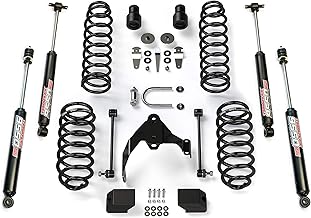
TeraFlex 1251000 2.5" Lift Kit (JK 4 Door with All (4) 2.5" Shocks)
Check Price on Amazon →For 2-door JK owners, there’s a separate SKU that maintains the same proven specs. The TeraFlex 2.5-inch system works on both body styles — you just need the right configuration.
Here’s something I learned the hard way: don’t skip the sway bar links. Stock links bind like crazy at 2.5 inches of lift, and it shows immediately in how your Jeep handles both on pavement and off road. Upgraded rear links make a noticeable, day-one difference:

Rear Sway Bar Links for 2007-2018 Jeep Wrangler JK (2.5–4")
Check Price on Amazon →Planning to run 37-inch tires? You’ll need adjustable upper and lower control arms. The lift alone won’t get you there without playing geometry games. For the full sway bar link strategy, our guide to the best front sway bar links for the JK walks you through what actually works.
Rock Krawler: When You Build for the Trail
Rock Krawler builds systems for JK owners who’ve made a choice: this Jeep is a trail machine. Everything flows from that decision.
Your 2-inch lift from Rock Krawler costs more than TeraFlex’s 2.5-inch — and that’s not a pricing mistake. Here’s what you’re actually buying:
- System-level suspension geometry — everything designed to work together, not assembled from separate parts
- Maximum articulation engineering — built so your suspension flexes hard on technical terrain
- Components engineered for hard impacts — rock strikes, sustained abuse, real trail stress
- Coordinated tuning — control arm angles, shock valving, and sway bar behavior all talk to each other
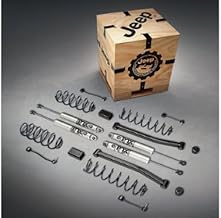
Rock Krawler 2" Lift Kit
Check Price on Amazon →The critical distinction: this is a suspension system, not a lift kit. A lift kit raises your vehicle. A suspension system reimagines how every part behaves at that new height and throughout the full range of motion. That’s why the price is what it is.
If you’re serious about trail use, the sway bar setup becomes a conversation about disconnects and anti-rock systems. Pairing a Rock Krawler build with a real anti-rock kit handles the shift between street stability and off-road flex way better than stock hardware at lifted heights:

Currie Antirock Front Swaybar Kit
Check Price on Amazon →Let me be honest about one thing: Rock Krawler’s premium is only worth it if you’ll actually use the capabilities. If your JK lives on asphalt with occasional dirt roads, the engineering sophistication doesn’t translate to real benefit. But if you’re spending weekends on technical trails, the investment pays dividends in durability and performance.
If a trail-capable build is next on your list, solid front protection matters. Check out our best front bumpers for a trail-built JK for the right platform.
DIY Installation: How Hard Is This Actually?
Both kits are doable at home if you have the right tools and some suspension experience. Neither is a Saturday morning job. You’re looking at a full weekend, a quality floor jack, proper jack stands, and a torque wrench.
TeraFlex 2.5” — Difficulty: ★★★☆☆ Rock Krawler 2” — Difficulty: ★★★★☆
TeraFlex follows the standard lift kit sequence:
- Safely lift and support the vehicle
- Remove the factory shocks and springs
- Install new coil springs and TeraFlex shocks
- Add bumpstop extensions
- Upgrade sway bar links (seriously, do this)
- Torque everything to spec
- Get a professional alignment before you drive it anywhere
Rock Krawler adds real complexity because of the control arm geometry work. If the kit includes adjustable control arms, you’re setting pinion angle and caster — and that’s where most DIYers need either experience or professional eyes. The basic sequence is the same, but the calibration work requires mechanical judgment.
Non-negotiable truth: get a professional alignment after either install. I can’t overstate this. Skip the alignment, and your tires wear like you’re punishing them, your steering gets twitchy, and you’ll spend months wondering why the lift feels off. Budget $80–$150 and consider it part of the cost.
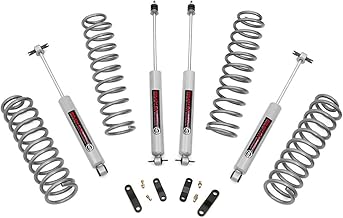
TeraFlex 2.5" Lift Kit for 2007–2018 JK Unlimited (SKU 67930)
Check Price on Amazon →If you want to test the waters before committing to a full suspension overhaul, a simple spacer leveling kit lets you validate ride height and tire clearance before going all in. Read our guide on how to regear your JK after a lift once you’ve picked your suspension, because tire size and gear ratios have to make sense together. If 33s are your target, the best gear ratio for 33-inch tires on the JK covers exactly what you need to know.
On-Road vs Off-Road: How Each Kit Actually Behaves
TeraFlex is built for balance; Rock Krawler is built for extremes. That one sentence explains more than pages of specifications.
On the road, a properly installed TeraFlex 2.5-inch kit with a real alignment and decent sway bar links actually rides pretty well for a lifted Jeep. The twin-tube shocks are tuned to handle highway speeds without feeling crashy, and the suspension geometry maintains reasonable stability. Most owners report acceptable daily driving if they don’t expect luxury-car smoothness.
Rock Krawler’s system? It’s tuned for rocks, not ribbon roads. You’ll feel the difference on pavement. The ride is firmer, the suspension geometry prioritizes maximum flex over highway comfort, and that’s the correct engineering choice for a trail machine. It’s the wrong choice if someone’s family is in the vehicle on the interstate.
Here’s a hard reality worth sharing: death wobble at highway speed is terrifying, and it happens to lifted JKs. The cause almost always traces back to suspension component mismatches, a track bar that’s worn or positioned wrong, or sway bar links that were never upgraded after the lift. It doesn’t matter if you have a premium kit or a budget option — neglecting the track bar and sway bar links after any lift is how you create a dangerous rig. A solid front sway bar stabilizer kit addresses part of the equation:
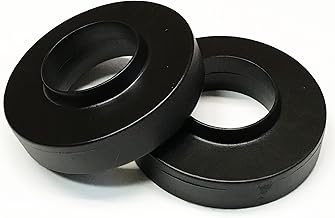
Front Suspension Stabilizer Bar Kit with Sway Bar Links, Bushings & Bracket
Check Price on Amazon →Get into the habit of inspecting your track bar, control arm bushings, and sway bar links on a schedule. Refer to our JK maintenance schedule for the intervals, and make suspension hardware part of every inspection after any lift.
On-road verdict: TeraFlex is the more livable choice. Off-road verdict: Rock Krawler will do more for you. Neither is wrong — it depends on where your Jeep actually spends its time. For wheel and tire pairing after the lift, check out our best wheels for a lifted JK.
Real Cost of Ownership: Beyond the Sticker Price
The price difference between these two is obvious. The total cost of ownership is more complicated.
TeraFlex 2.5” — Real-World Total Cost:
- Base kit (4-door JKU, all shocks): ~$967.98
- Upgraded sway bar links (front and rear): ~$70–$150
- Adjustable control arms (for proper geometry): ~$300–$600 depending on brand
- Professional alignment: ~$80–$150
- All-in range: approximately $1,400–$1,900
Rock Krawler 2” — Real-World Total Cost:
- Complete kit: ~$1,595.22
- Anti-rock sway bar kit (if you go dedicated trail): ~$554
- Professional alignment: ~$80–$150
- All-in range: approximately $1,700–$2,400
Both brands warranty their components for life (limited), which is what you expect at this price point. DIY installs are covered; damage from misuse or sketchy installation work is not.
Where the value math actually works:
- TeraFlex makes sense for daily drivers and weekend trail users who want real capability without paying for engineering they won’t actually use
- Rock Krawler pays for itself on dedicated trail builds where the articulation and component quality get used hard enough to matter
Remember: alignment is non-negotiable with either kit. Budget for it before you order suspension. For context on how suspension fits into your whole build budget, see our JK soft top vs hard top comparison as a reference point for how accessory decisions stack up.
TeraFlex vs Rock Krawler: Which Kit Is Actually Right for You?
For most JK owners, TeraFlex is the smart choice. For serious trail builders, Rock Krawler delivers real return on investment.
Picture this: you’re planning a real build — a 2.5-inch lift to start, then 35-inch tires, front and rear bumpers, eventually a full overland loadout. That progression is where the decision between these two gets real. If the lift is the foundation of a long-term trail project, Rock Krawler’s system engineering means you’re not replacing suspension pieces as the build evolves. If the lift is the main event and everything else stays street-focused, TeraFlex is the smarter spend.
Here’s how to make the call:
- Pick TeraFlex if: You daily-drive the JK, want reasonable highway manners, are budget-conscious, plan 33-inch or mild 35-inch tires, or you’re new to suspension work
- Pick Rock Krawler if: Your Jeep is a trail rig first, you’re running 35s or larger, maximum articulation matters to you, or you’re building a serious rock crawler
- TeraFlex 2-door if: You own a 2007–2018 2-door JK (not JKU) — Rock Krawler supports 2-door fitment too, just verify the specific listing
If you want to dip your toes in before committing to a full kit:
1" Front Spring Spacer Leveling Kit (Compatible JK 2007–2018)
Check Price on Amazon →The bottom line: TeraFlex wins on value and livability. Rock Krawler wins on trail performance and long-term engineering. Pick the one that matches your actual use case, not the version of Jeeping you wish you did.
For a comprehensive look at all lift kit options across the price spectrum, the complete JK lift kit buying guide has everything you need before you commit to a choice.
Frequently Asked Questions: TeraFlex vs Rock Krawler JK
Q: Is TeraFlex a good lift kit for the Jeep JK?
A: Absolutely. TeraFlex is one of the most trusted suspension brands in the JK community, with a proven track record on JK and JKU platforms. Their kits are engineered specifically for the JK’s geometry, come with a limited lifetime warranty, and have a massive community of owners documenting real-world experience. For most JK owners — especially daily drivers or weekend warriors — a TeraFlex lift delivers reliable capability at a fair price point.
Q: How much lift do I actually need for 35-inch tires?
A: You should plan for a minimum 2.5-inch lift for 35s on a JK or JKU without serious rubbing under articulation. Running 35s also typically requires adjustable control arms to correct caster angle and a front track bar relocation bracket. Some owners squeeze 35s onto a 2-inch lift with body trimming, but 2.5 inches gives you clearance headroom and a cleaner installation.
Q: Does Rock Krawler make 2-door JK kits?
A: Yes, Rock Krawler offers systems for both 2-door and 4-door platforms. The wheelbases and suspension geometry differ between 2-door and 4-door JK models, so make sure you order the right SKU for your specific configuration. This applies to all 2007–2018 model years.
Q: Will a 2.5-inch TeraFlex lift mess up my JK’s street driving?
A: A properly installed 2.5-inch TeraFlex lift with professional alignment and upgraded sway bar links produces good on-road behavior. Without proper alignment, you’ll see tire wear and highway wandering. Without upgraded sway bar links, binding affects both comfort and handling. The lift itself is just one piece — the installation quality is what determines how the rig actually drives. Check our guide to the best sway bar links for the JK for upgrade options.
Q: Do I need adjustable control arms with a 2.5-inch lift?
A: At 2.5 inches, adjustable control arms are strongly recommended, though not absolutely required depending on your use. Stock control arms can cause caster and pinion angle issues that wear components faster and affect handling. Adjustable arms let you dial in proper geometry. If you’re running larger tires or planning serious trail use, adjustable control arms are functionally mandatory. Check your JK maintenance schedule for post-lift inspection intervals to catch geometry issues early.
Q: What’s the difference between a lift kit and a suspension system?
A: A lift kit raises your vehicle. A suspension system reimagines how every component works together at that new height and throughout the suspension’s range of motion. Rock Krawler builds suspension systems — every piece is engineered to coordinate with the others. TeraFlex builds lift kits — effective and proven, but components are often selected individually. That’s why Rock Krawler costs more and why the price difference reflects engineering, not just lift height.
Free: JK Fluids at a Glance
Every fluid, spec and capacity for the 2007-2018 Wrangler JK on one page, plus a cut-out glovebox card. Checked against the owner's manuals. From the JK Service Kit.
Email me the download and new guides when they are published. Unsubscribe anytime. Privacy Policy.
Allan
I'm Allan. I own a 2014 Jeep Wrangler JKU and I research the hell out of every mod before I touch it. When I've fitted something to my own Jeep, I say so. Everything else is researched from manufacturer specs and other owners' reports. No sponsored fluff.
Learn more about me →Free: JK Fluids at a Glance
Every fluid, spec and capacity for the 2007-2018 JK on one page, plus a glovebox card.
Email me the download and new guides when they are published. Unsubscribe anytime. Privacy Policy.
Related Articles
ICON Vehicle Dynamics Lift Kits for Jeep JK: Are They Worth the Premium?
ICON Vehicle Dynamics lift kits pair coilovers, remote-reservoir shocks, and precision-valved components to deliver a noticeably smoother, more capable...
Lifted Jeep JK: What to Expect After Installing a 2–4 Inch Lift Kit
A lifted Jeep Wrangler JK is a 2007–2018 Wrangler that has had its suspension or body raised between 1 and 6 inches above factory height. The payoff:...
Best JK Shocks for Off-Road: Complete Bilstein, Fox & King Comparison
A shock absorber does one essential job: it controls how fast your suspension bounces. When your tire hits a rock, the spring compresses. The shock...