Jeep JK Rock Sliders vs Side Steps: Protection, Looks & Which One You Actually Need
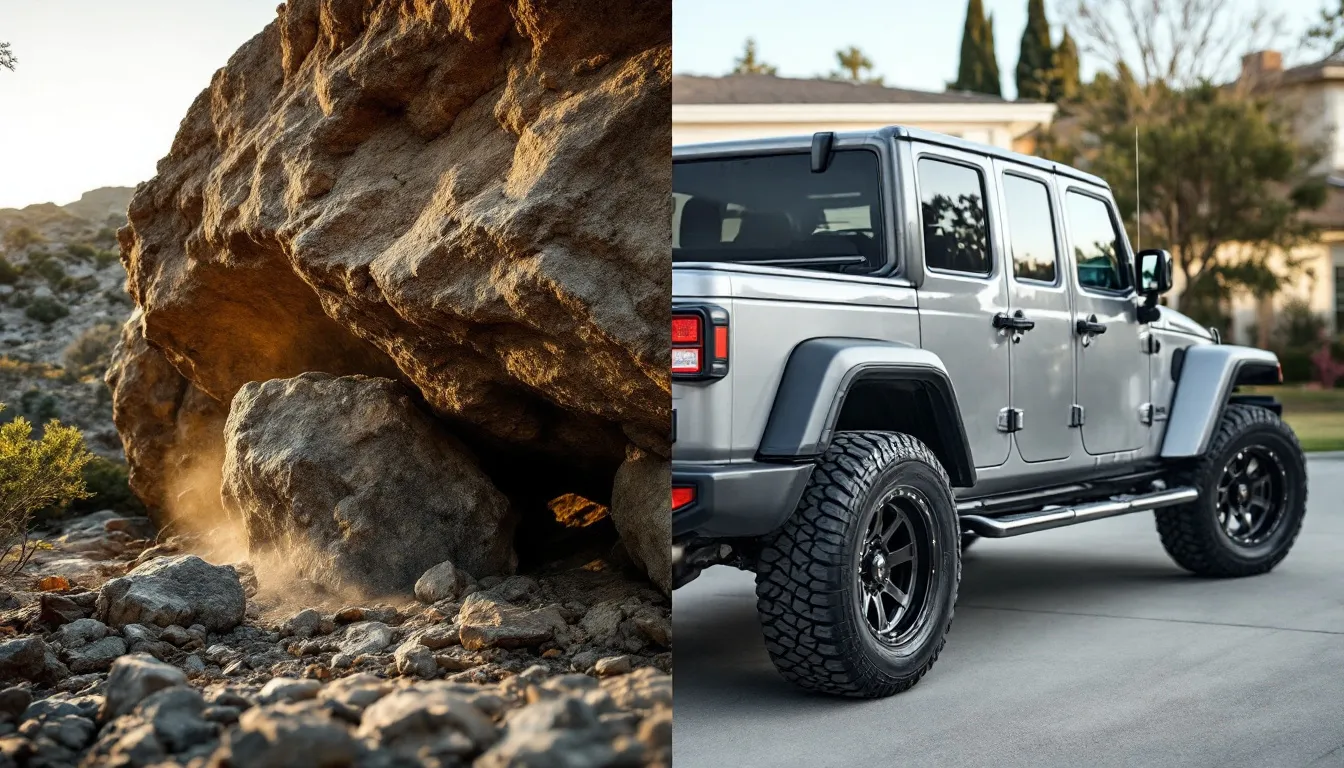
Jeep JK Rock Sliders vs Side Steps: Protection, Looks & Which One You Actually Need
Rock sliders are heavy-gauge steel (or aluminum) tubes or plates that bolt or weld to your Jeep’s frame, sitting flush along the rocker panels to absorb rock strike and side-entry impacts. Side steps—also called nerf bars or running boards—are lighter-duty accessories that mount to the body or frame primarily to help passengers step up into the cab.
When it comes to jeep jk rock sliders vs side steps, the verdict is straightforward: trail drivers need rock sliders, daily drivers can consider side steps. If you wheel your JK on rocky terrain even occasionally, side steps become a liability. They create a low-hanging snagging point with almost no structural protection behind them. Rock sliders protect the one JK vulnerability that costs real money to repair: the rocker panel, a thin sheet-metal section that folds and tears easily on rock ledges and can run you several thousand dollars to fix properly.
For a full picture of JK underbody and exterior protection, see our complete JK armor systems guide and the JK buyers guide if you’re still speccing your build.
What Are Jeep JK Rock Sliders (And Why Your Rockers Need Them)?
Rock sliders are structural side-protection bars designed to take the hit so your rocker panels don’t have to. Understanding how they mount is the most important detail before you buy—it’s the difference between real protection and expensive regret.
The Jeep JK’s rocker panels are thin stamped steel. One ledge strike on the trail can fold that rocker inward far enough to jam a door or crack the pinch weld. The 2007–2018 JK generation is particularly vulnerable compared to older TJ and YJ generations because the body sits slightly lower relative to the axles, and the rockers are deeper and more exposed to impact.
There are two fundamentally different mounting strategies, and they work in completely opposite ways:
Frame-mount sliders bolt directly to the frame rails, bypassing the body sheet metal entirely. When a rock strikes a frame-mount slider, the force transfers into the frame—not into your door sills. This is the design you want for serious wheeling.
Body-mount sliders attach to the body tub or pinch weld rather than the frame. They’re cheaper and easier to install, but under a hard strike, they can push the mounting point into the body—causing the damage they’re supposed to prevent. It’s the wrong tool for the job.
| Characteristic | Frame-Mount | Body-Mount |
|---|---|---|
| Force transfer | Into the frame | Into the body/pinch weld |
| Protection level | High | Moderate |
| Install complexity | Higher | Lower |
| Typical cost | More expensive | Less expensive |
| Best for | Trail use | Light trail/aesthetic |
A lift also affects slider function. Pair your sliders research with JK lift kits—a taller lift raises your rocker clearance but changes the geometry of how sliders contact obstacles. And if you’re building out your front end at the same time, JK front bumper options round out the armor picture.
Get new guides by email
One email when we publish something worth reading. Unsubscribe anytime.
What Are Side Steps and Nerf Bars on a Jeep JK?

Side steps and nerf bars are step-assist accessories that mount along the rocker area of a JK, making it easier to climb into a lifted or stock-height Jeep. They exist to solve a genuine problem: cab entry, not rocker protection.
The JK sits high, and passengers—especially kids or shorter adults—can find the standard door-sill entry genuinely awkward without a step. For a daily driver that never leaves pavement, side steps make real sense from a usability angle.
The three main sub-types you’ll encounter in the market:
- Round nerf bars—Tubular steel or aluminum bars, typically 3”–4” diameter. Lightweight, cheap, bolt-on. Minimal ground clearance loss. Common on Sport and Sahara trims.
- Running boards—Flat, wide step platforms that run the full door length. More car-like appearance. Most exposure to trail damage. Heaviest of the three types.
- Tube steps / rock-step hybrids—Wider-diameter tubes (sometimes 4”–6”) with a textured step surface. Marketed as dual-purpose, but their protection capability still falls far short of a true frame-mount slider.
The protection limitation is real and important: side steps attach to the body, not the frame, and their step platforms protrude below the rocker rather than guarding it. On trail, that means they can catch ledges and pry the mounting point directly into your body sheet metal. I’ve seen this happen. It’s not pretty.
If you’re weighing trim-level decisions—which affects what’s already fitted from the factory—check our Rubicon vs Sport vs Sahara trim comparison for factory side-step fitment context.
Rock Sliders vs Side Steps: Head-to-Head Comparison

The clearest way to separate these two products is by asking what each one is engineered to do. The answer is almost entirely different.
| Feature | Rock Sliders | Side Steps |
|---|---|---|
| Primary purpose | Rocker panel protection | Step assist for cab entry |
| Rocker protection level | High (frame-mount) to moderate (body-mount) | Low—negligible on trail |
| Typical weight | 30–80 lbs per pair | 10–30 lbs per pair |
| Typical price range | $350–$900+ per pair | $80–$400 per pair |
| Installation difficulty | Moderate to high | Low to moderate |
| Trail suitability | Excellent | Poor—increases snag risk |
| Daily driver suitability | Good (doubles as step) | Good |
| Lift compatibility | Improves with lift height | Step height mismatch above ~2.5” lift |
| 2-door JK fit | Yes (shorter run) | Yes |
| 4-door JKU fit | Yes (longer run—verify SKU) | Yes |
Two sentences of plain-English verdict: If you wheel your JK, rock sliders are non-negotiable—side steps will cost you body damage on the first rocky trail you attempt. If your JK is a daily driver that sees graded fire roads at most, side steps are a reasonable, affordable choice for step assist and peace of mind.
Real-World Protection: What Each Option Actually Stops
Rock sliders stop the most common and expensive trail damage mode on a JK: a rocker panel strike against a boulder or ledge edge. Side steps stop almost nothing in that scenario—and can make things significantly worse.
Here’s what actually happens on a typical rock ledge:
The JK tips laterally, the low side of the vehicle drops toward the obstacle, and the first thing to make contact is whatever hangs lowest along the rocker area. With a frame-mount rock slider in place, that contact point is thick steel tube, the load goes into the frame, and you drive off. With a side step in place, the step platform catches the ledge, levers upward, and drives the mounting bracket into the body—sometimes tearing out the mount entirely and creasing the rocker in the process.
The most common and expensive JK body damage you’ll read about in owner forums is rocker panel failure—specifically, owners who wheeled without sliders and learned the hard way. These aren’t isolated incidents. Community trail reports consistently confirm that sheet-metal rocker failure is the most common body damage on JKs that run trails without sliders. This isn’t theory. It’s what happens when the wrong tool meets the right (or wrong) obstacle.
Side steps do stop minor parking-lot door dings on the lower body—that’s legitimate. They also take minor brush contact on wide forest trails. But they are not structural, and no side step marketed for the JK is designed to slide over a rock face under load. The names are sometimes confusing, but the function is clear once you see one fail.
For more on keeping your JK’s underside protected on technical trails, see our guide to JK suspension upgrades—clearance and suspension geometry work together with sliders to determine your real-world exposure.
Installation & Fitment: What to Expect for Your JK
Installing rock sliders takes more time and skill than bolting on side steps, but most bolt-on frame-mount slider kits are within reach of a careful DIY owner with basic tools and patience. I’ve installed a steel bumper on my own JK—this isn’t much harder, just more deliberate.
Side steps typically take 30–60 minutes with basic hand tools. Rock sliders take longer, often 2–4 hours depending on frame geometry and rust around mounting points. Here’s the typical rock slider install sequence:
- Lift and support the JK safely on jack stands—you’ll be working under the rocker area and need clear access to the frame rails.
- Remove any existing side steps or OEM step boards if fitted, including their mounting brackets and any foam seals.
- Locate and clean the frame mounting points—rock slider kits typically use existing factory holes or specific frame tabs. Wire-brush rust and apply primer if needed before bolting anything up. This step saves you from moisture getting trapped.
- Test-fit the slider assembly before final torque—confirm the slider sits flush and level against the rocker without contacting the body sheet metal. Gaps and alignment vary by manufacturer; this step saves headaches later.
- Torque all hardware to manufacturer specification and re-check fitment with the vehicle weight on the ground.
Fitment warnings to know before you order:
- 2-door JK vs 4-door JKU—these are not interchangeable. JKU sliders are significantly longer and will not fit the 2-door without modification. Always verify the SKU is door-count specific before you buy.
- Bolt-on vs welded—most aftermarket frame-mount sliders are bolt-on; some heavy-duty options require welding to the frame. Welded installs are stronger but need professional fabrication.
- Lift height matters—a slider positioned for a stock JK may sit awkwardly low or high depending on your lift. Check the manufacturer’s fitment notes for lifted applications.
- Skid plate interference—on JKs with aftermarket belly skids, slider mounting tabs can conflict. Verify compatibility before purchasing.
For torque specs and service intervals, our JK maintenance and torque specs reference is worth bookmarking alongside your install guide.
Which One Does Your JK Actually Need?
The right answer depends almost entirely on how you use your JK—and this decision is worth making before you buy, not after your first trail run costs you rocker damage.
If you’re buying a used JK—or recently picked one up and are now building it out—this is one of the first calls you’ll face. The decision a 2014 JKU owner faces is typical: you’ve bought the truck, it may already have factory side steps fitted, and you need to decide whether to keep them, replace them with sliders, or add sliders on top. Getting the answer right early saves you from doing the job twice.
Here are three buyer profiles and the clear recommendation for each:
- Trail driver, even occasionally—Frame-mount rock sliders, full stop. If your JK sees rocks, ledges, off-camber terrain, or anything rated harder than a maintained gravel road, side steps are a liability. Invest in a quality frame-mount set. This isn’t negotiable.
- Daily driver / pavement only—Side steps or nerf bars are a reasonable fit. You get the step-assist functionality, lower cost, and cleaner factory look without the weight penalty of sliders. If you ever plan to wheel the JK in future, buy sliders now and save yourself the swap later.
- Mixed use (weekend warrior)—Rock sliders that double as a step. Many quality slider sets include a textured step pad or tube step feature—you get both functions. This is the most common JK owner scenario and the easiest decision: buy sliders with a step feature and don’t compromise on either.
For help speccing your full build around your use case, our how to spec your JK build guide walks through priorities in order. The Rubicon vs Sport vs Sahara comparison is also worth reading if your factory trim affects what’s already installed.
Best Rock Sliders & Side Steps for Jeep JK: Product Reviews

This section breaks down the most reliable frame-mount rock sliders and side step options currently available for 2007–2018 JK and JKU models. Each product below has been selected based on community feedback, fitment accuracy, material quality, and real-world trail performance data.
Best Overall Frame-Mount Rock Slider: Barricade Rock Sliders
The Barricade Rock Sliders represent the standard-bearer for heavy-duty frame-mount protection on the JK platform. These are constructed from tubular steel with a 3/16” wall thickness and a textured black powder coat designed to resist rust and weathering. The mounting design uses frame-specific tabs that align with the factory reinforcement points on both 2-door JK and 4-door JKU models.
Key Specs:
- Material: Heavy-gauge tubular steel with textured powder coat
- Mount Type: Frame-mount (bolt-on)
- Weight: ~65 lbs per pair
- 2-Door JK: Yes (verified fitment)
- 4-Door JKU: Yes (longer run, separate SKU)
- Lift Compatibility: 0–6” lift (geometry varies; confirm fit for lifts over 4”)
Pros:
- Proven rocker protection on technical trails; community reports confirm effective rock strike deflection
- Textured step pad included; doubles as cab entry assist for daily driving
- Installation is straightforward bolt-on design; most JK owners complete install in 2–3 hours with basic hand tools
Cons:
- Steel weight is noticeably higher than aluminum alternatives (~65 lbs adds to unsprung mass)
- Powder coat can chip if struck hard; touch-up paint recommended for long-term corrosion resistance
- Price point is mid-to-premium range, reflecting material and engineering quality
Price: $304.99
Barricade Rock Sliders | Heavy-Duty Tubular Steel Side & Undercarriage Protection | Textured Black O
Check Price on Amazon →Best Budget Frame-Mount Option: Paramount Canyon Rock Sliders
The Paramount Canyon Rock Sliders deliver solid frame-mount protection at a genuinely lower price point than heavier-duty brands. These use a tubular steel construction with a black powder coat and are engineered specifically for the 4-door JKU (2-door version available separately). Mounting uses factory frame tabs, and the install process is standard bolt-on with no welding required.
Key Specs:
- Material: Tubular steel with black powder coat
- Mount Type: Frame-mount (bolt-on)
- Weight: ~50 lbs per pair
- 2-Door JK: Yes (Paramount 81-10601)
- 4-Door JKU: Yes (Paramount 81-10602)
- Lift Compatibility: 0–4” lift (standard geometry)
Pros:
- Price is significantly lower than Barricade without major compromise on frame-mount protection
- Lighter than heavy-duty alternatives; ~50 lbs per pair is manageable for DIY install
- Door-count specific SKUs reduce fitment confusion; straightforward bolt-on install
Cons:
- Thinner wall gauge than premium options; protection is adequate but not as robust on severe rock strikes
- No built-in step pad; you’ll need to add your own textured surface if step assist is a priority
- Powder coat quality is average; touch-up and maintenance are recommended in high-corrosion environments
Price: $199.99

Paramount 81-10602 Canyon Rock Sliders (4 Door) Fits 07-18 Jeep Wrangler JK
Check Price on Amazon →Premium Alternative: EAG Rock Sliders
The EAG Rock Sliders represent a middle ground between budget and heavy-duty options, with emphasis on fabrication quality and fitment accuracy. These are frame-mount sliders designed specifically for 4-door JKU models and use a tubular steel construction with a black enamel finish. The mounting system integrates with factory frame points and uses grade 8 hardware throughout.
Key Specs:
- Material: Tubular steel with black enamel finish
- Mount Type: Frame-mount (bolt-on)
- Weight: ~55 lbs per pair
- 2-Door JK: Check fitment (EAG offers 2-door version separately)
- 4-Door JKU: Yes (standard fitment verified)
- Lift Compatibility: 0–5” lift (geometry stable across range)
Pros:
- Middle-ground pricing between budget and premium; good value for frame-mount protection
- Enamel finish is corrosion-resistant and easier to touch up than powder coat
- Frame mounting is rock-solid; community reports confirm reliable protection on technical trails
Cons:
- No textured step pad included; step assist requires aftermarket addition
- Fitment is JKU-specific; 2-door JK buyers need separate SKU verification
- Enamel finish will eventually show wear; periodic maintenance recommended in harsh environments
Price: $249.99
EAG Rock Sliders Fit for 07-18 Wrangler JK 4 Door Rocker Guard Body Armor
Check Price on Amazon →Best Dual-Purpose Option: Running Boards with Built-In Rock Slider
The Running Boards Compatible with 2007-2018 Jeep Wrangler JK JKU are designed to serve as both a side step for daily cab entry and a rock slider guard for light trail protection. These use a wider-diameter tube (approximately 5” OD) with a textured non-slip step surface integrated into the design. The mounting system uses frame-mount tabs, which provides better protection than body-mount alternatives.
Key Specs:
- Material: Tubular steel with textured step surface and black powder coat
- Mount Type: Frame-mount (bolt-on)
- Weight: ~60 lbs per pair
- 2-Door JK: Yes (confirmed fitment)
- 4-Door JKU: Yes (full-length JKU version available)
- Lift Compatibility: 0–4” lift (step height geometry ideal for stock to moderate lifts)
Pros:
- Dual-purpose design eliminates need to choose between sliders and steps; integrated textured step is genuine non-slip
- Frame-mount structure provides meaningful rocker protection for light to moderate trail use
- Wider tube profile creates excellent step assist for both daily entry and trail recovery
- Textured powder coat finish is durable and aesthetically clean
Cons:
- Heavier than single-purpose side steps; ~60 lbs adds noticeable unsprung mass
- Not suitable for extreme rock-crawling; protection is moderate, not heavy-duty
- Step height can become awkward above 3” of lift; fitment confirmation recommended for lifted builds
Price: $199.99

Running Boards Compatible with 2007-2018 Jeep Wrangler JK JKU 4-Dr | Built-in Rock Slider & Side Ste
Check Price on Amazon →Premium Daily Driver Side Steps: YZONA Running Boards
The YZONA Running Boards are designed specifically for JK and JKU models prioritizing daily entry assist and aesthetic integration over trail protection. These are body-mount side steps (not frame-mount sliders) with a wide flat platform, polished stainless steel construction, and integrated grab handles. The design is car-like and factory-finish in appearance.
Key Specs:
- Material: Stainless steel with polished finish and non-slip step surface
- Mount Type: Body-mount (bolt to door sills and mounting tabs)
- Weight: ~28 lbs per pair
- 2-Door JK: Yes (fitment verified)
- 4-Door JKU: Yes (full-length JKU version available)
- Lift Compatibility: 0–2.5” lift (beyond 3” lift, step height becomes misaligned)
Pros:
- Stainless steel construction is genuinely corrosion-resistant; ideal for wet climates and coastal areas
- Wide flat step platform is intuitive and safe for daily passenger entry; integrated grab handle adds safety
- Lightweight at ~28 lbs per pair; minimal impact on fuel economy or suspension geometry
- Polished finish is attractive and requires minimal maintenance
Cons:
- Body-mount design provides zero trail protection; rock strikes will damage mounting points and body
- Not suitable for any technical wheeling or rocky terrain; strictly a daily-driver accessory
- Stainless steel can be slippery when wet; non-slip surface texture is essential (confirmed included)
- Premium price for body-mount product; better value exists at lower price points
Price: $258.99
YZONA Running Boards Side Steps Compatible with 2007-2018 Jeep Wrangler JK | JKU Unlimited for 4 Doo
Check Price on Amazon →Product Comparison Table: Rock Sliders & Side Steps for JK/JKU
| Product | Material | Mount Type | 2-Door JK | 4-Door JKU | Price | Trail Protection | Daily Entry | Our Rating |
|---|---|---|---|---|---|---|---|---|
| Barricade Rock Sliders | Steel tube (3/16” wall) | Frame-mount | Yes | Yes | $304.99 | Excellent | Excellent (textured pad) | ★★★★★ |
| Paramount Canyon Rock Sliders | Steel tube | Frame-mount | Yes (SKU 81-10601) | Yes (SKU 81-10602) | $199.99 | Good | Moderate (no pad) | ★★★★☆ |
| EAG Rock Sliders | Steel tube | Frame-mount | Yes (separate) | Yes | $249.99 | Good | Moderate (no pad) | ★★★★☆ |
| Running Boards (Built-In Slider) | Steel tube with textured step | Frame-mount | Yes | Yes | $199.99 | Moderate | Excellent | ★★★★☆ |
| YZONA Running Boards | Stainless steel | Body-mount | Yes | Yes | $258.99 | None | Excellent | ★★★☆☆ |
Rating Scale: ★★★★★ = Best Overall | ★★★★☆ = Highly Recommended | ★★★☆☆ = Good for Specific Use | ★★☆☆☆ = Limited Application
Frequently Asked Questions: Jeep JK Rock Sliders vs Side Steps
These are the questions JK owners ask most often when comparing these two products—answered directly, without the usual roundabout marketing speak.
Q: Do rock sliders fit both 2-door JK and 4-door JKU?
A: Rock sliders are manufactured in door-count-specific lengths—2-door JK sliders are shorter than 4-door JKU sliders and are not interchangeable. Always verify that the product listing explicitly states compatibility with your door count and the 2007–2018 JK/JKU model years. Some manufacturers offer a single adjustable-length design, but these are less common and should be confirmed before purchase.
Q: Can I use side steps for off-roading on my Jeep JK?
A: Side steps are not suitable for technical off-road use on a JK. On rocky or uneven terrain, side step platforms hang below the rocker panel and create a snagging point that can lever the mounting bracket into the body, causing the damage you’re trying to avoid. For any wheeling beyond maintained fire roads, replace side steps with frame-mount rock sliders before you go.
Q: Are rock sliders worth it for a daily driver Jeep JK?
A: For a strict daily driver that never sees rocks or ledges, rock sliders are not strictly necessary—but many JK owners buy them anyway for the step-assist function and the peace of mind if plans change. Many quality slider sets include a step pad that works well for daily entry and exit. If there’s any chance you’ll wheel the JK in the future, buy sliders now and avoid the cost of doing the job twice.
Q: Do rock sliders add a lot of weight to a Jeep JK?
A: Rock sliders typically add 30–80 lbs per pair, depending on material, gauge, and design—steel frame-mount sliders sit at the heavier end of that range, aluminum options at the lighter end. This is meaningful but not unusual in the context of a built JK. For reference on how added weight affects your JK wheel and tire fitment and overall balance, it’s worth considering suspension upgrades in parallel.
Q: What is the difference between a nerf bar and a rock slider?
A: A nerf bar is a light-duty tubular step bar designed primarily for cab entry assistance, typically body-mounted with minimal structural protection. A rock slider is a heavy-gauge, frame-mounted protection bar designed to absorb and redirect rock strike force away from the rocker panels. The terms are sometimes used loosely in marketing, so always look at the mounting method—frame-mount vs body-mount—rather than the product name to understand what you’re actually buying.
Q: What is the best frame-mount rock slider for a lifted JK?
A: For a lifted JK (3”+ lift), the Barricade Rock Sliders remain a solid choice because the geometry remains stable across most lift heights. Confirm with the manufacturer that your specific lift height doesn’t create interference with the slider mounting tabs. The wider tube designs like the Running Boards with Built-In Slider also maintain good clearance on lifted applications up to 4” of lift.
The Bottom Line: Rock Sliders vs Side Steps for Your Jeep JK
The decision between jeep jk rock sliders vs side steps is simple once you know how you use your JK. Trail drivers need frame-mount rock sliders to protect their rockers—no substitute works. Daily drivers have a legitimate case for side steps. Anyone who does both should buy sliders with a built-in step feature.
Three factors that determine your choice:
- Use case—Rocky terrain at any frequency means rock sliders, period.
- Mounting type—Frame-mount sliders protect the JK; body-mount side steps do not.
- Lift height—Above roughly 2–3 inches of lift, standard side steps become inconveniently low or misaligned; sliders scaled to your lift height solve the problem.
If you’re ready to extend your JK’s protection beyond the rockers, our complete JK bumper and armor guide covers front and rear bumpers, skid plates, and full armor systems. And if you’re making bigger build decisions—like roof protection—the JK soft top vs hard top comparison is worth reading next.
Free: JK Fluids at a Glance
Every fluid, spec and capacity for the 2007-2018 Wrangler JK on one page, plus a cut-out glovebox card. Checked against the owner's manuals. From the JK Service Kit.
Email me the download and new guides when they are published. Unsubscribe anytime. Privacy Policy.
Allan
I'm Allan. I own a 2014 Jeep Wrangler JKU and I research the hell out of every mod before I touch it. When I've fitted something to my own Jeep, I say so. Everything else is researched from manufacturer specs and other owners' reports. No sponsored fluff.
Learn more about me →Free: JK Fluids at a Glance
Every fluid, spec and capacity for the 2007-2018 JK on one page, plus a glovebox card.
Email me the download and new guides when they are published. Unsubscribe anytime. Privacy Policy.
Related Articles
Jeep JK Rear Bumper with Tire Carrier: Best Heavy-Duty Combos for 35s & 37s
A Jeep JK rear bumper is a bolt-on steel replacement that takes the place of your OEM plastic bumper, typically adding a spare tire carrier, tow hitch...
Jeep JK Hood Upgrades: Vented, Aluminum & Cowl Hood Options Compared
A Jeep JK hood is the factory or aftermarket panel covering the engine bay on any 2007–2018 Jeep Wrangler JK or JKU. Four main types exist: the OEM...
Jeep JK Front Bumper Buyer's Guide: Steel, Aluminum & Winch-Ready Options Compared
A Jeep JK front bumper is the structural steel or aluminum assembly that replaces the factory plastic fascia on 2007–2018 Jeep Wrangler JKs, providing...