2018 Jeep Wrangler JK Maintenance Schedule: Final Year Service Guide
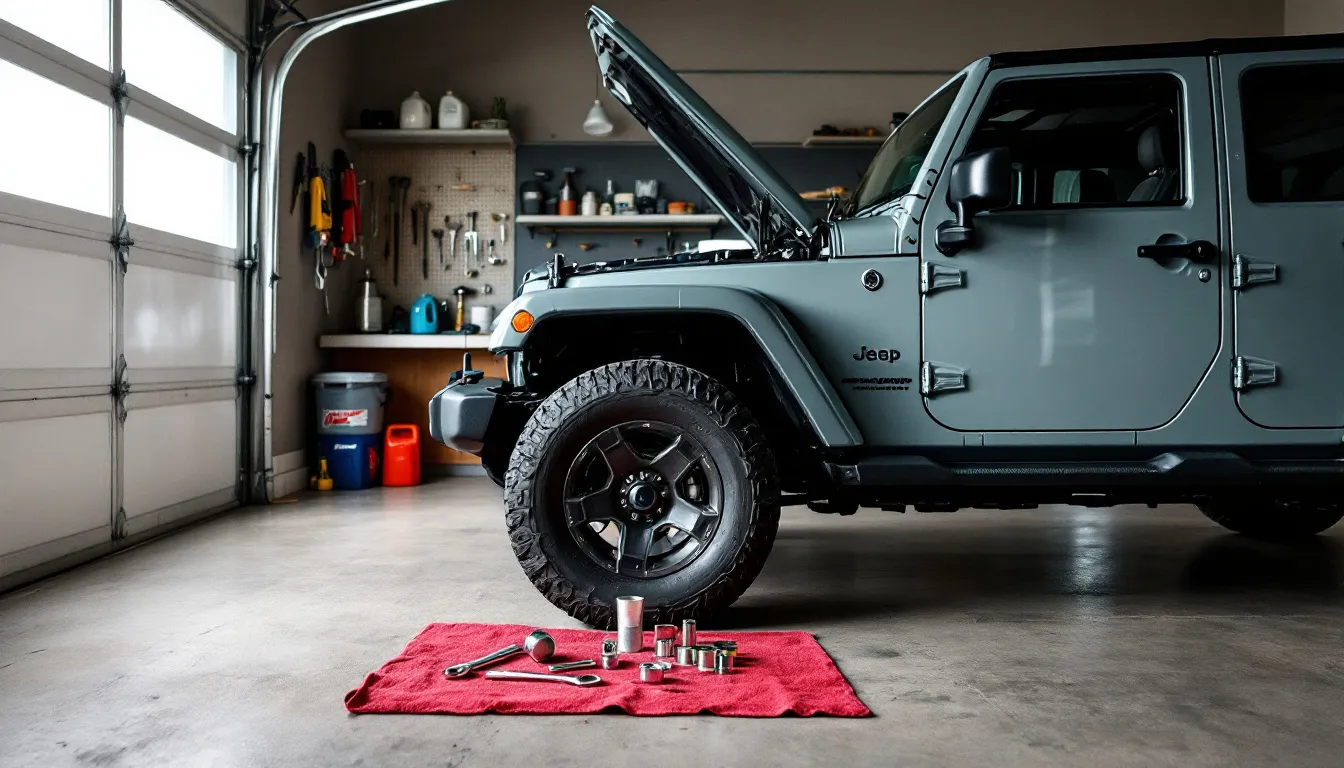
2018 Jeep Wrangler JK Maintenance Schedule: Final Year Service Guide
My first oil change on a JK ended with a stripped drain plug and a very humbling trip to the parts store — turns out “hand tight plus a quarter turn” means something, and a torque wrench isn’t optional. That experience kicked off a repair journal I still reference today, and it’s the reason this guide exists: so you don’t learn the same lessons the hard way.
This guide covers the complete 2018 Jeep Wrangler JK maintenance schedule — every fluid, filter, and inspection interval you need, organized so you can actually use it. The 2018 JK is the final production year of the platform that ran from 2007 through 2018, making it both the most refined version of the JK and one with enough miles of brand history to know exactly where it gets tired. Whether you’re maintaining it as a daily driver, a weekend wheeler, or a long-term keeper, this schedule applies to all 2018 JK trims (Sport, Sahara, Rubicon) in both 2-door and 4-door (JKU) configurations.
For context on how the 2018 model differs from earlier years, see our full breakdown of JK model year differences (2007–2018). And if you’re trying to understand what reliability issues to watch for specifically, our common JK problems by year guide is essential reading.
2018 Jeep JK Service Schedule at a Glance
Here’s the full interval summary for the 2018 JK. This covers the 3.6L Pentastar V6 — the only engine offered in the final model year. Use this table as your quick reference, then read the sections below for specs and details on the services that matter most.
| Service | Normal Interval | Severe Duty Interval |
|---|---|---|
| Engine oil & filter | Every 5,000–8,000 miles | Every 3,000–5,000 miles |
| Tire rotation | Every 5,000–7,500 miles | Every 5,000 miles |
| Air filter (engine) | Every 30,000 miles | Every 15,000–20,000 miles |
| Cabin air filter | Every 25,000 miles | Every 15,000 miles |
| Spark plugs | Every 30,000 miles | Every 30,000 miles |
| Coolant flush | Every 5 years / 100,000 miles | Every 50,000 miles |
| Brake fluid flush | Every 2 years | Every 2 years |
| Transmission fluid | Every 60,000 miles | Every 30,000 miles |
| Transfer case fluid | Every 30,000 miles | Every 15,000 miles |
| Front differential fluid | Every 30,000 miles | Every 15,000 miles |
| Rear differential fluid | Every 30,000 miles | Every 15,000 miles |
| Serpentine belt | Inspect at 60,000 miles | Inspect at 45,000 miles |
| Wheel bearing inspection | Every 30,000 miles | Every 15,000 miles |
| Brake inspection | Every 12,000 miles | Every 10,000 miles |
The two services most JK owners skip entirely are differential fluid and transfer case fluid. Both run hot, both pick up moisture on trail runs, and both rarely announce a problem until the damage is done. If your JK has any water crossings in its history, consider halving the standard interval for those two services regardless of mileage.
Mopar’s official recommendation for severe-duty service kicks in when your driving includes frequent towing, regular off-road use, short trips under 10 miles, extreme temperatures, or sustained idle time. Most JK owners doing any trail work qualify for the severe schedule — more on that in Section 8.
For a sense of how the JK’s maintenance demands compare to the JL that replaced it, check our JK vs JL Wrangler comparison.
Engine Oil, Coolant & Fluid Service for the 2018 JK
I didn’t grow up wrenching on cars. In Switzerland, you take your car to the dealer and pay whatever they ask. Moving to Cape Town and buying a Jeep forced me to learn — partly out of interest, partly out of necessity. JK specialists here are good, but they’re busy, and some jobs just aren’t worth paying shop rates for.
My first DIY job was an oil change. Sounds simple — it is simple — but I still managed to overtighten the drain plug the first time. Torque specs exist for a reason. Since then I’ve worked up to brake pads, fluid flushes, spark plugs, and basic suspension work. Each job taught me something about the JK platform. The brake caliper slides on the front axle are almost impossible to access without the right combination of extensions and universal joints. The spark plugs on the passenger side require the patience of someone with small hands or a lot of cursing.
For the 2018 JK 3.6L Pentastar, the factory spec is 5W-20 engine oil, with a sump capacity of 5.9 quarts with filter. The drain plug torque spec is 25 ft-lb — not 40, not 50. Use a quality filter and torque it to spec. If you’re doing this yourself, two tools will save you grief on every single oil change.
First, an oil filter swivel wrench makes removal clean and quick, especially in the tight engine bay of a JK where access angle matters.
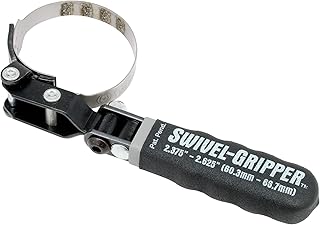
57010 Import Oil Filter Swivel Wrench
Check Price on Amazon →Second, a micrometer-style torque wrench for the drain plug means you set the torque, feel the click, and stop — no guessing, no stripped threads.
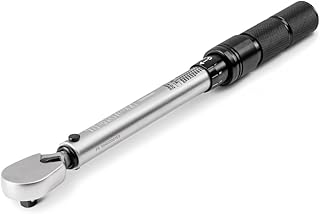
1/4 Inch Drive 90-Tooth Dual-Direction Micrometer Torque Wrench (20-200 in-lb) | TRQ50402
Check Price on Amazon →Coolant: The 2018 JK uses HOAT (Hybrid Organic Acid Technology) coolant — Mopar Antifreeze/Coolant 10-Year or equivalent. Do not mix coolant types. The full cooling system capacity is approximately 13.8 quarts. Flush interval is every 5 years or 100,000 miles under normal conditions.
Power steering fluid: The 2018 JK still runs a hydraulic power steering rack (not electric like the JL). Use Mopar Power Steering Fluid +4 or equivalent ATF+4. Check the level every oil change and inspect the reservoir for discoloration, which signals contamination.
Brake fluid: DOT 3 minimum; DOT 4 is acceptable. Flush every two years regardless of mileage — brake fluid is hygroscopic and absorbs moisture over time, lowering its boiling point.
Transmission, Transfer Case & Differential Service
The drivetrain below the 2018 JK’s body is where deferred maintenance does its most expensive damage. These fluids don’t have a dipstick or a warning light. You service them on schedule, or you find out they needed service when something grinds.
Automatic Transmission (NSG370 6-Speed Auto / 545RFE 5-Speed Auto)
The 2018 JK came with either the 6-speed manual (NSG370) or the 5-speed automatic (545RFE), depending on trim and configuration. Both have specific fluid requirements:
- Fluid type: ATF+4 (automatic) / Manual Transmission Fluid (manual — Mopar NSG370 specific)
- Capacity: Approximately 8.8 quarts (auto); 2.7 quarts (manual)
- Service interval: Every 60,000 miles normal / every 30,000 miles severe duty
- Drain plug torque: 21 ft-lb (auto pan bolts)
Transfer Case (NV241 / NV241OR Rock-Trac on Rubicon)
The transfer case is chronically under-serviced. Trail water ingestion and heat cycling degrade the fluid faster than mileage alone suggests. Most owners completely skip this service, then wonder why the transfer case feels notchy or whines under load.
- Fluid type: Mopar Transfer Case Fluid (NV241) or ATF+4
- Capacity: Approximately 1.0 quart
- Service interval: Every 30,000 miles normal / every 15,000 miles severe duty
- Fill plug torque: 40 ft-lb
Front Differential (Dana 30 Standard / Dana 44 on Rubicon)
- Fluid type: 75W-90 synthetic gear oil (add friction modifier if clutch-type LSD equipped)
- Capacity: Approximately 1.5 pints (Dana 30) / 2.0 pints (Dana 44)
- Service interval: Every 30,000 miles / every 15,000 miles severe duty
- Fill/drain plug torque: 25 ft-lb
Rear Differential (Dana 44 Standard / Dana 44 Rubicon with Locker)
- Fluid type: 75W-90 synthetic gear oil (add Mopar friction modifier for Trac-Lok LSD)
- Capacity: Approximately 2.8 pints
- Service interval: Every 30,000 miles / every 15,000 miles severe duty
- Fill/drain plug torque: 25 ft-lb
For these drain and fill plugs, you need serious torque — and the leverage to break them loose when they’ve been on for 30,000 miles. A 1/2-inch breaker bar gives you the mechanical advantage to crack stubborn plugs without rounding them.
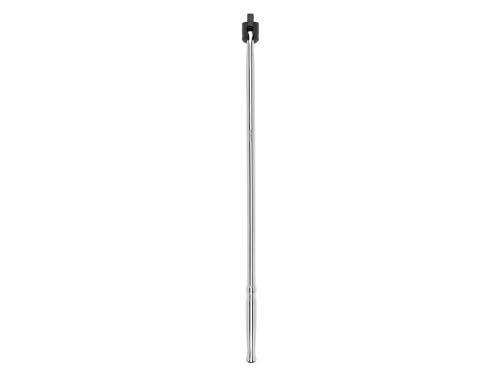
1/2 Inch Drive x 24 Inch Breaker Bar | SBH00224
Check Price on Amazon →And when reinstalling, a 1/2-inch drive torque wrench that reads in ft-lb (not in-lb) is the right tool for differential and transfer case plugs.
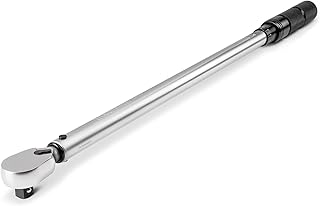
1/2 Inch Drive 90-Tooth Dual-Direction Micrometer Torque Wrench (40-300 ft-lb) | TRQ52403
Check Price on Amazon →The Rubicon’s front and rear locking differentials add complexity — if your 2018 JK is a Rubicon, verify whether friction modifier is required for your specific locker configuration. See our breakdown of Rubicon vs Sport vs Sahara drivetrain differences for details.
Spark Plugs, Brakes, Air Filters & Ignition Service
Spark Plugs
The 2018 JK 3.6L Pentastar takes Champion RE14MCC4 or equivalent iridium plugs. Gap spec is 0.043 inches. The 3.6L has six plugs in a V-layout — the rear bank requires some patience to access, but it’s a DIY-doable job with the right socket and extensions.
- Interval: Every 30,000 miles
- Torque: 13 ft-lb
- Plug type: Iridium or platinum; do not use copper plugs for regular service
Brakes
Inspect brake pad thickness every 12,000 miles or whenever you rotate tires. The 2018 JK has vented front discs and solid rear discs across all trims. Rubicons see more thermal stress from trail braking. Minimum pad thickness before replacement is 2mm, but plan your replacement at 3mm to avoid rotor scoring.
- Front rotor diameter: 12.9 inches
- Rear rotor diameter: 12.0 inches
- Caliper slide bolt torque: 32 ft-lb (front) / 17 ft-lb (rear)
An impact socket set makes brake caliper bolt removal significantly faster — especially on rear calipers that tend to resist a ratchet after years of heat cycling.
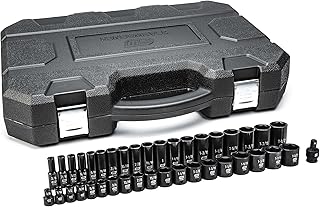
39 Pc. 1/2" Drive 6 Pt. Impact Socket Set, Standard & Deep, SAE - 84947N, Black
Check Price on Amazon →Brake Fluid
Use DOT 3 or DOT 4. Flush every two years regardless of mileage — brake fluid is hygroscopic and absorbs moisture over time, lowering its boiling point.
Air Filter
- Engine air filter: Every 30,000 miles normal / every 15,000 miles severe duty (trail dust cuts that in half)
- Filter type: Panel filter, 10 x 14 x 1.5 inches approximately
Note on cabin air filter: The 2018 Jeep Wrangler JK does NOT have a factory cabin air filter. Chrysler did not include a cabin filter housing in the JK platform. Some aftermarket kits exist, but the factory service manual has no cabin filter service interval because there is no cabin filter to service. Save yourself the time of searching — it simply isn’t there.
2018 JK-Specific Inspections: Known Weak Points to Check
Every used Jeep has a story. Mine had a few it hadn’t finished telling yet.
I know exactly what death wobble feels like at 65 mph with a family in the car — a violent shimmy that makes you wonder if the front axle is leaving the vehicle. The culprit was a worn track bar end. After that repair, checking the track bar and steering components became the first thing I do every oil change, without exception. You can’t put serious miles on a JK without knowing where the wear hides.
The 2018 JK is the most refined iteration of the platform, but it carries forward every structural quirk from 11 years of production. Here’s what to inspect proactively — these are the documented weak points:
- Track bar and end links: Worn or loose track bar hardware is the primary cause of death wobble. Grab the track bar by hand and check for play. No movement should be present.
- Steering stabilizer: A worn stabilizer won’t cause wobble but masks other wear. If your JK has wobble and a stabilizer, replace the stabilizer after fixing the root cause — not before.
- Tie rod ends and drag link: Inspect for slop. Push and pull each end with the wheels on the ground. Replace if any freeplay is felt.
- TIPM (Totally Integrated Power Module): The JK’s TIPM has a documented history of erratic behavior — windows operating on their own, fuel pump relay failures, horn activating randomly. Inspect for fault codes and known TSBs if you see electrical gremlins.
- Front and rear axle seals: Axle seal leaks are common on high-mileage JKs and trail-driven examples. Look for gear oil weeping from behind the brake rotors.
- Control arm bushings: Polyurethane and rubber bushings degrade with age and flex cycles. Any clunking over bumps warrants inspection.
- Sway bar end links: Quick-disconnect end links on Rubicons see more stress. Check for torn boots or seized joints.
- Coolant leak at water pump and thermostat housing: The 3.6L’s plastic thermostat housing is known to crack with age. Inspect during every coolant top-off.
The 2018 model year included minor electrical and software refinements over the 2017. For a detailed breakdown of what changed, see how the 2018 JK differed from earlier model years.
Essential DIY Tools for Your 2018 JK Maintenance
Doing your own maintenance on a 2018 JK is genuinely achievable — but only with the right tools. The radiator was done — swapped it out clean. Then came the AC. We found out it wasn’t working properly on a drive up into serious heat, with family in the back seat. Not ideal. Got that sorted the moment we got home.
Then came the big one: mechanical integrity before cosmetic ambition. You can’t call a Jeep reliable if you skip the foundational stuff. Here are the tools that actually move the needle for JK-specific work.
Best Overall: OBDII Bluetooth Scanner
The single most valuable tool you can own for a 2018 JK is an OBDII scanner. A dealer diagnostic appointment costs $100–$150 before they’ve touched anything. A quality scanner pays for itself in one visit — and gives you the ability to read and clear codes on your own schedule, before a Check Engine light turns into a shop bill.
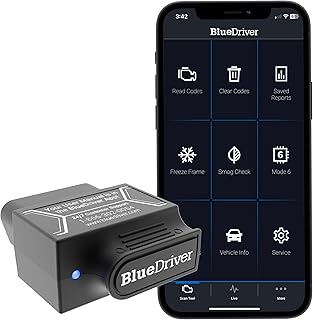
Bluetooth Pro OBDII Scan Tool for iPhone & Android - No Subscription Fee - OBD2 Car Scanner and Code
Check Price on Amazon →This Bluetooth scanner connects to your phone and supports not just engine codes but ABS, SRS, and airbag systems — all relevant to JK ownership. It works on any 1996+ OBD2-compatible vehicle, so it travels with you across multiple vehicles.
Digital Multimeter
Electrical issues — TIPM faults, bad grounds, parasitic drain — are a fact of life on older JKs. A basic digital multimeter lets you test battery health, verify charging voltage (should be 13.8–14.4V at idle), and trace shorts without guessing.
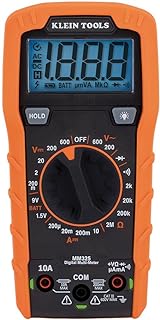
MM325 Multimeter, Digital Manual-Ranging 600V AC/DC Voltage Tester, Tests Batteries, Current, Resist
Check Price on Amazon →At under $30, this is the least expensive and most overlooked tool in most JK owners’ kits.
Mechanics Hand Tool Set
You cannot do meaningful JK maintenance with a single combination wrench and a crescent wrench. A comprehensive SAE and metric socket set with 1/4”, 3/8”, and 1/2” drive options covers the full range of fastener sizes you’ll encounter across engine, drivetrain, and body work.
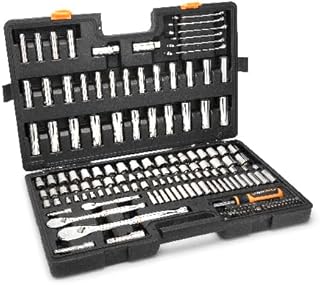
185 Piece Mechanics Hand Tool Set - 1/4", 3/8", & 1/2" Drive | 90 Tooth | SAE & Metric | GW90MCBMTS
Check Price on Amazon →Torque Wrench (Small Range — In-Lb)
For oil drain plugs, spark plugs, and sensor fittings, a small-range micrometer torque wrench prevents the most common DIY mistake: overtightening fasteners that strip easily.
Torque Wrench (Large Range — Ft-Lb)
Differential fill plugs, axle hardware, and lug nuts all require ft-lb torque specs. This larger-range wrench handles everything the small one can’t.
Standard vs. Severe Duty: Which Schedule Should You Follow?
Mopar defines two service tracks: Normal and Severe Duty. Normal service covers highway miles, moderate temperatures, and no towing or off-road use. Severe duty applies when your driving includes any of the following: repeated short trips, off-road use, towing or hauling, extreme heat or cold, or sustained low-speed operation.
| Driving Factor | Normal Schedule | Severe Schedule |
|---|---|---|
| Highway / commute driving | ✓ | — |
| Any off-road use | — | ✓ |
| Towing or hauling | — | ✓ |
| Short trips under 10 miles | — | ✓ |
| Extreme temps (hot or cold) | — | ✓ |
| Water crossings | — | ✓ |
Most JK owners qualify for the Severe schedule — and if you’re not sure which applies to you, default to Severe. The cost difference in consumables is minimal. The cost of a spun bearing or a failed differential is not.
If you’re evaluating whether to keep your 2018 JK or move to a JL, service complexity is one factor worth understanding — see our complete JK buyer’s guide for the full picture.
Get new guides by email
One email when we publish something worth reading. Unsubscribe anytime.
DIY vs. Dealer: What You Can Do at Home vs. What to Leave to a Shop
One early lesson in JK ownership: deferred maintenance doesn’t just grow — it compounds. My own JKU came to me with a radiator, the AC system and the cylinder heads all needing work, the classic trail of a coolant weep the previous owner ignored. The bill for that backlog dwarfed what routine maintenance would have cost. Do the easy stuff on time, and you protect yourself from the expensive stuff.
Here’s a practical breakdown for 2018 JK owners:
| DIY-Friendly | Shop-Recommended |
|---|---|
| Oil and filter change | Cylinder head / head gasket work |
| Air filter replacement | Transmission rebuild |
| Spark plug replacement | TIPM replacement / reprogramming |
| Differential fluid service | AC system recharge / evacuation |
| Transfer case fluid change | Alignment (requires alignment rack) |
| Brake pad replacement | Axle shaft replacement |
| Battery replacement | Fuel injector cleaning (professional) |
| OBDII code reading | Warranty / recall work |
| Tire rotation (with floor jack and stands) | Wheel bearing press-fit replacement |
An OBDII scanner is the bridge between DIY and dealer — read your own codes before paying a shop’s diagnostic fee to do the same.
For a comparison of how JK service complexity stacks up against the newer platform, see JK vs JL — how service complexity compares.
Frequently Asked Questions: 2018 Jeep JK Maintenance
How often should I change the oil on my 2018 Jeep Wrangler JK?
Under normal driving conditions, every 5,000–8,000 miles. If you wheel off-road, tow, or make frequent short trips, follow the severe-duty interval of every 3,000–5,000 miles. The 3.6L Pentastar does not have an oil life monitoring system, so you’ll track this by mileage — not a dashboard notification.
What type of oil does a 2018 Jeep Wrangler JK take?
The 2018 Jeep Wrangler JK 3.6L Pentastar V6 requires SAE 5W-20 engine oil meeting the API SN or ILSAC GF-5 specification. Total capacity with filter is 5.9 quarts. Full synthetic is recommended for extended intervals and for JKs that see high-heat off-road use.
Is the 2018 Jeep Wrangler JK reliable?
The 2018 JK is generally considered the most refined version of the JK generation, with the 3.6L Pentastar being a proven engine by that point in production. Known issues include TIPM electrical faults, death wobble from front suspension wear, and axle seal leaks on high-mileage examples. See our guide to known JK reliability issues by model year for a full breakdown.
How many miles can a 2018 Jeep JK last?
With consistent maintenance, many 2018 JK owners report 200,000–300,000 miles on the 3.6L Pentastar without major engine work. The drivetrain components are equally durable when fluids are serviced on schedule. Body and frame corrosion on trail-driven examples with regular water exposure tends to be the limiting factor before the engine gives out.
Does the 2018 Jeep Wrangler JK have a cabin air filter?
No. The 2018 Jeep Wrangler JK does not have a factory cabin air filter. The JK platform was never equipped with a cabin filter housing from the factory. Aftermarket conversion kits exist, but the stock vehicle has no cabin air filter to replace or service.
What is the transmission fluid for a 2018 Jeep Wrangler JK?
The 2018 JK automatic (545RFE) requires ATF+4 transmission fluid. The 6-speed manual (NSG370) requires a specific Mopar NSG370 manual transmission fluid — standard gear oil is not a suitable substitute. Check your owner’s manual or the transmission housing tag to confirm which unit your Jeep has before purchasing fluid. For more context on what changed in the final production year, see what changed in the 2018 JK vs earlier years.
Keep Your Final-Year JK Running Right
It’s done right, or it’s done twice. That philosophy runs through everything about maintaining a 2018 JK. The most transferable lesson from learning to wrench on a Jeep with zero experience isn’t any specific torque spec — it’s the habit of writing things down. A simple repair journal, even just notes in your phone, tells you exactly when the differential fluid was last changed, which brake pads went on at what mileage, and what the OBDII scanner said six months ago. That history is worth real money when you’re troubleshooting and when you eventually sell.
The 2018 JK is the end of a lineage. It’s not a vintage collectible, but it is a proven, parts-abundant, deeply understood platform with a community that has documented every known failure mode. Follow the schedule in this guide, inspect the known weak points proactively, and it will run well past 200,000 miles without drama.
Here are three natural next steps from here:
- Complete JK buyer’s guide — everything you need to know about owning a JK from purchase through long-term maintenance
- JK soft top vs hard top comparison — if you’re considering a top swap as part of your ownership refresh
- JK model year differences (2007–2018) — understand exactly how your 2018 compares to earlier years and what improvements it brought to the platform
Free: JK Fluids at a Glance
Every fluid, spec and capacity for the 2007-2018 Wrangler JK on one page, plus a cut-out glovebox card. Checked against the owner's manuals. From the JK Service Kit.
Email me the download and new guides when they are published. Unsubscribe anytime. Privacy Policy.
Allan
I'm Allan. I own a 2014 Jeep Wrangler JKU and I research the hell out of every mod before I touch it. When I've fitted something to my own Jeep, I say so. Everything else is researched from manufacturer specs and other owners' reports. No sponsored fluff.
Learn more about me →Free: JK Fluids at a Glance
Every fluid, spec and capacity for the 2007-2018 JK on one page, plus a glovebox card.
Email me the download and new guides when they are published. Unsubscribe anytime. Privacy Policy.
Related Articles
JK Fluid Specifications: Complete Reference Guide
Every fluid, spec and capacity for the 2007-2018 Jeep Wrangler JK, by engine and model year, checked against the owner's manuals: oil, ATF+4, NSG370, NV241, Dana 30/44, coolant, brakes.
Jeep JK Fall Trail Prep: 10-Point Checklist Before the Last Runs of the Year
Fall is when your JK needs attention most. Cooler temps, shorter daylight, and slicker trails expose what summer's heat masked. A Jeep JK fall trail...
Jeep JK Death Wobble: Every Cause, How to Diagnose It, and the Permanent Fix
Imagine this: you're cruising the highway at a steady clip when your front tire catches a seam in the pavement. Suddenly, your steering wheel is trying...