Jeep JK Rock Sliders Installation Guide: Steel vs Aluminum
Jeep JK Rock Sliders Installation Guide: Steel vs Aluminum
Disclosure: JeepJK Guide earns a commission on qualifying Amazon purchases at no extra cost to you. We only recommend products we’d bolt onto our own rigs.
Introduction
Jeep JK rock sliders are steel or aluminum tubes that bolt to your frame rails below the doors, protecting the body pinch welds and rocker panels from getting torn up on rock strikes. If you’re searching for a jeep jk rock sliders installation guide steel vs aluminum, here’s the straight answer: steel sliders are heavier and cheaper but nearly impossible to break; aluminum sliders cut weight but cost more and can crack under severe impacts. For 2007–2018 JK and JKU owners, both bolt to the same frame mounting points — your choice comes down to how hard you actually wheel, how much weight matters to your build, and what you’re willing to spend.
Rock sliders aren’t a nice-to-have once you’re running real trails. The factory rocker panels on a JK are thin, stamped steel with almost nothing behind them. One hard slide onto a ledge and you’re looking at a door that won’t close and bodywork that costs more than a complete slider kit ever would.
Before you order, also check out our guide to the best front bumper for Jeep JK and our full JK buyers guide to plan your build in the right order.
What Are Rock Sliders and Why Your JK Needs Them
Rock sliders give your Jeep JK a hard, replaceable surface for the rig to slide across rocks and ledges — instead of letting that impact hit thin factory sheetmetal directly.
The JK’s body sits lower than purpose-built crawlers. Even on a modest 2.5-inch lift with 33-inch tires, the rocker area is still one of the most exposed parts of the vehicle when you’re on off-camber sections or shelf rock. OEM rocker panels are pressed steel with minimal reinforcement underneath — they dent, fold, and crumple on contact. One good rock hit and you’re dealing with a door that’s hard to close and rust starting immediately along the crease.
Frame-mounted sliders are the only type worth bolting on: body-mounted or step-tube designs can’t transfer load to the chassis properly, so they fold under real impact forces.
There’s another benefit that doesn’t get talked about enough: recovery. A well-built slider with a flat top becomes a high-lift jack point. You can plant the base of a Hi-Lift under a slider and lift an entire corner of the rig without crawling underneath to find a frame tab. That alone has saved more than one recovery on trails too tight for anything else.
Check the trim level before you buy — Rubicon models come with factory rock rails, but those are step-style body mounts, not frame-mounted sliders. They’re not a substitute.
Steel vs Aluminum Rock Sliders: Which Material Is Right for Your JK?
For most JK owners who actually get on the trail, steel is the right call. Aluminum saves weight — typically 15–25 lbs per side — but it can crack under hard lateral impact, and cracks in aluminum are much harder to field-repair than bent steel. That said, aluminum makes real sense for JK owners focused on overlanding with lighter trail use, where weight savings help your fuel economy and put less stress on front axle bearings.
Here’s how the two materials stack up where it matters:
| Attribute | Steel | Aluminum |
|---|---|---|
| Weight per side | Typically 35–55 lbs | Typically 18–35 lbs |
| Typical price range | $300–$600/pair | $450–$850/pair |
| Impact strength | Excellent — bends but rarely cracks | Good — can crack on severe impacts |
| Corrosion resistance | Low without coating; needs paint/powder coat | High — naturally corrosion resistant |
| Repairability | Easy — any welder can fix a bend | Harder — requires TIG and aluminum experience |
| Best for | Rock crawling, hard trails, recovery use | Overlanding, sand, mild trail use |
That weight difference is real, and it adds up fast. Installing a steel front bumper on my JK took an entire Saturday — not because the bumper itself was complicated, but because the stock plastic bumper had corroded bolts behind the fascia that refused to cooperate. Three stripped bolts later, I was reaching for the angle grinder. Once it was on, I could feel the weight immediately in the steering response driving home. That’s when I understood why everyone in the forums says to upgrade the steering stabilizer at the same time.
Now multiply that weight across a full build: steel sliders on top of a steel bumper, winch, and spare tire carrier puts you at 200+ lbs of additional unsprung weight. That affects how you need to think about your armor as a system, not as individual purchases. It’s also a reason to plan on re-gearing sooner rather than later, especially if you’re running 37-inch tires on your JK.
For most rock crawlers: go steel. For weight-conscious overland builds: aluminum is a legitimate choice if you’re buying quality.
Tools and Prep Before You Start the Installation
Get the right tools in hand before you touch a bolt. This makes the difference between a two-hour job and a weekend wrestle. Start by applying penetrating oil to the frame bolt holes 24 hours before you plan to work — this step alone saves hours of frustration.
Here’s everything you’ll need:
- Floor jack (3-ton minimum, low-profile preferred)
- Jack stands (minimum 2, ideally 4)
- 3/8” and 1/2” drive ratchets with extension
- Socket set: metric and SAE (most kits use 1/2” or 9/16” hardware)
- Torque wrench (capable of 60–100 ft-lbs)
- Penetrating oil (apply 24 hours before install)
- Wire brush and die grinder for cleaning frame holes
- Impact driver or impact wrench
- Thread chaser or tap set (M10 and M12)
- Safety glasses and gloves
Never work under a lifted JK supported only by a floor jack — always use rated jack stands under the frame before you get underneath.
A quality floor jack is non-negotiable. The Jack Boss 3-ton low-profile floor jack lifts from 3-15/16” minimum, handles up to 18-5/16” — enough range for a stock or lifted JK — and at 58.5 lbs it’s manageable to move around without help.

Jack Boss 3 Ton Low Profile, Aluminum and Steel Racing Floor Jack with Dual Pistons Quick Lift Pump
$169.99
Key specs:
- 3-ton capacity
- Lifts 3-15/16" to 18-5/16"
- Aluminum and steel construction
- Quick-lift pump
Pros: Low profile fits under lifted JKs, fast pump action, durable construction
Cons: Heavy for occasional use, requires jack stands always
Check Price on Amazon →For hardware, don’t reuse OEM bolts if they show any corrosion or discoloration. Grade 8 hardware is the correct spec for frame mounting points. The Region Offroad Grade 8 Yellow ZINC crossmember bolts are the right replacement to have on hand.

Region Offroad Crossmember Skid Plate Bolts Grade 8 Yellow ZINC 6035836 Compatible with Jeep Wrangler
$24.99
Key specs:
- Grade 8 hardness
- Yellow zinc plated
- M14 x 1.5 x 45mm
- JK crossmember fitment
Pros: Correct spec for frame mounting, corrosion resistant, quality grade
Cons: Generic bolt — make sure you have the right size for your specific kit
Check Price on Amazon →Check your JK maintenance schedule before you start — if you’re due for an oil change or undercarriage inspection, now is the perfect time to knock that out while you’re already underneath.
How to Install Rock Sliders on Your Jeep JK: Step-by-Step
Installing rock sliders on a 2007–2018 JK or JKU takes 2–4 hours with proper prep. The process is bolt-on — no welding required for any quality kit — and the most common mistake is skipping anti-seize and rushing the torque sequence.
Follow these steps in order:
-
Apply penetrating oil to frame mounting holes. Do this the night before if possible. JK frames accumulate rust and scale inside the mounting holes, and dry-threading hardware into them strips threads fast. The corroded frame bolts problem is the same one I dealt with on a steel bumper install — a stuck bolt that refuses to budge, then eventually strips. Penetrating oil is your first line of defense.
-
Lift the JK and secure on jack stands. Use the frame rails as lift points, not the pinch welds. Set jack stands under the axle tubes if you need to remove the rocker panel trim, or under the frame for clearance access.
-
Remove OEM rocker panel trim (if applicable). Some JK trims have plastic rocker moldings held by clips. Pull these off before positioning the sliders — they’ll interfere with proper fitment and most won’t go back on anyway.
-
Clean and chase the frame mounting holes. Use a wire brush to clear debris, then run a thread chaser or tap through each hole. This prevents cross-threading and ensures your torque readings are accurate later.
-
Position the slider with a helper. Rock sliders are heavy — a steel pair can run 70–100 lbs total. Have someone hold the slider in position while you start the first bolt by hand.
-
Hand-thread ALL bolts before tightening any of them. This is the most important step: every single bolt must be hand-threaded fully before you apply torque to any bolt. Tightening one corner first pulls the slider out of alignment and can cross-thread the remaining holes. This is where patience pays off.
-
JKU (4-door) owners: verify B-pillar alignment. The JKU slider is longer and has an additional mounting tab at the B-pillar location. Before you torque anything, confirm this tab sits flush against the frame — a gap here means the slider isn’t seated correctly and will flex under load.
-
Torque in a cross pattern to spec. Most kits specify 60–85 ft-lbs for 1/2” Grade 8 hardware at the main frame mounts. Always confirm with your specific kit’s documentation — torque specs vary by bracket design and thread engagement. Apply anti-seize to bolt threads before final torque.
-
Check for clearance with tires at full droop. With the JK back on the ground, cycle the steering lock-to-lock and check that no part of the slider contacts the tire or lower control arm. If you’ve upgraded to suspension lift and new control arms, verify clearance with the new geometry.
-
Re-torque after the first trail run. Hardware settles under load. Come back after your first wheeling day and re-check every bolt. This is especially important if you’re running heavy steel sliders — the weight and vibration on trail will show you anything that wasn’t perfectly seated.
Note on re-gearing: A full steel armor setup — bumper, sliders, skid plates, spare carrier — adds meaningful rotating and unsprung weight. If you’re building out your armor package, plan ahead for re-gearing after adding heavy armor and larger tires as a logical next step.
Related Armor to Pair With Your Rock Sliders
Once rock sliders are bolted on, the next vulnerable areas are the fuel tank and the front end. The most important complementary piece to add after sliders is a fuel tank skid plate — an exposed tank is one of the few trail hits that can end your day immediately.
ECOTRIC Fuel Tank Skid Plate
The ECOTRIC fuel tank skid plate is purpose-built for 2007–2018 JK 2-door models. It’s a direct replacement for OEM part 52059743AJ: heavy-duty steel construction, black powder coat finish, and a straightforward bolt-on install that makes it a logical add immediately after your slider install.

ECOTRIC Fuel Tank Skid Plate Compatible with 2007-2018 Jeep Wrangler JK 2-Door Black Replacement for OEM 52059743AJ
$262.54
Key specs:
- OEM replacement fitment
- Heavy-duty steel
- Black powder coat
- 2-door JK only
Pros: Direct OEM-replacement fitment means no fabrication or trimming
Cons: 2-door fitment only — JKU owners need to verify compatibility before ordering
Check Price on Amazon →For hardware, use quality replacement skid plate bolts rated for the application. The Region Offroad Gas Tank/Transfer Case Skid Plate Bolts fit JK, JL, and JT models (2007–2024) and come in a 4-pack — keep a set in your kit bag.
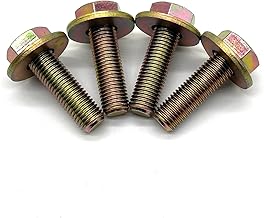
Region Offroad Gas Tank/Transfer Case Skid Plate Bolts Compatible with Jeep Wrangler JK JL Gladiator
$29.99
Key specs:
- 4-pack bolts
- JK, JL, JT compatible
- Grade 8 rated
- M14 x 45mm
Pros: Multi-model compatibility, quality grade, convenient 4-pack
Cons: Generic bolt — double-check size for your specific skid plate
Check Price on Amazon →Nilight Front Bumper (Rock Crawler with Winch Plate)
With your rockers and tank protected, the Nilight front bumper completes the baseline armor package. This bumper fits the full 2007–2018 JK and JKU range and includes a winch mounting plate — meaning you’re not paying extra for a separate plate when you’re ready to add a winch recovery system.
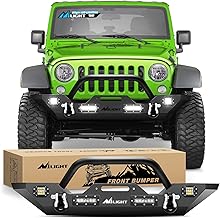
Nilight Front Bumper Compatible for 2007 2008 2009 2010 2011 2012 2013 2014 2015 2016 2017 2018 Jeep Wrangler JK with Winch Plate
$289.99
Key specs:
- Integrated winch plate
- Full JK and JKU fitment
- Steel rock crawler design
- D-ring mounts
Pros: Winch plate integrated, full JK/JKU fitment, competitive price for steel rock crawler bumper
Cons: Heavier than tube-style bumper — factor this into your total weight budget
Check Price on Amazon →See our full best front bumpers for Jeep JK roundup for more options at different price points, and our best wheels for Jeep Wrangler JK guide if you’re planning a full build refresh at the same time.
Frequently Asked Questions: Jeep JK Rock Sliders
These are the questions that come up most often about JK rock sliders — from trail use to fitment to weight. Honest answers, no guessing at specs you’d need to confirm with the manufacturer.
Do Jeep JK rock sliders affect ground clearance?
Properly installed, frame-mounted rock sliders do not reduce ground clearance below the OEM rocker panel height — they typically sit at or slightly above the factory rocker’s lowest point. What sliders do affect is departure angle on steep ledges if they extend significantly below the frame, so measure your installed clearance before heading out. Check your specific kit’s specs and mock up the position before final torquing.
Can I install rock sliders on my JK without a welder?
Yes. The vast majority of aftermarket rock sliders for the 2007–2018 JK are fully bolt-on designs that mount directly to factory frame rails using Grade 8 hardware. No welding is required, and you should be skeptical of any kit that claims you need to weld to frame-mount it on a JK — that suggests a non-standard design that may compromise the frame’s structural integrity or warranty. A socket set, torque wrench, and penetrating oil are all you need. You might also want to explore JK soft top vs hard top comparison while you’re planning your full build.
Will rock sliders fit both the 2-door JK and 4-door JKU?
No — 2-door JK and 4-door JKU sliders are different lengths and have different mounting tab locations. Always confirm you’re ordering the correct fitment before purchase. Most quality manufacturers offer separate SKUs for each body style. The JKU has an additional B-pillar mounting point that the 2-door kit doesn’t include.
How much do Jeep JK rock sliders weigh?
Weight varies significantly by material and design. Steel sliders typically run 35–55 lbs per side; aluminum sliders are typically 18–35 lbs per side. Always confirm the exact weight with the manufacturer before ordering, especially if you’re managing total build weight carefully. A pair of heavy steel sliders adds 70–110 lbs to your JK — meaningful if you’re also running a steel bumper, winch, and full-size spare.
Can rock sliders be used as a step to enter the JK?
Some rock sliders include a textured or notched top surface designed as a step, and these can absolutely be used for entry. However, standard tube sliders without a flat top surface are not designed as steps and can be slippery or unstable to stand on — check the manufacturer’s design intent before using any slider as a regular step. For recovery use, a flat-top slider with a reinforced bracket design works well as a Hi-Lift jack point — one of the most underrated benefits of frame-mounted sliders on trail. If you’re building out for water crossing, also check our best snorkel for Jeep JK water fording guide.
What’s the best way to prevent rock slider corrosion?
Steel sliders need protection. Apply a quality powder coat or paint finish during install — don’t rely on bare steel. Aluminum sliders have natural corrosion resistance but benefit from a clear coat to keep them looking new. After install, inspect the bolts and fasteners seasonally, especially if you’re in humid or salt-air environments. Re-apply anti-seize to bolts every 12–18 months if you’re in harsh conditions.
Final Verdict: Steel or Aluminum Rock Sliders for Your JK?
Choose steel if you rock crawl; choose aluminum if you overland and actively manage build weight. That’s the honest bottom line. Steel sliders hold up to real abuse, are repairable by any welder anywhere, and cost less. Aluminum saves meaningful weight — which matters if you’re already carrying a full steel bumper and winch — but costs more and limits your field-repair options.
Before you finish the install:
- Re-torque all mounting hardware after your first trail run — hardware settles under load
- Apply anti-seize to every bolt thread before final torque to prevent future corrosion seizure
- Confirm JKU B-pillar bracket alignment before torquing if you’re on a 4-door
Once your sliders are on, think about what comes next. A full armor package changes how your JK performs — heavier rigs need re-gearing after adding armor and larger tires, and your tire choice becomes even more important. See our guide to 37-inch tire options for your JK if you’re planning the next step in your build.
Rock sliders are the foundation of serious JK armor. Get them right, and you’re ready for whatever the trail throws at you.
Get the Free JK Build Planner
Complete PDF with mod checklists, gear ratios, tire sizing charts, and budget worksheets. Everything you need to plan your JK build.
No spam. Unsubscribe anytime. By subscribing, you agree to our Privacy Policy.
Allan
I'm Allan. I bought a 2014 Jeep Wrangler JKU and I research the hell out of every mod before I touch it. Everything here is tested or deeply researched on my own rig - no sponsored fluff, just honest findings.
Learn more about me →Get the JK Build Planner
Free PDF with complete build checklists, gear ratios, and tire fitment guides.
By subscribing, you agree to our Privacy Policy.
Related Articles
Power Door Mirror Upgrade Jeep JK: Heated Towing Mirrors (2007–2018 Guide)
If you've ever towed anything wider than your Jeep JK with stock mirrors, you already know the problem. Those factory units stick out maybe 3–4 inches...
Best Half Doors for Jeep Jk Summer Off-Roading
Affiliate Disclosure: JeepJK Guide earns a commission from qualifying Amazon purchases at no extra cost to you. All recommendations are based on...
Jeep JK Soft Top vs Hardtop MPG and Weather Protection
The soft top vs hardtop debate is something every 2007-2018 Wrangler owner grapples with — and honestly, there's no universal winner. Both have...