Best Winch for Jeep JK: Rated Pull, Line Speed & Mount Compatibility Guide
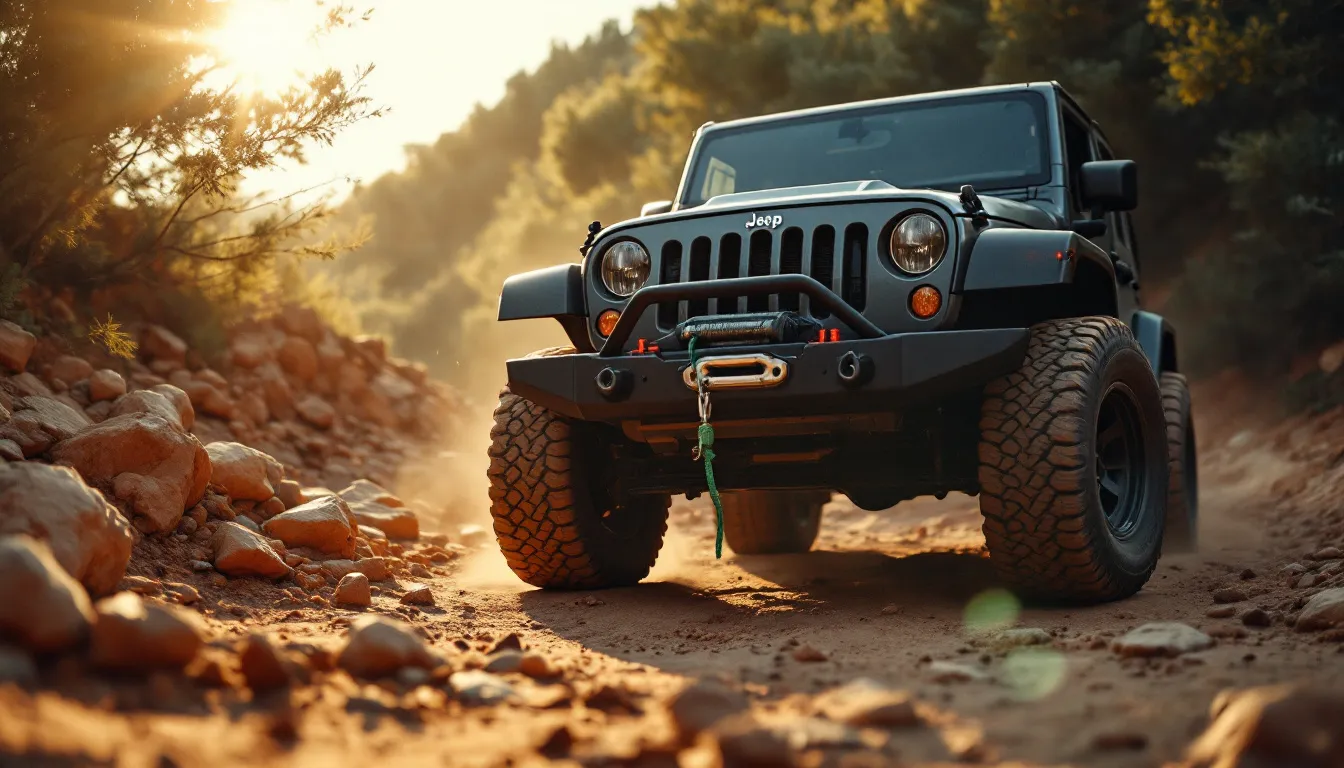
Best Winch for Jeep JK: Rated Pull, Line Speed & Mount Compatibility Guide
A jeep winch is an electric or hydraulic recovery device mounted to the front (or rear) of your Jeep that spools a steel cable or synthetic rope under load to pull the vehicle free from mud, sand, rocks, or other obstacles.
For a Jeep JK, the Warn VR EVO 12-S is the best overall jeep winch pick. It delivers 12,000 lbs of rated pull with a synthetic rope and an IP68 waterproof rating — enough margin above the JK’s curb weight to handle serious recovery situations. If you’re equipping a four-door JK Unlimited with extra gear, you’ll still want a minimum of 9,500 lbs, and the 12,000-lb rating gives you comfortable headroom.
Quick note on search confusion: some shoppers type “Winchester” when researching winch options. Winchester is a firearms brand. What you want here is a winch — a mechanical drum-and-motor recovery unit. Different things entirely.
Choosing a jeep winch also means thinking about how it mounts. Most JK owners pair their winch with a dedicated winch-plate bumper or a standalone winch plate. Both options are covered in detail below, along with the JK front bumper with winch mount guide for a full breakdown of bumper styles.
Best Winches for Jeep JK at a Glance
The right jeep winch for your JK depends on two things above everything else: rated pull capacity and how it mounts to your front end. The table below captures the three picks featured in this guide so you can compare at a glance before reading the full reviews.
| Product | Capacity (lbs) | Rope Type | IP Rating | Price Range | Best For |
|---|---|---|---|---|---|
| Warn VR EVO 12-S (Best Overall) | 12,000 | Synthetic | IP68 | ~$1,044 | Trail recovery, daily driver JK builds |
| TYT 1/4” x 50’ Synthetic Kit (Best Rope Upgrade Kit) | 10,000 (rope rating) | Synthetic | N/A (rope only) | ~$30 | Swapping steel cable to synthetic on a budget |
| Smittybilt XRC Gen 2 Front Bumper (Best Bumper Pairing) | N/A | N/A | N/A | ~$613 | Integrated winch-plate bumper for JK 2007–2018 |
All three products are available on Amazon and compatible with the 2007–2018 Jeep Wrangler JK platform. For JK Unlimited-specific fitment notes, see the best winch for JK Unlimited guide.
Get new guides by email
One email when we publish something worth reading. Unsubscribe anytime.
Best Overall Jeep JK Winch: Warn VR EVO 12-S

The Warn VR EVO 12-S is the best single winch for a Jeep JK because it combines a genuine 12,000-lb rated pull, IP68 waterproofing, and a factory-spec synthetic rope into one unit that fits standard JK winch plates without modification. If you only read one section of this guide, this is the one.
Warn is the benchmark name in recovery winching, and the VR EVO 12-S sits at the top of their recreational-duty line. The motor is a series-wound design that pulls hard under load without the voltage drop sensitivity you sometimes see in cheaper permanent-magnet motors. The synthetic rope — 80 feet of it — is safer than steel cable if it snaps under tension, and it’s lighter, which matters when you’re already adding a steel bumper to the nose of your JK.
IP68 explained in plain language: IP68 means the winch is rated for continuous submersion beyond one meter of water. For JK owners who cross water hazards on the trail, this matters. A cheaper winch rated IP55 or IP67 will resist splashing and brief immersion, but if your motor housing sits in a foot of standing water for several minutes during a recovery, IP55 may let moisture in. IP68 eliminates that concern.
The synthetic rope safety advantage is equally concrete. Steel cable stores enormous kinetic energy under tension. When it parts, it snaps back at lethal velocity. Synthetic rope loses tension almost instantly on failure — owners report it drops to the ground rather than whipping back. That’s not a minor comfort difference; it’s a fundamental safety distinction that trail-recovery communities take seriously.
I fitted a steel front bumper to my JKU in September, and the moment the installation was done, I understood why recovery gear matters. The weight difference alone — roughly 35 kg added to the front end — changed how the Jeep felt. But it was the conversation with other owners about rope safety that made me realise: if you’re going to carry a winch, synthetic rope isn’t a luxury upgrade. It’s the only choice that makes sense when you’re standing near your recovery anchor.
JK mount compatibility: The VR EVO 12-S uses a standard Warn mounting footprint (10” × 4.5”) that mates with most aftermarket JK winch-plate bumpers and Warn-compatible winch plates. You’ll want to confirm your specific bumper’s receiver dimensions before ordering, but the overwhelming majority of JK-spec front bumpers with integrated winch plates accept this footprint without adapters.
Owners commonly find that the wireless remote included with the EVO series eliminates the need to manage a corded controller from awkward positions during solo recovery attempts. The fairlead supplied is a hawse-type unit matched to the synthetic rope — do not substitute a roller fairlead, which can damage synthetic rope over time.
For rocks, roots, and deep mud where your JK’s underside is already getting a workout, pair this winch with appropriate JK underbody protection for rock crawling.
VR EVO 12-S Electric 12V Winch – 12,000 lb Pull Capacity, Synthetic Rope, IP68 Waterproof, High-Perf
Check Price on Amazon →Best Synthetic Rope Upgrade: TYT 1/4” x 50’ Kit

If you already own a winch fitted with steel cable, the TYT 1/4” x 50’ synthetic rope kit is the most cost-effective safety upgrade you can make for under $35. It replaces your existing steel cable with a 10,000-lb-rated synthetic rope, includes a protective sleeve, a heavy-duty hook, a rubber stopper, and a safety pull strap — everything you need for the swap.
The steel cable safety issue deserves a moment of direct explanation. Steel cable under high load is, in mechanical terms, a spring under compression. Pull 8,000 lbs of tension through 50 feet of 3/8” steel wire, and if that wire fails, it releases all of that stored energy in a fraction of a second. Trail users commonly note that a parting steel cable can travel fast enough to penetrate vehicle glass and injure bystanders.
That’s why the trail-recovery community has largely shifted to synthetic rope — and why many organised off-road events now require it.
Synthetic rope doesn’t store kinetic energy the same way. The fibres stretch slightly and then fail progressively, dissipating energy rather than releasing it in one violent event. The result is a rope that drops to the ground on failure rather than snapping back. It’s the difference between a catastrophic failure and a controlled one.
A few fitment notes before you order: The TYT kit is rated for winches up to 10,000 lbs pull capacity. If your winch is rated above that, you need a heavier rope — the 3/16” or 5/16” diameter options rated accordingly. At 1/4” diameter and 50 feet, this kit suits the 8,000–10,000 lb winch class that covers most stock-height JK builds. The included protective sleeve is worth fitting at any potential contact point with the fairlead or recovery anchor.
One critical compatibility note: synthetic rope requires a hawse fairlead, not a roller fairlead. Roller fairleads are designed for steel cable and will fray synthetic fibres over time. If your current bumper has a roller fairlead, budget an additional $20–$40 for a hawse fairlead replacement.
If you’re building out your JK for serious trail use, best mud terrain tires for the JK pairs logically with this upgrade — traction and recovery gear go together.
TYT Synthetic Winch Rope Kit - 1/4'' x 50' with 10000 lbs Strength, Protective Sleeve, Heavy Duty Ho
Check Price on Amazon →Jeep Winch Bumper Options: Mounting Your Winch Correctly

A winch only works if it’s mounted correctly, and for a Jeep JK that means either a full bumper with an integrated winch plate or a standalone winch plate that bolts to your existing bumper mounting points. Neither option is universally better — integrated bumper-winch combos spread load across the frame more efficiently, while standalone plates are lighter and cheaper if you already have a steel bumper you want to keep.
The structural point that matters most: your winch load transfers directly to your JK’s frame rails, not just the bumper steel. A winch plate welded into a full-steel bumper distributes that load across the bumper’s mounting brackets and into the frame at multiple points. A cheap bolt-on plate that attaches only to the bumper face places the entire recovery load onto the bumper’s own welds — which is not where you want the stress during a 10,000-lb pull.
When I fitted my steel front bumper in September, routing the winch cable correctly took more planning than I expected. I ran it through the fairlead three times before the lay was right. That wasn’t just about looks — it was about ensuring the cable wouldn’t bind or fray under load. A proper mount from the start saves troubleshooting later.
Here are the four main bumper options worth considering for JK winch builds, ranging from a premium integrated unit to budget-friendly plates:
Smittybilt XRC Gen 2 Front Bumper — Best Integrated Winch Bumper
The XRC Gen 2 is a JK-specific full-width steel bumper with an integrated winch plate built to handle up to 12,000-lb winches. It’s a well-regarded name in the JK community, priced around $613, and owners report solid fitment on both the two-door JK and the four-door JKU across the full 2007–2018 production run. The full-width design provides maximum approach angle protection and integrates D-ring mounts in the standard positions.
Smittybilt XRC Gen 2 Front Bumper – JK 2007–2018 with Winch Plate
Check Price on Amazon →Nilight JK/JKU Rock Crawler Winch Plate — Best Standalone Plate
At $289.99, the Nilight Front Bumper Compatible for 2007–2018 Jeep Wrangler JK is a standalone winch plate specifically designed for the 2007–2018 JK and JKU. This is the right choice if you already have a steel bumper fitted and want to add winch capability without replacing the whole front end. Owners report it mounts cleanly to factory JK bumper brackets and accepts standard Warn-footprint winches.
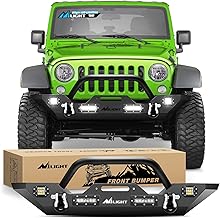
Nilight JK/JKU Standalone Winch Plate – 2007–2018
Check Price on Amazon →Hooke Road Steel Front Bumper with Winch Plate — Mid-Range Full Bumper
The Hooke Road Sturdy Front Bumper for Jeep Wrangler JK comes in at $263.99 and offers an integrated winch plate along with D-rings and provisions for auxiliary lighting. It covers multiple platforms — JK, JKU, JL, and JT — so verify the mounting bracket pattern matches the 2007–2018 body before ordering. The price point is competitive for a steel bumper with a built-in winch plate.

Hooke Road Steel Front Bumper with Winch Plate – JK/JKU
Check Price on Amazon →YZONA Stubby Front Bumper with Winch Plate — Best Budget Stubby Option
At $189.99, the YZONA Stubby Front Bumper for Wrangler JK is the lightest and cheapest option in this group. The stubby design improves your approach angle compared to full-width bumpers — useful if your JK sees narrow trails. JK buyers should confirm fitment with the seller before purchasing, as multi-platform listings sometimes have bracket differences between generations.

YZONA Stubby Front Bumper with Winch Plate – JK 2007–2018
Check Price on Amazon →For a detailed breakdown of approach angles, tube widths, and recovery anchor positions by bumper style, see the full-width vs stubby winch mount bumpers for the JK guide. If you’re building the front end comprehensively, control arm upgrades that complement a front bumper build is worth reading alongside it.
What Capacity Winch Does a Jeep JK Actually Need?
A Jeep JK needs a minimum 9,000-lb winch, and a 12,000-lb unit is the recommended standard. The industry-standard sizing rule is 1.5 times the vehicle’s gross vehicle weight (GVW). The two-door JK has a curb weight of approximately 3,760 lbs; the four-door JKU runs closer to 4,100 lbs. Apply the 1.5× rule and you get a minimum requirement of around 5,640–6,150 lbs — but that’s for a dead-pull on flat ground with nothing else working against you.
In the real world, the 1.5× number is a floor, not a target. Add trail gear, spare tire weight, a steel bumper, full fuel, and occupants, and your effective weight can climb well past 5,000 lbs before you’ve gone anywhere. Now factor in a 30-degree uphill pull through wet clay, where rolling resistance multiplies the effective load on the winch drum, and you can see why most experienced JK builders skip the 8,000-lb class entirely and go straight to 9,500–12,000 lbs.
A 12,000-lb winch on a JK also gives you reserve capacity for vehicle-to-vehicle recovery — helping extract another rig rather than just self-recovering. Many owners report that the first time they needed their winch for a trail friend, they were glad they hadn’t bought to the minimum.
One tradeoff to know: Higher-capacity winches are heavier. The Warn VR EVO 12-S weighs around 85 lbs, which adds to your front axle load. If you’re running a lifted JK with a heavy steel bumper, this adds up — though for most JK builds it falls well within the front axle rating.
For a JK Unlimited carrying extra weight from a full-length build with roof gear, the capacity math shifts slightly — see the dedicated winch sizing for the JK Unlimited specifically guide for those numbers. And if you’re adding a hardtop, don’t overlook hardtop weight considerations for your JK build when calculating total vehicle weight.
How Much Does Jeep JK Winch Installation Cost?
Expect to spend $150–$400 in labour for a professional jeep winch installation on a JK, on top of the cost of the winch and any bumper work. That range covers shops in most markets, though specialty off-road shops in high-cost-of-living areas report higher rates. The variation depends primarily on whether you’re also fitting a new bumper at the same time, or simply dropping a winch into an existing bumper plate.
The winch itself — in the $400–$1,100 range for a quality unit — is only part of the total budget. Community feedback consistently flags these additional line items that first-time buyers overlook:
- Wiring and solenoid box: A winch needs a dedicated heavy-gauge wiring run from the battery. Many aftermarket winches include the solenoid pack but not the full wiring harness to your battery terminals. Budget $30–$80 for wiring if your winch doesn’t include it.
- Fairlead: Synthetic rope needs a hawse fairlead; steel cable needs rollers. These are often included with the bumper or winch, but not always.
- Battery upgrade: This is the point many first-time buyers genuinely miss. A winch under sustained load draws 400–500 amps from your battery. A stock JK battery will handle this, but if your battery is older or you’re running significant auxiliary electrical (lights, fridge, audio), a secondary battery or an upgraded AGM battery is worth serious consideration.
- Bumper swap labour: If you’re replacing your OEM bumper with a winch-plate unit, add another $100–$200 for the bumper removal and refit.
DIY installation is realistic for mechanically confident JK owners — the wiring is straightforward and most winch-plate bumpers come with instruction sheets. Community reports put the full DIY job at 3–5 hours including bumper removal, winch mounting, and wiring.
Winch builds are a good prompt to plan a few other upgrades simultaneously — see other JK upgrades to plan alongside your winch build for a broader build checklist.
Jeep Winch Buying Guide: 5 Things to Check Before You Buy
Before you finalize a jeep winch purchase for your JK, five criteria separate a well-matched setup from an expensive mistake. Here they are, in order of importance:
- Bumper/plate compatibility
- Pull capacity vs. your actual loaded weight
- Rope type (synthetic vs. steel cable)
- IP waterproof rating
- Line speed and motor type
Bumper compatibility is the most critical item on this list. A winch that doesn’t physically fit your bumper’s receiver plate is useless, and not all winch mounting footprints are identical. The standard Warn footprint (10” × 4.5”) is widely supported, but some budget winches use non-standard dimensions. Measure your bumper’s winch plate opening before ordering, or verify with the bumper manufacturer that your chosen winch is a confirmed fit.
Pull capacity vs. loaded weight: As covered in the capacity section, the 1.5× GVW rule gives you a minimum. For a JK, that means 9,000 lbs minimum and 12,000 lbs recommended. Don’t buy to the floor.
Rope type: Synthetic rope is safer and lighter than steel cable. If you’re buying a steel-cable winch, plan to budget for a synthetic rope conversion kit immediately. The TYT Synthetic Winch Rope Kit is one of the cheapest ways to make that switch.
IP waterproof rating: Any rating below IP67 is marginal for serious trail use. IP67 handles brief submersion; IP68 handles sustained submersion. On a JK crossing water features, IP68 is the rating worth paying for.
Line speed and motor type: Line speed (feet per minute) determines how quickly you recover, not just whether you can. A slow winch at full load — common on budget permanent-magnet motors — means longer time with your recovery anchor under stress. Series-wound motors maintain speed under load more effectively than cheaper permanent-magnet designs.
For JK Unlimited owners, the sizing considerations shift — see the dedicated winch guide for the JK Unlimited. And before purchasing any JK accessory, verify fitment against understanding JK fitment specs before buying accessories to avoid compatibility surprises.
Frequently Asked Questions: Jeep Winch
These are the questions JK owners ask most often about winches — answered concisely so you can get a clear answer without reading the whole article.
What is the best winch option for a Jeep?
The best jeep winch for most JK owners is the Warn VR EVO 12-S — it combines a 12,000-lb rated pull, IP68 waterproofing, and a synthetic rope in a package that fits standard JK winch-plate bumpers. For owners on a tighter budget, a 9,500-lb winch in the $300–$500 range paired with a synthetic rope conversion kit is a workable alternative. See the JK front bumper with winch mount guide for mounting options.
Is a winch necessary for a Jeep owner?
A winch is not strictly necessary for every Jeep owner, but it becomes essential if you trail ride alone or in remote terrain. For urban driving and mild off-road use, a recovery strap and a traction board may be sufficient. If you regularly run technical trails — especially solo — a winch is the single most effective self-recovery tool available. Traction boards and straps require another vehicle or stable anchor; a winch requires neither.
What capacity winch does a Jeep require?
A Jeep JK requires a minimum 9,000-lb winch based on the standard 1.5× GVW sizing rule. The two-door JK weighs approximately 3,760 lbs at the curb; the JKU runs around 4,100 lbs. Add trail gear, occupants, and the resistance forces of a real-world recovery scenario, and a 12,000-lb winch is the practical recommendation for either platform. Buying to the minimum leaves no margin for difficult pulls.
How much does a Jeep winch installation cost?
Professional installation of a jeep winch on a JK typically costs $150–$400 in labour, not including the winch or any bumper work. DIY installation is achievable in 3–5 hours for mechanically experienced owners. Key hidden costs include heavy-gauge wiring ($30–$80), a fairlead if not included, and potentially a battery upgrade — winches draw 400–500 amps under sustained load, which can stress older or undersized batteries.
What is the best winch for a Jeep JK Unlimited?
The Warn VR EVO 12-S suits the JK Unlimited equally well, though the JKU’s heavier kerb weight makes the 12,000-lb rating even more appropriate than on the two-door JK. If your JKU carries significant overlanding gear or a heavy rooftop setup, the 12,000-lb class is the minimum worth considering. For full JKU-specific fitment notes, see the best winch for Jeep JK Unlimited guide.
What is the best winch for a Jeep Wrangler?
For the 2007–2018 Jeep Wrangler JK specifically, the Warn VR EVO 12-S is the top recommendation. For the JL (2018–present) or other generations, mount footprints and bumper specifications differ — JL and JK bumpers are not interchangeable. Always verify that the winch and bumper you’re buying are spec’d for your exact model year, not just “Wrangler” generically.
Final Verdict: Which Jeep Winch Should You Buy?
For most JK owners, the Warn VR EVO 12-S is the right call — full stop. It hits the right capacity, has the waterproofing rating to handle real trail conditions, and comes with synthetic rope already spooled. If you’re going to spend money on a recovery setup once and have it work when you actually need it, this is the winch.
Here’s the quick scenario guide:
- You trail ride regularly and want a set-and-forget setup: Get the Warn VR EVO 12-S and pair it with the Smittybilt XRC Gen 2 bumper. You’ll have a fully integrated, frame-load-capable front end.
- You already own a winch with steel cable: Get the TYT synthetic rope kit. For $30, it’s the most impactful safety upgrade available.
- You want winch capability on a budget and already have a steel bumper: Look at the Nilight standalone winch plate before buying a full replacement bumper.
- You’re building a JK Unlimited: The capacity math tips even further toward the 12,000-lb class — see the best winch for Jeep JK Unlimited guide for the full picture.
VR EVO 12-S Electric 12V Winch – 12,000 lb Pull Capacity, Synthetic Rope, IP68 Waterproof, High-Perf
Check Price on Amazon →Plan your bumper choice before you finalize your winch — the two decisions are linked. The full-width vs stubby winch mount bumpers guide covers that decision in detail. And if you’re building a complete trail-ready JK, best mud terrain tires for the JK is the logical next stop.
Free: JK Fluids at a Glance
Every fluid, spec and capacity for the 2007-2018 Wrangler JK on one page, plus a cut-out glovebox card. Checked against the owner's manuals. From the JK Service Kit.
Email me the download and new guides when they are published. Unsubscribe anytime. Privacy Policy.
Allan
I'm Allan. I own a 2014 Jeep Wrangler JKU and I research the hell out of every mod before I touch it. When I've fitted something to my own Jeep, I say so. Everything else is researched from manufacturer specs and other owners' reports. No sponsored fluff.
Learn more about me →Free: JK Fluids at a Glance
Every fluid, spec and capacity for the 2007-2018 JK on one page, plus a glovebox card.
Email me the download and new guides when they are published. Unsubscribe anytime. Privacy Policy.
Related Articles
Jeep JK Door Removal and Storage During Off-Road Season
Pull your Jeep JK's doors off, and something shifts. The whole driving experience changes — wind noise replaces engine sound, sightlines open up, and...
Adaptive LED Headlight Systems Jeep JK: Automatic Beam Adjustment Explained
Adaptive LED headlight systems for the Jeep JK sound like they should do something fancy — something that tracks corners or levels itself with a load....
Jeep JK Rock Sliders Installation Guide: Steel vs Aluminum
Jeep JK rock sliders are steel or aluminum tubes that bolt to your frame rails below the doors, protecting the body pinch welds and rocker panels from...