Jeep JK Door Removal and Storage During Off-Road Season
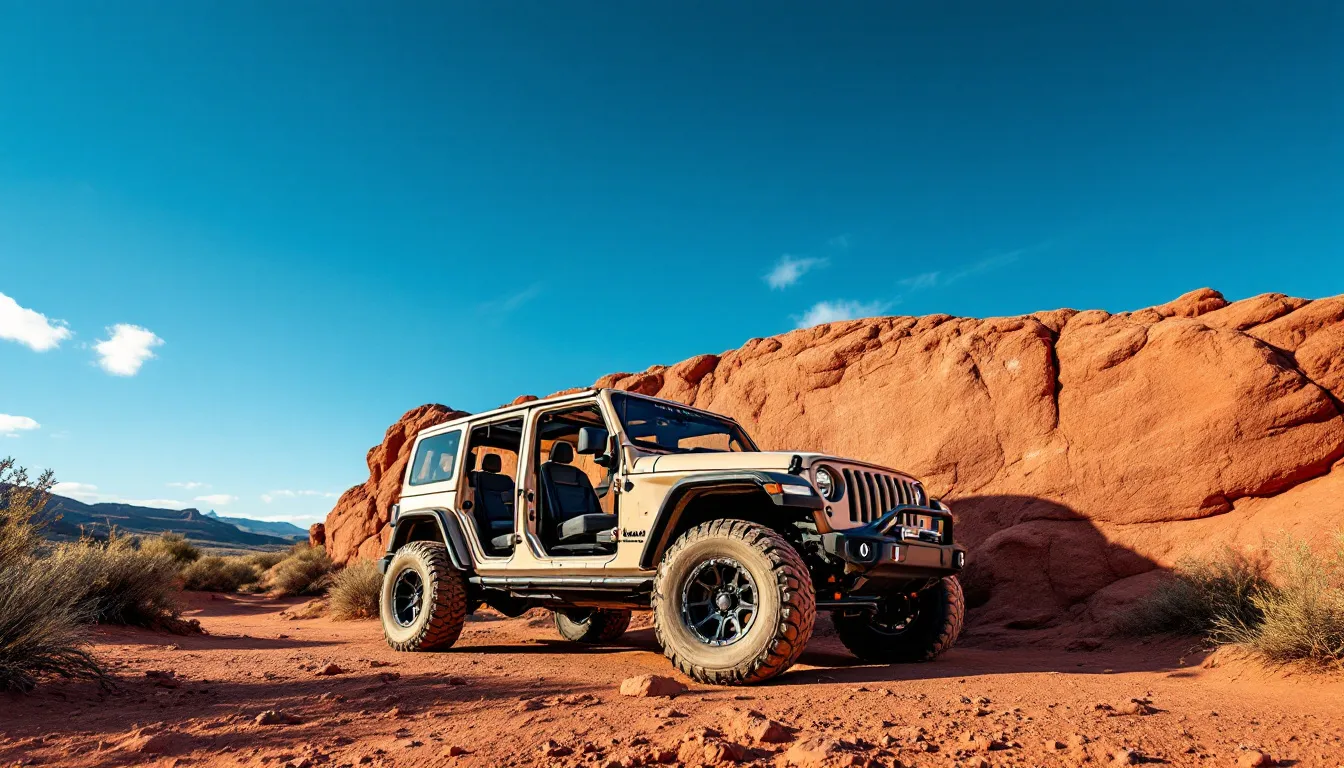
Jeep JK Door Removal and Storage During Off-Road Season
Going Doorless Is Simpler Than You Think
Pull your Jeep JK’s doors off, and something shifts. The whole driving experience changes — wind noise replaces engine sound, sightlines open up, and you feel genuinely connected to the trail in a way a soft top never quite delivers. The best part? Removing your 2007–2018 Wrangler’s doors takes under 30 minutes, requires only basic hand tools, and is completely legal in all 50 states — though most require at least one door-off mirror, which we’ll cover.
Whether you own a two-door JK or a four-door JK Unlimited, the process is nearly identical. The real decisions come down to which mirrors make sense for how you actually drive, how to store the doors without trashing the paint, and how to reconnect everything cleanly when the season ends.
Before you spend money on this setup, check out the JK buyers guide if you’re still sorting out your build priorities, or the JK soft top vs hard top comparison if you’re exploring all the open-air options available to you.
Affiliate Disclosure: JeepJK Guide earns a commission on qualifying purchases made through links on this page, at no extra cost to you.
Tools and Prep You Need Before Removing JK Doors
Here’s the honest part: you probably already own most of what you need. The one bit that trips up first-timers is the T50 Torx socket — it’s not a standard size that lives in every tool box, and it’s the single most Googled piece of equipment when someone’s standing in front of their JK ready to pull doors for the first time.
Everything else in your toolkit will work:
- T50 Torx socket — fits the two hinge bolts on each door; grab this if you don’t have it
- Ratchet and extension (3/8-inch drive is ideal)
- Flat-head screwdriver or plastic trim removal tool — for the electrical connector clip
- A second person or a door-removal strap — nice to have, not essential
- Masking tape and a marker — to label connectors and door positions so you don’t mix them up later
Two-door JK owners have it simple: two doors, minimal prep, done in 20 minutes. JK Unlimited (four-door) owners should clear a staging area large enough to rest four doors without stacking them, and know that the rear doors have a slightly shorter wiring harness run. It matters when you’re threading the connector through the B-pillar.
One step worth your time before you start: run your finger around the weather stripping on each door frame. Grit trapped under the seal doesn’t hurt anything until you’re pulling the door off, and then it becomes a paint chip waiting to happen.
How to Remove Jeep JK Doors: Step-by-Step
Your first door will take 10–15 minutes. By the third door, you’ll be done in five. The process is identical across all 2007–2018 JK and JKU models, and there’s genuinely nothing tricky about it — just a series of small, deliberate moves.
Roll the window down before you touch anything else. I mention this because it’s the step most people overlook, and then their JK’s glass hits the A-pillar on the way off the hinge pins. Not a disaster, but annoying.
- Lower the window completely. Non-negotiable.
- Open the door to roughly 90 degrees. This gives you clear access to both hinge bolts without contorting yourself.
- Locate the two T50 Torx bolts on the door-side of each hinge — one upper, one lower.
- Loosen both bolts before fully removing either one. Start the upper, then the lower, then come back and remove them both completely. Doing it this way prevents the door weight from binding up.
- Keep the T50 bolts in a labeled zip-lock bag for each door. You’ll be grateful for this organization when you’re putting them back together.
- Find the wiring harness connector at the bottom of the door jamb — it’s the rubber-booted plug that powers locks, speakers, and mirrors. Press the release tab and unplug it.
- Lift the door straight up and off the hinge pins. The door sits on two pins; once the bolts are free, steady upward pressure does it. If it sticks, a gentle rocking motion helps more than brute force.
- Set the door on a padded surface immediately. A moving blanket, an old towel, anything. Never lean it against the Jeep or lay it glass-down on concrete.
JKU rear door heads-up: The rear doors use the same hinge bolt (T50 Torx), but the wiring connector clips into a bracket on the B-pillar. Before you pull the door, trace where that wire goes and unclip it from the body. It’s easy to miss if you’re moving fast.
For the finer details on trim-level differences — Rubicon door check straps behave differently than Sport models, for example — the Rubicon vs Sport vs Sahara trim differences guide has the specifics.
Door-Off Mirrors: What’s Legal and What Actually Works
Here’s the real talk: yes, you need mirrors when driving doorless, and yes, most states will ticket you without them. The specifics vary — most jurisdictions require at least one rearview mirror with an unobstructed view to the rear, and many specifically call out the driver’s side external mirror. Driving doorless without any mirrors is a ticketable offense in most places, so don’t skip this.
There are three main approaches to solving this, and which one is right depends on how you actually use your JK.
Option 1: Hinge-pin mount mirrors — the budget route
These clip directly onto the exposed hinge pins after your doors come off. Zero tools required, fold flat when not in use, and cost almost nothing. They’re the gateway drug to door-off driving because the barrier to entry is so low.
The Liberrway Mirrors ($22.99/pair) work on any Jeep from YJ through JL, adjust to multiple angles, and weigh nothing. They’re perfect for trail running or parking-lot-to-trailhead type days. The catch: vibration at highway speeds is real. These aren’t mirrors for your daily commute, but for weekend adventures, they’re hard to beat at that price.
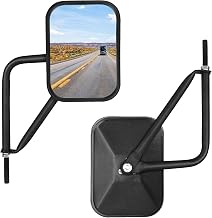
Liberrway Mirrors Doors Off Compatible with Jeep Wrangler YJ TJ JK JL Gladiator JT 1987-2025
$22.99
Check Price on Amazon →Option 2: Strap-on or clamp-style mirrors — the middle ground
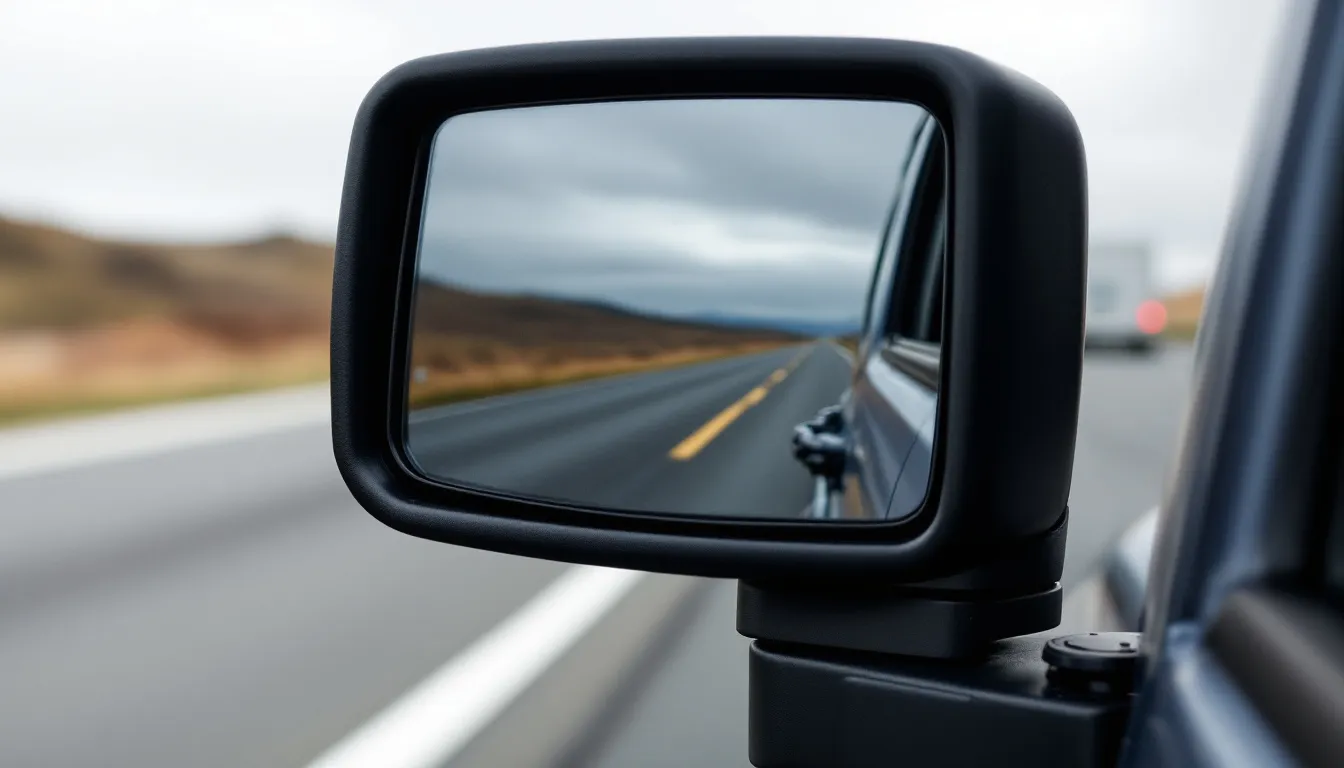
These bolt to your windshield frame or A-pillar and give you a larger viewing surface than hinge-pin mirrors. The Rectangular Mirrors pair ($29.99) uses a textured black clamp mount and delivers a field of view that actually feels familiar if you’re used to looking in a normal mirror. That bigger glass area matters if you’re mixing highway miles with trail time.
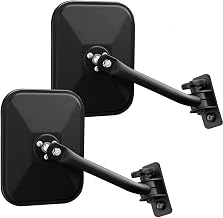
Door Off Mirror for Jeep Wrangler One Pair Rectangular Mirrors fit for 1997–2006 and 2007–2017
$29.99
Check Price on Amazon →Option 3: OEM-style replacement mirrors — the serious setup
These bolt to a small adapter using the factory door hinge mounting points. You get rock-solid stability, zero vibration, and a mirror that looks like it belongs on a Jeep. The trade-off is price and installation time. If you’re running doorless regularly — not just weekends — this approach pays for itself the first season.
The A-Premium Pair ($69.99 for both driver and passenger, 2007–2017 JK) is the solid choice here. Manual folding, non-heated, and built to last. They look right, feel right, and drive right. If you spend real time on pavement between trail runs, this is the mirror tier I’d pick.
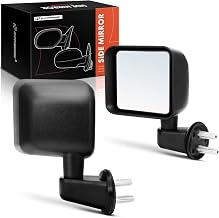
A-Premium Pair (2) Driver and Passenger Side Manual Door Mirror | Compatible with Jeep Wrangler JK 2007–2017
$69.99
Check Price on Amazon →For drivers who want OEM styling without the dual-mirror commitment, the Driver & Passenger Side Mirror Compatible with Jeep Wrangler 2007–2017 ($69.91) delivers factory-style aesthetics with full manual folding capability and solid construction across the board.
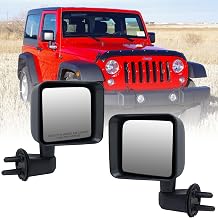
Driver & Passenger Side Mirror Compatible with Jeep Wrangler 2007–2017 Black | 1 Pair Set Manual Folding
$69.91
Check Price on Amazon →If budget is tight and you just need to stay legal, the Left Driver Side Mirror Compatible with Jeep Wrangler JK ($40.59) covers the legal requirement most states actually care about — a functioning driver’s side external mirror.
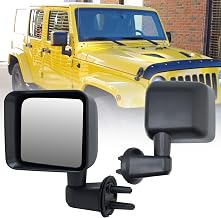
Door-Off Mirror Options: Quick Comparison
Pick the mirror tier that matches your actual driving pattern, not the Instagram version of how you think you’ll use your JK. Trail-only? Go budget. Mixed highway and off-road? Go OEM-style.
| Product | Mount Type | Price | Fits JK Years | Best For |
|---|---|---|---|---|
| Liberrway 2-Pack | Hinge-pin | $22.99 | JK 2007–2025 (also YJ/TJ/JL/JT) | Trail use, budget conscious |
| Rectangular Pair (Textured Black) | Clamp/strap | $29.99 | JK 2007–2017 (also TJ) | Mixed use, wider viewing angle |
| A-Premium Pair (Manual, Non-Heated) | OEM-style bolt-on | $69.99 | JK 2007–2017 | Highway + trail combo, stability matters |
| Driver & Passenger Set (Manual Folding) | OEM-style bolt-on | $69.91 | JK 2007–2017 | Full replacement, daily doorless drivers |
| Left Driver Side Only (Manual Non-Heated) | OEM-style bolt-on | $40.59 | JK 2007–2017 | Driver-side legal compliance on a budget |
Prices subject to change. Verify on Amazon before purchasing.
How to Store JK Doors Without Damaging Them
I learned this lesson the hard way during that Namibia trip. Four doors sitting in a garage for months sounds simple until you realize you’ve got no clear system for keeping track of which door goes where, whether the paint’s getting scratched, or whether moisture is creeping into the wiring connectors. Label each door before you store it — FL, FR, RL, RR with a marker on masking tape. Door check straps and wiring harness lengths are slightly different depending on position, and mixing them up during reinstallation is the kind of frustration that makes you regret the whole exercise.
Here’s how to actually do it right:
Tier 1 — Budget: Blankets and garage floor
Lay each door flat on a moving blanket or furniture pad, glass side up, on your garage floor. Keep them out of direct sunlight to protect the weather stripping. This works fine for a single season in a climate-controlled space. In humid climates, put a vapor barrier (even a tarp) beneath the blankets so moisture doesn’t wick up from the concrete. It’s low-tech and it works.
Tier 2 — Mid-range: Dedicated door storage carts
If you’re doing this every year, a purpose-built door cart makes sense. They hold all four doors upright on padded pegs, usually come with wheels, and take up way less floor space than laying everything flat. The glass stays protected, and you can roll the whole cart to wherever you need to grab a door. Over multiple seasons, you’ll avoid enough scratches to justify the investment.
Tier 3 — Premium: Overhead pulley hoists
For garages where floor space doubles as a workshop, ceiling-mounted hoists let you store doors completely out of the way. This requires solid ceiling joists and some rigging patience, but if you’re working in tight quarters, it’s the best use of vertical space.
Protect the wiring harness connectors before storage. This is the step that separates a clean reinstall from a frustrating afternoon of troubleshooting dead power windows six months later. Apply dielectric grease to each connector socket or wrap them in small zip-lock bags. Connectors left open in humid air corrode at the pin contacts, and corrosion shows up as intermittent electrical failures. Thirty seconds of prep saves hours later.
Climate matters too. In dry desert climates, weather stripping can crack if left baking in extreme heat. In humid coastal climates, the bigger threat is corrosion on hinge pins and connector contacts. Either way, a cool, shaded storage spot beats a hot, sun-exposed garage. Think of it the way you’d store the Jeep itself during off-season.
For other seasonal upkeep tasks, the 2018 JK maintenance schedule covers what else needs attention when you’re ramping up for off-road season.
Reinstalling JK Doors at the End of the Season
Paint damage at the hinge pin area happens more often than it should. It’s always the same story: someone tries to force a misaligned door back onto the pins without a helper, and the A-pillar takes a hit. Equally common is a wiring connector that looks seated but isn’t, and come winter, you discover your power windows don’t work.
Follow this sequence and you’ll avoid both:
- Match each door back to its original position (FL, FR, RL, RR). I cannot stress this enough. Door positioning matters for the check strap tension and wiring harness routing.
- Apply fresh dielectric grease to the hinge pins before sliding the door back on. This prevents corrosion from forming over the off-season and makes next year’s removal easier.
- Hold the door at a slight outward angle and lower it onto the upper hinge pin first, then let the lower pin guide into place naturally. This self-alignment technique removes the temptation to force anything and keeps the paint intact.
- Snug the lower T50 Torx bolt first, then the upper. Tighten both firmly, but don’t go crazy — check your torque spec to avoid stripping the threads.
- Plug in the wiring harness connector and listen for the audible click. A half-seated connector is silent and deadly. It won’t show itself until you’re sitting at a light with dead locks or inoperative windows.
- Test every electrical function before rolling up the window — locks, power windows (if equipped), speakers, anything that draws power through that connector. Catching a bad connection right now is infinitely easier than chasing it on the trail.
The JK maintenance schedule PDF is worth printing and keeping in the garage as a checklist after reinstallation. It covers what else to verify after a full off-road season.
Frequently Asked Questions: JK Door Removal and Storage
Q: Is it legal to drive a Jeep without doors?
A: Yes, it’s legal in all 50 states, but the caveat matters: most states require at least one functioning rearview mirror — typically the driver’s side external mirror. Your specific state’s vehicle code has the exact requirements. Running door-off mirrors keeps you legal everywhere and gives you actual visibility, which is the better outcome anyway.
Q: Do you need tools to remove Jeep JK doors?
A: A T50 Torx socket and ratchet are the only specialized tools. A flat-head screwdriver or trim tool helps release the wiring harness connector clip. Beyond that, anything in a basic tool box will work. No specialty equipment needed.
Q: How long does it take to remove Jeep JK doors?
A: Your first door takes 10–15 minutes. By the third, you’re down to five. A two-door JK owner can have both doors off and stored in under 20 minutes. JKU owners pulling all four doors typically finish in 30–45 minutes the first time.
Q: What is the best way to store Jeep JK doors?
A: Lay each door flat on a padded surface (moving blanket, foam, anything soft), glass side up, in a cool, dry location away from direct sunlight. Label each door by position before storage. Apply dielectric grease to the wiring connectors. If you’re storing on concrete in a humid climate, put a vapor barrier under the blankets to prevent moisture wicking.
Q: Can you remove just the front doors on a JKU?
A: Absolutely. The front and rear doors on a JK Unlimited are completely independent. You can remove fronts only, rears only, or all four in any combination. Many JKU owners run just the fronts off for summer and leave the rears on for passenger convenience or extra cargo security.
Looking for other quick wins to customize your JK? The best JK grill inserts are an easy visual upgrade. If you’re ready to invest in rolling stock, the best aluminum wheels for the JK guide covers what actually makes a difference offroad versus what’s just shiny.
Ready to Go Doorless This Season?
Going doorless is absolutely worth the time investment. It’s one of the easiest, most reversible mods you can do to a JK, and the payoff in driving experience is immediate. The three real decisions are: picking mirrors that match your actual driving pattern (not the fantasy version), storing the doors properly to protect paint and wiring, and reinstalling them cleanly to avoid connector headaches.
If you’re still building out your open-air setup, the JK soft top vs hard top guide pairs naturally with door removal for full open-air flexibility. New to the platform? Start with the complete JK buyers guide to understand what you’re working with. Planning a serious off-road season? Pairing doorless driving with a proper tire upgrade makes sense — the best 35-inch tires for the JK is a solid companion read.
Pull the doors, bolt on the mirrors, and get out there.
Get the Free JK Build Planner
Complete PDF with mod checklists, gear ratios, tire sizing charts, and budget worksheets. Everything you need to plan your JK build.
No spam. Unsubscribe anytime. By subscribing, you agree to our Privacy Policy.
Allan
I'm Allan. I bought a 2014 Jeep Wrangler JKU and I research the hell out of every mod before I touch it. Everything here is tested or deeply researched on my own rig - no sponsored fluff, just honest findings.
Learn more about me →Get the JK Build Planner
Free PDF with complete build checklists, gear ratios, and tire fitment guides.
By subscribing, you agree to our Privacy Policy.
Related Articles
Adaptive LED Headlight Systems Jeep JK: Automatic Beam Adjustment Explained
Adaptive LED headlight systems for the Jeep JK sound like they should do something fancy — something that tracks corners or levels itself with a load....
Jeep JK Rock Sliders Installation Guide: Steel vs Aluminum
Disclosure: JeepJK Guide earns a commission on qualifying Amazon purchases at no extra cost to you. We only recommend products we'd bolt onto our own rigs.
Power Door Mirror Upgrade Jeep JK: Heated Towing Mirrors (2007–2018 Guide)
If you've ever towed anything wider than your Jeep JK with stock mirrors, you already know the problem. Those factory units stick out maybe 3–4 inches...