Jeep Jk Maintenance Schedule
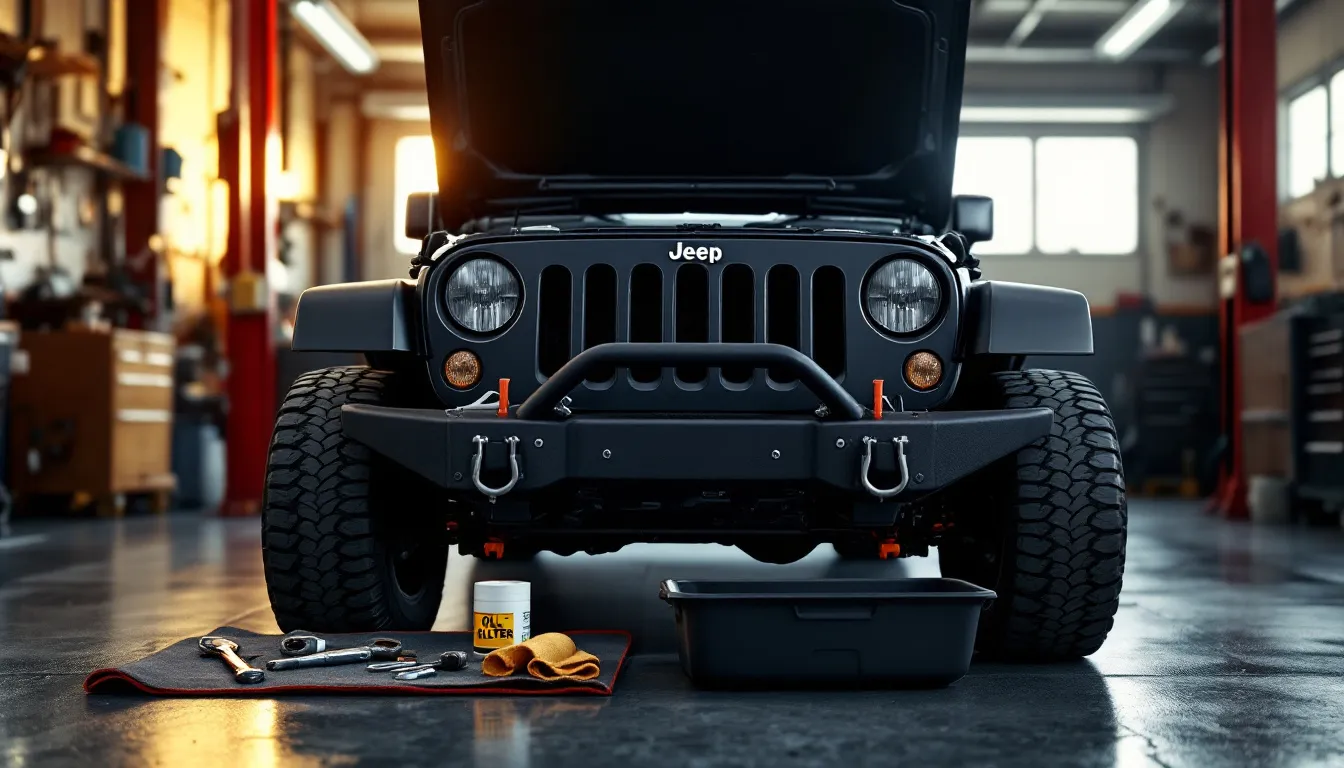
Jeep JK Maintenance Schedule: Complete 2007–2018 Service Guide
A Jeep JK maintenance schedule is a structured service plan specifying the mileage and time intervals at which oil, fluids, filters, brakes, and other components should be inspected or replaced on the 2007–2018 Jeep Wrangler JK and JKU.
For most JK owners, here is the short answer: change the oil every 3,000–5,000 miles on the 3.8L V6 and every 6,000–8,000 miles on the 3.6L Pentastar, rotate tires every 5,000–7,500 miles, service differentials and transfer case every 30,000 miles on pavement (or after every major water crossing off-road), and inspect brakes every 12 months. These intervals tighten significantly if you wheel in mud, cross water, or run the rig hard on trails. This guide covers all 2007–2018 JK model years, both the 2-door body style and the JKU 4-door, and both engine variants.
For a printable version of this schedule, see the Jeep JK Maintenance Schedule PDF.
Why Staying on Schedule Actually Matters for JK Owners
JK owners face higher service stakes than typical car owners because the Wrangler is often pushed far beyond its design baseline — towing, rock crawling, deep mud, and daily driving all in the same week. Miss a service interval on a sedan and you might get away with it. Miss one on a heavily used JK and you are looking at a worn front differential or a transmission shudder that compounds fast.
The single biggest maintenance mistake JK owners make is not skipping service — it’s skipping the record. When I started wrenching on my first JK with zero prior experience, I learned this the hard way. One of my earliest oil changes ended with an overtightened drain plug that galled the threads in the oil pan — a consequence of not having a process and not writing anything down. Starting a repair journal after that changed everything. Knowing exactly when each service was done, what torque spec was used, and what was noticed during inspection meant no more guesswork.
A dedicated logbook like the
{{PRODUCT_CARD:4b32aae8-d070-4ec1-8999-2da9562cbf5d}}
makes that habit easy. It tracks up to three vehicles, which matters if you own both a 2-door JK and a JKU. If you’re evaluating a used JK purchase, a documented service history is invaluable — see our JK Buyers Guide for what to look for.
Oil Change Intervals: 3.8L vs 3.6L Pentastar

3.8L V6 (2007–2011):
- Recommended viscosity: 10W-30 (factory) or 5W-30 in colder climates
- Oil capacity: approximately 6 quarts with filter
- This engine is known for higher oil consumption as mileage climbs — checking the dipstick between changes is a smart habit
3.6L Pentastar (2012–2018):
- Recommended viscosity: 0W-20 or 5W-20 per factory spec
- Oil capacity: approximately 6 quarts with filter
- The Pentastar is a more refined engine, but early production years (2012–2013) had some reported cam phaser sensitivity to dirty oil — staying on schedule matters
In the JK’s engine bay, oil filter access is tighter than on a typical pickup truck. A swivel-style oil filter wrench makes the job significantly faster and prevents knuckle damage on the firewall:
{{PRODUCT_CARD:e0d9f0db-40a7-415c-8f6d-3e2f133acd76}}
For off-road use involving sustained high RPM, deep dust, or heat soak, shorten oil change intervals by 20–25% regardless of engine variant. Clean oil is the cheapest insurance a JK engine has.
Transmission, Differential & Transfer Case Fluid Service
How often should you service the differentials and transfer case on a JK? On pavement, the factory recommendation is approximately every 30,000 miles for differentials and transfer case fluid. If you wheel off-road — especially through water or mud — service after every significant outing or at least every 15,000 miles.
Here is a breakdown by system:
Automatic Transmission (NSG370 manual or 42RLE/W5A580 auto):
- Fluid change: every 30,000 miles for trail use, every 60,000 miles for street-only use
- Manual transmission (NSG370) uses a specific MTF fluid — do not substitute with standard gear oil
Front and Rear Differentials:
- Street interval: 30,000 miles
- Off-road interval: 15,000 miles or after any water crossing deep enough to submerge the axle housing
- Rubicon models use electronic locking differentials with a different fluid spec than the standard open axles on Sport and Sahara trims — always verify with your axle tag before filling. See our breakdown of Rubicon vs Sport vs Sahara differential differences for specifics.
NV231 / NV241OR Transfer Case:
- Rubicon’s Rock-Trac NV241OR uses a different lubricant capacity than the Command-Trac NV231 on Sport and Sahara models
A common mistake when reinstalling differential drain plugs is over-torquing — exactly the kind of thread damage that’s easy to do without a reference. The lesson from my early wrenching days (where an overtightened oil drain plug caused real damage) applies equally to axle fill plugs. A click-type torque wrench removes all guesswork:
{{PRODUCT_CARD:cbdae124-cb70-42f6-8fd5-de93bd1e2092}}
For breaking loose stubborn differential fill and drain plugs, a long breaker bar provides the leverage you need without damaging fasteners:
{{PRODUCT_CARD:0ecadbe3-dcf9-4f3d-85aa-33d4bb11e635}}
Differential drain plugs on the Dana 30 and Dana 44 axles typically torque to 20–25 ft-lb. Transfer case drain and fill plugs are similar. Always confirm with your service manual for the specific model year.
Complete JK Maintenance Interval Summary

These intervals reflect factory specifications tightened for trail use based on owner community consensus — not a fabricated statistic.
| Service | Street Interval | Off-Road/Trail Interval | Notes |
|---|---|---|---|
| Engine oil & filter | 5,000–8,000 mi | 3,000–5,000 mi | 3.8L: shorter interval; 3.6L: full syn OK at 6K+ |
| Automatic transmission fluid | 60,000 mi | 30,000 mi | 42RLE and W5A580 |
| Manual transmission fluid | 60,000 mi | 30,000 mi | NSG370; use specified MTF |
| Front differential fluid | 30,000 mi | 15,000 mi / after water crossing | Rubicon: verify fluid spec |
| Rear differential fluid | 30,000 mi | 15,000 mi / after water crossing | Dana 44 rear standard |
| Transfer case fluid | 30,000 mi | 15,000 mi | NV231 vs NV241OR differ |
| Tire rotation | 7,500 mi | 5,000 mi | Include spare in 5-tire rotation |
| Brake fluid | 2 years | 1 year or after water crossing | DOT 3 or DOT 4 per spec |
| Brake pad inspection | 12 months | 6 months | Check rotor condition simultaneously |
| Air filter | 30,000 mi | 15,000 mi | More frequent in dusty environments |
| Spark plugs | 30,000 mi (3.8L) / 60,000 mi (3.6L) | Same | Iridium plugs extend interval on 3.6L |
| Coolant flush | 5 years / 100,000 mi | 3 years / 60,000 mi | OAT coolant; check hoses simultaneously |
| Drive belt inspection | 60,000 mi | 30,000 mi | Replace at first sign of cracking |
| Battery test | 3 years | Annually | JK electrics tax factory batteries |
| TPMS sensor check | Annually | Every 6 months | 2008+ JKs |
For a printable version you can store in your glove box, download the printable PDF version. Tracking each completed service in a logbook alongside this schedule keeps you ahead of every interval:
{{PRODUCT_CARD:4b32aae8-d070-4ec1-8999-2da9562cbf5d}}
Brakes, Battery & Electrical Checks

The JK’s front brakes wear faster than the rears, especially on lifted rigs with larger tires. Mud and water exposure — even a single deep crossing — can compromise brake fluid hygiene enough to warrant a flush.
One experience that permanently reshaped my inspection habits was an encounter with death wobble at highway speed. What felt like a catastrophic failure turned out to be a combination of a worn track bar and a neglected front-end inspection. After replacing the track bar and tightening down the inspection process, the systematic approach to checking steering components, electrical grounds, and suspension hardware became non-negotiable. If your JK has death wobble, it is almost always a maintenance or wear issue — not a fluke. Catching it through regular inspection is far cheaper than roadside repairs.
A multimeter and an OBD II scanner belong in every JK owner’s toolkit for electrical diagnostics:
{{PRODUCT_CARD:3e375943-7277-49ac-8a6a-7c37f5c0af63}}
{{PRODUCT_CARD:070d308b-407e-477c-8d1d-7b5b6ae150e3}}
For a full list of what to have on hand, see our guide to essential tools for Jeep JK maintenance.
Essential Tools for DIY JK Maintenance

As an affiliate, we may earn a commission on purchases made through product links — at no cost to you.
A comprehensive mechanics set covers the vast majority of oil changes, fluid services, and filter swaps:
{{PRODUCT_CARD:0b564fc8-e5ec-4e38-8070-2659439d9523}}
For smaller, torque-sensitive fasteners like spark plugs, transmission pan bolts, and interior hardware, a 1/4-inch drive micrometer torque wrench keeps you in spec:
{{PRODUCT_CARD:b3cc788a-99af-405d-8090-b88d45ac5869}}
Axle shafts, wheel lugs (typically 100 ft-lb on a stock JK), and suspension hardware require a heavier-duty torque wrench:
{{PRODUCT_CARD:d82c0b0e-342f-4fe6-828f-ab076b02ab40}}
The JK sits high enough that a standard scissor jack is dangerous for real service work. A low-profile floor jack with adequate lift range keeps the rig stable:
{{PRODUCT_CARD:96f21cfc-ea04-4daf-a22f-3e755fcb8808}}
For wheel removal with an impact driver, standard chrome sockets can crack. Use a dedicated impact socket set:
{{PRODUCT_CARD:92a00c4d-5807-4388-86d7-7aef9b17b746}}
For a deeper breakdown of what to buy and why, see our full essential tools guide for Jeep JK maintenance.
Tire Rotation, Inspection & When to Upgrade

If you run a full-size spare matching your other four tires, include it in a 5-tire rotation pattern. This extends overall tire life noticeably and keeps all five tires wearing evenly.
At every rotation, inspect for sidewall damage, cracking, or embedded trail debris. Off-road tires are especially prone to picking up rocks in aggressive tread blocks that can work inward over time.
On 2008 and newer JKs, the TPMS system will trigger if tire pressure drops significantly — but TPMS is not a substitute for manual pressure checks before every trail run. After fitting larger tires, some owners find TPMS sensors require recalibration or replacement.
Ready to move up in tire size? See our guide to the best 37-inch tires for the Jeep JK and the gear ratio guide for larger JK tires before you buy.
Frequently Asked Questions: Jeep JK Maintenance Schedule

How often should I change the oil in my Jeep JK? On the 3.8L V6 (2007–2011), change the oil every 3,000–5,000 miles with conventional or synthetic blend, or every 5,000 miles with full synthetic. On the 3.6L Pentastar (2012–2018), full synthetic allows 6,000–8,000 mile intervals. Shorten intervals for heavy off-road use, sustained high-speed driving, or towing.
What fluids does a Jeep JK need serviced? A complete JK fluid service includes engine oil, automatic or manual transmission fluid, front and rear differential fluid, transfer case fluid, brake fluid, and coolant. Each has a different service interval — see the full interval table above for specifics by use type (street vs. off-road).
How often do Jeep JK differentials need to be serviced? Every 30,000 miles for street-driven JKs. If you trail ride, cross water, or run in mud, service the differentials every 15,000 miles or immediately after any water crossing that submerged the axle housing. Rubicon owners should verify the correct fluid spec for their locking differentials — it differs from standard Dana 30/44 open axle specs.
What maintenance does a high-mileage Jeep JK need? Beyond the standard schedule, high-mileage JKs (100,000+ miles) often need attention to front-end steering components (track bar, tie rod ends, drag link), transfer case shift linkage, cooling system hoses, and motor mounts. Death wobble symptoms on high-mileage rigs are almost always wear-related and are caught early with consistent inspection. Check the printable JK maintenance schedule PDF for a handy inspection checklist.
Is a Jeep JK expensive to maintain? Based on typical owner-reported experience, a well-maintained JK is not dramatically more expensive to service than other midsize SUVs — most fluid services are DIY-friendly and relatively affordable in parts cost. The costs rise when deferred maintenance leads to component failure, particularly in the drivetrain. Using the JK Buyers Guide to vet a used purchase and keeping a service log from day one keeps costs predictable.
Keep Your JK Running Strong: Final Thoughts
The single most important takeaway from this guide is simple: stick to a written schedule, shorten your intervals for off-road use, and record every service. A JK that gets consistent attention stays reliable far longer than one that gets occasional heroic repairs.
Three key takeaways to carry forward:
- Interval discipline wins. Street intervals are your minimum. If you wheel, treat them as a starting point and adjust shorter.
- Record everything. A logbook — like the
{{PRODUCT_CARD:4b32aae8-d070-4ec1-8999-2da9562cbf5d}}
pays for itself the first time you need to prove service history or diagnose a recurring issue.
- Tools make the difference. The right torque wrench prevents the overtightening mistakes that cost real money. See our guide to essential tools for Jeep JK maintenance before your next service day.
Grab the printable JK maintenance schedule PDF to keep a copy in the glove box, and bookmark the JK Buyers Guide if you’re still shopping. Your JK is built to last — maintaining it properly is the part that’s up to you.
Get the Free JK Build Planner
Complete PDF with mod checklists, gear ratios, tire sizing charts, and budget worksheets. Everything you need to plan your JK build.
No spam. Unsubscribe anytime. By subscribing, you agree to our Privacy Policy.
Allan
I'm Allan. I bought a 2014 Jeep Wrangler JKU and I research the hell out of every mod before I touch it. Everything here is tested or deeply researched on my own rig - no sponsored fluff, just honest findings.
Learn more about me →Get the JK Build Planner
Free PDF with complete build checklists, gear ratios, and tire fitment guides.
By subscribing, you agree to our Privacy Policy.
Related Articles
Jeep JK Maintenance Schedule PDF: Complete Service Guide (All Years)
Complete JK maintenance schedule with intervals, fluid specs, and torque specs for 2007-2018 Wranglers. Severe duty intervals, DIY tips, and downloadable checklist.
2018 Jeep Wrangler JK Maintenance Schedule: Final Year Service Guide
Complete 2018 Jeep Wrangler JK maintenance schedule with severe service intervals, fluid specs, and cost breakdowns. Keep your final-year JK running strong.
2017 Jeep Wrangler JK Maintenance Schedule: Complete Service Guide
2017 Jeep JK needs 0W-20 synthetic oil every 5,000-10,000 miles, tire rotation every 5,000-7,500 miles, and differential service every 15,000-60,000 miles depending on use.