Running Big Tires on a Jeep JK: 35s, 37s & 40s — What You Actually Need
Running Big Tires on a Jeep JK: 35s, 37s & 40s — What You Actually Need
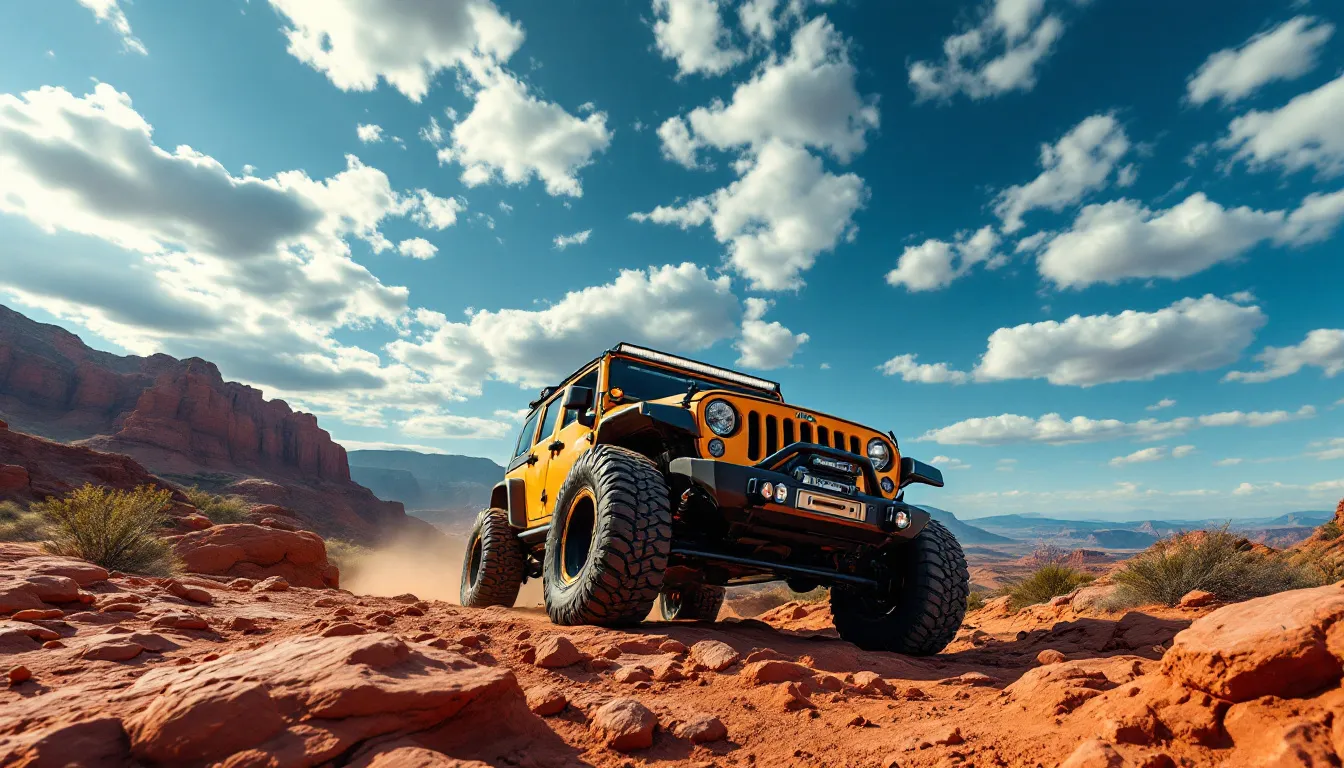
Running big tires on a Jeep Wrangler JK means fitting tire diameters beyond the stock 31–32-inch OEM size to gain ground clearance, traction, and real trail capability. On a stock JK, you can squeeze a 33-inch tire with minimal fuss. But 35s need at least a 2.5-inch lift, 37s demand a serious supporting build, and 40s are full custom territory. The hard truth: bigger tires always require supporting modifications—clearance, gearing, and structural upgrades all escalate as diameter climbs.
The biggest mistake new JK owners make is buying tires first and asking questions later. Before you add anything to your cart, use this guide alongside the JK wheels and tires fitment guide and the JK mods by budget to map out your full build cost so nothing catches you by surprise.
What Is the Maximum Tire Size That Fits Without a Lift?
On a completely stock 2007–2018 Jeep Wrangler JK, 33-inch tires represent the practical ceiling. You can fit them with little more than removing the front mud flaps and possibly trimming some plastic liner. Anything larger than 33 inches will rub on the fender liner, front track bar, or control arms during full droop or full lock steering.
The OEM tire sizes are 245/75R17 on Sport and Sahara trims and 255/75R17 on Rubicon models—both landing in the 30–32-inch diameter range. The factory wheel well is sized snugly around these dimensions, with very little spare clearance for a larger tire.
JK vs JKU fitment note: The 4-door JKU shares the same front axle and wheel well geometry as the 2-door JK, so stock clearance limits are essentially identical between body styles. The longer wheelbase of the JKU doesn’t automatically create more tire room.
A modest 33-inch tire in a common size like 285/70R17 will usually clear on a stock JK after removing the front flap. But community experience shows results vary by specific tire brand—some run taller than their stated size—and by driving conditions. At full droop off-road, even a 33 can catch the liner.
If you want to run 33s without the uncertainty, check out the best 33-inch tires for the JK and best tires for the Jeep Wrangler JK for size-verified options that fit within stock parameters.
Running 35-Inch Tires on Your Jeep JK: What You Actually Need
A 35-inch tire requires a minimum of 2–2.5 inches of lift on a JK. Without it, you’ll have constant fender rub at full articulation, and the front fender flares will contact the tire during tight turns. The good news: 35s are the most popular upgrade size for JK owners, and the supporting mod list is manageable and predictable.
Minimum modification checklist for 35-inch tires on a JK:
- 2–2.5-inch suspension lift (coil spacer or full kit): $200–$600 installed
- Fender flare trimming or replacement: remove the inner liner at a minimum; some owners trim the fender flare corners
- Extended brake line brackets (if not included in lift kit): $40–$80
- Front track bar relocation bracket: may be needed depending on the specific lift
- Alignment after lift: $80–$120
- Re-gear to 4.10 ratios if on an automatic, 4.56 if you spend significant time off-road or tow: see re-gear note below
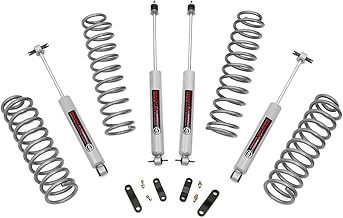
The Rough Country 2.5-inch lift kit is one of the most widely installed entry-level options for the 35-inch tire size range on JK and JKU models:
On Amazon and eBay
Rough Country 2.5" Lift Kit for 2007-2018 Jeep Wrangler JK
Check price on Amazon → See new and used on eBay →
See all current listingsPaid links. We may earn a commission from Amazon or eBay. Prices can change.
Re-gearing: don’t skip it. The JK’s factory axle ratios are 3.21:1 (Sport/Sahara) or 4.10:1 (Rubicon). Moving from a 32-inch tire to a 35-inch tire increases rolling diameter by roughly 9 percent. That effectively raises your final drive ratio and makes the engine work harder at highway speeds. Many JK owners on 35s with factory 3.21 gears report sluggish acceleration, excessive RPM drop when engaging 4WD, and noticeably worse fuel economy. Re-gearing to 4.10 ratios (or 4.56 if you plan further upgrades) restores factory driveability. Budget $800–$1,500 per axle for a professional re-gear.
For detailed ratio guidance, see best gear ratio for 35-inch tires on the JK.
For the 2-door JK, the shorter rear overhang means the spare tire carrier typically handles a 35 without replacement, though verify weight ratings. For the JKU, the same applies, though many owners notice tailgate sag earlier due to the added weight of the longer body.
Browse the best 35-inch tires for the JK and JK fender flares for bigger tires for compatible parts once your lift is in place.
Jeep JK With 37-Inch Tires: The Mods You Cannot Skip

Fitting a JK with 37-inch tires is a different category of build from the 35-inch upgrade. The modification list grows significantly, and the total cost roughly doubles. You need a minimum of 3.5 inches of lift, and fender trimming becomes mandatory rather than optional.
Required modifications for 37-inch tires on a JK:
- 3.5–4-inch suspension lift (full kit with new coils and control arms recommended): $700–$2,000 installed
- Fender flare trimming and/or aftermarket flares: the OEM flares typically need to be cut or replaced entirely
- Front and rear fender liner removal: non-negotiable at 37 inches
- Extended brake lines: mandatory, not optional
- Front and rear track bar relocation brackets or adjustable track bars: required at 3.5+ inches of lift
- Upgraded steering stabilizer: factory unit is overwhelmed by 37-inch tire mass
- Re-gear to 4.56 or 4.88 ratios on both Dana 30/44 axles (or aftermarket replacements): 4.56 minimum, 4.88 recommended for heavily built JKUs
- Upgraded spare tire carrier: the factory tailgate is not rated for the weight of a mounted 37
- Consider skid plates for the JK: with more lift and travel, your rock clearance is better but so is exposure at low speed
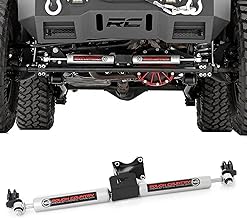
Many JK owners running 37s report that the factory steering stabilizer is one of the first components to show symptoms. Death wobble risk increases with larger, heavier tire assemblies. An upgraded dual or high-pressure unit makes a meaningful difference:
The spare tire situation is just as critical. A mounted 37-inch tire with a steel wheel can weigh 70–80 lbs. The factory JK tailgate hinge and latch are not built for that load. An adjustable aftermarket carrier rated for the size is essential:

Honest total cost for a 37-inch JK build: Budget $4,000–$8,000 all-in when you include tires, lift, re-gear (both axles), fender work, alignment, steering components, and carrier. Many JK owners running 37s report that the re-gear alone accounts for $2,000–$3,000 of that total at a shop.
For wheel sizing matched to 37-inch tires, see aftermarket wheels sized for 37-inch tires.
Jeep JK With 40-Inch Tires: Full Build Territory
Forty-inch tires on a JK are not a bolt-on upgrade. They represent a full custom build. At 40 inches, you need not just lift and gearing but axle and differential upgrades to handle the torque multiplication and rotational mass these tires create. The stock Dana 30 front axle and even the Dana 44 rear are working at or beyond their design limits with 40-inch tires on anything but the smoothest trails.
What a 40-inch JK build requires, at minimum:
- 4.5–6 inches of lift, typically a long-arm suspension system with custom geometry correction
- Complete fender removal or full aftermarket fenders – there is no trimming solution at 40 inches
- Front axle upgrade: Dana 44 (or stronger) with heavy-duty hubs and steering knuckles
- Differential upgrades: lockers front and rear are effectively mandatory for trail capability
- Re-gear to 4.88 or 5.13 ratios – at 40 inches, even 4.88 leaves the engine working hard
- Upgraded driveshafts: at extreme lift angles, factory driveshafts hit their operating limit
- High-clearance bumpers, rock sliders, and heavy-duty skid plate suite
- Upgraded brakes: the additional rotational mass increases stopping distance and brake fade
For reference, this is the category of ring-and-pinion work involved in a 40-inch build:

Note on the product above: This is a GM 8.5-inch differential ring-and-pinion set shown for category illustration. JK owners will need JK-specific Dana 30, Dana 44, or aftermarket axle gearing. Consult a drivetrain specialist for the correct part for your build. Do not order this GM unit expecting JK fitment.
Many JK owners who have built in the 40-inch range report that the build cost regularly exceeds $15,000–$25,000 including labor. Most of that money goes into the drivetrain and suspension, not the tires themselves.
For wheel options that handle the bead stress at this size, see beadlock wheels for extreme tire sizes. And if you’re building this heavy, a recovery winch is not optional – see winch for a heavily built JK.
35 vs 37 vs 40-Inch Tires on a Jeep JK: Side-by-Side Requirements
Choosing between 35, 37, and 40-inch tires comes down to matching your use case, trail ambition, and total budget. Not picking the biggest tire that will physically fit. The table below summarizes community-reported requirements and costs for each size on a 2007–2018 JK or JKU.
| Tire Size | Minimum Lift Required | Fender Modification | Re-Gear Recommended | Axle Upgrade Needed | Approx. Total Build Cost | Best For |
|---|---|---|---|---|---|---|
| 35 inch | 2–2.5 in | Liner trim / flare clip removal | 4.10–4.56 | No (stock axles handle it) | $2,000–$4,500 | Daily driver + weekend trails |
| 37 inch | 3.5–4 in | Flare trim or full replacement | 4.56–4.88 | Recommended (upgrade hubs/steering) | $4,500–$9,000 | Serious trail use, light rock crawl |
| 40 inch | 4.5–6 in | Full fender removal / aftermarket | 4.88–5.13 | Yes, mandatory | $15,000–$25,000+ | Dedicated off-road / competition build |
These figures are community-reported estimates compiled from JK owner forums and build threads. Actual costs vary by region, shop labor rates, and specific parts chosen. Use these as planning baselines, not firm quotes.
The key takeaway: each size tier roughly doubles the complexity and cost of the build. Going from 35s to 37s is not a minor step up. It’s a different league of commitment.
See best rock crawling tires for the JK if trail performance is your primary goal when choosing a size.
Get new guides by email
One email when we publish something worth reading. Unsubscribe anytime.
Do Bigger Tires Require New Wheels?

You don’t always need new wheels to run bigger tires. Offset is the key variable that determines whether your existing wheels will cause rubbing problems or leave you with safe fitment.
Two terms worth understanding before you shop:
- Offset is the distance between the wheel’s centerline and its mounting face. Positive offset pushes the tire inward toward the suspension; negative offset pushes it outward toward the fender. For big tires on a lifted JK, you generally want a negative or low-positive offset to give the tire clearance from control arms and the coil bucket.
- Backspacing is the distance from the mounting face to the inside edge of the wheel. Lower backspacing moves the tire outward; higher backspacing tucks it in. Most JK big-tire builds target 4.5–5.5 inches of backspacing depending on tire size.
The OEM JK wheel is a 17×7.5 with roughly +44mm offset. That’s quite high, which is why many owners find that running 35s or larger on factory wheels causes inner fender and control arm contact at full articulation.
Here are two popular aftermarket options sized for bigger tires on the JK:
If swapping wheels isn’t in the immediate budget, wheel spacers for the JK can replicate the effect of a lower-offset wheel by pushing the tire outward. They add complexity though, and require hub-centric fitment and proper torquing.
For a full comparison of aftermarket wheel options, see best aftermarket wheels for the JK.
The Spare Tire Problem: What Most Owners Forget
When you upsize your tires, your spare tire also grows. The factory JK tailgate carrier is only rated for the stock tire weight. A mounted 35-inch tire on a steel wheel typically weighs 55–65 lbs; a mounted 37-inch tire on a steel wheel can reach 70–85 lbs. The factory hinge and latch are not engineered for that load, and many owners discover premature tailgate sag or hinge wear before they think to check the carrier rating.
The fix is an aftermarket adjustable spare tire carrier rated explicitly for the larger size. This unit is compatible with both 2-door JK and 4-door JKU models, handles tires up to 40 inches, and adjusts in height to align with your specific tire diameter:
If you’re building toward a steel rear bumper with an integrated carrier, that’s the cleanest solution for 37-inch and larger spares – see JK rear bumpers with integrated spare tire carriers for options that eliminate the factory tailgate mount entirely.
Don’t forget: your spare needs to match your road tires exactly in size and offset. Running a mismatched spare defeats the purpose of carrying one.
What Does a Big-Tire Upgrade Actually Cost?
A complete big-tire upgrade on a Jeep JK costs between $2,000 and $25,000+ depending on tire size. The tire purchase itself is usually the smallest line item once you add lift, re-gear, and supporting hardware. Plan the full build budget before you buy anything. Spend everything upfront and you’ll come out ahead compared to buying tires now and retrofitting the supporting mods later.
Community-reported cost breakdown by category:
- Tires (set of 4): $800–$2,000 depending on brand and size. A 35-inch all-terrain tire like the Falken Wildpeak AT3W lands in a competitive price range.
- Lift kit (parts only): $250–$2,500 depending on kit quality and whether it includes control arms
- Lift installation (labor): $400–$800 at most shops
- Alignment after lift: $80–$150
- Re-gear (both axles, labor included): $1,500–$3,500
- New wheels (if needed): $600–$1,500 for a set of 4
- Spare tire carrier upgrade: $100–$400
- Fender flares or trimming: $100–$600
- Miscellaneous (brake lines, track bar, etc.): $150–$400
These are community-estimated ranges, not firm quotes. Labor rates vary significantly by region and shop experience.
For a structured approach to sequencing these purchases against your available budget, see how to plan JK mods by budget.
Frequently Asked Questions: Big Tires on a Jeep JK
Below are the questions JK owners ask most often about big tire fitment.
Is it possible to fit larger tires on a stock Jeep Wrangler?
Yes, within limits. On a completely stock 2007–2018 JK, you can fit a 33-inch tire with minimal modification (removing the mud flap and possibly trimming the inner liner). Anything larger than 33 inches will rub on the fender liner or suspension components during full articulation on a stock-height JK. A lift kit is required for 35 inches and above.
What is the maximum tire size that fits without suspension modifications?
The practical maximum on a stock JK is 33 inches. Some owners report fitting a 285/70R17 (approximately 32.7 inches) without any modification, but results vary by brand. Some 285/70R17 tires measure closer to 33.5 inches tall in practice. See the best 35-inch tires for the JK if you want to understand exactly what the next step up requires.
Can larger tires be installed without adding a lift kit?
Beyond 33 inches, not reliably. Without a lift, a 35-inch tire will contact the front fender liner at full steering lock and the control arms at full droop. Some owners use a leveling kit (1–1.5 inches) to reduce rubbing on 33s, but 35s require at minimum 2–2.5 inches of lift for reliable clearance. There’s no way to run 37s or 40s on a stock-height JK without serious rubbing.
What is the cost of upgrading to bigger tires?
Total cost depends heavily on the target size. A 33-inch upgrade can cost as little as $800–$1,200 for tires and minor trimming. A full 35-inch build runs $2,000–$4,500. A 37-inch build is typically $4,500–$9,000. A 40-inch build regularly exceeds $15,000 when drivetrain upgrades are included. The tire purchase is usually a small fraction of the full build cost.
Do bigger tires require new wheels as well?
Not always, but often yes. The factory JK wheel has a high positive offset that can cause inner contact with larger tires. Many owners find that running 35s or larger on stock wheels results in rubbing against control arms or coil buckets at full articulation. Aftermarket wheels with lower offset (or wheel spacers as a budget alternative) resolve this. For the complete gear ratio guide for the JK and other related build decisions, check the linked guide.
Are there model-specific tire size limits for different Wrangler generations?
Yes. This guide covers the 2007–2018 JK and JKU only. The earlier TJ Wrangler has different wheel well geometry and a narrower front track, making its stock limits slightly smaller. The newer JL Wrangler has a different suspension design with marginally more stock clearance in some configurations. Always verify fitment against your specific model year. Never assume data from one generation transfers to another.
Which Tire Size Is Right for Your JK Build?
The right tire size for your JK is the one that matches your actual use case and your total available budget. Pick the biggest diameter you can physically fit, and you’ll regret it.
Here’s a simple decision framework:
- Choose 35-inch tires if your JK sees a mix of daily driving and weekend trails. This is the sweet spot. Meaningful off-road capability improvement, manageable cost, and street manners that don’t punish you every commute.
- Choose 37-inch tires if trail performance is a genuine priority and you’re prepared to commit to a proper build including re-gear and fender work. Budget $5,000–$9,000 realistically.
- Choose 40-inch tires only if you’re building a dedicated off-road rig with a clear budget and a specific purpose. This is not a casual upgrade.
Plan the full build budget before you buy anything. Buying tires first and retrofitting the supporting mods is consistently more expensive than doing the build in a logical sequence from the start.
Your next steps: start with the best 35-inch tires for the JK, review the complete JK wheels and tires guide, and get your gearing sorted with the JK gear ratio guide before you spend a dollar on tires.
Free: JK Fluids at a Glance
Every fluid, spec and capacity for the 2007-2018 Wrangler JK on one page, plus a cut-out glovebox card. Checked against the owner's manuals. From the JK Service Kit.
Email me the download and new guides when they are published. Unsubscribe anytime. Privacy Policy.
Allan
I'm Allan. I own a 2014 Jeep Wrangler JKU and I research the hell out of every mod before I touch it. When I've fitted something to my own Jeep, I say so. Everything else is researched from manufacturer specs and other owners' reports. No sponsored fluff.
Learn more about me →Free: JK Fluids at a Glance
Every fluid, spec and capacity for the 2007-2018 JK on one page, plus a glovebox card.
Email me the download and new guides when they are published. Unsubscribe anytime. Privacy Policy.
Related Articles
Best JK Wheel Locks: Anti-Theft Protection for Wrangler Wheels & Spare
Wheel locks are security lug nuts with a unique keyed socket pattern that replaces one standard lug nut per wheel, preventing removal without the...
Best Wheels for Jeep Wrangler JK: Top 8 Picks for 2026
Find the best wheels for Jeep JK with expert picks for beadlocks, daily drivers, and budget builds. 4.5-inch backspacing, 1,500+ lb load ratings, verified fitment.
Best 35 Inch Tires for Jeep Wrangler JK: Top 8 Picks for 2026
Discover the best 35 inch tires for Jeep JK with our expert comparison of 8 top options. Complete fitment guide, real-world reviews, and installation requirements.