Steel vs Aluminum Skid Plate Jeep JK Rock Crawling
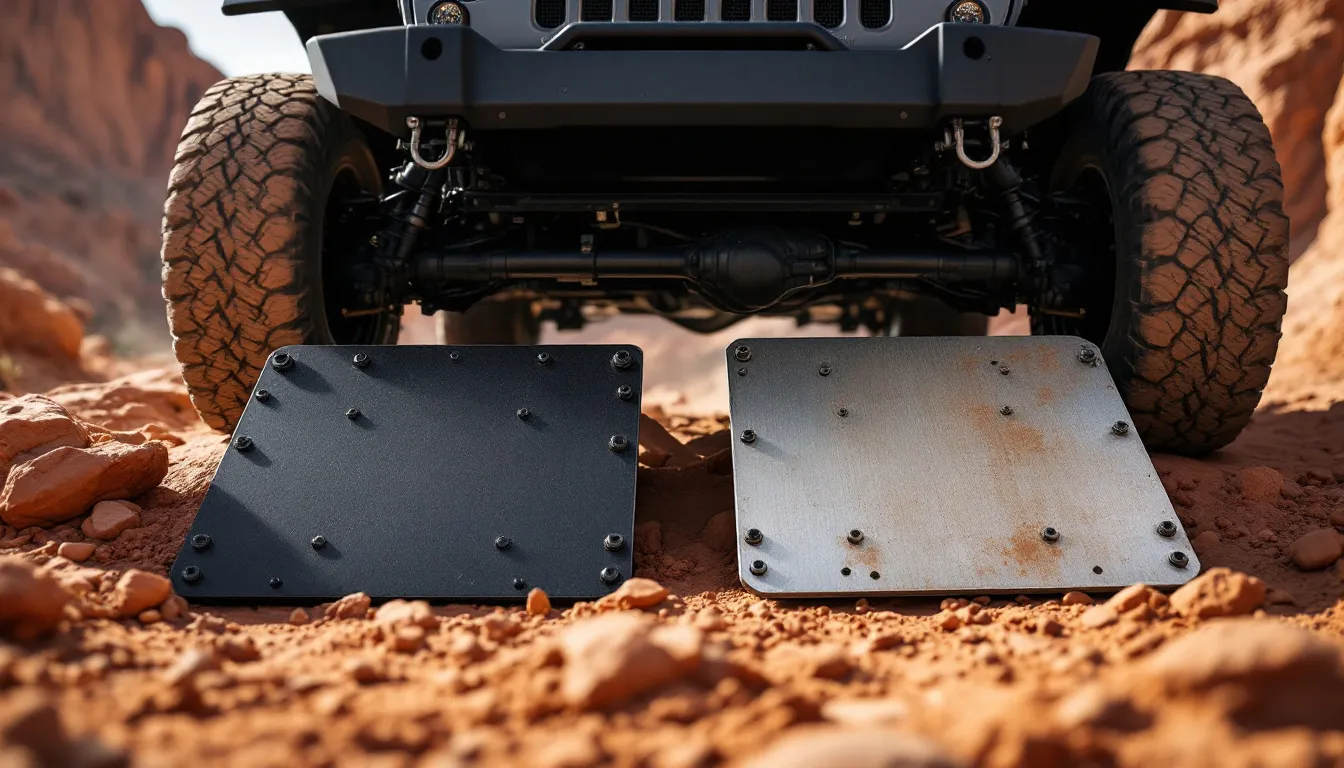
Steel vs Aluminum Skid Plate Jeep JK Rock Crawling
Steel or Aluminum: Which Skid Plate Actually Protects Your JK on the Rocks?
A skid plate is straightforward in concept — a protective steel or aluminum panel bolted underneath your JK to shield the engine, transfer case, fuel tank, and differentials from rocks, roots, and the kind of trail debris that costs real money to fix. But the moment you start shopping, the material question stops being simple.
For steel vs aluminum skid plate Jeep JK rock crawling, steel wins for aggressive rock crawling, especially over the transfer case and differential. Steel handles sharp, concentrated impacts the way you want — it bends. Aluminum cracks. That single difference shapes everything else: weight, durability, maintenance, and which trails your underbody can handle.
This isn’t theory. It’s grounded in what actual Jeep JK owners report on the trail and what happens when metal meets granite at 3 mph. The guidance below reflects real-world performance, not marketing spec sheets.
For deeper dives on specific components, check out the best transfer case skid plates for the Jeep JK and the best rock crawling tires for the JK.
Get new guides by email
One email when we publish something worth reading. Unsubscribe anytime.
What Steel and Aluminum Actually Do Differently Under Impact
Steel is denser. Aluminum is lighter. But on the trail, the real difference is how each material fails.
Hit a thin aluminum skid plate with a sharp granite edge, and it cracks — a stress fracture that spreads and leaves your transfer case exposed. Hit the same plate in steel, and it dents. The plate stays functional. That’s the core trade-off, and it’s why choosing between these materials matters more than most JK owners realize.
Density and Weight Penalty
Steel weighs roughly 2.5 to 3 times more per cubic inch than aluminum. A 3/16” steel skid plate typically runs 30–40% heavier than an equivalent aluminum plate of the same dimensions, depending on coverage area and construction style.
For a 2007–2018 JK, that weight sits low and forward — directly affecting steering feel and suspension response. I felt it immediately after installing a steel bumper with a winch plate a few years back. Roughly 35 kg added to the front, and the steering was noticeably heavier on the drive home. That’s when I realized why so many builders recommend upgrading the steering stabilizer at the same time — the extra unsprung mass changes how the JK responds.
If you’re building an overlanding rig with fuel cans, cargo, and recovery boards already adding weight, those extra 40–60 lbs from full steel skid plate coverage actually matters. It’s not a deal-breaker, but it’s worth knowing upfront.
Thickness Equivalency: The Spec That Actually Matters
This is the detail that gets overlooked in generic comparisons, and it changes everything:
3/16” steel ≈ 3/8” aluminum for equivalent impact resistance.
Aluminum manufacturers compensate by going thicker and adding structural ribbing, gussets, and boxed construction. Don’t fall into the trap of comparing thickness numbers directly. A well-designed 3/8” aluminum plate with bracing might legitimately match a 3/16” steel plate’s protection — but a thin 3/16” aluminum plate will not.
When you’re evaluating products, look at the overall structure, not just the thickness spec. A reinforced aluminum plate with deep ribs can outperform a plain steel sheet of identical gauge.
Corrosion: Where Aluminum Pulls Ahead
This is aluminum’s legitimate advantage, and it’s substantial if your JK sees wet trails, creek crossings, or humidity.
Steel skid plates rust when the protective coating chips. On a rock crawler, the coating will chip — you’re dragging underbody armor across stone. Many JK owners report needing to touch up bare spots with bed liner or rust inhibitor after a single hard season. It’s not catastrophic, but it’s maintenance.
Aluminum forms a passive oxide layer. Once it oxidizes, that layer actually protects the metal underneath, and it happens automatically without intervention. You don’t have to repaint it or treat it. That’s a genuine practical advantage for JK builds that live in wet climates or get soaked regularly.
Welding and Field Repair
Here’s a scenario worth considering: you’re 40 miles from the nearest service road, and your skid plate cracks.
A cracked steel plate? A welder with a stick rig can patch it trail-side. Aluminum requires a TIG welder and the right filler rod — something you won’t have in your recovery kit. For remote rock crawling, steel’s field-repairability is a real tactical advantage. It’s one of those details that only matters until it matters, at which point it matters a lot.
Steel vs Aluminum Skid Plate: Head-to-Head Comparison Table
Use this to settle any single-category debate quickly. Steel dominates for impact-heavy rock crawling; aluminum makes sense on lighter builds and fuel tank duty.
For protecting your JK’s drivetrain in a complete system, pairing the right skid plate with upgraded axles gives you genuine underbody armor.
| Category | Steel | Aluminum | Winner |
|---|---|---|---|
| Impact resistance (point load) | Excellent — deforms, protects | Good — can crack under sharp impacts | Steel |
| Weight | Heavier (30–40% more typical) | Lighter — better for unsprung mass | Aluminum |
| Corrosion resistance | Chips, rusts without touch-up | Passive oxide layer, minimal maintenance | Aluminum |
| Thickness for equivalent protection | 3/16” is solid for rock crawling | 3/8”+ needed to match steel | Steel (simpler spec) |
| Field repair capability | Easy to weld trail-side | Needs TIG welder, harder to fix | Steel |
| Cost | Generally lower | Often higher for equivalent strength | Steel |
| Best use case | Aggressive rock crawling, transfer case | Moderate trails, fuel tank, lighter builds | Depends on your use |
| JK fitment options | Wide — most aftermarket options available | Growing — fewer heavy-duty options | Steel |
The real verdict: Steel for transfer case and differential protection on technical rock crawling. Aluminum is viable for fuel tank duty on moderate trail rigs.
Transfer Case Skid Plates for JK Rock Crawling: Steel Is the Safe Choice Here
The transfer case sits low and forward on a 2007–2018 JK, right in the strike zone during ledge climbs and rock shelf encounters. When it comes to the transfer case specifically, steel is the only material worth considering for serious rock crawling.
This isn’t opinion — it’s consensus from the JK owner community and years of real failure reports. The NP241 transfer case isn’t cheap to replace, and getting to it on the trail is a nightmare. A cracked or jammed skid plate miles from the trailhead means you’re hiking out.
The research consistently points the same direction: the weight penalty of steel protection under the transfer case is worth every pound. It’s the one place where I never recommend aluminum for a serious crawler.
The Westin Snyper transfer case skid plate shows up in build threads constantly:

Westin Automotive Products 42-21025 Snyper Textured Black Transfer Case Skid Plate
- Steel construction with textured black finish
- Bolts directly to factory mounting points on 2007–2018 JK
- Covers transfer case and belly pan area
- Protects critical drivetrain components during rock crawling
Best for: JK owners who want proven, tested protection without custom fabrication.
Check Price on Amazon →A critical fitment note: Confirm whether you’re running a 2-door JK or a 4-door JKU before ordering anything. The JKU’s longer wheelbase changes the frame rail geometry and spacing. Transfer case skid plate mounting brackets sit in different positions on the two chassis. Always cross-reference the manufacturer’s fitment chart against your specific model year (anywhere in 2007–2018) and body style before hitting purchase. A skid plate designed for the wrong configuration won’t sit flat, and you’ll be sending it back.
The Bolt Problem Nobody Talks About Until It’s Too Late
Factory skid plate bolts on JKs are single-use fasteners — they stretch when you remove them and strip if you try to reinstall them. When you’re bolting up a new aftermarket plate, do yourself a favor and grab a dedicated hardware kit. This sounds like a small detail, but it’s the difference between a smooth afternoon and two hours of fighting stripped threads.

Region Offroad Gas Tank/Transfer Case Skid Plate Bolts Compatible with Jeep Wrangler JK JL Gladiator
- Quality fasteners designed for JK/JL/JT family
- Covers both transfer case and fuel tank mounting positions
- Won't strip on installation or removal
- Grade 8 steel with proper thread sizing
Best for: Any JK owner replacing OEM bolts during a skid plate upgrade.
Check Price on Amazon →For complete coverage of transfer case protection options, the complete guide to transfer case skid plates for the JK digs into fitment, construction details, and installation nuances. If you’re also running a Dana 44 axle upgrade or other drivetrain mods, those guides integrate well with underbody armor planning.
Fuel Tank Skid Plates: Where Aluminum Actually Makes Sense
The fuel tank is a different animal. It sits further rearward, and typical impacts back there are drags and slides rather than sharp point strikes. Aluminum skid plates are a legitimate option for fuel tank protection, especially on JK builds that aren’t tackling extreme rock crawling.
But here’s the reality check: if you’re running aggressive lines on technical terrain, steel still gives you more confidence. The choice matters less here than it does at the transfer case, but it’s still a choice.
Two solid options covering both ends of the material spectrum:
The OEM-style fuel tank skid plate uses factory mounting points with zero modification required — a straightforward direct-fit upgrade for JK owners who want simplicity:

Fuel Tank Skid Plate Compatible with 2007-2018 Jeep Wrangler JK Black Replacement for 52059743AJ
- Direct replacement for OEM part 52059743AJ
- Uses existing frame mounting points — no modification
- Fits 2-door JK and 4-door JKU
- Protects fuel tank from trail impacts
Best for: JK owners who want a bolt-on replacement with zero hassle.
Check Price on Amazon →The ECOTRIC steel fuel tank skid plate is the heavier-duty choice for JK owners who want maximum underbody protection all the way back:

ECOTRIC Fuel Tank Skid Plate Compatible with 2007-2018 Jeep Wrangler JK 2-Door Black Replacement
- Steel construction for maximum impact resistance
- Direct fit for 2-door JK (confirm fitment if JKU)
- Protects fuel tank and rear underbody
- Textured black powder coat finish
Best for: JK owners who prioritize protection over weight savings and do aggressive rock crawling.
Check Price on Amazon →The Drain Plug Detail That Gets Overlooked
Here’s something most generic guides skip entirely: some aftermarket fuel tank skid plates don’t provide drain plug access. If you service your JK regularly, you need to reach that drain plug without fully removing the skid plate.
Before you install any fuel tank plate, verify the design provides access. Check the product dimensions against your JK’s specific fuel tank configuration. I’ve seen several community complaints about plates that require full removal just to drain the tank — which defeats the purpose of having a removable skid plate. It’s a small detail that matters when you’re working under a 95-degree sun trying to get an oil change done.
If you’ve recently added suspension height to your JK, the lift kit installation guide covers how a lift changes your underbody clearance and whether you need to re-index mounting hardware afterward.
Installing a Skid Plate: The Details That Keep It There
Skid plate installation on a 2007–2018 JK is a driveway job if you know what you’re doing. The problem areas are almost always the same: stripped threads and missing hardware. Both are preventable with planning.
Steel bumper installs routinely turn into Saturday-long extraction sessions. Factory bolts corrode badly enough that they strip the moment you try to remove them, and an angle grinder becomes the tool of last resort. That is why the forums are so consistent about one thing: replace the bolts.
The Proper Way to Get Under a JK
Never work under a vehicle supported only by a floor jack. Get the front end up with a proper floor jack and support it on rated jack stands:
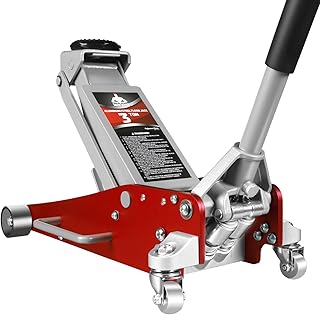
Jack Boss 3 Ton Low Profile, Aluminum and Steel Racing Floor Jack with Dual Pistons Quick Lift Pump
- 3-ton capacity (sufficient for most JK work)
- Low profile design clears suspension
- Dual piston pump for smooth operation
- Aluminum/steel construction for durability
Best for: JK owners who do regular underbody work and want a reliable lifting tool.
Check Price on Amazon →Step-by-Step Installation Process
-
Remove old hardware carefully. Spray OEM bolts with penetrating oil and let them soak — rusty fasteners strip easily. Use the right socket size (not an adjustable wrench) and work slowly.
-
Inspect the mounting points. Look at the frame rails where the plate bolts down. Any deformation or rust needs to be addressed before installation. A bent frame rail means the plate won’t sit flat, and you’ll have gaps.
-
Install the new plate dry first. Position it, align all holes, and do a test fit before you torque anything. Make sure it sits evenly and doesn’t bind.
-
Replace all bolts with quality fasteners. Don’t reuse stretched OEM bolts. The Region Offroad kits are designed specifically for the JK/JL/JT family and cover both transfer case and tank positions with hardware that won’t strip.
-
Torque to specification. Check your specific plate’s documentation — torque values typically run 30–45 ft-lb for most JK skid plate hardware. Use a calibrated torque wrench, not just muscle memory. Over-torquing aluminum threaded inserts is a common mistake that cracks the mounting bosses.
Details Worth Remembering
- Skip thread-locking compound on bolts you’ll need to remove for service. If you ever need to drop the skid plate for tank drain access or component service, permanent thread-lock will make that job miserable.
- Apply anti-seize compound to steel bolts going into aluminum plates. This prevents galvanic corrosion where dissimilar metals meet — a real issue on the coast or in humid climates.
- Recheck torque after the first trail run. Vibration and suspension movement will loosen new hardware. Give everything a final tightening session after a weekend of wheeling.
For getting under the JK safely in the field, the Hi-Lift jack mounting guide and a portable air compressor setup complete your recovery capability.
Which Skid Plate Material Belongs on Your JK?
The right material depends on how you actually use your JK — not how you daydream about using it. There’s a real difference, and matching the material to your genuine trail conditions is the whole point of this exercise.
Here’s something I rarely see mentioned upfront: aluminum skid plates often cost more than equivalent steel options. Precision machining, structural ribbing, anodizing — that work adds up. Don’t assume aluminum = budget-friendly. You’re usually paying for lighter weight and corrosion resistance, not a discount.
The Hardcore Rock Crawler
You’re running Moab, the Rubicon, or technical lines with ledge drops and sharp granite everywhere. Go full steel — transfer case, fuel tank, and any differential protection.
Weight matters far less than protection when you’re three grand away from a transfer case replacement and forty miles from cell service. Plan to add approximately 40–60 lbs for a complete steel skid plate system on a JK, and accept that as the cost of running real rock crawling armor. It’s money well spent when a sharp rock slides under your bumper and finds your underbody.
The Weekend Trail Rig and Overlander
You’re hitting moderate terrain — forest roads, dirt trails, the occasional rocky section. You’re not doing extreme rock crawling, but you want to protect your investment. Aluminum for the fuel tank is a legitimate choice here. You’ll appreciate the weight savings and the fact that you won’t be touching up rust every season.
Keep steel for the transfer case even on this build. The transfer case sits too low and too exposed to take a chance on aluminum protection. The slight weight penalty is insurance money.
The Daily Driver That Occasionally Wheels
You commute in your JK and hit easy trails on weekends. A OEM-replacement aluminum or steel fuel tank skid plate is honest protection — nothing fancy. For the transfer case, a quality steel plate is cheap insurance even if you never hit anything hard. The daily-driven JK build guide covers the complete picture for dual-purpose Wranglers that live both on pavement and on dirt.
For other components where material and weight decisions matter equally, the performance upgrades guide applies the same thinking to bolt-on modifications.
Frequently Asked Questions: Steel vs Aluminum Skid Plates for Jeep JK
These are the questions that come up repeatedly in owner forums and community discussions — answered directly and thoroughly.
Q: Is steel or aluminum better for rock crawling on a Jeep JK?
A: Steel is better for serious rock crawling on a Jeep JK, especially for the transfer case and differentials. Steel deforms under sharp point impact rather than cracking, keeping the plate functional after a hard hit. Aluminum is a viable option for moderate trail use and fuel tank protection, but it requires significantly more thickness to match steel’s impact resistance. For a 2007–2018 JK that sees aggressive technical terrain, steel underbody armor is the safer choice.
Q: How thick should an aluminum skid plate be to match steel protection?
A: The commonly cited equivalency from the JK owner community is that 3/8” aluminum approximates 3/16” steel for impact resistance. This isn’t an absolute engineering standard — it reflects real-world feedback from builders and trail users. When evaluating aluminum plates, look at structural design (ribbing, gussets, boxed construction) as much as raw thickness. A well-engineered 3/8” aluminum plate with deep reinforcement can outperform a plain 3/16” steel sheet, but you have to inspect the design.
Q: Do I need to replace OEM skid plate bolts when upgrading?
A: Yes. OEM skid plate bolts on 2007–2018 JKs are single-use fasteners that stretch during removal and will strip if you try to reuse them. Replacing them with a quality aftermarket hardware kit is strongly recommended. Kits designed for the JK, JL, and Gladiator JT are available and cover both transfer case and fuel tank mounting positions. This small upfront investment prevents hours of headache during installation.
Q: Will a 2-door JK skid plate fit a 4-door JKU?
A: Not always. The 2-door JK and 4-door JKU have different wheelbase and frame dimensions, which directly affects skid plate mounting bracket geometry and plate length. Always verify the manufacturer’s fitment chart specifies your exact body style (2-door or 4-door) and model year within the 2007–2018 range before purchasing. A plate designed for the wrong wheelbase won’t sit flat and will need to be returned.
Q: Can I repair a cracked skid plate in the field?
A: Yes, with steel — difficult to impossible, with aluminum. A cracked steel plate can be welded trail-side with basic welding equipment. Aluminum requires a TIG welder and the correct filler rod, which you won’t have in your recovery kit. This field-repairability advantage is worth considering if you plan remote rock crawling far from service.
The Final Word: Steel Wins the Transfer Case, Aluminum Gets the Fuel Tank
For steel vs aluminum skid plate Jeep JK rock crawling, the answer is layered. Steel protects better where it matters most — the transfer case and differentials on technical terrain. Aluminum earns its place on moderate rigs and fuel tank duty, where weight savings and corrosion resistance add real value.
Start with the transfer case skid plate guide for the JK, then pair your armor decision with upgraded rock crawling tires to build a capable, protected Wrangler from the ground up. The trails will be waiting.
Free: JK Fluids at a Glance
Every fluid, spec and capacity for the 2007-2018 Wrangler JK on one page, plus a cut-out glovebox card. Checked against the owner's manuals. From the JK Service Kit.
Email me the download and new guides when they are published. Unsubscribe anytime. Privacy Policy.
Allan
I'm Allan. I own a 2014 Jeep Wrangler JKU and I research the hell out of every mod before I touch it. When I've fitted something to my own Jeep, I say so. Everything else is researched from manufacturer specs and other owners' reports. No sponsored fluff.
Learn more about me →Free: JK Fluids at a Glance
Every fluid, spec and capacity for the 2007-2018 JK on one page, plus a glovebox card.
Email me the download and new guides when they are published. Unsubscribe anytime. Privacy Policy.
Related Articles
Best JK Rocker Panel & Body Armor: Complete Protection Kits Ranked
JK body armor is any aftermarket steel or aluminum protection — rocker guards, rock sliders, skid plates, or tube fenders — bolted to a 2007–2018 Jeep...
Jeep JK Rock Sliders vs Side Steps: Protection, Looks & Which One You Actually Need
Rock sliders are heavy-gauge steel (or aluminum) tubes or plates that bolt or weld to your Jeep's frame, sitting flush along the rocker panels to...
Best Jeep JK Front Bumpers with Winch Mounts: Full-Width vs Stubby Compared
A Jeep JK front bumper with winch mount is a steel or aluminum replacement for your factory plastic fascia that bolts solid protection, integrated...