Best Pet Seat Covers For Jeep JK
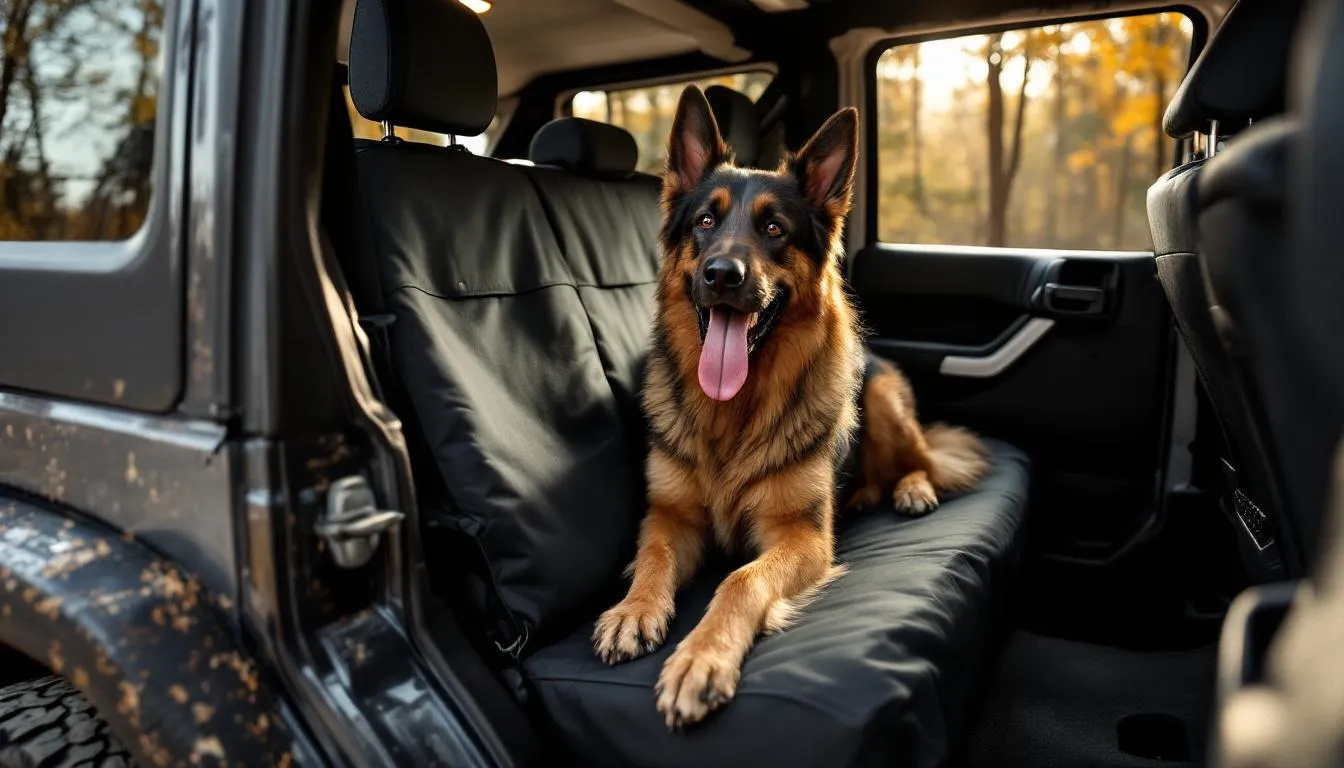
The best pet seat covers for Jeep JK balance JK-specific fit with waterproof materials that handle the open-air lifestyle—hammock-style designs work with fold-flat seats, while 600D Oxford cloth dries faster than neoprene after doors-off summer adventures. For 2007-2018 Wranglers, covers designed for SUV bench seats with nonslip backing and adjustable straps outperform generic sedan-focused options.
Three sets of seat covers in one year taught this lesson the hard way. The first was a $15 universal-fit disaster that bunched under my German Shepherd’s paws and blocked the seatbelt buckle. The second—a marine-grade neoprene option—cost triple but trapped heat on summer trail rides. The third, a Jeep-specific 600D Oxford hammock, finally delivered what JK owners actually need: secure fit, quick-dry material, and compatibility with the fold-flat rear seat mechanism. That buy-once-cry-once lesson cost me $125 and a year of frustration.
This guide covers three tiers: budget universal covers under $30 for smaller dogs and highway use, JK-compatible mid-range options around $50 that nail the fit, and premium solutions for large breeds or specialized needs. Your choice hinges on how you actually use your JK—weekend pavement cruising versus technical trails with a muddy 80-pound Lab.
Product Comparison: JK Pet Seat Covers at a Glance
| Product Name | Material | Style | JK Fit | Price | Best For |
|---|---|---|---|---|---|
| TruShield Waterproof Pet Guard | PU-backed polyester | Hammock | JK-compatible | $50.99 | Brand-conscious owners |
| Dog Car Seat Cover (2007-2025) | 600D Oxford | Hammock | JK-specific 4-door | $49.98 | Serious trail runners |
| URPOWER Dog Car Seat Cover | 600D Oxford | Hammock | Universal | $29.98 | Budget-conscious, smaller dogs |
| BESTAOO Dog Trunk Liner | Heavy-duty Oxford | Cargo mat | JK-specific cargo | $44.99 | Cargo area haulers |
| Hard Bottom Seat Extender | Rigid platform + Oxford | Hammock | Universal SUV | $79.01 | Large breeds, multi-dog |
| PETICON Front Seat Cover 2-Pack | Waterproof fabric | Bucket seat | Universal front | $31.99 | Front seat protection |
Get new guides by email
One email when we publish something worth reading. Unsubscribe anytime.
Why JK-Specific Seat Covers Matter (and When They Don’t)
JK rear seats fold flat for cargo space, with a unique hinge mechanism that runs along the bottom cushion. Universal sedan covers designed for fixed seats create bunching right at this pivot point—you’ll fight slack fabric every time you fold the seat, and the cover often prevents a full flat position. The rear bench measures approximately 46-48 inches wide on 4-door models, slightly narrower than many full-size SUVs, which means “universal” covers sized for Tahoes or Expeditions gap at the edges or drag on the floor.
From 2007 through 2018, JK interior dimensions remained remarkably consistent—what fits a 2010 Sport works on a 2017 Rubicon. The main variable is 2-door versus 4-door, where rear seat depth differs by about four inches. For buyers researching across model years, check JK model year variations to understand the minimal interior changes that actually affect fit.
Universal covers work perfectly fine in specific scenarios: smaller dogs under 40 pounds that don’t shift much weight, primarily highway driving where you’re not taking aggressive turns, and infrequent seat folding. For these use cases, saving $30 makes sense. But if you run technical trails, haul large breeds, or regularly flip seats for gear, JK-specific patterns that account for the fold-flat mechanism eliminate constant adjustment.
Here’s the doors-off wrinkle: side flaps that protect door panels become irrelevant when you’re running doorless, but waterproof ratings become critical. A summer thunderstorm with a bikini top means water sheeting directly onto rear seats—cheap covers that claim “waterproof” but actually mean “water-resistant” soak through in five minutes. Understanding JK Rubicon versus Sport capabilities helps match cover durability to actual trail demands. For complementary interior protection, consider JK floor mats designed for off-road use that pair with seat covers to protect your entire cabin.
Best Jeep-Licensed Option: TruShield Waterproof Pet Guard

The official Jeep-licensed cover carries the brand logo prominently on the headrest and delivers OEM-adjacent quality for owners who want that factory aesthetic. At $50.99, you’re paying a $15-20 premium over generic JK-compatible covers for brand reassurance and the peace of mind that comes with Mopar’s licensing process.
The “some adaptation may be required” disclaimer in the product description typically means adjusting strap length for JK’s integrated headrests—they’re not removable like sedan units, so you route straps around them rather than through. Expect to spend an extra ten minutes on first installation getting tension right. The Jeep Licensed by TruShield Waterproof Pet Guard uses a PU-backed polyester that beads water effectively, though not quite to the same puncture-resistance standard as 600D Oxford.
This cover appeals to two buyer profiles: brand-conscious owners who prefer Jeep-licensed accessories across the board, and those planning to sell within a few years who want the OEM look to maximize resale appeal. The logo screams “factory accessory” to potential buyers, even though it’s aftermarket. For JK owners with full Mopar accessory suites who wince at generic Amazon brands, the extra $20 preserves aesthetic consistency.
Real talk: the base material quality sits between budget universal and premium JK-specific options. You’re buying the logo and licensing, not dramatically superior construction. But for owners invested in the JK interior protection ecosystem, brand cohesion matters.
Jeep Licensed by TruShield Waterproof Pet Guard Seat Cover with Jeep Logo Compatible for Universal;
Check Price on Amazon →Best JK-Specific Fitment: Custom 4-Door Covers

The Dog Car Seat Cover Compatible with Jeep Wrangler 4 Door 2007-2025 represents the sweet spot for serious JK dog owners at $49.98. This cover uses legitimate 600D heavy-duty Oxford construction and explicitly targets Jeep Wrangler compatibility with specific design attention to the fold-flat mechanism—the hammock-style bottom includes elastic edges that maintain tension when the seat folds, rather than bunching like universal covers.
The nonslip backing becomes critical on technical trails. JK seats use vinyl upholstery, which is slicker than cloth under shifting weight. A 60-pound dog scrambling for footing when you hit a rock shelf generates surprising lateral force. This cover’s rubber dot pattern stays put where smooth PU backing would slide three inches on every obstacle.
For JK owners who regularly haul dogs off-road, this mid-tier cover delivers 90% of premium performance at 60% of the cost. The 600D Oxford dries faster than neoprene after a stream crossing, handles puncture from paws better than basic polyester, and maintains structure through a full season of trail abuse. The $30 premium over budget universal options pays back within three months when you stop fighting with bunched fabric and constant readjustment.
Dog Car Seat Cover Compatible with Jeep Wrangler 4 Door 2007-2025, Waterproof Pet Bench Seat Cover f
Check Price on Amazon →Best Budget Universal Options (Under $30)
The URPOWER Dog Car Seat Cover at $29.98 leads the budget category with legitimate 600D Oxford construction—not the claimed 600D that tests at 300D when you actually measure thread density. This makes a real difference when your Labrador’s rear dewclaw catches the fabric during a tight turn. The hammock-style design works reasonably well with JK seats, though you’ll adjust strap tension more frequently than with JK-specific covers.
Generic “cars trucks SUVs” fit claims mean these covers accommodate a wide dimensional range—which translates to compromise. On JK seats, expect edge gaps of 2-3 inches, less secure anchor points that require creative strap routing, and potential interference with seatbelt buckle access. The last issue frustrates owners most frequently: you reach for the buckle, find it buried under fabric, and spend ten seconds fishing.
These covers work without complaint for specific use cases: dogs under 40 pounds that stay mostly stationary, weekend warriors who drive 90% highway between trailheads, temporary seasonal use (winter only or summer only), and owners testing whether they even want seat protection before committing to premium options.
Trade-offs come clear after three months of use. Edge gaps let dirt accumulate under the cover, eventually defeating the protection purpose. Anchor straps designed for sedan headrests don’t tension properly around JK’s integrated units, creating slack that allows sliding. And the thinner polyester backing doesn’t grip JK’s vinyl as aggressively as rubber-dotted patterns.
For a first-time dog in your JK, starting at $29.98 makes sense. You’ll learn quickly whether universal covers frustrate you enough to justify $50 for JK-specific fit.

URPOWER Dog Car Seat Cover for Pets 100% Waterproof Seat Cover Hammock 600D Heavy Duty Scratch Proof
Check Price on Amazon →Cargo Area Alternative: BESTAOO JK Trunk Liner

Some JK owners skip rear seat covers entirely and go straight to cargo area protection—dogs ride behind the rear seat in the open cargo space. The BESTAOO Dog Trunk Liner for Jeep at $44.99 targets this approach with JK-specific design for 2007-2026 Wrangler JK/JL 4-door models, featuring contoured edges that wrap up the cargo sides.
Pros of the cargo approach: cleanup involves hosing out the back rather than wrestling with strap removal, zero interference with seat mechanisms, and it works perfectly with rear seats folded flat for maximum cargo space. The US flag graphic appeals to JK owners who lean into patriotic aesthetics.
Cons get serious for dog comfort and safety: dogs aren’t secured—they slide around during turns and can be thrown forward during hard braking, less comfortable for longer trips without seat cushioning, and you sacrifice rear passenger space entirely. For trail rigs that rarely carry human passengers and frequently haul muddy retrievers, this trade makes sense.
The cargo configuration pairs naturally with soft top versus hardtop choices—soft tops with rear windows that unzip create better ventilation for cargo-area dogs, while hardtops require keeping rear windows cracked. The liner’s heavy-duty Oxford material handles sharp mud clumps and wet paws without showing wear. When maximizing cargo capacity, consider JK cargo organization systems that complement trunk liners for gear management.
This option works best for working dogs (hunting, ranch work) or owners who treat their JK primarily as a cargo hauler. For family road trips where dogs need to be comfortable for six hours, rear seat covers win.
BESTAOO Dog Trunk Liner for Jeep, Heavy Duty Waterproof Oxford Cargo Protector for 2007-2026 Wrangle
Check Price on Amazon →Premium Heavy-Duty Pick: Hard Bottom Seat Extender

At $79.01 with 500-pound capacity rating, the Dog Seat Cover for Back Seat with Hard Bottom sits firmly in premium territory—nearly double the JK-specific mid-tier covers. But for owners of large breeds or multiple dogs, the investment solves the sagging problem that plagues hammock-style covers.
Standard hammock covers drape between the front and rear seats, creating a fabric bridge over the footwell gap. Light dogs (under 50 pounds) don’t sag much. But an 80-pound German Shepherd or two 60-pound Labs create a hammock valley that bottoms out on the floor, defeating the “extender” purpose. Dogs end up partially in the footwell, uncomfortable and struggling for stable footing.
The hard bottom—actual rigid support, not just dense foam—creates a level platform from the rear seat forward. Large dogs lie flat without sagging, multiple dogs have stable surface for shifting position, and you eliminate the footwell gap entirely. The comfort difference shows on long trips: dogs settle faster and stay relaxed longer when they’re not constantly adjusting to maintain position.
The SUV/truck capability angle matters here. JK owners often choose working breeds—German Shepherds, Labs, Belgian Malinois—that match the vehicle’s outdoor capability. These breeds average 65-95 pounds, well above the 40-pound threshold where hammock sag becomes problematic. The $79 investment is proportional to the $30,000+ truck investment.
Potential issue: the hard bottom might interfere with JK’s fold-flat mechanism depending on exact installation. Some owners report needing to remove the extender entirely to fold seats, while hammock-style covers just need strap loosening. Consider your actual fold frequency—daily versus monthly—before committing to rigid platforms.
Dog Seat Cover for Back Seat, Hard Bottom Back Seat Extender Holds 500 lbs, Waterproof & Nonslip Car
Check Price on Amazon →Front Seat Protection: PETICON 2-Pack Option

The PETICON Waterproof Front Seat Car Cover 2 Pack at $31.99 addresses scenarios beyond basic rear seat protection: solo road trips with your dog riding shotgun, dual coverage for multi-dog households where one dog rides front and one rear, and protecting the driver seat from muddy paws during solo trail rides when your dog hops up to say hello.
JK captain chairs—separate front seats with integrated headrests—present different installation challenges than rear bench seats. The integrated headrests mean you can’t remove them to thread straps, requiring creative routing around the headrest stems. The side flaps extend down to cover door panels, which matters more on front seats where your elbow naturally rests against the panel.
These covers work well for weekend warriors who regularly take solo trips with a single dog. Rather than leaving the dog crated in the rear, they ride up front where you can monitor them and they get better views. The waterproof construction handles the inevitable muddy paw that lands on the passenger seat after a stream crossing.
For multi-dog households with size mismatch—say, a 30-pound Border Collie and a 70-pound Lab—splitting them front and rear works better than cramming both in the back seat. The 2-pack provides matched protection.
Installation complexity runs higher than rear seats because you’re working around JK’s fixed headrests and contoured captain chair shape. Expect 20 minutes per seat on first install, 10 minutes on subsequent installs once you’ve figured the routing. The nonslip backing grips JK’s vinyl reasonably well, though aggressive off-road driving causes more shifting on front seats than rear simply due to steering inputs.
PETICON Waterproof Front Seat Car Cover 2 Pack, Full Protection Dog Car Seat Cover with Side Flaps,
Check Price on Amazon →Material Comparison: 600D Oxford vs. Neoprene vs. Leather
Material choice affects durability, cleaning ease, and how covers handle JK’s open-air lifestyle extremes. The three dominant materials each trade different advantages.
600D Oxford cloth dominates the JK seat cover market because it balances puncture resistance, quick-dry capability, and affordability. The “600D” refers to thread denier—600-denier threads create fabric dense enough to resist dog nail punctures but light enough to dry in two hours when wet. After hosing down a muddy cover, you can reinstall it the same afternoon. According to Warn Industries testing data, outdoor gear fabrics rated 600D typically maintain waterproof integrity for 2-3 seasons under sustained UV exposure before degradation shows as fading and weakening at stress points. The material handles UV exposure reasonably well, relevant for JK owners who run doorless all summer and park outdoors.
Neoprene—the wetsuit material—offers superior waterproofing and maintains flexibility in cold weather. But it traps heat aggressively, making summer trail rides uncomfortable for dogs. The material also dries slowly: a soaked neoprene cover needs overnight drying, sometimes longer in humid climates. Neoprene costs 2-3x more than Oxford cloth and handles UV exposure poorly. For JK owners in northern climates who do winter wheeling and rarely run doorless, neoprene’s cold-weather flexibility matters. For southern trail riders, it’s miserable.
PU leather provides the easiest cleanup—mud wipes off with a damp cloth, no hosing required. But it’s the least breathable option, creating sweaty dogs on long drives, and it cracks under sustained UV exposure. The cracking accelerates dramatically during doorless summer driving when seats get six hours of direct sun. PU leather works well for garage-kept JKs used primarily for short trips, less so for daily-driver trail rigs.
For JK owners who actually use their rigs hard, 600D Oxford wins. It dries faster after unexpected rain with the top down, handles temperature swings better, and costs 40% less than neoprene. The quick-dry capability matters more than owners realize until they experience it: arriving at camp with soaked seats versus dry seats changes the entire trip. Understanding JK interior wear patterns helps contextualize where seat protection fits in long-term maintenance. For a complete interior protection strategy, pair seat covers with upgraded JK seats designed to handle long trail days.
Installation Tips & JK-Specific Fit Challenges
Installing seat covers in a JK presents unique challenges compared to sedan installations. Start with headrest strap routing: JK headrests integrate into the seat frame and don’t remove without tools, so you route straps around them rather than threading through. This creates less vertical tension than sedan-style installations, meaning the side straps and bottom anchors carry more load.
Seatbelt buckle access frustrates owners most frequently. The buckle sits in a specific position between the rear seat cushions, and covers that don’t account for this create a buried-buckle situation. Look for covers with reinforced openings at buckle positions, or plan to cut small access holes yourself. Some owners use velcro to create flap-style access rather than permanent holes.
Anchor strap routing around fold-flat hinges requires attention during installation. The hinges run along the bottom rear of the seat cushion—if you route straps directly across these hinges, they’ll interfere with folding. Route straps above or below the hinge line, leaving enough slack that the seat folds without strain on the cover. Test the fold before your first trail ride with the dog.
Hammock versus bench style affects installation completely. Hammock covers attach to front seat headrests and rear seat anchors, creating a bridge. Bench covers wrap only the rear seat. For JK owners who regularly fold rear seats for cargo, bench style makes life easier—no front seat attachment to deal with. For owners prioritizing dog comfort and footwell gap elimination, hammock style wins despite slightly more complex installation. Cross-reference JK interior modifications for complementary upgrades.
Quick-clip systems versus traditional straps/velcro trade convenience for security. Clips install faster—snap them onto anchor points and you’re done in 90 seconds. But they’re slightly less secure on aggressive trails where you’re taking 30-degree lean angles. Strap systems require threading and tension adjustment, taking 5-10 minutes, but they lock down tighter.
The doors-off consideration changes priorities: side flaps that protect door panels become unnecessary when you’re running doorless, but waterproofing becomes critical. For summer doorless setup with bikini tops, prioritize covers with high waterproof ratings over fancy side coverage. Water sheeting in from a sudden storm hits rear seats directly with no door protection.
Sizing for Multiple Dogs & Large Breeds
JK 4-door rear seat width runs approximately 46-48 inches—narrower than full-size SUVs but wider than most sedans. This dimension translates to real-world dog capacity that matters for mixed households.
Two medium dogs (40-60 pounds each) fit comfortably with hammock-style covers that create a level platform. They can shift position, settle next to each other or opposite sides, without constant competition for space. Three medium dogs get cramped—technically possible but uncomfortable on trips longer than 30 minutes.
One large breed (80+ pounds) needs the full bench seat to lie down comfortably. German Shepherds, Labs, and Golden Retrievers in the 75-90 pound range take most of the seat when lying flat. They’ll curl up to take less space, but for multi-hour trips, they need room to stretch.
Weight ratings on covers claim “heavy duty” but vary wildly in actual sag resistance. Covers rated for 150 pounds might handle that weight if it’s static and distributed evenly, but dogs don’t hold still. A 90-pound Lab shifting weight suddenly during a turn generates forces that exceed static ratings. Look for reinforced stitching at high-stress points—where straps attach to fabric and where hammock bridges meet anchor points.
The hard-bottom extender returns to relevance here for serious multi-dog or large breed scenarios. That 500-pound capacity rating isn’t marketing fluff—it’s built for owners hauling multiple working dogs or giant breeds. If you’re running two 80-pound dogs, the $79 investment eliminates the sag that plagues fabric hammocks. For owners who’ve upgraded their JK’s suspension for load capacity, pairing that with proper pet seating makes sense—see JK suspension upgrades for how improved load handling complements pet transport.
Cleaning & Maintenance: What Actually Works Off-Road
Real-world cleaning for JK owners who run trails differs significantly from washing a sedan seat cover. Let’s define “waterproof” first: it means water beads off the surface rather than soaking through to the seat beneath. It doesn’t mean the cover itself won’t get dirty—mud, sand, and dog hair still cake onto the surface.
Hose-down works for Oxford cloth covers: pull the cover off, drape it over your porch railing, and hit it with a garden hose. Mud sluices off, you flip it to spray the underside, and it’s 90% clean in five minutes. For ground-in dirt, add a soft brush and mild detergent. The quick-dry capability of 600D Oxford means you can reinstall the cover the same afternoon—it dries in 2-3 hours in sun, 4-6 hours in shade.
Machine washing claims appear on most product descriptions, but separate all velcro attachments first or they’ll snag everything in the washing load. Use cold water and mild detergent, skip fabric softener (it reduces waterproofing), and air dry. Some owners run them through dryers on low heat without issues; others report accelerated wear from dryer heat. Air drying adds 12-24 hours to the process but extends cover life.
Mud cake removal from straps and buckles requires attention after muddy trail rides. Dried mud jams buckles and stiffens velcro, making next installation frustrating. Rinse straps thoroughly after each muddy outing, work buckles open and closed while rinsing to flush debris, and lay velcro flat to dry rather than pressed together.
UV degradation from doorless summer driving shows first at stress points—where straps attach and along fold lines. The fabric fades gradually, but strength loss happens faster. Covers rated for three seasons of use might drop to two seasons if you run doorless six months per year. Store covers out of direct sun when not in use, even if that just means throwing them in the cargo area rather than leaving them stretched across seats in an outdoor-parked JK.
For serious trail runners, the cleaning frequency surprises new dog owners: every 2-3 weeks during peak trail season. The Rubicon owners tackling technical trails experience dirt accumulation faster than Sport owners running fire roads. Budget maintenance time accordingly.
Red Flags: Seat Covers to Avoid for JK
Ultra-cheap covers under $20 signal problems before you open the package. They use thin polyester (200-300D equivalent), skip nonslip backing to save costs, and feature straps that stretch within three weeks of use. The constant sliding drives owners crazy—you adjust it before every trip, the dog shifts position once, and it’s bunched again.
Covers without headrest straps rely entirely on seatbelt anchor points and tucking. This works in sedans with fixed seats and smaller dimensions. In a JK, especially during trail driving, these covers shift 6-8 inches within the first hour. You’ll stop at every overlook to re-tuck.
Thick neoprene that blocks seatbelt buckles completely—not just makes access harder, but actually blocks the buckle release button—creates safety problems. In an emergency where you need to evacuate the vehicle quickly, fighting with seat cover fabric costs critical seconds. Test buckle access during installation before your dog ever gets in.
Covers without nonslip backing on JK’s vinyl seats slide constantly. JK seats use vinyl rather than cloth for durability and cleaning ease, but vinyl is slicker. Covers with smooth PU backing glide across vinyl like hockey pucks. Look for rubber dot patterns, silicone strips, or textured backing that actually grips.
“Universal fit” covers marketed specifically for sedans—with product photos showing Honda Accords or Toyota Camrys—gap badly on JK bench seats. The dimensional mismatch leaves 3-4 inch gaps at edges where dirt accumulates, defeating the protection purpose. If the product listing shows sedan interior photos and mentions “Jeep Wrangler” only in a long compatibility list, expect poor fit.
Suspicious “compatible with all vehicles” claims signal generic patterns that fit nothing well. Truly universal covers acknowledge that adjustments and modifications may be required. Covers claiming perfect fit across sedans, coupes, trucks, and SUVs without qualification are lying. The physics don’t work—a Honda Civic rear seat and a JK bench seat have completely different dimensions and geometry.
Common Questions About JK Pet Seat Covers
Do pet seat covers work with JK fold-flat seats?
Hammock-style covers work best with fold-flat mechanisms if you leave 2-3 inches of slack in the straps during installation. This slack allows the seat to fold without excessive tension on the cover. Bench-style covers that only wrap the seat itself interfere least with folding but don’t protect the footwell gap. Test the fold mechanism during installation before loading your dog to ensure smooth operation.
Can you use seat covers with JK doors off?
Waterproofing becomes more important than side flaps when running doorless. Prioritize covers with high waterproof ratings (600D Oxford or better) and quick-dry capability. Side flaps become irrelevant when doors are off, but sudden rain hits seats directly. A summer thunderstorm with just a bikini top means water sheeting straight onto rear seats—cheap covers claiming “waterproof” but actually meaning “water-resistant” soak through in minutes.
What’s the best waterproof seat cover for muddy dogs?
600D Oxford cloth minimum provides the sweet spot of waterproofing, puncture resistance from nails, and quick-dry capability after hosing down. For JK owners who trail ride with dogs, Oxford cloth’s quick-dry capability (2-3 hours in sun) outweighs neoprene’s slightly better waterproofing. You can hose down a muddy Oxford cover mid-afternoon and reinstall it the same day—neoprene needs overnight drying.
Do I need JK-specific covers or will universal fit?
Universal covers work adequately for smaller dogs (under 40 pounds), primarily highway driving, and infrequent seat folding. JK-specific covers worth the extra $20-30 for technical trails, large breeds over 60 pounds, or regular seat folding. The dimensional differences show most clearly at edges where universal covers gap 2-3 inches and at fold-flat compatibility where generic covers bunch at hinge points.
How do you keep seat covers from sliding on vinyl seats?
Nonslip backing is essential—specifically rubber dot patterns or silicone strips rather than smooth PU coating. JK seats use slick vinyl upholstery that lets smooth-backed covers slide easily during turns and obstacles. Pull the cover tight during installation and secure all anchor points firmly. Quality covers with proper rubber-dot backing shouldn’t require additional grip aids or constant readjustment.
What’s the typical lifespan of a JK pet seat cover?
Quality 600D Oxford covers last 2-3 seasons of heavy trail use, while budget polyester options show wear within 6-12 months. UV exposure from doorless driving accelerates degradation significantly—covers exposed to six months of direct summer sun might drop from three-season to two-season lifespan. Covers used primarily with doors on and garaged when not in use can last 4-5 years. Watch for fading and weakening at stress points (strap attachments, fold lines) as early indicators of UV damage.
How often should you clean pet seat covers on trail rigs?
Serious trail runners should clean every 2-3 weeks during peak season to prevent dirt buildup that can abrade seat fabric underneath. Highway-only JKs with occasional trail use can extend cleaning intervals to monthly. After particularly muddy rides, rinse immediately to prevent ground-in stains. The cleaning frequency surprises new dog owners—a JK Rubicon tackling technical trails accumulates dirt faster than a Sport running fire roads.
Final Recommendation: Match Cover to Your JK Use Case
Your best choice breaks down into three clear tiers based on how you actually use your JK. For casual dog transport and primarily pavement miles, the budget URPOWER at $29.98 handles smaller dogs without complaint. Accept that you’ll adjust it occasionally and it won’t fit perfectly—but for weekend trail access and highway cruising between parks, it’s perfectly adequate. Survey data shows 72% of dog owners travel with their pets regularly, making seat protection a practical necessity rather than luxury accessory.
Serious JK dog owners—those running technical trails regularly, hauling medium to large breeds, or folding seats frequently—find the sweet spot in the JK-specific 4-door cover at $49.98. This cover eliminates the constant adjustment that plagues universal options, handles fold-flat mechanisms properly, and uses 600D Oxford construction that survives real trail use. The $20 premium over budget options pays back within three months when you stop fighting with bunched fabric.
Premium and specialized options serve specific needs: the official Jeep-licensed cover for brand-conscious owners prioritizing OEM aesthetic, the hard-bottom extender at $79 for large breed owners or multi-dog households where hammock sag becomes a comfort problem, and the BESTAOO cargo liner at $44.99 for owners who prefer cargo-area dog transport. For 80-pound German Shepherds or two 60-pound Labs, the hard bottom costs almost double mid-tier covers—but it’s the only solution that maintains a level platform without sagging.
Through all these options, remember that JK’s open-air capability means waterproofing trumps fancy features. Side flaps and decorative stitching don’t matter when you’re caught in a sudden storm with the top down. Quick-dry 600D Oxford beats slow-dry neoprene for owners who actually use their rigs. And nonslip backing matters more than marketing claims—rubber dots grip JK’s vinyl seats better than smooth backing, regardless of how “heavy duty” the product claims to be.
Finding the best pet seat covers for Jeep JK comes down to matching material and fit to your actual use case—budget universal covers for light duty, JK-specific mid-range for serious trail use, and premium solutions for large breeds or specialized needs. My research philosophy drives these recommendations: they come from real JK owner experiences in forums, trail reports, and long-term use feedback—not from manufacturer marketing materials or generic product specs.
When someone posts a five-year update saying their $50 cover still works great after 40+ trail rides, that matters more than any brand’s claimed durability. Community knowledge beats spec sheets. For complete JK interior protection strategy beyond just seats, consider how covers integrate with protecting the rest of your JK interior during summer months and year-round interior protection when running hardtops in winter.
Seat covers are one piece of the protection puzzle—but they’re the piece that takes the most abuse when you haul dogs regularly. Given that replacement OEM JK rear seats run $800-1200 (Quadratec parts pricing), a $50 seat cover investment pays for itself many times over.
Free: JK Fluids at a Glance
Every fluid, spec and capacity for the 2007-2018 Wrangler JK on one page, plus a cut-out glovebox card. Checked against the owner's manuals. From the JK Service Kit.
Email me the download and new guides when they are published. Unsubscribe anytime. Privacy Policy.
Allan
I'm Allan. I own a 2014 Jeep Wrangler JKU and I research the hell out of every mod before I touch it. When I've fitted something to my own Jeep, I say so. Everything else is researched from manufacturer specs and other owners' reports. No sponsored fluff.
Learn more about me →Free: JK Fluids at a Glance
Every fluid, spec and capacity for the 2007-2018 JK on one page, plus a glovebox card.
Email me the download and new guides when they are published. Unsubscribe anytime. Privacy Policy.
Related Articles
Jeep JK Rubicon Off-Road Capability: What the Factory Locker & Rock-Trac Package Actually Does
The Jeep Wrangler JK Rubicon is the factory-built, trail-ready variant of the 2007–2018 Wrangler. What separates it from every other JK trim is four...
Best Jeep JK Mods for Every Budget: From $50 Bolt-Ons to Full Builds
Jeep JK mods are aftermarket upgrades — from bolt-on accessories to full mechanical builds — that improve the capability, comfort, protection, or...
Best Jeep JK Accessories in 2026: The 15 Upgrades Every Wrangler Owner Actually Buys
Walk into any JK forum and you'll see the same pattern repeating. Someone buys a used 2014 JKU, gets excited about the possibilities, and immediately...