The Complete Jeep JK Guide: Specs, Trims, Years & What Makes It Special
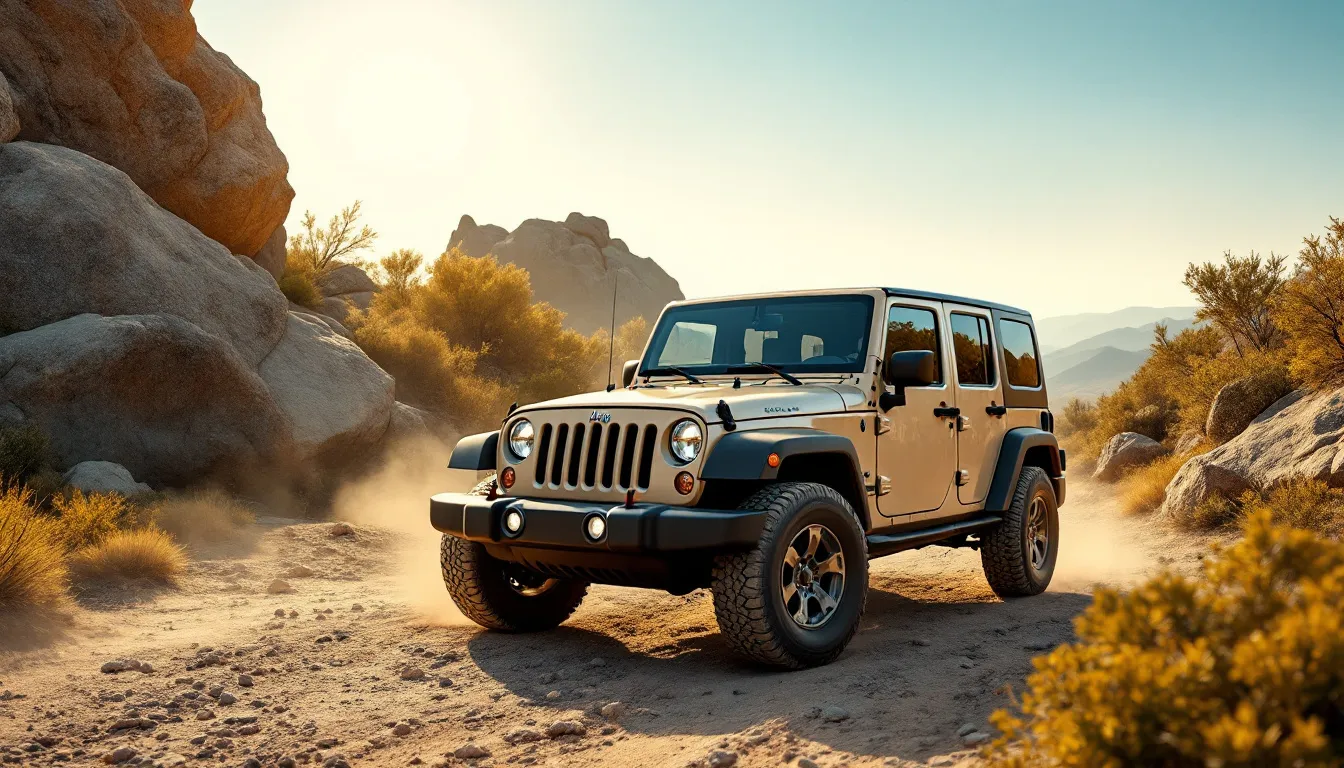
The Jeep JK is the third-generation Jeep Wrangler, produced from 2007 through 2018, available in a two-door (JK) and a four-door extended-wheelbase variant (JKU). It replaced the TJ in 2007 and was itself replaced by the JL in 2018. If you’re researching a used purchase or planning a build, this guide covers everything: production history, trim levels, key Jeep JK specs, years to avoid, and the upgrades owners do most.
The JK ran for twelve model years across three distinct engine and feature phases. That long production run is exactly why it has such a massive aftermarket — parts, accessories, and community knowledge accumulated for over a decade. Whether you’re shopping for your first Wrangler or trying to decode a listing, the JK buyer’s guide and our roundup of the best upgrades for the Jeep Wrangler JK are your natural next stops after this overview.
One thing to settle upfront: JK and JKU are not different generations or different models. They are the same vehicle, the same generation, differentiated only by body style. The two-door is the JK; the four-door is the JKU. You’ll see both terms used interchangeably in listings, and that trips up a lot of buyers. More on that distinction below.
What Years Was the Jeep JK Produced? (2007–2018 Production History)
The Jeep JK was produced from 2007 to 2018, covering twelve model years. That longer run than most vehicles in this segment is a large part of why the platform became such a popular modification base — parts, community knowledge, and aftermarket options accumulated across a full decade.
The production timeline breaks into three recognisable phases:
2007–2011: 3.8L Era
Jeep launched the JK with a 3.8L V6 producing around 202 hp. Owners commonly report that this engine is the weakest point of the early JK — it runs warm, lacks low-end torque, and can develop oil consumption issues over time. A well-maintained 3.8L example with a clean service history is not automatically a problem vehicle, but these years carry the most risk. They are also typically the most affordable JKs on the used market.
2012–2018: 3.6L Pentastar Era
The 2012 model year brought the 3.6L Pentastar V6 — 285 hp, more torque, improved fuel efficiency, and far fewer owner complaints. If you’re shopping used, 2012 and later is the most common recommendation from the JK community. The Pentastar era is where the Jeep JK really found its footing as a daily-driver-meets-trail-rig platform.
2013–2018: Feature Maturity
From 2013 onward, Jeep continued refining the interior, adding connectivity features, and expanding trim options. The final 2018 model year ran alongside the debut of the JL, which created some crossover confusion in the market. The 2018 JK is a fully mature, well-sorted vehicle — many buyers deliberately choose it over an early JL to get a known quantity with a proven track record.
The engine swap to the Pentastar is the clearest dividing line in the platform’s history. For buyers wondering what to look for when purchasing a used JK, engine generation is the first filter to apply. The JK buyer’s guide walks through the full pre-purchase process.
Get new guides by email
One email when we publish something worth reading. Unsubscribe anytime.
JK vs JKU: Two-Door and Four-Door Are the Same Generation
The JK and JKU are not different models or different generations — they are the same Jeep Wrangler JK platform in two different body styles. JK refers to the two-door variant; JKU (sometimes written JK Unlimited) refers to the four-door. This trips up buyers constantly, especially when scanning listings that mix the terms.
Both were produced from 2007 to 2018. Both used the same engines, the same trim levels (Sport, Sahara, Rubicon), and the same underlying platform. The confusion often comes from sellers who write “Jeep Wrangler JK” for the two-door and “Jeep Wrangler JKU” or “Jeep Wrangler Unlimited” for the four-door, which can make them look like separate model lines.
The practical differences are real, even if the generation is identical:
- Wheelbase: JK two-door: 95.4 inches | JKU four-door: 116 inches
- Length: JK: ~155 inches | JKU: ~175 inches
- Rear door count: 0 (JK) vs 2 (JKU)
- Rear seat space: JK has a fold-down rear bench | JKU has a full rear seating row with meaningful legroom
- Cargo space: JKU carries significantly more with rear seats folded
- Turning radius: The two-door is more nimble on tight trails
The JKU’s longer wheelbase changes how it handles certain trail obstacles. It bridges gaps more easily but can struggle on tighter switchbacks. The two-door’s shorter wheelbase gives it a flexibility advantage on technical terrain. For a detailed look at how those differences play out on the trail, see the two-door JK vs JKU off-road comparison.
Bottom line: if a listing says “JKU,” you’re looking at a four-door. If it says “JK” without the U, it’s a two-door. Same generation, different bodies.
Jeep JK Trim Levels Explained: Sport, Sahara, and Rubicon
The Jeep JK came in three core trim levels — Sport, Sahara, and Rubicon — each targeting a different buyer. Understanding which trim you’re looking at (or shopping for) affects both price and what you’ll need to add.
Sport
The entry-level trim. It gets the job done but arrives relatively bare:
- 16-inch steel wheels (early years) or base alloys
- Manual windows and door locks in early models
- Air conditioning (standard from 2007)
- Tow hooks front and rear
- Skid plates not standard on all years
- No heated seats or premium audio as standard
Owners report that the Sport is the most popular base for custom builds precisely because you’re not paying for features you’ll remove. It’s also the most affordable entry point on the used market.
Sahara
The mid-tier comfort trim. This is where most daily drivers land:
- Body-colour fender flares (a key visual identifier)
- 18-inch alloy wheels
- Heated seats
- Premium audio (Infinity system in later years)
- Automatic climate control (later models)
- Side steps or rocker guards
- Tow package standard
Owners commonly report the Sahara as the sweet spot for someone who wants a presentable daily driver that can still handle moderate off-road use without feeling stripped. The body-colour flares are the fastest way to identify a Sahara from a distance.
Rubicon
The factory off-road package. It’s the most capable JK straight from the dealer:
- Rock-Trac 4WD system with a 4:1 low-range ratio (vs 2.72:1 on other trims)
- Front and rear locking differentials
- Front sway-bar disconnect
- 32-inch BFGoodrich All-Terrain tyres from factory
- Dana 44 axles front and rear (Sport/Sahara use Dana 30 front)
- Vented front fender flares
The Rubicon’s Dana 44 axles and factory lockers are a genuine off-road advantage. For a full breakdown of what the Rubicon’s factory locker and Rock-Trac package actually does, it’s worth reading the dedicated guide. If you’re deciding between trims for a build, the JK mods by budget guide maps out what each trim needs to reach a given capability level.
Buyer decision framing: If off-road performance is the priority, a Rubicon is cheaper in the long run than upgrading a Sport’s axles later. If you’re building a street-to-trail rig on a budget, start with a Sport or Sahara and add selectively.
Jeep JK Specs: What Every Buyer Should Know
The Jeep JK’s core specs are consistent across most model years, with the main variable being the engine change in 2012. Here’s how the two body styles compare side by side.
| Spec | JK 2-Door | JKU 4-Door |
|---|---|---|
| Production Years | 2007–2018 | 2007–2018 |
| Engine (2007–2011) | 3.8L V6, ~202 hp | 3.8L V6, ~202 hp |
| Engine (2012–2018) | 3.6L Pentastar V6, 285 hp | 3.6L Pentastar V6, 285 hp |
| Torque (3.6L) | 260 lb-ft | 260 lb-ft |
| Wheelbase | 95.4 in | 116.0 in |
| Overall Length | ~155.4 in | ~174.9 in |
| Curb Weight | ~3,760 lb | ~4,100 lb |
| Tow Rating | 2,000 lb (3.8L) / 3,500 lb (3.6L) | 3,500 lb (3.6L) |
| Fuel Tank | 18.6 gal | 22.5 gal |
| Ground Clearance | 9.7 in | 9.7 in |
| Wheel Bolt Pattern | 5×127 mm (5×5 in) | 5×127 mm (5×5 in) |
Two specs worth flagging explicitly:
Bolt pattern: The Jeep JK uses a 5×127 mm (5×5 inch) bolt pattern — the same as many other Jeep and Chrysler products from this era. This matters when shopping for aftermarket wheels. Don’t confuse fitment with the JL; they share the bolt pattern, but JK and JL wheels are not always interchangeable due to backspacing differences.
Tow capacity: With the 3.6L Pentastar, the JK is rated at 3,500 lb. With the older 3.8L, that drops to 2,000 lb. If towing matters to you, verify which engine the vehicle has before assuming capacity.
For differential, transfer case, brake fluid, power steering, and transmission fluid specs, see the complete JK fluid specifications reference — worth having in one place before any service work.
How Do You Tell a JK Apart from a JL?
You can tell a JK from a JL at a glance by looking at the headlights, door hinges, and tail lamps. The JK ran from 2007 to 2018; the JL launched for model year 2018 and continues today. Because the final JK and first JL overlapped briefly in showrooms, buyers regularly mix them up — especially in used-car listings.
Here’s what to look for:
- Headlights: The JK has round, sealed-beam-style headlights set into a flat grille surround. The JL has smaller, more integrated LED headlights with a slightly different grille shape.
- Door hinges: The JK’s hinges are external and exposed — a classic Wrangler look. The JL moved to a hidden-hinge design for a cleaner door line.
- Tail lamps: JK tail lamps are vertical and narrow. JL tail lamps are wider and use a different lens shape.
- Windshield angle: The JL’s windshield has a slightly more raked angle. Minor, but visible once you know to look.
- Body creases: The JL has more sculpted body panels. The JK’s flanks are flatter and more slab-sided.
- Window switches: Inside, the JK retains a more traditional dashboard layout. The JL moved to a more modern centre stack.
On the reliability question: Buyers sometimes hesitate over a JK versus a JL, concerned the older platform will be more trouble. That’s a reasonable concern, but it needs context. The JL is a newer platform with a more modern interior and improved fuel economy. The JK, however, has a vastly larger aftermarket, well-understood failure points, and over a decade of community troubleshooting knowledge behind it. Owners with high-mileage JKs regularly report keeping them running well into six-figure kilometres with routine maintenance.
On mislabelling: If a listing calls a vehicle a “2019 JK,” that’s wrong — 2018 was the final JK year. A 2019 Wrangler is a JL. Always cross-reference the VIN if you’re unsure. For more detail on how to inspect a used JK before you buy, the buyer’s guide walks through the full process.
Which JK Model Years Should You Avoid?
If you’re buying used, the years most commonly flagged by owners are 2007–2010 — not because they’re unusable, but because the 3.8L V6 from that era attracts the most complaints. Here’s what the community commonly reports:
2007–2010 (early 3.8L years):
Owners report the most issues with this period. Common complaints include:
- Oil consumption and engine running hot under load
- Automatic transmission (if equipped) shifting harshly
- Electrical gremlins on early builds
- Cooling system issues, particularly the radiator and thermostat
The 2007 and 2008 model years are first-year and second-year production, which always carries more risk. First-year quality control, early-run quirks, and accumulated wear all factor in.
2011 (final 3.8L year):
Not dramatically worse than 2009–2010, but it’s the last of an engine generation that owners consistently rate below the Pentastar. Some buyers avoid it simply for being neither the improved new engine nor the most affordable old one.
2012 and later:
The community consensus is that 2012-and-up represents the more desirable used purchase. The Pentastar 3.6L is a known reliable engine. Owners report far fewer powertrain complaints across this period.
Balance this: A 2008 JK that has been meticulously maintained, with documented service history, an upgraded cooling system, and reasonable mileage, is not a vehicle to automatically dismiss. The 3.8L’s reputation reflects fleet-level patterns, not every example. Inspect any used JK thoroughly — engine generation matters, but so does the specific vehicle’s history.
The full JK pre-purchase inspection checklist covers exactly what to look for regardless of which year you’re evaluating.
What Do Jeep JK Owners Upgrade Most? A Practical Breakdown
The four most common upgrade categories on the Jeep JK are lighting, suspension, exterior protection, and interior organisation. Owners report that the JK’s platform practically invites modification — the parts ecosystem is enormous, and most upgrades are achievable as weekend DIY projects.
Lighting: LED Headlights
Upgrading the factory sealed-beam headlights is one of the first modifications most owners make. The OEM units are dim by modern standards, and the round 7-inch format means there’s a large range of aftermarket LED options that drop straight in without wiring changes.
The HWSTAR 7-inch LED headlights are a popular choice, offering anti-glare design and DOT-approved Hi/Lo output:

For a proven LED upgrade at a lower price point, the UNI-SHINE 7-inch round LED headlights offer DOT approval and integrated DRL/turn signal:

If you want the full visual statement — starry DRL start-up sequence, gradient halo, and turn signal in one unit — the HWSTAR Starry DRL version steps it up further:

For cabin lighting upgrades, see the best interior LED lights for the JK.
Exterior: Rear Bumper
Owners commonly replace the factory rear bumper for trail protection and cleaner aesthetics. The YZONA rear bumper is compatible with both JK and JKU (2- and 4-door, 2007–2018) and is frequently mentioned in community discussions as a solid entry-level steel upgrade:

For more options, the best JK rear bumpers guide covers the full range.
Interior: Console Organisation
The JK’s centre console is functional but not particularly well organised. The EDBETOS console organiser tray fits 2011–2018 JK and JKU models across all trims and is one of the simplest, cheapest quality-of-life upgrades available:

For the full picture on what’s worth buying versus skipping, the best accessories for the Jeep Wrangler JK covers accessories across every category.
Lift Kits and Suspension: The Most Popular JK Modification
Suspension lift is the single most common modification on the Jeep JK. Owners report fitting lifts primarily to clear larger tyres, improve articulation, and add visual presence. The most common range is 2 to 3.5 inches, which fits within the JK’s geometry limits without requiring significant supporting modifications.
For four-door JKU owners, kits designed explicitly for the longer wheelbase handle better than trying to adapt two-door geometry setups. The JKU’s weight distribution and wheelbase mean it rewards a kit tuned for its proportions.
Which lift performs best on the four-door? Based on community reporting, mid-range kits from established brands — in the 2.5- to 3.25-inch range — are the most consistently recommended for the JKU. They clear 33- to 35-inch tyres, don’t stress the CV axles excessively, and work with stock driveshafts at the lower end.
The maXpeedingrods 2.5” suspension lift is a popular entry point for JKU owners seeking balanced lift performance:

For more lift and tyre clearance, the Rough Country 3.25-inch kit is one of the most widely installed setups on the JKU. It’s purpose-built for the four-door and tuned for performance use:

CV driveshaft note: At 3.5 inches and above, the front CV driveshaft runs at an angle steep enough to accelerate wear — sometimes rapidly. Owners who lift into this range commonly report replacing the front driveshaft as a companion modification. The Rough Country front CV driveshaft is designed specifically for JK Unlimited models with 3.5- to 6-inch lifts and Dana 30/44 front axles:

If you plan to run larger rubber after lifting, the guide on running 35s, 37s, and 40s on a Jeep JK covers what else you’ll need. For premium suspension options, see the ICON lift kits for the Jeep JK reviewed.
Exterior Protection: Bumpers, Sliders, Skid Plates & More
Rock sliders and skid plates are the two exterior protection upgrades owners most commonly prioritise after a lift. The JK’s rocker panels and fuel tank are exposed to trail hazards, and protecting them before damage happens is far cheaper than repairing them after.
Rock Sliders
For four-door JKU owners, rock sliders protect the full length of the lower rocker panel — the section most exposed to side-hill scrapes and rock strikes. The YZONA JK rock sliders are purpose-built for 2007–2018 four-door JKs:

For the full comparison of protection styles, see rock sliders vs rocker guards — which JK side protection to choose.
Skid Plates
The fuel tank is the JK’s most vulnerable underside component on rough terrain. The factory plastic skid plate is better than nothing but offers limited protection against rock strikes. OEM replacement skid plates use part numbers 52059747AD, 52059747AE, 52059747AF, and 52059747AG — these are the references to quote when sourcing a direct-fit steel replacement.
This steel direct-replacement skid plate covers the 2007–2018 JK 4-door and uses those exact OEM references for fitment certainty:

For a heavy-duty Dorman alternative with broader compatibility:

For the full roundup, the best skid plates for the Jeep JK guide covers all positions — not just the fuel tank.
Mud Flaps
A simpler entry-level protection add-on, the Kiwi Master mud flaps fit 2007–2018 JK models (note: not compatible with off-road aftermarket bumpers) and prevent rocker panel mud spray — a quick, cheap win for daily drivers:

Roof Racks and Cargo Storage for the Jeep JK
Roof racks for the JK work on the hard top only — there is no factory-supported soft-top roof rack solution for this generation. If you’re running a soft top, your cargo storage options are limited to interior solutions and tailgate-mounted carriers. If you have a hard top, a roof rack significantly expands overland load capacity.
The Hooke Road aluminium crossbar rack is one of the most commonly specified JK roof setups. It fits both 2- and 4-door hard tops from 2007–2018:

The KUAFU roof rack adds integrated side ladders and is rated to 330 lb, making it suitable for heavier overland loads — tents, jerry cans, and recovery gear:

If you want cargo storage without committing to a full rack, simple crossbars offer a budget entry point. These roof rack cross bars fit JK, JL, and Gladiator JT from 2007–2026, making them a versatile option if you’re unsure about upgrading your top later:

For decisions about which top pairs best with a rack, see the best hard tops for the Jeep JK guide.
Interior and Accessory Upgrades for the Jeep JK
JK owners consistently report that interior upgrades improve daily usability more than almost any other modification category. The factory interior is functional but sparse — especially on Sport trims — and the open-body design means organisation matters more than it does in a conventional SUV.
The upgrade categories owners tackle most often include:
- Centre console organisation — the EDBETOS console organiser tray (covered in the section above) is the most cited entry point
- Phone and device mounting — a secure, vibration-resistant phone mount is essential on a trail rig
- Grab handles — both driver and passenger aftermarket handles are popular trail additions
- Seat covers — to protect upholstery from trail mud and daily wear
- Footwell and cargo LED lighting — improves usability at camp or in the dark
- Floor liners — rubber liners outperform carpet on a vehicle that gets wet regularly
- Storage nets and roll bar bags — the JK’s exposed roll cage creates natural mounting points
For phone mounting specifically, the best phone mounts for the Jeep JK covers options that handle trail vibration without rattling loose. For a ranked overview of everything worth adding to the JK cabin, the JK accessories ranked by value guide separates the genuine improvements from the gimmicks.
Frequently Asked Questions: Jeep JK
How do you tell a JK apart from a JL?
The clearest visual differences are the headlights, door hinges, and tail lamps. The JK has round sealed-beam headlights and exposed external door hinges; the JL has integrated LED headlights and a hidden-hinge door design. The JK’s windshield is more upright, and its body panels are flatter than the more sculpted JL. If you see a 2019-or-later Wrangler, it’s a JL — the JK ended with the 2018 model year.
Which JK model years should buyers avoid?
Owners most commonly flag 2007–2010 as the highest-risk years due to the 3.8L V6 engine’s reputation for oil consumption, overheating under load, and transmission concerns on automatic-equipped examples. 2007 and 2008 carry first- and second-year production risk on top of that. The community consensus is that 2012 and later — with the 3.6L Pentastar V6 — represents the more reliable used buy, though a well-maintained early example with documented service history can still be a solid vehicle.
Is the JKU a different model or just a body style?
The JKU is simply the four-door body style of the Jeep JK — not a separate model, not a different generation. JKU stands for “JK Unlimited.” Both the two-door JK and four-door JKU were produced for every year of the generation, 2007–2018, using the same engines, the same trims, and the same underlying platform.
What is the Jeep JK wheel bolt pattern?
The Jeep JK uses a 5×127 mm bolt pattern, also expressed as 5×5 inches. This applies to all years (2007–2018) and both body styles. It’s the same pattern used on many other Chrysler and Jeep vehicles from this era. When sourcing aftermarket wheels, verify backspacing as well — the bolt pattern matches the JL, but backspacing requirements can differ.
What is the Jeep JK towing capacity?
With the 3.6L Pentastar V6 (2012–2018), the JK is rated to tow 3,500 lb. With the 3.8L V6 (2007–2011), the rated tow capacity is approximately 2,000 lb. These figures apply to properly equipped vehicles; a lifted JK without a tow package may have different practical limits. Always check the specific vehicle’s tow rating on the door sticker or owner’s manual.
What should I know before buying a used Jeep JK?
Four things matter most: engine generation (3.6L Pentastar from 2012 onward is the preferred buy), service history (look for documented oil changes and cooling system maintenance), rust inspection (frame and rocker panels especially), and the trim level’s axle spec (Rubicon gets Dana 44s front and rear; Sport and Sahara use a Dana 30 up front). A thorough pre-purchase inspection is essential regardless of year.
Is the Jeep JK Worth Buying in 2026?
Yes — the Jeep JK is still a strong buy in 2026, particularly if you’re prioritising aftermarket support, build potential, and value for money. The generation’s twelve-year production run means parts are abundant, problems are well-documented, and the community knowledge base is unmatched among used off-road platforms.
The buying decision in short:
- Buy a Jeep JK if you want a proven platform with massive aftermarket support and lower entry cost than a used JL
- Buy 2012 or later to get the 3.6L Pentastar and avoid the 3.8L’s known weaknesses
- Budget for maintenance — a high-mileage JK needs attention, but it’s rarely expensive to fix when problems are caught early
- Choose your trim deliberately — Rubicon costs more upfront but saves money if you plan to build seriously
- Inspect before you buy — the platform is well-understood, so there’s no excuse for skipping a proper pre-purchase check
My own 2014 JKU Sahara came to Cape Town as a grey-market import. That fact alone says something about how much the global market values this generation — eight years after the JL launched, buyers on the other side of the world still prefer the Jeep JK’s proven platform and established parts ecosystem.
For everything you need to take the next step, start with the complete JK buyer’s guide, then map out your build with the JK mods for every budget guide. If you’re considering OEM-quality accessories, the best Mopar accessories for the JK is worth a look too.
Free: JK Fluids at a Glance
Every fluid, spec and capacity for the 2007-2018 Wrangler JK on one page, plus a cut-out glovebox card. Checked against the owner's manuals. From the JK Service Kit.
Email me the download and new guides when they are published. Unsubscribe anytime. Privacy Policy.
Allan
I'm Allan. I own a 2014 Jeep Wrangler JKU and I research the hell out of every mod before I touch it. When I've fitted something to my own Jeep, I say so. Everything else is researched from manufacturer specs and other owners' reports. No sponsored fluff.
Learn more about me →Free: JK Fluids at a Glance
Every fluid, spec and capacity for the 2007-2018 JK on one page, plus a glovebox card.
Email me the download and new guides when they are published. Unsubscribe anytime. Privacy Policy.
Related Articles
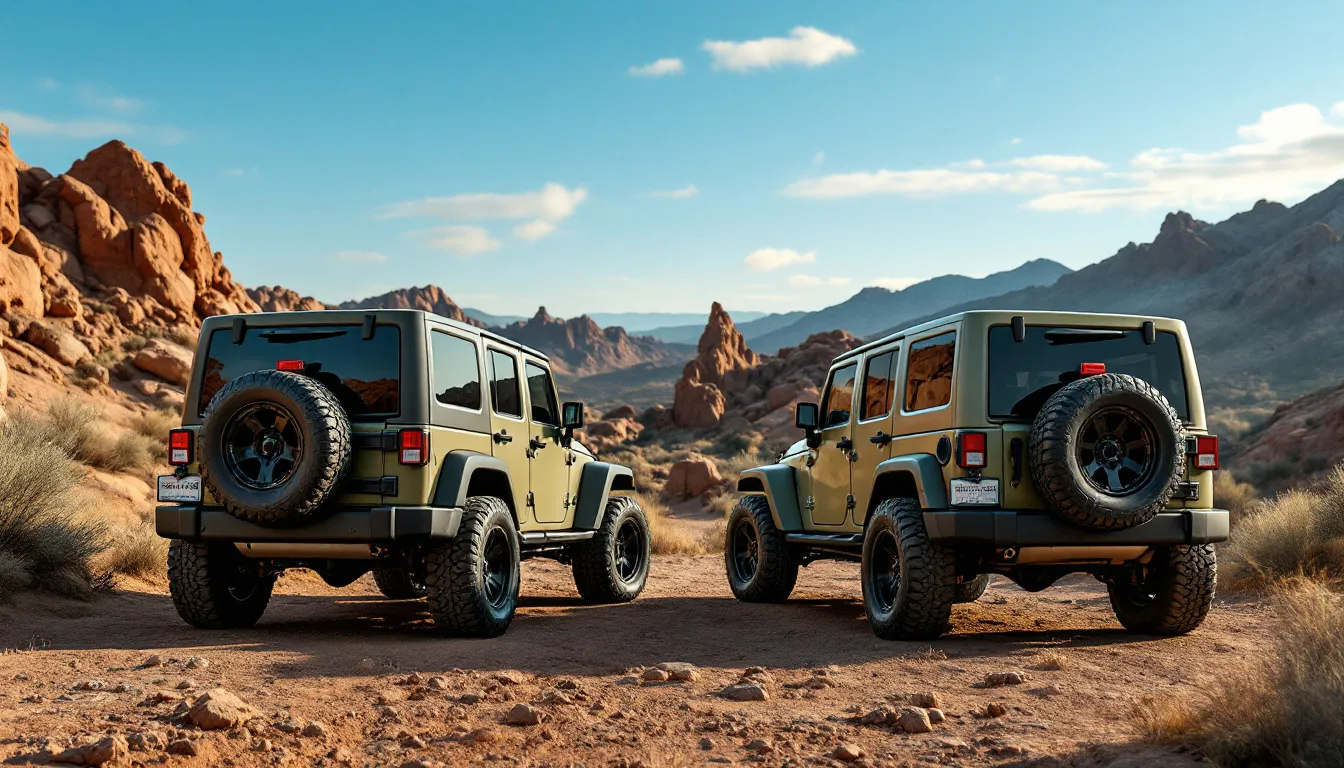
Jeep JK 2-Door vs 2-Door Unlimited: Short vs Long Wheelbase for Off-Road
The JK 2-door Wrangler is the standard, short-wheelbase version of Jeep's 2007–2018 Wrangler, riding on a 95.4-inch wheelbase compared to the 4-door...
Best Mopar Accessories for Jeep JK: OEM Upgrades Worth Buying (and What to Skip)
Mopar is Stellantis's official parts and accessories division, think of it as Jeep's in-house aftermarket brand.
Best Upgrades and Modifications for a Jeep Wrangler JK: Where to Start
JK upgrades are bolt-on or plug-in modifications designed to improve the 2007–2018 Jeep Wrangler JK and JKU's lighting, storage, protection, and appearance...