Jeep JK Rubicon Off-Road Capability: What the Factory Locker & Rock-Trac Package Actually Does
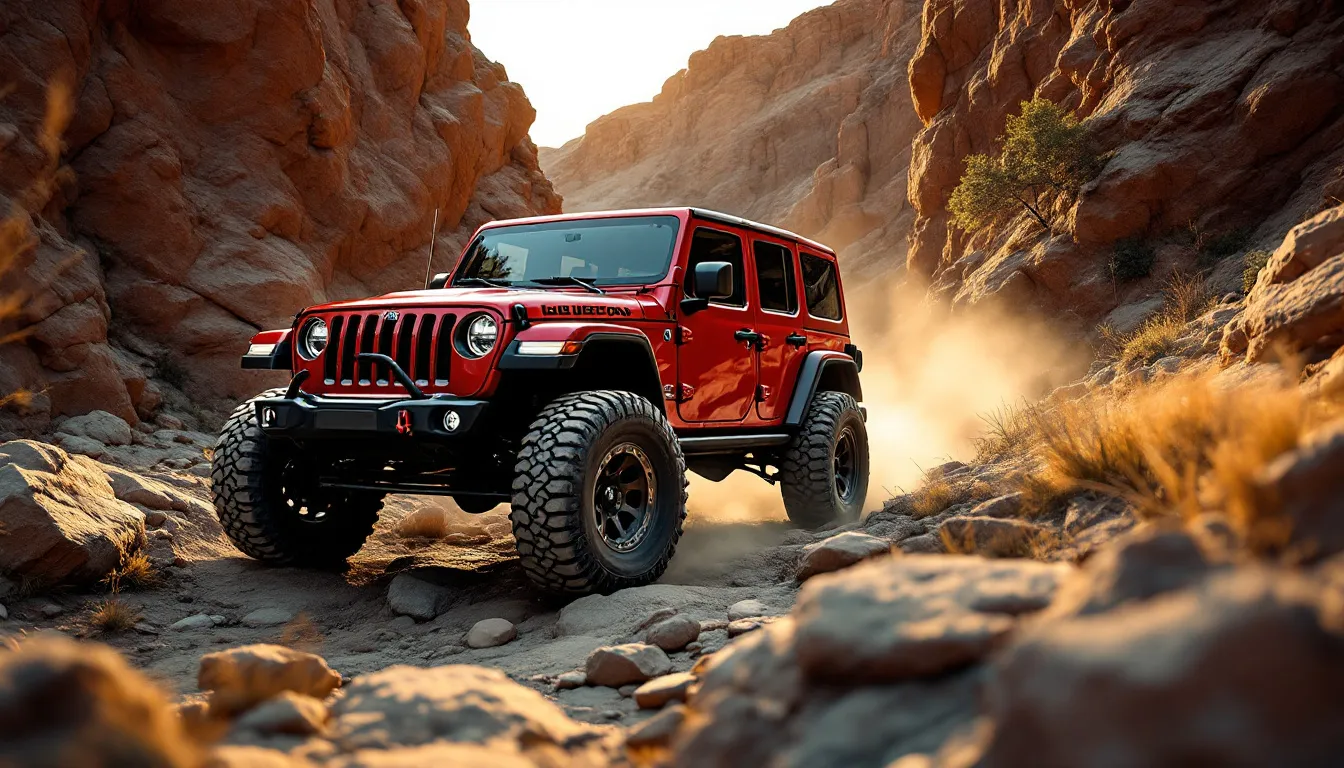
Jeep JK Rubicon Off-Road Capability: What the Factory Locker & Rock-Trac Package Actually Does
Introduction
The Jeep Wrangler JK Rubicon is the factory-built, trail-ready variant of the 2007–2018 Wrangler. What separates it from every other JK trim is four pieces of hardware you cannot buy on a Sport or Sahara: the Rock-Trac 4:1 low-range transfer case, electronic front and rear locking differentials on Dana 44 axles, and an electronic front sway-bar disconnect. Together, these four features make the Rubicon the most capable production 4WD Jeep sold in this generation — without touching a single aftermarket catalogue. If you are trying to understand jeep wrangler rubicon off-road capability before buying or modifying a JK, those four components are where everything starts.
The Rubicon’s factory package closes the gap between a standard 4WD and a purpose-built trail vehicle. Understanding exactly what each component does — and what it does not do — will help you decide whether the Rubicon premium is justified for your use case. Before you buy, also read the Jeep JK buyer’s guide and the pre-purchase inspection checklist to make sure the hardware is actually functioning on the vehicle you are considering.
Get new guides by email
One email when we publish something worth reading. Unsubscribe anytime.
What the Rubicon Package Actually Includes (2007–2018 JK)
Every 2007–2018 JK Rubicon ships with a specific set of hardware upgrades that no other JK trim offers. Here is what you get:
- Rock-Trac NV241OR transfer case — a 4:1 low-range ratio (versus 2.72:1 on the Command-Trac unit in Sport and Sahara models)
- Dana 44 front and rear axles — heavier-duty than the Dana 30 front / Dana 44 rear combination on non-Rubicon trims
- Electronic front locking differential — engages both wheels on the front axle equally
- Electronic rear locking differential — engages both wheels on the rear axle equally
- Electronic front sway-bar disconnect — decouples the front anti-roll bar for increased wheel articulation at the touch of a button
- 32-inch BFGoodrich All-Terrain T/A KO tires — fitted from the factory on 17-inch wheels
- Rock Rails — factory steel side rock rails for rocker panel protection
The 4:1 low-range ratio is the single most significant mechanical differentiator. In practical terms, it gives you roughly 47% more crawl reduction compared to the standard 2.72:1 — which means far more precise throttle control on steep, technical descents and rocky surfaces. Many owners report this makes the difference between a vehicle you have to fight on a boulder field and one you can walk through on idle.
There is also a generational split worth knowing. The 2007–2011 Rubicon used the 3.8L V6, which many owners found adequate but not inspiring at altitude or with larger tires. The 2012–2018 Rubicon received the Pentastar 3.6L V6 — a meaningfully more powerful and more efficient engine, and the one the owner community consistently prefers. The 3.6L era also refined the electronic locker and sway-bar controls. Either way, the core transfer case and axle hardware remains the same across all model years.
Check the JK fluid specifications to ensure the Dana 44 axles and transfer case are serviced correctly — neglected differential fluid is one of the most common ways Rubicon hardware gets damaged before a sale.
How the Factory Lockers and Sway-Bar Disconnect Work in Practice
The off-road mode controls in a Jeep Rubicon work in stages, depending on how difficult the terrain actually is. Here is the correct engagement order:
- Shift the transfer case to 4L (low range). This activates the 4:1 Rock-Trac ratio. The vehicle must be stopped or moving very slowly — under 3 mph is the generally accepted threshold.
- Engage the rear locker using the dash-mounted rocker switch. The rear locker is available once you are in 4L. A light will confirm engagement. The rear wheels now turn at the same speed regardless of traction.
- Engage the front locker — available after the rear locker is confirmed. Both axles are now fully locked. This is maximum traction mode and is intended for slow, technical crawling only.
- Engage the sway-bar disconnect — press the dedicated switch to decouple the front anti-roll bar. This allows each front wheel to travel further in its arc independently, dramatically increasing articulation over rocks and ledges.
The sway-bar disconnect is one of the most underappreciated features on the Rubicon. On a Sport or Sahara, the front sway bar is always connected, which limits how far a wheel can drop into a rut before the opposite wheel lifts and loses contact. Disconnect it on a Rubicon and the front axle can flex significantly further, keeping both tires planted.
Important: the sway-bar disconnect is designed for off-road speeds only. On-road handling changes noticeably with it disengaged — body roll increases and the vehicle feels vague in corners. Many owners report forgetting to re-engage it before returning to tarmac, which is uncomfortable and puts unnecessary side-load on components. Re-engaging is a simple button press, but it requires a brief pause at near-zero speed.
The lockers impose a similar discipline: they must be disengaged before returning to sealed road driving, as a locked differential cannot accommodate the speed difference between inside and outside wheels through a corner. Driving on tarmac with locked axles causes binding, accelerated tire wear, and stress on drivetrain components.
When trails get beyond even what the lockers can handle, solid recovery gear becomes essential — see the recovery gear for when traction runs out guide for what to carry alongside this hardware.
Rubicon vs Sport vs Sahara: Off-Road Capability Compared
The Rubicon wins on off-road hardware decisively. The Sport and Sahara are capable family 4WDs; the Rubicon is a purpose-built trail vehicle. Here is exactly how the factory specs compare:
| Feature | Rubicon | Sahara | Sport |
|---|---|---|---|
| Transfer Case | Rock-Trac 4:1 low range | Command-Trac 2.72:1 | Command-Trac 2.72:1 |
| Front Axle | Dana 44 | Dana 30 | Dana 30 |
| Rear Axle | Dana 44 | Dana 44 | Dana 44 |
| Front Locker | Electronic (factory) | None | None |
| Rear Locker | Electronic (factory) | None | None |
| Sway-Bar Disconnect | Electronic (factory) | None | None |
| Factory Tires | 32” BFGoodrich AT | 30–32” all-terrain | 30–31” all-terrain |
| Rock Rails | Yes (factory steel) | No | No |
| Starting Price Premium | Higher | Mid | Base |
The table makes it clear: the Sahara and Sport share the same Command-Trac transfer case and the same Dana 30 front axle. The Sahara adds luxury features — leather, dual-zone climate, factory navigation — but adds nothing in off-road hardware over the Sport.
To replicate the Rubicon’s locker setup on a Sport, you would need to source and fit aftermarket lockers on both axles. The ARB RD116 Air Locker for Dana 44, 30 Spline, 3.92 and Up is a well-regarded choice for a Dana 44 rear on a non-Rubicon JK:

On Amazon and eBay
ARB RD116 Air Locker for Dana 44, 30 Spline, 3.92 and Up
Air-operated, so it needs an onboard compressor. Fits 30-spline Dana 44s with 3.92 or lower gearing, like a JK Rubicon front.
Check price on Amazon → See new and used on eBay →
See all current listingsPaid links. We may earn a commission from Amazon or eBay. Prices can change.
Many owners who have priced the Sport-to-Rubicon upgrade path report that adding lockers, upgrading the front axle, and sourcing a low-range transfer case costs more than simply paying the used Rubicon premium in the first place. The best JK mods for every budget guide covers this decision in detail, but the short answer is: buy the Rubicon if off-road capability is genuinely important to you.
The Rubicon’s Real Trade-Offs: What You Give Up for the Off-Road Hardware
The honest answer to ‘What are the drawbacks of owning a Rubicon?’ is this: the same hardware that makes it exceptional off-road adds weight, reduces on-road refinement, and costs more to maintain than the other JK trims. These are real trade-offs, not minor footnotes.
Weight and fuel economy. The Dana 44 front axle, Rock-Trac transfer case, locker actuators, and factory rock rails add meaningful unsprung and total weight compared to a Sport. Many owners report fuel economy that is noticeably lower than what the Sahara returns on the same route, particularly in highway driving.
On-road ride quality. The stiffer factory setup, combined with the heavier axle hardware, makes the Rubicon ride more firmly on sealed roads. Owners who primarily commute report it as fatiguing over long distances.
Purchase and insurance cost. The Rubicon commands a significant premium on the used market — consistently the highest of the three trims — and insurance costs typically reflect that.
Side step and clearance choices. One practical trade-off many Rubicon owners overlook is the running board question. Running boards or side steps help entry and exit, especially useful for families, but they hang lower than the factory rock rails and reduce the effective ground clearance along the rocker panels. The Hooke Road JK Running Boards 4 Door Rock Sliders for 2007-2018 Jeep Wrangler JK Unlimited 4 Doors On are a popular entry-level choice that balances usability with moderate intrusion:

For owners who prioritise trail clearance, the Hooke Road Wrangler JK Rock Slider Nerf Bars Running Boards for 2007-2018 Jeep Wrangler JK Unlimited is a purpose-built rock slider with an integrated step that mounts higher and protects the rockers at the same time:

The difference between a low-hanging running board and a properly mounted rock slider can determine whether your rocker panels clear a ledge or get pinned on one. For a detailed breakdown of the options, see rock sliders vs rocker guards and best JK skid plates.
Tires, Wheel Offset, and How They Affect Your Rubicon’s Capability
The factory Rubicon ships with 32-inch BFGoodrich All-Terrain T/A KO tires. They are competent for most moderate trail use, but many owners find them limiting on more aggressive terrain, particularly in mud or on wet rock. The upgrade path typically starts with 33s and extends to 35s or 37s once a suspension lift is fitted.
Wheel offset matters as much as tire size. Moving to a zero or negative offset wheel pushes the tire further outside the wheel arch, which improves clearance around suspension components, but it also changes scrub radius and adds stress on wheel bearings. Many owners report that factory-width fender flares limit you to modest backspace changes without trimming.
For Rubicon owners who have already fitted a suspension lift and want a mud-capable tire in a larger size, the Atturo Trail Blade MTS M/T Mud Off-Road Light Truck Radial Tire-37X12.50R17LT 37X12.50X17 37X12.50-1 is a mud-terrain option the community discusses in the 37-inch range:
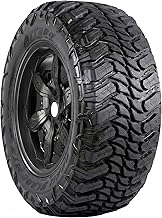
This tire is not a stock fit. At 37x12.50R17, it requires a lift. The owner community generally considers a minimum of 3.5 to 4 inches of suspension lift necessary to run this size without significant rubbing on the JK. Many owners also report that larger tires reduce fuel economy further and require a re-gear to restore drivability. If you are running larger tires, check best JK fender flares for larger tires before you commit to a size.
Recovery Gear the Rubicon Still Needs (Lockers Aren’t Enough)
Even a fully locked Rubicon needs recovery gear. Lockers maximise traction, but they cannot lift you out of a wash, pull you off a ledge, or free you when you are axle-deep in mud with nowhere for the tires to push against. Every Rubicon driven on serious trails should carry a winch and a kinetic recovery kit at minimum.
Many owners running technical trails fit an electric winch to a steel front bumper — a worthwhile investment given the scenarios where lockers alone reach their limit. The VR EVO 12-S Electric 12V Winch – 12,000 lb Pull Capacity, Synthetic Rope, IP68 Waterproof, High-Perf is a 12,000 lb synthetic rope winch with IP68 waterproofing, suited to the JK’s weight range:

A winch is only as useful as the rope it carries. Synthetic rope is now the preferred choice over wire for most JK owners — it is lighter, does not store energy the same way steel cable does when it snaps, and is easier to handle. The TYT Synthetic Winch Rope Kit - 1/4” x 50’ with 10000 lbs Strength, Protective Sleeve, Heavy Duty Ho is a cost-effective entry point:

How to Verify Locker Function on a Used Rubicon
Before you buy any used Rubicon, verify that the lockers and sway-bar disconnect actually work. The process is straightforward:
- With the vehicle in a safe flat area, shift to 4L
- Press the rear locker switch and wait for the dashboard confirmation light to stay solid (not flash)
- Press the front locker switch and confirm the light
- Press the sway-bar disconnect and listen for a light mechanical click; check for confirmation on the dash
- Drive slowly in a tight circle: a locked axle will cause slight binding and resistance (this is normal and confirms engagement)
If any light flashes continuously without going solid, or if the vehicle behaves identically with lockers “engaged,” the actuators may be faulty. Replacement actuators are a known cost on high-mileage Rubicons.
For further reading: best winch for Jeep JK, kinetic recovery rope guide, and off-road first aid kit.
Which Rubicon Model Years to Avoid — and What to Look For
Avoid early 3.8L-era Rubicons (2007–2011) if you want the strongest foundation for a modified build, and approach any high-mileage example cautiously regardless of year. The 2012–2018 Pentastar 3.6L models are what the owner community consistently recommends.
The 3.8L engine is not unreliable in absolute terms, but many owners report it as the weakest part of the early Rubicon package — underpowered with larger tires, prone to coolant and oil consumption issues at higher mileages, and less pleasant to service than the 3.6L. The community consistently flags this era when discussing regrets on used purchases.
Within the 3.6L era, the 2013–2018 range is generally considered the most refined. Early 2012 models had a short adjustment period as the engine was introduced, and some owners report minor teething issues in that first model year. From 2013 onward, the drivetrain is well-sorted.
What to look for on any used Rubicon:
- Functioning lockers and sway-bar disconnect (see the verification steps above)
- Differential fluid condition and service history; neglected Dana 44 fluid is the most common deferred maintenance item
- Visible damage to rock rails, indicating the vehicle has been used hard; inspect the axle housing and skid plates for cracks or heavy impact marks
- Transfer case for smooth shifting between 2H, 4H, and 4L with no grinding or hesitation
The complete used JK pre-purchase inspection checklist covers all of these points in detail and is worth printing before you go to inspect any used Rubicon.
Upgrades That Complement the Factory Rubicon Package
The upgrades that make the most sense on top of a factory Rubicon are ones that extend what the hardware already does well: they protect the vehicle, improve visibility, and fill the gaps the factory left open. You do not need to recreate the locker system — it is already there. Focus on protection, recovery, and usability.
Doors-off mirrors are a practical first step for trail use. When you remove the doors for open-air driving, you lose your mirrors, and in many places that is a road-law issue as well as a safety one. The Liberrway Mirrors Doors Off Compatible with Jeep Wrangler YJ TJ JK JL Gladiator JT 1987-2025, Door H clip-on hinge mirrors are a simple, inexpensive fix:

Rock sliders protect the rocker panels on tight trails and ledge crossings. The Barricade Rock Sliders | Heavy-Duty Tubular Steel Side & Undercarriage Protection | Textured Black O for the two-door JK are a well-regarded option in the owner community — they mount with a built-in step and are constructed from heavy-duty steel:

Steel bumpers, skid plates, and a winch round out a sensible Rubicon build. For a full breakdown of upgrade priorities, see best JK rear bumpers and the best JK mods for every budget guide.
Frequently Asked Questions: Jeep JK Rubicon Off-Road
Is the Rubicon trim suitable for off-road driving?
Yes — the Rubicon is the most capable factory off-road variant in the 2007–2018 JK lineup. Its Rock-Trac 4:1 transfer case, electronic front and rear lockers, and sway-bar disconnect give it genuine technical trail capability without any aftermarket modifications.
What are the drawbacks or disadvantages of owning a Rubicon?
The Rubicon costs more to buy and insure, rides more firmly on-road, and returns slightly lower fuel economy than the Sahara or Sport. The heavier Dana 44 front axle and transfer case add weight, and locker actuators can fail on high-mileage examples, requiring repair before the hardware functions correctly.
What does the off-road mode button do in a Jeep Rubicon?
The Rubicon has separate rocker switches rather than a single “off-road mode” button. The sequence is: shift to 4L first, then engage the rear locker, then the front locker, then optionally engage the sway-bar disconnect. Each switch must be activated in order, and all must be disengaged before returning to sealed-road driving.
Which model years of Jeep Rubicon should be avoided?
Many owners recommend avoiding the 2007–2011 3.8L models if a modified build is planned — the engine is considered the weakest link in that configuration. The 2012 model year gets mixed reviews as the first Pentastar year. From 2013 onward, the 3.6L Rubicon is considered well-sorted by the owner community.
How can you verify off-road capability when buying a used Jeep?
In a safe area, shift to 4L and engage each locker in sequence — watch for a solid dashboard confirmation light, not a flashing one. Press the sway-bar disconnect and listen for engagement. Drive a slow circle to feel locker binding confirmation. Inspect differential fluid colour and condition, and look for cracks or heavy impact on the axle housings and skid plates. The full Jeep JK buyer’s guide has a complete inspection framework.
How does the Rubicon compare to Sahara and Sport trims?
The Rubicon has a 4:1 low-range transfer case (versus 2.72:1), a Dana 44 front axle (versus Dana 30), electronic front and rear lockers, and an electronic sway-bar disconnect. The Sahara and Sport share the same off-road hardware as each other — the Sahara adds comfort and technology features, not off-road capability.
Is the Rubicon Worth It for Off-Road Use?
Yes — if trail capability is genuinely your priority, the Rubicon is worth the premium. The factory locker and Rock-Trac package would cost significantly more to replicate on a Sport, and the execution on the Rubicon is seamless from day one. For casual off-road use on graded tracks and mild 4WD terrain, a Sport or Sahara will serve you fine for less money.
The Rubicon earns its premium specifically in the scenarios where the lockers, the 4:1 low-range, and the sway-bar disconnect work together: rocky descents, ledge crossings, and loose-surface climbs where precise throttle control and maximum traction matter simultaneously.
The caveat: verify that the hardware actually works before you buy any used example. A Rubicon with failed locker actuators is a Sahara with a higher price tag.
Your next steps: work through the used JK inspection checklist before any purchase, then plan your build using the JK mods guide to layer the right upgrades on top of the factory package.
Free: JK Fluids at a Glance
Every fluid, spec and capacity for the 2007-2018 Wrangler JK on one page, plus a cut-out glovebox card. Checked against the owner's manuals. From the JK Service Kit.
Email me the download and new guides when they are published. Unsubscribe anytime. Privacy Policy.
Allan
I'm Allan. I own a 2014 Jeep Wrangler JKU and I research the hell out of every mod before I touch it. When I've fitted something to my own Jeep, I say so. Everything else is researched from manufacturer specs and other owners' reports. No sponsored fluff.
Learn more about me →Free: JK Fluids at a Glance
Every fluid, spec and capacity for the 2007-2018 JK on one page, plus a glovebox card.
Email me the download and new guides when they are published. Unsubscribe anytime. Privacy Policy.
Related Articles
Best Jeep JK Mods for Every Budget: From $50 Bolt-Ons to Full Builds
Jeep JK mods are aftermarket upgrades — from bolt-on accessories to full mechanical builds — that improve the capability, comfort, protection, or...
Best Jeep JK Accessories in 2026: The 15 Upgrades Every Wrangler Owner Actually Buys
Walk into any JK forum and you'll see the same pattern repeating. Someone buys a used 2014 JKU, gets excited about the possibilities, and immediately...
Jeep JK Towing Capacity: What Your Wrangler Can Actually Pull (2007–2018)
Jeep Wrangler towing capacity is straightforward on paper: 2,000 lb for 2007–2011 models with the 3.8L V6, and 3,500 lb for 2012–2018 models with the...