JK Kinetic Recovery Rope Guide: When to Use and Best Options
JK Kinetic Recovery Rope Guide: When to Use and Best Options
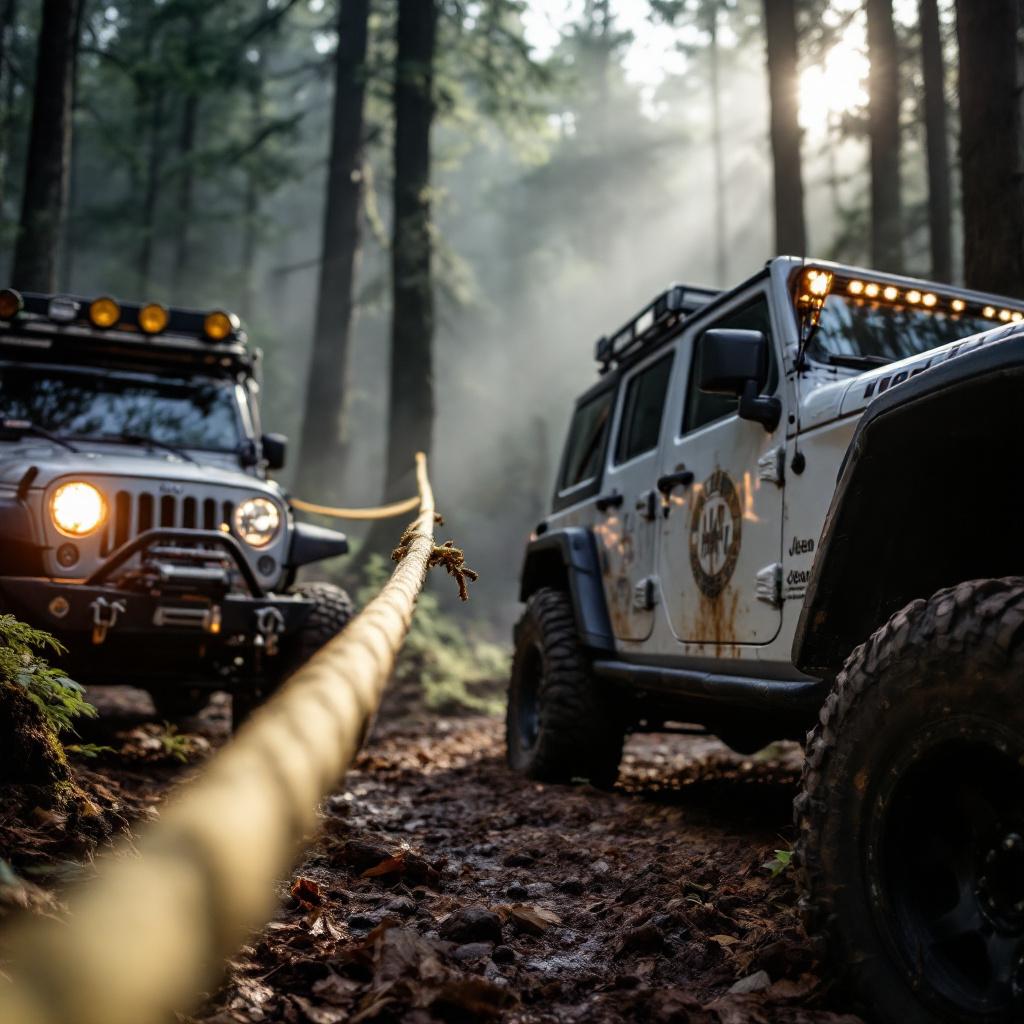
Kinetic recovery ropes harness physics that static straps cannot match. When a stuck Jeep JK needs more than a simple pull, the rope’s elasticity stores energy during the approach and releases it precisely when needed. This makes extractions faster, gentler on both vehicles, and possible in situations where static pulls would fail.
Understanding when and how to use kinetic ropes separates confident trail recovery from risky guesswork.
How Kinetic Ropes Work
Traditional tow straps and chains transfer force directly—when the recovery vehicle moves, that energy goes straight to the stuck vehicle. This works for light stuck situations but creates problems when more force is required:
- Sudden shock loads stress recovery points
- Wheels dig deeper before the vehicle moves
- Recovery vehicle loses momentum fighting static resistance
Kinetic ropes solve this by stretching up to 30% under load. The recovery vehicle builds momentum while the rope elongates, storing that energy like a massive rubber band. When the rope reaches full extension, it releases all that stored energy simultaneously, creating a powerful but smooth extraction force.
This “snatch” effect is why kinetic ropes excel at extracting deeply stuck vehicles—the energy multiplication overcomes static friction that direct pulls cannot defeat.
Get new guides by email
One email when we publish something worth reading. Unsubscribe anytime.
Kinetic Rope vs Static Strap: Which to Use
Choose based on the stuck situation:
Use a Static Strap When:
- Vehicle is lightly stuck and needs a simple pull
- Extraction angle is straight
- Both vehicles can maintain tension without slack
- You’re pulling from a winch
Pros:
- Designed specifically for Jeep JK fitment and proven trail compatibility
- Well-reviewed by the JK community with consistent positive feedback
- Good value for the quality and durability offered
Cons:
- Higher cost compared to universal or no-name alternatives
- Installation may require basic tools and mechanical knowledge
- Limited finish options depending on manufacturer availability
Use a Kinetic Rope When:
- Vehicle is moderately to severely stuck
- Tires have dug into soft terrain
- Multiple extraction attempts have failed
- You need energy multiplication to break suction
Never use: A kinetic rope with a winch or as a tow line for road towing. The stretch creates dangerous rebound if the connection fails, and the rope degrades faster under sustained tension.
Top Kinetic Recovery Ropes for JK
1. Yankum Ropes Kinetic Recovery Rope - Best Overall

Yankum Ropes 7/8" x 30' Kinetic Recovery Rope
Check Price on Amazon →Yankum has become the go-to brand for serious off-roaders, and their 7/8” rope handles JK recoveries with margin to spare. The double-braided construction provides consistent stretch characteristics across the rope’s lifespan, and the military-grade eyes resist wear at the connection points.
Why we like it:
- Smooth, predictable energy release
- Abrasion-resistant outer jacket
- Made in USA with quality materials
- Excellent reputation in the off-road community
Best for: JK owners who want buy-once quality and reliable performance in demanding recoveries.
2. Bubba Rope Power Stretch - Premium Choice

Bubba Rope 7/8" x 30' Power Stretch Recovery Rope
Check Price on Amazon →Bubba Rope essentially created the modern kinetic rope market, and their Power Stretch remains an industry benchmark. The proprietary double-nylon construction delivers optimal energy storage and release, while the gator-jaw-style eyes provide secure attachment.
Standout features:
- Original kinetic rope design, refined over decades
- Consistent stretch pattern throughout lifespan
- Premium materials justify higher price
- Available in multiple colors for visibility
Best for: Off-roaders who demand proven premium gear and don’t mind paying for the best.
3. ARB Snatch Strap - Budget-Friendly Option

ARB ARB710LB Snatch Strap 30' x 3"
Check Price on Amazon →ARB’s snatch strap offers kinetic recovery at a lower price point than dedicated ropes. The flat webbing design stores less energy than round ropes but handles most JK recovery situations effectively. The 3” width spreads load across recovery points.
Pros:
- Lower cost entry into kinetic recovery
- Flat design stores compactly
- ARB quality and reputation
- Adequate for moderate stuck situations
Cons: Less energy multiplication than round ropes, webbing can fray at edges over time.
Best for: Budget-conscious JK owners who want kinetic capabilities without premium pricing.
4. WARN Spydura Nightline - Synthetic Hybrid
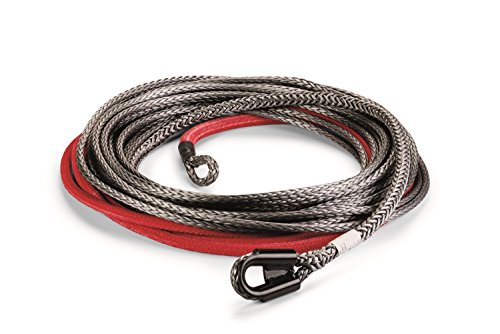
WARN Spydura Pro 30' Recovery Strap
Check Price on Amazon →WARN’s Spydura brings synthetic winch line technology to recovery straps. This is a semi-static strap rather than true kinetic rope—it has some stretch but not the aggressive energy storage of nylon ropes. Ideal for controlled pulls where you want some give without full kinetic action.
Best for: Winch users who want a recovery strap that behaves similarly to their synthetic winch line.
5. GearAmerica Kinetic Recovery Rope - Value Pick

GearAmerica 7/8" x 30' Kinetic Recovery Rope
Check Price on Amazon →GearAmerica delivers legitimate kinetic performance at roughly half the price of premium brands. The double-braided nylon construction provides proper stretch characteristics, and the reinforced loop eyes handle repeated use. An excellent entry point for JK owners new to kinetic recovery.
Value proposition:
- True kinetic performance at budget pricing
- Adequate breaking strength for JK recovery
- Includes storage bag
- Good warranty support
Best for: JK owners who want real kinetic capability without premium investment.
Proper Kinetic Rope Technique
Using kinetic ropes requires specific technique to be safe and effective:
Pre-Recovery Setup
-
Clear the area. Ensure no bystanders are near the rope path or potential rebound zone.
-
Inspect all equipment. Check the rope for cuts, abrasions, or UV damage. Inspect shackles, D-rings, and recovery points.
-
Use proper connections. Soft shackles are preferred—they’re lighter and won’t become projectiles if something fails. If using metal shackles, ensure they’re properly rated and closed.
-
Position the recovery vehicle. The rope should extend in a straight line or slight angle. Avoid sharp angles that multiply side loads.
-
Communicate clearly. Establish hand signals or radio communication between drivers before starting.
The Extraction Sequence
-
Lay out the rope. Allow it to rest naturally without kinks or twists. Connect to both vehicles with the rope slack but not tangled.
-
Build the stack. The recovery vehicle backs up slowly to create slack in the rope—typically 20-50% of rope length depending on conditions.
-
Prepare the stuck vehicle. Engage 4-Low, point wheels in the extraction direction, and prepare to drive (not just idle) when the rope pulls.
-
Execute the recovery. The recovery vehicle accelerates steadily (not aggressively) forward. As the rope stretches and reaches full extension, the stuck vehicle drives in the same direction.
-
Follow through. Both vehicles continue moving until the stuck vehicle reaches solid ground. Don’t stop too soon.
Critical Safety Points
- Never exceed rope capacity. If initial attempts fail, reassess—don’t just hit it harder.
- Watch the rope. If it starts fraying or smoking, stop immediately.
- Use dampeners. A heavy blanket or commercial rope dampener over the middle of the rope contains it if connections fail.
- Inspect after each use. Kinetic ropes degrade—catch damage before the next recovery.
Kinetic Rope Care and Storage
Proper maintenance extends rope life significantly:
After each use:
- Rinse mud, sand, and debris with clean water
- Allow to dry completely before storage
- Inspect entire length for cuts, abrasion, or UV damage
Storage:
- Keep in a breathable bag away from direct sunlight
- Store in a cool, dry location
- Avoid folding—coil loosely instead
- Keep away from chemicals, petroleum products, and sharp objects
Replace when:
- Any cuts penetrate more than 25% of rope diameter
- Significant UV fading appears
- Stretch characteristics change noticeably
- Outer jacket shows extensive wear
Choosing the Right Size Rope
For Jeep JK recovery, the 7/8” diameter provides ideal performance:
| Rope Diameter | Breaking Strength | Best For |
|---|---|---|
| 1/2” | ~7,500 lbs | UTVs, ATVs |
| 5/8” | ~14,000 lbs | Small SUVs |
| 7/8” | ~28,000 lbs | Full-size SUVs, JK |
| 1” | ~32,000 lbs | Full-size trucks |
| 1-1/4” | ~52,000 lbs | Heavy trucks |
The 30-foot length handles most trail scenarios. Shorter ropes (20’) work for tight spaces, while longer options (50’+) suit expedition use.
When Kinetic Ropes Won’t Work
Kinetic recovery has limitations:
- High-centering: The vehicle needs wheel traction to assist the pull. If all wheels are suspended, use a winch.
- Deep water: Kinetic energy can’t overcome hydraulic resistance. Winch slowly instead.
- Mechanical failure: If the drivetrain is damaged and wheels won’t turn, static pull or winch is required.
- Extreme angles: Side pulls over 15° can roll the stuck vehicle or damage recovery points.
For these situations, pair your kinetic rope with a winch, traction boards, and Hi-Lift jack for complete recovery capability.
Our Recommendation
Best overall: Yankum Ropes 7/8” x 30’ delivers premium performance at a more accessible price than Bubba Rope while maintaining excellent quality and reliability.
Budget choice: GearAmerica provides true kinetic performance at roughly 60% of premium rope cost, making it the smart choice for JK owners starting their recovery kit.
For existing recovery kits: If you already have a quality static strap, adding a kinetic rope covers the extraction scenarios your current gear can’t handle.
Every JK that ventures beyond pavement should carry a kinetic rope. The physics simply work better for most stuck situations, and the gentler force transfer protects both vehicles.
Complementary Upgrades
Explore these related modifications for your Jeep JK:
- JK Armor & Protection Guide — your complete starting point
- Best D-Ring Shackles for JK — essential connection hardware for kinetic ropes
- JK Recovery Gear Checklist — kinetic ropes belong in your kit
- Best Winches for JK — when a buddy pull isn’t available
- Best Traction Boards for JK — try self-recovery first
- Best JK Front Bumpers — proper recovery points are critical
Related Guides
Explore more JK upgrade guides to complement your build:
- Best JK Rear Bumpers — rear bumper choices
- Best JK Skid Plates — underbody protection options
- Rock Sliders vs Rocker Guards — side protection comparison
- Best JK Fender Flares — fender flare options for larger tires
- Best JK Steering Stabilizer — steering stabilizer options after lift
- Best All-Terrain Tires — tire choices for off-road capability
Frequently Asked Questions
Can I use a kinetic rope as a tow strap?
No, kinetic ropes are designed for recovery, not towing. The stretch creates dangerous slack and rebound during road towing. Use a static tow strap or tow bar for towing.
How many times can I use a kinetic rope?
Quality ropes handle hundreds of recoveries when properly maintained. Replace when you see visible damage or notice decreased stretch performance.
What size shackle do I need for kinetic recovery?
Use 3/4” D-ring shackles rated for at least 35,000 lbs (3x the JK’s weight). Soft shackles are preferred as they’re lighter and safer if they fail.
Should I buy a kinetic rope or snatch strap?
Round kinetic ropes store more energy and last longer. Snatch straps cost less and pack smaller. For serious off-roading, the rope is worth the investment.
Can kinetic ropes damage my JK’s recovery points?
When used properly, kinetic ropes actually reduce stress on recovery points compared to static pulls because the energy release is smoother. Never exceed rope or recovery point ratings.
Do kinetic ropes work in cold weather?
Yes, but stretch characteristics change slightly below freezing. Allow extra slack and avoid aggressive snatches in very cold conditions. Store ropes indoors during winter.
Free: JK Fluids at a Glance
Every fluid, spec and capacity for the 2007-2018 Wrangler JK on one page, plus a cut-out glovebox card. Checked against the owner's manuals. From the JK Service Kit.
Email me the download and new guides when they are published. Unsubscribe anytime. Privacy Policy.
Frequently Asked Questions
Do seat covers affect heated seats?
Most neoprene and canvas seat covers allow heat to pass through. Check manufacturer specifications for heated seat compatibility.
Will seat covers interfere with side airbags?
Quality JK-specific seat covers have airbag-compatible seams that separate during deployment. Avoid universal covers that may impede airbags.
How do I clean neoprene seat covers?
Clean neoprene with mild soap and water, then air dry. Avoid harsh chemicals and machine washing. Some covers are machine washable - check labels.
What's the difference between a kinetic rope and a tow strap?
Kinetic ropes stretch 20-30% under load, storing and releasing energy to help pull stuck vehicles out. Tow straps have minimal stretch and are designed for flat towing. Never use a tow strap for recovery pulls — the sudden shock load can break attachment points. Kinetic ropes absorb impact gradually.
What length kinetic rope do I need for JK recovery?
A 30-foot kinetic rope is the standard for most JK trail recovery scenarios. This length provides enough distance between vehicles for safe recovery while allowing adequate momentum buildup. For tight trails, a 20-foot rope works but limits your approach speed.
Allan
I'm Allan. I own a 2014 Jeep Wrangler JKU and I research the hell out of every mod before I touch it. When I've fitted something to my own Jeep, I say so. Everything else is researched from manufacturer specs and other owners' reports. No sponsored fluff.
Learn more about me →Free: JK Fluids at a Glance
Every fluid, spec and capacity for the 2007-2018 JK on one page, plus a glovebox card.
Email me the download and new guides when they are published. Unsubscribe anytime. Privacy Policy.
Related Articles
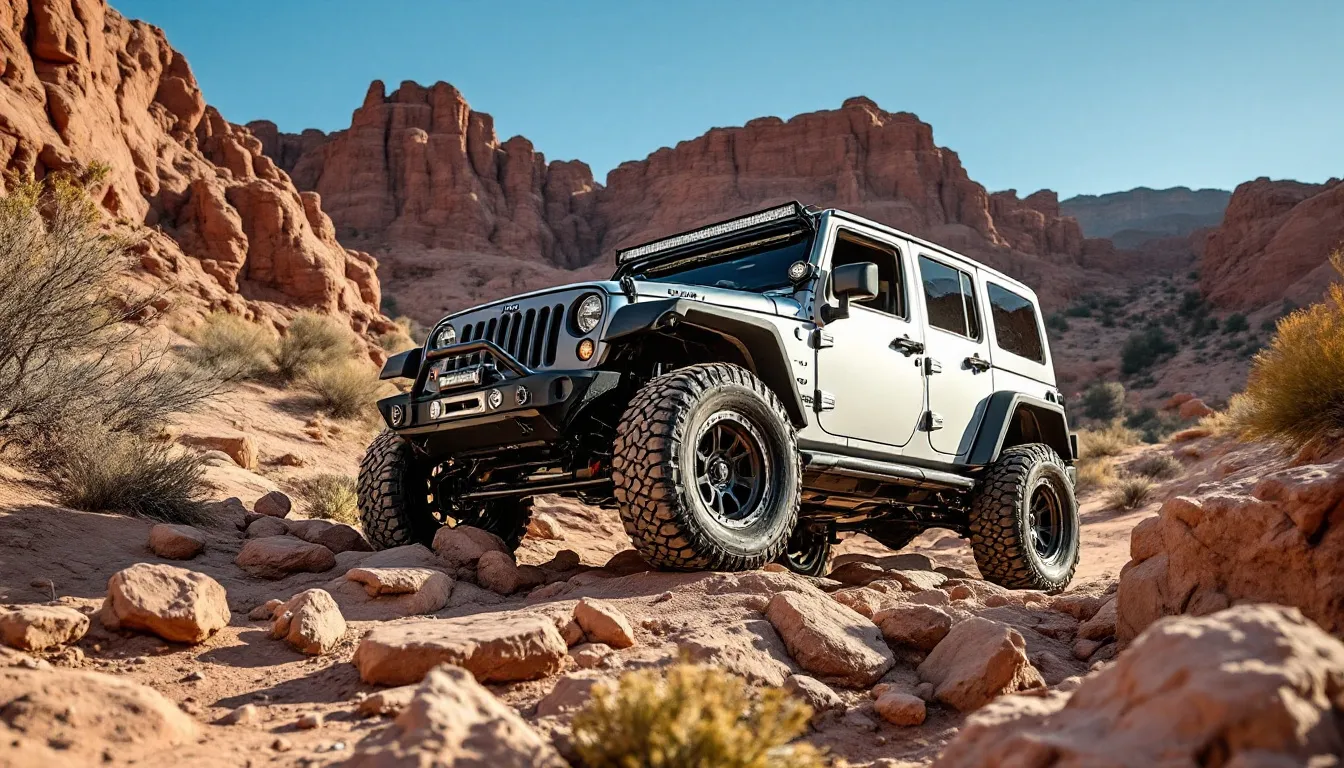
Best JK Rocker Panel & Body Armor: Complete Protection Kits Ranked
JK body armor is any aftermarket steel or aluminum protection — rocker guards, rock sliders, skid plates, or tube fenders — bolted to a 2007–2018 Jeep...
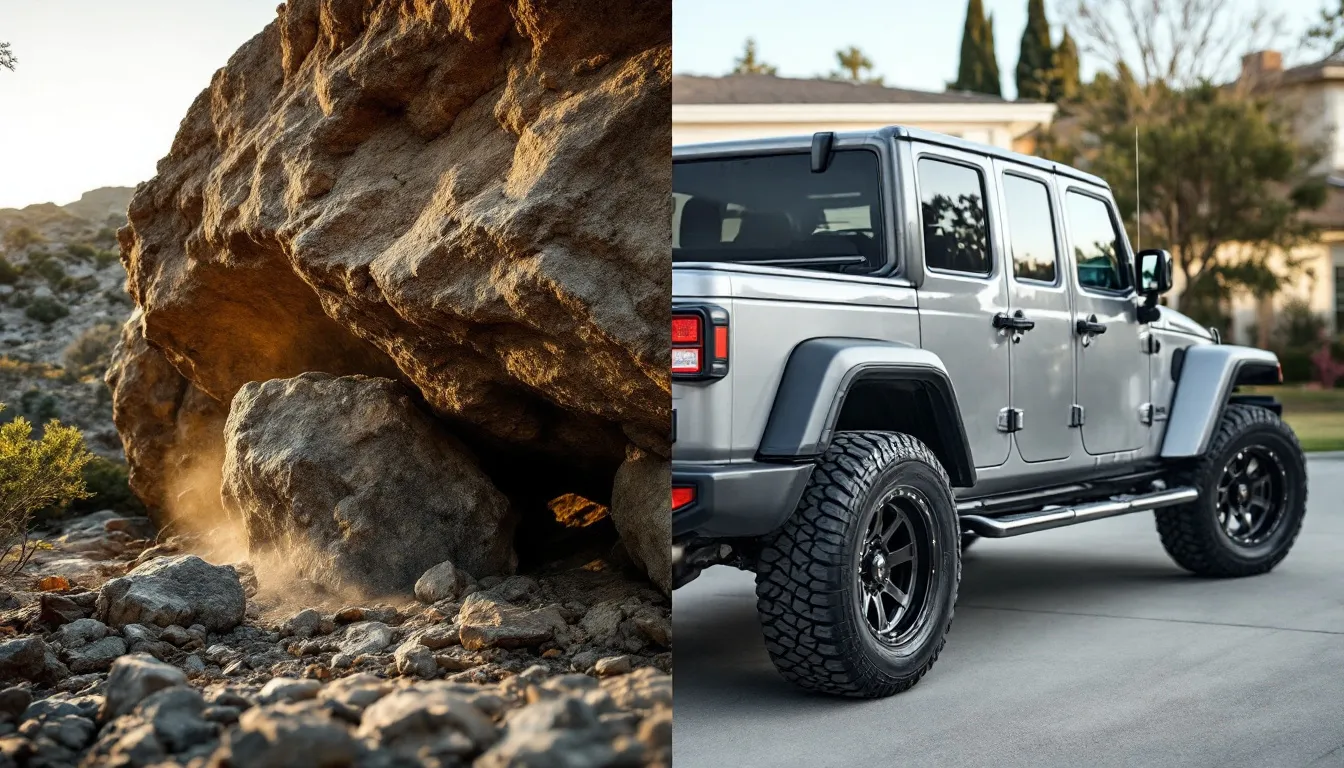
Jeep JK Rock Sliders vs Side Steps: Protection, Looks & Which One You Actually Need
Rock sliders are heavy-gauge steel (or aluminum) tubes or plates that bolt or weld to your Jeep's frame, sitting flush along the rocker panels to...
Best Jeep JK Front Bumpers with Winch Mounts: Full-Width vs Stubby Compared
A Jeep JK front bumper with winch mount is a steel or aluminum replacement for your factory plastic fascia that bolts solid protection, integrated...