Best D-Ring Shackles for Jeep JK: Safe Recovery Connections
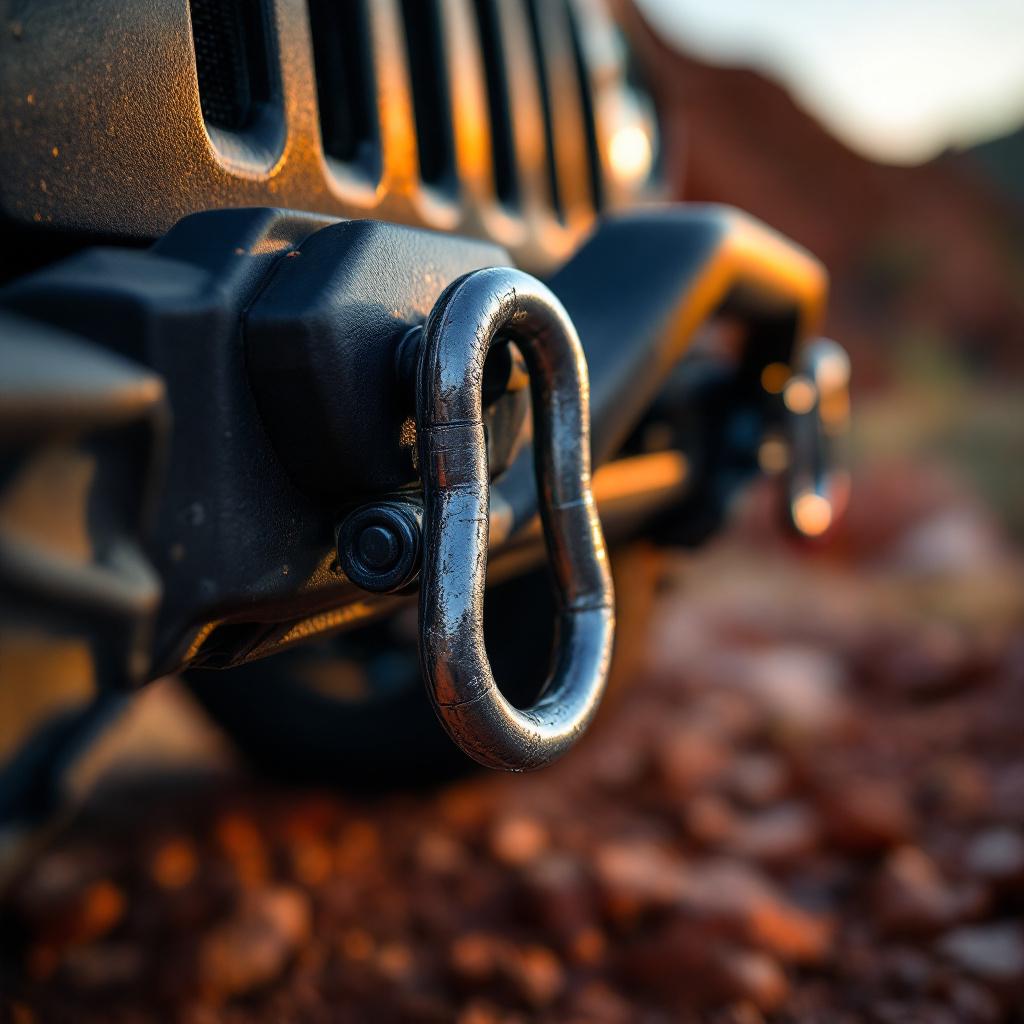
Best D-Ring Shackles for Jeep JK: Safe Recovery Connections
D-ring shackles are the critical connection point between your recovery strap and your Jeep JK. The right shackles handle enormous loads while the wrong ones become dangerous projectiles. For an accessory that costs under $50, there’s no excuse to cheap out—your safety depends on these small but essential pieces of hardware.
This guide covers everything JK owners need to know about choosing, using, and maintaining quality recovery shackles.
Why Shackle Quality Matters
During a kinetic recovery, shackles experience forces far exceeding the stuck vehicle’s weight. When the rope reaches full stretch and releases its stored energy, the load spike can triple or quadruple normal static weight. A 4,500-pound JK can generate 15,000+ pounds of force at the shackle connection.
Cheap shackles fail in two dangerous ways: the pin breaks (sending the shackle flying) or the bow deforms (allowing the pin to escape). Either failure turns that piece of steel into a deadly projectile traveling at the speed of a snapping rope.
Quality shackles are rated for these dynamic loads and include safety margins that prevent catastrophic failure even under abuse.
Get new guides by email
One email when we publish something worth reading. Unsubscribe anytime.
Understanding Shackle Ratings
Working Load Limit (WLL)
The WLL is the maximum load for continuous use. For recovery shackles, you’ll see ratings from 2,000 to 13,000+ pounds. For JK recovery, choose shackles with a WLL of at least 9,500 pounds—approximately twice your vehicle’s weight.
Minimum Breaking Strength (MBS)
The MBS indicates the load at which the shackle will fail. Quality shackles maintain a 5:1 or 6:1 safety factor, meaning a shackle with 9,500-pound WLL will have an MBS of roughly 47,500-57,000 pounds.
Size Designation
Shackles are sized by pin diameter: 3/4” is standard for full-size SUVs like the JK. Larger 7/8” shackles exist for heavy-duty applications but usually aren’t necessary for recreational Jeeping.
Top D-Ring Shackles for Jeep JK
1. Smittybilt D-Ring Shackle - Best Value

Smittybilt 13047B 3/4" D-Ring Shackle
Check Price on Amazon →Smittybilt’s D-ring has become the go-to affordable shackle for Jeep owners. The forged steel construction handles JK recovery loads easily, and the protective coating resists corrosion. At roughly $20 per shackle, you can equip all your recovery points without major investment.
Why we recommend them:
- Proven performance across thousands of Jeep recoveries
- Forged construction (not cast) ensures strength
- Protective finish holds up to trail abuse
- Easy to find in stock
Best for: JK owners building their recovery kit on a budget without sacrificing safety.
2. ARB 2012 Shackle - Premium Quality

ARB ARB2012 3/4" Recovery Shackle
Check Price on Amazon →ARB’s premium shackle represents serious off-road engineering. The high-tensile forged steel exceeds standard specifications, and the oversized pin is easier to thread with cold fingers or gloves. The silver powder coat finish resists corrosion better than basic paint.
Premium features:
- Certified to Australian/NZ off-road standards
- Oversized bail diameter for easy strap attachment
- Clevis pin won’t rust to the shackle body
- Smooth pin operation even after years of exposure
Best for: JK owners who want gear matching ARB’s quality reputation and expedition-grade durability.
3. GearAmerica Mega D-Ring Shackle - Heavy Duty

GearAmerica Mega Shackles 68,000 lb Rating
Check Price on Amazon →GearAmerica’s Mega Shackles offer the highest strength rating in our roundup. The 68,000-pound breaking strength provides enormous safety margin for JK recovery, and the larger bow opening accepts thick straps and ropes easily. These are overkill for normal recovery but perfect for peace of mind.
Highlights:
- Massive safety margin (6:1 ratio)
- Wide opening accepts thick straps
- Quality materials at mid-range pricing
- Includes rubber isolators to prevent rattling
Best for: JK owners who want maximum safety margin and those who help recover larger vehicles.
4. Rhino USA D-Ring Shackles - Kit Value

Rhino USA D-Ring Shackles 2-Pack
Check Price on Amazon →Rhino USA sells quality shackles in pairs at excellent prices, making them ideal for building a complete kit. The heat-treated steel construction handles JK loads reliably, and the company stands behind their products with solid warranties.
Value proposition:
- Two shackles for less than many single units
- Quality comparable to name brands
- Protective coating resists corrosion
- Good customer support
Best for: Budget-conscious JK owners equipping multiple recovery points at once.
5. Bubba Rope Mega Shackle - Expedition Grade

Bubba Rope 7/8" Mega Shackle
Check Price on Amazon →From the company that pioneered kinetic recovery ropes, Bubba Rope’s Mega Shackle uses aircraft-grade steel for exceptional strength. The oversized 7/8” pin handles the most demanding applications, and the electroplated finish resists corrosion for years.
Premium touches:
- Certified for commercial recovery use
- Pin retainer prevents accidental loosening
- Finish won’t chip like painted shackles
- Matches Bubba Rope’s quality standards
Best for: Expedition rigs and those with existing Bubba Rope recovery gear.
Soft Shackles: The Modern Alternative
Soft shackles made from UHMWPE (ultra-high-molecular-weight polyethylene) have gained popularity for good reason. They’re lighter, easier to handle, and if they fail, they don’t become projectiles.
Bubba Rope Gator-Jaw Soft Shackle

Bubba Rope Gator-Jaw Soft Shackle
Check Price on Amazon →Soft shackle advantages:
- Won’t damage recovery points or paint
- Safe if connections fail (no projectile)
- Lighter than steel shackles
- Easier to attach with cold hands
Considerations:
- Can be damaged by sharp edges
- Require proper threading technique
- More expensive than steel
- Need occasional inspection for wear
For JK recovery, soft shackles excel when used with synthetic winch lines and kinetic ropes. Many experienced off-roaders use soft shackles for strap connections and traditional D-rings for permanent bumper mount points.
Proper Shackle Usage
Installation
-
Thread by hand. Always thread the pin by hand until finger-tight, then back off 1/4 turn. This prevents cross-threading and ensures the pin can be removed after load.
-
Align properly. The pin should point away from the load direction. Load should pull across the bow, not against the pin.
-
Check for interference. Ensure the shackle can rotate freely without binding on bumper tabs or recovery points.
During Recovery
-
Verify all connections before applying load. Walk the entire chain from vehicle to vehicle.
-
Maintain sight lines. Everyone should stay outside the potential rebound zone—typically 1.5x the rope/strap length in any direction from the connection.
-
Use dampeners. A heavy blanket or commercial dampener over the rope near the shackle contains it if the connection fails.
After Recovery
-
Inspect for damage. Look for deformation of the bow, pin wear, or cracked coating.
-
Clean and lubricate. A drop of penetrating oil on the pin threads prevents seizing.
-
Store properly. Keep shackles in your recovery bag, not loose in your cargo area where they’ll rattle and scratch.
Mounting Shackles to Your JK
Most aftermarket steel bumpers include integrated D-ring mounts. Factory bumpers do not—you’ll need to attach to frame-mounted recovery points or upgrade your bumper.
Front recovery options:
- Aftermarket bumpers with integrated mounts (best option)
- Tow hook upgrades for factory frames
- D-ring isolators to prevent noise
Rear recovery options:
- Aftermarket bumpers with mounts
- Receiver hitch shackle adapters
- Frame-mounted points (professional installation recommended)
Never attach recovery shackles to body panels, tie-down points, or suspension components. These are not designed for recovery loads and will fail dangerously.
Maintenance and Inspection
Regular Checks
- Pin threads: Should turn smoothly without binding
- Bow shape: Any visible deformation means replacement
- Finish condition: Surface rust is cosmetic; deep pitting compromises strength
- Pin wear: If the pin shows visible wear grooves, replace the shackle
When to Replace
- After any recovery where you suspect the shackle was overloaded
- Visible deformation of any kind
- Pin won’t thread smoothly
- Heavy corrosion or pitting
- If you don’t know the shackle’s history (used equipment)
At $15-50 per shackle, replacement is cheap insurance.
Common Mistakes to Avoid
Using hardware store shackles: Marine and lifting shackles from hardware stores often lack the ratings and safety margins needed for vehicle recovery. Stick to purpose-built recovery shackles.
Over-tightening pins: A pin cranked tight is nearly impossible to remove after loading. Hand-tight minus 1/4 turn is correct.
Mixing shackle sizes: If your weakest shackle is rated for 6,000 pounds, that’s your system’s limit regardless of what other components can handle.
Ignoring inspection: A shackle that looks fine can have invisible damage from previous loads. When in doubt, replace.
Our Recommendations
Best value: Smittybilt D-Ring Shackles deliver proven performance at a price that lets you equip all recovery points without breaking the bank.
Premium choice: ARB Recovery Shackles offer expedition-grade quality with features like oversized pins and superior corrosion resistance.
For kinetic rope users: Add Bubba Rope Soft Shackles to your kit. They’re safer with stretching ropes and won’t damage your gear.
Building a complete kit: Rhino USA’s two-packs provide excellent value for equipping front and rear recovery points.
Every JK recovery kit needs quality shackles. They’re the small components that tie everything together—literally. Spend the extra $10-20 for rated, forged shackles and never worry about connection failure.
Complementary Upgrades
Explore these related modifications for your Jeep JK:
- JK Armor & Protection Guide — your complete starting point
- JK Recovery Gear Checklist — D-ring shackles are just one piece of a complete recovery kit
- JK Kinetic Recovery Rope Guide — pair your shackles with a kinetic rope
- Best Winches for Jeep JK — for winch-based recovery
- Best JK Front Bumpers — need proper recovery points on your bumper
- Best Traction Boards for JK — before pulling, try traction boards
- JK Hi-Lift Jack Guide — another essential recovery tool
Quick Comparison
| Product | WLL | Material | Price | Best For |
|---|---|---|---|---|
| Smittybilt D-Ring | 9,500 lbs | Forged Steel | $15-25 | Budget-conscious owners |
| ARB Recovery Shackle | 9,500 lbs | Forged Steel | $25-35 | Durability seekers |
| Rugged Ridge D-Ring | 9,500 lbs | Forged Steel | $20-30 | OEM compatibility |
| Factor 55 ProLink | 10,000 lbs | Forged Steel | $30-40 | Premium quality |
Smittybilt D-Ring Shackle
Pros
- Affordable at $15-25 per pair
- Proven track record on thousands of Jeeps
- Forged steel construction (not cast)
- Easy to find in stock
Cons
- Protective coating can chip
- Heavier than soft shackles
ARB Recovery Shackle
Pros
- Superior corrosion resistance
- Premium forged construction
- Excellent customer service
- Lifetime warranty
Cons
- Higher price point at $25-35
- Overkill for casual wheeling
Related Guides
Explore more JK upgrade guides to complement your build:
- Best JK Rear Bumpers — rear bumper choices
- Best JK Skid Plates — underbody protection options
- Rock Sliders vs Rocker Guards — side protection comparison
- Best JK Fender Flares — fender flare options for larger tires
- Best JK Steering Stabilizer — steering stabilizer options after lift
Frequently Asked Questions
What size D-ring shackle do I need for my JK?
A 3/4” pin diameter shackle rated for at least 9,500 pounds working load handles all JK recovery situations with appropriate safety margin.
How many shackles should I carry?
Minimum two (one front, one rear). Four shackles provide redundancy and let you help other vehicles. Six covers multi-point recovery scenarios.
Can I leave shackles permanently mounted to my bumper?
Yes, but use isolators to prevent rattling and remove them periodically to lubricate pin threads and prevent seizing.
Are soft shackles better than steel D-rings?
Each has advantages. Soft shackles are safer if they fail and won’t damage equipment. Steel shackles tolerate sharp edges and don’t wear. Many JK owners use both.
Why do shackles have WLL ratings lower than breaking strength?
The safety factor ensures shackles survive dynamic loads (like kinetic recovery) that can exceed static weight by 3-4x. Never exceed the WLL.
How do I know if a shackle is overloaded?
Visual deformation is obvious, but microscopic damage isn’t visible. If you suspect a shackle experienced forces near its rating, replace it to be safe.
Free: JK Fluids at a Glance
Every fluid, spec and capacity for the 2007-2018 Wrangler JK on one page, plus a cut-out glovebox card. Checked against the owner's manuals. From the JK Service Kit.
Email me the download and new guides when they are published. Unsubscribe anytime. Privacy Policy.
Frequently Asked Questions
Do seat covers affect heated seats?
Most neoprene and canvas seat covers allow heat to pass through. Check manufacturer specifications for heated seat compatibility.
Will seat covers interfere with side airbags?
Quality JK-specific seat covers have airbag-compatible seams that separate during deployment. Avoid universal covers that may impede airbags.
How do I clean neoprene seat covers?
Clean neoprene with mild soap and water, then air dry. Avoid harsh chemicals and machine washing. Some covers are machine washable - check labels.
What size D-ring shackle fits Jeep JK recovery points?
The standard JK recovery point accepts a 3/4-inch pin D-ring shackle. The working load limit should be at least 9,500 lbs (breaking strength of 57,000 lbs) to safely handle JK recovery loads. Always match your shackle rating to your recovery rope's minimum breaking strength.
Are soft shackles better than steel D-rings for JK recovery?
Soft shackles made from Dyneema are lighter, won't dent your bumper, and are safer if they fail under load — they won't become dangerous projectiles like steel. However, they're more expensive ($25-40 each vs $10-15 for steel) and can wear faster on rough surfaces. Many JK owners carry both types.
Allan
I'm Allan. I own a 2014 Jeep Wrangler JKU and I research the hell out of every mod before I touch it. When I've fitted something to my own Jeep, I say so. Everything else is researched from manufacturer specs and other owners' reports. No sponsored fluff.
Learn more about me →Free: JK Fluids at a Glance
Every fluid, spec and capacity for the 2007-2018 JK on one page, plus a glovebox card.
Email me the download and new guides when they are published. Unsubscribe anytime. Privacy Policy.
Related Articles
Best JK Rocker Panel & Body Armor: Complete Protection Kits Ranked
JK body armor is any aftermarket steel or aluminum protection — rocker guards, rock sliders, skid plates, or tube fenders — bolted to a 2007–2018 Jeep...
Jeep JK Rock Sliders vs Side Steps: Protection, Looks & Which One You Actually Need
Rock sliders are heavy-gauge steel (or aluminum) tubes or plates that bolt or weld to your Jeep's frame, sitting flush along the rocker panels to...
Best Jeep JK Front Bumpers with Winch Mounts: Full-Width vs Stubby Compared
A Jeep JK front bumper with winch mount is a steel or aluminum replacement for your factory plastic fascia that bolts solid protection, integrated...