Best JK Shocks for Off-Road: Complete Bilstein, Fox & King Comparison
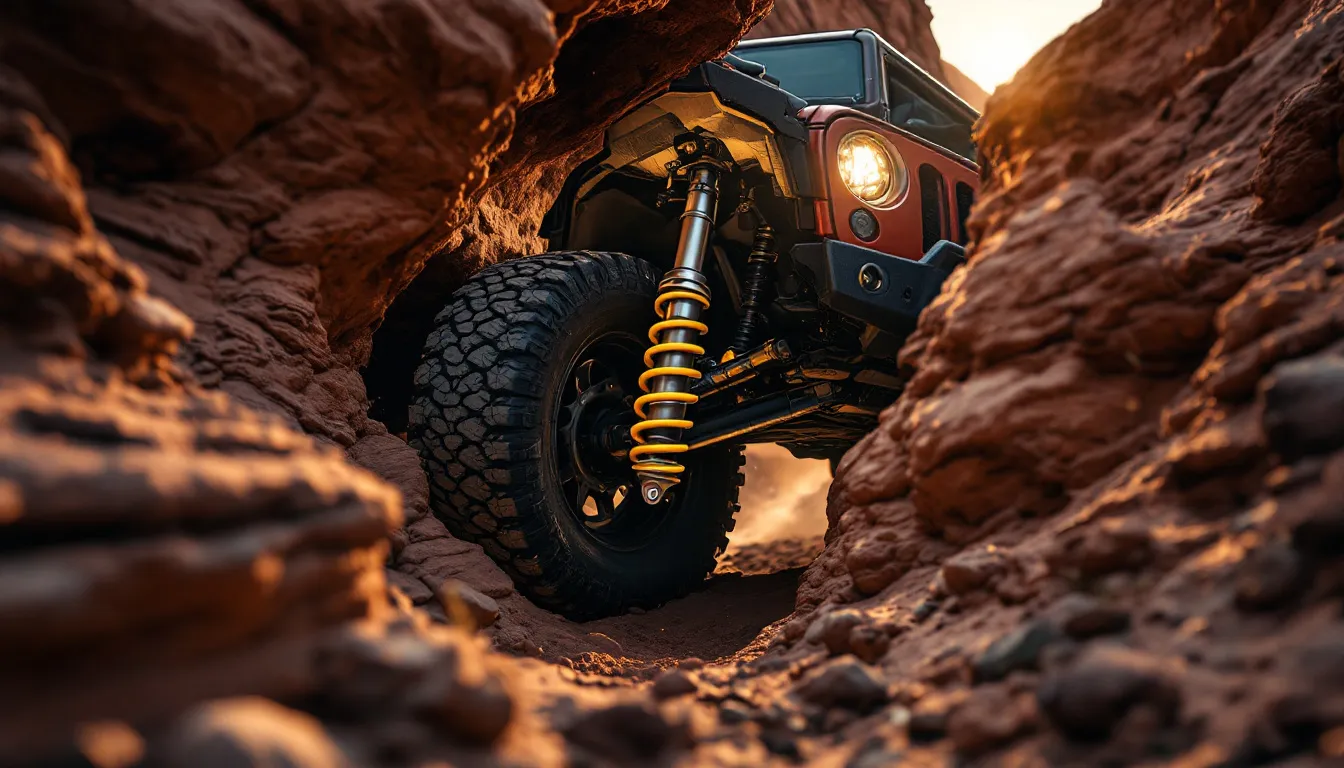
Best JK Shocks for Off-Road: Complete Bilstein, Fox & King Comparison
A shock absorber does one essential job: it controls how fast your suspension bounces. When your tire hits a rock, the spring compresses. The shock stops that energy from turning into an endless pogo-stick motion — it converts that movement into heat, keeping your tires planted and your steering predictable.
The best shocks for Jeep JK break down by budget and use case. If you’re running 1.5–2.5 inches of lift and split time between pavement and moderate trails, the Bilstein 5100 is the standout value. Step up to Fox 2.0 Performance if you wheel more aggressively and need better heat management. For serious off-road use — rock crawling, extended technical sections, or builds paired with long-travel suspension — King OEM Performance shocks earn their premium price.
I haven’t tested these shocks personally on a trail. What follows is grounded in the kind of real-world knowledge that comes from years of watching JK owners report back on what actually works — the nuanced, experience-driven consensus you only gather by paying attention to people who drive these trucks hard every weekend.
Before any product links below: this article contains affiliate links. If you buy through them, we earn a commission at no extra cost to you.
Whether you’re building from scratch or correcting a suspension setup that’s started to feel wrong, the Lift Kits & Suspension hub is your starting point. If you’re still evaluating a used JK purchase, check the JK Buyers Guide first.
Quick Picks: Best Shocks for Jeep JK at a Glance
The right shock depends on your lift height, your typical terrain, and your budget — but these are the top performers in each category.
- Best Overall — Bilstein 5100: The most consistently recommended shock in the JK community for 0–2.5-inch lifts. Monotube construction, OEM-compatible sizing, and a price that doesn’t require justification to a spouse.
- Best Mid-Range / Trail Performance — Fox 2.0 Performance Series: A significant step up in damping precision and heat resistance. Owners running 2–3.5-inch lifts and getting regular trail time consistently report a noticeable improvement over the Bilstein at speed on rough terrain.
- Best Premium / Serious Off-Road — King OEM Performance: Built to a higher tolerance than either competitor. The go-to choice when you’re pairing shocks with aftermarket control arms and expecting them to survive repeated hard use.
- Best Budget — OEM Replacement (Mopar/KYB): If you’re not lifting and just need to restore stock ride quality, a quality OEM-spec replacement gets the job done without the premium.
The detailed reviews below cover specs, compatibility, and trade-offs in full. Shock selection pairs directly with your control arm setup; the Jeep JK control arm upgrades article is worth reading alongside this one.
Why Your JK Needs Better Shocks After a Lift
Lifting your Jeep JK without addressing the shocks is one of the most common — and most expensive — mistakes in suspension builds. When you install a lift, you change the geometry your shocks were designed to work within, and the OEM dampers can’t keep up.
When I spent three months researching a 2.5-inch lift for a JK build, it became clear early that shock compatibility wasn’t something to sort out after the lift was installed. It was a core variable in the decision. That research led to pairing adjustable control arms with properly valved aftermarket shocks, and it was absolutely the right call. Community members who skip that step consistently report the same problems: vague steering, premature wear, and a ride that never settles.
The geometry change matters because lifts alter the angle at which your springs and shocks operate through their range of motion. OEM JK shocks are tuned for stock geometry. Push your suspension geometry outside that envelope without changing the dampers, and you get either wallowing (soft) or harsh (stiff) behavior — sometimes both, depending on the speed and terrain.
Monotube vs Twin-Tube Shocks
Monotube shocks place the piston and gas charge in a single tube. This allows a larger piston diameter, better heat dissipation, and more consistent damping — critical when you’re on the trail for hours. All three brands reviewed here use monotube construction in their JK lines.
Twin-tube shocks use an inner working tube surrounded by an outer reservoir. They’re cheaper to manufacture and work fine for street driving, but they’re more prone to aeration (oil and gas mixing) under sustained high-cycle use. OEM JK shocks are twin-tube.
Reservoir vs Non-Reservoir Shocks
Remote-reservoir shocks separate the oil and gas into an external canister connected by a hose. This dramatically increases fluid volume and heat capacity — critical for extended technical driving where shock fluid temps can climb. The King OEM Performance shocks offer a remote reservoir option. The Bilstein 5100 and Fox 2.0 do not; they’re non-reservoir monotubes.
An improperly matched shock after a lift can also contribute to JK death wobble — a symptom often blamed on steering components but sometimes rooted in suspension geometry gone wrong. Suspension differences between trims matter here too; the Rubicon vs Sport vs Sahara suspension differences are significant enough to affect which shock length you need.
Bilstein 5100 Jeep JK Review: Best Value Shock for Street & Mild Trails
The Bilstein 5100 is the most recommended shock in the Jeep JK community for a reason: it delivers genuine monotube performance at a price that makes sense.
This review is based on published Bilstein specifications and extensive documented owner community experience over many years — not a personal trail test. That consistency of owner reports across forums and build threads makes the community consensus on the Bilstein 5100 about as reliable as first-hand data gets.
The single most important thing to know: the Bilstein 5100 is available in multiple pre-set height positions for the front, allowing you to dial in 0–2.5 inches of lift without needing a separate lift kit on the front axle.
The rear shocks are a direct swap at stock or mild-lift heights. For 2007–2018 JK and JKU owners, Bilstein offers application-specific part numbers — always verify by door count (2-door vs 4-door JKU) and axle, as stroke length differs.
Bilstein 5100 Specs
- Design: Monotube, non-reservoir
- Body diameter: 46mm
- Valving: Fixed (not adjustable)
- Lift compatibility: 0–2.5 inches (front adjustable; rear fixed)
- Finish: Zinc-plated body with yellow accent — highly corrosion resistant
- Rebuildable: Yes, by Bilstein service centers
Pros
- Excellent value for a true monotube shock
- Multiple front height settings simplify lift compatibility
- Proven corrosion resistance — important in salt-belt states
- Application-specific fitment removes guesswork
- Very strong community track record over 10+ years of JK production
Cons
- Fixed valving means no tuning for different loads or driving styles
- Not ideal for lifts above 2.5 inches — you’ll exceed the designed stroke range
- Rear fitment can require a longer shock when paired with a 3-inch+ lift kit
- No reservoir option — sustained technical wheeling will heat the fluid faster than King or Fox reservoir variants
The Bilstein 5100 is the right choice for JK owners who want a real upgrade over OEM, drive mostly on pavement with occasional moderate trail use, and don’t want to over-engineer a daily-driver build.
Fox 2.0 Performance Series Shocks for Jeep JK: Mid-Range Trail Performance
Fox shocks occupy the sweet spot between the Bilstein’s value positioning and King’s premium tier — and for owners who trail ride regularly, that middle ground is where the money works best.
This review is based on Fox’s published specifications and widely documented owner community experience. No personal trail testing informs this section.
Fox rates the 2.0 Performance Series across a wide range of lift heights. Owners consistently report a noticeably more controlled feel over repeated large impacts compared to the Bilstein — particularly during high-speed desert running or sustained rock crawling where shock temperatures climb.
The key advantage of the Fox 2.0 is its larger 2.0-inch body diameter, which increases oil capacity and delays fade during extended hard use. That extra cooling capacity makes a real difference when you’re working a technical section for hours.
Fox offers application-specific JK configurations with separate part numbers for 2-door and 4-door JKU. Lift compatibility typically runs 2–3.5 inches depending on the specific stroke length you select — always cross-reference your actual lift measurement, not your kit’s advertised height.
Fox 2.0 vs Fox 2.0 Factory Series
The standard Fox 2.0 Performance Series uses fixed-valving monotube design. The Fox 2.0 Factory Series adds an internal bypass circuit — a more sophisticated damping architecture that allows different compression rates at different shaft positions. The Factory Series is meaningfully better on technical terrain, but it carries a higher price tag. For most JK owners doing weekend trail runs, the standard 2.0 is better value; the Factory Series is for dedicated wheelers.
Fox 2.0 Performance Series Specs
- Design: Monotube, non-reservoir
- Body diameter: 2.0 inches (51mm)
- Valving: Fixed (velocity-sensitive)
- Lift compatibility: ~2–3.5 inches (application-specific)
- Finish: Hard-anodized aluminum body
- Rebuildable: Yes
Pros
- Larger body than Bilstein = better heat management
- Strong trail performance at speed
- Clean, durable anodized finish
- Well-documented JK-specific fitment
- Good pairing with best control arms for Jeep JK at 2.5–3.5-inch lifts
Cons
- Noticeably stiffer on-road than the Bilstein — daily drivers will notice
- Higher price than the Bilstein 5100 for a non-reservoir shock
- Factory Series upgrade adds cost that approaches King territory
King OEM Performance Shocks for Jeep JK: Premium Choice for Serious Off-Roaders
King shocks represent the top of the production shock market — not custom-valved race shocks, but the best you can buy off the shelf for a 2007–2018 JK without going full race-budget custom.
This review is based on King’s published specifications and the broader JK community consensus. No personal testing is claimed here.
King OEM Performance shocks are built with tighter tolerances than either Bilstein or Fox’s non-reservoir lines. The piston-to-bore fit, seal quality, and overall construction consistency are a step above. Where King earns its premium is in durability and rebuild-friendliness — King shocks are designed to be serviced and re-valved, not replaced, which changes the long-term cost calculation significantly.
The defining characteristic of King OEM Performance shocks is that they’re genuinely rebuildable and re-valvable — meaning a competent suspension shop can tune them to your exact setup as your build evolves. For JK owners running serious control arm upgrades alongside a 3–4.5-inch lift, King OEM Performance shocks are the correct pairing.
At that lift height, you need a shock that can work through the full travel range without fade or premature wear. Remote reservoir versions are available and recommended for builds that will see serious trail time. The reservoir keeps oil temperatures lower and virtually eliminates fade on extended technical sections.
King OEM Performance Specs
- Design: Monotube, available with remote reservoir
- Body diameter: 2.0 inches (51mm) base; larger with reservoir
- Valving: Fixed OEM-spec; re-valvable at service
- Lift compatibility: 2.5–4.5 inches (application-specific)
- Finish: Hard-anodized aluminum
- Rebuildable: Yes — a core product feature
Pros
- Best build quality in this comparison
- Remote reservoir option for serious off-road use
- Re-valvable — tunable as your build changes
- Long service life when properly maintained
- Handles larger lifts (3–4.5 inches) more confidently than Bilstein or Fox 2.0
Cons
- Highest price point — significantly more per shock than Bilstein
- Overkill for mild-lift or street-focused builds
- Re-valving requires a qualified shop, adding service cost
- Stiffer on-road character — not comfortable for daily driving in most setups
Bilstein vs Fox vs King: JK Shock Absorber Comparison Table
Choosing between these three brands comes down to matching your shock’s capability to your actual build and use case. Here’s how they stack up side by side.
Note: Prices are approximate ranges based on publicly available retailer information. Prices vary by retailer, application, and whether reservoir options are selected. Always verify current pricing before purchase.
| Brand/Model | Body Size | Design Type | Best Lift Range | Approx. Price (per shock) | Street Comfort | Trail Performance | Rebuildable | Best For |
|---|---|---|---|---|---|---|---|---|
| Bilstein 5100 | 46mm | Monotube | 0–2.5 in | ~$90–$130 | ★★★★☆ | ★★★☆☆ | Yes | Daily drivers, mild trails |
| Fox 2.0 Performance | 51mm | Monotube | 2–3.5 in | ~$130–$180 | ★★★☆☆ | ★★★★☆ | Yes | Weekend trail use |
| Fox 2.0 Factory Series | 51mm | Monotube w/ bypass | 2–3.5 in | ~$200–$260 | ★★★☆☆ | ★★★★★ | Yes | Dedicated wheelers |
| King OEM Performance | 51mm | Monotube | 2.5–4.5 in | ~$250–$380 | ★★☆☆☆ | ★★★★★ | Yes (re-valvable) | Serious off-road builds |
The table tells the key story: street comfort and trail performance pull in opposite directions at every price tier. The Bilstein splits the difference most successfully for mixed-use builds. Fox closes the gap for moderate trail use. King prioritizes trail capability over everything else.
Keep in mind that shock selection interacts with wheel geometry — JK wheel backspacing and offset can affect suspension travel limits in ways that compound if your shock stroke is already near its limit.
How to Choose the Right Shocks for Your Jeep JK: Buyer’s Guide
Selecting the right shock requires answering three questions in sequence — ideally before you finalize your lift kit choice, not after. When I was deep into researching a lift for a JK build, that timing mattered more than almost any other detail. Shock selection and lift selection are the same decision, not sequential ones.
Choosing a lift kit without locking in your shock simultaneously is how owners end up with mismatched stroke lengths, unexpected bottoming out, or shocks that bind at full droop. Treat them as a package.
Lift Height Compatibility
This is the non-negotiable starting point. Every shock has a compressed length and an extended length — and your lift height determines how much stroke travel the shock needs to function correctly through the suspension’s full range of motion.
- 0–2-inch lift: Bilstein 5100 is straightforward
- 2–3.5-inch lift: Fox 2.0 or Bilstein 5100 long-travel variants
- 3–4.5-inch lift: King OEM Performance — the other two begin to run out of stroke
For JKU (4-door) owners, note that the longer wheelbase means slightly different spring rates and shock travel requirements compared to the 2-door JK. Always spec by door count, not just lift height.
Driving Profile
Be honest about how you actually drive the Jeep, not how you intend to drive it.
- Mostly pavement with occasional fire roads: Bilstein 5100
- Regular trail use, moderate obstacles: Fox 2.0 Performance
- Consistent technical terrain, rock crawling, or any competitive use: King OEM Performance
The Rubicon vs Sport vs Sahara suspension differences article is relevant here — Rubicon owners have a stiffer OEM spring setup that changes the baseline your shock needs to complement.
Budget Planning
Expect to budget for all four shocks at once — mixing brands or generations across axles creates damping imbalances that affect handling.
- Bilstein 5100: roughly $350–$500 for a full set of four
- Fox 2.0 Performance: roughly $500–$700 for a set of four
- King OEM Performance: roughly $900–$1,500+ for a set, depending on reservoir configuration
Factor in alignment after installation — suspension changes that affect caster or toe require a professional alignment, and skipping it accelerates tire wear. Check the 2018 Jeep JK maintenance schedule for post-suspension-change service intervals.
JK Shock Absorber Upgrade: Installation Tips & What to Expect
Replacing JK shocks is one of the more accessible suspension jobs a JK owner can tackle — but doing it correctly requires preparation, the right tools, and realistic expectations. This section is based on published installation guidance and community-documented procedures, not a first-hand install.
Torque specifications below are referenced from manufacturer spec sheets — always verify against the specific documentation for your shock and axle combination before torquing.
Installation Steps
- Lift and support the vehicle safely. Use a floor jack and quality jack stands rated for the JK’s weight. Never work under a vehicle supported only by a jack.
- Support the axle independently. Place a secondary jack under the axle so you can lower it slowly to decompress the shock without losing suspension control.
- Remove the upper shock bolt first. On JK applications, the upper mount is typically a through-bolt. Break it loose before lowering the axle.
- Lower the axle to decompress the old shock. Lower slowly until the shock is fully extended and loose in the mounts.
- Remove the lower shock bolt and pull the shock free. Note the orientation — some shocks are position-sensitive (reservoir shocks especially).
- Install the new shock starting with the lower mount. Hand-thread the bolt first, then snug. Do not fully torque until the vehicle is at ride height with weight on the suspension.
- Raise the axle and install the upper mount. Again, hand-thread first.
- Lower the vehicle to ride height and torque both mounts. Manufacturer specs typically fall in the 55–75 ft-lb range for JK shock hardware — verify your specific application’s spec sheet before torquing.
- Repeat for remaining shocks. Work one corner at a time to keep the axle stable.
- Drive slowly for the first 50 miles and re-torque. New hardware can settle slightly after initial use.
After installation, if you notice shimmy or steering vagueness, read through diagnosing JK death wobble after a suspension change before assuming the shocks are at fault. If you changed lift height simultaneously, also verify that your aftermarket JK control arms are set correctly for your new ride height.
Frequently Asked Questions: Best Shocks for Jeep JK
Q: Are Bilstein 5100 shocks good for a lifted Jeep JK?
A: Yes — the Bilstein 5100 Jeep JK application is specifically engineered for lifted use, with multiple pre-set front height positions covering 0–2.5 inches of lift. They’re one of the most widely recommended shocks in the JK community for this lift range, offering genuine monotube performance at a competitive price. Beyond 2.5 inches, evaluate Fox or King for appropriate stroke length.
Q: Do I need new shocks when I lift my Jeep JK?
A: Yes, in almost every case. Lifting your JK changes the operating range your shocks need to cover — OEM twin-tube shocks are designed for stock ride height geometry and will operate outside their intended stroke range after a lift, leading to premature wear, diminished damping performance, and potentially contributing to JK death wobble causes and fixes. New shocks should be selected at the same time as your lift kit, not as an afterthought.
Q: What is the difference between monotube and twin-tube shocks?
A: A monotube shock uses a single tube containing both the piston and pressurized gas charge, allowing a larger piston diameter and better heat dissipation than a twin-tube design. Twin-tube shocks use an inner working tube inside an outer reservoir tube — they’re adequate for street driving but more prone to aeration and fade under sustained high-cycle off-road use. All three brands compared here (Bilstein, Fox, King) use monotube construction in their JK-specific lines.
Q: How long do aftermarket shocks last on a Jeep JK?
A: Under normal mixed street and moderate trail use, quality aftermarket shocks typically last 50,000–80,000 miles before damping performance noticeably degrades — though this varies significantly with driving conditions. Aggressive off-road use shortens service life. King shocks have an advantage here because they’re designed to be rebuilt and re-valved rather than replaced outright.
Q: Can I replace JK shocks myself?
A: Yes — shock replacement is one of the more DIY-friendly suspension jobs on the JK platform. You’ll need basic hand tools, a floor jack, jack stands, and a torque wrench. The critical step most owners miss is torquing the mounting hardware with the vehicle at ride height, not in the air. If you’re changing lift height simultaneously, a professional alignment afterward is not optional.
Q: Should I buy a reservoir shock for my JK?
A: Reservoir shocks are worth the cost if you’ll be doing sustained technical trail runs or competitive wheeling where shock temperatures climb. For daily drivers or weekend-only trail use with moderate obstacles, a non-reservoir shock is sufficient. King offers reservoir options; Bilstein and Fox 2.0 do not.
Final Verdict: Which JK Shock Is Right for You?
The best shock for your Jeep JK is the one matched to your actual lift height and how you actually drive — not the most expensive option or the most popular forum recommendation.
For most 2007–2018 JK and JKU owners running 1.5–2.5 inches of lift and mixing pavement with moderate trails, the Bilstein 5100 is the correct choice. It delivers real monotube performance, proven corrosion resistance, and application-specific fitment at a price that makes sense. Move to the Fox 2.0 if you trail ride consistently and want better fade resistance. Choose King OEM Performance when you’re building seriously — long-arm suspension, 3-inch-plus lift, and terrain that demands a shock you can rebuild and re-tune over time.
Don’t finalize your shock selection without also reviewing the Jeep JK control arm upgrade guide — shocks and control arms are a system, not independent choices. And if you’re still working out the full suspension picture, the Lift Kits & Suspension hub covers everything from spring rates to skid plates.
Get the Free JK Build Planner
Complete PDF with mod checklists, gear ratios, tire sizing charts, and budget worksheets. Everything you need to plan your JK build.
No spam. Unsubscribe anytime. By subscribing, you agree to our Privacy Policy.
Allan
I'm Allan. I bought a 2014 Jeep Wrangler JKU and I research the hell out of every mod before I touch it. Everything here is tested or deeply researched on my own rig - no sponsored fluff, just honest findings.
Learn more about me →Get the JK Build Planner
Free PDF with complete build checklists, gear ratios, and tire fitment guides.
By subscribing, you agree to our Privacy Policy.
Related Articles
JK Death Wobble Fix: Step-by-Step Diagnosis & Repair Guide
Affiliate Disclosure: JeepJK Guide earns a commission on qualifying purchases made through links on this page. This does not affect our recommendations...
Jeep JK Control Arm Upgrades: When OEM Arms Fail & Which Aftermarket Arms Last
Your JK's control arms are doing something critical right now: they're holding your axle in the exact position your suspension geometry depends on....
Coilover Suspension vs Traditional Lift Kit Jeep Jk Comparison
A coilover suspension is a single-unit shock absorber and coil spring assembly that replaces your JK's factory suspension components, offering height...