Best All-Terrain Tires for Jeep Wrangler JK: 2026 Top Picks
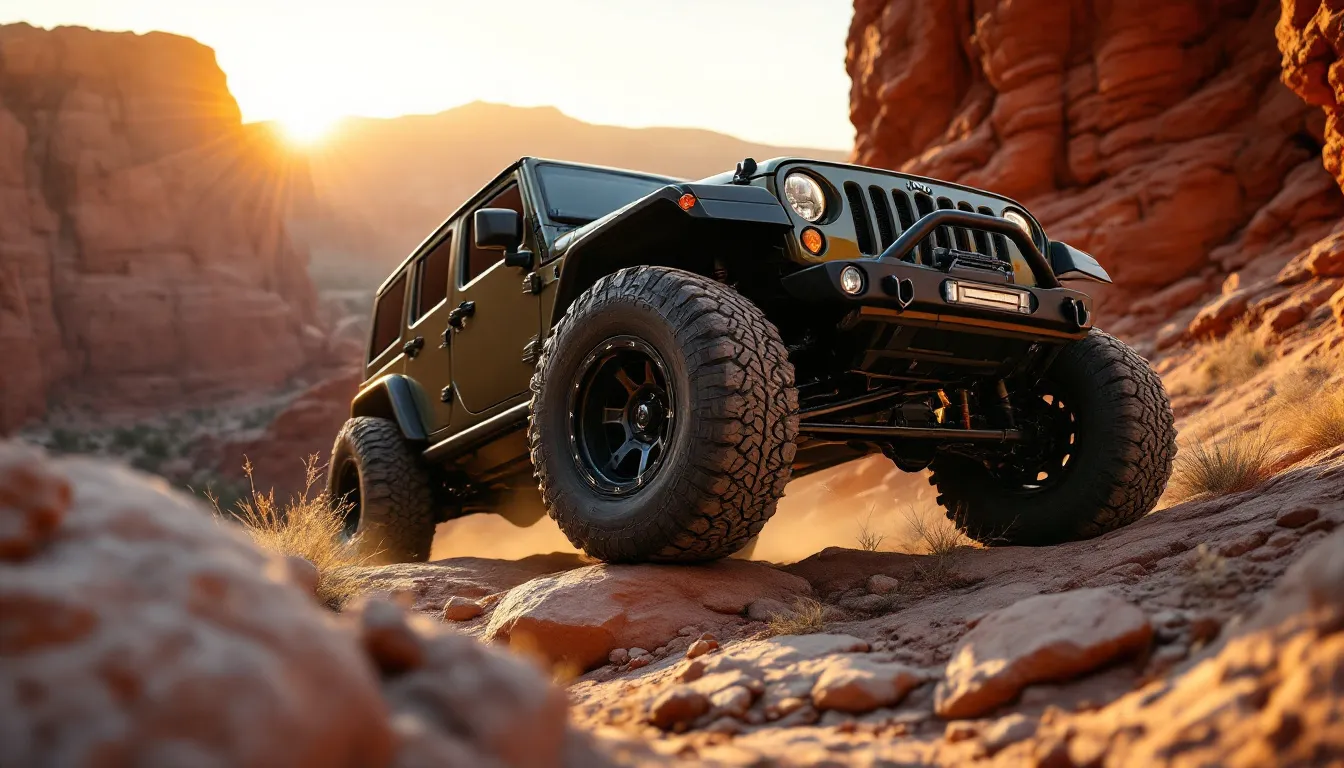
Best All-Terrain Tires for Jeep Wrangler JK: 2026 Top Picks
An all-terrain tire sits in that pragmatic middle ground — engineered to grip pavement without complaint while handling dirt, gravel, light mud, and rock without forcing you to choose between capability and livability.
The best all-terrain tires for Jeep Wrangler JK in 2026 are the BFGoodrich All-Terrain T/A KO2 (best overall), the Falken Wildpeak AT3W (best value), and the Nitto Terra Grappler G2 (best for snow and ice). These three consistently earn owner trust across the 2007–2018 JK and JKU model years, covering both 2-door and 4-door body styles in every trim from Sport to Rubicon.
This guide covers every JK produced from 2007 to 2018, including the 2-door JK and the 4-door JKU Unlimited. If you’re still researching your JK purchase, check out the JK buyers guide before committing to a tire upgrade. If you’re leaning toward more aggressive tread for serious rock crawling, the best mud-terrain tires for JK pairs well with this article and will help you weigh the trade-offs.
By the end, you’ll know exactly which all-terrain tire fits your JK, your budget, and your actual driving reality.
Affiliate Disclosure: JeepJK Guide earns a commission from qualifying Amazon purchases made through links on this page. This comes at no extra cost to you and does not influence our recommendations.
Best All-Terrain Tires for Jeep JK: Quick-Pick Summary
Tire choice comes down to matching your real use case — daily commuting, weekend trails, or serious off-road work — to the right tread design and size. The table below gives you a side-by-side snapshot without the marketing noise.
| Tire Name | Best For | Sizes Available | Tread Life | Price Range | Our Rating |
|---|---|---|---|---|---|
| BFGoodrich All-Terrain T/A KO2 | Best Overall — all-around use | LT225 – LT315 | 50,000 mi warranty | $175–$320/tire | 9.5/10 |
| Falken Wildpeak AT3W | Best Value | LT235 – LT315 | 55,000 mi warranty | $145–$260/tire | 9.0/10 |
| Cooper Discoverer AT3 XLT | Rock Crawling | LT235 – LT325 | 50,000 mi warranty | $155–$270/tire | 8.8/10 |
| Nitto Terra Grappler G2 | Snow & Ice / Highway | LT245 – LT325 | 50,000 mi warranty | $160–$285/tire | 8.7/10 |
| Goodyear Wrangler Duratrac | Budget / Hybrid AT-MT | LT245 – LT315 | 50,000 mi warranty | $130–$230/tire | 8.3/10 |
The KO2 wins top billing because it genuinely balances off-road performance with daily-driver manners across the widest range of JK configurations. The Falken AT3W is the pick if you want to save $25–$50 per tire without a meaningful capability gap.
Critical sizing note: moving to 35-inch tires on a stock or 2.5-inch-lifted JK with factory 3.73 or 4.10 gears will put real stress on your drivetrain. Check out the best 33-inch tires for JK and best 35-inch tires for JK guides for detailed fitment and regearing context before you commit.
Best Overall: BFGoodrich All-Terrain T/A KO2
The BFGoodrich KO2 has earned its place in the JK community through years of real-world use, not marketing claims. It runs quiet enough for a daily commute, grips rocky terrain without drama, and carries a 3-Peak Mountain Snowflake (3PMSF) rating that most competitors only recently added.
Why it works for JK owners specifically: the CoreGard sidewall uses a tougher rubber compound — BFGoodrich engineered this to resist splitting and bruising where the previous KO generation could falter. On rocky terrain, that matters more than you’d expect. The interlocking tread design ejects stones more efficiently, which reduces the likelihood of a stone wedging in and working through the rubber over time — something that happens more often than you’d think on granite and shale.
For JK fitment, the workhorses are the LT265/70R17 (roughly a 32-inch tire on stock rims) and the LT285/70R17 (just over 33 inches), which fits most JKs on a 2-inch lift without the fender contact hassle. Step up to LT315/70R17 and you’re in 35-inch territory — that typically needs a 3.5-inch lift and a bump stop modification to avoid pinching the fender under full suspension droop.
Noise: the KO2 is one of the quieter all-terrain tires on pavement, though you’ll notice a moderate tread hum at highway speeds compared to a passenger car tire. That’s the tradeoff for the tread pattern — it’s normal, not a defect.
Tread life: BFGoodrich backs the KO2 with a 50,000-mile treadwear warranty. Real-world experience from JKU owners shows 40,000–50,000 miles is realistic with regular rotation on mixed on-road/off-road use.
If you’re sizing up to 35s on a JKU, the regearing your JK for larger tires guide walks through the 4.10 versus 4.56 decision and tells you what to expect when you’re climbing hills or merging on the interstate.
Best Value: Falken Wildpeak AT3W
The Falken Wildpeak AT3W delivers KO2-level capability at a price point that typically runs $25–$50 less per tire. It also throws in a 55,000-mile treadwear warranty, which edges out the KO2’s 50,000-mile coverage.
What separates the AT3W from the budget tier is Falken’s silica-enriched compound in the upper tread layer. This improves wet-road grip measurably — important if you live anywhere rain is a regular companion. The stepped tread blocks were specifically engineered to reduce the harmonic drone that plagued older-generation all-terrain tires at freeway speeds. It’s a detail that sounds small until you’re spending eight hours on the highway and realize your truck isn’t buzzing in your skull anymore.
JK-specific sizing: the AT3W covers all the key JK fitment points:
- LT265/70R17 — clears stock or rubs slightly on 2-door JK; 1.5-inch lift recommended
- LT285/70R17 — the practical sweet spot; fits most JKs cleanly on a 2-inch lift
- LT315/70R17 — 35-inch equivalent; needs 3.5-inch lift on both JK and JKU
The math on price: a set of four KO2s in LT285/70R17 runs roughly $800–$950 depending on where you shop. The same set in AT3W typically comes in around $700–$800. That’s real money freed up for a lift kit, winch, or actually getting on the trails.
Warranty confidence: the 55,000-mile treadwear warranty means you’re protected slightly longer than with the KO2. For a daily-driver JK with regular pavement miles, that’s tangible peace of mind.
To dial in the wheels that complement your new tires, the best wheels for Jeep Wrangler JK guide covers offset and backspacing so you don’t end up with rubbing or that inward-facing look that makes your setup feel wrong.
Best for Rock Crawling: Cooper Discoverer AT3 XLT
If your JK lives on technical rock trails — not just fire roads where the most challenging thing is washboard — the Cooper Discoverer AT3 XLT earns consideration for its load range E construction and sidewall engineering.
What load range E actually means: it’s a 10-ply rating. That translates to a stiffer, thicker tire carcass compared to standard load range C or D. On rocks, this means better resistance to punctures from sharp edges and cuts from the hard impacts you can’t predict. The trade-off is a noticeably harsher on-road ride and slightly higher rolling weight that affects fuel economy.
Lift requirements by size: the Cooper AT3 XLT scales up to LT325/60R20, but for stock JK rims these are your realistic options:
- LT265/70R17 — fits a stock JK with minimal or zero lift
- LT285/70R17 — fits most JKs on a 2-inch lift without drama
- LT305/70R17 — roughly 34.5 inches; needs 3–3.5-inch lift
For wider sizes on stock suspension, most users report minor rubbing at full turn and full downtravel — verify clearance on your specific JK before signing the receipt.
Highway noise: be honest with yourself here. The AT3 XLT is noticeably louder at freeway speeds than the KO2 or AT3W. If 80% of your miles are pavement, this will be the tire reminding you it’s there every time you accelerate. If you’re mostly wheeling, the aggression you gain more than compensates for the drone.
The real education on what matters when you’re running 35s came from testing them in the rocky terrain of the Cederberg — three hours north of Cape Town. The difference was immediate. Lines that would have scraped the factory bumper suddenly opened up. You could pick your way through rock gardens without that sickening crunch of skid plate on granite. But the hard lessons came fast. Aired down to 18 PSI on the gravel road in, and by the time we hit the rocky sections near Sneeuberg Pass, dropping lower — to 15 PSI — is when the tire’s sidewall flex finally gave you the grip that actually worked. That experience made one thing crystal clear: big tires only work if you actually let them work. A quality tire deflator and a portable compressor became non-negotiable cargo. The return trip taught the harder lesson about regearing. Stock 3.21 gears with 35s meant the Pentastar was screaming at highway speed. A tire with a robust sidewall like the AT3 XLT’s load range E carcass gives you that same confidence when you drop to proper pressures on technical terrain.
If you’re considering stepping up beyond 35s, the 37-inch tire options for JK guide walks through the additional lift and regearing requirements that come with going that far.
Best for Snow & Ice: Nitto Terra Grappler G2
The Nitto Terra Grappler G2 is the pick for JK owners in regions where winter isn’t just a season — it’s a serious driving condition. It carries the 3-Peak Mountain Snowflake (3PMSF) rating and uses a dual-compound tread design that most competitors avoid.
Dual-compound tread — the practical difference: the G2 uses a harder compound in the center tread blocks for durability and highway longevity, and a softer compound on the outer shoulder blocks for grip during cornering and in cold temperatures. On snow and ice, that softer shoulder compound stays flexible when temperatures drop — maintaining bite where a single-compound tire would begin to harden and lose traction.
JK sizing and lift compatibility:
- LT265/70R17 — fits stock JK and JKU with standard clearance
- LT285/70R17 — most owners’ size of choice; fits a 2-inch-lifted JK well
- LT315/70R17 — this size requires attention. The LT315 on a JKU typically requires a 3.5-inch lift, and the wider footprint creates offset considerations depending on your wheel choice.
For specific offset and backspacing guidance when running the LT315, the JK wheel backspacing and offset guide should be required reading before you buy.
Winter performance in practice: the 3PMSF rating means the G2 meets the standardized threshold for severe snow conditions. Many JK owners in mountain states run these year-round and find the winter performance a genuine notch above what standard all-season-rated all-terrain tires deliver when the snow shows up.
Highway manners: the G2 is among the quieter options in this list — its tread pattern is notably refined for an aggressive-looking tire. If highway comfort ranks equally with off-road ability, the G2 is a strong alternative to the KO2 without sacrificing winter capability.
Best Budget Pick: Goodyear Wrangler Duratrac
The Goodyear Wrangler Duratrac sits in that honest middle ground between a true all-terrain tire and a mild mud-terrain — which is its greatest strength and its most important caveat.
What the Duratrac actually is: Goodyear markets this as an all-terrain tire, but the open, aggressive tread pattern puts it closer to an AT/MT hybrid. That wider void ratio gives it legitimate mud and loose dirt performance that beats the KO2 or AT3W, but there’s a price: road noise. The Duratrac is noticeably louder than most in this roundup on pavement, particularly at interstate speeds. If pavement makes up most of your miles, set your expectations accordingly.
JK size compatibility:
- LT255/75R17 — approximately 32.1 inches; fits stock JK with minimal clearance issues
- LT285/70R17 — approximately 33 inches; fits most JKs on a 2-inch lift
- LT315/70R17 — approximately 34.6 inches; needs 3–3.5-inch lift
Where the price saves add up: the Duratrac consistently undercuts the KO2 by $30–$60 per tire. A set of four in LT285/70R17 often lands under $680, making it one of the most accessible options for JK owners working within a real budget.
Tread life reality: rated at 50,000 miles, though the more aggressive void ratio means wear accelerates if the bulk of your miles are on pavement. Rotate every 5,000–6,000 miles to squeeze the maximum life out of the set.
How to Choose the Right All-Terrain Tire for Your JK
The right tire for your JK depends on four honest questions: What size works with your current lift? What load range matches your actual use? How much highway driving do you actually do versus wheeling? And do you know how to air down on trails?
One thing that consistently rings true in the JK community is that real owner experience reveals truths that spec sheets can’t. Actual feedback on noise, wear patterns, and seasonal performance — the kind of knowledge that builds from forums, trails, and talking to other JK owners who’ve run these tires through their own adventures — often tells you more than manufacturer marketing. That research methodology matters here, because a tire that looks perfect on paper might generate consistent complaints about highway drone or uneven wear patterns that only surface after thousands of miles of real-world punishment.
Tire Size & Lift Requirements
Stock JKs from 2007–2018 come on 255/75R17 or 245/75R17 depending on trim level. The most common upgrade paths follow predictable routes:
- 33-inch tires (285/70R17): fit most JKs on a 2-inch lift; minor rubbing is possible at full suspension droop and full steering lock without a trim or bump stop modification. See the 33-inch tire guide for stock and lifted JKs.
- 35-inch tires (315/70R17): require a 3.5-inch lift minimum on most JK configurations; the 4-door JKU can be marginally more forgiving due to longer wheelbase geometry. See 35-inch tire options for JK.
Regearing isn’t optional: moving from 33s to 35s on a JK with factory 3.73 gears will noticeably affect your low-speed crawl ability and fuel economy. Most experienced owners recommend regearing to 4.56 when running 35s. The gear ratio guide for JK tire upgrades explains the math and gives you a realistic cost estimate.
A 2.5” lift kit for Jeep Wrangler JK is often the practical first step in accommodating larger tires while maintaining proper suspension geometry and preserving ride quality.

Load Range
Load range C or D handles most JK use cases — daily driving with weekend trail excursions. Load range E (10-ply) deserves consideration if you regularly carry heavy payloads, run a heavy winch bumper setup, or spend consistent time on sharp rocky terrain where sidewall puncture risk climbs.
Tread Aggression vs Tread Life
More aggressive tread voids grip better in mud and loose material — but they wear faster on asphalt and generate noticeably more noise. The KO2 and AT3W strike the best balance for mixed-use JKs that spend time both on highway and off pavement. The Duratrac and Cooper AT3 XLT lean more toward aggression and suit owners who wheel more than they commute.
Airing Down: Not Optional
Airing down is not optional on rocky terrain — it’s how you protect your tires and actually improve traction. Dropping to 18–20 PSI on rock dramatically increases the tire’s contact patch, improves sidewall flex, and reduces the puncture risk from sharp edges. This becomes especially critical with 35-inch tires on technical terrain, where a properly aired-down tire behaves like a completely different tool than one run at street pressure. Always carry a quality gauge and either a compressor or CO₂ inflator to air back up before returning to pavement.
JK All-Terrain Tire Size Reference: What Fits Without Major Modification
Knowing which tire sizes actually fit your specific JK — and what lift height each one requires — is the single most critical practical question before you buy anything. The table below covers the five most realistic AT tire sizes for 2007–2018 JK and JKU Wranglers.
| Tire Size | Lift Required | Fits 2-Door JK | Fits JKU (4-Door) | Notes |
|---|---|---|---|---|
| 255/75R17 (~32 in) | Stock (0 in) | ✅ Yes | ✅ Yes | OEM size on many trims; direct bolt-on replacement |
| 285/70R17 (~33 in) | 1.5–2 in | ✅ Yes | ✅ Yes | Sweet spot — best balance of fitment and capability |
| 305/70R17 (~33.8 in) | 2.5–3 in | ⚠️ Verify | ✅ Most | 2-door may rub at full suspension stuff; check bump stops |
| 315/70R17 (~34.6 in) | 3–3.5 in | ⚠️ Verify | ✅ Most | Wider footprint — verify backspacing and offset math |
| 37×12.50R17 (~37 in) | 4.5–6 in | ⚠️ Major mods | ⚠️ Major mods | Full lift kit, regearing, and fender work typically required |
The 285/70R17 is the practical sweet spot for most JK owners. It clears with a modest 2-inch lift, doesn’t force regearing on most factory axle ratios, and fits both the 2-door JK and the 4-door JKU without creating fitment drama.
Important reality check: 2-door JKs have a shorter wheelbase and slightly tighter fender geometry than the JKU. A size that clears cleanly on a JKU with 2.5 inches of lift might require trimming or bump stop adjustments on the 2-door. Always verify with owners running your exact configuration before committing money.
For the wheel offset and backspacing numbers that affect how your tire sits, the JK wheel offset and backspacing guide provides the specific technical data. If you’re planning to run truly large rubber, the 37-inch tires for Jeep JK article covers the full list of modifications required.
Once you’ve locked down your tire size, wheel spacers like the Orion Motor Tech 1.5” option can help you dial in the exact fitment and visual stance you’re chasing.

Orion Motor Tech 5x5 Wheel Spacers Compatible with Jeep Wrangler JK Grand Cherokee Commander, 1.5" W
$102.99
Check Price on Amazon →Frequently Asked Questions: All-Terrain Tires for Jeep JK
These are the questions JK owners ask most often about AT tires — answered without the fluff.
Q: What size all-terrain tires fit a stock Jeep Wrangler JK without any lift?
A: On a completely stock 2007–2018 JK or JKU, a 255/75R17 (OEM equivalent) is the direct replacement. Many owners also fit 265/70R17 with no rubbing. The commonly desired 285/70R17 (33-inch) typically requires at least 1.5–2 inches of lift to clear the fender liner at full suspension droop and full steering lock.
Q: Do I need to regear my JK after installing 35-inch all-terrain tires?
A: For most JKs with factory 3.73 gears, stepping to 35-inch tires creates noticeably sluggish throttle response, slower acceleration, and reduced crawl ratio. Most experienced JK owners recommend regearing to 4.56 when running 35s. The JK regearing guide breaks down the full cost and walk-through of the process.
Q: Are all-terrain tires actually good in snow for a Jeep JK?
A: All-terrain tires carrying the 3-Peak Mountain Snowflake (3PMSF) rating — like the BFGoodrich KO2, Falken AT3W, and Nitto Terra Grappler G2 — perform meaningfully better in snow than standard all-season tires. They’re not a true replacement for dedicated winter tires in severe conditions, but for the mixed-terrain use most JK owners encounter, a 3PMSF-rated AT tire is a practical year-round choice.
Q: How long do all-terrain tires actually last on a Jeep JK?
A: Most AT tires in this category carry 50,000–55,000-mile treadwear warranties. Real-world life varies based on your highway mileage percentage, how often you rotate, and how aggressively you air down and air back up on trails. Many owners report 40,000–50,000 miles with regular rotations every 5,000–6,000 miles on a mixed-use JK.
Q: What is the best all-terrain tire for a Jeep JK Rubicon?
A: The BFGoodrich All-Terrain T/A KO2 is the most recommended AT tire for the JK Rubicon, and notably, Jeep used it as factory-original equipment on Rubicon models for years — which tells you something valuable. Rubicon owners who wheel regularly tend to favor it for the CoreGard sidewall protection and 3PMSF rating. For Rubicon-specific trim comparisons, the Rubicon vs Sport vs Sahara comparison guide walks through the differences.
Final Verdict: The Right All-Terrain Tire for Your Jeep JK
The best all-terrain tire for most Jeep JK owners is the BFGoodrich All-Terrain T/A KO2 — it genuinely balances performance across the widest range of conditions with the fewest compromises. If budget is your primary constraint, the Falken Wildpeak AT3W gets you 90% of the capability at a meaningfully lower price.
Here’s the honest three-bullet framework to guide your decision:
- Choose the KO2 if you want the proven, balanced option with robust sidewalls and solid snow capability for mixed daily-driving and trail use
- Choose the Falken AT3W if you want to save $100+ on a set without sacrificing treadwear warranty or wet-road grip
- Choose the Cooper AT3 XLT if rock crawling is your primary mission and you want load range E sidewall protection as your priority
Tire choice is one of the first real decisions you face as a JK owner — and it shapes almost every trail experience that follows. When I found and purchased a 2014 JKU in Cape Town, that question moved to the top of the list almost immediately. The difference is that getting it right early makes everything else clearer. You’re building a platform that the global overlanding community has spent two decades figuring out, modifying, and pushing to places that would swallow lesser vehicles. Starting with the right tires — knowing the lift, knowing the regearing, knowing what actual owners report — that’s how you lay the foundation.
Once your tires are locked in, make sure your wheels are dialed in correctly too. The JK wheel backspacing guide will verify your offset is right for your new tire size, and the best wheels for JK roundup covers the top rim options to pair with your new rubber.
Get the Free JK Build Planner
Complete PDF with mod checklists, gear ratios, tire sizing charts, and budget worksheets. Everything you need to plan your JK build.
No spam. Unsubscribe anytime. By subscribing, you agree to our Privacy Policy.
Allan
I'm Allan. I bought a 2014 Jeep Wrangler JKU and I research the hell out of every mod before I touch it. Everything here is tested or deeply researched on my own rig - no sponsored fluff, just honest findings.
Learn more about me →Get the JK Build Planner
Free PDF with complete build checklists, gear ratios, and tire fitment guides.
By subscribing, you agree to our Privacy Policy.
Related Articles
Best Wheels for Jeep Wrangler JK: Top 8 Picks for 2026
Find the best wheels for Jeep JK with expert picks for beadlocks, daily drivers, and budget builds. 4.5-inch backspacing, 1,500+ lb load ratings, verified fitment.
Best 35 Inch Tires for Jeep Wrangler JK: Top 8 Picks for 2026
Discover the best 35 inch tires for Jeep JK with our expert comparison of 8 top options. Complete fitment guide, real-world reviews, and installation requirements.
Best Tires for Jeep JK: Complete 2026 Tire Selection Guide
Find the best tires for your Jeep Wrangler JK with our expert guide. Compare all-terrain, mud-terrain, and budget options with real-world testing and fitment advice.