Best Tires for Jeep JK: Complete 2026 Tire Selection Guide
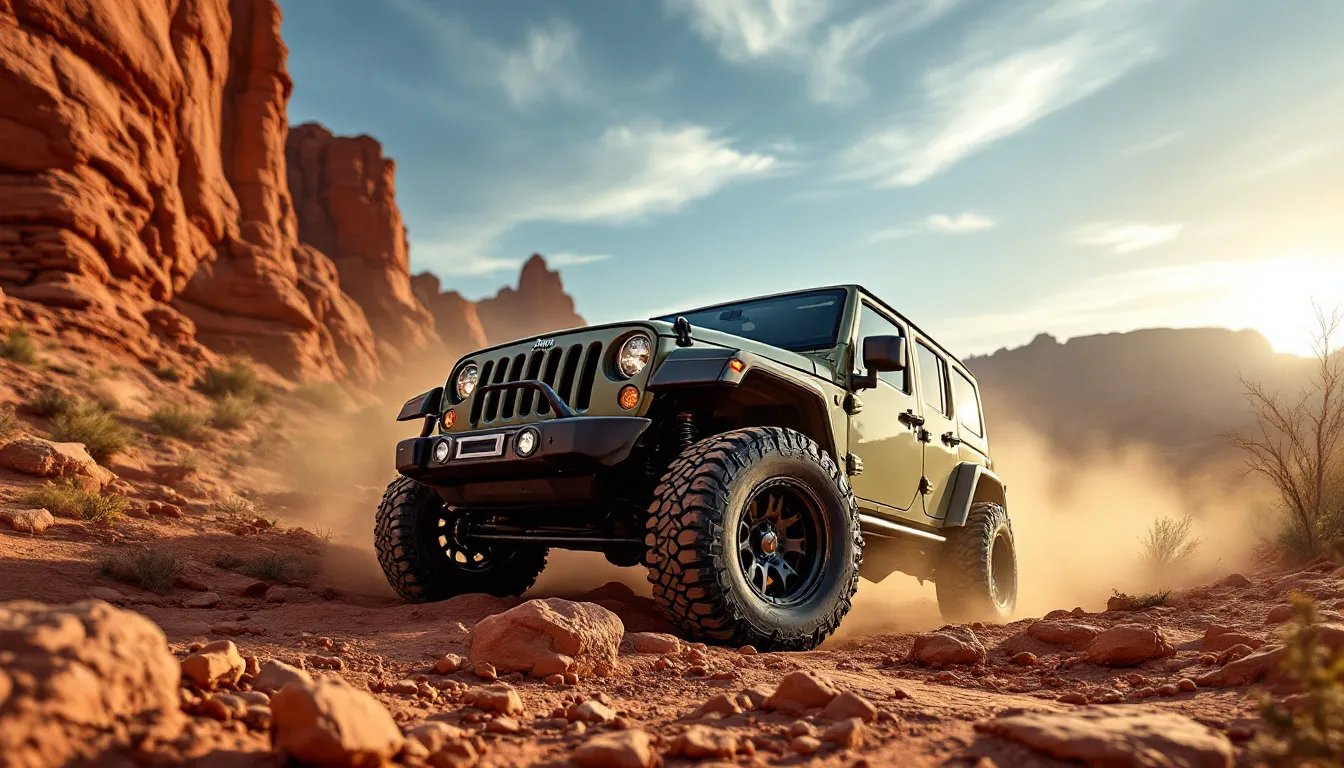
Best Tires for Jeep JK: Complete 2026 Tire Selection Guide
Affiliate Disclosure: JeepJK Guide earns a commission from qualifying purchases made through links on this page. This never affects our editorial recommendations.
The Best Tires for a Jeep JK, Answered Directly
The best tires for a Jeep JK are all-terrain tires in the 33-inch to 35-inch range — they balance on-road manners, off-road capability, and fuel economy better than any other category for most JK owners. For the majority of 2007–2018 Wrangler JK and JKU owners, the BFGoodrich All-Terrain T/A KO2 in 33x12.50R17 or 285/70R17 is the single most-recommended tire on the market, offering proven durability, respectable highway noise levels, and genuine off-road bite.
Here’s the thing: if you spend most of your time on pavement with occasional trail runs, a highway-terrain or all-terrain tire fits your life better than a mud-terrain. You’ll stay sane on the highway, and your wallet will thank you. But if you’re wheeling technical rock or deep mud weekly, mud-terrains earn their noise penalty because they actually deliver the grip you need in those conditions. The sections below break down every fitment tier, tire type, and brand so you can match the right tire to how you actually drive your JK.
Already shopping for your next Jeep? The JK Buyers Guide covers everything from trim selection to common mod sequences. If you’re weighing trims, the Rubicon vs Sport vs Sahara trim comparison explains how each trim’s factory axle gearing affects your tire upgrade options.
Jeep JK Tire Size Guide: What Fits Stock and What Needs a Lift
Stock Jeep JK Wranglers (2007–2018) can fit up to 32-inch tires without any modifications on most trim levels, though you may encounter light rubbing at full steering lock depending on wheel offset. The practical rule: 33-inch tires need at minimum a 2-inch lift — and 35-inch tires require at least 3.5 inches of lift to clear without rubbing.
Here’s how the fitment tiers break down:
- Stock (0” lift): Up to 31–32 inches. No rubbing issues in most cases. Some owners fit 285/70R17 (~32.7”) with careful wheel selection.
- 2–2.5” lift: 33-inch tires fit cleanly. A kit like the Rough Country 2.5-inch lift is a common entry point that unlocks 33s on JKs without major suspension geometry changes.
- 3–3.5” lift: 35-inch tires become viable. Expect to trim the front plastic flares slightly on some builds.
- 4–4.5” lift: 35s fit with room to spare. 37s become possible with additional fender trimming and wheel spacers.
- 6”+ lift: 37-inch tires fit comfortably. 40-inch tires are possible with significant body and fender modification.
2-door JK vs 4-door JKU fitment note: The JKU’s longer wheelbase gives you slightly more clearance at the rear compared to the 2-door JK, but the front fitment constraints are identical. Both share the same front axle width and fender geometry, so the lift requirements above apply to both body styles.
Year-specific consideration: 2007–2011 JKs used a slightly different front sway bar end-link geometry compared to 2012–2018 models. When running a 2.5-inch lift on earlier JKs, it’s worth checking end-link length to avoid binding at full droop — an often-overlooked detail that affects how cleanly 33s tuck at full lock.

Rough Country 2.5" Lift Kit for 2007–2018 Jeep Wrangler JK Unlimited
• 2.5" of front and rear lift
• Includes front coil springs and rear leaf springs
• Compatible with 33-inch tires
• Retains factory ride quality
$299.95
Check Price on Amazon →Upsizing tires also affects your effective gear ratio, which changes your acceleration feel and low-speed crawl ability. Before committing to 35s or 37s, read our guide on best gear ratio for 33 inch tires on Jeep JK — the math applies equally to larger sizes. Wheel backspacing also plays a major role in whether a given tire clears your fenders and control arms; the JK wheel backspacing and offset guide gives you the exact numbers by lift height.
All-Terrain vs Mud-Terrain vs Highway Tires: Which JK Tire Type Is Right for You?
The right JK tire type depends entirely on the ratio of pavement to trail miles you actually drive — not the miles you plan to drive. All-terrain tires handle both worlds competently for most owners, but each category involves real trade-offs worth understanding before you spend $1,000+ on a set of four.
| Tire Type | Best For | On-Road Noise | Off-Road Capability | MPG Impact | Tread Life |
|---|---|---|---|---|---|
| Highway Terrain (HT) | Daily commuters, mostly pavement | Low | Light trails only | Minimal loss | Long |
| All-Terrain (AT) | Mixed use — road + moderate trails | Moderate | Rock, gravel, light mud | Moderate loss | Moderate–Long |
| Mud-Terrain (MT) | Serious off-road, mud, rock crawling | High | Excellent | Noticeable loss | Shorter |
| Hybrid AT/MT | Frequent wheelers who still drive daily | Moderate–High | Very good | Moderate loss | Moderate |
The honest trade-off on noise: Mud-terrain tires are genuinely loud at highway speeds. Many JK owners underestimate this until they drive 200 miles on the interstate with them. If your JK is a daily driver, the noise fatigue from mud-terrains adds up fast. I learned this the hard way on a trip through the Cederberg — those first few hours at highway speed made me reconsider the whole MT experiment until I realized the real benefit was what happened when the pavement ended and the terrain got technical.
MPG impact is real but varies. Larger, heavier tires with aggressive tread patterns increase rolling resistance. The exact MPG loss depends on tire size, vehicle weight, driving habits, and gearing — so treat any specific figure you read elsewhere with healthy skepticism unless it comes from someone running your exact setup.
For most JK owners, all-terrain tires are the correct answer. They perform well enough off-road to handle the trails the average JK sees, while remaining livable on the highway. If you’re committed to serious mud or rock crawling, check the best mud-terrain tires for JK Wrangler for a deeper breakdown of MT-specific picks.
For a focused look at the most popular size in the AT category, the best 33-inch tires for Jeep JK covers fitment, brand options, and real-world feedback in detail.
Best JK Tire Recommendations by Size: 33s, 35s, and 37s
The three most common tire sizes for JK Wranglers are 33-inch, 35-inch, and 37-inch — each representing a meaningful step up in capability, cost, and required supporting modifications. Choosing the right size means matching your lift height, your budget, and your actual use case.
One thing worth saying upfront: tire manufacturer spec sheets tell you load ratings and tread depth. They don’t tell you how a tire actually behaves on Moab slickrock at 12 psi, or whether the sidewall holds up after a season of East Coast rocky trails. That’s why community-sourced real-world feedback matters more than any catalog description — a research philosophy that shapes how this guide is built. Real owners running these tires on real JKs in real conditions are your best data source.
Best 33-Inch Tires for Jeep JK
33-inch tires are the sweet spot for most JK owners. They fit on a 2–2.5-inch lift, require minimal gear ratio changes (though a regear still improves performance), and they’re available from every major brand in every tread pattern.
Best overall pick at 33 inches: BFGoodrich All-Terrain T/A KO2 in 285/70R17. This tire has dominated the JK community’s recommendation lists for years, and for good reason — the sidewall toughness, tread life, and all-weather performance are hard to beat at this size. For a complete breakdown of 33-inch options across brands and budgets, see the best 33-inch tires for Jeep JK.
Best 35-Inch Tires for Jeep JK
35s require a 3.5–4-inch lift and, on most JKs with the stock 3.21 or 3.73 axle ratios, strongly benefit from a regear to 4.56 or 4.88. Without the regear, you’ll feel the torque loss in low-speed crawling situations and notice increased strain on the drivetrain.
I found this out the hard way on my first trip with 35s into the Cederberg. At 18 psi on that gravel road in, the Pentastar was working hard — too hard. It wasn’t until I aired down further and let the sidewalls do their job that things clicked. But on the return trip at highway speed, stock 3.21 gears with 35s had the engine screaming. That’s when I realized the regear wasn’t optional — it was essential if I wanted to actually enjoy driving the thing.
Best overall pick at 35 inches: Falken Wildpeak AT3W in 315/70R17. The Wildpeak’s load rating, heat-diffusing tread design, and competitive price point make it a standout in the 35-inch space. Fitment at this size also becomes sensitive to wheel backspacing — check the JK wheel backspacing and offset guide before ordering wheels and tires together.
In some cases, adding 1.5-inch wheel spacers designed for the JK’s 5x127 bolt pattern can resolve borderline clearance issues at this size without requiring a full wheel swap.

Orion Motor Tech 1.5" Wheel Spacers for Jeep JK (5x5 Bolt Pattern)
• Hub-centric design for proper fitment
• 1.5" offset per spacer
• High-grade aluminum construction
• Resolves 35-inch tire rubbing on most 3.5"+ lift builds
$102.99
Check Price on Amazon →For the full 35-inch breakdown, see best 35-inch tires for Jeep Wrangler JK.
Best 37-Inch Tires for Jeep JK
37s are serious tires for serious builds. You’ll need 4.5–6 inches of lift, a regear to 4.88 or 5.13, and likely front and rear axle shaft upgrades if you’re wheeling hard. Fender trimming is almost always required.
Best overall pick at 37 inches: Toyo Open Country MT in 37x12.50R17. At this size, most owners are using their JK primarily off-road, and the Toyo MT delivers the sidewall protection and self-cleaning tread needed for that use case. See best 37-inch tires for Jeep JK for a full comparison of options at this size.
Top JK Tire Brands: BFGoodrich, Falken, Cooper, Toyo, and More
The best tire brand for your JK depends on the balance you’re striking between price, off-road performance, and daily drivability. A few brands have earned consistently strong reputations in the JK community — and the table below gives you an honest snapshot without inflating any brand’s reputation beyond what’s warranted.
| Brand | Flagship AT Model | Flagship MT Model | Price Range Per Tire | Best Known For | JK Community Reputation |
|---|---|---|---|---|---|
| BFGoodrich | All-Terrain T/A KO2 | Mud-Terrain T/A KM3 | $200–$380 | Sidewall toughness, longevity | Consistently top-rated; the default recommendation |
| Falken | Wildpeak AT3W | Wildpeak MT01 | $170–$320 | Value, snow/wet performance | Strong following; respected as BFG alternative |
| Cooper | Discoverer AT3 | Discoverer STT Pro | $160–$300 | Quiet AT ride, price-to-value | Solid mid-tier choice; popular with daily drivers |
| Toyo | Open Country AT3 | Open Country MT | $190–$370 | Long tread life, highway comfort | Trusted for larger sizes (35s/37s) |
| Nitto | Ridge Grappler (Hybrid) | Trail Grappler MT | $220–$400 | Hybrid AT/MT balance | Favored by aesthetic-focused builds |
| Mickey Thompson | Baja Boss AT | Baja Boss MT | $200–$380 | Aggressive styling, off-road grip | Popular for crawler builds; newer reputation |
BFGoodrich remains the most consistently recommended brand across the JK community, particularly the KO2 in all-terrain form. It’s not always the cheapest option, but the real-world longevity and puncture resistance reports from JK owners are hard to argue with. That said, Falken’s Wildpeak AT3W has closed the gap significantly in recent years and often comes in at a lower price point without sacrificing meaningful capability.
If you’re upgrading wheels at the same time as tires, the best wheels for Jeep Wrangler JK guide covers fitment, offset, and style options that pair well with each of these tire brands.
JK Tire Buying Guide: Load Rating, Speed Rating, Ply, and Sidewall Construction
Choosing the right tire specs for your JK goes beyond size. Load Range E (10-ply rated) tires are the recommended choice for any JK running off-road or carrying significant load — they resist punctures, handle airing down better, and hold up under stress that Load Range C or D tires can struggle with.
Here’s what each spec actually means and why it matters for your JK:
- Load Range / Ply Rating: Refers to the sidewall’s load-carrying capacity and resistance to puncture. Load Range C = 6-ply, D = 8-ply, E = 10-ply. For off-road use, Load Range D is the minimum; Load Range E is preferred for rock crawling and trail use.
- Speed Rating: Indicated by a letter (e.g., Q, S, T, H). Most all-terrain and mud-terrain tires for the JK carry Q (99 mph) or S (112 mph) ratings — more than adequate for street and trail use.
- Tread Depth: Measured in 32nds of an inch. More tread depth means longer wear life and better off-road traction. New AT tires typically range from 12/32” to 16/32”. MT tires often start deeper.
- Sidewall Construction: Radial construction (standard on virtually all modern tires) provides better on-road handling and heat dissipation than bias-ply. Some dedicated rock crawling tires use reinforced sidewalls for added cut resistance.
- LT vs P Metric Sizing: LT (Light Truck) designation tires are built for heavier loads and are the correct choice for the JK. Avoid P-metric tires for off-road use — they’re not rated for the same stresses.
One often-overlooked point: when you upsize to 35s or 37s, it’s a natural moment to revisit axle and differential maintenance. Heavier tires put more load on your differentials, and many owners find their axle fluid is due for a change right around this time anyway. A quality full-synthetic gear oil is a cost-effective way to refresh your diffs at the same time you’re doing your tire upgrade.
For a complete maintenance timeline, the Jeep JK maintenance schedule covers fluid change intervals alongside all other service items.
JK Tire Installation Tips: Avoiding Rubbing, Recalibrating Speedometer, and Break-In
Installing larger tires on a Jeep JK is straightforward in principle, but a few installation steps get skipped more often than they should — and skipping them leads to rubbing, inaccurate speedometers, and uneven wear. Getting these right from day one saves you headaches later.
When planning a tire upgrade on a JK — whether it’s a new build or a used Wrangler like a 2014 JKU coming off a stock setup — one of the first decisions is whether to address clearance with a wheel spacer, a wheel swap, or additional lift. Each approach has different cost and geometry implications worth thinking through before you buy the tires.
Follow these steps after mounting larger tires:
- Do a full-lock rub check. Turn the steering wheel to full lock in both directions and inspect for contact with the fender liner, control arms, and sway bar end-links. Do this with the vehicle at full droop (wheels hanging) as well as loaded.
- Recalibrate your speedometer. Larger tires change your effective rolling diameter, which makes your factory speedometer read slow. Recalibration can be done with a programmer/tuner or by a shop with OBD access. This is the single most critical post-installation action — an uncalibrated speedo also throws off your odometer and can affect shift points on automatic-equipped JKs.
- Check and adjust alignment. New tires — especially larger ones — will expose any existing alignment issues. A proper alignment after installation protects your tire investment and prevents premature edge wear.
- Run a break-in period. New tires need roughly 300–500 miles of moderate driving before the tread compounds fully seat and achieve optimal grip. Avoid aggressive off-road use immediately after installation.
- Verify lug nut torque after 50–100 miles. Wheels can settle after initial installation, especially on larger, heavier tire and wheel combinations.
If your rub check reveals borderline clearance at full lock, hub-centric wheel spacers are a practical solution before you commit to a wheel swap. The Orion Motor Tech 1.5-inch spacers push the wheel out enough to clear most fitment issues at the 33–35-inch range.
Orion Motor Tech 1.5" Wheel Spacers for Jeep JK (5x5 Bolt Pattern)
• Hub-centric design for proper fitment
• 1.5" offset per spacer
• High-grade aluminum construction
• Resolves 35-inch tire rubbing on most 3.5"+ lift builds
$102.99
Check Price on Amazon →If you’re also evaluating suspension geometry changes to support larger tires, the best control arms for Jeep JK guide covers how control arm upgrades interact with tire size and lift height.
Frequently Asked Questions: Best Tires for Jeep JK
What is the most popular tire size for a stock Jeep JK?
The most popular tire size for a stock Jeep JK is 31 or 32 inches, which fits without rubbing on most trim levels with no lift required. Many owners push to 285/70R17 (approximately 32.7 inches), which typically clears with careful wheel selection and modest backspacing. Going to a true 33-inch tire on a completely stock JK will result in rubbing at full steering lock in most cases.
Do I need to regear my Jeep JK when I go to 35-inch tires?
A regear is not strictly required, but it’s strongly recommended when moving to 35-inch tires on a JK with factory 3.21 or 3.73 axle ratios. Without a regear, you’ll notice reduced low-speed torque, sluggish acceleration, and increased drivetrain stress — particularly on the 3.21 gearing found in many Sport-trim JKs. See our complete gear ratio guide for JK tires for the specific ratio recommendations by tire size.
Are all-terrain tires good enough for rock crawling on a Jeep JK?
Yes, with caveats. Modern all-terrain tires like the BFGoodrich KO2 and Falken Wildpeak AT3W perform well on rocky trails, especially when aired down to 12–18 psi to increase the tire’s contact patch. For moderate rock crawling, a quality AT tire in Load Range E is genuinely capable. For sustained hard-core rock crawling or deep mud, mud-terrain tires offer better grip and more aggressive sidewall protection.
Will bigger tires affect my JK’s fuel economy?
Yes. Larger tires increase rolling resistance and rotating mass, which reduces MPG. The magnitude of the impact depends on how much larger you go, your driving habits, and whether you’ve regeared to compensate. A regear partially offsets the MPG loss from larger tires by bringing the engine back to a more efficient RPM range for highway cruising. Expect some MPG reduction any time you significantly upsize — the exact number varies too much by setup to quote accurately.
What tire pressure should I run on my Jeep JK off-road?
For off-road use, most JK owners air down to 15–20 psi for rocky terrain and 10–15 psi for sand, allowing the tire to conform to the surface and improve traction dramatically. On highway, always return to the manufacturer’s recommended pressure (typically 32–36 psi for most JK applications — check your door jamb sticker for your specific setup). Running low pressures at highway speed damages tires and creates heat buildup that can cause tire failure.
How often should I rotate my JK’s tires?
Standard tire rotation every 5,000–7,000 miles is the baseline, but larger tires and more aggressive driving patterns may warrant more frequent rotation. Off-road use accelerates uneven wear, so if you’re regularly hitting trails, consider rotating every 3,000–5,000 miles to extend tire life.
Final Verdict: Picking the Right Tires for Your Jeep JK
The best tires for a Jeep JK come down to one honest question: how do you actually use your Wrangler? For the majority of 2007–2018 JK and JKU owners, a 33-inch all-terrain tire — particularly the BFGoodrich KO2 or Falken Wildpeak AT3W — is the right answer. It fits on a modest lift, works on the highway, and handles the trails most JKs actually see.
If you’re building for more serious off-road use, size up to 35s with a proper lift and regear. If you’re committed to rock crawling, go mud-terrain and accept the noise trade-off. The key is matching the tire to your actual driving, not to some imaginary version of how you think you’ll use the Jeep.
Once your tires are sorted, the next logical upgrade is getting the right wheels to match. The best wheels for Jeep Wrangler JK guide covers offset, backspacing, and style options for every build direction. And if you’re building out the front end at the same time, the best front bumper for Jeep JK is worth a look next.
Get the Free JK Build Planner
Complete PDF with mod checklists, gear ratios, tire sizing charts, and budget worksheets. Everything you need to plan your JK build.
No spam. Unsubscribe anytime. By subscribing, you agree to our Privacy Policy.
Allan
I'm Allan. I bought a 2014 Jeep Wrangler JKU and I research the hell out of every mod before I touch it. Everything here is tested or deeply researched on my own rig - no sponsored fluff, just honest findings.
Learn more about me →Get the JK Build Planner
Free PDF with complete build checklists, gear ratios, and tire fitment guides.
By subscribing, you agree to our Privacy Policy.
Related Articles
Best Wheels for Jeep Wrangler JK: Top 8 Picks for 2026
Find the best wheels for Jeep JK with expert picks for beadlocks, daily drivers, and budget builds. 4.5-inch backspacing, 1,500+ lb load ratings, verified fitment.
Best All-Terrain Tires for Jeep Wrangler JK: 2026 Top Picks
Find the best all-terrain tires for your Jeep Wrangler JK with our expert guide. Real-world testing, honest reviews, and size recommendations for stock to 35-inch builds.
Best 35 Inch Tires for Jeep Wrangler JK: Top 8 Picks for 2026
Discover the best 35 inch tires for Jeep JK with our expert comparison of 8 top options. Complete fitment guide, real-world reviews, and installation requirements.