Jeep JK 2-Door vs 4-Door (unlimited): Which Should You Buy?
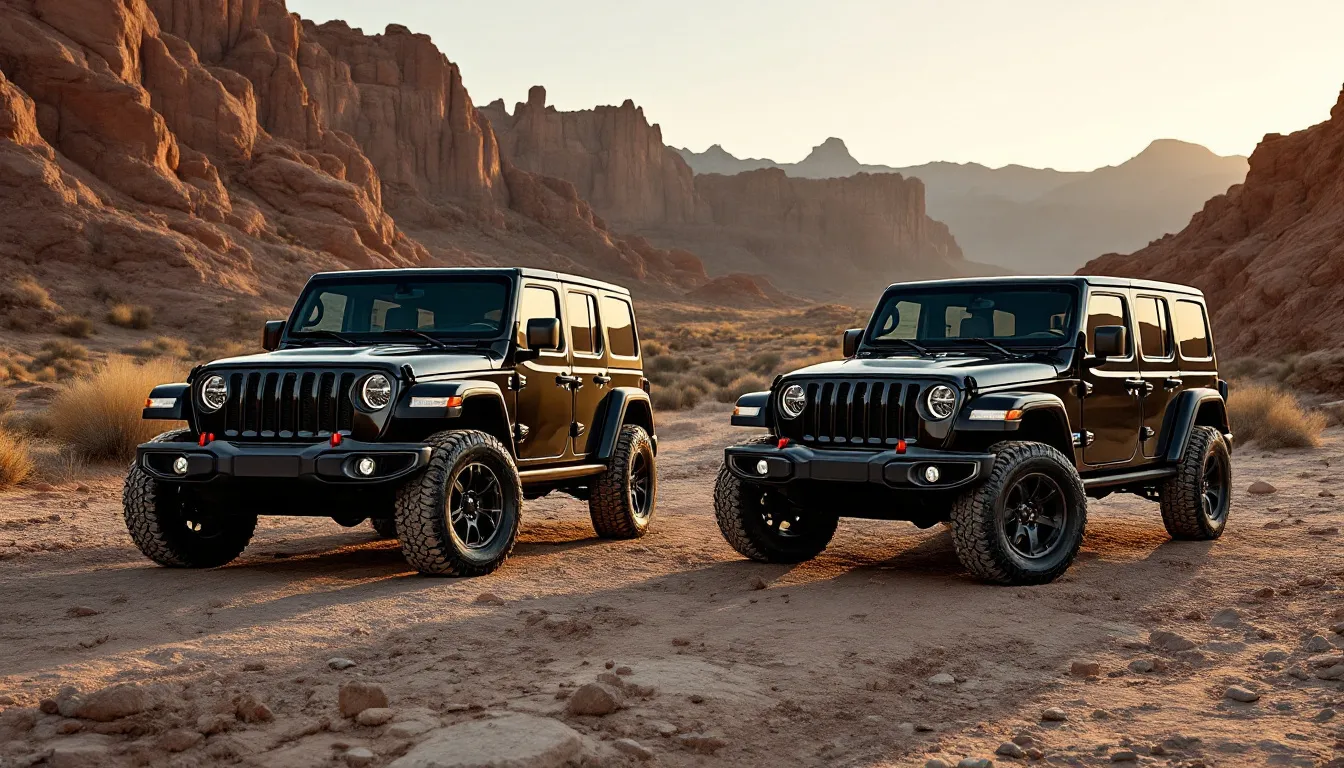
Jeep JK 2-Door vs 4-Door (Unlimited): Which Should You Buy?
Affiliate Disclosure: JeepJK Guide earns a commission on qualifying purchases made through links on this page, at no extra cost to you.
The Quick Answer
The JK 2-door versus 4-door decision is one of the most common questions any prospective Wrangler buyer faces — and honestly, there’s no universally right answer. It all depends on how you actually plan to use the truck.
The Jeep Wrangler JK (2007–2018) comes in two configurations: the standard 2-door JK and the stretched 4-door JK Unlimited (JKU). Here’s the real talk: If you’re wheeling solo or with one passenger and you want maximum trail performance, the 2-door’s shorter wheelbase and lighter weight give you a genuine edge. If you regularly carry passengers or need usable cargo space, the JKU wins convincingly.
I bought a 2014 JKU myself, and the decision ultimately came down to practicality. I needed to haul people and gear comfortably, and the extra doors and rear seat space made that a no-brainer — even though I knew I was sacrificing some of the trail-specific advantages the 2-door would’ve given me. Your situation might point a different direction entirely, which is why the sections below dig into every meaningful trade-off: dimensions, off-road angles, daily usability, real-world costs, and aftermarket parts availability.
If you’re just starting your JK research, the JK buyers guide covers the bigger picture, and the best year JK to buy will help you narrow down the model year question separately from the body-style question.
Get new guides by email
One email when we publish something worth reading. Unsubscribe anytime.
JK 2-Door vs JK Unlimited: The Core Specs
The key differences between these two come down to just a few hard numbers: wheelbase, overall length, weight, seating, and price. The 2-door is shorter, lighter, and cheaper. The JKU adds a usable rear seat and nearly double the cargo space, at the cost of roughly 20 inches of extra length and several hundred pounds of additional curb weight.
| Spec | JK 2-Door | JK Unlimited (4-Door) |
|---|---|---|
| Wheelbase | 95.4 in | 116.0 in |
| Overall Length | 152.5 in | 172.9 in |
| Overall Width | 73.8 in | 73.8 in |
| Curb Weight (approx.) | ~3,780 lb | ~4,200 lb |
| Seating Capacity | 4 | 5 |
| Cargo Volume (behind rear seat) | ~14.8 cu ft | ~31.5 cu ft |
| Breakover Angle (stock) | ~27° | ~20.5° |
| Approach Angle (stock) | ~44° | ~44° |
| Departure Angle (stock) | ~37° | ~37° |
| Base MSRP (2018, Sport trim) | ~$27,495 | ~$31,195 |
A few important notes: cargo volume and breakover angle figures can vary depending on trim level, equipment, and which Jeep source you’re referencing — verify these against Jeep’s published specifications before using them in a build plan. Trim matters too; the Rubicon gets different differential specs and skid plate coverage regardless of whether you buy 2-door or unlimited. If trim selection is still up in the air, the Rubicon vs Sport vs Sahara trim comparison walks through exactly what you get at each level.
The core takeaway is straightforward: the JKU is a significantly bigger vehicle in every dimension except width, and that size difference has real, measurable consequences both on technical trails and in your driveway.
Wheelbase, Overall Size & What It Actually Means Off-Road
This is where body style starts to matter in specific ways. Yes, the size difference has trail consequences — particularly on technically demanding terrain where you’re dealing with tight obstacles and high-centered rocks. The 2-door’s 95.4-inch wheelbase gives it better breakover geometry and makes it easier to clear obstacles without dragging your underbody. The JKU’s 116-inch wheelbase is a real limitation on certain trail features, though it’s not a disqualifying one for most off-roaders.
Let’s define breakover angle in plain language: it’s the steepest peak or ridge you can cross without the lowest point of your undercarriage scraping. Think of it as drawing the largest triangle from your front axle, down to the lowest part of your vehicle (usually the transfer case or fuel tank), and back to your rear axle. A higher breakover angle means you can crest steeper obstacles without going belly-up.
Stock figures suggest the 2-door carries roughly a 6–7 degree breakover advantage over the JKU. That gap narrows significantly once you add suspension lift — a 2.5-inch lift on the JKU meaningfully raises the entire body and closes the disadvantage considerably — but at identical suspension heights, the 2-door keeps its geometric upper hand.
Approach and departure angles are essentially equal for both body styles at stock height, since both share the same front and rear overhang proportions relative to their respective wheelbases. Where the JKU genuinely pays a penalty is on tight switchbacks, narrow shelf roads, and V-ditches. A 20-inch wheelbase difference feels substantial when you’re threading a narrow line at an odd angle. That extra length can hang up on terrain that a shorter wheelbase would clear cleanly.
Here’s the thing: suspension travel and axle articulation are independent of body length. Both JK and JKU platforms use the same Dana 30 front and Dana 44 rear axle options on most trims (Rubicon gets Dana 44 front). Both accept the same lift kit families. If you’re planning a serious trail build, decisions like control arm geometry and suspension design matter just as much as body style. For a deep dive into wheel fitment and how it interacts with your suspension geometry, the JK wheel backspacing and offset guide is essential reading.
The honest summary: the 2-door has a genuine off-road geometry advantage on technical terrain, but the JKU is far from a compromised off-roader. Most trail obstacles won’t expose the difference at all.
Daily Driving, Passengers & Cargo: This Is Where the JKU Shines
Here’s where the JKU separation is obvious. The extra 20 inches of wheelbase buys you an actual rear seat where adult passengers can sit without contorting themselves, plus cargo room that doesn’t feel like playing Tetris every time you load up. If you regularly carry passengers beyond just yourself and a co-pilot, the 2-door’s rear jump seats feel more like a legal formality than a practical seating arrangement.
When I bought my 2014 JKU, practicality was a major part of that decision. I needed reliable space for passengers and gear, and the 2-door would’ve meant constantly compromising on both. That calculation changes depending on who you are and how you live, but it’s a real factor for a lot of buyers.
The cargo volume gap is substantial enough that it deserves real attention. The JKU offers roughly double the behind-the-seat cargo space compared to the 2-door (around 31.5 cu ft versus 14.8 cu ft). In actual terms, that’s the difference between loading your weekend camping gear comfortably versus engaging in creative storage every single time you have more than a sleeping bag and a cooler.
The top configuration also plays into this equation significantly. Both 2-door and unlimited models offer soft tops and hardtops, but the JKU’s rear half opens up more possibilities depending on what you choose. For the full breakdown of soft top versus hardtop trade-offs, the JK soft top vs hard top comparison is a must-read. Already decided on soft? Best soft tops for Jeep JK compares the top options. Committed to hardtops? Best hardtops for Jeep JK does the same analysis for that category.
One practical upgrade worth doing early if you buy a JKU: get better seat covers. The OEM upholstery on 2007–2018 JK Sport trims shows wear fast and offers almost no lumbar support.
For JKU owners who want a complete front-and-rear interior refresh with waterproof construction, this full-set seat cover designed specifically for 4-door Unlimited models is worth considering:

Wrangler Seat Covers 2007-2026 Full Set, Waterproof Leather Interior Sets with Lumbar Support Custom
$139.99
Check Price on Amazon →If you only need front seat covers and want something that works on both 2-door and 4-door JK models (2013–2017), these front covers are listed as universal fit for both body styles:

GIANT PANDA Front Jeep Wrangler 2/4 Door JK 2013-2017 Car Seat Covers for Sahara Sport Rubicon Unlim
$129.99
Check Price on Amazon →Both are listed as waterproof or faux leather — smart for a vehicle where you’re regularly climbing in with muddy boots or soaking gear. Check Amazon’s current reviews for those products before you buy; they’re the best source for real-world feedback on how these hold up.
Off-Road Performance: Does Body Style Actually Change What You Can Wheel?
The 2-door is modestly better off-road in stock trim, but the practical gap is much smaller than most people assume. Both JK body styles share the same axles, transfer case, and suspension foundation, so real capability depends far more on trim level, tires, and how much you’re willing to modify the rig than on which body you chose.
Both 2-door and unlimited models came standard with the NV241 Command-Trac transfer case on Sport and Sahara trims, and the NV241OR Rock-Trac on Rubicon. The Rubicon also got electronic front and rear locking differentials and front sway bar disconnect — benefits that come with the body regardless of door count. That means a Rubicon JKU is equipped more capable from the factory than a Sport 2-door. Trim matters.
What the 2-door genuinely has in its corner is that wheelbase advantage on technical terrain (which we covered in detail earlier), plus it’s roughly 400 pounds lighter in stock trim. Less weight helps on loose, sandy terrain, matters in recovery situations, and shows up in your fuel economy. The JKU compensates partly through its longer chassis, which provides more stable footing on side slopes and shelf roads — it’s not a pure disadvantage everywhere.
For serious trail builds, both body styles accept the same core armor. A front bumper with winch mount is a front bumper — the width is identical across both bodies. If you’re planning a trail-ready build on either model, this steel front bumper option is compatible with JK, JKU, JL, JLU, and JT platforms:
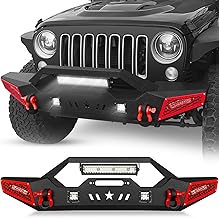
for Wrangler JK JL & Gladiator JT Front Bumper Compatible with 2007-2026 Jeep Wrangler JK JL JKU JLU
$268.99
Check Price on Amazon →It includes a winch mounting plate, LED lighting, and D-rings — a complete front-end solution regardless of whether you’re building a 2-door or unlimited. For suspension work that improves geometry, best control arms for Jeep JK covers what actually matters. On rocky terrain, steel vs aluminum skid plates for rock crawling breaks down the real trade-offs. If you’re adding winch capability to a JKU build, best winch for Jeep JK Unlimited has specific recommendations.
Bottom line: the 2-door is the better trail tool at equal trim and modification levels, but not by a margin large enough that it should override your practical needs if the JKU makes more sense for how you live.
Price, Insurance & Real Cost of Ownership
The JKU costs more to buy, more to insure, and slightly more to maintain — but we’re not talking about a massive difference here. The spread is real enough to factor into your budget, but it shouldn’t be the only thing driving your decision unless you’re working with a very tight ceiling.
On the used market, a 2-door JK typically runs somewhere in the $1,500–$3,500 range less than a comparable JKU of the same year and trim. That’s an approximate range based on recent market observation; your local market might show different numbers. Low-mileage Rubicon JKUs command a significant premium over any 2-door, regardless of trim. Check current listings on Craigslist, Facebook Marketplace, or Autotrader to see what the actual spread looks like in your region.
Insurance rates vary so much by state, driver profile, and coverage level that I won’t give specific numbers — but insurers do generally rate the JKU slightly higher than the 2-door because of its greater replacement cost. Get quotes for both body styles before you decide. That actual number matters.
Registration fees in many states scale with vehicle weight or original MSRP. The JKU’s higher curb weight (~400 lb, approximately) and higher original MSRP can bump your annual registration cost in states that use weight-based or value-based fee structures. Check with your local DMV to see if this applies where you live.
Aftermarket parts stack up differently between the two as well. JKU-specific parts cost the same or more than their 2-door equivalents, and certain parts exist only for the longer wheelbase. For example, these rear fender flares designed specifically for 4-door JKU models run $359.99 for the set:

Jeep Flat Style Rear Fender Flares | 2-Piece Set, Black, Textured Finish | 10050-07 | Fits 2007-2018
$359.99
Check Price on Amazon →A 2-door buyer doesn’t need these at all, but a JKU owner doing maintenance or cosmetic work has to budget accordingly. Before you commit to any used JK, the complete JK buyers guide covers what to actually inspect and what red flags to avoid. For an idea of ongoing maintenance costs after ownership begins, the JK maintenance schedule and costs gives you a realistic picture of year-to-year ownership.
Mods & Aftermarket Parts: What’s Different Between the Two?
Here’s the important part: most core JK aftermarket parts — lift kits, axles, front bumpers, skid plates, lighting — fit both body styles without modification. But tops and body-specific armor are not interchangeable between 2-door and unlimited JK. This is non-negotiable, and it’s something a lot of first-time buyers discover the hard way.
Before you order anything body-specific, do what I’ve always done: dig through community forums to find real-world fitment reports from owners who’ve actually installed that part. User experience is worth more than any spec sheet.
Running boards and rock sliders are a clear example of body-specific parts. These options are all explicitly listed as 4-door JKU fitment only.
The Hooke Road running board option provides full side protection along the longer wheelbase:
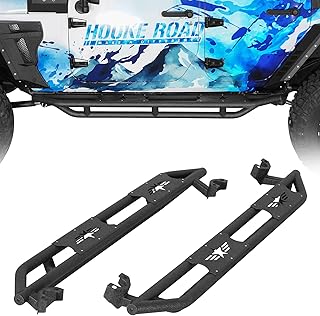
Hooke Road JK Running Boards 4 Door Rock Sliders for 2007-2018 Jeep Wrangler JK Unlimited 4 Doors On
$199.99
Check Price on Amazon →Here’s a second Hooke Road option with a different profile:
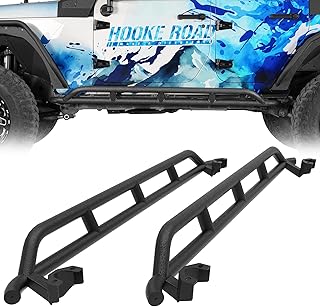
Hooke Road Wrangler JK Rock Slider Nerf Bars Running Boards for 2007-2018 Jeep Wrangler JK Unlimited
$239.99
Check Price on Amazon →And a third option from YZONA at a similar price:
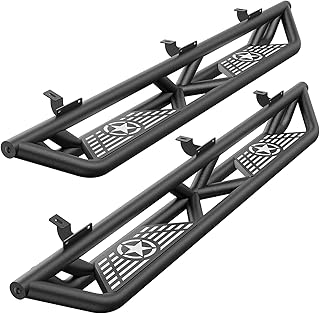
YZONA Running Boards Side Steps Compatible with 2007-2018 Jeep Wrangler JK | JKU Unlimited for 4 Doo
$258.99
Check Price on Amazon →All three are explicitly labeled as 4-door JKU fitment — none of them will fit a 2-door JK. A 2-door buyer needs sliders that are specifically engineered for the shorter wheelbase.
Mirror choices, on the other hand, work differently. These door-off mirrors are listed as compatible with both TJ and JK body styles — 2-door and unlimited alike:
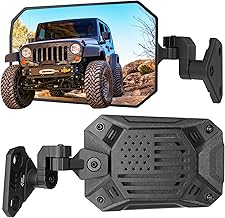
JOYTUTUS Wrangler Mirrors Doors Off Compatible with Wrangler TJ JK & Unlimited, Wrangler JK Side Mir
$69.99
Check Price on Amazon →They’re a smart accessory for any JK owner who pulls doors regularly, and you don’t need to verify door count before ordering.
Other body-specific categories deserve attention: bikini tops (size varies by wheelbase) — best JK bikini tops covers fitment. Half doors and tube doors are also cut to specific wheelbases — best half doors and tube doors for Jeep JK walks through what fits what. Front bumpers, notably, share the same width across both bodies, so front bumper shopping is generally unified between 2-door and unlimited — JK front bumpers with winch mounts applies to both.
Which Should You Buy? The Real Decision
The right choice between 2-door and 4-door ultimately hinges on three honest questions: how many people do you regularly transport, how technical is your wheeling, and what’s your actual budget? Answer those three questions truthfully and the decision usually becomes pretty obvious.
| Your Situation | Best Choice | The Reasoning |
|---|---|---|
| Solo wheeler or couple, mostly trail work | JK 2-Door | Shorter wheelbase, lighter weight, measurably better breakover angles |
| Family with kids or regular adult passengers | JK Unlimited | Rear seat and cargo space are genuinely usable; the 2-door rear is genuinely cramped |
| Daily driver with occasional off-road trips | JK Unlimited | Daily practicality pays dividends every single day; the trail performance gap is smaller than you think |
| Working with a strict budget | JK 2-Door | Lower purchase price, lower insurance rates, parts generally cost less |
| Overlanding or extended trip camping | JK Unlimited | More cargo volume, easier to build out for multi-day missions |
| City dweller with tight parking | JK 2-Door | 20 inches of length is genuinely noticeable in urban parking situations |
| Planning to run competitive trail events | JK 2-Door | Wheelbase advantage shows up in scored obstacle courses |
The one-sentence version: if you carry more than one regular passenger or need usable cargo space, get the JK Unlimited; if you wheel hard and travel light, the 2-door’s shorter wheelbase will prove itself worth the trade-offs.
Before you settle on a body style, the Rubicon vs Sport vs Sahara trim comparison will help you figure out which trim level makes sense. And before you commit to a specific model year, JK common problems by year to watch for when buying used is absolutely required reading.
Frequently Asked Questions
After digesting the full comparison, most buyers still have a few specific lingering questions about what “Unlimited” actually means, how much more you’re paying, and whether parts will cross over. Here are the five questions that come up most often.
Is the Jeep JK Unlimited better for off-roading than the 2-door?
The 2-door has a measurable edge in stock form — that shorter wheelbase (95.4 in versus 116.0 in) translates to a better breakover angle and slightly lower curb weight. The JKU is still a capable off-roader though, and when both vehicles are lifted equally and modified to similar specs, that gap closes considerably. Honestly, trim level matters more than body style; a Rubicon’s locking diffs and sway bar disconnect matter more for real wheeling than whether you have two or four doors. Best mud terrain tires for JK and best beadlock wheels for Jeep JK cover the tire and wheel upgrades that genuinely improve capability on either body.
What does JK Unlimited mean?
JK Unlimited is Jeep’s name for the 4-door, long-wheelbase version of the Wrangler JK (2007–2018). The name refers to the longer body with full rear doors, an actual rear seat where adults can sit, and a 116-inch wheelbase compared to the 2-door’s 95.4 inches. The naming convention traces back to the TJ generation, where the 4-door was also called Unlimited.
Is a 2-door or 4-door Jeep JK better for daily driving?
The 4-door JKU is measurably better for daily driving. The rear seat is usable by real adults, cargo volume is roughly double (verify exact figures), and the longer wheelbase generally provides a slightly more composed highway ride. The 2-door’s only daily-driving advantage is its shorter overall length — roughly 20 inches less to maneuver in parking lots and city traffic.
How much more does a JK Unlimited cost than a 2-door?
On the used market, a JKU typically runs somewhere in the $1,500–$3,500 range more than a comparable 2-door of the same year and trim. Those are approximate ranges based on general market observation, and actual prices vary significantly by region, mileage, condition, and current local demand. Check active listings in your area to get real numbers before you make a decision.
Do 2-door and 4-door Jeep JK parts interchange?
Most core parts do interchange: lift kits, axles, front bumpers, skid plates, lighting, and drivetrain components are shared across both bodies. However, soft tops, hardtops, rear body armor, running boards, and rock sliders are body-specific — a part built for the JKU’s 116-inch wheelbase will not fit the 2-door, and vice versa. Always verify the product fitment list specifically mentions your door count and wheelbase before ordering anything body-specific.
Get the Free JK Build Planner
Complete PDF with mod checklists, gear ratios, tire sizing charts, and budget worksheets. Everything you need to plan your JK build.
No spam. Unsubscribe anytime. By subscribing, you agree to our Privacy Policy.
Allan
I'm Allan. I bought a 2014 Jeep Wrangler JKU and I research the hell out of every mod before I touch it. Everything here is tested or deeply researched on my own rig - no sponsored fluff, just honest findings.
Learn more about me →Get the JK Build Planner
Free PDF with complete build checklists, gear ratios, and tire fitment guides.
By subscribing, you agree to our Privacy Policy.
Related Articles
Jeep JK Buyers Guide: What to Know
I learned the hard way that enthusiasm can cloud judgment when buying a Jeep. Back in South Africa, I found what looked like a pristine JKU Sahara at a...
Jeep JK Buyers Guide: What to Look for When Buying Used (2026)
Complete used Jeep JK buying guide: inspect frame/rust, test 4WD, evaluate mods, check for death wobble, verify history. Avoid expensive mistakes with our systematic checklist.
Rigid Industries vs KC HiLiTES Light Bars for JK: Real-World Comparison
Detailed comparison of Rigid Industries and KC HiLiTES light bars for Jeep Wrangler JK. Real brightness data, mounting considerations, and which works best for your build.