How to Install LED Headlights on Jeep Wrangler JK: Complete Step-by-Step Guide
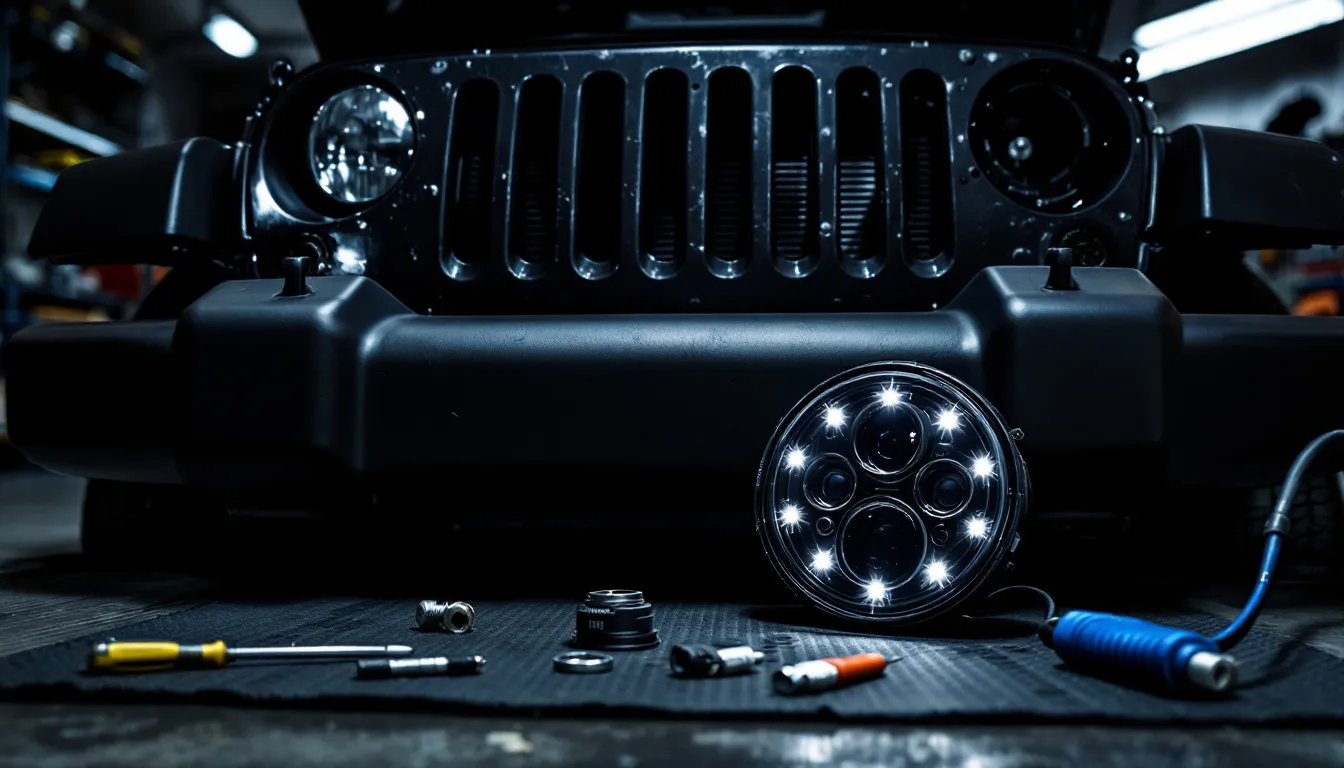
How to Install LED Headlights on Jeep Wrangler JK: Complete Step-by-Step Guide
Factory Jeep Wrangler JK headlights are, to put it charitably, barely adequate — dim, yellowish, and unchanged in basic performance for years. If you’ve ever driven a dirt road at night and found yourself squinting past the reach of your own headlights, you already know the upgrade is overdue.
I learned the hard way what not to do. A friend called asking for help with his JK’s lighting, and I thought I’d knock it out in an hour. Rushed the wiring, skipped the bench test, and watched the connectors melt before my eyes. That very long garage night taught me something every JK owner should know before cracking open a headlight bucket: preparation and the right parts aren’t optional. Bench-testing your wiring before buttoning everything up saves hours of backtracking and keeps your electrical system intact.
This guide walks you through the entire process — from choosing between a full housing replacement and a bulb-only swap, to the specific tools and adapters your JK actually needs (including why 2013–2018 models demand an anti-flicker harness), all the way through the step-by-step install and beam aiming. We also call out the JK model year differences (2007–2018) that affect your wiring approach. Everything here comes from real install experience, not a spec sheet.
What You Need Before You Start: Tools & Parts List
Getting organized before you pull a single screw is the difference between a smooth Saturday afternoon and a frustrating one. The JK headlight bucket is straightforward to access, but having the wrong adapter or a missing harness will send you back to square one mid-install.
Tools You’ll Need
- T27 Torx bit and driver (or ratchet adapter)
- Standard flathead and Phillips screwdrivers
- Needle-nose pliers
- Electrical tape or heat shrink tubing
- Multimeter (strongly recommended for bench testing)
- Masking tape and a flat wall or garage door (for aiming)
- Work gloves — LED housings have sharp edges on some units
Parts You’ll Need
- Your chosen LED headlight (full housing or bulb swap — more on this below)
- H13-to-H4 adapter pigtail — essential if your new LEDs use H4 connectors but your JK runs H13 from the factory

2PCS 7 Inch LED Headlight Connector Pigtail,H13 to H4 Adapter Headlight Socket,Heat Resistant Headli
Check Price on Amazon →- Anti-flicker/CANBUS decoder harness — eliminates error codes and flickering caused by the JK’s load-monitoring electronics
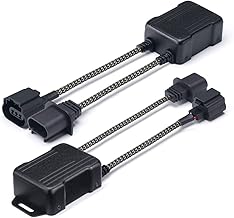
Xprite H13/9008 LED Canbus Decoder Anti Flicker Harness Error Free Resistor Capacitor for LED Headli
Check Price on Amazon →⚠️ Skip the anti-flicker harness on a 2013–2018 JK, and you’re almost guaranteed flickering and CANBUS error codes. The JK’s Body Control Module (BCM) watches the load on each lighting circuit. LEDs draw far less current than halogens, so the BCM reads that drop as a bulb failure and cycles power to the circuit. The decoder harness adds the correct resistive load to keep the BCM satisfied. It’s a cheap insurance policy that takes five minutes to install.
Not sure about your model year or trim? See our guide on JK common problems by year — the electrical quirks vary more than you’d expect between a 2007 and a 2018, and knowing your specific JK pays dividends.
Choosing the Right LED Headlights for Your JK
The LED headlight market for JKs breaks into three distinct camps, and knowing which one fits your needs matters before you hit “buy now.”
Premium Full Housing — Super7 2.0: This is the path most JK owners choose if they want a clean, permanent upgrade that won’t cause headaches. The Super7 2.0 replaces the entire headlight assembly with a purpose-built LED housing. It’s plug-and-play, DOT approved for street use, and designed from the ground up to eliminate the flicker and error code issues that plague bulb-only swaps. Build a daily driver? Use the JK on the road regularly? This is the one to get.
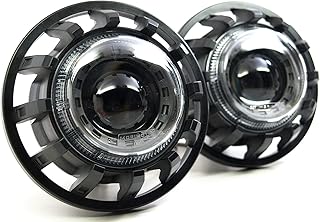
Super7 2.0 LED Headlight Housings for 2007-2018 Jeep Wrangler JK, Full LED Housing Replacement, Flic
Check Price on Amazon →Enthusiast Full Housing — J.W. Speaker 8700 Evolution J2: J.W. Speaker has been making professional lighting for decades, and it shows in the 8700 Evolution J2. The carbon fiber bezel looks great, the adaptive driving beam actually works, and the beam pattern is exceptional. If you want the absolute best light output and don’t mind spending over $500 for the pair, this is worth the investment. It’s the choice for serious trail rigs and owners who want lighting that performs as well as it looks.
Budget Bulb Swap — Termitor H13: Want a real brightness boost without replacing the full housing? A direct H13 LED bulb swap is your cheapest entry point. The Termitor H13 puts out serious lumens and installs in about 15 minutes. You’ll need the H13-to-H4 adapter and the anti-flicker harness to make it work properly in a JK — those are non-negotiable. Also worth knowing: this option is better suited for off-road or trail use. DOT compliance on bulb-swap LEDs is all over the place, so check the listing carefully if street legality matters to you.
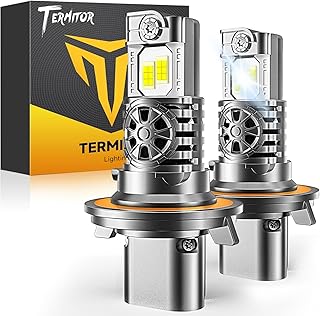
Termitor Brightest H13/9008 LED Bulbs, 10X Brighter 50,000LM, 85K+ Hours Service Life, 6500K Cool Wh
Check Price on Amazon →Trim level can affect your stock wiring slightly — Rubicons and Saharas sometimes have slightly different factory configurations than Sport models. See the JK trim level breakdown to confirm what you’re working with.
LED Headlight Options at a Glance: Quick Comparison
One table, all the critical details:
| Product | Type | DOT Approved | Requires Anti-Flicker Harness | Approx. Price |
|---|---|---|---|---|
| Super7 2.0 | Full Housing Replacement | Yes | No (built-in) | Check current price |
| J.W. Speaker 8700 Evolution J2 | Full Housing Replacement | Yes | No (built-in) | ~$500 |
| Termitor H13 LED Bulb | Bulb Swap | Off-road use | Yes | ~$40 |
| Termitor Smart H4 (Bluetooth) | Bulb Swap | Check listing | Yes | ~$100 |
The Termitor Smart H4 deserves a mention if you want app-controlled dimming and color temperature adjustment (3000K–6500K). That flexibility is genuinely useful for someone who runs mixed duty — street driving during the week, trail runs on weekends:
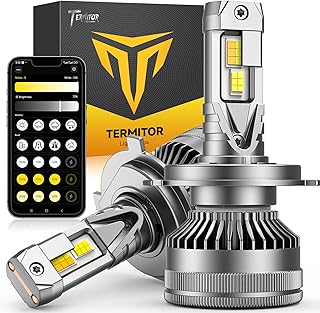
Termitor Smart H4 Light Bulb, 0-80000LM 1500% Super Brighter, App-Controlled Dimming & Color Tempera
Check Price on Amazon →All four options fit into the standard 7-inch round headlight opening that every JK and JKU uses from 2007 through 2018 — two-door and four-door fitment is identical across the board.
Step-by-Step: How to Install LED Headlights on Your Jeep Wrangler JK
This walkthrough covers both the full housing swap and the bulb-only swap. The first three steps are the same regardless of which path you take.
1. Disconnect the negative battery terminal.
Always start here. Working on any JK lighting circuit with the battery connected is how you blow a fuse, trip a BCM fault, or melt a connector. Disconnect the negative terminal at the battery, then give the system five full minutes to discharge before you touch a single wire. This isn’t paranoia — it’s how electrical systems stay intact.
2. Remove the grille-mounted headlight retaining ring.
On all 2007–2018 JKs, the headlight sits inside a round housing held in place by a chrome or black retaining ring. Three T27 Torx screws secure it. Remove all three and set them somewhere they won’t roll under the car — I use a small magnetic tray. The retaining ring pulls straight out once the screws are out. Don’t twist it; just pull it forward.
3. Unplug the factory headlight connector.
The OEM headlight uses an H13 connector. You’ll see a small plastic tab on top of the connector — squeeze it and pull the connector straight back toward you. Don’t twist sideways; the plastic can be brittle on older JKs. Pull it completely free and set the factory halogen headlight aside.
4a. Full housing swap (Super7 2.0 or J.W. Speaker 8700):
These units come with their pigtail already attached. Literally plug the factory H13 connector straight into the headlight’s harness — no adapters, no fumbling. Press it until it clicks. Seat the housing into the bucket and confirm the alignment tabs are seated flush before you reattach the retaining ring. Snug the T27 screws evenly; don’t crank them.
4b. Bulb-only swap (Termitor H13 or similar):
This path requires more steps, but it’s still straightforward. Take the H13-to-H4 adapter pigtail and plug your factory H13 connector into the adapter’s H13 socket. Then connect the H4 end to your LED bulb. Now the anti-flicker harness: connect it inline between the adapter and the LED bulb. If you want a belt-and-suspenders approach with a fused relay harness that draws power directly from the battery — common for builds running multiple auxiliary lights — the True Mods wiring harness is a solid option:
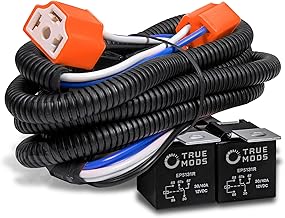
True Mods H6054 H4 LED Headlight Wiring Harness [Negative Switched Conversion] [Fused] Universal H4
Check Price on Amazon →5. Bench test before you button anything up.
This is the step I skipped. Don’t do what I did. Before you even think about reinstalling the retaining ring, reconnect the battery, turn on your headlights, and verify that low beam and high beam both work on both sides. Watch for flickering. Check the dash for warning lights. If everything is clean and bright, move forward. If you see flickering or a dash warning light pops up, the anti-flicker harness isn’t seated properly or has a polarity issue — see the troubleshooting section below. That five-minute bench test saves an hour of diagnostic work later.
6. Secure the housing and reinstall the retaining ring.
Once both headlights pass the bench test, tuck any excess wiring behind the headlight bucket — keep it clear of hot surfaces and anything that moves. Reattach the retaining ring with the three T27 Torx screws. Run them in a triangle pattern to seat the housing square.
7. Aim the headlights.
Park the Jeep on flat ground, nose pointed at a blank wall or garage door about 25 feet away. Use masking tape to mark the center of each headlight’s beam pattern on the wall. The horizontal cutoff line of the low beam should sit at or just slightly below the center height of the headlight itself. Adjust the two aim screws — one on top, one on the side of each housing — until both beams are correct. Misaimed LED headlights are brighter than halogens, so they’ll absolutely blind oncoming drivers if you point them up. This step takes time but matters more than you’d think.
Need specifics on your exact model year? Check JK model year differences — 2007–2011 models don’t have the same BCM sensitivity as 2012–2018 models, which changes how critical some of these steps are.
Get new guides by email
One email when we publish something worth reading. Unsubscribe anytime.
Troubleshooting Common JK LED Headlight Problems
Most issues that crop up after an install fall into a predictable handful of categories. Here’s how to diagnose what happened and how to fix it.
Headlights flickering at idle or low RPM. This is almost always a CANBUS/BCM load-detection issue. The JK’s BCM reads the low current draw of LEDs as a failing bulb and starts cycling power to the circuit. The fix: install the anti-flicker harness. It adds the correct resistive load to keep the BCM happy. On 2013–2018 JKs, the BCM is noticeably more sensitive than early models, so this harness is essentially non-negotiable on those years.
“Bulb Out” warning light on the dash. Same root cause as flickering — the BCM thinks it’s reading a dead bulb because LED current draw is so much lower than halogen. The CANBUS decoder harness resolves this. If you have the harness installed and still see the warning, confirm the harness is properly seated at both ends and that all connectors are fully clicked in.
High beam works but low beam doesn’t (or vice versa). On bulb-swap installs using an H13-to-H4 adapter, this is almost always a polarity reversal. The H13 connector on the JK is a “negative-switched” circuit — the BCM switches the ground wire rather than the positive to control high/low beam. Some aftermarket pigtails get this backward. If only one beam mode works, try reversing the polarity connection at the adapter or source an adapter specifically designed for negative-switched H13 circuits.
One headlight significantly brighter than the other. Check that both anti-flicker harnesses are seated and connected identically. Also verify both LED units are from the same production batch — mixed batches of budget LEDs can have real output variation.
For a deeper dive into electrical issues beyond just headlights, bookmark our full list of common JK problems by year — the electrical gremlins vary more than you’d expect.
Why Community Research Matters Before Buying JK Headlights
Amazon listings for JK LED headlights are a minefield of exaggeration. Lumen claims in the six-figure range. Photos that look nothing like the actual beam pattern. Spec sheets that conveniently omit whether a unit carries DOT approval or just says “SAE compliant.” It adds up to a genuinely confusing buying landscape if you’re working from listings alone.
Jeep-specific forums and actual owner communities have saved more bad purchases than any product page ever has. Real owners posting beam pattern photos, actual install notes, and long-term durability feedback? That’s information no manufacturer spec sheet touches. You’ll find comments from people who’ve been running the same headlights for three years through hard trail use, or warnings about units that looked great in photos but failed after six months. That truth-telling is invaluable.
DOT compliance deserves its own emphasis. A headlight marked “DOT approved” has been designed and tested to meet federal standards for street use. A headlight marked “for off-road use only” has not, and using it on public roads can get you a fix-it ticket in many jurisdictions. Always verify the actual DOT marking stamped on the lens itself, not just what the product listing claims. When I was sourcing LED upgrades, I called the manufacturer directly on a couple of units that had ambiguous listings. Five minutes of phone time saved me from buying non-street-legal lights.
Doing the research before buying, not after returning something, is a principle that shapes everything on this site. Spec sheets tell you what a manufacturer wants you to believe; community knowledge tells you what actually happens after a year of trail use. See our complete JK buyer’s guide for the same research-first approach applied to every major JK purchase decision.
Frequently Asked Questions: JK LED Headlight Installation
Do I need to program anything after installing LED headlights on a Jeep JK?
No programming is required for a JK LED headlight swap. The swap is entirely plug-and-play at the connector level. However, you will need to physically aim the headlights after installation — this is a manual adjustment done with a screwdriver, not a programming step.
Will LED headlights cause error codes on my Jeep Wrangler JK?
They can, especially on 2013–2018 JK models with a more sensitive BCM. The JK’s electronics monitor current draw on lighting circuits, and LEDs draw far less than factory halogens, triggering a “bulb out” fault. An anti-flicker/CANBUS decoder harness eliminates this issue by simulating the correct load. Full housing replacements like the Super7 2.0 have this circuitry built in. Check the full JK model year breakdown for year-specific details.
What size headlights does a Jeep Wrangler JK take?
All 2007–2018 Jeep Wrangler JK and JKU models use a standard 7-inch round headlight. This is a universal size with a long automotive history, so the aftermarket selection is enormous — from basic H13 bulb swaps to full LED housing replacements like the J.W. Speaker 8700 Evolution J2.
Can I install LED headlights on a JK myself, or do I need a mechanic?
This is a beginner-to-intermediate DIY job that most JK owners handle themselves. You need basic hand tools (primarily a T27 Torx bit), patience with small connectors, and about 45–90 minutes depending on which path you take. A bulb-only swap with an adapter and anti-flicker harness is slightly more involved than a full housing swap, which is often genuinely plug-and-play. No soldering required, no cutting factory wiring.
Are LED headlights legal on a Jeep Wrangler JK for street use?
It depends on the product. Full housing replacements from reputable brands like Super7 and J.W. Speaker carry DOT approval, making them legal for street use in all U.S. states. Bulb-swap LEDs are more complicated — many are marked “for off-road use only” and are technically not street legal. If street legality matters to you, verify the DOT marking on the lens itself before purchasing. If you’re cross-shopping with the newer JL platform, check how the JL Wrangler handles LED headlights differently.
Final Thoughts: Is the JK LED Headlight Swap Worth It?
Absolutely. Factory JK halogens are one of the easiest and most satisfying performance wins on the entire platform. The upgrade is accessible to any owner with basic tools and an afternoon free.
The two paths are straightforward: if you want a clean, street-legal, permanent upgrade with zero fuss, a DOT-approved full housing replacement like the Super7 2.0 or J.W. Speaker 8700 is your answer. If you want a brightness boost on a budget and don’t mind adding an adapter and harness, a bulb swap gets the job done for under $70.
Either way, don’t skip the bench test and don’t skip the anti-flicker harness on a post-2012 JK. Those two decisions separate a smooth install from a frustrating one. For more on keeping your JK’s electrical system healthy overall, dive into other common JK issues worth knowing about. And if you’re newer to the JK platform entirely, the JK buyer’s guide for new owners is a solid next stop.
Free: JK Fluids at a Glance
Every fluid, spec and capacity for the 2007-2018 Wrangler JK on one page, plus a cut-out glovebox card. Checked against the owner's manuals. From the JK Service Kit.
Email me the download and new guides when they are published. Unsubscribe anytime. Privacy Policy.
Allan
I'm Allan. I own a 2014 Jeep Wrangler JKU and I research the hell out of every mod before I touch it. When I've fitted something to my own Jeep, I say so. Everything else is researched from manufacturer specs and other owners' reports. No sponsored fluff.
Learn more about me →Free: JK Fluids at a Glance
Every fluid, spec and capacity for the 2007-2018 JK on one page, plus a glovebox card.
Email me the download and new guides when they are published. Unsubscribe anytime. Privacy Policy.
Related Articles
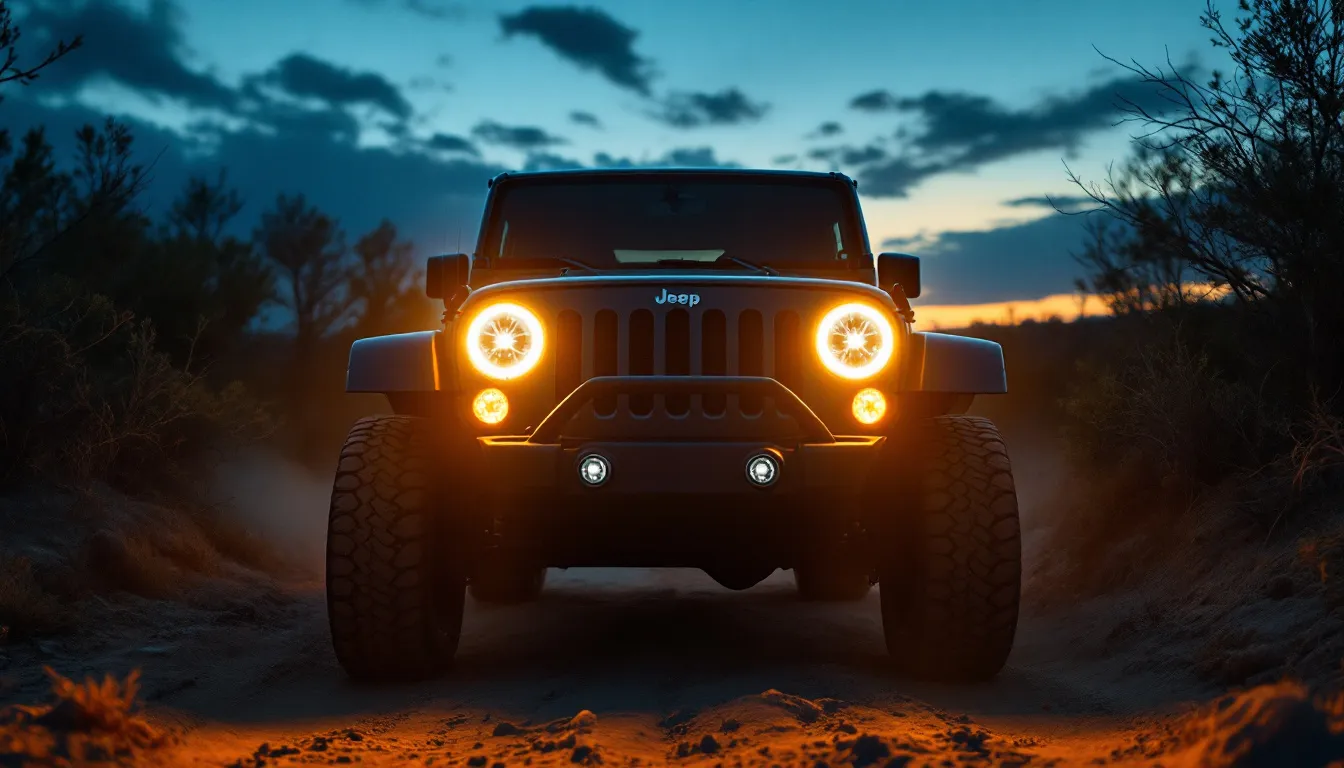
Oracle Lighting LED Headlights for Jeep JK: Halo, Projector & Sealed Beam Options Reviewed
Oracle Lighting is a US-based aftermarket lighting brand that specialises in LED and halo headlights, fog lights, and accent lighting. Their 7-inch...
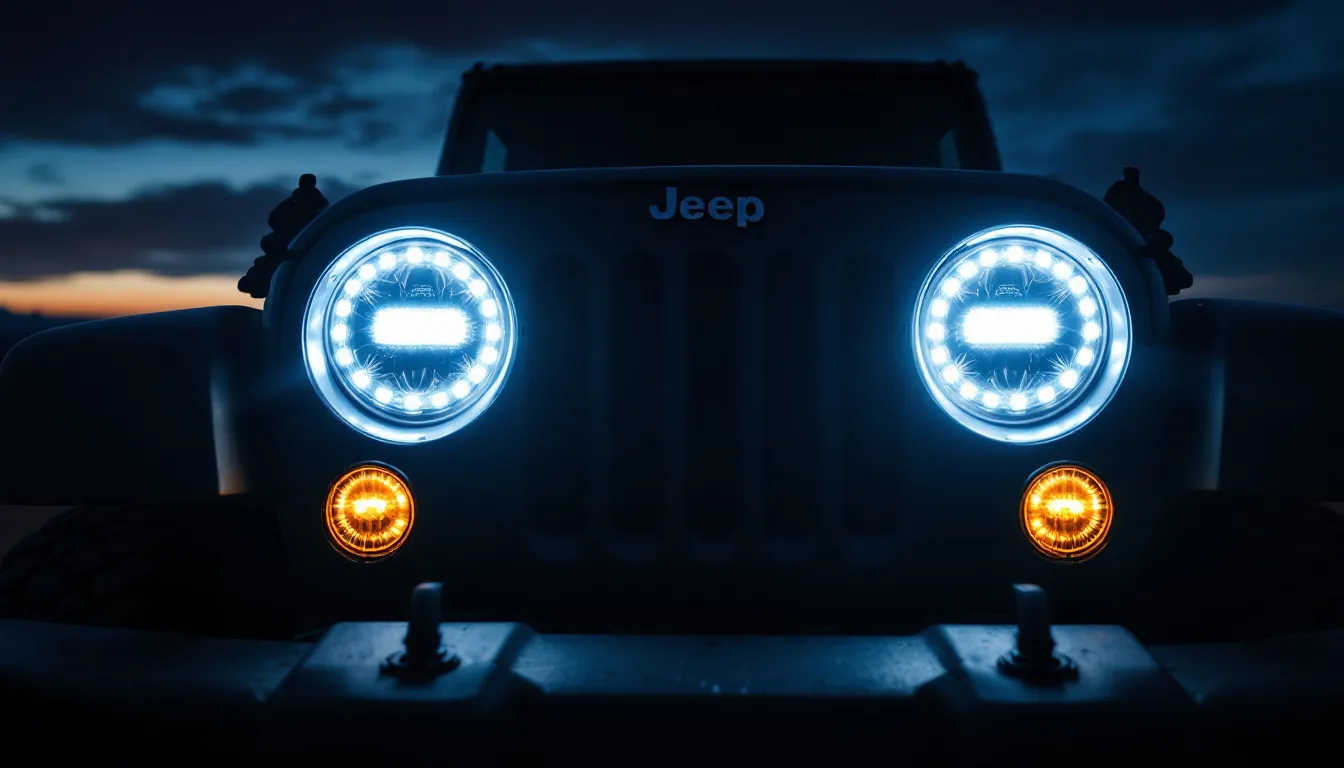
JW Speaker 8700 LED Headlights for Jeep JK: Full Review & Install Notes
The JW Speaker 8700 Evolution J2 is a DOT-compliant, 7-inch round LED headlight designed as a direct plug-and-play replacement for the 2007–2018 Jeep...
Best Light Bars for JK Wrangler: Complete Guide
The best light bars for a 2007-2018 Jeep JK: seven Amazon picks from $41 to $145, where to mount them, the windshield fold-down test, and the wiring that makes an install last.