JK Wheels & Tires Guide: Fitment, Sizing & Best Options
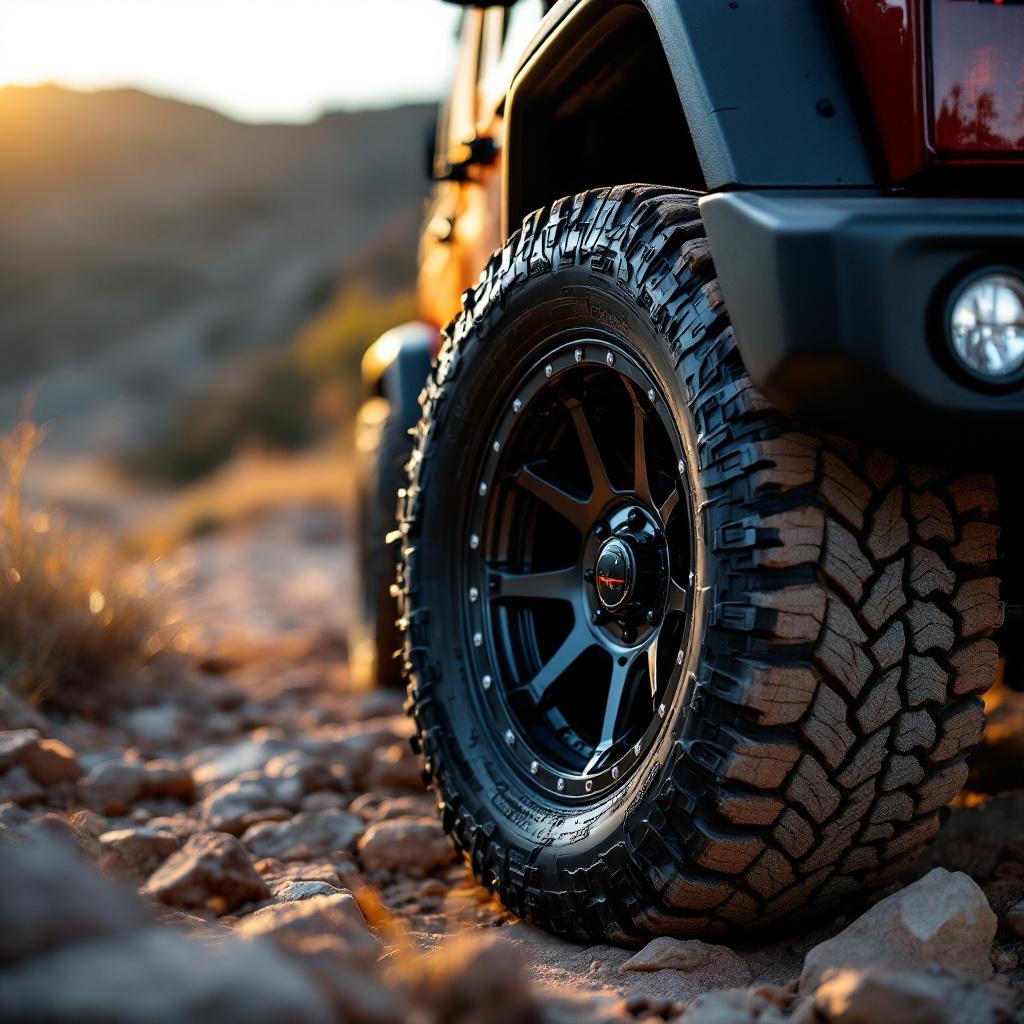
Wheels and tires are the most visible modification on any Jeep JK - and one of the most confusing to get right. Between tire sizing formats, wheel offset vs. backspacing, and fitment at different lift heights, there’s a lot to understand before you spend your money.
This guide covers everything you need to know to make the right choice for your build.
Understanding Tire Sizing: What the Numbers Actually Mean
You’ll see JK tires listed in two formats. Let’s decode both.
The “Inch” Format: 35x12.50R17
| Number | What It Means |
|---|---|
| 35 | Overall tire diameter in inches |
| 12.50 | Tire width in inches |
| R | Radial construction |
| 17 | Wheel diameter in inches |
So 35x12.50R17 = a 35-inch tall tire that’s 12.5 inches wide, designed for a 17-inch wheel.
The Metric Format: 285/70R17
| Number | What It Means |
|---|---|
| 285 | Tire width in millimeters |
| 70 | Aspect ratio (sidewall height = 70% of width) |
| R | Radial construction |
| 17 | Wheel diameter in inches |
To find the height: 285mm x 0.70 = 199.5mm sidewall. Two sidewalls (top and bottom) plus the 17” wheel = approximately 33 inches.
Common Size Conversions
| Inch Size | Metric Equivalent | Actual Diameter |
|---|---|---|
| 31” | 265/70R17 | 31.6” |
| 33” | 285/70R17 | 32.7” |
| 35” | 315/70R17 | 34.4” |
| 35” | 35x12.50R17 | 34.5” |
| 37” | 37x12.50R17 | 36.8” |
Important: Tires rarely measure their stated size exactly. A “35-inch” tire might actually measure 34.5 inches. Check the manufacturer’s specs.
Get new guides by email
One email when we publish something worth reading. Unsubscribe anytime.
Wheel Specifications Explained
Getting the right wheel isn’t just about diameter. Three specs matter for JK fitment.
Bolt Pattern
JK bolt pattern is 5x5 (or 5x127mm). This is different from the older TJ (5x4.5), so TJ wheels won’t fit your JK without adapters.
Backspacing
Backspacing is measured from the wheel’s mounting surface to the back edge of the wheel (the side that faces the Jeep).
- More backspacing = wheel sits further inward
- Less backspacing = wheel sits further outward (more “poke”)
Stock JK wheels have about 6” backspacing. Most aftermarket JK wheels run 4.5” backspacing.
Offset
Offset measures the same thing as backspacing, just differently. It’s the distance (in mm) from the wheel centerline to the mounting surface.
- Positive offset = mounting surface is toward the outside (wheel sits inward)
- Zero offset = mounting surface is at center
- Negative offset = mounting surface is toward the inside (wheel sits outward)
Stock JK offset is about +44mm. Most aftermarket wheels are -12mm to +12mm.
Backspacing vs. Offset: Quick Reference
For a 17x9” wheel (most common JK size):
| Backspacing | Approximate Offset |
|---|---|
| 5.5” | +12mm |
| 5.0” | 0mm |
| 4.5” | -12mm |
| 4.0” | -25mm |
| 3.5” | -38mm |
The JK sweet spot: 4.5” backspacing (-12mm offset) on a 17x9 wheel. This provides good tire clearance without putting excessive stress on wheel bearings or dramatically changing your scrub radius.
What Fits at Each Lift Level
Here’s the practical guide to what actually fits without constant rubbing.
Stock Height
| Tire Size | Fits? | Notes |
|---|---|---|
| 31” (265/70R17) | Yes | Factory option on some models |
| 32” (275/70R17) | Yes | No issues |
| 33x10.50 | Yes | Fits with stock wheels |
| 33x12.50 | Mostly | May need to trim fender liner, remove air dam |
| 35” | No | Will rub significantly at full lock |
2” Lift
| Tire Size | Fits? | Notes |
|---|---|---|
| 33x10.50 | Yes | No rubbing |
| 33x12.50 | Yes | Minor trimming may help |
| 35x12.50 | Tight | Rubs at full lock, needs trimming |
2.5” Lift
| Tire Size | Fits? | Notes |
|---|---|---|
| 33” | Yes | No issues at all |
| 35x12.50 | Yes | Some trimming recommended |
| 37” | No | Will rub without significant mods |
3.5”+ Lift
| Tire Size | Fits? | Notes |
|---|---|---|
| 35” | Yes | Fits well |
| 37x12.50 | Possible | Needs fender trimming or high-line fenders |
| 37x13.50 | Tight | May need flat fenders |
Rubicon owners: Your fenders sit about half an inch higher than Sport/Sahara models. This gives you slightly more clearance at every lift height. See our Rubicon vs Sport vs Sahara comparison for more differences.
All-Terrain vs. Mud-Terrain: Choosing the Right Type
This is where most people overthink things. Here’s the honest breakdown.
All-Terrain (A/T) Tires
Best for: Daily drivers, occasional off-roading, highway miles, wet roads.
Pros:
- Quieter on the highway
- Longer tread life (40,000-60,000 miles)
- Better wet traction on pavement
- Lower rolling resistance = better fuel economy
Cons:
- Less aggressive in deep mud
- Can pack with mud in sticky conditions
- Less sidewall protection
Popular choices: BFGoodrich KO2, Falken Wildpeak AT3W, Toyo Open Country AT3
Mud-Terrain (M/T) Tires
Best for: Serious off-roading, rock crawling, muddy trails, aggressive looks.
Pros:
- Self-cleaning tread
- Better grip in loose surfaces
- Stronger sidewalls
- Looks more aggressive (if that matters to you)
Cons:
- Loud on the highway
- Shorter tread life (25,000-40,000 miles)
- Worse wet traction on pavement
- Higher rolling resistance
Popular choices: BFGoodrich KM3, Nitto Trail Grappler, Toyo Open Country MT
The Honest Truth
If you’re 80% street, 20% trail: Get all-terrains. The KO2 is the go-to for a reason.
If you’re 50%+ off-road or hit serious mud: Mud-terrains make sense.
If you want the look but mostly drive pavement: You’re paying extra in noise, tread life, and fuel economy. Your call.
Popular Wheel and Tire Combos
These combinations are proven to work well on JKs. Here are some top tire and wheel options:

BFGoodrich KO2 33x10.50R17
Check Price on Amazon →The Daily Driver: 33s on Stock Height
- Tires: 285/70R17 (BFGoodrich KO2)
- Wheels: 17x8.5, 4.75” backspacing
- Lift: None to 2”
- Total cost: $1,200-1,800 (tires + wheels)
Great balance of capability and daily driving. No regear needed.
The Sweet Spot: 35s on 2.5” Lift
- Tires: 35x12.50R17 (your choice of A/T or M/T)
- Wheels: 17x9, 4.5” backspacing
- Lift: 2.5-3.5”
- Total cost: $2,500-4,000 (including lift, tires, wheels)
This is the most popular JK build for good reason. Significant improvement in capability without major drivetrain modifications. May want 4.88 gears if you have the 3.21 ratio. Consider pairing with quality shocks and a steering stabilizer for optimal performance.
The Serious Build: 37s on 4” Lift
- Tires: 37x12.50R17
- Wheels: 17x9, 4.5” backspacing
- Lift: 4”+ with flat or high-line fenders
- Total cost: $6,000-10,000+ (lift, gears, tires, wheels, fenders)
This is where costs escalate. You’ll need regearing (4.88s minimum), possibly upgraded axle shafts, and definitely fender modifications.
Regearing: When You Need It
Bigger tires act like a taller gear ratio, making your engine work harder. Here’s when regearing becomes necessary.
Regear Recommendations by Tire Size
| Tire Size | Stock 3.21 Gears | Stock 3.73 Gears | Stock 4.10 (Rubicon) |
|---|---|---|---|
| 33” | Consider 4.10 | Fine | Fine |
| 35” | Need 4.88 | Consider 4.56 | Usually fine |
| 37” | Need 5.13 | Need 4.88 | Need 4.88 |
Signs You Need to Regear
- Sluggish acceleration, especially on hills
- Constantly downshifting (auto) or lugging in high gears (manual)
- Significantly worse fuel economy than expected
- Transmission running hot
Regear Cost
Expect $1,500-2,500 for parts and labor to regear both axles. This includes new ring and pinion gears, installation, and setup. Not a DIY job unless you have experience - gear setup requires precision. For more details, see our comprehensive regearing guide.
The Real Cost of Bigger Tires
Let’s be honest about what larger tires actually cost beyond the sticker price.
33-Inch Tires
| Item | Cost |
|---|---|
| Tires (set of 5) | $800-1,200 |
| Wheels (set of 5) | $600-1,200 |
| Lift (optional) | $0-500 |
| Regear | Usually not needed |
| Total | $1,400-2,900 |
Ongoing: Minimal impact on fuel economy (maybe 0.5 mpg). Normal tire life.
35-Inch Tires
| Item | Cost |
|---|---|
| Tires (set of 5) | $1,200-1,800 |
| Wheels (set of 5) | $800-1,500 |
| Lift kit | $500-2,500 |
| Regear (if needed) | $0-2,500 |
| Fender trimming | $0-200 |
| Total | $2,500-8,500 |
Ongoing: 1-2 mpg loss. Increased wear on steering and suspension components. Slightly shorter tire life.
37-Inch Tires
| Item | Cost |
|---|---|
| Tires (set of 5) | $1,800-2,500 |
| Wheels (set of 5) | $800-1,500 |
| Lift kit | $2,000-4,500 |
| Regear | $1,500-2,500 |
| Fenders | $400-800 |
| Axle upgrades (maybe) | $0-2,000 |
| Total | $6,500-13,800 |
Ongoing: 2-3 mpg loss. Accelerated wear on axles, U-joints, and wheel bearings. Increased stress on transmission.
Common Mistakes to Avoid
Buying wheels with too much backspacing: Stock-backspacing wheels push the tire inward, causing inner fender rubbing with larger tires.
Ignoring wheel width: A 12.50-inch-wide tire on a 7-inch-wide wheel will bulge excessively. Match wheel width to tire width (9” wheel for 12.50” tire is ideal).
Cheaping out on tires: Your tires are the only thing between your Jeep and the ground. Budget $200+ per tire for quality rubber.
Forgetting the spare: Five tires, five wheels. Your spare matters, especially off-road.
Skipping the alignment: After any wheel/tire change, get an alignment. It’s $100 that saves you from uneven tire wear. Learn more about tire maintenance in our maintenance guide.
Recommended Wheel Brands
| Brand | Price Range | Notes |
|---|---|---|
| Method Race | $250-350/wheel | Popular, proven, wide selection |
| Fuel | $200-300/wheel | Aggressive styles, good quality |
| Pro Comp | $150-250/wheel | Budget-friendly, decent quality |
| Mopar | $200-350/wheel | OEM quality, conservative styles |
| Black Rhino | $200-300/wheel | Good value, stylish |
| KMC | $180-280/wheel | Solid mid-range option |
Related Articles
- Best JK Lift Kits - Choosing the right lift for your tire size
- Best All-Terrain Tires for JK - Detailed A/T tire reviews
- Best Mud-Terrain Tires for JK - Detailed M/T tire reviews
- JK Wheel Backspacing & Offset Explained - Deep dive into wheel specs
- Best JK Shocks - Suspension tuning for larger tires
- Best JK Steering Stabilizer - Handle geometry with new wheel specs
- JK Regear Cost & Benefits - When to regear for tire size changes
- Rubicon vs Sport vs Sahara - Stock differences that affect fitment
- JK Death Wobble: Causes and Fixes - Wheel and tire balance matters
- The Complete JK Buyer’s Guide - Consider tire size when budgeting your purchase
Frequently Asked Questions
What size tires fit a stock JK?
Stock JKs can fit up to 33x10.50 tires with no modifications. 33x12.50 may require minor trimming of the fender liner and removing the air dam. Rubicons with their higher fenders can fit 33s more easily than Sport or Sahara models. For anything larger, you’ll need a lift.
What wheel backspacing do I need?
For JKs, 4.5-inch backspacing (or about -12mm offset) is the sweet spot for most tire sizes up to 35s. This pushes the tires out slightly for better inner fender clearance while maintaining acceptable steering geometry. Going lower than 4” backspacing puts extra stress on wheel bearings.
Are 35-inch tires worth it?
35s offer noticeably better off-road capability with approximately 1 inch more ground clearance and improved approach/departure angles. However, they require at least a 2.5-inch lift, may need regearing (especially with 3.21 gears), and impact fuel economy by 1-2 mpg. For serious off-roading, absolutely worth it. For mostly pavement driving, 33s provide 90% of the benefit with fewer compromises.
Do I need to regear with 35-inch tires?
It depends on your current gear ratio. With Rubicon 4.10 gears, 35s are manageable without regearing, though 4.88s will feel better. With 3.73 gears, you can get by but will notice sluggishness. With 3.21 gears, regearing to 4.88 is strongly recommended for anything over 33s.
What’s the difference between offset and backspacing?
Both describe where the wheel mounting surface sits, just measured differently. Backspacing is measured in inches from the mounting surface to the wheel’s inner edge. Offset is measured in millimeters from the wheel centerline to the mounting surface. For JKs, 4.5” backspacing equals roughly -12mm offset on a 17x9 wheel.
Can I run different size tires front and rear?
Technically yes for 2WD driving, but it’s not recommended. When in 4WD with mismatched tire sizes, the transfer case binds because the axles turn at different speeds. Always run matching tires on all four corners (and your spare).
Free: JK Fluids at a Glance
Every fluid, spec and capacity for the 2007-2018 Wrangler JK on one page, plus a cut-out glovebox card. Checked against the owner's manuals. From the JK Service Kit.
Email me the download and new guides when they are published. Unsubscribe anytime. Privacy Policy.
Frequently Asked Questions
What size tires fit a stock JK?
Stock JKs can fit up to 33x10.50 tires with no modifications. 33x12.50 may require minor trimming. Rubicons with their higher fenders can fit 33s more easily than Sport or Sahara models.
What wheel backspacing do I need?
For JKs, 4.5 inch backspacing (or about -12mm offset) is the sweet spot for most tire sizes. This pushes the tires out slightly for better clearance while maintaining acceptable steering geometry.
Are 35 inch tires worth it?
35s offer noticeably better off-road capability with more ground clearance and approach angles. However, they require at least a 2.5 inch lift, possible regearing, and impact fuel economy by 1-2 mpg. For serious off-roading, yes. For mostly pavement, 33s are often the better choice.
What wheel size is best for off-road on a Jeep JK?
17-inch wheels are the most versatile JK wheel size — they offer the widest tire selection, good sidewall flex for off-road, and reasonable on-road comfort. 15-inch wheels maximize sidewall but limit brake clearance on some JKs. 18-inch wheels reduce off-road performance due to less sidewall flex and are primarily for on-road builds.
Can I run wider tires on stock JK wheels?
The stock JK wheel (7.5-inch wide) accommodates tires up to 285/75R17 (33 inches) without issues. For 315/70R17 (35 inches), a minimum 8-inch wide wheel with proper backspacing (4.5 inches) is recommended to prevent sidewall damage and ensure proper bead seating. Never stretch a tire onto a wheel narrower than the manufacturer's minimum width.
Allan
I'm Allan. I own a 2014 Jeep Wrangler JKU and I research the hell out of every mod before I touch it. When I've fitted something to my own Jeep, I say so. Everything else is researched from manufacturer specs and other owners' reports. No sponsored fluff.
Learn more about me →Free: JK Fluids at a Glance
Every fluid, spec and capacity for the 2007-2018 JK on one page, plus a glovebox card.
Email me the download and new guides when they are published. Unsubscribe anytime. Privacy Policy.
Related Articles
Best JK Wheel Locks: Anti-Theft Protection for Wrangler Wheels & Spare
Wheel locks are security lug nuts with a unique keyed socket pattern that replaces one standard lug nut per wheel, preventing removal without the...
Best Wheels for Jeep Wrangler JK: Top 8 Picks for 2026
Find the best wheels for Jeep JK with expert picks for beadlocks, daily drivers, and budget builds. 4.5-inch backspacing, 1,500+ lb load ratings, verified fitment.
Best 35 Inch Tires for Jeep Wrangler JK: Top 8 Picks for 2026
Discover the best 35 inch tires for Jeep JK with our expert comparison of 8 top options. Complete fitment guide, real-world reviews, and installation requirements.