Electric Winch vs Hydraulic Winch Jeep Jk Recovery
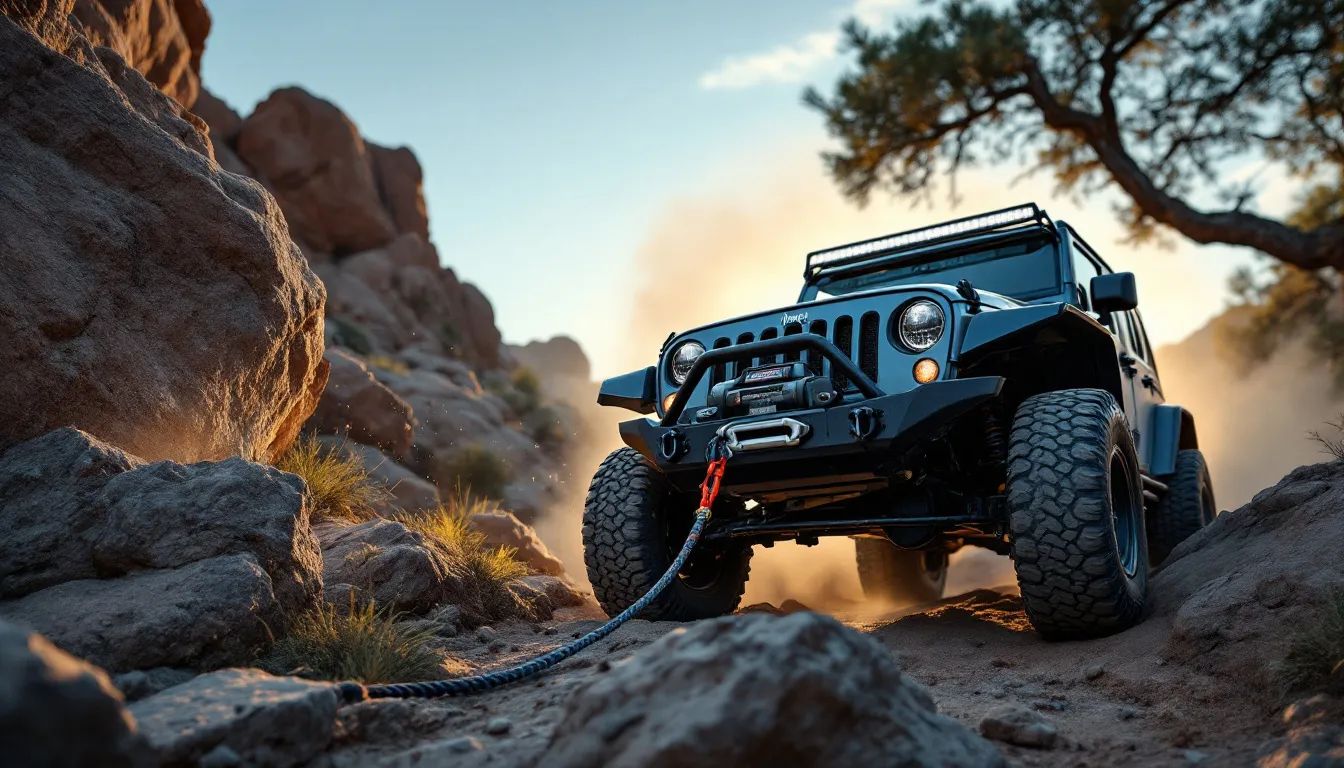
Electric Winch vs Hydraulic Winch: Which Is Right for Your Jeep JK?
An electric winch draws power from your JK’s battery and alternator to drive a motor, while a hydraulic winch taps into your power steering pump to generate pull force. The difference between them isn’t just technical—it shapes how you’ll actually use your rig.
For most 2007–2018 Jeep JK and JKU owners, an electric winch is the better choice. It installs cleanly on a winch-plate bumper, works with the engine off, and fits a far wider range of budgets. Hydraulic winches offer genuine advantages—they won’t overheat under sustained pulls and handle continuous high-load recoveries better—but those benefits come at the cost of installation complexity, expense, and the hard requirement that your engine be running the entire time you’re pulling.
Before you buy, check out our best winch for Jeep JK Unlimited roundup to understand how a winch fits into your overall build plan. The right answer depends on how and where you wheel—and we’ll break that down in detail below.
How Electric and Hydraulic Winches Actually Work
The core mechanical difference between these two winch types comes down to where they get their power: one draws from your electrical system, the other from your engine’s hydraulic circuit.
An electric winch uses a DC motor—typically 12V—connected directly to your JK’s battery. When you press the remote, current flows through a solenoid pack, the motor spins, and a gearbox reduces that speed into serious pulling torque at the drum. Most quality electric winches in the 9,500–12,000 lb range draw between 400 and 500 amps at peak load, which is why your battery and alternator matter so much.
A hydraulic winch, by contrast, replaces the electric motor with a hydraulic motor. It taps into a dedicated hydraulic pump—usually a separate unit, though some setups share a modified power steering pump—and converts hydraulic pressure into drum rotation. The key advantage here is that a hydraulic system dissipates heat through the hydraulic fluid rather than through motor windings, which means it can sustain pull indefinitely without thermal cutout.
Electric winches generate heat in the motor and solenoids during extended pulls. Most quality units include thermal protection that cuts power before damage occurs—but this means you may need to wait several minutes between pulls on a tough recovery. Hydraulic winches don’t have this limitation. They can pull continuously as long as the engine runs and the fluid stays cool.
For the Jeep JK specifically, the electrical system’s stock alternator output becomes the practical ceiling for electric winch performance. That constraint doesn’t exist with a hydraulic setup.
Get new guides by email
One email when we publish something worth reading. Unsubscribe anytime.
Electric vs Hydraulic Winch: Pros and Cons for the Jeep JK
For the vast majority of JK owners, electric wins—it’s simpler, cheaper, and more practical for solo trail use. But hydraulic has a real place for specific use cases, particularly extended overlanding and high-frequency recovery work.
Here’s how they compare across the factors that matter most for a 2007–2018 Jeep JK or JKU:
| Feature | Electric Winch | Hydraulic Winch |
|---|---|---|
| Installation complexity | Moderate—bumper swap, wiring run to battery | High—requires separate hydraulic pump, plumbing, reservoir |
| Engine required to operate | No—can pull with engine off | Yes—engine must run throughout recovery |
| Sustained pull performance | Limited by heat buildup; duty cycles apply | Continuous pull with no thermal cutout |
| Heat resistance under load | Lower—motor windings overheat under long pulls | High—heat dissipated through hydraulic fluid |
| JK electrical impact | Significant—peak draws of 400–500 A stress stock alternator | Minimal—draws only engine power via pump |
| Typical price range | $300–$1,200 for the winch unit | $800–$2,000+ including pump and installation |
| Best for | Solo trail riding, weekend wheeling, overlanding | High-frequency recovery, professional use, extreme sustained loads |
The price gap alone tells most of the story for recreational JK owners. A solid 12,000 lb electric winch with synthetic rope lands in the $500–$1,100 range installed on an existing winch-plate bumper. A hydraulic system at the same pull rating adds pump, hoses, reservoir, and labor—often doubling the total spend.
That said, if you’re running a JKU loaded with camping gear on a month-long overland trip, the hydraulic winch’s ability to pull repeatedly without rest becomes genuinely valuable. The mathematics of the situation change when you’re doing back-to-back recoveries across challenging terrain.
JK-Specific Installation: What Your Bumper and Electrical System Need to Handle
Running an electric winch on a JK requires three things: a compatible winch-plate bumper, a wiring harness routed properly to the battery, and an electrical system that can actually sustain the load.
The stock JK front bumper does not have a winch plate. You’ll need an aftermarket front bumper with an integrated winch mount, or a dedicated winch cradle that bolts to your existing bumper—though the latter is less common and less clean. Most winch-ready steel bumpers for the 2007–2018 JK add between 60 and 100 lbs over the factory plastic unit. You’ll notice that weight immediately in your steering, especially at parking lot speeds.
I spent a full Saturday installing a steel front bumper and winch on my JK, and the experience taught me more than any YouTube video could. The bumper itself mounted without drama until I hit the lower bolts on the driver’s side—completely corroded, stuck fast. Three stripped bolts later, I was reaching for the angle grinder. Budget extra time for corrosion on any JK with trail miles.
Once the bumper was bolted down, the steering felt noticeably heavier on the drive home. That 35 kg weight gain up front was real. That’s when I understood why everyone in the forums recommends upgrading your steering stabilizer at the same time—the extra mass forward of the axle compounds as your JK ages.
Mounting the winch plate itself was straightforward, but routing the winch cable cleanly took more planning than I expected. I ran it through the fairlead three times before the lay was right. The real satisfaction came a month later when I helped pull a stuck Hilux out of sand near the coast. That moment alone justified every stripped bolt and every hour of frustration.
On the electrical side, the JK’s stock alternator produces around 160 amps, which is adequate for normal operation but gets stressed quickly under winch load. A high-output alternator upgrade is worth considering if you’re running an electric winch alongside a heavy accessory load—lights, air compressor, and a fridge will all compete for current. At minimum, run proper gauge wiring (most quality winches specify the wire gauge in the manual), use the supplied solenoid pack, and connect directly to the battery with a dedicated fuse. Your alternator will thank you.
Winch-Ready Bumpers and Recovery Gear for Your JK
A complete JK electric winch recovery setup isn’t just the winch—you need a compatible bumper, a quality rope, and the right mounting hardware. Here’s what actually works for 2007–2018 JK and JKU builds.
Best Overall: Warn VR EVO 12-S—the winch that anchors any serious recovery kit.

Warn VR EVO 12-S Electric 12V Winch
• 12,000 lb pull capacity
• Synthetic rope (safer than steel cable)
• IP68 waterproof rating
• High-performance DC motor
Why this winch: The Warn VR EVO 12-S delivers 12,000 lbs of pull capacity—enough margin for any stock or mildly modified JK or JKU. The synthetic rope won’t store energy like steel cable does, which means if it ever parts under load, it goes slack instead of whipping. That matters when you have spotters or bystanders nearby. The IP68 waterproof rating handles deep water crossings without damage, a real consideration if you’re crossing streams or navigating wet terrain.
Pros:
- Synthetic rope is lighter, safer, and easier to pack
- IP68 waterproofing means no worry about submersion damage
- Pulls smoothly at full capacity with proper bumper mounting
- Trusted brand with strong warranty support
Cons:
- Over $1,000—this is a premium investment
- Requires a winch-plate bumper; won’t mount to stock JK front end
- Draws significant amp load; factor in electrical upgrades
Next, you need a bumper that can actually hold that winch. Here are two solid options covering different budgets for the 2007–2018 JK/JKU.

OEDRO Front Bumper with Winch Plate
• Integrated winch plate rated for up to 13,000 lbs
• Fits 2007–2018 JK and JKU
• Includes two D-rings for recovery straps
• Four LED work lights bundled in
Why this bumper: The OEDRO is a no-nonsense steel bumper that covers all JK model years from 2007 through 2018. It comes with an integrated winch plate—no adapter needed—and two D-rings bolted in, ready for recovery straps. The four LED lights are a bonus that saves you from wiring auxiliary lighting separately.
Pros:
- Full winch plate included; mounts to standard winch footprint
- D-rings and LED lights bundled saves money and install time
- Works with all JK/JKU trim levels and model years
- Budget-friendly entry point for a complete setup
Cons:
- Steel construction adds significant weight over OEM plastic
- LED wiring requires additional routing during install
- Rock crawler profile isn’t as aggressive as premium options
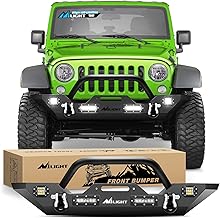
Nilight Rock Crawler Front Bumper
• Heavy-duty steel construction
• Integrated winch plate for standard mounts
• Two D-ring mounts included
• Fits all 2007–2018 JK and JKU models
Why this bumper: The Nilight rock crawler design offers a step up in visual aggression and build quality. The heavier-gauge steel and stronger welding make this bumper feel more substantial in hand. It’s still affordable but positions your JK with a more off-road-focused front end.
Pros:
- Heavy-duty construction feels more durable than budget options
- Rock crawler profile gives your JK a tougher appearance
- Winch plate is rated for high-capacity winches
- Direct fit for all JK/JKU model years
Cons:
- Heavier than budget alternatives—steering weight compounds
- Doesn’t include auxiliary lights like the OEDRO
- Premium price for similar functionality
Finally, if you’re swapping from steel cable to synthetic rope or setting up a new winch from scratch, rope quality matters more than most people realize.

TYT Synthetic Winch Rope Kit
• 1/4" diameter, 50 feet length
• 10,000 lb break strength
• Includes protective sleeve, hook, stopper, pull strap
• UV-resistant polyester core
Why synthetic rope: Steel cable stores enormous amounts of kinetic energy. When it breaks under load, it whips with force that can cause serious injury. Synthetic rope is fundamentally different—if it parts, it goes slack and harmless. For trail use where you might have spotters nearby, synthetic is the standard recommendation across the off-road community.
Pros:
- Much safer than steel cable if it parts under load
- Lighter weight makes repacking easier
- Won’t rust or corrode like steel
- 10,000 lb rating works for most JK setups
Cons:
- Not suitable for the highest-capacity winches (check your winch spec)
- Vulnerable to UV degradation; requires covered storage
- Not as durable under repeated abrasion as steel
For more detailed options, check our full JKU winch roundup and heavy-duty recovery winch picks.
Which Winch Type Is Right for Your JK? Decision Framework
The choice between electric and hydraulic comes down to how you actually wheel and what you’re willing to spend.
Solo trail use (2-door JK): The 2-door JK has a shorter wheelbase and lower stock curb weight—generally around 3,900–4,000 lbs depending on trim. A 9,500 lb electric winch covers you with a solid margin (the standard rule of thumb in the off-road community is 1.5x your vehicle’s gross weight). Electric is the right call here. You won’t need sustained pull, and the simplicity of installation matters when you’re the one doing the work.
Overlanding with a loaded JKU: The 4-door JKU weighs meaningfully more, particularly loaded with camping gear, fuel, and water for a month on the road. Many JKU owners run 12,000 lb electric winches to maintain that safety margin. Still electric for most, but if you’re doing repeated daily recoveries on a long trip, the hydraulic’s sustained-pull advantage starts to become real. You won’t be waiting for a motor to cool between pulls.
Convoy or guided trail use: If someone else in the group always has a strap, a mid-range 9,500 lb electric winch is plenty. But if you’re consistently the one pulling everyone else out, hydraulic’s no-cool-down operation becomes genuinely valuable. Your winch becomes part of your group’s infrastructure.
The dynamic shows up on every mountain pass: a driver who has dropped a wheel off the trail edge, and the difference between a 20-minute roadside recovery and a long wait for a tow truck in an area with no cell signal is whether someone has a full recovery kit—not just a winch, but straps, shackles, and a tree saver. Whatever winch type you choose, the hardware around it matters just as much.
Frequently Asked Questions: Electric vs Hydraulic Winch for Jeep JK
Can I run an electric winch on a stock Jeep JK?
Yes, but with caveats. The stock JK electrical system can power an electric winch for typical recovery pulls, but you’ll stress the stock alternator under sustained or repeated loads. Many owners add a second battery or a high-output alternator upgrade when running a winch alongside other accessories like lights and air compressors. Think of your alternator’s output as a shared resource—a winch pull can draw 400+ amps, leaving little for everything else.
What size winch do I need for a Jeep JK Wrangler?
A 9,500 lb winch is the minimum recommended for a stock 2-door JK; a 12,000 lb winch gives better margin and is the standard recommendation for a JKU or any JK running larger tires and heavier gear. The off-road community generally targets 1.5x your vehicle’s loaded weight as the pull rating. If you’re running 35-inch tires, added armor, and camping gear, that calculation changes in favor of a larger winch.
Is synthetic rope better than steel cable for Jeep recovery?
For trail and recreational use, yes. Synthetic rope is lighter, easier to handle, and significantly safer if it parts under load. Steel cable stores enormous kinetic energy and can whip violently when it breaks; synthetic rope goes limp. The trade-off is that synthetic rope is more vulnerable to UV degradation and abrasion over time, so it needs proper storage and periodic inspection.
Do I need a special bumper to mount a winch on my Jeep JK?
Yes. The stock JK front bumper has no winch plate and cannot support the load of a recovery pull. You need an aftermarket front bumper with an integrated winch plate, or a separate winch cradle designed for your specific JK model year. All bumpers featured in this article are compatible with 2007–2018 JK and JKU models. Check your winch’s mounting footprint against the bumper’s plate spec before ordering.
Can a hydraulic winch work on a Jeep JK?
Technically yes, but it requires adding a separate hydraulic pump and reservoir—the JK’s power steering system alone is not adequate to run most hydraulic winches. The install is significantly more complex and costly than an electric setup. For recreational JK use, most owners find the additional complexity isn’t justified compared to a quality electric winch. Hydraulic winches make more sense on purpose-built recovery rigs or commercial applications where sustained pull is a daily requirement.
How much weight does a steel winch bumper add to the front of my JK?
Most aftermarket steel winch bumpers add 60–100 lbs over the factory plastic bumper. Add the winch itself (typically 90–130 lbs depending on capacity), and you’re looking at 150–230 lbs on the front axle. You’ll notice this in steering weight and potentially in front suspension sag. Many JK owners upgrade their steering stabilizer when adding a winch-ready bumper to compensate for the weight and reduced steering feel.
Free: JK Fluids at a Glance
Every fluid, spec and capacity for the 2007-2018 Wrangler JK on one page, plus a cut-out glovebox card. Checked against the owner's manuals. From the JK Service Kit.
Email me the download and new guides when they are published. Unsubscribe anytime. Privacy Policy.
Allan
I'm Allan. I own a 2014 Jeep Wrangler JKU and I research the hell out of every mod before I touch it. When I've fitted something to my own Jeep, I say so. Everything else is researched from manufacturer specs and other owners' reports. No sponsored fluff.
Learn more about me →Free: JK Fluids at a Glance
Every fluid, spec and capacity for the 2007-2018 JK on one page, plus a glovebox card.
Email me the download and new guides when they are published. Unsubscribe anytime. Privacy Policy.
Related Articles
Jeep JK Regear vs Locker: Which Upgrade Comes First?
Ask ten JK owners which comes first — a regear or a locker — and you'll get the same answer from nine of them: regear first, locker second.

Jeep JK Towing Capacity: What Can Your Wrangler Actually Pull?
Your Jeep JK can tow more than you might think — but probably less than you want to. The factory ratings are straightforward: 2,000 lbs for the 2-door...
How to Choose Tire Size for Jeep Jk Lift Kit Compatibility
Lift kit and tire size compatibility is straightforward in concept but trips up a lot of JK owners in practice: the amount of suspension height you add...