Jeep JK Towing Capacity: What Can Your Wrangler Actually Pull?

Jeep JK Towing Capacity: What Can Your Wrangler Actually Pull?
Your Jeep JK can tow more than you might think — but probably less than you want to. The factory ratings are straightforward: 2,000 lbs for the 2-door JK and 3,500 lbs for the 4-door JK Unlimited. But those numbers live in a world of stock suspension, factory bumpers, and ideal conditions. Bolt on a lift, swap in some 35-inch tires, or hang a steel bumper with a winch, and suddenly that comfortable margin starts feeling thinner.
I bought my 2014 JKU specifically because I needed the extra towing and payload capacity. At 3,500 lbs rated, it opens up possibilities the 2-door simply doesn’t have — pop-up campers, larger utility trailers, the kind of gear that makes overlanding trips possible rather than just a weekend warrior fantasy. But even with that higher rating, I stayed acutely aware of what the suspension and drivetrain could actually handle, not just what the sticker said.
This guide walks through the real story: which model years get which ratings, how engine choice actually matters for sustained towing, and exactly how your favorite mods quietly chip away at your safety margin. If you’re trying to figure out whether your JK can handle a particular trailer, or you’re still shopping and towing capability matters to your decision, the details below are what separate confident pulls from sketchy highway moments.
Check out the JK buyer’s guide if you’re still shopping, or the Rubicon vs Sport vs Sahara comparison if trim-level differences are part of your decision.
Stock Towing Capacity by Model Year and Body Style (2007–2018)
Your JK’s towing rating depends on two things and only two things: whether it’s a 2-door or a 4-door, and what engine’s under the hood. Here’s what Jeep actually rated each combination for.
| Model | Years | Engine | Tow Rating | Tongue Weight Max |
|---|---|---|---|---|
| JK 2-Door | 2007–2011 | 3.8L V6 | 2,000 lbs | 200 lbs |
| JK 2-Door | 2012–2018 | 3.6L V6 Pentastar | 2,000 lbs | 200 lbs |
| JK Unlimited (4-Door) | 2007–2011 | 3.8L V6 | 3,500 lbs | 350 lbs |
| JK Unlimited (4-Door) | 2012–2018 | 3.6L V6 Pentastar | 3,500 lbs | 350 lbs |
The 2012 Engine Swap — What Changed and What Didn’t
When 2012 rolled around, Jeep ditched the 3.8L V6 entirely and swapped in the 3.6L Pentastar. The power bump was real: 285 hp and 260 lb-ft of torque beat the 3.8L’s 202 hp and 237 lb-ft on paper. On the road, the difference felt even bigger — the Pentastar pulled from low RPM without the desperate downshifting the older engine demanded.
Here’s the quirk: the tow rating didn’t move. The 2-door stayed at 2,000 lbs. The JKU held at 3,500 lbs. Same number, different engine.
What actually improved was how the engine felt under load. The Pentastar stays cooler at sustained highway speeds with a trailer behind you. It doesn’t hunt for gears on climbing grades quite as aggressively. And on long pulls, the extra torque means your transmission works less hard to hold that load. You’re still within the same rated capacity — but you’re sitting in a bigger comfort margin while you’re there.
If you’re deciding between a pre-2012 3.8L JK and a 2012-or-later Pentastar, this is one reason the newer one makes more sense for towing. Same rating, but significantly more room to breathe.
The Rubicon Myth: Better Axles Don’t Mean More Towing
Walk into any Jeep forum and someone will argue that a Rubicon should be rated higher for towing because it’s got the Dana 44 front and rear axles instead of the Dana 30/35 combo on the Sport. It makes intuitive sense — bigger axles sound tougher, right?
They don’t translate to a higher tow rating. The Rubicon gets the same 2,000 lbs (2-door) or 3,500 lbs (4-door JKU) as the Sport and Sahara. Jeep rates tow capacity based on the whole vehicle system — frame geometry, hitch receiver strength, brake proportioning, suspension compliance, and how weight transfers from front to rear. The axles are part of that picture, but they’re not the limiting factor.
The Dana 44’s real job is rock-crawling durability, not trailer-hauling muscle. For a complete picture of what actually changes between trims, see the Rubicon vs Sport vs Sahara breakdown.
Get new guides by email
One email when we publish something worth reading. Unsubscribe anytime.
Engine and Transmission: How the Drivetrain Affects Your Towing Reality
The ratings are locked in — but how your engine and transmission behave under load is where real-world towing experience diverges from the spec sheet. The 3.6L Pentastar and a clean automatic transmission make towing demonstrably better. A manual transmission and an older 3.8L? You can still tow, but expect to work harder.
3.8L vs 3.6L Head-to-Head: Comfort Under Load
- 3.8L V6 (2007–2011): 202 hp and 237 lb-ft. Capable of reaching the tow rating, but it runs warm doing it. No factory tow package options. On long grades with a loaded trailer, the engine works noticeably harder.
- 3.6L Pentastar V6 (2012–2018): 285 hp and 260 lb-ft. Noticeably more confident. Handles highway grades with less drama and runs cooler overall. Better throttle response at low RPM means you’re not constantly reaching for downshifts.
If you’re comparing a 2010 JKU with the 3.8L against a 2014 JKU with the Pentastar, both rated at 3,500 lbs — go with the Pentastar for any serious towing. The extra torque and cooler running temperatures matter on climbs and long interstate pulls where the older engine would be breathing harder.
Transmission Heat: The Slow-Burning Towing Risk Nobody Talks About
Here’s something the owner’s manual buries: automatic transmission fluid degrades under sustained heat. Most JKs didn’t leave the factory with a transmission cooler sized for regular trailer use. If you’re pulling a loaded trailer on a hot day through mountain grades, your transmission temperature can creep up into the danger zone where fluid breakdown begins.
That breakdown doesn’t cause a sudden failure — it happens gradually, shortening fluid life and increasing internal wear. By the time you notice something’s wrong, the transmission’s already taking damage.
The practical solution is straightforward: an aftermarket transmission cooler bolts on without drama and keeps fluid temperature stable even under sustained towing loads. For 2012–2018 JKs running the 3.6L Pentastar, a quality cooler is one of the smartest protective investments you can make if towing is even occasionally in your plans.
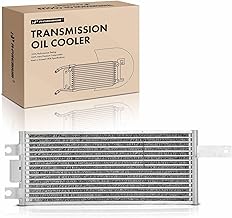
A-Premium Transmission Oil Cooler for Jeep Wrangler JK 2012-2018 3.6L
Check Price on Amazon →If towing is on your schedule — even light utility trailer duty — this cooler pays for itself in transmission longevity. For ongoing drivetrain care, see the complete JK maintenance schedule for fluid service intervals that apply when towing puts extra demands on your drivetrain.
Manual vs Automatic: Why Automatic Wins for Trailers
The manual transmission debate comes up in towing discussions more than it should. Let’s settle it: for towing, the automatic is meaningfully better.
An automatic handles slow-speed maneuvering and parking smoother. You’re not working a clutch leg in parking lots or heavy traffic. More importantly, the automatic’s engine braking works predictably on long descents — you can hold a gear and let the transmission do the braking without the load of feathering a manual clutch. That makes controlling speed on mountain descents noticeably safer.
If you own the manual, you can still tow within the rating. Just expect more driver fatigue and be vigilant about transmission temperature.
How Lift Kits, Bigger Tires, and Heavy Bumpers Shrink Your Safety Margin
Here’s the honest part: modifications don’t change your factory tow rating, but they absolutely change how safely you can approach it.
A stock JK towing at 2,500 lbs feels completely different from a lifted JK with 35-inch tires and a 150-lb steel bumper doing the same pull. The rating is the same. The real-world margin between safe and sketchy isn’t.
Lift Kits and Towing Stability: The Physics Nobody Explains
Lifting your JK raises the center of gravity. On a modified rig, that higher CG + a trailer behind you = increased sensitivity to sway. Crosswinds that barely registered on a stock JK towing a trailer will feel noticeable on a lifted one. Lane changes on the highway get sharper. The whole experience requires more attention.
A 2-inch or 3-inch lift on your JKU doesn’t break the tow rating — you’re still legally at 3,500 lbs. But you’re sitting in a smaller comfort zone while you’re there. The suspension geometry that worked perfectly at stock height now angles the hitch slightly differently, shifting how tongue weight loads the rear axle. A drop hitch ball mount corrects the angle, but it’s a step many owners skip.
If you’re building a lifted JK that needs to tow occasionally, look at suspension setups specifically designed for towing stability. They’re worth the extra investment.
Bigger Tires: The Hidden Drivetrain Tax
Swap from 32-inch to 35-inch tires, and your effective gear ratio gets taller. At 65 mph, your engine’s spinning faster than it was before. Your transmission’s working harder. Your transfer case is working harder. That stress exists whether you’re towing or not — but add a trailer, and it compounds.
If you haven’t re-geared for your tire size, you’re already asking more of your drivetrain than Jeep designed it for. Now add 2,000 or 3,500 lbs of trailer weight, and your transmission is genuinely getting worked. The guide to gear ratios for larger JK tires walks through the full picture.
Heavy Bumpers, Winches, and the Weight Distribution Problem
Steel front bumpers and winches are beautiful. They’re also heavy. A quality steel bumper with a winch setup can easily add 150–200 lbs to the front of your vehicle compared to the factory plastic bumper. That extra mass shifts your front-to-rear weight balance in ways that affect how your hitch loads work.
Tongue weight should be 10–15% of your trailer’s total loaded weight. That percentage is what keeps sway manageable. When your front end is heavier than stock, you need to be even more careful about how that tongue weight interacts with your suspension. And this is critical: don’t exceed 55 mph towing with a modified JK, especially if it’s lifted or carrying heavy front-end hardware. Sway control deteriorates rapidly above that speed when your suspension geometry isn’t stock anymore.
These aren’t theoretical concerns. This is the knowledge that comes from actual JK owners who’ve actually towed with lifted, bumper-heavy Wranglers. See the complete rundown on front bumper and winch mount options with towing weight in mind.
Essential Towing Equipment: What You Actually Need Before Hooking Up
Before you hitch anything to your JK, four pieces of equipment are non-negotiable. Skip any one and you’re either breaking the law, creating a safety hazard, or both.
1. Receiver hitch: The JK uses a standard 1-1/4” or 2” Class III receiver. Not all aftermarket hitches are rated equally — verify yours is rated for the weight you plan to tow.
2. Trailer wiring harness: Your JK needs a 4-pin or 7-pin connector to power trailer lights. Most JKs didn’t ship with factory trailer wiring; a plug-and-play T-harness taps into your existing tail lights without cutting anything.
3. Correct ball mount and hitch ball: This matters more than people think. A 1-7/8” ball works for light loads; most utility and camping trailers use a 2” ball. Match your ball to the trailer coupler, and make sure the mount leaves your trailer tongue level.
4. Brake controller (if required): Any trailer over 1,000 lbs with its own brakes requires a brake controller in most U.S. states. Even for lighter trailers, a proportional brake controller is solid insurance — it lets your JK’s brakes work with the trailer’s brakes instead of fighting them.
The Step Nobody Plans For: Rear Axle Bearing Inspection
Before you tow regularly, inspect your rear axle bearings. Trailer weight loads those bearings harder than daily driving does. A bearing that’s quietly wearing out will fail much faster under sustained towing stress. If your JK has high mileage and you’ve never replaced the rear bearings, this is the time.
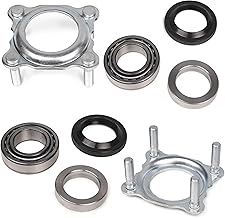
2pcs Rear Axle Bearing and Seal Kit for Jeep Wrangler JK/JKU 2007-2017
Check Price on Amazon →A full bearing and seal kit covers all years 2007–2017 and is a solid DIY project for anyone comfortable working with axles. Good seals also protect your gear oil — which matters for everything downstream. See the guide to protecting your JK axle housing and the locker guide for other axle-related hardware decisions.
JK 2-Door vs JK Unlimited: Why the 4-Door Tows More
The difference between 2,000 lbs (2-door) and 3,500 lbs (JKU) isn’t arbitrary. It comes down to wheelbase, weight distribution, and how each configuration handles the forces a trailer creates.
| Config | Wheelbase | Curb Weight | Tow Rating | Best Use |
|---|---|---|---|---|
| JK 2-Door | 95.4 in | ~3,800 lbs | 2,000 lbs | Utility trailers, PWCs, light cargo |
| JK Unlimited (4-Door) | 116.0 in | ~4,100 lbs | 3,500 lbs | Pop-up campers, boat trailers, larger utility loads |
Why Wheelbase Changes Everything
Twenty additional inches between the front and rear axles (2-door to JKU) is the difference between a stable towing platform and one that’s constantly fighting sway. A longer wheelbase resists the side-to-side motion that a trailer tries to induce, especially in crosswinds or during quick lane changes. Combined with the JKU’s higher curb weight, you’ve got significantly more mass holding the line.
The 2-door’s 2,000 lb limit isn’t a conservative guess — it’s an honest engineering limit. Push much beyond that weight, and trailer sway becomes a real concern at highway speeds. The JKU opens doors the 2-door simply can’t: pop-up campers, larger travel trailers, substantial utility loads.
When I was looking for my JKU in Cape Town, the extra wheelbase wasn’t just a nice-to-have. On a vehicle built for serious overlanding trips through rough country, the towing and payload capacity of the 4-door made a genuine difference. More capacity meant more self-sufficiency — more fuel, more water, more everything you need when the nearest town is days away. For anyone still weighing the 2-door versus 4-door decision, the complete JK buyer’s guide walks through the full tradeoff.
Real-World Towing: Five Practices That Keep You Safe
Your factory rating is just a number. Safe towing is a practice. These five habits matter every single time you hook up.
-
Stay at 55 mph or below. The JK’s tall stance and relatively short wheelbase (especially the 2-door) make it inherently prone to trailer sway. 55 mph is the practical speed ceiling for most JK towing, not a suggestion. Faster speeds amplify every bump and wind gust.
-
Load your trailer nose-heavy — but not too heavy. Aim for 10–15% of the trailer’s total weight on the tongue. Too little and the trailer wants to sway; too much and you’re overloading your hitch and compressing your rear suspension beyond safe limits.
-
Check tire pressure before every haul. Trailer tongue weight shifts weight rearward and off your front tires. Under-inflated tires under that load wear unevenly and handle poorly.
-
Inspect your axle seals before long tows. A weeping seal on the highway becomes a leaking seal over 500 miles. If you’re doing water crossings, also consider extended diff breather kits for water and mud protection — stock breathers sit low and can allow contamination during water crossings with a trailer attached.
-
Give yourself massive stopping distance. The JK’s braking system wasn’t designed around a 3,000 lb trailer. Double your normal following distance and pre-plan your braking well ahead of intersections and turns.
Frequently Asked Questions: Jeep JK Towing Capacity
Q: Can a Jeep JK tow 5,000 lbs?
A: No. The maximum factory tow rating for any Jeep JK is 3,500 lbs, which applies only to the 4-door JK Unlimited. The 2-door JK is rated at 2,000 lbs. Exceeding the rating puts stress on the frame, hitch, transmission, and axles beyond their design limits. Jeep’s warranty also doesn’t cover damage from over-capacity towing.
Q: Does a lift kit void my JK’s towing capacity rating?
A: A lift kit doesn’t technically cancel the factory rating, but it fundamentally changes the vehicle’s towing geometry and stability in ways the original rating didn’t account for. Jeep rates tow capacity on a stock vehicle. Lift your JK, especially with larger tires and heavy front-end hardware, and your real-world safe towing margin shrinks even if the spec sheet number doesn’t change. Look for suspension options specifically designed for JK towing if towing is part of your plan.
Q: What size hitch does a Jeep JK use?
A: The Jeep JK uses a standard 2-inch Class III receiver hitch. This is the industry standard for light-duty towing and compatible with most ball mounts, cargo carriers, and bike racks. Always verify the hitch’s weight rating matches your actual intended use — not all aftermarket JK hitches are rated to the full factory tow capacity.
Q: Can a Jeep JK Unlimited tow a pop-up camper?
A: Yes, most pop-up campers fit comfortably within the JKU’s 3,500 lb rating. Many pop-ups weigh 1,500–2,500 lbs loaded. Larger hard-sided travel trailers often exceed the JKU’s limit. Always verify the camper’s loaded weight, not just its dry weight, before you leave the driveway. Calculate tongue weight to make sure it falls in the 10–15% range.
Q: Is the Jeep JK actually good for towing?
A: The JK is capable of towing light to moderate loads responsibly — boats, PWCs, utility trailers, small campers. It’s not a dedicated tow vehicle like a pickup truck, and its tall stance and shorter wheelbase mean it requires more driver attention at highway speeds. But for occasional towing within spec, particularly the JKU with the 3.6L Pentastar, it’s a practical and competent choice.
The Bottom Line: Know the Real Number Before You Hitch
The numbers are simple: 2,000 lbs for the 2-door, 3,500 lbs for the JKU Unlimited. But simplicity ends there.
If your JK has been modified — lifted, taller tires, a steel bumper or winch setup — you’re already working with a smaller real-world safety margin even if the factory rating stays the same. Your suspension geometry changed. Your weight distribution shifted. Your hitch angle changed. All of these things matter when you’re running a trailer.
Before your first tow of the season, get your loaded trailer weighed at a certified CAT scale. Don’t estimate. The difference between what you think the trailer weighs and what it actually weighs is exactly where dangerous surprises hide.
For deeper drivetrain maintenance and cooling upgrades, see the complete JK drivetrain and axles guide. And if you’re building a more capable all-around rig, don’t overlook related upgrades — axle-back exhaust options are part of a broader performance picture. Know your limits, gear up properly, and your JK will handle what you ask of it. That’s the only promise that actually matters.
Free: JK Fluids at a Glance
Every fluid, spec and capacity for the 2007-2018 Wrangler JK on one page, plus a cut-out glovebox card. Checked against the owner's manuals. From the JK Service Kit.
Email me the download and new guides when they are published. Unsubscribe anytime. Privacy Policy.
Allan
I'm Allan. I own a 2014 Jeep Wrangler JKU and I research the hell out of every mod before I touch it. When I've fitted something to my own Jeep, I say so. Everything else is researched from manufacturer specs and other owners' reports. No sponsored fluff.
Learn more about me →Free: JK Fluids at a Glance
Every fluid, spec and capacity for the 2007-2018 JK on one page, plus a glovebox card.
Email me the download and new guides when they are published. Unsubscribe anytime. Privacy Policy.
Related Articles
Jeep JK Stroker Kit: 3.8L & 3.6L Engine Displacement Upgrades Explained
A jeep stroker kit swaps in a crankshaft with a longer stroke, increasing engine displacement and — most critically — low-end torque without boring out...
Jeep JK Regear vs Locker: Which Upgrade Comes First?
Ask ten JK owners which comes first — a regear or a locker — and you'll get the same answer from nine of them: regear first, locker second.
How to Choose Tire Size for Jeep Jk Lift Kit Compatibility
Lift kit and tire size compatibility is straightforward in concept but trips up a lot of JK owners in practice: the amount of suspension height you add...