How to Choose Tire Size for Jeep Jk Lift Kit Compatibility
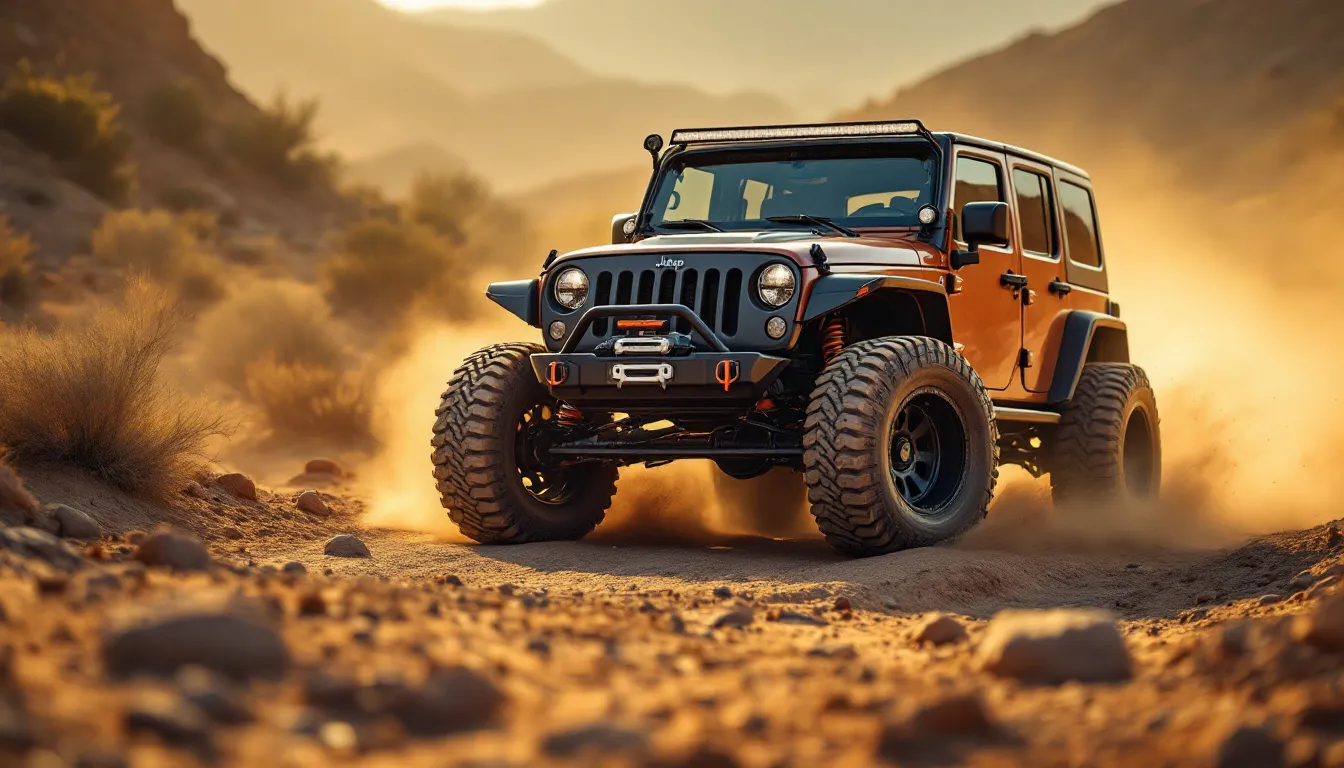
How to Choose Tire Size for Jeep JK Lift Kit Compatibility
Lift kit and tire size compatibility is straightforward in concept but trips up a lot of JK owners in practice: the amount of suspension height you add determines the maximum tire diameter that will actually fit without rubbing your fenders, control arms, and steering components.
Here’s the practical answer for 2007–2018 JK and JKU owners: a 2-inch lift supports up to 33-inch tires, a 3- to 3.5-inch lift supports 35-inch tires, and a 4-inch or taller lift opens the door to 37-inch tires. Push past those pairings without trimming or re-gearing, and you’re looking at rubbing, accelerated tire wear, and speedometer error that compounds over every mile.
This guide walks through every lift height from stock through 4-inch-plus, shows you exactly what extra work each tier demands, and explains why the 2-door JK and 4-door JKU don’t have identical fender clearances. You’ll find specific product recommendations with real pricing so you can map out your build before spending money.
Before you commit to any lift, verify your exact trim and axle configuration in the JK Buyers Guide — and pay close attention to wheel backspacing and offset, because getting the backspacing wrong is just as problematic as choosing the wrong lift height.
Start with Your Factory Tire Size — It Matters More Than You Think
Your OEM tire size is the baseline that determines how far off you already are from the factory gear ratios and speedometer calibration. Different JK trim levels ship with different stock rubber, and that one-inch difference is more significant than it sounds.
Sport and Sahara models typically run 255/75R17 tires (roughly 32 inches in overall diameter), while Rubicon models come equipped with 255/80R17 (roughly 33 inches). That single inch of difference means a Sport owner jumping to 35-inch tires is making a three-inch leap in diameter, while a Rubicon owner is jumping only two. The experience feels different on-road and off, and your gear ratios respond differently to each scenario.
Here’s where most people miss the mark: a larger tire diameter means your axle spins fewer times per mile, which makes your engine work harder in the low RPM range and throws your speedometer off by 4–6 mph depending on how big you go. Knowing your exact factory tire size before you plan any lift is non-negotiable if you want to make smart re-gearing decisions later.
There’s another layer here: Rubicon models come with slightly more aggressive fender flares from the factory compared to Sport trims, which gives you marginally more clearance at the same lift height. It’s subtle, but it’s a real advantage worth noting.
For deeper context on how tire diameter interacts with axle gearing, see best gear ratio for 33-inch tires on Jeep JK.
Lift Height vs. Tire Size: The Clear Reference Chart
The fastest decision tool is a simple lookup table. Lift height directly corresponds to tire size capability — stock to 1-inch lifts fit up to 32-inch tires without trimming, and each additional inch of lift unlocks the next tire size tier.
The chart below reflects what real JK owners report after field-testing fitment, not just theoretical clearance numbers from suspension engineers:
| Lift Height | Max Tire Size | Typical Trimming Needed | Re-gearing Recommended | Example Lift Kit |
|---|---|---|---|---|
| Stock (0”) | Up to 32” (255/75R17) | None | No | — |
| 1–1.5” (leveling) | 32–33” | Minor bump-stop trim | No | 1” Front Spring Spacer Leveling Kit |
| 2–2.5” | 33–35” | Front fender liner trim likely | Yes (if running 35s) | Rough Country 2.5” Lift Kit (67930) |
| 3–3.5” | 35” | Front fender liner trim, possible control arm clearance | Yes | Rough Country 2.5”+ spacer combos |
| 4”+ | 35–37” | Significant front fender and body mount trim | Strongly yes | Teraflex 2.5” (1251000) + spacer |
If you’re just looking to level out the nose and fit modest 33s without a full suspension overhaul, the leveling kit route is where most budget-conscious owners start:
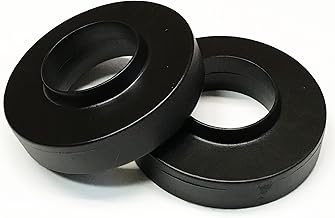
1" Front Spring Spacer Leveling Kit, Compatible with Jeep Wrangler JK 2007-2018
Check Price on Amazon →Ready to jump into genuine 33–35” tire territory? The Rough Country 2.5” is one of the most widely installed budget lifts for the JKU, and for good reason:
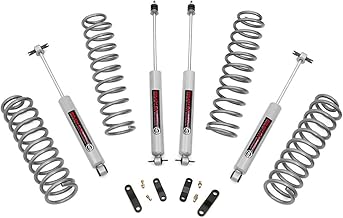
2.5" Lift Kit for 2007-2018 Jeep Wrangler JK Unlimited - 67930
Check Price on Amazon →If on-road comfort matters as much as lift height — and it should, since you’ll spend way more time on pavement than rocks — the Teraflex kit is engineered at a different level:
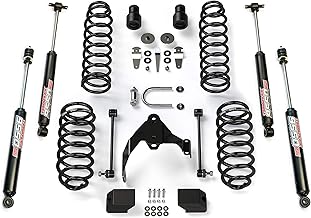
Teraflex 1251000 2.5" Lift Kit (JK 4-Door with All (4) 2.5" Shocks)
Check Price on Amazon →Here’s something you need to understand upfront: running tires larger than the recommended size without re-gearing isn’t just a numerical inconvenience — it’s a real mechanical problem. Your factory 3.73 gears were engineered for the stock tire diameter. Jump to 35s without re-gearing to at least 4.56s (ideally 4.88s), and your engine will lug in the low RPM range, your fuel economy takes a hit, and you’re adding unnecessary wear to your clutch and transmission year after year.
Dive deeper into tire selection at best 33-inch tires for Jeep JK, best 35-inch tires for Jeep JK, and best 37-inch tires for Jeep JK.
Pick Your Lift Height Based on How You Actually Drive
The real test: choose your lift height based on what you actually do with the Jeep — not what looks impressive in photos. A 2- to 2.5-inch lift is the sweet spot for most owners who split their time between commuting and weekend trail runs. A 4-inch or taller lift makes sense only if you’ve got a dedicated trail rig that spends minimal time at highway speeds.
I spent three months researching lift options before committing to my own build — reading through forum threads, watching install videos, pricing out the downstream costs like re-gearing, alignments, and UCA upgrades at each tier. After all that research, I landed on a 2.5-inch lift paired with adjustable control arms. Best decision I made. The stock control arm geometry is acceptable at 2 inches; once you push past 2.5 inches, adjustable arms shift from “nice to have” to essential if you care about caster angle and avoiding premature tire wear. That 2.5-inch height let me run 35s with minimal fender liner trimming, kept on-road manners close to stock, and avoided the immediate need for a full re-gear. It was the practical middle ground.
Here’s the trade-off in plain terms: if you’re driving to work four days a week and trail running on weekends, a 2–2.5-inch lift with 33–35-inch tires delivers the best balance; if you’re building a dedicated trail rig, 3.5–4 inches-plus with 35–37-inch tires is justified — but that means committing to re-gearing, extended brake lines, and the full list of supporting modifications.
For owners watching their budget closely, the Rough Country kit delivers real value:
2.5" Lift Kit for 2007-2018 Jeep Wrangler JK Unlimited - 67930
Check Price on Amazon →If you want a more complete suspension package from day one — with full shocks already included — the Teraflex option is noticeably better on pavement and doesn’t require a second upgrade down the road:
Teraflex 1251000 2.5" Lift Kit (JK 4-Door with All (4) 2.5" Shocks)
Check Price on Amazon →One thing JKU owners need to keep in mind: that longer wheelbase gives you a different flex characteristic than the 2-door JK. The 2-door tends to articulate more aggressively on technical terrain, which means your actual clearance at full flex can be tighter than what you see when the Jeep is parked level on the street. Do a static fitment check, but also think about what happens when you’re crawling over rocks.
Your trim level also plays a small but real role in fender clearance. Rubicon models start ahead in the clearance department, but the differences between Sport and Sahara are minimal.
Recommended Tire Sizes for Each Lift Tier
Each lift height has a tire size range that plays nicely — push to the top of that range only after you’ve actually measured the overall diameter of the specific tires you’re buying, because two tires with the same label can measure differently depending on the manufacturer.
Here’s how each tier breaks down:
Stock to 1” lift: Stay with 255/75R17 (roughly 32 inches) or equivalent. Most JK owners find they can push 265/70R17 (roughly 31.6 inches) or 265/75R17 (roughly 32.6 inches) without fender trimming.
2–2.5” lift: 265/70R17 to LT265/75R16 (roughly 32–33 inches) fit cleanly. Many owners fit LT285/70R17 (roughly 33.1 inches) with minor fender liner trimming on the front.
3–3.5” lift: LT315/70R17 (roughly 34.4 inches) to 35x12.50R17 (roughly 35 inches) typically fit with fender liner trimming and sometimes bump stop adjustments.
4”+ lift: 35x12.50R17 and up to 37x12.50R17 are achievable, but expect real front fender trimming work on both 2-door and 4-door models.
Critical point: always verify the actual measured overall diameter of the specific tire you’re ordering. The “35-inch” label is nominal, not a guarantee. Real-world diameters for tires with the same label commonly range from 34.5 to 35.5 inches depending on brand and load rating.
If you’re stepping up to 33s on a 2–2.5-inch lift, the Finalist Terreno M/T is a solid entry point into mud terrain without blowing your budget:
Wheel backspacing becomes critical the moment you move to wider tires. Get backspacing wrong and you’re either rubbing the control arms or sticking out past your fender flares. Check correct wheel backspacing for wider tires before ordering wheels.
Need the full breakdown of mud-terrain options? See best mud terrain tires for JK Wrangler.
The Supporting Parts You Actually Need: Sway Bars, TPMS, Brake Lines
Here’s where most lift builds go wrong: owners focus on the lift kit and tires, then overlook the supporting parts that are genuinely near-mandatory, not optional upgrades. The sway bar, TPMS sensors, and extended brake lines aren’t sexy, but they’re what keep your build reliable.
Let’s walk through what to plan for at each lift tier:
Sway bar disconnect or replacement is the first thing people ignore. The factory front sway bar is tuned for stock suspension geometry; at 2.5 inches or more of lift, you lose off-road articulation because the geometry pulls on the end links in ways they weren’t designed to handle. The JKS quicker disconnect is practical because it lets you disconnect in seconds before hitting the trail, then reconnect for the drive home — no full swap required:
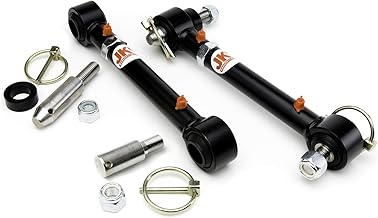
JKS 2034 Front Sway Bar Quicker Disconnect System for Jeep JK
Check Price on Amazon →If you’re building a serious trail rig and want maximum articulation all the time, the Currie Antirock Front Swaybar Kit replaces the factory bar with an anti-roll system optimized for lifted geometry. It stays connected on-road and off, with noticeably improved suspension performance at lifted heights. At $554, it’s a bigger investment, but it’s a complete one-and-done solution.
Rear sway bar links also need extension after any lift above 1.5 inches. Stock links bind up during trail articulation and can crack over time. Extended links for the 2.5–4-inch range are cheap insurance:

Rear Sway Bar Links for 2007-2018 Jeep Wrangler JK | 2.5-4"
Check Price on Amazon →TPMS sensors are the compatibility issue most owners miss entirely. When you swap to aftermarket wheels, your OEM sensors may not transfer over — and your TPMS warning light stays on permanently. A fresh set of compatible 433MHz sensors keeps the system functional and prevents that annoying false alert on every drive:

Set of 4 TPMS Tire Pressure Monitoring System Sensors 433MHz Compatible with Jeep Wrangler JK
Check Price on Amazon →Finally, bigger tires on trails mean a statistically higher chance of a flat when help is miles away. A compact flat repair kit with an onboard compressor takes up almost no space and has saved more trail days than I can count:
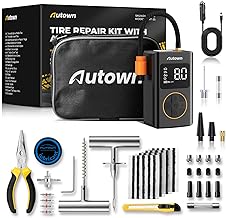
AUTOWN Flat Tire Repair Kit with Air Compressor 54 Pieces for Car, Motorcycle, ATV, Jeep, Truck
Check Price on Amazon →Keep all of this in your maintenance planning. The Jeep JK maintenance schedule has service intervals that apply specifically to lifted builds.
Frequently Asked Questions
Q: What size tires can I fit on a stock Jeep JK without a lift?
A: On a completely stock JK (2007–2018), most owners fit up to 32-inch tires (like 255/75R17 or 265/75R17) without any rubbing. Some report fitting 33-inch tires with minor fender liner trimming at full articulation on rocks, but 33s are typically better paired with at least a 2-inch lift to avoid contact during sharp turns or hard flex.
Q: Do I need to re-gear if I go to 35-inch tires on a Jeep JK?
A: Yes — re-gearing is strongly recommended when you move to 35-inch tires on most JK models. Stock 3.73 gears were calibrated for factory tire diameter. Run 35s without re-gearing to 4.56s or 4.88s, and you’ll notice sluggish low-end power, worse fuel economy, and increased strain on your drivetrain — especially noticeable when crawling rocks or towing.
Q: Will 35-inch tires fit on a 2.5-inch lift Jeep JK?
A: Typically yes, with some trimming required. Most owners report that 35x12.50R17 tires on a 2.5-inch lift need front lower fender liner trimming and possibly bump stop adjustments to prevent rubbing at full droop or during hard turns. It’s a workable setup, not a clean bolt-on, and your wheel backspacing is critical here.
Q: What is the biggest tire I can fit on a Jeep JK with a 4-inch lift?
A: A 4-inch lift on a JK or JKU commonly handles 37x12.50R17 tires, though most owners find this requires serious front fender trimming and sometimes cuts at the body mount area on the 2-door JK. Running 37s also strongly demands re-gearing to 4.88 gears, extended brake lines, and upgraded differential covers to manage the added rotating mass and weight.
Q: Does tire size affect my Jeep JK speedometer?
A: Absolutely. A larger tire diameter means your tires travel farther per revolution, and the stock speedometer doesn’t account for that. Moving from a 32-inch factory tire to a 35-inch tire typically creates roughly 4–6 mph of speedometer error at highway speeds — your actual speed is higher than what the gauge shows. A tuner or recalibration tool fixes this, and it matters for odometer accuracy and emissions readings too.
Get new guides by email
One email when we publish something worth reading. Unsubscribe anytime.
The Bottom Line: Plan Your Entire Build Before Buying Anything
The smartest lift builds work backward from the tire size you want, not forward from a lift height you like. Decide on 33s, 35s, or 37s first, then select the minimum lift that clears them without drama, then budget for re-gearing, wheel backspacing, sway bar work, TPMS, and extended brake lines all at once.
This one principle prevents the most common and expensive mistake in JK builds: buying a lift kit, then finding out the tires you want require a completely different approach.
Start with your tire goal, build out the full list of supporting parts, and price the complete package at once. That way you’re not making surprise discoveries two months in.
Ready to dial in your tire choice? See best 35-inch tires for Jeep JK for the strongest options at that popular size.
Free: JK Fluids at a Glance
Every fluid, spec and capacity for the 2007-2018 Wrangler JK on one page, plus a cut-out glovebox card. Checked against the owner's manuals. From the JK Service Kit.
Email me the download and new guides when they are published. Unsubscribe anytime. Privacy Policy.
Allan
I'm Allan. I own a 2014 Jeep Wrangler JKU and I research the hell out of every mod before I touch it. When I've fitted something to my own Jeep, I say so. Everything else is researched from manufacturer specs and other owners' reports. No sponsored fluff.
Learn more about me →Free: JK Fluids at a Glance
Every fluid, spec and capacity for the 2007-2018 JK on one page, plus a glovebox card.
Email me the download and new guides when they are published. Unsubscribe anytime. Privacy Policy.
Related Articles
Jeep JK Regear vs Locker: Which Upgrade Comes First?
Ask ten JK owners which comes first — a regear or a locker — and you'll get the same answer from nine of them: regear first, locker second.

Jeep JK Towing Capacity: What Can Your Wrangler Actually Pull?
Your Jeep JK can tow more than you might think — but probably less than you want to. The factory ratings are straightforward: 2,000 lbs for the 2-door...
Electric Winch vs Hydraulic Winch Jeep Jk Recovery
An electric winch draws power from your JK's battery and alternator to drive a motor, while a hydraulic winch taps into your power steering pump to...