Jeep JK Regear vs Locker: Which Upgrade Comes First?
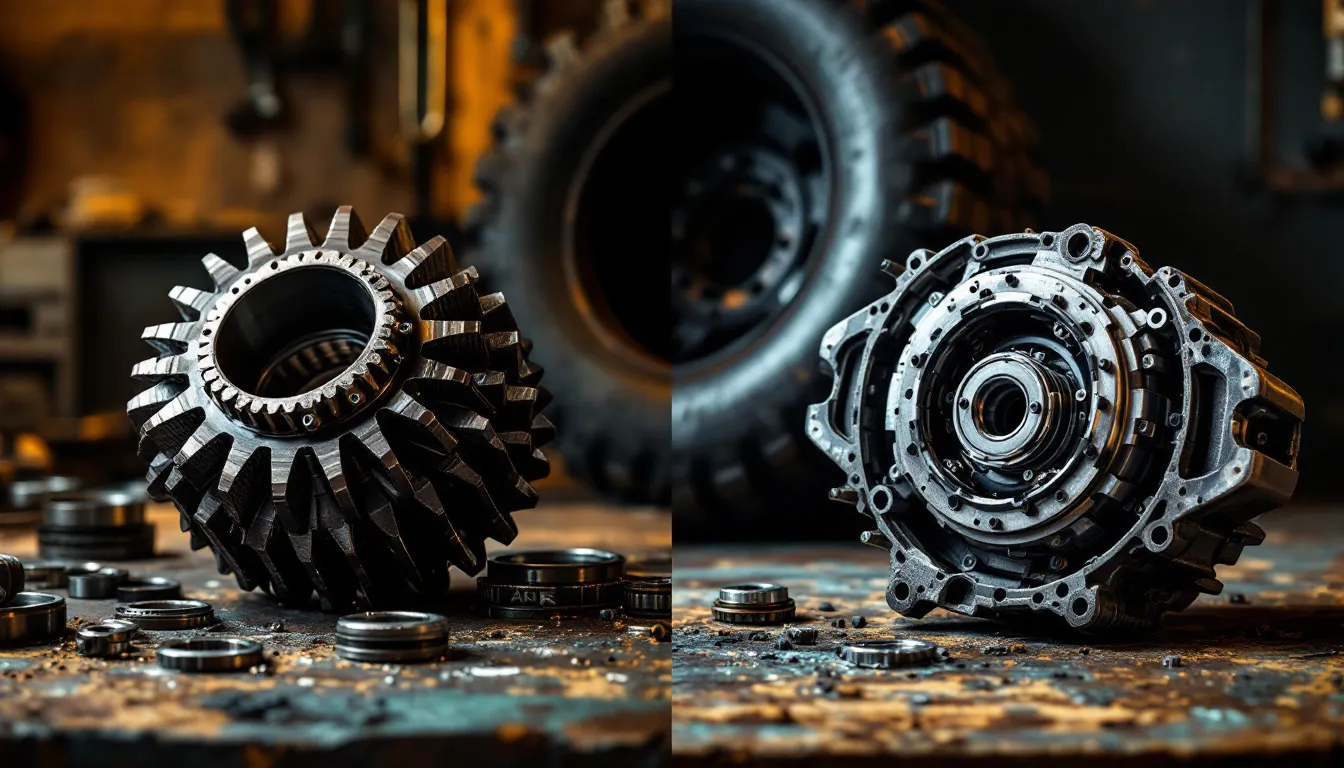
Jeep JK Regear vs Locker: Which Upgrade Comes First?
Affiliate Disclosure: JeepJK Guide earns a commission on qualifying purchases made through links on this page. This comes at no extra cost to you and helps keep the site running.
Regear vs Locker: The Short Answer
Ask ten JK owners which comes first — a regear or a locker — and you’ll get the same answer from nine of them: regear first, locker second.
Here’s why it matters. A regear restores the power and driveability your JK loses the moment you fit bigger tires. A locker redirects torque to the wheel that’s actually gripping. Both upgrades matter for serious off-road work, but they solve different problems — and one problem is more urgent.
If you’ve already fitted 35-inch tires to a non-Rubicon JK, your factory 3.21 gears are fighting you on every road, every day. The engine’s lugging. The transmission’s hunting for gears. The Jeep feels slower than it should. A regear fixes that immediately. Once your drivetrain is balanced again, a selectable or automatic locker becomes a genuine traction multiplier instead of a band-aid covering a deeper mechanical problem.
This guide breaks down what each upgrade actually does, compares them head-to-head, and gives you a clear decision framework — including what to do if budget only allows one right now. For a broader look at drivetrain mods, see the Drivetrain & Axles Guide. For locker-specific picks, jump to Best Lockers for Jeep JK.
Get new guides by email
One email when we publish something worth reading. Unsubscribe anytime.
Why Bigger Tires Break Your Factory Gear Ratio
The moment you bolt on bigger tires, you’ve fundamentally changed how your drivetrain works — and not in a good way.
Your gear ratio is calculated against a specific tire diameter. When Jeep’s engineers spec’d 3.21 gears for a Sport or Sahara, they assumed roughly 30-inch tires rolling down the highway and up steep grades. That ratio is the sweet spot for that combination. The engine produces a certain amount of torque. The gears multiply it by a certain factor. The tires rotate. Balance achieved.
Now add 35-inch tires to the equation. You’ve just effectively lowered your gear ratio — which sounds backward, but it’s real. Every additional inch of tire diameter is like adding invisible weight to your drivetrain. The engine has to work harder to turn that heavier rotating mass through the same gears it was designed to turn through 30-inch rubber.
I know an owner near Somerset West who ran stock 3.21 gears on 35s for four months before finally regearing both axles to 4.56. His story is identical to what dozens of JK owners describe: constant transmission hunting, noticeably poor fuel economy, and a Jeep that felt genuinely gutless on anything steeper than a highway on-ramp. Highway cruising sat at almost 3,000 RPM — way above where it should be. Hill climbs felt sluggish. The automatic was constantly searching for the right gear.
After the regear, the transformation was immediate. Highway RPM dropped back to normal. The transmission stopped hunting. Throttle response came back alive. And here’s the part that surprised him: fuel consumption actually improved because the engine wasn’t labouring anymore. The Pentastar was finally working in its optimal torque range.
The rule of thumb widely accepted in the JK community is simple: go up two sizes in tires, go up one gear ratio tier. For 33s on a non-Rubicon, that points to 4.10 gears. For 35s, 4.56 or 4.88. For 37s and beyond, 5.13 becomes worth considering.
The Rubicon changes this calculus slightly — it ships with 4.10 gears from the factory, which is adequate for 33s and tolerable (though not ideal) on mild 35s. But a stock Sport or Sahara on 35s with 3.21 gears is genuinely compromised, and staying that way long-term stresses components that weren’t designed for it.
For a detailed breakdown of ratio recommendations by tire size, check the best gear ratio for a JK on 33-inch tires guide.
What a Regear Actually Does for Your JK
A regear replaces the ring and pinion gears in your front and rear differentials with a numerically higher ratio, restoring the mechanical advantage your factory setup lost when you added bigger tires.
Think of it this way: your engine produces a fixed amount of torque. Gear ratios multiply that torque before it reaches the wheels. A higher numerical ratio (like 4.88 vs 3.21) multiplies that torque more aggressively — which is exactly what a heavier, taller tire demands if you want the Jeep to feel responsive again.
The transformation is tangible. That owner I mentioned earlier described it as “driving a completely different vehicle.” The Jeep felt responsive. Low-range crawling worked again. Trail obstacles that felt sluggish became manageable. And the daily commute stopped being a chore — the Jeep no longer felt like it was working against you.
That experience reflects what the numbers predict. Regearing doesn’t add power — your 3.6L Pentastar still produces the same horsepower it always did. What a regear does is multiply that power more effectively against the load. For non-Rubicon JK owners on 35s, the 4.88 ratio is the most commonly recommended target. On 33s, 4.10 is usually sufficient. On 37s, you’re looking at 5.13 at minimum.
A full front-and-rear regear kit for the JK covers the Dana 30 front axle and Dana 44 rear (non-Rubicon) or dual Dana 44s (Rubicon). The Yukon Gear & Axle 4.88 ratio kit is a well-regarded option for non-Rubicon JKs:

Yukon Gear & Axle - Gear & Install Kit for Jeep JK non-Rubicon 4.88 Ratio - includes ring and pinion
$620–$750
Check Price on Amazon →One critical point that catches newer owners off guard: always regear front and rear simultaneously. Mismatched ratios between axles create binding in 4WD — a mechanical problem that’s hard on transfer case components and completely defeats the purpose of the upgrade. It’s not optional. Do both or do neither.
What a Locker Actually Does — and What It Doesn’t
A locker forces both wheels on an axle to rotate at the same speed, eliminating the differential’s ability to send power to the wheel with less resistance — which is usually the wheel in the air or on ice.
Here’s the mechanical reality. In a standard open differential, torque follows the path of least resistance. One wheel spins freely in the air while the other sits planted and immovable on a rock. You get traction from zero wheels. You go nowhere. A locker breaks that dynamic entirely: both wheels turn together, so the planted wheel is forced to drive the vehicle forward regardless of what the other wheel is doing.
There are two main types. Selectable lockers (ARB Air Locker, OX Locker, factory Rubicon e-locker) engage on demand via air or electric actuator. You run open on the highway — normal turning behavior, no tire wear penalty, no clunking — and lock up when the terrain demands it. Automatic lockers (Detroit Locker, Powertrax No-Slip) engage mechanically under load. Simpler and cheaper, but they produce a noticeable clunk when engaging and can alter handling characteristics on pavement.
The Rubicon’s factory electric lockers (front and rear) are selectable units and genuinely capable. If you’re shopping for a used JK and the factory lockers work, they’re worth protecting before you even think about upgrading. For owners of non-Rubicon JKs considering aftermarket options, see Best Lockers for Jeep JK: ARB, Eaton, and Detroit Locker Guide.
Here’s what lockers cannot do: they can’t fix a drivetrain that’s undergeared for its tire size. If your JK is already lugging and sluggish because your gear ratio is wrong for your tire diameter, locking both wheels doesn’t add usable power. It just ensures both wheels spin ineffectively together at the same speed. A locker maximizes the traction available from whatever torque reaches the axle. If that torque is insufficient because your ratios are fundamentally off, the locker’s benefit is sharply limited.
Lockers also don’t improve on-road driveability, fuel economy, or transmission behavior. Those improvements come exclusively from the regear. A locker is a trail-specific upgrade. A regear is an everyday upgrade.
Regear vs Locker: Head-to-Head Comparison
When choosing between a regear and a locker, the core difference is this: a regear solves a mechanical imbalance your bigger tires created, while a locker solves a traction distribution problem on difficult terrain. They address different problems, and one of those problems affects you every single time you drive.
| Factor | Regear | Locker |
|---|---|---|
| Primary benefit | Restores correct gear ratio for tire size | Forces both axle wheels to rotate together |
| On-road improvement | Yes — better throttle response, highway cruising, fuel economy | No — automatic lockers can degrade on-road handling |
| Off-road improvement | Yes — better crawl ratio in low range | Yes — eliminates wheel spin to the axle with least resistance |
| Works without the other | Yes — significant standalone benefit | Partially — limited by insufficient torque from wrong gearing |
| Community-consensus cost (parts + labor) | ~$1,200–$2,200 front and rear | ~$600–$1,800 per axle depending on type |
| Installation complexity | High — requires differential setup, backlash, pattern check | Moderate to high depending on locker type |
| Rubicon consideration | 4.10 stock gears are adequate for 33s; borderline on 35s | Factory e-lockers are competitive with most aftermarket options |
| Tire size threshold | Critical on 33s+ for non-Rubicon; 35s+ for Rubicon | Valuable on any size — most noticeable benefit at lower speeds on difficult terrain |
The table makes the prioritization clear. A regear benefits every mile you drive — commuting, highway, trail. A locker benefits the specific moments when one wheel loses traction on technical terrain. For a discussion of whether the Rubicon’s factory locker justifies its price premium, see Rubicon vs Sport vs Sahara: is the factory locker worth the premium.
The Recommended Upgrade Order — and When to Break the Rules
Regear first. Always — unless you own a Rubicon on tires 35 inches or smaller, or you wheel exclusively on terrain where traction (not power delivery) is your only limiting factor.
The standard non-Rubicon JK on 33s or larger should prioritize the regear before any locker. The reason the order matters is straightforward: a locker on wrong gearing gives you locked axles with insufficient mechanical advantage. The Jeep still lugs. The transmission still overheats on grades. Fuel economy still suffers. You’ve added cost and complexity without fixing the root problem.
Once you’ve regeared, the locker becomes exponentially more effective. Now you have the correct torque multiplication reaching the axle, and the locker ensures all of it goes to ground rather than spinning a lifted wheel.
The one legitimate exception is budget. If you wheel a Rubicon with factory 4.10 gears on 33s and you need traction on a specific trail right now, adding a front locker first is defensible. The Rubicon’s gearing is close enough to correct for 33-inch tires that the mismatch isn’t severe. But if you’re on 35s or larger, even on a Rubicon, the regear becomes non-negotiable.
For non-Rubicons on anything larger than 33s: the regear is not optional. Running 35s on 3.21 gears long-term stresses the transmission, runs the engine outside its optimal torque range, and ultimately shortens component life — sometimes significantly.
What if your budget only covers one upgrade this year? Do the regear. A correctly geared JK with an open diff is more capable and more enjoyable to drive than a wrong-geared JK with lockers. You can add lockers later when the funds are available. You can’t un-stress a transmission that’s been lugging for two years.
For ratio guidance by tire size, see the best gear ratio for JK on 33-inch tires article. If you’re still evaluating which JK to buy, the JK Buyers Guide covers how to assess existing drivetrain mods before purchase.
Cost, Installation, and What to Budget for Each Upgrade
Budgeting for either upgrade requires honesty about parts, labor, and what you’re actually getting. Neither a regear nor a locker is a cheap afternoon project — and both deserve experienced hands.
Regear costs (community-consensus estimates):
- Gear and install kit (front + rear): $600–$900 for quality sets
- Labor: $600–$1,400 depending on shop and region
- Total front-and-rear regear: roughly $1,200–$2,200 installed
Locker costs (community-consensus estimates):
- Automatic locker (e.g., Detroit, Powertrax): $300–$600 per axle in parts
- Selectable locker (e.g., ARB Air Locker, OX Locker): $700–$1,200+ per axle in parts
- Labor: $300–$600 per axle
- Total per axle installed: roughly $600–$1,800
For JK non-Rubicon owners regearing to 4.88, the Yukon Gear & Axle kit includes ring and pinion plus the master bearing kit in one package for a straightforward installation. It’s one of the most commonly recommended kits among JK owners who’ve done the work themselves with a shop.
A note on compatibility that’s worth repeating: many general retailers stock GM differential gear sets that look similar but are completely incompatible with JK axles. The GM 8.625 8.5-inch ring and pinion sets fit GM axles from the 1970s–1990s, not JK Dana axles:

GM 8.625 8.5 Inch 3.73 Ratio Differential Ring and Pinion Gear Set + Master Bearing Kit for GM 8.5"
$212.93
Check Price on Amazon →Don’t order GM gear sets expecting JK fitment — they will not work. It’s a trap that catches DIY’ers who aren’t careful about part compatibility.
Installation requires proper differential setup: correct backlash, bearing preload, and a contact pattern check on the ring and pinion. This is not a job for guesswork or YouTube videos. A shop that does regular gear work will have the setup tools and experience; many general mechanics don’t. It’s worth paying for competence here.
After a regear, it’s a smart time to replace your differential cover and install upgraded diff breathers if you plan to water ford. See Best Diff Covers for Jeep JK and Best Diff Breathers for Jeep JK for recommendations. Your JK maintenance schedule should also be updated — fresh fluid changes are required after a break-in period following any gear work.
The JK Regear vs Locker Decision Framework: Which One Are You?
The right upgrade depends on your current setup, your tires, and what’s actually limiting you on the trail. If your JK feels sluggish on the highway, hunts for gears on grades, or struggles in low range, your gear ratio is the problem — not your traction.
Use this quick framework to figure out where you stand:
- Non-Rubicon JK on 33s or larger: Regear first. No debate. Your drivetrain is mechanically mismatched to your tires.
- Non-Rubicon JK still on 31s or factory tires: Either upgrade works; a locker adds more trail capability at this tire size, but regearing improves your overall driving experience if you’re feeling sluggish.
- Rubicon JK on 33s: Factory 4.10 gears are adequate. A locker upgrade is a reasonable first move if traction is your limiting factor on the trails you frequent.
- Rubicon JK on 35s: Regear to 4.56 or 4.88 becomes relevant. Factory lockers are already strong — gearing is now the gap to close.
- Any JK on 37s or larger: Regear is non-negotiable. Do it first and do it now.
For JK owners considering the 2-door vs 4-door configuration, note that the JKU’s longer wheelbase and additional weight make correct gearing even more important — the drivetrain is under greater load. See JK 2-door vs 4-door JKU drivetrain differences for more on how body style affects drivetrain decisions.
Bottom line: a locker on wrong gears is a partial solution to a problem you don’t actually have. A regear on an open diff is a complete solution for daily driveability, with more trail capability added later.
Frequently Asked Questions: JK Regear vs Locker
These are the questions JK owners ask most when sorting out their drivetrain upgrade order. Each answer is written to stand alone.
Q: Do I need to regear if I add 35-inch tires to my Jeep JK?
A: Yes, if you’re running a non-Rubicon JK with factory 3.21 gears. Moving from stock 30-inch tires to 35s significantly drops your effective gear ratio, resulting in sluggish throttle response, poor fuel economy, and a transmission that struggles on grades. Regearing to 4.56 or 4.88 restores the mechanical advantage your factory drivetrain was designed to deliver. The Rubicon’s factory 4.10 gears are marginally better but still borderline on 35s for most owners who do serious wheeling.
Q: Can I run lockers without regearing my JK?
A: Yes, but you’ll be solving the wrong problem first. A locker forces both wheels on an axle to turn together, which improves traction on difficult terrain. It does nothing for on-road driveability, fuel economy, or the mechanical stress your transmission experiences from wrong gearing. For non-Rubicon JKs on 33s or larger, regearing delivers improvements every mile you drive. The locker’s benefit is trail-specific and limited by insufficient torque if your gearing is wrong. Do the regear first — then add lockers when the budget allows. See Best Lockers for Jeep JK when you’re ready.
Q: What gear ratio should I run on a JK with 35-inch tires?
A: For a non-Rubicon JK (factory 3.21 gears) on 35-inch tires, 4.56 or 4.88 is the widely accepted community recommendation. The 4.88 ratio is the more popular choice for owners who may eventually move to 37s, as it stays usable at that tire size. The Rubicon’s factory 4.10 gears are tolerable on 35s for mild wheeling but leave the drivetrain slightly undergeared. For a full breakdown by tire size, see the best gear ratio for JK with 33s guide.
Q: How much does it cost to regear a Jeep JK?
A: Community-consensus estimates put a front-and-rear regear at roughly $1,200–$2,200 installed, depending on shop labor rates and the gear kit you choose. Parts alone for a quality ring-and-pinion set with bearings typically run $600–$900. Labor varies significantly by region and shop experience — a shop that does regular differential work will be faster and more accurate than a general mechanic. Budget toward the higher end if you’re having both axles done simultaneously, which is the correct approach.
Q: Does the Jeep JK Rubicon need a locker upgrade?
A: Most Rubicon owners don’t need an aftermarket locker. The factory front and rear electric lockers are selectable, capable, and well-integrated with the Rubicon’s 4.10 gearing. The main reasons to upgrade are if the factory lockers fail (a known issue on high-mileage examples) or if you’re running significantly larger tires and need more aggressive locking force than the factory setup provides. Aftermarket lockers like the ARB Air Locker can outperform the factory units in extreme conditions, but most Rubicon owners will get more from a regear on larger tires than from a locker upgrade.
Q: Should I regear my JK if I only do light trail riding?
A: If you’ve added 35-inch tires and you’re feeling any sluggishness on the highway or noticing the transmission hunting for gears, regearing will improve your daily driving experience even if you only hit the trail once a month. The regear benefits every mile. If you’re still running 33s or smaller and you mostly do mild trail riding, the urgency is lower — a locker might actually deliver more noticeable trail benefit for your dollar. But if bigger tires are on your Jeep, correct gearing isn’t a luxury — it’s basic mechanical maintenance for component longevity.
The Bottom Line: Regear First, Locker Second
The Jeep JK regear vs locker upgrade order comes down to this: fix your gear ratio before you add traction devices. A regear improves your JK on every road, every day. A locker improves your JK on specific trail obstacles. Both matter — but one matters more, more often.
If you’re on 33s or larger with a non-Rubicon JK, the regear is your next move. Once that’s done, explore your locker options at Best Lockers for Jeep JK. And while the diff is open, it’s a smart time to upgrade at Best Diff Covers for Jeep JK.
Your Jeep will thank you — and so will your fuel tank.
Get the Free JK Build Planner
Complete PDF with mod checklists, gear ratios, tire sizing charts, and budget worksheets. Everything you need to plan your JK build.
No spam. Unsubscribe anytime. By subscribing, you agree to our Privacy Policy.
Allan
I'm Allan. I bought a 2014 Jeep Wrangler JKU and I research the hell out of every mod before I touch it. Everything here is tested or deeply researched on my own rig - no sponsored fluff, just honest findings.
Learn more about me →Get the JK Build Planner
Free PDF with complete build checklists, gear ratios, and tire fitment guides.
By subscribing, you agree to our Privacy Policy.
Related Articles

Jeep JK Towing Capacity: What Can Your Wrangler Actually Pull?
Disclosure: JeepJK Guide earns a commission on qualifying purchases made through links in this article, at no extra cost to you.
How to Choose Tire Size for Jeep Jk Lift Kit Compatibility
Lift kit and tire size compatibility is straightforward in concept but trips up a lot of JK owners in practice: the amount of suspension height you add...
Electric Winch vs Hydraulic Winch Jeep Jk Recovery
Affiliate Disclosure: JeepJK Guide earns a commission on qualifying purchases made through links on this page, at no extra cost to you.