Jeep JK Stroker Kit: 3.8L & 3.6L Engine Displacement Upgrades Explained
Jeep JK Stroker Kit: 3.8L & 3.6L Engine Displacement Upgrades Explained
A jeep stroker kit swaps in a crankshaft with a longer stroke, increasing engine displacement and — most critically — low-end torque without boring out the block. For JK owners considering serious engine work, it’s one of the most discussed and least clearly explained upgrades in the community.
The short answer: a stroker can meaningfully improve your JK’s trail performance, but viability, cost, and payoff differ significantly between the 3.8L (2007–2011) and 3.6L Pentastar (2012–2018). Neither is a weekend bolt-on, and neither is cheap when done right.
Before committing, read our JK mods by budget guide. It’ll show you where a stroker build fits relative to other performance investments.
What Is a Stroker Kit and How Does It Work?
A stroker replaces the crankshaft with one that has increased stroke length — the distance each piston travels in its cylinder. That directly raises displacement and shifts your torque curve lower without requiring a wider bore or a new block.
Stroke is half the displacement equation: bore × stroke × number of cylinders. Lengthen the stroke, and you get more swept volume per revolution. Swept volume is what produces torque, especially at lower RPM — exactly where a loaded JK needs it on rocky terrain or a steep climb.
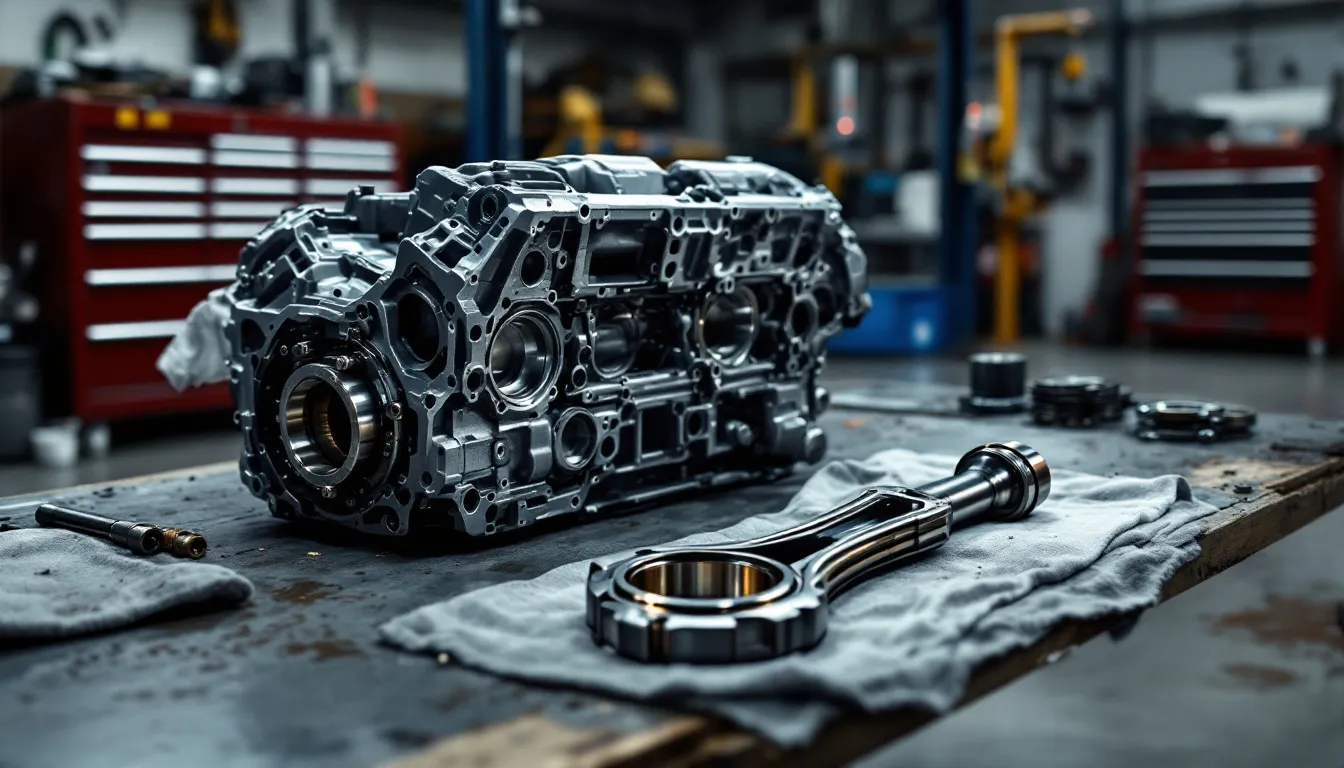
A typical stroker kit includes:
- Stroker crankshaft — the core component with the longer throw
- Connecting rods — usually stronger aftermarket units to handle the new geometry
- Pistons — matched to the new stroke and often forged for durability
- Piston rings and bearings — complete sets for a proper rebuild
- Gasket set — essential to seal the rebuilt bottom end
Here’s what matters: torque at lower RPM, not peak horsepower. That’s the real-world gain for trail driving. More torque at lower RPM means less clutch slipping, less gear hunting over obstacles, and an engine that stays tractable under load. Forums obsess over peak horsepower numbers, but torque is what you feel when you’re climbing.
When you rebuild a bottom end, the crankshaft position sensor deserves attention. It reads crankshaft position precisely, and a worn or misaligned sensor on a newly stroked engine causes misfires and erratic idle. Worth checking — or replacing proactively — while the bottom end is already apart.

Power and displacement figures throughout this article come from documented community builds and published manufacturer specs — not from a single dyno session.
Stroker Options for the JK 3.8L Engine (2007–2011)
For 2007–2011 JK owners with the 3.8L, the most documented stroker path hits approximately 4.2L–4.6L by fitting a longer-throw crankshaft and matching rotating assembly. Community builds report torque gains in the 30–50 lb-ft range depending on the specific rotating assembly and supporting mods — but results vary. Treat these figures as indicative, not guaranteed.
The 3.8L (3,778 cc pushrod V6) is flexible but fundamentally older architecture. It responds well to a stroker crank. Real limitations exist, though, and you need to understand them before you budget.
Here’s the honest part: the 3.8L block has known head gasket and cooling weaknesses that should be sorted before — or during — any stroker build. A stroker that makes more torque and more heat going into a compromised cooling system is asking for an expensive failure. Every used Jeep has a story. Mine had a few it hadn’t finished telling yet.
The radiator was done — we swapped it clean. Then came the AC. We found out it wasn’t working properly on a drive up to the Cederberg in 112°F heat, with our two-month-old baby boy in the back seat. Not ideal. Got that sorted the moment we got home.
Then came the big one: the cylinder heads. The 3.6L Pentastar’s heads were warped — a known issue on this generation. Rather than skimming them again, we sourced brand new replacement heads. It’s done right, or it’s done twice.
That philosophy — mechanical integrity before cosmetic ambition — runs through everything we recommend here. You can’t put serious power into a Jeep with blown head gaskets and call it reliable. The PHILTOP Engine Cylinder Head Gasket Kit is a sensible inclusion in any 3.8L bottom-end rebuild budget. It addresses the gasket set for the JK/Grand Cherokee 3.8L and ensures you’re not leaving a weak point behind after machine work.

Community builders consistently add these supporting mods to a 3.8L stroker:
- Upgraded head gaskets and thermostat — cooling system integrity first
- High-flow intake or cold air intake for better breathing at higher displacement
- Performance exhaust to reduce back pressure
- Tuned ECU map to match the new displacement and breathing characteristics
- Stronger axle shafts — more torque finds weak spots downstream
On intake, a cold air intake designed for the 3.8L/3.6L JK helps the engine breathe more freely after displacement increases. It’s one of the lower-cost supporting mods worth adding:

On the 4.0L crankshaft question: Older Jeep guys sometimes ask whether the 4.0L inline-six crank can stroke a JK 3.8L. It can’t. These are completely different engine families (inline-six vs. V6) with no shared internal geometry. The 4.0L crank works for pre-JK Jeep stroker builds, not the JK platform.
Once a stroker significantly increases torque output, your axles become the next concern. See our Dana 44 axle swap guide for what a full axle upgrade involves.
Can You Stroke the JK 3.6L Pentastar? (2012–2018)
The 3.6L Pentastar can technically be stroked. But here’s the reality: the aftermarket offers very limited off-the-shelf kit options for this engine. That’s the critical market fact 3.6L JK owners need to understand before spending hours searching.
The Pentastar is a DOHC aluminium V6 introduced in 2012. It’s genuinely modern, high-revving — and that architecture is both its strength and why stroker kit development has lagged. Custom rotating assemblies for the 3.6L exist, but they’re typically bespoke machine shop projects, not packaged kits from established suppliers. Expect custom fabrication pricing and lead times, not online shopping.
Off-the-shelf 3.6L stroker kits barely exist. Without a named kit supplier, most 3.6L Pentastar stroker builds are custom machine shop projects costing significantly more than equivalent 3.8L work. The community knows this gap. It hasn’t been filled as of 2026.
What this means practically: if you own a 2012–2018 JK and want more displacement, you’re either commissioning custom work or looking at an engine swap. The more accessible performance path for most 3.6L owners is bolt-on gains — intake, exhaust, and tuning — rather than a stroker build.
For intake, the same cold air intake referenced above covers the 2012–2018 3.6L:
A performance exhaust is another meaningful supporting mod for a 3.6L that’s been tuned. Two well-regarded options for the full 2007–2018 JK range:

If a full stroker isn’t viable for your budget or timeline, prioritise your JK performance mods by budget and stack gains methodically.
Stroker Kit vs Engine Swap vs Bolt-On Mods: Which Makes Sense for Your JK?
Weighing a stroker build against other engine upgrades depends on your existing engine’s health, your budget, and what you’re actually trying to achieve on the trail.
| Option | Estimated Cost Range | Displacement Gain | Torque Gain | Build Complexity | Best For |
|---|---|---|---|---|---|
| Bolt-on mods (intake + exhaust + tune) | $500–$1,500 | None | Modest (10–20 lb-ft est.) | Low | Daily drivers, modest trail use |
| 3.8L Stroker Build | $3,000–$6,000+ | ~0.4–0.8L gain | Significant (30–50 lb-ft est.) | High | Dedicated trail builds on 3.8L |
| 3.6L Custom Stroker | $5,000–$10,000+ | Variable | Significant | Very High | Custom machine shop builds only |
| Engine Swap (e.g., LS or 6.4L) | $8,000–$20,000+ | Major | Very significant | Extreme | Full purpose-built trail rigs |
Cost ranges are community build estimates, not shop quotes. Actual costs vary by region, labour rates, and parts sourcing.
A stroker makes sense when your 3.8L block is fundamentally sound, you want a torque curve optimised for low-speed trail use, and you’re prepared to rebuild supporting systems as part of the project. It’s a purposeful choice for a dedicated off-road build, not a value play.
Bolt-ons win when your engine is healthy, you’re not running extreme obstacles, and you want meaningful gains without an engine-out job. For most 3.6L JK owners, intake, exhaust, and a tune deliver noticeable improvements at a fraction of the cost.
Before committing to either path, assess your engine honestly. A compression tester tells you what your cylinders are actually doing:

An OBD2 scanner gives you a read on any underlying fault codes before you spend money on a build:

More torque also means your driveline needs to handle it. Check our Dana 44 axle upgrade guide and factor in gear ratio considerations for bigger tyre builds. Running 35s? The gear ratio guide for 35-inch tires is essential reading before you finalise a build plan.
Supporting Mods Your JK Needs After a Stroker Build
After a stroker build, increased torque stresses everything downstream. Here’s what experienced builders upgrade next, and where costs start compounding in ways the initial build budget rarely anticipates.
More torque from a stroked engine doesn’t stay in the engine bay. It travels through the transmission, transfer case, driveshafts, and — most critically — your axle shafts. Experienced JK builders consistently report that axle shafts fail first, particularly on stock 30-spline non-Rubicon shafts when torque increases significantly.
The full supporting mods list experienced builders recommend after a stroker:
- Stronger axle shafts — 4340 chromoly units are the standard upgrade
- Re-gear to match tyre size and new torque curve — critical if you’ve changed both displacement and tyre size
- Upgraded transmission cooler — more torque means more heat through the auto trans
- Performance exhaust — essential for a stroked engine to breathe freely
- Cold air intake — matched breathing on both ends of the engine
- Tuned ECU — without a tune, the ECU runs on stock fuelling maps that don’t match your new displacement
- Upgraded radiator and thermostat — especially on the 3.8L platform
- Heavy-duty u-joints — driveshafts see increased stress at higher torque levels
Here’s the hard truth: most builders report that the axle and drivetrain work following a stroker build adds $1,500–$3,000 or more to the total project cost. Budget for it upfront, not as an afterthought.
For Rubicon JK owners, the 32-spline Dana 44 rear is the starting point. Revolution Gear’s chromoly kit is the community-recognised upgrade:

Non-Rubicon Sport and Sahara owners on 30-spline Dana 44 rear axles need a different kit:

Re-gearing to suit your tyre size and new power delivery is essential. Start with re-gearing your JK for 33-inch tires or the gear ratio guide for larger tyre builds depending on what you’re running. Building a serious trail rig? The best winch for Jeep JK guide covers what you need when things go sideways.
Is a Jeep JK Stroker Kit Worth the Investment?
A Jeep JK stroker kit is worth it for a specific build: a dedicated trail rig where low-RPM torque is the limiting factor, where the existing block is healthy enough to build on, and where you’ve fully budgeted for the downstream impact.
The conclusions here draw from broad community research and documented builds across JK forums and builder threads. That research approach — real-world knowledge, not spec sheets — gives these assessments their weight. Individual builds vary.
The realistic cost baseline for a complete 3.8L stroker project including supporting mods is $5,000–$9,000+. That climbs if axle work, re-gearing, or cooling system rebuilds are needed. It drops if you’re mechanically capable of doing significant labour yourself.
For a 3.6L Pentastar owner, the honest answer is that the stroker market isn’t mature yet. Bolt-on mods and a quality tune get you meaningful gains at a fraction of the cost and complexity.
Once you’ve invested in a stroker, protecting what’s underneath matters. See our guide on protecting your undercarriage with JK skid plates and weigh up rock sliders vs rocker guards for trail protection.
Get new guides by email
One email when we publish something worth reading. Unsubscribe anytime.
Frequently Asked Questions: Jeep JK Stroker Kits
Q: How much horsepower does a 4.6L stroker engine produce in a Jeep JK?
A: Community-reported builds of JK 3.8L engines stroked to approximately 4.6L typically show estimated output in the range of 230–270 horsepower and 290–330 lb-ft of torque, depending on supporting mods, compression ratio, and tune. These are community-reported ranges, not manufacturer specs. Results vary significantly with camshaft choice, cylinder head work, and exhaust setup.
Q: How much horsepower does a stroker kit add?
A: A stroker kit alone doesn’t produce large horsepower gains. Peak horsepower increases are typically modest (15–30 hp in community builds) compared to torque gains of 30–50 lb-ft or more. Torque is what matters for trail driving. To maximise horsepower alongside displacement, you need supporting mods: heads, intake, exhaust, and a tune.
Q: What is the best engine swap option for a Jeep JK?
A: The most commonly discussed JK engine swaps are the GM LS-series V8 and the Chrysler 6.4L HEMI. The LS swap has the broadest aftermarket support and most documented builds. The 6.4L keeps you in the Chrysler family for simpler electronics integration. Both are $8,000–$20,000+ projects when done properly. A swap makes sense when the stroker cost approaches swap cost.
Q: What crankshaft can be used to convert a 4.0 to a stroker?
A: The Jeep 4.0L inline-six (found in TJ and XJ, not the JK) is typically stroked using a 4.6L or 4.7L crankshaft from compatible stroker rotating assembly suppliers. This doesn’t apply to the JK platform. The JK uses a 3.8L V6 or 3.6L Pentastar V6, which share no internal geometry with the 4.0L inline-six. If you’re building a pre-JK Jeep, the crankshaft question is different research entirely. For JK builds, see the gear ratio guide for 35-inch tires to understand how engine output interacts with gearing.
Q: Will a stroker kit void my JK’s warranty?
A: If your 2007–2018 JK is still under any powertrain warranty (unlikely given ages now), a stroker build will void powertrain coverage. For older, out-of-warranty JKs — which is the vast majority — this isn’t a practical concern. The relevant question is whether your builder offers their own workmanship warranty on the rebuild. Always confirm this in writing before authorising the work. Check our best JK mods for every budget guide for lower-risk alternatives.
Free: JK Fluids at a Glance
Every fluid, spec and capacity for the 2007-2018 Wrangler JK on one page, plus a cut-out glovebox card. Checked against the owner's manuals. From the JK Service Kit.
Email me the download and new guides when they are published. Unsubscribe anytime. Privacy Policy.
Allan
I'm Allan. I own a 2014 Jeep Wrangler JKU and I research the hell out of every mod before I touch it. When I've fitted something to my own Jeep, I say so. Everything else is researched from manufacturer specs and other owners' reports. No sponsored fluff.
Learn more about me →Free: JK Fluids at a Glance
Every fluid, spec and capacity for the 2007-2018 JK on one page, plus a glovebox card.
Email me the download and new guides when they are published. Unsubscribe anytime. Privacy Policy.
Related Articles
Jeep JK Regear vs Locker: Which Upgrade Comes First?
Ask ten JK owners which comes first — a regear or a locker — and you'll get the same answer from nine of them: regear first, locker second.

Jeep JK Towing Capacity: What Can Your Wrangler Actually Pull?
Your Jeep JK can tow more than you might think — but probably less than you want to. The factory ratings are straightforward: 2,000 lbs for the 2-door...
How to Choose Tire Size for Jeep Jk Lift Kit Compatibility
Lift kit and tire size compatibility is straightforward in concept but trips up a lot of JK owners in practice: the amount of suspension height you add...