Jeep JK Death Wobble: Every Cause, How to Diagnose It, and the Permanent Fix
Jeep JK Death Wobble: Every Cause, How to Diagnose It, and the Permanent Fix
Affiliate Disclosure: JeepJK Guide earns a commission on qualifying purchases made through links on this page. This does not affect our editorial recommendations.
What Is Jeep Death Wobble — and Can It Be Fixed?
Imagine this: you’re cruising the highway at a steady clip when your front tire catches a seam in the pavement. Suddenly, your steering wheel is trying to wrench itself from your hands. The entire front end of your Jeep is oscillating wildly, side to side, and nothing you do seems to stop it. That’s Jeep JK death wobble, and it’s absolutely fixable — but only if you find every worn component causing it, not just the most obvious one.
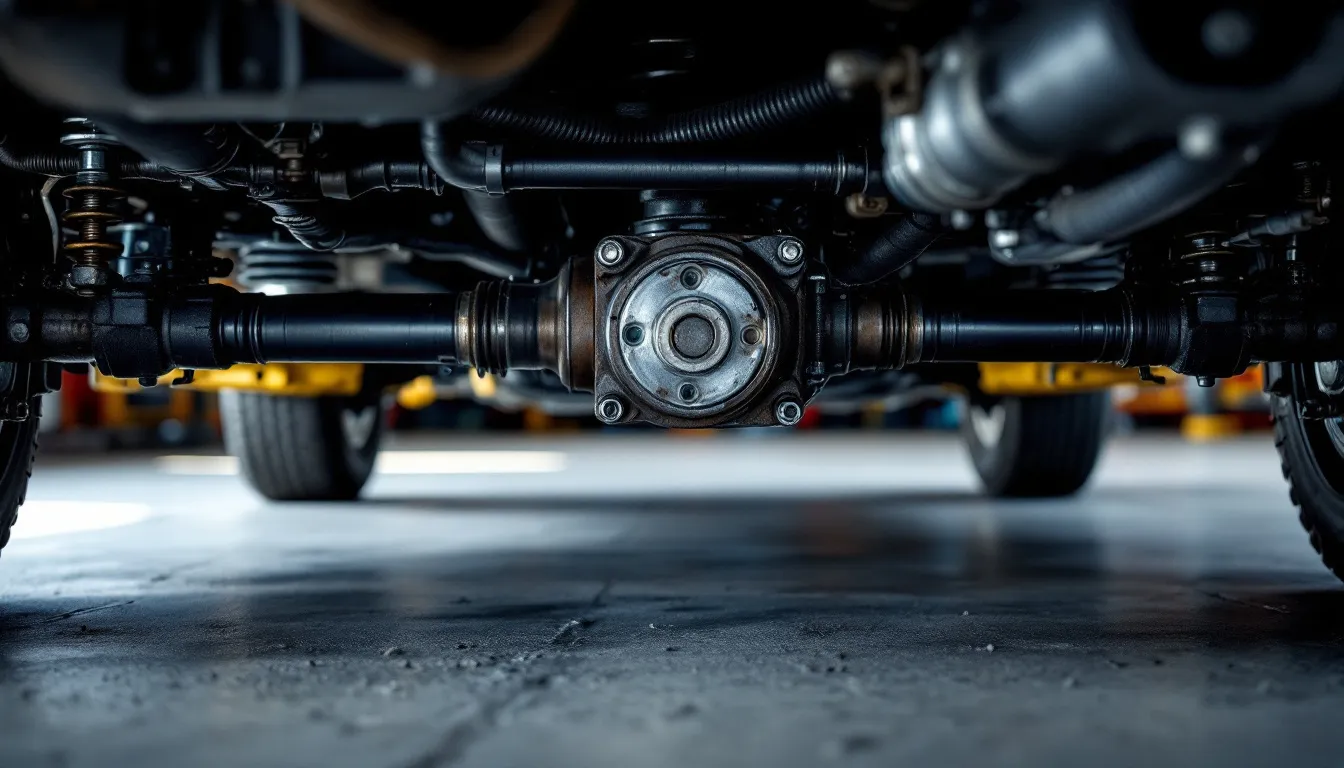
Death wobble is a violent, high-frequency oscillation of the front axle that travels through the steering wheel and shakes the entire chassis, typically triggered at highway speeds after hitting a bump or road imperfection. It doesn’t stop until you slow below roughly 45 mph. It’s caused by worn or loose front-end steering and suspension components, and yes, it can be permanently eliminated.
The most common culprit on the JK (2007–2018) is a worn or incorrectly adjusted track bar, followed by ball joints, tie rod ends, control arm bushings, and wheel bearing play. Fix the worn component, get a proper alignment, and the wobble goes away for good — provided you track down every contributing factor, not just the most obvious one.
I learned this lesson the hard way. On a highway trip near Beaufort West with my family aboard, the Wrangler hit a seam in the pavement at 65 mph and the steering wheel tried to leave my hands. My wife was in the passenger seat. Our baby was in the back. I was literally shaking when I pulled over. That’s not a mechanical inconvenience — that’s a safety emergency. The root cause turned out to be a worn track bar bushing combined with loose steering box bolts. I replaced the track bar entirely with an adjustable unit, torqued the steering box to spec, and added a heavy-duty steering stabilizer as insurance. Haven’t had a wobble since. That experience completely changed how I approach JK maintenance.
If you’re researching this before buying a used JK, the JK buyers guide covers exactly what to check at the curb before you sign anything.
Get new guides by email
One email when we publish something worth reading. Unsubscribe anytime.
What Actually Causes Jeep JK Death Wobble?
Death wobble on a Jeep JK is caused by worn, loose, or improperly adjusted steering and suspension components that allow the front axle to enter a resonant oscillation once a road disturbance sets it in motion. Here’s the thing: no single component causes it in isolation. It’s almost always a combination of worn parts where one triggers the chain reaction.
The solid front axle design that makes the JK so capable off-road is also what makes death wobble possible. A solid axle can oscillate as a unit in a way that independent front suspension cannot. Every road imperfection that deflects the axle sends a force back through every joint and bushing. If any of those joints have slack, the axle doesn’t return cleanly — it overshoots, rebounds, and the oscillation amplifies into the teeth-rattling wobble you experience at highway speed.
The track bar is the most frequent first culprit on a JK. Based on widespread owner experience (though published failure-rate data isn’t publicly available), the track bar is the single component that controls lateral, side-to-side axle position. When its ends develop play, the axle can shift left and right with each oscillation rather than being held in line. On lifted JKs, a stock-length track bar is now running at a steeper angle than it was designed for, which accelerates wear and changes the geometry in ways that guarantee trouble.
Here are the five components most commonly responsible:
- Track bar (Panhard bar): Wear in the bar’s rubber or poly bushings — or a bent/cracked bar — allows lateral axle movement. On lifted JKs, a stock-length track bar runs at the wrong angle and accelerates wear dramatically.
- Ball joints: Upper and lower ball joints connect the axle knuckle to the steering components. Worn ball joints introduce angular play that the axle translates into oscillation. JKs with larger tires and lifts experience faster ball joint wear than stock setups.
- Tie rod ends and tie rod itself: The tie rod links the two front wheels and transfers steering input. A bent tie rod or worn tie rod end introduces uneven force on each wheel and can trigger or sustain wobble.
- Control arm bushings: The four control arms (two upper, two lower per side on the JKU) locate the axle front-to-back. Worn or collapsed bushings allow longitudinal and rotational play that compounds any wobble already started by other components.
- Wheel bearings: A loose or worn front wheel bearing introduces runout — essentially a wobbling wheel — that can initiate the resonance at speed.
Lifted JKs face elevated risk. A 3.5” or higher lift raises the axle but leaves the track bar at the wrong angle unless you also install an adjustable, dropped track bar bracket or a longer bar. That geometry change loads the track bar ends differently, accelerates bushing wear, and shortens the window before you feel the consequences. If you’re running a lift and haven’t upgraded to adjustable control arms for lifted JKs, that’s a conversation worth having soon.
How to Diagnose Death Wobble on Your JK: Step-by-Step
Diagnosing death wobble correctly means testing components in a specific sequence, starting with the most likely cause and working outward. Skip the sequence, and you’ll end up replacing parts randomly — which is expensive and often doesn’t solve the problem.
You’ll need a floor jack, jack stands, a pry bar, a flashlight, and a helper for a few of the checks. Work through the steps in this exact order. Finding a problem at step 2 doesn’t mean you skip steps 3 through 7 — on a JK with death wobble, multiple worn components are common.
1. Check tire pressure and tire balance first. An out-of-balance tire or significantly over/under-inflated tire can cause shimmy that mimics early death wobble. Set pressures to spec, have the tires balanced, then test drive before proceeding. This step eliminates the most common false alarm.
2. Inspect the track bar visually — on the ground. Get under the JK with it at ride height (do not jack it up yet). Look at both ends of the track bar. Are there cracked welds? Visible corrosion at the joints? Is the bar straight? When I ran through this sequence after our highway incident, the track bar had visible lateral play at the axle-side mount — the bracket had a hairline crack that was easy to miss until I knew to look for it.
3. Jack the front axle and check track bar play. Use a quality floor jack. Support the axle on jack stands. Grab the track bar with both hands and try to move it side-to-side and up-and-down. Any detectable movement at either end is a failed bushing or a worn joint — replace the bar.

Jack Boss 3 Ton Low Profile, Aluminum and Steel Racing Floor Jack with Dual Pistons Quick Lift Pump
$169.99
Check Price on Amazon →4. Check ball joints. With the front wheels still off the ground, grab each tire at 12 o’clock and 6 o’clock and try to rock it. Then grab at 9 and 3 o’clock and repeat. Any clunk or visible movement at the ball joint (not the wheel bearing) confirms a worn joint. A worn ball joint is not just a death wobble cause — it’s a safety issue full stop.
5. Inspect tie rod ends. Grab the tie rod ends at each wheel and try to wiggle them. There should be zero free play. Also sight down the tie rod itself — a bent tie rod is visible once you know to look. Lift kits and large tires put significant stress on the OEM tie rod.
6. Check control arm bushings. With a pry bar, gently lever each control arm at its mounting points. You’re looking for bushing deflection — if the bushing sleeve moves visibly relative to the housing, it’s worn.
7. Check wheel bearings. With the wheel off the ground, grab the tire at 3 and 9 o’clock and rock sharply. Looseness here (distinct from ball joint play) indicates a worn bearing.
8. Run an OBD2 scan. This step surprises people, but it matters. A scanner rules out ABS faults, wheel speed sensor codes, and throttle/stability control issues that can masquerade as or accompany death wobble. Don’t spend money on front-end parts until you’ve confirmed there are no electronics-related codes throwing off your diagnosis.

Bluetooth Pro OBDII Scan Tool for iPhone & Android - No Subscription Fee - OBD2 Car Scanner and Code
$84.95
Check Price on Amazon →9. Torque-check every fastener you’ve touched. Before you reassemble, verify every fastener with a proper torque wrench. Under-torqued fasteners are a common cause of wobble returning shortly after a repair. Always verify torque specs against your specific part’s instructions — values vary by manufacturer and application.

EPAuto 1/2-inch Drive Click Torque Wrench (10-150 ft-lb / 13.6-203 Nm) Adjustment Torque Wrench
$39.99
Check Price on Amazon →Keep a written log of what you inspected and what you found. The JK maintenance schedule gives you a framework for building front-end inspections into regular intervals so this sequence isn’t always reactive.
Death Wobble Causes: Quick-Reference Diagnosis Table
Not sure which component is most likely causing your death wobble? This table gives you a fast-reference view of each culprit, the symptom that points to it, how to test for it yourself, and a realistic parts-cost range. Use it alongside the step-by-step sequence above — don’t use it as a shortcut to skip hands-on inspection.
All cost figures are parts only, prices vary by brand and supplier, and do not include labor or alignment costs.
For context on how Rubicon vs Sport suspension differences affect which components wear fastest, that page is worth reviewing before you buy replacement parts — Rubicon JKs and Sport JKs don’t always use the same spec components.
| Component | Failure Symptom | DIY Diagnosis Test | Est. Parts Cost (parts only) | Difficulty (1–5) |
|---|---|---|---|---|
| Track bar | Death wobble triggered at 45–65 mph after a bump; steering wanders | Grab bar with both hands at ride height; check for lateral play at either end | $80–$200 | 2 |
| Ball joints | Clunk over bumps; death wobble with tire wear; play at 12/6 o’clock rock test | Jack front axle; rock tire at 12 and 6 o’clock; look for joint movement | $100–$250 (per axle set) | 3 |
| Tie rod ends | Vague steering; wobble; uneven tire wear | Grab each tie rod end and check for free play; sight down rod for bends | $50–$150 | 2 |
| Control arm bushings | Clunk on acceleration/braking; imprecise steering feel | Pry bar at each control arm mount; look for bushing sleeve movement | $50–$200 (full set) | 3 |
| Wheel bearings | Humming noise at speed; play when rocking tire at 3 and 9 o’clock | Jack front axle; rock tire firmly at 3 and 9 o’clock positions | $80–$180 (each) | 3 |
| Wheel balance / tire | Shimmy at specific speeds; no clunks or play in any joints | Have tires balanced; check inflation; inspect for cupping or damage | $15–$80 (balance per wheel) | 1 |
The Most Common Fix: Replacing the Track Bar on Your JK
Replacing the track bar is the fix that resolves death wobble on the majority of JKs — and on a lifted JK, it’s also the upgrade that should have happened when the lift went on. Installing an adjustable track bar corrects the geometry that a stock-length bar can no longer maintain at lifted ride height.
The job is DIY-accessible. You need basic hand tools, a floor jack, jack stands, and a torque wrench. Here’s how the replacement goes:
Before you start: If your JK is lifted more than 2 inches, a stock replacement bar is not the right fix. You need an adjustable bar that lets you re-center the axle after installation. A bar that’s too short or too long will leave your steering wheel off-center and your tires wearing unevenly.
The maXpeedingrods adjustable track bar is built specifically for 2007–2018 JK and JKU with 0–6 inches of lift. The forged solid steel construction is a meaningful step up from the OEM stamped bar, and the adjustable length means you can dial in axle centering rather than accepting whatever the factory spec assumed.

maXpeedingrods Adjustable Front 0-6" Track Bar for Jeep Wrangler JK JKU | Adjustable Front Track Bar
$103.99
Check Price on Amazon →Installation outline:
Support the front axle on jack stands at ride height — do not allow the axle to droop, which would preload the new bar incorrectly. Break loose the frame-side bolt first, then the axle-side bolt. Use an impact socket set for the larger fasteners — the axle-side bolt on a JK is typically in the 18mm range and often corroded.
Remove the old bar. Inspect the mounting brackets at both ends for cracks or elongated bolt holes — if the bracket is damaged, address it before installing the new bar. Set the new bar to approximately stock length to start. Install both ends hand-tight first.
With the bar installed but bolts only snugged (not final-torqued), lower the Jeep to ride height and check axle centering by measuring from the frame to each front tire. Adjust bar length until the axle is centered, then final-torque both ends with a calibrated torque wrench.
Torque values vary by bar manufacturer — the maXpeedingrods instructions specify the correct values for their hardware. Always verify torque figures against your specific bar’s instructions rather than treating any published figure as universal.
After replacing the track bar following our highway incident, the death wobble was gone on the first test drive. But the job wasn’t fully done until the alignment was completed — without the alignment, the steering wheel sat slightly off-center and the tires would have worn unevenly within a few thousand miles. The alignment step is not optional. See JK wheel offset and alignment basics for what to ask for when you take it to the alignment rack.
Ball Joints and Tie Rod: The Other Death Wobble Culprits
If you’ve replaced the track bar and the wobble persists — or if your diagnosis pointed away from the track bar — ball joints and the tie rod are the next components to address. Ball joints are the second most common death wobble culprit after the track bar, based on widespread JK community experience, particularly on JKs running 35” or larger tires or any significant lift height.
Larger tires increase the leverage acting on the ball joints. Every steering input, every pothole, every off-road obstacle sends a larger moment through the joint than the OEM design anticipated for a stock-height, stock-tire setup. Over time, the joint’s internal wear surface degrades, and the small amount of play that develops is enough to destabilize the axle at speed.
How to confirm worn ball joints: With the front axle jacked off the ground, have a helper watch the upper and lower ball joints while you rock the tire firmly at 12 and 6 o’clock. Any visible movement — any — at the joint itself (not the bushing, not the bearing) means the joint is worn beyond serviceable limits. Do not drive the vehicle with a confirmed worn ball joint; joint separation at speed is catastrophic.
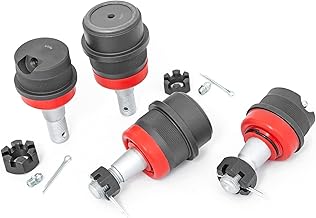
The Rough Country Heavy Duty Ball Joints (part 10626) are a direct replacement for 2007–2018 JK and JKU. They’re built to handle larger tire loads better than OEM-spec joints — a meaningful upgrade if you’re running anything bigger than a 33” tire. Replace upper and lower as a set; replacing one side and leaving the other at unknown mileage is a short-term plan.
Rough Country Heavy Duty Replacement Ball Joints for 07-18 Jeep Wrangler - 10626
$129.95
Check Price on Amazon →Tie rod inspection and replacement: The tie rod deserves its own attention. A bent tie rod is common on JKs that have seen any off-road use — a single rock strike in the wrong spot bends the OEM rod. A bent rod causes uneven toe angle between the two front wheels, which creates a steering pull and can sustain death wobble. Checking it takes less than five minutes.
To remove tie rod ends for replacement, use a proper inner tie rod removal kit to avoid stripping the threads. Tie rod end nuts are typically in the 36mm–46mm range and torqued tightly from the factory. For the initial break, you’ll often need a breaker bar with adequate leverage.
After replacing tie rod ends, a wheel alignment is mandatory — toe setting changes any time the tie rod is disturbed.
One more note: if you’re running a heavy aftermarket winch bumper, the added weight over the front axle does affect steering geometry and ball joint load. The front bumper upgrades that affect steering geometry article covers what to factor in if you’re shopping that category.
Tools You Need to Fix Death Wobble Yourself
The right tools make death wobble diagnosis and repair a manageable DIY project. Without them, you’ll either skip steps (missing a worn component) or risk stripping fasteners and under-torquing critical hardware. Here’s what you actually need:
A floor jack and stands are non-negotiable for safe front-axle work. A low-profile racing jack gives you the clearance to work under a lifted JK without fighting the jack. You can’t do this work safely without proper support.
A torque wrench in the 0–150 ft-lb range is essential — steering and suspension fasteners must be torqued to spec. Guessing by feel has consequences. The EPAuto 1/2” click wrench covers the 10–150 ft-lb range that handles most JK front-end fasteners. It’s the entry-level option if you don’t need the higher-range capability of a micrometer wrench.
A complete socket set (SAE and metric) is a necessity because JK suspension hardware is a mix of SAE and metric fasteners depending on year and whether you’re working on OEM or aftermarket components. A 185-piece set with 1/4”, 3/8”, and 1/2” drive covers every fastener you’ll encounter across track bar, ball joints, tie rod, and control arm work — without swapping between multiple sets.
A pry bar works for pushing against control arm bushings to check for deflection. A standard 18” pry bar does the job. A flashlight or work light is critical because the track bar axle-side bracket is in a dark spot. You will miss things without good lighting. Don’t underestimate how often you’ll need to see what you’re doing.
An OBD2 scanner was already covered in the diagnosis section — rule out electronics before chasing mechanical causes. A maintenance logbook sounds obvious until it isn’t. This one tool is worth its weight in prevention.

Vehicle Maintenance Logbook: Service and Repair Record Book for Up to 3 Vehicles
$9.99
Check Price on Amazon →After our highway incident, I started logging every front-end inspection — date, mileage, what was checked, what was found, what was replaced. That record caught developing ball joint wear before it became an emergency. It told me, two years later, that the ball joints were approaching the mileage at which the track bar had originally failed. A logbook isn’t exciting, but it’s the difference between proactive maintenance and emergency roadside calls. See the full JK maintenance schedule and torque reference for building those inspection intervals into a real schedule.
How to Prevent Death Wobble from Coming Back
Death wobble doesn’t come back once you’ve fixed the root cause — unless you let the replacement components wear to the same point without catching them. Prevention is straightforward: inspect systematically, torque fasteners on a schedule, and don’t let a lift kit go without the supporting hardware.
Here’s the prevention checklist, based on community consensus from JK owners who’ve been through this:
- Front-end inspection every 15,000 miles: Most JK owners find this interval catches early wear before it progresses to death wobble territory. If you’re running larger tires or doing regular off-roading, shorten that to every 10,000 miles.
- Torque check after any significant off-road use: Vibration and shock loads loosen fasteners faster than highway miles do. A torque wrench check on your track bar, control arm, and tie rod hardware costs 20 minutes and can prevent a return of wobble.
- Replace components in matched sets: If one ball joint is worn, the other side isn’t far behind. Same logic applies to tie rod ends and control arm bushings.
- Upgrade supporting hardware when you lift: A lift without a proper adjustable track bar, best adjustable control arms for lifted JKs, and geometry-corrected components is a death wobble waiting to happen — often within 20,000 miles.
- Get an alignment after any steering or suspension work: An alignment confirms your geometry is correct. Skipping it after replacing front-end components defeats the purpose of doing the work.
- Watch for early warning signs: Steering wander, a slight shimmy at specific speeds, or any new clunk over bumps are the front-end’s way of telling you something is developing. Don’t wait for highway-speed wobble to investigate.
The JK 2-door vs 4-door suspension differences are worth understanding if you’re maintaining a JKU — the Unlimited’s longer wheelbase and additional control arms change the wear pattern slightly compared to a 2-door.
Frequently Asked Questions: Jeep JK Death Wobble
Q: Is death wobble dangerous?
A: Yes. Death wobble involves violent, uncontrolled oscillation of the front axle at highway speed, and it can compromise your ability to steer and brake. The risk isn’t just discomfort — a driver who isn’t prepared for the sudden onset can overcorrect, and a severely worn ball joint that has been contributing to wobble can fail completely. If you experience death wobble, treat it as a safety issue and inspect the front end before driving at highway speed again.
Q: What is the most common cause of death wobble on a Jeep JK?
A: Based on widespread JK owner and community experience, the track bar (also called the Panhard bar) is the most frequently cited first cause of death wobble on a 2007–2018 JK. Worn bushings or a cracked mounting bracket allow lateral axle movement that sets off the oscillation. On lifted JKs, a stock-length track bar running at an incorrect angle accelerates this wear significantly.
Q: Can I fix death wobble myself?
A: Yes, for most of the common causes — track bar replacement, tie rod end replacement, and control arm bushing swaps are all DIY-accessible with basic hand tools, a floor jack, and a torque wrench. Ball joint replacement is more involved and requires a press (or a shop with one). Any steering or suspension work should be followed by a professional wheel alignment.
Q: Does a lift kit cause death wobble?
A: A lift kit by itself doesn’t cause death wobble, but an incomplete lift — one that raises the body and axle without correcting the track bar angle, control arm geometry, and alignment — creates the conditions for it. A properly executed lift with an adjustable track bar, geometry-corrected control arms, and a fresh alignment is far less likely to produce wobble than a budget lift that skips those steps. Check the Rubicon vs Sport suspension specs to understand baseline geometry differences before adding lift.
Q: Will a wheel alignment fix death wobble?
A: An alignment alone will not fix death wobble. Alignment corrects the angles at which your tires meet the road, but it cannot compensate for physical play in worn ball joints, a loose track bar, or worn tie rod ends. Fix the worn components first — then get an alignment to confirm the geometry is correct. If you take a vehicle with death wobble to an alignment shop without fixing the worn parts first, the shop won’t be able to align it properly anyway, because the worn components make the measurements unstable. Check the used JK buying checklist if you’re evaluating a used JK — a vehicle that already has death wobble needs a full front-end inspection before purchase, not a quick alignment.
Q: How much does it cost to fix death wobble?
A: The cost depends entirely on which components are worn. A track bar replacement runs $80–$200 for the part alone, plus alignment costs ($100–$200). Ball joints are $100–$250 per axle set. Tie rod ends are $50–$150. If multiple components need replacement, you’re looking at $500–$1,500 in parts plus labor and alignment. DIY work eliminates labor but doesn’t eliminate the parts cost or alignment expense. Budget accordingly before you start, and remember that skipping a single worn component means the wobble will likely return.
The Bottom Line on Jeep JK Death Wobble
Jeep death wobble is fixable — permanently — but only if you diagnose every contributing component and fix all of them, not just the most obvious one. The track bar is the most common starting point on a JK. Ball joints, tie rod ends, control arm bushings, and wheel bearings are the supporting cast. Miss one, and the wobble comes back.
The repair is DIY-accessible for most of these components. The tools are straightforward. The alignment afterward is not optional. And the maintenance habit that prevents recurrence is simpler than the repair itself: inspect the front end on a schedule, torque-check hardware after hard use, and log what you find.
After our highway incident, that logbook became a permanent part of how I maintain the JK. It caught developing ball joint wear before it became an emergency. It documented when the track bar was replaced and at what mileage. It turned a scary roadside experience into a system. The complete JK maintenance schedule is the best place to build that system into your regular intervals.
If you’re experiencing death wobble right now: stop driving at highway speed, work through the diagnosis sequence in this article, and fix everything the inspection surfaces — not just the first thing you find.
If you’re buying a used JK, run the used JK pre-purchase inspection checklist and spend fifteen minutes under the front end before you commit. A JK with death wobble is a known, fixable problem — but you should know about it before the purchase, not after.
Get the Free JK Build Planner
Complete PDF with mod checklists, gear ratios, tire sizing charts, and budget worksheets. Everything you need to plan your JK build.
No spam. Unsubscribe anytime. By subscribing, you agree to our Privacy Policy.
Allan
I'm Allan. I bought a 2014 Jeep Wrangler JKU and I research the hell out of every mod before I touch it. Everything here is tested or deeply researched on my own rig - no sponsored fluff, just honest findings.
Learn more about me →Get the JK Build Planner
Free PDF with complete build checklists, gear ratios, and tire fitment guides.
By subscribing, you agree to our Privacy Policy.
Related Articles
How to Winterize Your Jeep JK: Complete Fall Prep & Storage Guide
Affiliate disclosure: This article contains affiliate links. If you purchase through them, we may earn a commission at no extra cost to you.
2018 Jeep JK Maintenance Schedule PDF
Every used Jeep has a story. Mine had a few it hadn't finished telling yet.
Jeep JK Maintenance Schedule PDF: Complete Service Guide (All Years)
Complete JK maintenance schedule with intervals, fluid specs, and torque specs for 2007-2018 Wranglers. Severe duty intervals, DIY tips, and downloadable checklist.