Jeep JK Fall Trail Prep: 10-Point Checklist Before the Last Runs of the Year
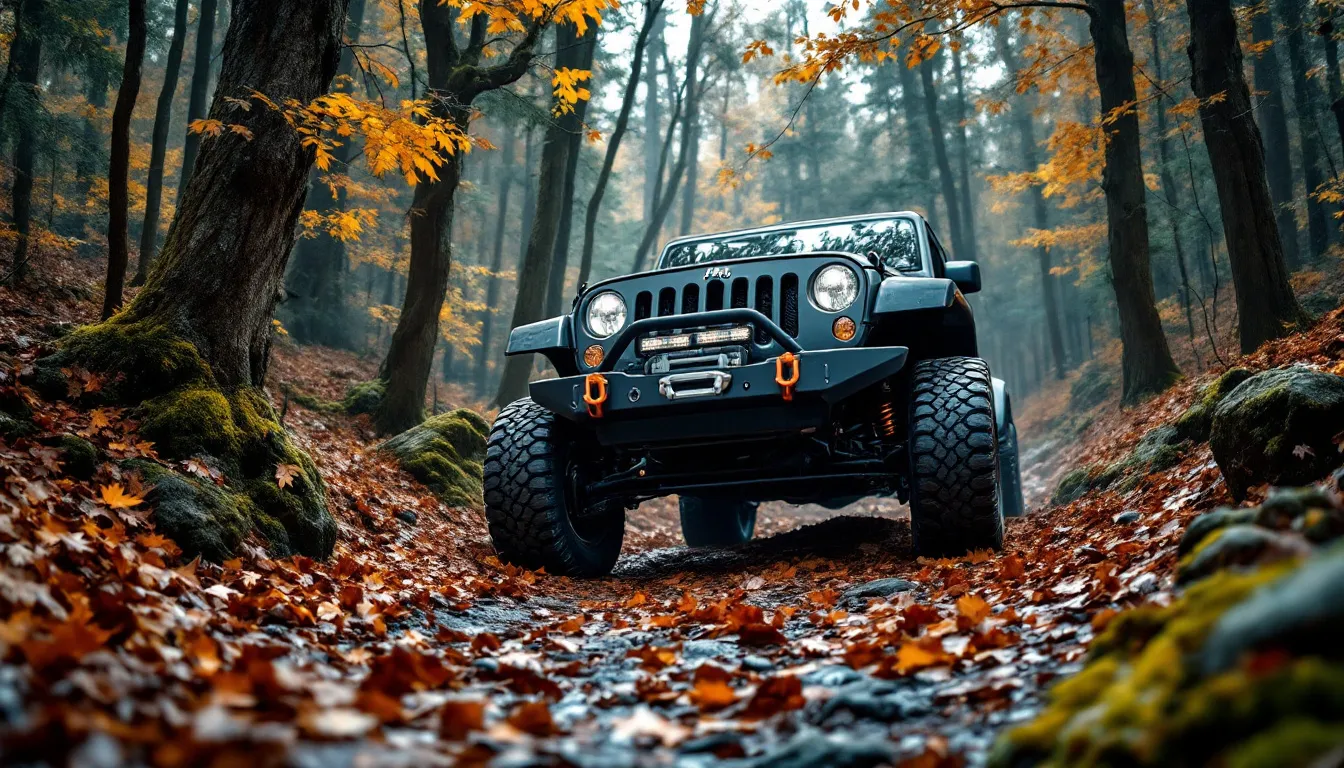
Jeep JK Fall Trail Prep: 10-Point Checklist Before the Last Runs of the Year
Affiliate Disclosure: JeepJK Guide earns a commission on qualifying Amazon purchases. This costs you nothing and helps keep the site running.
Fall is when your JK needs attention most. Cooler temps, shorter daylight, and slicker trails expose what summer’s heat masked. A Jeep JK fall trail prep checklist is your insurance policy — ten checks covering tires, fluids, brakes, fasteners, recovery gear, lights, armor, and your maintenance log, all done before your last off-road runs of the year on a 2007–2018 Jeep Wrangler JK or JKU.
This isn’t busy work. A soft tire or low diff oil catches you at home for $50 and thirty minutes. On a trail at dusk in November, it catches you stranded. The goal here is zero surprises.
Start with the quick-reference table below, then walk through each section in order. Every check has a pass/fail criterion and the exact tools you’ll need. Most take under two hours total if you’re methodical. For deeper winterization beyond trail season — long-term storage prep and freeze protection — see the full JK winterization guide.
The 10-Point Fall Trail Prep Checklist at a Glance
Here are all 10 checks in one place for quick reference, then full detail in each section below.
| Check # | System | What to Inspect | Pass/Fail Criteria | Tools Needed |
|---|---|---|---|---|
| 1 | Tires | Tread depth, sidewall cracks, tire age | ≥4/32” tread, no cracking or bulging | Tread depth gauge |
| 2 | Tire Pressure | Cold PSI vs. recommended, TPMS calibration | Within 2 PSI of spec after cold adjustment | Tire gauge, air compressor |
| 3 | Fluids | Oil, coolant, brake fluid, diff oil, transfer case oil | All at correct level; coolant tested for freeze point | Fluid tester, dipstick, rags |
| 4 | Cooling System | Hoses, clamps, radiator condition | No cracks, soft spots, or coolant smell | Visual inspection |
| 5 | Brakes | Pad thickness, rotor condition, brake lines | ≥3mm pad; no scoring, rust pitting, or weeping | Floor jack, flashlight |
| 6 | Axle Fastener Torque | Lug nuts, U-bolts, track bar bolt, control arm bolts | 100 ft-lb on lug nuts; all fasteners to spec | Torque wrench, impact socket set |
| 7 | Recovery Gear | Winch rope, straps, shackles, hi-lift jack | No fraying, kinking, or corrosion; all rated for JK weight | Visual inspection |
| 8 | Lighting & Electrical | Battery CCA, alternator, aux lights, switches | Battery tests strong; no flickering or dead switches | Battery tester, multimeter |
| 9 | Underbody & Armor | Skid plates, rock sliders, frame rails, brake lines | No cracked welds, loose bolts, or crushed lines | Floor jack, flashlight |
| 10 | Maintenance Log | Last service dates, upcoming intervals | All entries current; next service dates noted | Logbook or app |
Skip Checks 3 and 6 at your own risk. Fluids look fine until the refractometer tells you otherwise, and fasteners feel tight until a torque wrench reveals the truth.
Get new guides by email
One email when we publish something worth reading. Unsubscribe anytime.
Checks 1 & 2: Tires and Tire Pressure
Before any fall trail run, inspect tread depth, sidewall condition, and cold pressure — in that order. These three checks take less than ten minutes and will tell you everything about whether your tires will work when the terrain gets technical.
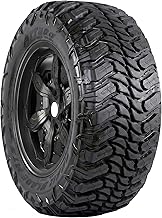
Start with tread depth. The minimum for mixed-terrain and trail use is 4/32 of an inch — anything thinner and wet roots and muddy fall conditions will have you searching for traction. A tread depth gauge costs $8 and beats the penny test by a mile. On mud terrains like the Atturo Trail Blade MTS, check the center lugs and the shoulder blocks — wear never happens evenly on a lifted JK.
Cold tire pressure is where temperature changes bite you. For every 10-degree drop in ambient temperature, expect your tires to lose 1 PSI. If you aired up in August at 85°F and it’s now a 45°F October morning, your tires will read 4 PSI lower than your summer baseline before you even turn the key. Adjust after the truck has sat overnight and the rubber has cooled to ambient. This matters more on fall trail runs than summer because the pressure swings are bigger.
Inspect both sidewalls for UV cracking — especially on tires over five years old. Hairline surface cracks are cosmetic. Deep cracks that reach through the outer plies are a replacement signal. Look for bulges or flat spots, which indicate internal damage from a hard hit or prolonged storage.
If your JK is lifted with larger tires, your TPMS sensors may throw false warnings at trail pressures. Understand that warning before you ignore it. Running 35-inch tires on a lifted JK taught me quickly that bigger tires only work if you actually let them work — that means airing down to 15–18 PSI on technical terrain, not staying at highway pressure and wondering why the grip falls flat. For fitment specifics on your exact setup, check the JK wheel backspacing and offset guide.

Atturo Trail Blade MTS M/T Mud Off-Road Light Truck Radial Tire—37X12.50R17LT
$270.50
Check Price on Amazon →Checks 3 & 4: Fluids and Cooling System
The fluids you check before fall trail runs are engine oil, coolant (and its freeze point), brake fluid, front and rear differential oil, and transfer case fluid. These five systems are the ones most likely to fail in cold-weather conditions when you need them most.
Engine oil is obvious but easy to botch — check it cold, on level ground, and look at color and consistency, not just the level line. If it’s been more than 4,000 miles since your last change and you’re about to run trails, change it now.
Coolant is where I learned expensive lessons firsthand. A 3.6L Pentastar head gasket replacement sidelines your truck for weeks and costs what a used car is worth. The lesson afterward was simple: test your coolant’s freeze point every fall before the temperature drops, not after the first cold snap. A refractometer costs $15 and tells you immediately whether your coolant still has protection. The 2012–2018 JKs with the 3.6L Pentastar are well-documented across the Jeep community as sensitive to coolant degradation — running old coolant or low-protection mix in temperature swings kills water pumps and head gaskets faster than almost any other maintenance failure. This isn’t speculation; it’s a pattern.
Check brake fluid color. Brown fluid has absorbed moisture and lost boiling point protection in the wrong direction. Diff oil and transfer case fluid should both be at the fill hole level with zero metallic smell. A metallic smell means internal wear, and you need a drain-and-inspect before the next run.
For specific intervals by model year and fluid capacity, the complete JK winterization and fluid flush guide and 2018 Jeep JK maintenance schedule spell out when each service is due.
Checks 5 & 6: Brakes and Axle Fastener Torque
Brakes and fasteners get their own section because a summer of trail use — water crossings, hard landings, flex cycles — loosens what you torqued and wears what was fresh. This isn’t theoretical.
I hit death wobble at 95 km/h on the highway once. Imagine the entire front end oscillating side to side while the steering wheel fights your hands. Your instinct is to brake, which makes it worse. We pulled over shaking — literally. My wife was in the passenger seat, baby in the back. That’s not an inconvenience; it’s a safety emergency.
The diagnosis led to a worn track bar bushing and loose steering box bolts. I replaced the track bar with an adjustable unit, torqued the steering box to spec, and added a heavy-duty steering stabilizer for insurance. Haven’t had a wobble since. That experience rewired how I approach fastener maintenance. I now check the front end before every long trip — ball joints, track bar, control arms, and that track bar bolt. It takes fifteen minutes. Skip it once and you earn back tenfold in peace of mind.
For brakes: look for at least 3mm of pad thickness, inspect rotors for deep scoring beyond surface rust, and trace brake lines for cracking or weeping at fittings.
For fasteners: JK lug nut torque is 100 ft-lb. That’s the published spec for every 2007–2018 Wrangler. For track bar bolts, control arm bolts, and U-bolt values, consult your service manual — these vary by model year and lift setup. It’s better to look it up than guess and over-torque.

The EPAuto torque wrench covers 10–150 ft-lb and handles lug nuts and most suspension fasteners. For heavier axle and skid plate hardware in the 40–300 ft-lb range, a micrometer-style wrench is your best bet. To break loose stubborn fasteners before re-torquing, the Neiko impact socket set and the DEWALT 20V impact driver make the job faster and safer than manually turning stuck fasteners.


Check 7: Recovery Gear Condition
The recovery items worth checking on your JK are winch rope (or cable), recovery straps, shackles, and hi-lift jack — every piece that gets used in an actual recovery. Gear sitting in your cargo area for three months can degrade in ways that fail silently under load.
I once found a Fortuner stuck on a remote mountain pass with a blown tire and no jack that fit. My JK’s recovery kit was the only thing standing between a long wait for help and a twenty-minute roadside repair. Hi-lift, wheel chock, breaker bar, some WD-40 for seized lugs — that’s all it took. But only because the gear was there and it worked. That was the day recovery gear stopped being optional and became non-negotiable. Recovery gear isn’t really for your Jeep — it’s for everyone you’ll meet on the trail.
Start with the winch rope. If you’re running steel cable, look for kinks, fraying, and bird-caging. For synthetic rope, inspect for UV fading (significant color wash-out signals UV degradation), kinks, flat sections where fibers separated, and anything that’s been run over or pinched. A synthetic rope showing flat, ribbon-like sections or that crunches when bent needs replacement before your next trail run — not after.

TYT Synthetic Winch Rope Kit — 1/4" x 50' with 10,000 lbs Strength, Protective Sleeve, Hook
$29.99
Check Price on Amazon →The TYT Synthetic Winch Rope Kit gives you 50 feet of 1/4-inch rope rated for 10,000 lbs, a protective sleeve, hook, rubber stopper, and pull strap. At $29.99, replacing a questionable rope is one of the cheapest safety upgrades you can make before fall season.
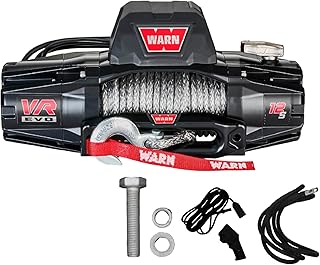
If your winch is aging, undersized for your JK’s current weight (especially after adding a bumper, roof rack, or armor), or hasn’t been run under load in over a year, the VR EVO 12-S Electric 12V Winch is worth considering — 12,000 lbs capacity, IP68-rated, and synthetic rope included.

VR EVO 12-S Electric 12V Winch – 12,000 lb Pull Capacity, IP68 Waterproof, Synthetic Rope
$1,044.24
Check Price on Amazon →Check your shackles for bent pins and stretched bows. Inspect kinetic recovery ropes or tow straps for fraying at the loops — that’s exactly where they fail under load. For complete winch selection and mounting, see the best winch for Jeep JK Unlimited guide, and JK front bumpers with winch mounts if you’re adding a proper mount simultaneously.
Check 8: Lighting, Electrical, and Battery
The electrical checks that move the needle on a JK before fall trails are battery condition, charging system output, and auxiliary lighting function — in that order. Fall means shorter days, longer trail runs into dusk, and colder temperatures that expose marginal batteries.
Test your battery’s cold cranking amps (CCA), not just voltage. A battery can read 12.6V at rest and still fail to crank on a cold morning when CCA has dropped below spec. Most auto parts stores test this for free. The 2007–2011 JKs with the 3.8L engine have a well-known weak point in the alternator — many owners report charging issues, especially after adding auxiliary lighting. If your voltage gauge is sluggish or headlights dim at idle, have the alternator tested before you add fall trail miles.
For auxiliary lights: test every switch, trace wiring near exhaust and suspension components, and look for chafed insulation. Extended dusk runs on fall trails are exactly when a dead light bar or corroded switch becomes a real problem.
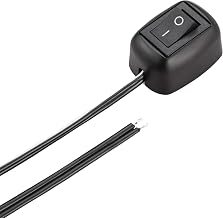
Universal Rocker Switch, Car DIY Switch 12V DC, with Pre-Applied Adhesive
$6.29
Check Price on Amazon →A corroded or flaky rocker switch is one of the simplest fixes on a JK. The universal rocker switch is a $6 solution for a switch that’s been intermittent all summer — replace it before the season gets dark.
Check 9: Underbody, Skid Plates, and Rock Sliders
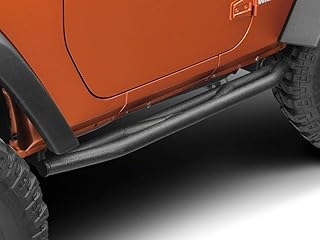
After a summer on the trails, the underbody things to look for are cracked welds, loose or missing skid plate bolts, bent rock slider tubes, and brake or fuel lines that have been pushed, rubbed, or crimped from trail contact.
The first step is getting the JK safely in the air. You cannot inspect the underbody properly from a creeper on flat ground — you need height and stability.

Jack Boss 3 Ton Low Profile, Aluminum and Steel Racing Floor Jack with Dual Pistons
$169.99
Check Price on Amazon →The Jack Boss 3-ton aluminum and steel floor jack lifts from 3-15/16” minimum to 18-5/16” maximum — enough clearance for a lifted JK. At 58.5 lbs, it’s portable enough for a garage inspection without being a burden. Always use jack stands — never trust a jack alone.
Once you’re underneath: press on each skid plate bolt to check for movement. Look for fresh scrape marks that reveal raw metal — those tell you the armor took a hit this season. Inspect weld seams on rock sliders for cracks, which propagate under load.
If your sliders show damage or you’re running without them, the Barricade Rock Sliders (2007–2018 JK 2-door compatible) offer textured steel with a built-in step. For front bumper damage, the OEDRO Front Bumper fits both JK and JKU, includes a winch plate and LED lights.
Barricade Rock Sliders – Heavy-Duty Tubular Steel Side & Undercarriage Protection
$304.99
Check Price on Amazon →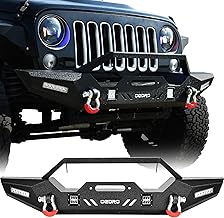
OEDRO Front Bumper, Compatible for 2007–2018 Jeep Wrangler JK & Unlimited, Rock Crawler Bumper with Winch Plate & LED Lights
$229.35
Check Price on Amazon →More front bumper options are at the best JK front bumpers with winch mounts guide.
Check 10: Update Your Maintenance Log
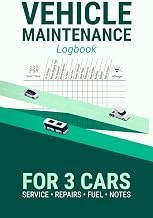
A maintenance log matters for trail-running JK owners because memory is not a maintenance system. The alternative — trying to remember when you last changed the diff oil or whether you re-torqued the track bar after that last hard run — is unreliable and eventually expensive.
Learning to wrench on a JK from scratch involves painful early lessons: an over-torqued drain plug, a stripped thread, changing the same fluid twice while skipping something else entirely. The repair journal habit started from that frustration — writing down what was done, when, and what was found makes every inspection faster and more confident. It also matters at resale time: a documented service history is one of the clearest signals of a well-kept JK. Any serious buyer will want to see it. The JK buyers guide explains what buyers look for and why records move the needle.

Vehicle Maintenance Logbook: Service and Repair Record Book for Up to 3 Vehicles
$9.99
Check Price on Amazon →The Vehicle Maintenance Logbook tracks up to three vehicles, covers oil changes, mileage, and service intervals, and is small enough to live in the glove box. At $9.99, it’s the cheapest item on this entire checklist and among the highest-value habits you can build.
After your fall inspection, log every result — pass, fail, or “watch this” — with the date and odometer reading. That entry becomes your baseline for the next inspection.
The Right Tools Make This Faster
The tools you actually need to complete this inspection at home are a torque wrench (or two), a floor jack, a tire pressure gauge, a battery tester, and a strong flashlight. That’s the working list. Skip the nice-to-haves.
What experienced JK owners actually reach for in practice beats what a catalog says you should own. That filter keeps the tool drawer sane.
For smaller fasteners — drain plugs, skid plate bolts, anything in the 20–200 in-lb range — a 1/4-inch drive torque wrench is the right tool, not an overkill half-inch unit.
The EPAuto torque wrench covers 20–200 in-lb with 1/4-inch drive precision, and at $31.32 is the budget option that handles most smaller fasteners. For lug nuts and larger suspension hardware, this same EPAuto unit in 10–150 ft-lb at $31.32 covers most of what a seasonal inspection requires.
For interval reminders on what actually needs service, the full JK maintenance schedule breaks it down by mileage and model year.
Frequently Asked Questions: Jeep JK Fall Trail Prep
Q: How often should I do a full inspection on my Jeep JK?
A: A full 10-point inspection like this should happen twice a year minimum — before spring trail season opens and before fall runs begin. If you trail hard through summer (multiple trips per month, rock crawling, water crossings), add a mid-season check. Casual weekend drivers manage fine with the two-season schedule.
Q: Does a JK 4-door Unlimited need a different fall prep checklist than the 2-door?
A: The core 10 checks are identical — tires, fluids, brakes, fasteners, recovery gear, lighting, underbody, and the log. The JKU’s longer wheelbase means more suspension fasteners to inspect (additional lower control arm hardware), and its heavier curb weight makes recovery gear capacity more important. The JK 2-door vs 4-door Unlimited comparison details the mechanical differences between the two.
Q: What is the most commonly skipped item on a JK fall prep checklist?
A: Axle fastener re-torque wins by a wide margin. Most owners assume that if nothing felt loose on the last trail run, the fasteners are fine. But trail flex cycles work fasteners over time without obvious symptoms — until they loosen enough to cause handling issues or, worse, trigger death wobble on a lifted JK. Check torque values against your service manual or the Rubicon vs Sport vs Sahara trim comparison guide, which covers model-specific hardware differences.
Q: Can I complete this entire fall checklist myself with basic tools?
A: Yes. Checks 1, 2, 3, 4, 7, 8, and 10 require only a tire gauge, flashlight, and basic hand tools. Checks 5, 6, and 9 require a floor jack, jack stands, and a torque wrench. Total tool investment for a first-time DIY inspection is typically under $200 if you don’t own a torque wrench and jack. None of these checks require a lift or dealer-level equipment.
Q: When is it too late in the season to do fall trail prep on a JK?
A: There’s no hard cutoff — if you’re planning to trail, the inspection is worth doing. Ideally, complete it before overnight temperatures consistently drop below 40°F in your area. Below that threshold, tire pressure swings become significant, battery CCA matters more on cold starts, and coolant freeze point becomes an active concern. Doing the inspection in late September or early October gives you time to address failures before conditions close the window.
Get the Free JK Build Planner
Complete PDF with mod checklists, gear ratios, tire sizing charts, and budget worksheets. Everything you need to plan your JK build.
No spam. Unsubscribe anytime. By subscribing, you agree to our Privacy Policy.
Allan
I'm Allan. I bought a 2014 Jeep Wrangler JKU and I research the hell out of every mod before I touch it. Everything here is tested or deeply researched on my own rig - no sponsored fluff, just honest findings.
Learn more about me →Get the JK Build Planner
Free PDF with complete build checklists, gear ratios, and tire fitment guides.
By subscribing, you agree to our Privacy Policy.
Related Articles
Jeep JK Death Wobble: Every Cause, How to Diagnose It, and the Permanent Fix
Affiliate Disclosure: JeepJK Guide earns a commission on qualifying purchases made through links on this page. This does not affect our editorial...
How to Winterize Your Jeep JK: Complete Fall Prep & Storage Guide
Affiliate disclosure: This article contains affiliate links. If you purchase through them, we may earn a commission at no extra cost to you.
2018 Jeep JK Maintenance Schedule PDF
Every used Jeep has a story. Mine had a few it hadn't finished telling yet.