How to Winterize Your Jeep JK: Complete Fall Prep & Storage Guide
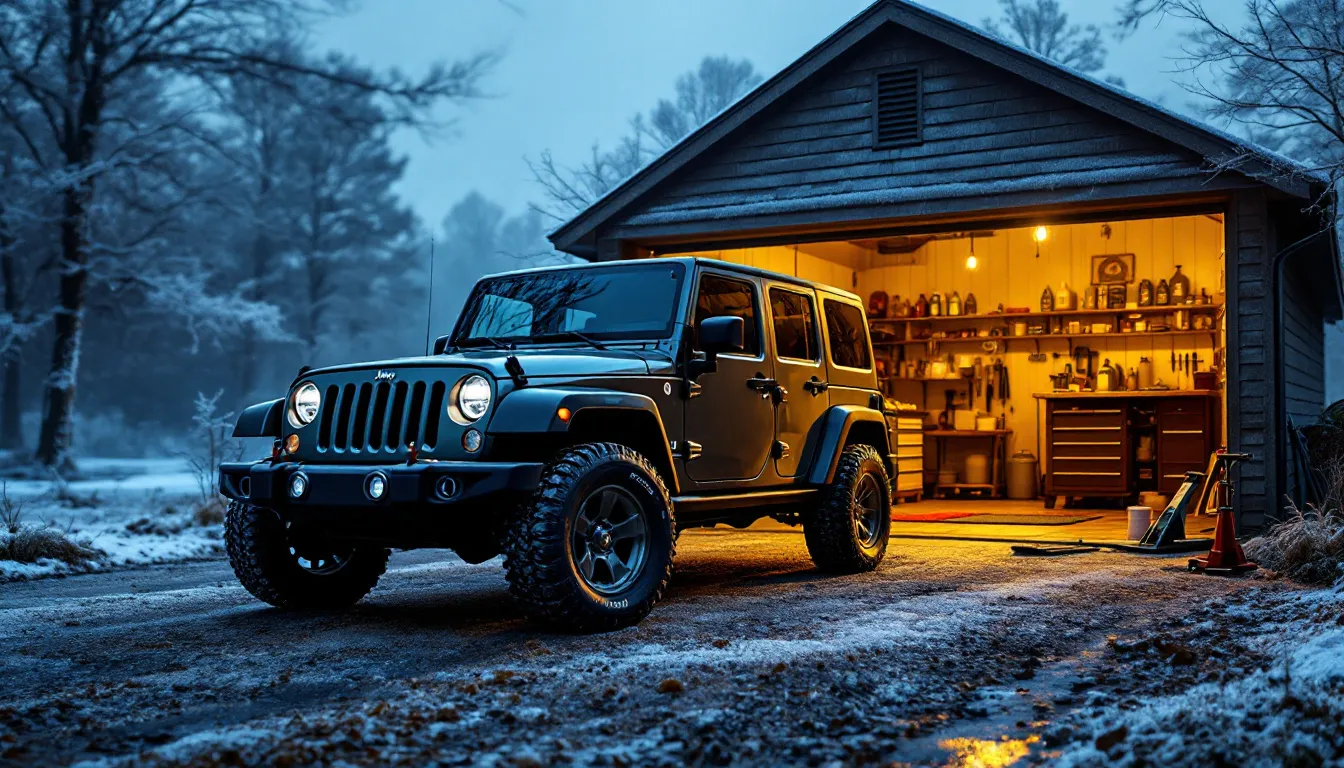
How to Winterize Your Jeep JK: Complete Fall Prep & Storage Guide
Affiliate disclosure: This article contains affiliate links. If you purchase through them, we may earn a commission at no extra cost to you.
What Does It Mean to Winterize a Jeep JK?
Winterizing your Jeep JK isn’t complicated — it’s just preparing your 2007–2018 Wrangler (2-door or 4-door JK Unlimited) to handle the cold months without drama. Think of it as wrapping your JK in a protective layer before temperatures drop and road salt hits.
The core idea is simple: inspect and service your JK now, before winter stress reveals what summer hid. Cold thickens fluids, stiffens rubber, and turns a marginal battery into a dead one. Road salt finds every seam in your frame. Tire pressure drops with every degree. Get ahead of these things before they strand you.
Here’s what you’re actually doing when you winterize:
- Change engine oil to a cold-weather viscosity (0W-20 for the 3.6L Pentastar; different spec for the 3.8L — check your manual)
- Test and load-test the battery — this matters far more in January than July
- Inspect tires and adjust pressure — you’ll lose roughly 1 PSI for every 10°F drop in temperature
- Flush or top off coolant to the correct freeze-point rating
- Wash the undercarriage and apply rust inhibitor before road salt season begins
- Check weatherstripping and soft-top zippers for cracking or gaps
- Inspect brake fluid, pad thickness, and suspension components for cold-weather weakness
- Prepare for storage if the JK is going to sit longer than three months
The key is doing this before the season turns nasty. Follow your JK maintenance schedule alongside these seasonal steps, and you’ll keep your JK ready for whatever winter throws at it.
Get new guides by email
One email when we publish something worth reading. Unsubscribe anytime.
JK Winter Prep at a Glance: Your Complete Checklist
A complete JK winterization checklist covers eight core service tasks. I’ve ranked them by impact — work through them in order and you won’t miss anything critical.
Use this table as your master reference. Print it. Stick it on your garage wall. It’s designed so you can check off each task as you go.
| Task | When to Do It | Tools/Products Needed | Priority |
|---|---|---|---|
| Engine oil change (correct winter viscosity) | Before first hard frost | Oil, filter, drain plug wrench, torque wrench | 🔴 High |
| Coolant flush or top-off (to correct freeze point) | Every 2 years or before winter | Coolant tester, fresh coolant | 🔴 High |
| Battery test and load test | Before temps drop below 40°F | Multimeter or load tester | 🔴 High |
| Tire inspection and pressure adjustment | Monthly through winter | Tire gauge | 🔴 High |
| Undercarriage wash and rust inhibitor | Before first road-salt application | Pressure washer, rust inhibitor spray | 🟡 Medium |
| Weatherstripping and soft-top seals check | Early fall | Silicone lubricant | 🟡 Medium |
| Brake fluid check (moisture content and level) | Annually or if pedal feels soft | Brake fluid tester strips | 🟡 Medium |
| Storage cover and battery tender (if storing 3+ months) | Before long storage | Car cover, battery maintainer | 🟢 If storing |
The sections below walk through every high-priority task with real-world JK detail — especially the 3.8L versus 3.6L engine differences that most generic winterization guides completely gloss over. The devil is in those details, and ignoring them costs money or strands you in February.
Step 1: Engine Oil and Fluid Changes for Cold Weather
Before winter hits, your JK needs the right oil viscosity and fresh fluids. Stale oil thickens in cold temps, which means harder cold starts and accelerated wear during those critical first few cranks of the season.
Here’s what to change and exactly how to do it:
Identify your engine first. The 2007–2011 JK runs the 3.8L V6 — check your owner’s manual for its viscosity (usually 5W-20). The 2012–2018 JK runs the 3.6L Pentastar, and Chrysler specifies 0W-20 full synthetic. In cold weather, that 0W rating isn’t marketing fluff. It flows immediately at startup, which is when most engine wear actually happens.
Warm the engine for five minutes, then drain the old oil. Warm oil flows faster and carries more contaminants out with it. Use the correct socket on the drain plug — 18mm on most JKs.
Now here’s where I learned a painful lesson: torque the drain plug correctly. I overtightened mine years ago (just cranking it tight “by feel”), and stripped the threads in the oil pan. That mistake turned a $50 oil change into a $1,200 pan replacement. It’s what pushed me to keep a detailed repair journal and check torque specs religiously ever since. The 3.6L Pentastar drain plug spec is 25 ft-lb — no more, no less. A torque wrench isn’t optional here; it’s insurance against an expensive mistake.
Replace the filter next. The 3.6L filter location is notoriously awkward to reach without a swivel wrench. Don’t skip this — an old filter is still circulating oxidized, contaminated oil through a cold engine.
Fill with the correct amount of fresh oil. The 3.6L takes 6 quarts with the filter. Use full synthetic every time.
For that drain plug torque, a quality micrometer-style torque wrench ensures you hit exactly 25 ft-lb without guessing. And for the filter removal, an oil filter swivel wrench makes that cramped engine bay task actually bearable.
Beyond the oil, check your transfer case fluid, differential fluid (front and rear if you have a Rubicon or upgraded axles), and power steering fluid before winter. Cold temperatures thicken all of these, and degraded fluid in a Dana 30 or Dana 44 axle announces itself loudly when you need traction most.
Step 2: Battery Test and Electrical System Check
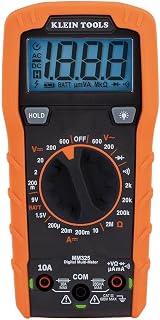
Testing your JK battery before winter is straightforward, and it’s one of the highest-impact checks you can make. Measure resting voltage with a multimeter (12.6V means full charge; below 12.4V warrants a load test). If the battery is three years old or older, get it load-tested regardless of how it behaved last summer.
Cold reduces a battery’s available power significantly. A battery that started your JK fine in August might not have enough juice to turn over the 3.6L in January. Look for a minimum of 550 cold cranking amps (CCA). Ideally 650+ if you’re in a consistently cold climate or if you’ve added weight like a winch or aftermarket lights.
Here’s how to check your JK battery with a multimeter:
Set the multimeter to DC voltage (20V range). Connect the red lead to the positive terminal, black to negative. Read resting voltage with the engine off — 12.6V is full charge; below 12.0V means the battery is seriously discharged. Start the engine and check charging voltage — you want to see 13.8–14.7V at the terminals, confirming the alternator is working. If resting voltage looks borderline, take the battery to an auto parts store for a proper load test. A multimeter alone can’t tell you how the battery behaves under the actual cranking load of a cold 3.6L.

MM325 Multimeter, Digital Manual-Ranging 600V AC/DC Voltage Tester, Tests Battery
$24.99
Check Price on Amazon →If your battery is 3+ years old, test it regardless of how it behaved all summer. Winter is simply unforgiving to marginal batteries.
One JK-specific note: after you swap a battery, the Jeep’s ECU and throttle body may need a relearn cycle. Some owners notice rough idle for the first few drives after a swap. If your check engine light comes on, an OBD2 scanner lets you read and clear those codes without a dealership visit.
Check all battery terminals for corrosion — that white or blue-green buildup. Clean it with a terminal brush and a baking soda solution. Apply dielectric grease before reinstalling. Ten minutes now prevents a no-start at the trailhead in February.
Step 3: Tires, Brakes, and Suspension for Winter Conditions
Before winter, your JK needs a tire pressure check (cold air shrinks it fast), a brake pad measurement, and a hard look at suspension components — especially if you’ve ever felt any looseness at highway speed.
Tire pressure is the easiest thing to get wrong and the most consequential. Expect to lose approximately 1 PSI for every 10°F drop in ambient temperature. If you set your tires to 35 PSI in September when it’s 80°F, they could be sitting at 28–30 PSI by December. Underinflated tires reduce handling response, wear unevenly, and — on a JK carrying a heavy steel bumper and full-size spare — create unpredictable handling on ice.
Check your JK wheel and tire fitment guide for the correct baseline pressure for your specific tire size. Then check them monthly through winter.
Brake pads should be measured before winter arrives. Replace them if they’re below 3mm. Wet and icy roads demand maximum stopping power, and a JK with a heavy bumper and 35-inch tires has significantly more stopping mass than stock.
Suspension inspection is where cold weather reveals what summer hid. This one hits home for me: I experienced death wobble at highway speed with my family in the car — a terrifying shimmy that starts around 55 mph and doesn’t stop until you slow down. Diagnosing it led straight to the track bar and worn control arm bushings. Here’s what matters: rubber bushings that feel acceptable in 70°F weather stiffen and crack in the cold. Any existing play in the track bar or control arms gets amplified. Winter is when marginal components fail first.
Before the season hits, physically grab your track bar and check for play. Inspect your control arm bushings for cracking. If anything feels loose or looks deteriorated, fix it now — not on the side of a snow-covered highway. See the JK control arm upgrade guide for replacement options that will actually hold up through multiple winters.
Step 4: Undercarriage Wash, Rust Prevention, and Exterior Protection
Protecting your JK from winter corrosion starts before the first road salt application. Once brine and salt get into frame seams, drain holes, and brake line brackets, the damage compounds season over season. There’s a lesson here that applies beyond rust: fix the fundamentals before you worry about anything else.
I learned this the hard way after dealing with radiator, AC, and cylinder head repairs before I could touch a single performance upgrade. The undercarriage is the JK’s foundation — neglecting it while adding lift kits or bumpers is exactly backwards. Applying rust inhibitor to the frame before winter is the single most underrated winterization step most JK owners skip.
Here’s what to do before winter arrives:
- Pressure wash the entire undercarriage, including the frame rails, axle housing, control arm brackets, and brake lines. Pay special attention to pinch welds and any areas where mud packs in and traps moisture.
- Inspect drain holes in the rocker panels and doors. They clog with mud and hold moisture against bare metal all winter.
- Apply a rust inhibitor or undercoating spray to bare metal areas. Products like fluid film or similar wax-based inhibitors displace moisture and protect metal through multiple freeze-thaw cycles.
- Check your soft-top zippers now. This is a JK-specific detail: soft-top zippers become brittle in cold weather. Forcing a stiff zipper can split the tape or tear the window attachment. Apply a zipper lubricant in the fall while temps are still mild.
See the JK soft top vs hard top comparison if you’re weighing a seasonal top swap. A hard top is far easier to seal against cold drafts and moisture.
Finally, check all door and windshield weatherstripping for cracking or compression set. A door seal that looks fine in August can let in surprising amounts of cold air and moisture by January.
The Right Tools Make Winter Prep Faster and Safer
To winterize your JK at home, you need four core tools: a complete socket set, a torque wrench, a floor jack rated for your JK’s weight, and a maintenance logbook to track what you did and when.
Getting the tools right isn’t just convenience — it’s about not creating new problems while fixing existing ones. When I was learning to wrench on my JK from scratch, overtightening the drain plug was a mistake that came directly from not having (or not using) a torque wrench. Keeping a repair journal after that changed how I approached every subsequent service. If you’re serious about doing your own JK maintenance across multiple winters, that logbook habit pays for itself in avoided repeat mistakes.
A quality socket set handles the majority of JK service tasks — drain plugs, battery terminals, brake caliper bolts, skid plate hardware. A comprehensive set covers SAE and metric in all three drive sizes you’ll actually use.
A proper torque wrench is non-negotiable. Stripped drain plugs and over-torqued lug nuts are the two most common self-inflicted JK injuries. Use a click-type micrometer torque wrench to cover most fluid service torque specs precisely. You’ll use it again and again.
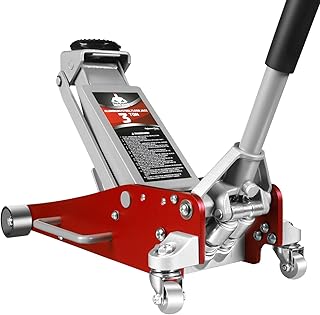
A floor jack with adequate minimum height matters on a JK, especially a lifted one. The Jack Boss 3-ton unit has a minimum height of 3-15/16 inches and lifts to 18-5/16 inches — enough range for stock and moderately lifted JKs:
Jack Boss 3 Ton Low Profile, Aluminum and Steel Racing Floor Jack with Dual Pistons Quick Lift Pump
$169.99
Check Price on Amazon →Finally, log every service task in a vehicle maintenance record book. After a few winters, you’ll have a clear picture of oil change intervals, fluid change dates, and component replacement history. It’s invaluable when troubleshooting or when you sell the Jeep:

Vehicle Maintenance Logbook: Service and Repair Record Book for Up to 3 Vehicles | Multi-Car Mainten
$9.99
Check Price on Amazon →Storing Your JK for Winter: Cover, Battery Tender, and Fuel
If you’re putting your JK away for three or more months, storage prep becomes its own separate checklist — owners who drive their JK through winter can skip this section.
For long-term storage, the priorities are: protecting the exterior, preventing battery discharge, and stabilizing the fuel system.
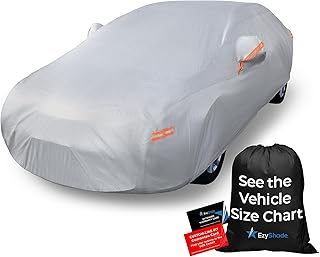
Start with a quality car cover. The JK sits tall, and cheap covers abrade the paint in wind. Verify the size chart carefully for your specific body style — a 2-door JK is significantly shorter in overall length than a JKU, and using the wrong size leaves sections exposed or bunches against the fenders. The EzyShade 10-layer waterproof cover is rated for all-weather use and comes in sizes for both configurations:

EzyShade 10-Layer Car Cover Waterproof All Weather - See Vehicle Size-Chart - Car Covers for Automob
$67.90
Check Price on Amazon →A battery tender (trickle charger/maintainer) is the single most important tool you can plug in. A JK battery left disconnected over three months will self-discharge and may not recover to full capacity. A quality maintainer keeps it at float voltage without overcharging.
For top protection during storage, see the JK soft top care and selection guide or browse JK top options for every season if you’re planning a seasonal swap before parking the Jeep.
Add fuel stabilizer to a full tank before parking the JK long-term. A full tank minimizes condensation inside the fuel system, and stabilizer prevents gasoline from breaking down and varnishing injectors over a multi-month sit.
Buying Guide: What to Look for in Winter Prep Products
Choosing the right winter prep products for your JK comes down to spec-matching your engine, body style, and local climate — not grabbing whatever has the highest star rating on a generic automotive shelf.
Real-world community knowledge beats spec sheets every time. When I was learning what actually works on a JK versus what’s just marketed well, the forum threads and owner reviews from people with 50,000 actual miles in similar climates were worth more than any product description. Check model-year-specific threads and ASIN reviews before you buy — especially for oils, coolants, and rust inhibitors where the “universal” version is often not the right version.
Always replace the oil filter at the same time you change the oil — never one without the other. A fresh filter ensures you’re not circulating old contaminants through new oil.
| Product Category | What to Look For | What to Avoid |
|---|---|---|
| Motor oil | Full synthetic, correct viscosity (0W-20 for 3.6L), API SP rating | Conventional or blend oil for a modern JK; wrong viscosity for your engine generation |
| Battery | 550+ CCA minimum; 650+ for accessory-heavy builds; verified JK fitment | Cheap no-name batteries without CCA rating disclosure; undersized group sizes |
| Rust inhibitor | Wax or lanolin-based penetrating formula; rated for frame use | Cheap aerosol paint masquerading as undercoating; water-based formulas in freeze climates |
| Car cover (storage) | Multi-layer, UV and waterproof rated; correct size for 2-door JK or JKU | Single-layer tarp-style covers that abrade paint; universal-fit covers that don’t seal at the base |
| Torque wrench | Click-type or micrometer; calibrated range that covers 25 ft-lb drain plug spec | Beam-style wrenches for drain work; cheap digital wrenches with poor calibration history |
If you’re buying a used JK and trying to figure out what maintenance is overdue, start with the complete JK buyer’s guide. And if you’re debating trim levels and what’s already equipped from the factory, the Rubicon vs Sport vs Sahara comparison covers what each trim brings to the table.
Frequently Asked Questions: Winterizing a Jeep JK
JK owners most commonly ask about oil viscosity, step-by-step process, block heaters, undercarriage washing frequency, tire choice for snow, and whether the JK’s 4WD system is actually useful on ice. Here are direct, JK-specific answers.
What oil should I use in my Jeep JK in winter?
For 2012–2018 JKs with the 3.6L Pentastar, use full synthetic 0W-20. The 0W flows immediately at cold startup, which is when most engine wear occurs. For 2007–2011 JKs with the 3.8L V6, consult your owner’s manual — most specify 5W-20 full synthetic. Never use conventional oil in a modern JK; the engine’s tighter tolerances and variable valve timing depend on consistent synthetic flow characteristics, especially in cold weather. Check the full JK maintenance schedule for complete fluid specs.
How do I winterize a Jeep Wrangler?
Winterizing a Jeep Wrangler JK involves eight core tasks: oil change, coolant check, battery test, tire pressure adjustment, undercarriage wash, rust inhibitor application, weatherstripping inspection, and brake fluid check. Complete them in early fall, before the first hard frost hits. If you’re storing the JK for 3+ months, add a car cover, battery tender, and fuel stabilizer to the list. See the complete checklist table above for a task-by-task breakdown with priority ratings.
Should I use a block heater on my JK in cold weather?
A block heater is worth installing if you regularly see temperatures below 0°F, especially with the 3.8L engine. The 3.6L Pentastar is a capable cold-weather starter with the correct 0W-20 oil, but in extreme cold — think negative 20°F — a block heater ensures the coolant and oil are warm enough to reduce startup wear dramatically. Plug it in two hours before you plan to start the Jeep; overnight use wastes electricity without meaningful additional benefit. JKs don’t come with factory block heaters, but aftermarket options are available for both engine families.
How often should I wash my Jeep undercarriage in winter?
Wash the undercarriage every two to three weeks during active road-salt season, or immediately after any trip where you drove on salted roads. Road salt accelerates rust on steel brake lines, frame rails, and axle hardware — and it doesn’t take months to cause damage. A pressure washer aimed at the frame seams, skid plates, and spring perches takes about 10 minutes and prevents the kind of rust that makes brake line replacement a weekend-destroying job three years from now.
Can I use mud-terrain tires in snow on my JK?
Mud-terrain tires perform poorly in packed snow and on ice compared to dedicated winter tires or all-terrain tires with a mountain/snowflake rating. The wide, open tread blocks that clear mud efficiently don’t channel snow the same way a siped all-terrain does. On light snow over dirt roads, mud-terrains are workable. On packed snow or ice, they lack the biting edges to generate traction. If you run mud-terrains year-round on your JK, lower your speed expectations in winter and lean more heavily on the 4WD system. Check your 2-door JK vs JK Unlimited guide for how body style affects winter tire options and spare tire sizing.
Does the Jeep JK 4WD system help in snow and ice?
Yes — but it’s not a substitute for good tires or driver judgment. The JK’s Command-Trac (on Sport and Sahara) and Rock-Trac (on Rubicon) systems engage all four wheels, which improves traction and stability on snow significantly over 2WD. Use 4H on snow-covered roads for improved traction; reserve 4L for deep snow, steep inclines, or getting unstuck. The JK does not have electronic stability control on early models, so don’t assume 4WD prevents sliding — it improves your ability to go, not necessarily to stop or steer on ice.
Final Thoughts: Don’t Let Winter Catch Your JK Unprepared
The most important thing about winterizing a JK is that it’s a prevention exercise, not a repair exercise. Every hour spent in October saves multiple hours (and dollars) spent in February.
Here’s the quick recap of what actually matters:
- Change oil to the correct winter viscosity before temps drop below 40°F
- Load-test the battery if it’s 3+ years old — don’t guess on this one
- Check and adjust tire pressure monthly throughout the season
- Wash the undercarriage and apply rust inhibitor before first road-salt exposure
- Inspect suspension and weatherstripping for cold-weather failure points
- Prepare for storage if the JK is sitting for three or more months
Keep your records updated on the year-round JK maintenance schedule. And if you’re planning a recovery-ready winter build, see what we recommend for the best winch for the JK Unlimited.
A well-prepped JK handles winter better than almost anything else on four wheels. Give it the prep it deserves, and it’ll reward you with reliable starts, solid handling, and a frame that doesn’t rust away beneath you.
Get the Free JK Build Planner
Complete PDF with mod checklists, gear ratios, tire sizing charts, and budget worksheets. Everything you need to plan your JK build.
No spam. Unsubscribe anytime. By subscribing, you agree to our Privacy Policy.
Allan
I'm Allan. I bought a 2014 Jeep Wrangler JKU and I research the hell out of every mod before I touch it. Everything here is tested or deeply researched on my own rig - no sponsored fluff, just honest findings.
Learn more about me →Get the JK Build Planner
Free PDF with complete build checklists, gear ratios, and tire fitment guides.
By subscribing, you agree to our Privacy Policy.
Related Articles
2018 Jeep JK Maintenance Schedule PDF
Every used Jeep has a story. Mine had a few it hadn't finished telling yet.
Jeep JK Maintenance Schedule PDF: Complete Service Guide (All Years)
Complete JK maintenance schedule with intervals, fluid specs, and torque specs for 2007-2018 Wranglers. Severe duty intervals, DIY tips, and downloadable checklist.
2018 Jeep Wrangler JK Maintenance Schedule: Final Year Service Guide
Complete 2018 Jeep Wrangler JK maintenance schedule with severe service intervals, fluid specs, and cost breakdowns. Keep your final-year JK running strong.