Jeep Wrangler JK Maintenance Schedule: Complete Guide for 2007-2018 Models
This article contains affiliate links. We may earn a commission at no extra cost to you.
I bought my first JK knowing almost nothing about wrenching. The first oil change ended with an overtightened drain plug that took a breaker bar and choice words to remove. Fast-forward through a few years of learning—radiator swaps, cylinder head repairs, tracking every service in a battered notebook—and I can tell you that consistent maintenance is what separates JKs that hit 200,000 miles from those that die at 100,000.
The jeep wrangler jk maintenance schedule breaks down into four key intervals: 3,000-5,000 miles for oil changes and tire rotations, 30,000-50,000 miles for transmission and differential fluid, 60,000 miles for major services like spark plugs and coolant flush, and 100,000+ miles for timing chain inspection and major component checks. Your specific schedule varies based on whether you have the 3.8L (2007-2011) or 3.6L Pentastar (2012-2018) engine, and whether you follow normal or severe duty conditions.
Most JK owners fall into severe duty without realizing it. Off-roading, short trips under 10 miles, dusty conditions, towing, or running larger tires all count as severe duty—which means shorter service intervals and more frequent checks. Understanding your actual maintenance needs prevents expensive failures and keeps your JK running strong well past 150,000 miles.
This guide covers the complete maintenance schedule for both engines, real cost breakdowns for DIY versus dealer service, essential tools you’ll actually need, and critical adjustments for modified JKs. If you’re new to wrenching or just want to stop overpaying for routine maintenance, here’s everything you need to know about keeping your JK in top shape. For background on year-by-year JK changes, check our model year differences guide.
Essential JK Maintenance Intervals: The Complete Schedule
The foundation of JK longevity is consistent interval-based maintenance. Here’s the complete schedule broken down by mileage and service type.
Oil and Filter Changes
Every 3,000-5,000 miles (severe duty) or every 5,000-7,500 miles (normal duty). Use 5W-20 synthetic oil for both 3.8L and 3.6L engines. The 3.8L takes 6 quarts including filter; the 3.6L takes 5.9 quarts. Always use a quality oil filter—Mopar part number MO-090 for 3.6L or MO-744 for 3.8L works perfectly.
Tire Rotation and Alignment
Every 5,000-7,500 miles for tire rotation. Rotate in a five-tire pattern if you’re running a matching spare. Check alignment every 20,000 miles or immediately after any suspension work or hard off-road use. Uneven tire wear is your early warning sign.
Transmission and Differential Fluids
- Automatic transmission (W5A580 or NAG1): Change fluid and filter every 30,000-50,000 miles. Use Mopar ATF+4 (MS-9602). The transmission holds about 9 quarts including torque converter.
- Manual transmission (NSG370 or Aisin AR-5): Change gear oil every 50,000 miles. Use Mopar Manual Transmission fluid or 75W-90 GL-4 rated oil.
- Front and rear differentials: Change gear oil every 40,000-50,000 miles for normal use, every 20,000-30,000 miles if you’re running larger tires or doing serious off-roading. Rubicons with electronic lockers need Mopar Limited Slip additive in the rear.
Air and Cabin Filters
Air filter: Inspect every oil change, replace every 15,000-30,000 miles depending on dust exposure. Off-road in dusty conditions? Replace every 10,000 miles or less. Mopar part 53034051AA fits all JKs.
Cabin air filter: Replace every 15,000-20,000 miles. If you smell musty air from the vents or notice reduced airflow, replace it sooner.
Coolant System
Flush and replace coolant every 60,000 miles or 5 years, whichever comes first. The 3.8L uses Mopar HOAT coolant (orange); the 3.6L uses OAT coolant (purple). Never mix the two types. The system holds about 3.5 gallons including the reservoir.
Brake System
Inspect brake pads and rotors every 10,000 miles. Replace pads when they reach 3-4mm thickness. Flush brake fluid every 2 years regardless of mileage—brake fluid absorbs moisture and degrades over time. Use DOT 3 brake fluid.
Spark Plugs and Ignition
3.8L engine: Replace spark plugs every 30,000 miles. Use Mopar plugs or equivalent copper core plugs gapped to 0.050 inches.
3.6L Pentastar: Replace spark plugs every 60,000 miles. Use iridium plugs—they’re expensive but last twice as long. Proper torque is 13 ft-lbs; overtightening can crack the aluminum heads.
For a deeper look at maintenance-related issues that crop up at specific mileages, see our guide on common JK problems by year.
3.8L vs 3.6L Pentastar: How Your Engine Changes the Schedule
The engine under your hood determines several key maintenance intervals and specifications. If you own a 2007-2011 JK, you have the 3.8L V6. If you own a 2012-2018 JK, you have the 3.6L Pentastar V6. They’re not interchangeable, and they don’t follow the same schedule.
Spark plug intervals: The 3.8L needs plugs every 30,000 miles while the 3.6L can go 60,000 miles between changes. That’s a direct cost savings of about $80-120 over the life of the engine if you DIY.
Oil consumption tendencies: The 3.8L is notorious for burning oil, especially after 100,000 miles. I had to rebuild the cylinder heads on mine at 130,000 miles before I could even think about upgrades. Check your oil level every 1,000 miles on a 3.8L and top off as needed. The 3.6L is much better about this—expect minimal consumption under normal use.
Coolant type: The 3.8L uses HOAT (Hybrid Organic Acid Technology) coolant, which is orange. The 3.6L uses OAT (Organic Acid Technology) coolant, which is purple. Mixing them damages the cooling system. Always verify which coolant your engine requires before topping off or flushing.
Valve cover gasket leaks: The 3.8L develops valve cover gasket leaks around 80,000-100,000 miles. Budget about $150 in parts and 2-3 hours if you DIY, or $400-600 at a shop. The 3.6L has fewer issues here but isn’t immune—check for oil seepage during every oil change.
Both engines are durable when maintained properly, but the 3.6L Pentastar is objectively the better engine in terms of power, efficiency, and long-term maintenance costs. If you’re shopping for a used JK, the 2012+ models with the Pentastar are worth the premium.
DIY vs Dealer Maintenance: Real Cost Breakdown for JK Owners
Let’s talk real numbers. A basic oil change at a Jeep dealer costs $80-120 depending on location. An independent shop charges $50-70. Doing it yourself costs about $35-45 in oil and filter. Over 10 oil changes, you save $450-750 by doing it yourself.
A 60,000-mile major service at the dealer runs $800-1,200 and includes oil change, transmission fluid, differential fluid, coolant flush, spark plugs, air filters, and brake inspection. The same service at an independent shop costs $500-700. DIY cost for parts alone is $250-350, and you’ll spend a Saturday afternoon getting it done.
Annual maintenance cost comparison (assuming 15,000 miles per year, severe duty schedule):
- Dealer: $1,200-1,800 per year
- Independent shop: $700-1,000 per year
- DIY: $300-450 per year in parts
The barrier to entry for DIY maintenance is tool cost. You need a good socket set, torque wrenches, oil filter wrench, drain pan, jack stands, and basic hand tools. The initial investment is $300-500, but you recoup that in your first year of DIY maintenance.
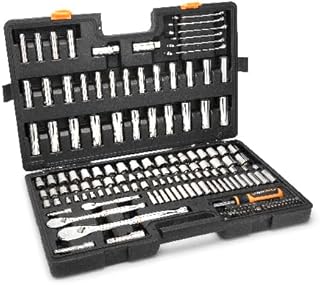
185 Piece Mechanics Hand Tool Set - 1/4", 3/8", & 1/2" Drive | 90 Tooth | SAE & Metric | GW90MCBMTS
$129
Check Price on AmazonThis 185-piece set covers 90% of JK maintenance tasks. It includes SAE and metric sockets, three drive sizes, and the 90-tooth ratchets make tight engine bay work manageable. If you’re starting from zero tools, this is your foundation.
One critical note: keep your receipts. Whether you DIY or pay a shop, document every service with date, mileage, and what was done. Keep them in a binder or use a maintenance tracking app. When you sell your JK, a complete maintenance history adds $2,000-3,000 to resale value. Buyers pay premium prices for well-maintained rigs with proof.
Essential Tools for DIY JK Maintenance
You don’t need a $10,000 tool collection to maintain a JK. You need the right tools for the specific jobs you’ll do repeatedly. Here’s what actually matters.
Torque Wrenches
This is where I learned the hard way. That overtightened drain plug I mentioned earlier? It happened because I was guessing at torque with a regular ratchet. Never again.
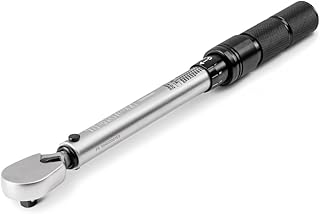
1/4 Inch Drive 90-Tooth Dual-Direction Micrometer Torque Wrench (20-200 in-lb) | TRQ50402
$85
Check Price on AmazonThis small torque wrench handles spark plugs (13 ft-lbs), oil drain plugs (20 ft-lbs on the 3.6L, 25 ft-lbs on the 3.8L), and other delicate fasteners. The micrometer adjustment gives you precise torque control, and the 90-tooth mechanism works in tight spaces.
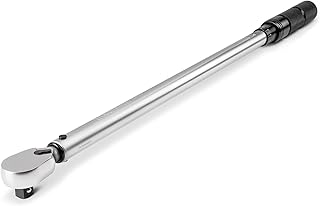
1/2 Inch Drive 90-Tooth Dual-Direction Micrometer Torque Wrench (40-300 ft-lb) | TRQ52403
$150
Check Price on AmazonThis larger torque wrench is essential for wheel lug nuts (100-110 ft-lbs), axle nuts, suspension bolts, and drivetrain work. A click-type torque wrench prevents overtightening that strips threads or warps rotors. This is non-negotiable if you’re doing your own tire rotations or any suspension work.
Diagnostic Tools
Modern JKs throw codes for everything from loose gas caps to failing oxygen sensors. You need a way to read those codes without paying a parts store $30 every time your check engine light appears.
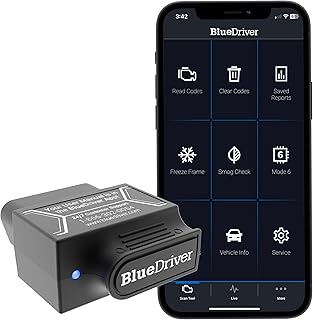
Bluetooth Pro OBDII Scan Tool for iPhone & Android - No Subscription Fee - OBD2 Car Scanner and Code Reader - Diagnose Check Engine, ABS, SRS, Airbag & 7000+ Issues on Vehicles 1996+
$84.95
Check Price on AmazonThis Bluetooth scanner connects to your phone and reads engine codes, ABS codes, airbag codes, and transmission codes. It works on any 1996+ vehicle, so you’ll use it on future vehicles too. The no-subscription model means you’re not locked into monthly fees.
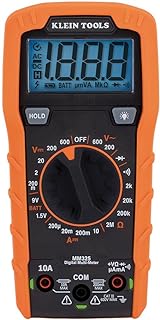
MM325 Multimeter, Digital Manual-Ranging 600V AC/DC Voltage Tester, Tests Batteries, Current, Resistance, Diodes, and Continuity
$29.98
Check Price on AmazonA basic multimeter diagnoses electrical problems, tests battery voltage, checks charging system output, and verifies sensor signals. Expect to pay $30-40 for a quality digital multimeter that handles everything from dead battery diagnosis to alternator testing.
Heavy-Duty Socket Work
For stuck bolts, high-torque fasteners, and general “this won’t budge” situations, you need leverage. The
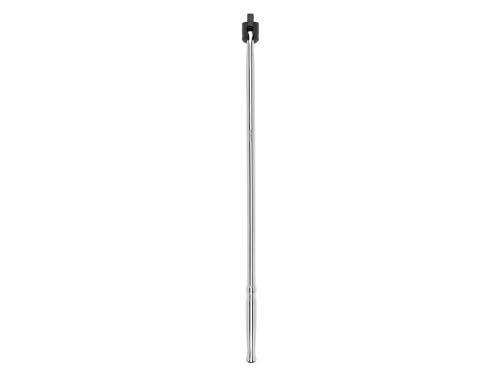
Combine the breaker bar with deep sockets and you’re equipped for 90% of JK maintenance. The remaining 10% requires specialty tools you can rent from auto parts stores—spring compressors, bearing pullers, and alignment tools aren’t worth buying for occasional use.
Maintenance Schedule Adjustments for Modified JKs
The factory maintenance schedule assumes stock ride height, stock tire size, and on-road use. Once you lift your JK, install 35s, or start adding armor, those assumptions go out the window.
Lifted JKs need more frequent alignments. I learned this the hard way when death wobble hit at 65 mph with my family in the car. The diagnosis pointed to a worn track bar and misalignment from my 3.5-inch lift. Now I check alignment every 10,000 miles instead of every 20,000, and I inspect steering and suspension components during every oil change. Death wobble doesn’t appear out of nowhere—it gives you warnings if you’re paying attention.
Larger tires increase differential and transmission stress. If you’re running 35-inch tires on stock gearing, your transmission runs hotter and shifts more frequently. Change your transmission fluid every 30,000 miles instead of 50,000. Differential fluid should be changed every 20,000-25,000 miles instead of 40,000. The extra rotating mass and increased torque load accelerate fluid degradation.
Gear ratios matter. If you’ve regeared to 4.56 or 4.88 to match your tire size, you can return to near-stock fluid change intervals. The transmission and differentials work less hard when properly geared. Rubicon’s factory 4.10 gears handle 33-inch tires reasonably well, but Sports and Saharas with 3.21 or 3.73 gears struggle with anything over 33 inches.
Rock sliders, bumpers, and skid plates add weight. A heavily armored JK weighs 500-1,000 pounds more than stock. That extra weight stresses wheel bearings, ball joints, tie rod ends, and brake components. Inspect suspension and steering components every 15,000 miles instead of every 30,000. Budget for more frequent brake pad replacements—expect 30-40% shorter pad life with heavy armor.
Air filters need shorter intervals. If you’re hitting dusty trails regularly, inspect your air filter every 5,000 miles and replace it when it looks dirty—don’t wait for the 15,000-mile interval. A clogged air filter costs you horsepower and fuel economy.
Modified JKs are more expensive to maintain, but they’re also more capable and more fun. Plan for 20-30% higher annual maintenance costs compared to a stock JK, and you won’t be caught off guard.
How to Track and Document Your JK Maintenance
Good record-keeping transforms maintenance from a chore into an asset. When you sell your JK, a binder full of receipts and service records proves to buyers that you took care of the vehicle. That proof is worth $2,000-3,000 in resale value compared to an identical JK with no documentation.
What to track:
- Date and mileage for every service
- Parts used (include part numbers)
- Labor costs if you paid a shop
- Any issues discovered during service
- Modifications and upgrades with installation dates
How to track it:
- Paper logbook: Keep a small notebook in the glove box. Write down every service immediately. Transfer to a binder at home.
- Maintenance app: Apps like CARFAX Car Care or simply a spreadsheet track everything digitally and send service reminders.
- Receipt folder: File every receipt chronologically in a binder with sheet protectors. Add handwritten notes for DIY services.
The method doesn’t matter—consistency does. I started with that battered notebook after my first oil change disaster, scribbling down torque specs and lessons learned. Years later, when I listed my JK for sale, buyers saw that notebook and knew immediately that the rig was well-maintained. It sold for asking price in three days.
If you’re buying a used JK, demand to see maintenance records. No records means you’re gambling on the previous owner’s honesty. Complete records mean you can verify that the important services were done and plan your upcoming maintenance accordingly.
Frequently Asked Questions About JK Maintenance
How often should I change oil in my Jeep Wrangler JK?
Change your oil every 3,000-5,000 miles if you fall into severe duty conditions, which includes off-roading, dusty environments, short trips under 10 miles, towing, or running larger tires. For normal duty highway driving, you can extend it to 5,000-7,500 miles. Most JK owners should assume severe duty and stick with the shorter interval.
Use 5W-20 synthetic oil for both the 3.8L and 3.6L engines. Synthetic oil handles temperature extremes better than conventional oil and provides superior protection during cold starts and hard use.
What type of oil does a Jeep JK take?
All JK Wranglers use 5W-20 motor oil. The 3.8L engine (2007-2011) takes 6 quarts including the filter. The 3.6L Pentastar (2012-2018) takes 5.9 quarts including the filter.
Always use synthetic oil—it’s worth the extra cost for better protection and longer life. Mopar, Pennzoil, Mobil 1, and Valvoline all make quality 5W-20 synthetic oils that meet Chrysler specifications.
How often should I rotate tires on my JK?
Rotate tires every 5,000-7,500 miles to ensure even wear. If you’re running a full-size matching spare, include it in the rotation pattern—this gives you five tires wearing evenly instead of four.
Uneven tire wear indicates alignment problems or worn suspension components. If your tires show cupping, feathering, or one-sided wear, get an alignment check and inspect ball joints, tie rod ends, and track bar bushings.
Do Jeep Wranglers need premium gas?
No. All JK Wranglers run perfectly on 87 octane regular gasoline. Both the 3.8L and 3.6L engines are designed for regular fuel and produce their rated horsepower on 87 octane.
Premium fuel won’t give you more power, better fuel economy, or longer engine life. Save your money and run regular. The only exception is if you’ve installed a supercharger or custom tuning that specifically requires higher octane.
Can regular maintenance prevent death wobble?
Yes, but with a caveat. Death wobble is caused by worn or loose steering and suspension components. Regular inspection and replacement of worn parts prevents most death wobble issues.
Check your track bar, tie rod ends, ball joints, control arm bushings, and steering stabilizer during every oil change. Replace worn components immediately—don’t wait. Proper wheel balance and alignment also matter. For a complete breakdown of death wobble causes and fixes, see our guide on common JK problems.
At what mileage do JKs need major maintenance?
The first major service hits at 60,000 miles and includes spark plugs (on the 3.6L), coolant flush, transmission fluid, differential fluid, and potentially a transfer case fluid change. Budget $600-800 at a shop or $250-350 in parts for DIY.
The second major milestone is 100,000 miles, where you should inspect the timing chain, replace all fluids again, and thoroughly inspect suspension and steering components. After 100,000 miles, budget for higher maintenance costs—expect to replace water pumps, thermostats, wheel bearings, and other wear items as they age.
Keep Your JK Running Strong: Final Maintenance Tips
The jeep wrangler jk maintenance schedule isn’t complicated—it’s consistent. Follow the 3,000-5,000 mile oil change interval, don’t skip the 50,000-60,000 mile major service, and inspect your steering and suspension components regularly. Those three habits prevent 90% of expensive failures.
If you’re new to wrenching, start with oil changes and work your way up to more complex services. Every service you learn to do yourself saves money and gives you deeper knowledge of your JK’s condition. That knowledge is what separates owners who catch problems early from those who face expensive repairs.
Modified JKs need tighter maintenance intervals and more frequent inspections. Lifted rigs with 35s, heavy armor, and aggressive off-road use fall squarely into severe duty—adjust your schedule accordingly and you’ll avoid premature component failures.
When you stay on top of maintenance, JKs easily reach 200,000+ miles. When you skip services or ignore early warning signs, you’re gambling with expensive failures. The choice is yours. For more context on most common JK issues and how maintenance prevents them, check our problems guide. For everything else about owning and buying a JK, see our comprehensive JK buyer’s guide.
What’s your current mileage, and when was your last major service?
This article contains affiliate links. If you purchase through these links, we may earn a small commission at no extra cost to you. This helps support the site and allows us to continue creating content for the Jeep JK community.
Get the Free JK Build Planner
Complete PDF with mod checklists, gear ratios, tire sizing charts, and budget worksheets. Everything you need to plan your JK build.
No spam. Unsubscribe anytime. By subscribing, you agree to our Privacy Policy.
Allan
I'm Allan. I bought a 2014 Jeep Wrangler JKU and I research the hell out of every mod before I touch it. Everything here is tested or deeply researched on my own rig - no sponsored fluff, just honest findings.
Learn more about me →Get the JK Build Planner
Free PDF with complete build checklists, gear ratios, and tire fitment guides.
By subscribing, you agree to our Privacy Policy.
Related Articles
2018 Jeep JK Maintenance Schedule PDF
Every used Jeep has a story. Mine had a few it hadn't finished telling yet.
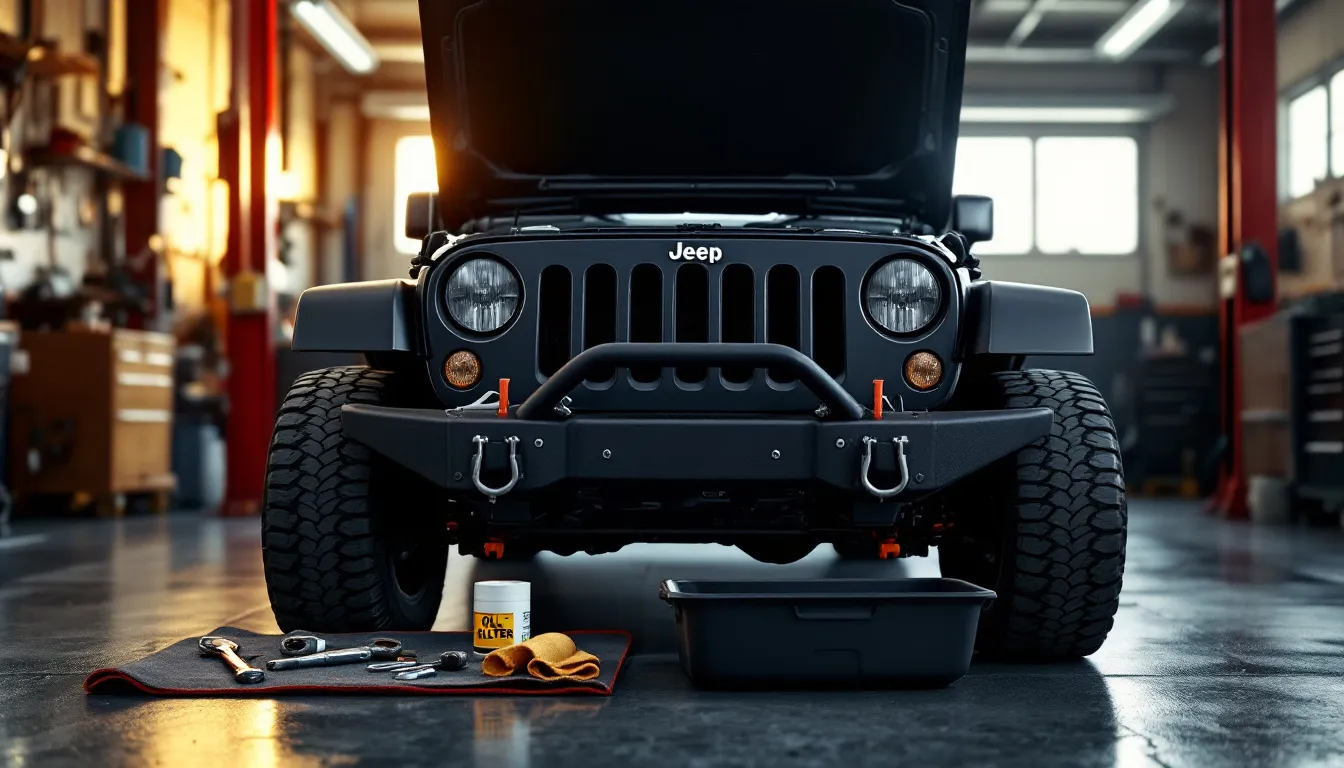
Jeep JK Maintenance Schedule PDF: Complete Service Guide (All Years)
Complete JK maintenance schedule with intervals, fluid specs, and torque specs for 2007-2018 Wranglers. Severe duty intervals, DIY tips, and downloadable checklist.
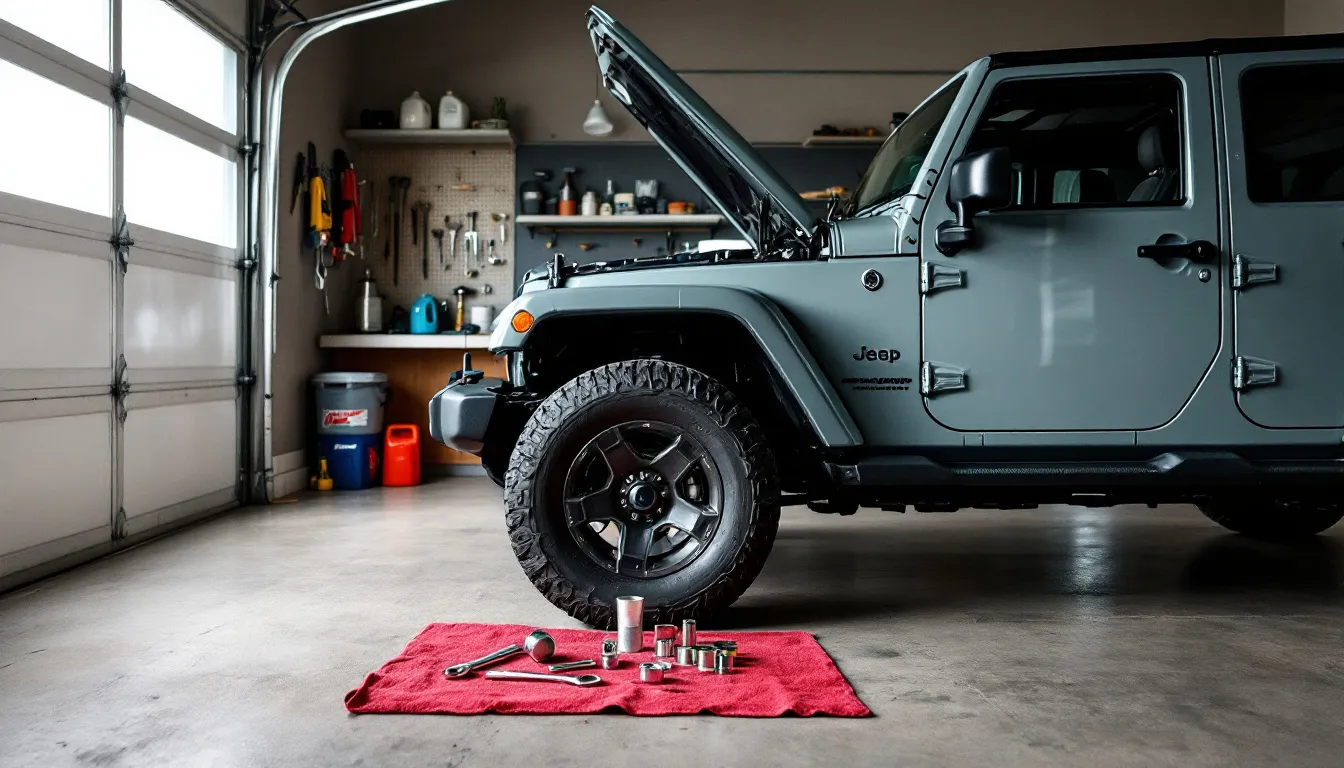
2018 Jeep Wrangler JK Maintenance Schedule: Final Year Service Guide
Complete 2018 Jeep Wrangler JK maintenance schedule with severe service intervals, fluid specs, and cost breakdowns. Keep your final-year JK running strong.