JK Fluid Specifications: Complete Reference Guide
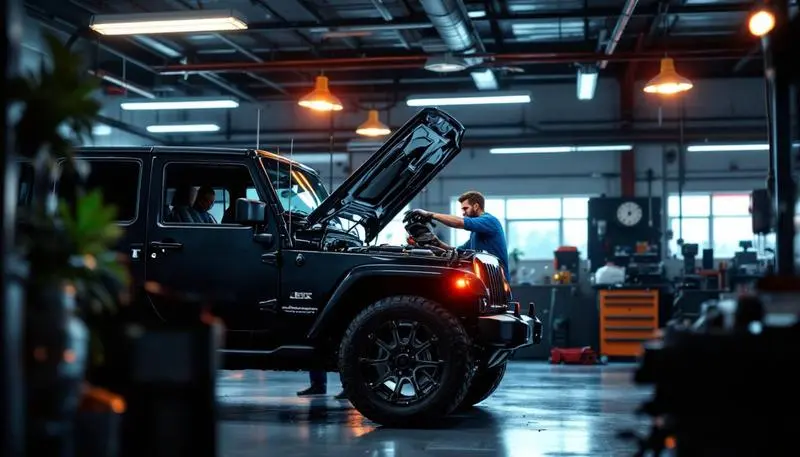
JK Fluid Specifications: Complete Reference Guide
Introduction: Why Fluid Specs Matter for Your JK
Using the correct fluid specifications in your 2007-2018 Jeep Wrangler JK isn’t just about following the owner’s manual—it’s about protecting a $30,000+ investment and avoiding costly repairs. The wrong transmission fluid can destroy your torque converter. Incorrect differential oil wears ring and pinion gears prematurely. Even mixing coolant types creates corrosive sludge that eats away at aluminum engine components.
Your JK’s jk fluid specifications are precise because Chrysler engineers designed each system around specific viscosity ranges, additive packages, and thermal properties. The 3.6L Pentastar engine requires 0W-20 synthetic oil to reach narrow oil passages during cold starts. The ATF+4 in your automatic transmission contains friction modifiers calibrated for Chrysler clutch pack materials. Dana axles need gear oil with specific extreme-pressure additives to handle off-road shock loads.
This complete fluid specs guide for jeep jk covers every lubricant and fluid in your Wrangler, from engine oil to windshield washer solvent. You’ll get exact specifications, capacities, change intervals, and product recommendations. No guessing. No generic “check your manual” advice. Just the precise information you need to maintain your JK correctly.
How to Use This Guide
This jeep wrangler fluid specs guide is organized by system, from engine to axles to cooling. Each section provides:
Specification details: The exact fluid type, viscosity grade, and performance ratings required.
Capacities: How much fluid each system holds, including overfill warnings where critical.
Change intervals: When to replace fluids based on Chrysler’s maintenance schedule and real-world off-road use.
Product recommendations: Specific fluids that meet or exceed OEM specifications.
If you’re doing a complete fluid refresh, work through the guide systematically. Start with engine oil, move to drivetrain fluids (transmission, transfer case, differentials), then finish with brake fluid and coolant.
For quick lookups, jump to the reference chart in Section 11. It lists every fluid, specification, and capacity in a scannable format.
Save this guide in your trail toolkit or bookmark it on your phone. You’ll reference it before every major service interval, after installing a lift kit that requires differential fluid changes, and when buying fluids for your garage stockpile.
Engine Oil: 3.8L (2007-2011) and 3.6L (2012-2018)
Your JK’s engine oil specification depends entirely on which motor you’re running under the hood.
2007-2011 3.8L V6: This engine uses 5W-20 conventional or synthetic oil meeting API certification SN or higher. Capacity is 6 quarts with filter change. The 3.8L is less demanding than its successor—5W-20 conventional oil works fine for stock applications. If you’re running aggressive off-road trails in extreme heat, synthetic provides better thermal stability.
2012-2018 3.6L Pentastar V6: Chrysler specifies 0W-20 full synthetic oil meeting API SN Plus or higher for all 3.6L engines. Capacity is 6 quarts with filter change. The 0W-20 weight is non-negotiable. This engine uses narrower bearing clearances and variable valve timing that requires low-viscosity oil for proper operation. Using 5W-20 or 10W-30 will trigger low oil pressure warnings and reduce fuel economy.
Change interval is every 8,000 miles for normal driving or every 4,000 miles if you frequently idle, tow, drive in dusty conditions, or run trails. Jeep’s oil life monitor accounts for operating conditions, but if you’re rock crawling monthly, change it more often than the light suggests.
Check oil level weekly when you’re wheeling hard. The JK’s oil pan sits low and unprotected—a rock strike can crack the pan or damage the drain plug. Losing two quarts on a remote trail will grenade your engine before you notice the pressure gauge dropping.
For the 3.6L, Mopar-branded 0W-20 synthetic is formulated specifically for Pentastar engines and available at any Jeep dealership. Mobil 1, Pennzoil Platinum, and Castrol Edge in 0W-20 also meet specifications. For the 3.8L, any major brand 5W-20 meeting API SN works perfectly.
Transmission Fluid: Automatic (ATF+4) and Manual
Transmission fluid specifications split between automatic and manual transmissions in the JK lineup.
Automatic Transmission (42RLE, NAG1, W5A580): All JK automatic transmissions use ATF+4 (Automatic Transmission Fluid +4) exclusively. This is a Chrysler-specific formulation with friction modifiers designed for their torque converters and clutch packs. Capacity varies by transmission model—the 42RLE holds approximately 9 quarts total, though a drain-and-fill only replaces about 4 quarts since half the fluid remains in the torque converter and valve body.
Never substitute Dexron, Mercon, or generic ATF in a JK automatic. The friction characteristics are different. You’ll feel harsh shifts, delayed engagement, and premature clutch wear within 5,000 miles. ATF+4 is backwards-compatible with ATF+3, but stick with ATF+4 for best results.
Change automatic transmission fluid every 60,000 miles under normal use or 30,000 miles if you tow regularly, run larger tires, or wheel in deep water. If you’ve submerged your transmission during a water crossing, change the fluid immediately—even if it looks clean. Water contamination isn’t always visible but will corrode internal components rapidly.
Manual Transmission (NSG370): The six-speed manual uses Mopar Manual Transmission Lubricant or equivalent 75W-90 GL-3 gear oil. Capacity is approximately 2.0 quarts. Do not use GL-4 or GL-5 oils—the sulfur-based extreme-pressure additives in GL-5 eat the brass synchronizers in the NSG370.
Manual transmission fluid should be changed every 60,000 miles or whenever you notice grinding during shifts. If you’ve installed larger tires or a regear, check the fluid level after 1,000 miles—increased torque can cause leaks at the shifter tower or output shaft seals.
Mopar ATF+4 is available at any auto parts store in quart bottles. For the manual transmission, Mopar MTL (Manual Transmission Lubricant) part number 04874465 is the safest choice. Redline MT-90 is an acceptable synthetic alternative that meets GL-3 specs without harming synchronizers.
Transfer Case Fluid: NV241 and NV241OR
Every JK Wrangler uses a New Venture Gear transfer case—either the standard NV241 or the Rubicon’s NV241OR with a 4:1 low range.
Fluid Specification: Both transfer cases require ATF+4, the same fluid used in automatic transmissions. This surprises many owners who expect gear oil, but Chrysler designed these chain-driven transfer cases around ATF viscosity. Capacity is approximately 2.0-2.5 quarts depending on model year.
The fill plug sits on the rear of the transfer case housing, accessible from underneath the Jeep. The drain plug is at the bottom of the case. When refilling, pump fluid in slowly until it dribbles out of the fill hole—that’s your level check.
Change transfer case fluid every 60,000 miles under normal conditions or 30,000 miles if you frequently engage 4-Low, run aggressive trails, or drive through deep water. If you’ve upgraded to larger tires without regearing, the transfer case works harder to multiply torque—shorten your change interval to 20,000 miles.
Watch for metal shavings on the magnetic drain plug when you drop the fluid. A light coating of fine gray paste is normal—that’s chain and gear break-in material. Heavy chunks or glitter indicates worn chain guides or bearing failure. Catch it early and you’ll replace a $30 chain guide. Ignore it and you’re rebuilding the entire transfer case for $1,800.
After a water crossing that submerged the transfer case breather, check the fluid immediately. Milky pink fluid means water contamination. Drain it completely, flush with fresh ATF+4, then drain and refill again. Water corrodes the chain and bearings faster than you’d think possible.
Use Mopar ATF+4 for transfer case fluid changes. It’s formulated for the exact friction characteristics Chrysler engineered into the NV241 design.
Differential Fluid: Front (Dana 30) and Rear (Dana 44/44 HD)
Your JK’s differential fluid specification depends on whether you have the standard Dana 30 front and Dana 44 rear or the Rubicon’s heavier-duty Dana 44 front.
Standard Front Dana 30 (Non-Rubicon): Requires 75W-90 synthetic gear oil meeting API GL-5 specification. Capacity is approximately 2.7 pints (1.35 quarts). The Dana 30 runs hotter than the rear because it handles steering loads and CV joint angles. Synthetic oil provides better protection under these conditions.
Rubicon Front Dana 44: Uses 75W-140 synthetic gear oil meeting API GL-5 specification. Capacity is approximately 2.7 pints (1.35 quarts). The heavier 75W-140 weight compensates for higher loads from the electronic locker and more aggressive off-road use.
Rear Dana 44 (All JK Models): Requires 75W-140 synthetic gear oil meeting API GL-5 specification. Capacity is approximately 4.75 pints (2.4 quarts) for the Dana 44 or 5.5 pints (2.75 quarts) for the Rubicon’s Dana 44 HD with thicker ring gear.
If you’ve installed an aftermarket limited-slip differential or Detroit Locker, add 4 ounces of friction modifier to the rear axle. Factory Tru-Lok electronic lockers don’t require friction modifier—they’re full lockers, not limited-slip units.
Change differential fluid every 50,000 miles under normal use or 15,000-20,000 miles if you’re running 35-inch or larger tires, have regeared to lower ratios (4.56 or deeper), or frequently wheel in mud or water. After any water crossing that submerges the differentials above the breather height, change the fluid within a week. Water contamination shows up as milky fluid instead of clear amber. Even a small amount of water will pit ring and pinion gears.
The fill plug on both axles sits at the top of the differential cover. Remove it first to confirm it’s not seized before draining the old fluid. Fill until fluid dribbles out of the fill hole, then reinstall the plug. Some JK owners install magnetic drain plugs to catch metal particles and monitor gear wear—a smart upgrade if you’re running modified axles.
Mopar gear oil part numbers 68218925AA (75W-90) and 5127939AA (75W-140) meet all specifications. Redline, Amsoil, and Royal Purple synthetic gear oils in the correct viscosity also work well. If you’re running an aftermarket limited-slip, use the friction modifier specific to that differential manufacturer—not all modifiers are compatible with all clutch pack materials.
Brake Fluid: DOT 3 Specification
Your JK’s brake system uses DOT 3 brake fluid with a minimum dry boiling point of 401°F and wet boiling point of 284°F. Capacity for a complete system flush is approximately 1 quart, though you’ll use slightly more due to bleeding procedures.
Do not substitute DOT 4 or DOT 5.1 unless you’re upgrading to high-performance brake pads that generate significantly more heat. DOT 3 is perfectly adequate for stock JK braking systems, even under hard trail use. DOT 5 (silicone-based) is completely incompatible with the JK’s ABS system and will destroy the hydraulic control unit.
Brake fluid is hygroscopic—it absorbs moisture from the air through microscopic pores in rubber hoses. As water content increases, boiling point drops. Moisture also corrodes ABS components and brake calipers from the inside. Change brake fluid every 3 years regardless of mileage, or every 2 years if you live in high-humidity climates or frequently cross water.
Check fluid level monthly by looking at the translucent reservoir on the driver’s side firewall. Level drops slightly as brake pads wear—that’s normal. Sudden drops indicate leaks at calipers, wheel cylinders, or brake lines. Dark brown or black fluid means it’s contaminated with rubber particles from deteriorating hoses. Flush the system immediately before the contamination clogs the ABS pump.
When buying brake fluid, purchase small bottles and use them within a year of opening. Once exposed to air, DOT 3 absorbs moisture rapidly and loses effectiveness. Don’t store half-empty bottles for next year’s fluid change.
Any major brand DOT 3 fluid meeting FMVSS 116 standards works in the JK. Valvoline, Prestone, and Castrol are widely available and meet specifications. Avoid bargain-brand brake fluid—the cost difference is two dollars, and your stopping ability isn’t worth gambling on.
Power Steering Fluid: Uses ATF+4
The JK’s hydraulic power steering system uses the same ATF+4 fluid specified for automatic transmissions. Chrysler simplified parts inventory by designing the power steering pump to run on ATF instead of dedicated power steering fluid. Capacity is approximately 1 quart in the system.
The reservoir sits on the passenger side of the engine bay, clearly marked with MIN and MAX level indicators. Check level with the engine cold and turned off. Fluid should sit between the marks when the steering is centered. Low fluid creates whining noises from the pump and makes steering heavier at low speeds.
Power steering fluid doesn’t require regular changes like transmission or differential oil. Instead, check it monthly and top off as needed. If you’re losing fluid, inspect the pressure hoses running from the reservoir to the steering box. The high-pressure hose near the steering box develops leaks after 80,000-100,000 miles. You’ll see ATF dripping on the skid plate or smell burning fluid on hot components.
After installing a new steering stabilizer, aftermarket steering box, or hydraulic ram assist for larger tires, flush the old fluid and refill with fresh ATF+4. Power steering systems accumulate metal particles and rubber debris over time. Flushing prevents this contamination from damaging new components.
The easiest flush method: Remove the return hose from the reservoir and drain the fluid into a catch pan. Refill the reservoir with fresh ATF+4, start the engine, and let it pump out while continuously adding fresh fluid. When the fluid runs clear instead of dark brown, reconnect the return hose and top off the reservoir.
Use Mopar ATF+4 in your power steering system. Some owners substitute Dexron or generic ATF to save money, but ATF+4’s specific additive package provides better protection for Chrysler power steering pumps.
Coolant: OAT (Organic Acid Technology)
The JK cooling system requires OAT (Organic Acid Technology) coolant, specifically the pink or orange HOAT (Hybrid OAT) formulation Chrysler calls Mopar Antifreeze/Coolant 10 Year/150,000 Mile Formula. Total system capacity is approximately 13 quarts for the 3.8L or 14 quarts for the 3.6L Pentastar.
Never mix OAT coolant with traditional green ethylene glycol coolant. The different inhibitor packages react to form acidic sludge that corrodes aluminum cylinder heads, water pump housings, and heater cores. If you’re switching from green to OAT, flush the system completely—multiple times if necessary—before adding OAT coolant.
OAT coolant is typically mixed 50/50 with distilled water for a protection range of -34°F to 265°F. In extreme cold climates, you can run 60% coolant / 40% water for lower freeze protection, but don’t exceed 70% coolant—the mixture actually protects against freezing less effectively when too concentrated. In hot desert environments, 40% coolant / 60% water provides better heat transfer, but sacrifice freeze protection.
Change coolant every 10 years or 150,000 miles under normal conditions. This assumes you’re using quality OAT coolant and haven’t introduced contamination. If you frequently ford water crossings and worry about water entering through the radiator cap overflow, shorten the interval to 5 years. Contaminated coolant loses its corrosion inhibitors and can’t protect aluminum components.
Check coolant level weekly when the engine is cold by looking at the translucent overflow reservoir near the passenger-side headlight. Level should sit between MIN and MAX marks. If you’re constantly adding coolant, inspect for leaks at the water pump (weep hole on the bottom), radiator hose connections, and heater core (sweet smell inside the cab indicates heater core failure).
After installing a new radiator, water pump, or aftermarket cooling mods like a mishimoto radiator, flush and refill with fresh coolant. Old coolant contains metal particles and degraded inhibitors that will contaminate your new components.
Mopar OAT coolant (part number 68051212AC) is the safest choice. Zerex G-05 is chemically identical and meets Chrysler MS-9769 specification. Both are available pre-mixed or as concentrate. Pre-mix is convenient but costs twice as much per gallon of actual coolant.
Windshield Washer Fluid
Windshield washer fluid is the most flexible specification in your JK—almost any formulation works. The reservoir holds approximately 1 gallon and sits in front of the passenger-side wheel well, accessible by removing the access panel behind the front bumper on earlier models or from the top on 2011+ JKs.
For most climates, standard blue washer fluid rated to -20°F provides adequate freeze protection and cleaning power. Rain-X branded fluids add water-repelling polymers that improve visibility in rain. Bug-removal formulas contain stronger detergents for summer driving through insect swarms.
If you live where winter temperatures drop below -20°F, switch to winter formulas rated to -40°F or lower. These use higher concentrations of methanol or ethanol to prevent freezing. Regular washer fluid freezes in the lines and cracks the reservoir or pump housing.
For serious winter wheeling or high-altitude runs, some owners mix straight methanol (available at racing supply stores) for freeze protection to -100°F. It’s more expensive than retail washer fluid but won’t freeze in extreme cold. The tradeoff: methanol doesn’t clean as effectively and evaporates faster than commercial formulas.
Avoid using plain water, even in summer. Water lacks detergents to remove road film and bugs. It also promotes algae and bacteria growth in the reservoir, which clogs spray nozzles. In freezing weather, plain water will crack your washer system components.
Check washer fluid level monthly and refill as needed. If your washers stop spraying, check for clogged nozzles before assuming the pump failed. Remove the nozzle from the hood and soak it overnight in vinegar to dissolve mineral deposits. If the pump runs but doesn’t spray, the lines may be frozen or kinked.
Buy washer fluid in gallon jugs at any auto parts store or big-box retailer. Brand doesn’t matter much—compare freeze ratings and choose based on climate needs. Keep a spare gallon in your garage for quick refills.
Quick Reference Chart: All Fluids at a Glance
| System | Fluid Type | Specification | Capacity | Change Interval |
|---|---|---|---|---|
| Engine Oil (3.8L) | 5W-20 conventional or synthetic | API SN or higher | 6 quarts w/ filter | 4,000-8,000 miles |
| Engine Oil (3.6L) | 0W-20 full synthetic | API SN Plus or higher | 6 quarts w/ filter | 4,000-8,000 miles |
| Auto Transmission | ATF+4 | Chrysler specification | ~9 quarts total (~4 drain/fill) | 30,000-60,000 miles |
| Manual Transmission | 75W-90 GL-3 gear oil | Mopar MTL or equivalent | 2.0 quarts | 60,000 miles |
| Transfer Case | ATF+4 | Chrysler specification | 2.0-2.5 quarts | 30,000-60,000 miles |
| Front Diff (Dana 30) | 75W-90 synthetic | API GL-5 | 2.7 pints (1.35 qts) | 15,000-50,000 miles |
| Front Diff (Rubicon Dana 44) | 75W-140 synthetic | API GL-5 | 2.7 pints (1.35 qts) | 15,000-50,000 miles |
| Rear Diff (Dana 44) | 75W-140 synthetic | API GL-5 | 4.75-5.5 pints (2.4-2.75 qts) | 15,000-50,000 miles |
| Brake Fluid | DOT 3 | FMVSS 116 | ~1 quart | 2-3 years |
| Power Steering | ATF+4 | Chrysler specification | ~1 quart | Check/top off monthly |
| Coolant | OAT (pink/orange) | Mopar 10yr/150k or MS-9769 | 13-14 quarts | 5-10 years or 150,000 miles |
| Washer Fluid | Any washer fluid | Match freeze rating to climate | 1 gallon | Refill as needed |
Print this chart and tape it inside your garage cabinet or toolbox lid. You’ll reference it constantly during routine maintenance and pre-trip inspections.
Common Mistakes to Avoid
Using the wrong transmission fluid: This is the most expensive mistake JK owners make. Putting Dexron or Mercon in an automatic transmission designed for ATF+4 will cause harsh shifting and clutch pack failure within 10,000 miles. Transmission rebuilds start at $2,500. Always verify you’re buying ATF+4 before adding fluid.
Mixing coolant types: Combining green ethylene glycol with pink OAT creates corrosive sludge that eats aluminum components. If you’re uncertain what’s in your cooling system, drain it completely and flush three times with distilled water before adding fresh OAT coolant. The $30 cost of extra coolant is cheaper than replacing a $900 radiator.
Using GL-5 gear oil in the manual transmission: The brass synchronizers in the NSG370 manual can’t tolerate the extreme-pressure additives in GL-5 oil. You’ll notice grinding within a few thousand miles as the synchros deteriorate. Use only GL-3 rated oil or Mopar’s specific manual transmission lubricant.
Ignoring water contamination after crossings: Milky fluid in your differentials, transmission, or transfer case indicates water intrusion. Change the fluid immediately—within days, not weeks. Water corrodes gears and bearings at an accelerating rate. What starts as a simple fluid change becomes a $1,200 differential rebuild if you wait too long.
Overfilling the transmission: Adding too much ATF causes foaming as the fluid aerates. Foamy fluid can’t lubricate properly and creates erratic shift points. Check your transmission fluid level on level ground with the engine running and transmission in Park. Add fluid in half-quart increments and recheck between additions.
Using summer washer fluid in winter: Water-based washer fluid freezes at 32°F and will crack your reservoir or pump housing overnight. Switch to winter-rated fluid by October if you live in freezing climates. Replacing a cracked washer reservoir costs $80 and requires removing the front bumper on some JK models.
Running mismatched differential weights: If you have a non-Rubicon JK with a Dana 30 front (requiring 75W-90) and Dana 44 rear (requiring 75W-140), don’t use the same fluid in both axles. The Dana 30 runs hotter due to CV joint angles and needs the thinner 75W-90 for proper lubrication.
Neglecting brake fluid changes: Brake fluid looks fine for years while slowly absorbing moisture and lowering its boiling point. By the time it turns dark brown, it’s already corroding your ABS pump and brake calipers internally. Change it every three years regardless of appearance.
Where to Buy Fluids (OEM vs Aftermarket)
Mopar OEM Fluids: Available at any Jeep dealership parts counter, Mopar fluids are guaranteed to meet exact specifications. ATF+4, OAT coolant, and gear oils in the correct weights come with part numbers specifically referenced in your owner’s manual. Pricing runs 20-30% higher than aftermarket equivalents, but you eliminate any compatibility concerns.
Buy Mopar fluids when you’re servicing critical systems like the transmission or transfer case, especially if your JK is still under warranty. Using non-approved fluids can void warranty coverage if a failure occurs.
Auto Parts Stores: Advance Auto, AutoZone, O’Reilly, and NAPA carry aftermarket fluids meeting the same specifications as OEM. Valvoline, Pennzoil, Castrol, and Mobil 1 are reputable brands with formulations certified to Chrysler standards. Check the label for “meets Chrysler MS-9602” (ATF+4), “API GL-5” (gear oil), or “MS-9769” (coolant).
Parts stores run frequent sales and mail-in rebates. You can often buy five quarts of Mobil 1 0W-20 synthetic for less than the cost of three quarts at the dealership. Stacking a store coupon with a manufacturer rebate makes aftermarket fluids significantly cheaper than OEM.
Online Retailers: Amazon and RockAuto carry bulk quantities of fluids at competitive prices. This makes sense if you’re doing multiple fluid changes or buying for a group of wheeling buddies. The downside: you can’t inspect the packaging before purchase, and counterfeit fluids do exist on Amazon (especially motor oil).
If ordering online, buy directly from the manufacturer’s storefront (Mobil, Valvoline, Pennzoil) rather than third-party sellers. Check that bottles have intact seals and proper labeling when they arrive.
Specialty Off-Road Retailers: Quadratec, 4 Wheel Parts, and Northridge4x4 stock Mopar fluids alongside premium synthetics from Redline, Amsoil, and Royal Purple. These retailers cater specifically to Jeep owners, so their product descriptions often include JK-specific compatibility information.
Premium synthetic gear oils from Redline and Amsoil offer better extreme-pressure protection for modified JKs running 37-inch tires and 5.13 gears. The cost runs 2-3 times higher than standard synthetics, but the improved protection makes sense when you’ve invested $3,000 in regearing both axles.
When to Choose OEM vs Aftermarket: Use Mopar fluids for transmission, transfer case, and power steering systems where Chrysler engineering is tightly coupled to fluid chemistry. For engine oil, gear oil, brake fluid, and coolant, aftermarket brands meeting the same specifications work perfectly and save money. Your 3.6L Pentastar doesn’t care whether the 0W-20 synthetic comes in a Mopar bottle or a Mobil 1 bottle—it only cares about viscosity and additive package.
Keep receipts and empty bottles when using aftermarket fluids during the warranty period. If a warranty claim arises, you can prove you used fluids meeting Chrysler specifications.
Conclusion: Keep Your JK Running Strong with the Right Fluids
Your JK Wrangler’s longevity depends more on fluid quality and change intervals than almost any other maintenance factor. Run the correct jk fluid specifications, change them before they degrade, and you’ll see 200,000+ miles from your drivetrain. Cut corners with wrong fluids or extended intervals, and you’ll rebuild transmissions and differentials before 100,000 miles.
The initial investment in quality fluids pays for itself immediately. A $50 differential fluid change every 20,000 miles prevents a $1,800 ring and pinion replacement. A $40 brake fluid flush every three years stops $800 in ABS pump corrosion damage. Fresh ATF+4 in your automatic transmission every 30,000 miles adds years of service life to a component that costs $3,500 to replace.
Bookmark this jeep wrangler fluid specs guide and reference it before every service interval. When a parts store employee suggests “close enough” substitutes, pull up this guide and verify specifications. When your buddy insists his generic ATF works fine in his JK (right up until his transmission fails at 87,000 miles), you’ll know better.
Stock your garage with the correct fluids before you need them. Buy engine oil when it’s on sale. Keep extra differential fluid on hand after water crossings. Store fresh brake fluid in a cool, dark cabinet where moisture can’t contaminate it.
Your JK will reward you with reliable performance on every trail run, every daily commute, and every cross-country road trip. All it asks in return is the right fluid in every system.
Get the Free JK Build Planner
Complete PDF with mod checklists, gear ratios, tire sizing charts, and budget worksheets. Everything you need to plan your JK build.
No spam. Unsubscribe anytime. By subscribing, you agree to our Privacy Policy.
Allan
I'm Allan. I bought a 2014 Jeep Wrangler JKU and I research the hell out of every mod before I touch it. Everything here is tested or deeply researched on my own rig - no sponsored fluff, just honest findings.
Learn more about me →Get the JK Build Planner
Free PDF with complete build checklists, gear ratios, and tire fitment guides.
By subscribing, you agree to our Privacy Policy.
Related Articles
2018 Jeep JK Maintenance Schedule PDF
Every used Jeep has a story. Mine had a few it hadn't finished telling yet.
Jeep JK Maintenance Schedule PDF: Complete Service Guide (All Years)
Complete JK maintenance schedule with intervals, fluid specs, and torque specs for 2007-2018 Wranglers. Severe duty intervals, DIY tips, and downloadable checklist.
2018 Jeep Wrangler JK Maintenance Schedule: Final Year Service Guide
Complete 2018 Jeep Wrangler JK maintenance schedule with severe service intervals, fluid specs, and cost breakdowns. Keep your final-year JK running strong.