Jeep JK Towing Capacity: What Your Wrangler Can Actually Pull (2007–2018)
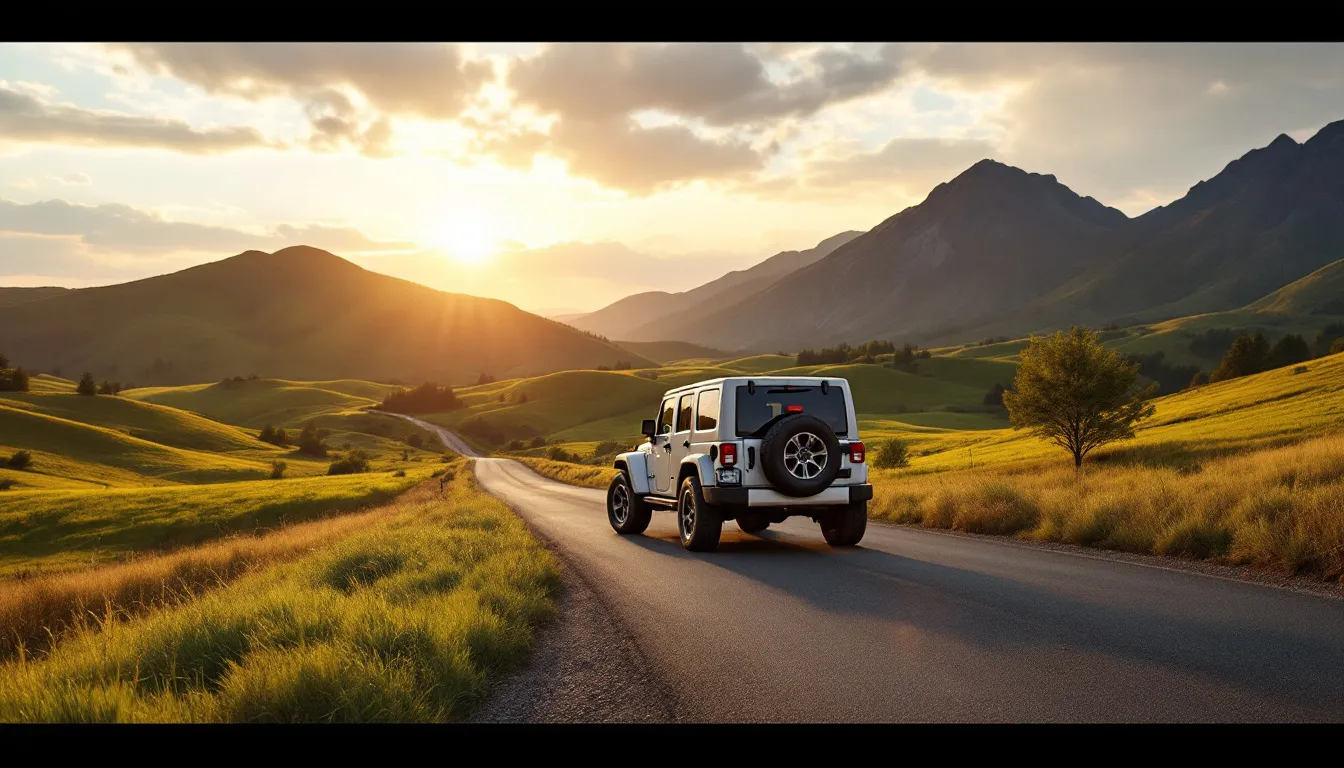
Jeep JK Towing Capacity: What Your Wrangler Can Actually Pull (2007–2018)
Affiliate disclosure: JeepJK Guide earns a commission on qualifying purchases made through links on this page. This does not affect our recommendations or editorial independence.
How Much Can a Jeep JK Actually Tow?
Jeep Wrangler towing capacity is straightforward on paper: 2,000 lb for 2007–2011 models with the 3.8L V6, and 3,500 lb for 2012–2018 models with the 3.6L Pentastar V6. That’s it. Those two numbers answer 90% of the questions people ask about JK towing.
But the real question isn’t what Chrysler says your JK can tow — it’s what it can tow safely. Your lifted, gear-loaded 2014 JKU pulling a boat hull through summer heat? That’s a different equation than a bone-stock 2013 Sport towing a utility trailer on a flat highway. The numbers don’t tell you whether you’re operating safely within those limits. That’s where this guide picks up.
Before you hitch anything, you’ll want to know three things about your specific JK: the door count (2-door vs. 4-door JKU), whether you’ve lifted it, and what your actual payload capacity is after passengers and gear. If you’re still deciding which JK to buy, start with the JK Buyers Guide or check out our 2-door vs 4-door JK comparison — both give you context that makes the towing numbers click into place.
The sections below break down the official ratings by year and engine, explain what tongue weight and GVWR actually mean in the real world, and cover the specific use cases — boats, campers, off-road trailers — where the JK’s numbers get tested hardest.
Get new guides by email
One email when we publish something worth reading. Unsubscribe anytime.
Jeep JK Towing Capacity by Year and Engine: The Official Numbers
The split is clean: 2,000 lb for anything 2007–2011, and 3,500 lb for 2012–2018 and beyond. Every JK in that eleven-year window falls into one bucket or the other, regardless of trim level or whether it’s a 2-door or JKU.
Here’s the breakdown:
2007–2011 (3.8L V6)
- Rated tow capacity: 2,000 lb
- Engine output: 202 hp / 237 lb-ft torque
- Applies to: all trims (Sport, Sahara, Rubicon), both 2-door JK and 4-door JKU
2012–2018 (3.6L Pentastar V6)
- Rated tow capacity: 3,500 lb
- Engine output: 285 hp / 260 lb-ft torque
- Applies to: all trims (Sport, Sahara, Rubicon), both 2-door JK and 4-door JKU
That jump from 2,000 to 3,500 lb is real — not a pencil-whipping of the numbers. The 3.6L Pentastar delivers 83 more horsepower and 23 more lb-ft of torque. More importantly, it’s a different engine architecture with better torque management under sustained load. You feel the difference when you’re climbing a long grade with a trailer.
I own a 2014 JKU with the 3.6L Pentastar. Before I ever thought seriously about towing, I went through a significant foundation-building repair process — new radiator, AC work, and eventually a full cylinder-head replacement because the heads were warped, a known weak spot on the Pentastar generation. That wasn’t the fun part of Jeep ownership. But it’s the part that matters when you’re asking your engine to pull weight. You can’t safely tow with marginal cooling, blown seals, or brewing head gasket issues. Mechanical integrity before trailer hookups — that philosophy runs through everything on this site.
If you’re comparing trims alongside towing, check out our Rubicon vs Sport vs Sahara trim comparison — it covers weight differences and what each trim adds to the equation.
A few nuances that matter:
- Body style doesn’t change the tow rating. The 2-door JK and 4-door JKU share identical tow ratings for each engine. What differs is payload — the JKU weighs more out of the factory, which shrinks how much additional gear you can carry on top of towing.
- Your specific options can shift GVWR. Heavy audio systems, extra seating, factory skid plates, and other add-ons push weight around. Check the door-jamb sticker on your JK for your exact numbers, not just the model-year figure.
- These ratings assume stock suspension and tires. Once you lift it, go to 35-inch tires, or bolt on heavy aftermarket bumpers, the real-world safety equation shifts — covered in detail below.
The 2012 engine swap is the single most important dividing line in JK towing history. If you’re shopping used and towing matters to you, targeting a 2012 or newer is worth the search.
JK Towing Capacity at a Glance: Quick-Reference Tables
JK towing capacity is split down the middle by engine: 2,000 lb before 2012, 3,500 lb from 2012 onward. The tables below let you find your number in seconds and then see what kinds of trailers actually fit within those limits. For a deeper breakdown on how body style affects overall capability, check our 2-door JK vs JKU — which is right for you comparison.
Table 1: JK Towing Capacity by Engine and Year
| Model Years | Engine | Horsepower | Torque | Max Tow Rating |
|---|---|---|---|---|
| 2007–2011 | 3.8L V6 | 202 hp | 237 lb-ft | 2,000 lb |
| 2012–2018 | 3.6L Pentastar V6 | 285 hp | 260 lb-ft | 3,500 lb |
Note: Rating applies to both 2-door JK and 4-door JKU for each engine. Always verify against your door-jamb sticker — individual options affect GVWR.
Table 2: Trailer-Type Suitability for the Jeep JK
| Trailer Type | Typical Dry Weight | 3.8L (2,000 lb rated) | 3.6L (3,500 lb rated) |
|---|---|---|---|
| Small utility trailer | 500–800 lb | ✅ Comfortable | ✅ Comfortable |
| Motorcycle/ATV trailer (1 unit) | 800–1,200 lb | ✅ Within limits | ✅ Comfortable |
| Jet ski / PWC on trailer | 1,200–1,800 lb | ⚠️ Near limit | ✅ Within limits |
| Small aluminum fishing boat | 1,500–2,200 lb | ❌ Likely over | ✅ Manageable |
| Pop-up / fold-down camper | 1,500–2,800 lb | ❌ Over | ⚠️ Check wet weight |
| Small travel trailer | 2,500–4,000 lb | ❌ Over | ❌ Over (at high end) |
| Full-size bass boat | 3,000–4,500 lb | ❌ Over | ❌ Over |
Weights shown are approximate dry weights. Real loaded weight — with fuel, water, gear, and whatever collects in the hull — is always higher. Weigh before you leave the dock.
Tongue Weight, GVWR, and Why the Numbers Get Complicated
This is where most people’s eyes glaze over — and where mistakes actually happen.
Tongue weight is the downward force your trailer’s coupler puts on the hitch ball. GVWR is the maximum allowable total weight of your loaded JK. These two numbers don’t make the headlines like “3,500 lb tow capacity” does, but they’re equally important. Ignore them and you end up with a trailer that falls under the tow rating but still handles like it’s possessed.
Here’s how the relationship works:
- Tongue weight should be 10–15% of total trailer weight. On a 3,500 lb trailer, that’s 350–525 lb pressing straight down on your rear hitch.
- That tongue weight gets subtracted from your payload capacity — the total weight your JK can carry in people, cargo, and tongue load combined.
- If your payload is already spoken for by four passengers and a full cargo area, your effective towing capacity drops, even if the math says you’re under the limit.
Let’s walk through a real scenario: You have a 2015 JKU rated at 3,500 lb tow capacity. Your loaded trailer weighs 3,200 lb. Tongue weight at 12% = 384 lb pressing on the hitch. That 384 lb has to come out of your payload budget. You’re carrying three passengers (roughly 500 lb), plus 100 lb of gear in the cargo area. You’re at 984 lb of payload used. Most JKUs have around 1,000–1,100 lb of payload capacity depending on options. You’re already at the edge before the tongue load lands on the hitch. Add 384 lb, and you’re over.
This is why mechanical health is non-negotiable before towing. My cooling system is in excellent shape now after the radiator swap and Pentastar head work. That matters because Jeep’s cooling system runs close to its limits under sustained tow loads. Many community reports flag elevated coolant temperatures on long climbs with trailers. Check your coolant, thermostat, and radiator before your first tow, not the week after. While you’re preparing your rig, this is also the right time to think about recovery options — if towing puts you in a vulnerable position (like a wet boat ramp), a JK front bumper with a winch mount and the best winch for JK Unlimited become genuinely useful, not just trail toys.
Bottom line: staying under 3,500 lb is the starting point, not the finish line. Tongue weight, payload, and engine/cooling condition all matter equally.
How Lift Kits and Bigger Tires Affect JK Towing
Lifting your JK affects towing safety, and it’s not in a helpful direction. A lift raises your center of gravity, changes how the driveshafts sit relative to each other, and alters rear suspension geometry enough to shift the trailer-stability equation. Bigger tires add rotating mass and aerodynamic drag. Neither of these changes is trivial when you’re working within a 3,500 lb ceiling.
Here’s what actually shifts when you add lift:
Driveshaft angle: A 2–4 inch lift without a transfer case drop puts the front and rear driveshafts at steeper angles relative to each other. Under sustained tow load, this creates additional vibration and heat cycling in the U-joints and transfer case. It’s not catastrophic, but it’s wear you wouldn’t have incurred otherwise.
Hitch height mismatch: Most JK trailer hitches are engineered for stock ride height. Lift the vehicle 3 inches, and suddenly your hitch ball is sitting higher than it should be relative to the trailer coupler. This forces the trailer to nose-up slightly, which kills brake effectiveness and promotes sway.
Tire and gearing: Many owners who go to 35-inch tires also re-gear the axles (typically 4.88:1 or 5.13:1) to restore drivability. Re-gearing helps you live with big tires on the highway, but it doesn’t restore tow capacity — the manufacturer’s limit is still the ceiling.
Handling and sway control: A lifted JK with aftermarket shocks tuned for off-road compliance can feel floatier on the highway, which amplifies trailer sway. On a short-wheelbase 2-door JK (95.4 inches between axles), this becomes a real concern.
The truth is that hardened data on exactly how much a specific lift height degrades towing stability on a JK is sparse on this site. But if you dig into JK-Forum and WranglerForum threads, you’ll find experienced owners who tow regularly with lifted rigs. Their consensus: keep trailer weight conservatively below the rated limit — often 500–800 lb below — when towing with a lifted setup.
If you’re building a JK that needs to tow and wheel, nailing down your suspension with quality components is foundational work. Check our picks for best JK shocks for off-road and JK control arm upgrades to understand how the suspension system behaves under load. That knowledge directly applies to towing behavior.
Towing a Boat with Your Jeep JK: What Actually Works
A Jeep JK can tow a boat — but only a small one. With the 3.6L Pentastar at 3,500 lb, you’re looking at aluminum fishing boats, small bass boats, or personal watercraft. Larger fiberglass hulls, center-console boats, and anything with a heavy outboard motor will exceed your limit fast.
The number most people miss is the difference between dry weight and wet weight. A boat listed as 2,200 lb dry weight can gain several hundred pounds once you add fuel, a full live well, safety gear, fishing equipment, and water that pools in the bilge. What looked safely under 3,500 lb on the spec sheet can hit that number or exceed it by the time you launch.
Practical boat-towing guidelines for the JK:
- Aluminum fishing boats (14–16 ft): Usually 800–1,500 lb loaded. These work well with the 3.6L.
- Bass boats (17–19 ft fiberglass): Often 2,500–3,500 lb loaded. Marginal — you’re at the limit with limited safety margin.
- Jet ski / PWC on a trailer: Typically 1,200–1,800 lb. Manageable with the 3.6L.
- Any boat on a double-axle trailer: The trailer itself adds significant weight. Account for trailer weight separately, not just the boat.
Boat ramps create a recovery scenario that flat-road towing never does. Algae-covered concrete, wet pavement, and the angle of descent while backing a trailer introduce real risk of getting stuck — especially if you’re running aired-down tires for traction. This is one scenario where a waterproof winch on a steel front bumper goes from “nice to have” to genuinely useful.
The VR EVO 12-S electric winch is worth serious consideration for boat-ramp work. IP68 waterproof rating means it’s rated for continuous submersion — when your winch is sitting near the waterline on a ramp, that matters. Synthetic rope is also safer than steel cable when people are working nearby and the ground is wet. It’s not a towing upgrade per se; it’s a recovery upgrade for situations where towing puts you in a vulnerable position.
For bumper configurations that can mount a winch in a boat-ready setup, see our guide to JK front bumpers with winch mounts.
Essential Towing Gear and Upgrades for the Jeep JK
Safe JK towing requires more than a hitch ball and a prayer. You need a Class III receiver hitch, a correctly-rated ball mount, trailer wiring harness, and safety chains. Once you’re regularly in the 2,500+ lb range, a weight-distribution system (if your trailer supports one) and a dedicated trailer brake controller become serious upgrades, not luxuries.
Here’s what actually matters:
The Hitch
Factory JKs from 2012–2018 often came with a trailer hitch prep package, but many never had the receiver installed. A Class III 2-inch receiver hitch is the correct spec for your JK’s full tow rating. Class II (1.25-inch) is undersized and shouldn’t be your first choice.
Trailer Wiring
A 4-pin flat connector handles running lights, brake lights, and turn signals. If your trailer has electric brakes, you need a 7-pin connector and a brake controller mounted inside the cab. The controller allows you to actuate trailer brakes independently — critical for safe stopping on long downhill grades.
Weight Distribution and Sway Control
At loads above 2,000 lb, a sway control bar makes a measurable difference on a short-wheelbase vehicle. It’s not exciting gear, but it directly addresses one of the JK’s structural vulnerabilities when towing.
Recovery Gear — Where the Winch Fits In
I’ve personally installed a steel front bumper and winch on a JK, and I’ve used it for real recovery work. The weight of a steel bumper (typically 80–120 lb vs. 20–30 lb for factory plastic) is relevant: it adds to your front-axle payload and shifts weight distribution slightly forward. That’s a trade-off you make consciously for the protection and recovery capability a steel bumper provides.
For a winch that handles both recovery duties and the wet conditions of a boat ramp, the VR EVO 12-S stands out with industry-leading waterproof ratings and synthetic rope safety:

VR EVO 12-S Electric 12V Winch – 12,000 lb Pull, Synthetic Rope, IP68 Waterproof
$1,044.24
Check Price on Amazon →Specs at a glance:
- 12,000 lb pull capacity (4× your tow rating — plenty of margin)
- Synthetic rope (safer than steel near people and wet surfaces)
- IP68 waterproof rating (rated for continuous submersion)
- 12V electric, standard JK electrical system compatible
- Requires a winch-ready bumper mount — see front bumpers with winch mounts
For a full comparison of winch options at different price points, check our best winch for JK Unlimited guide. And if you’re adding towing to your routine, this is the time to review your JK maintenance schedule — cooling system, transmission fluid, and brake condition all come under real stress when towing regularly.
Towing Safety Tips Specific to the Jeep JK
The JK’s biggest towing vulnerability is its wheelbase. A 2-door JK measures 95.4 inches between the axles; a JKU 4-door stretches to 116 inches. Both are short by truck and SUV standards. A shorter wheelbase gives a trailer more leverage to induce sway — the physics are straightforward, and the JK doesn’t have the mass or length to dampen oscillations the way a full-size truck does.
Jeep’s owner’s manual caps towing speed at 55 mph for exactly this reason. That’s not conservative hand-wringing — it’s an engineering limit that accounts for the JK’s dynamics under trailer load. Ignoring it will cost you.
Real towing safety rules for the JK:
- Never exceed 55 mph while towing. This is Jeep’s specified maximum, not a suggestion.
- Keep tongue weight at 10–15% of trailer weight. Tongue weight below 10% causes sway; above 15% overloads the rear axle.
- Brake early and progressively. The JK’s brake system wasn’t designed with sustained trailer loads in mind. Give yourself more stopping distance than you think you need.
- Watch your mirrors constantly. With a short wheelbase, sway develops fast. If you see the trailer moving in your mirrors, reduce speed gradually — never brake hard.
- Check your steering before towing. A worn track bar or loose steering stabilizer causes death wobble under normal conditions. Add trailer tongue weight, and the problem gets worse. Our JK death wobble fix guide covers diagnosis and repair.
- Inspect your control arms for play. OEM JK control arm bushings wear over time. Under tow load, worn bushings mean imprecise steering and unpredictable handling. See best control arms for JK if yours need replacement.
Temperature matters more than you’d think. Towing in summer heat, especially on long grades, pushes coolant temperature higher than normal driving. Watch your gauge on climbs and don’t ignore a rising needle.
Frequently Asked Questions: Jeep JK Towing
Q: How much can a Jeep JK tow?
A: A Jeep JK with the 2007–2011 3.8L V6 is rated to tow 2,000 lb. A 2012–2018 JK with the 3.6L Pentastar V6 is rated to tow 3,500 lb. These are factory maximums for stock vehicles. Modifications like lift kits, larger tires, or heavy bumpers may affect real-world safety and stability.
Q: Is the Jeep JKU 4-door rated differently for towing than the 2-door?
A: No — the factory tow rating is identical for both body styles within each engine generation (2,000 lb for 3.8L, 3,500 lb for 3.6L). The JKU does weigh more than the 2-door, which slightly reduces payload capacity, but the maximum trailer weight rating stays the same.
Q: Can a Jeep JK tow a camper?
A: A 2012–2018 JK with the 3.6L can tow lightweight pop-up and fold-down campers that stay under 3,500 lb loaded weight. Many pop-ups dry-weigh 1,800–2,500 lb and are workable. Teardrop trailers and compact A-frames fit the envelope. Traditional travel trailers — even small ones — typically exceed 3,500 lb loaded and fall outside the JK’s safe range.
Q: Does a lift kit reduce towing capacity on a Jeep JK?
A: The factory tow rating doesn’t change on paper, but a lifted JK tows less safely in practice. A raised center of gravity, altered driveshaft angles, and hitch height mismatches all degrade trailer stability. Experienced owners often apply a conservative 500–800 lb buffer below the rated limit when running a significant lift and larger tires.
Q: What hitch class does a Jeep JK use?
A: The Jeep JK uses a Class III trailer hitch with a 2-inch receiver. This is the correct spec for the JK’s full 3,500 lb tow rating. Class II (1.25-inch) is undersized for the JK’s full capacity. Many factory JK hitch prep packages included wiring but not the receiver — verify what’s actually installed on your vehicle.
Q: What is tongue weight, and why does it matter for JK towing?
A: Tongue weight is the downward force your trailer’s coupler applies to the hitch ball — typically 10–15% of the total trailer weight. That weight counts against your JK’s payload capacity, which is your total allowable load including passengers, cargo, and tongue weight combined. Ignoring tongue weight often means overloading your rear axle while staying under the gross trailer weight limit.
The Bottom Line on JK Towing Capacity
Know your numbers, respect the limits, and prepare your rig before you hitch. A 2012–2018 JK with the 3.6L is a capable light-duty tower at 3,500 lb. A 2007–2011 3.8L JK is more limited at 2,000 lb but still handles small trailers, utility hauls, and lightweight watercraft.
Quick-reference summary:
- 3.8L (2007–2011): 2,000 lb maximum
- 3.6L (2012–2018): 3,500 lb maximum
- Body style (2-door vs. JKU) does not change the rating
- Tongue weight (10–15% of trailer weight) counts against payload
- Lifted JKs should stay conservatively below the rated limit
- Mechanical health — cooling system, steering, brakes — is non-negotiable before towing
- Maximum towing speed: 55 mph per factory spec
The numbers here come from Chrysler documentation and real-world reports from the JK community, not invented figures. That matters. I’d rather give you an honest range with appropriate caveats than a confident-sounding number that puts you in a dangerous position.
Before your first tow, review your JK maintenance schedule and check your best control arms for the JK if steering or handling feels imprecise. Both will work harder with a trailer behind you.
Tow smart. Stay under the limit. Keep your Jeep reliable. Everything else follows from those three rules.
Get the Free JK Build Planner
Complete PDF with mod checklists, gear ratios, tire sizing charts, and budget worksheets. Everything you need to plan your JK build.
No spam. Unsubscribe anytime. By subscribing, you agree to our Privacy Policy.
Allan
I'm Allan. I bought a 2014 Jeep Wrangler JKU and I research the hell out of every mod before I touch it. Everything here is tested or deeply researched on my own rig - no sponsored fluff, just honest findings.
Learn more about me →Get the JK Build Planner
Free PDF with complete build checklists, gear ratios, and tire fitment guides.
By subscribing, you agree to our Privacy Policy.
Related Articles
Jeep JK 2-Door vs 4-Door (unlimited): Which Should You Buy?
Affiliate Disclosure: JeepJK Guide earns a commission on qualifying purchases made through links on this page, at no extra cost to you.
Jeep JK Buyers Guide: What to Know
I learned the hard way that enthusiasm can cloud judgment when buying a Jeep. Back in South Africa, I found what looked like a pristine JKU Sahara at a...
Jeep JK Buyers Guide: What to Look for When Buying Used (2026)
Complete used Jeep JK buying guide: inspect frame/rust, test 4WD, evaluate mods, check for death wobble, verify history. Avoid expensive mistakes with our systematic checklist.