Best Cat-Back Exhaust for Jeep JK
Best Cat-Back Exhaust for Jeep JK
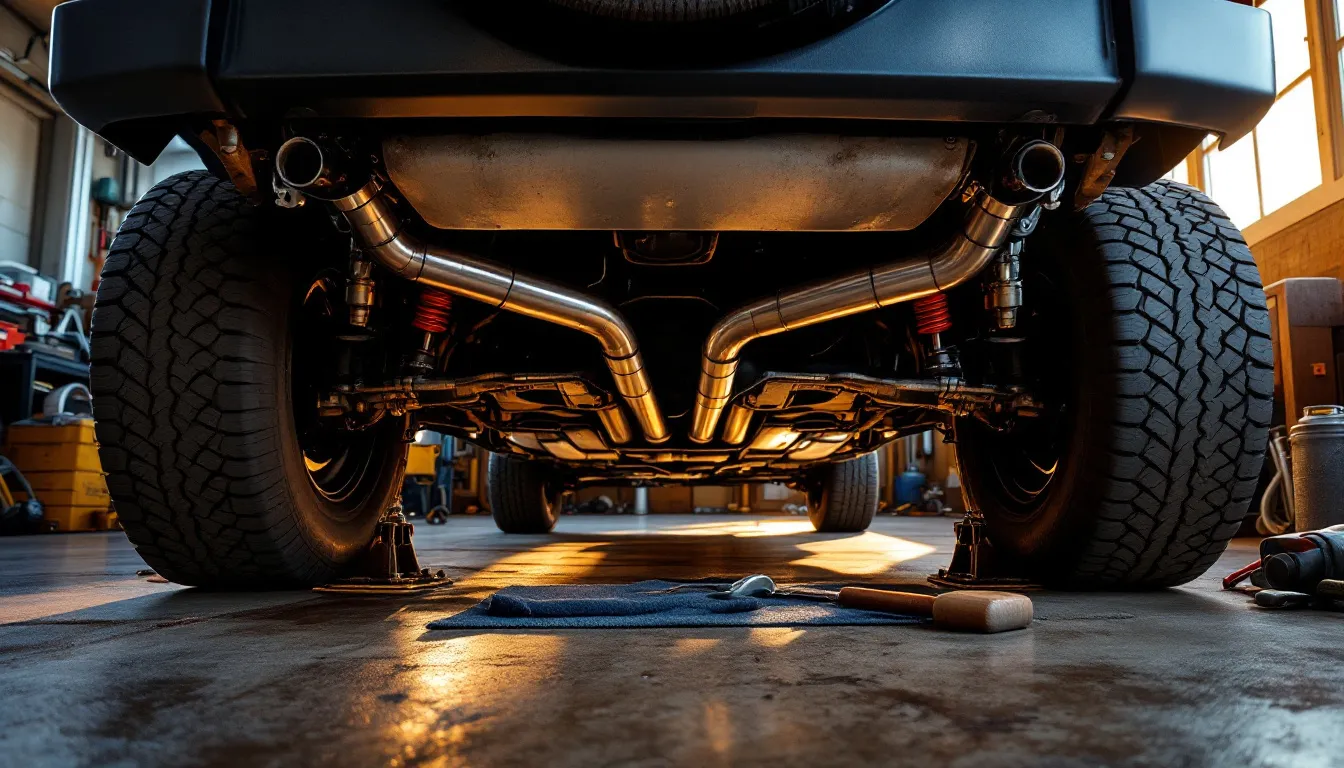
A cat-back exhaust is a replacement exhaust system that starts at the catalytic converter outlet and runs all the way to the tailpipe tip. If you’re searching for the best cat-back exhaust for a Jeep JK, the short answer is: prioritize mandrel-bent 304 stainless steel tubing sized at 2.5 inches, confirm fitment for your specific engine (3.8L for 2007–2011, 3.6L Pentastar for 2012–2018), and match the sound level to your daily-use expectations before you buy.
This guide is built on community research and real-world fitment knowledge — not just spec sheets. That same philosophy behind “Why I Research Everything” applies here: what owners actually experience in the field matters more than manufacturer marketing copy. Expect modest horsepower gains from a cat-back alone, but a noticeably improved exhaust note and reduced backpressure across the RPM range.
For broader context on Exhaust Systems and a full JK Buyers Guide, those pages are worth bookmarking alongside this one.
What Is a Cat-Back Exhaust — and Why Upgrade Your JK?
A cat-back exhaust replaces everything downstream of the catalytic converter — the mid-pipe, muffler, and tip. Because the catalytic converter stays in place, the system remains emissions-legal in most jurisdictions while still allowing meaningful changes to flow, sound, and weight.
For the Jeep JK specifically, the OEM exhaust was engineered for noise suppression and cost efficiency, not performance. The factory tubing tends to be thinner-walled, with tighter bends that create backpressure under load. A quality aftermarket cat-back opens up that flow path, which most owners report translates into a more satisfying throttle response and a deeper, less tinny exhaust note.
The gains aren’t dramatic on their own. Expect modest improvements — a seat-of-the-pants feel rather than a stopwatch result. Where the upgrade really earns its money is as a foundation for a broader performance stack: paired with a cold air intake and a tune, the sum is noticeably greater than the parts.
⚠️ Critical fitment warning: the 2007–2011 JK runs the 3.8L V6, while the 2012–2018 JK (and all JKU Unlimited four-door models) run the 3.6L Pentastar V6. These engines have different exhaust outlet sizing and mounting configurations — a system listed only for the 3.6L will NOT fit a 3.8L truck, and vice versa. Always verify year, engine, and door count before ordering.
Weight savings are another underrated benefit. Many factory exhaust systems use heavier-gauge mild steel with extensive sound deadening. A mandrel-bent stainless system from an aftermarket brand can shave several pounds — small, but meaningful if you’re building a trail rig where every pound counts.
For a side-by-side look at specific systems, check the complete cat-back exhaust system comparison once you’ve finished this buying guide.
Get new guides by email
One email when we publish something worth reading. Unsubscribe anytime.
What to Look for When Buying a Cat-Back Exhaust for Your JK
When buying a cat-back exhaust for your Jeep JK, the four factors that matter most are material, pipe diameter, muffler design, and verifiable sound level. Get those right and everything else — tip style, finish, brand — is secondary.
Material: Stainless vs. Aluminized vs. Mild Steel
- 304 Stainless Steel: The gold standard for a JK that sees trail use, water crossings, or salt-road winters. Corrosion-resistant, long-lasting, and typically carries a lifetime or multi-year warranty. Higher upfront cost, worth it for a keeper build.
- Aluminized Steel: A coating of aluminum-silicon alloy over mild steel. Decent protection in dry climates, but the coating chips over time and the underlying steel will rust — especially around welds and hangers. Budget-friendly short term.
- Mild Steel: Lowest cost, shortest lifespan. Adequate for a temporary build or a JK that never sees moisture, but not recommended as a long-term solution for most owners.
The single most important spec combination: 304 stainless with 2.5-inch mandrel-bent tubing. That diameter balances low-end torque with top-end flow for the JK’s V6 — going wider without supporting mods can actually reduce scavenging velocity and hurt low-RPM grunt.
Sound Level: Measure It, Don’t Guess
Exhaust manufacturers describe sound in words like “aggressive,” “mild,” or “race-inspired” — which are largely subjective. The honest way to evaluate a system is to use a calibrated decibel meter and compare readings at idle, 2,000 RPM, and 3,500 RPM before and after install.
The TopTes TS-501B SPL meter measures from 30–130 dB with A/C weighting, which is the standard scale for exhaust noise evaluation. Run a baseline measurement on your stock exhaust, then repeat after install. It removes the guesswork and gives you something concrete to share with the JK community.
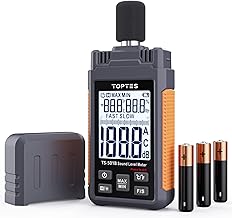
Decibel Meter, TopTes TS-501B Sound Level Meter with 2.25" Backlit LCD Screen, Portable SPL Tester w
Check Price on Amazon →Pipe Diameter and Fitment
Confirm the inlet diameter matches your catalytic converter outlet — typically 2.25 or 2.5 inches on the JK. Check hanger locations against your specific year and door count. Some systems fit the two-door JK but require a different mid-section for the longer JKU Unlimited wheelbase.
For reference on how gear ratios interact with performance mods like exhaust, see the best gear ratio guide for modified JKs.
Cat-Back Exhaust Options for Jeep JK: Quick-Pick Comparison
Choosing between exhaust-adjacent products comes down to matching the tool or accessory to your specific install need. The table below covers the key support products featured in this guide — helpful whether you’re upgrading the system itself, protecting components, or measuring results.
| Product | Primary Use | Price | Best For |
|---|---|---|---|
| TopTes TS-501B Decibel Meter | Sound level verification | $26.99 | Measuring dB before/after install |
| 2.5” Stainless Exhaust Clamp | Butt-joint pipe connection | $12.78 | Connecting mid-pipe sections |
| Permatex Ultra Copper RTV | High-temp gasket sealing | $9.79 | Sealing exhaust joints |
| Amazon Basics 3-Ton Jack Stands | Safe vehicle support | $28.88 | Lifting JK for underside work |
| WD-40 Specialist Penetrant | Freeing corroded fasteners | $7.98 | Rusty hanger bolts and clamps |
| Exhaust Heat Wrap (2”x16ft) | Thermal management | $9.99 | Protecting nearby components from heat |
| Hose Clamp Pliers | Clamp installation/removal | $9.95 | Spring clamp work during install |
| YIYEIE 22PC Torque Wrench Set | Fastener torque spec accuracy | $59.97 | Final tightening to spec |
| Superchips Flashcal F5 | ECU tuning after mods | $278.95 | Retuning after exhaust + intake combo |
| Rough Country Cold Air Intake | Intake flow improvement | $129.95 | 2012–2018 3.6L JK/JKU |
| Rough Country Throttle Body Spacer | Throttle response | $59.95 | 3.6L JK/JL/JT |
The 2.5 Inch Stainless Exhaust Clamp is essential for butt-joint connections between mid-pipe sections, ensuring a secure, leak-free seal that handles thermal cycling.

2.5 Inch Automotive Exhaust Clamp, Stainless Steel Butt Joint Bolts Band Flanges Clamp Assembly, Uni
Check Price on Amazon →For individual product deep-dives and head-to-head scoring, visit the full cat-back exhaust system comparison for Jeep JK.
Tools You Need for a DIY Cat-Back Exhaust Install on a JK
You need four things for a clean cat-back install on a Jeep JK: proper vehicle support, penetrating oil for corroded hardware, basic hand tools, and a torque wrench for the final connections. The JK’s ground clearance actually makes this more accessible than most cars — but high-mileage rigs often have corroded hangers and clamps, so budget extra time and don’t skip the penetrant step.
⚠️ Never work under a Jeep supported only by a floor jack. Always use rated jack stands before going underneath.
The Amazon Basics 3-Ton Jack Stands provide stable, rated support for the JK’s frame rails and are an absolute safety requirement before any undercarriage work.
Amazon Basics 3-Ton Capacity Jack Stands Set of 2
Check Price on Amazon →Here’s the install sequence:
- Soak all fasteners 24 hours before you start. Every flange bolt, hanger nut, and clamp gets a dose of penetrating oil — the narrow straw on quality products like WD-40 Specialist gets into tight hanger brackets where standard spray cans can’t reach.
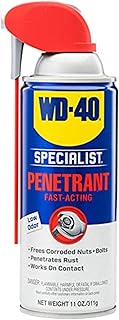
WD-40 Specialist Penetrant with Smart Straw Spray, 11 OZ
Check Price on Amazon →-
Lift and support the vehicle safely. Use a floor jack to raise the JK, then place the jack stands under the frame rails. Do not proceed until the rig is stable and the stands are fully seated.
-
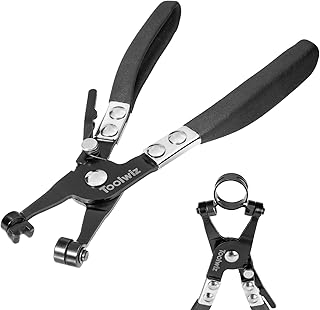
Remove the factory exhaust from the rear. Work forward — tip first, then muffler, then mid-pipe. Use a hose clamp plier tool to compress spring clamps without rounding them.
Hose Clamp Pliers Heavy Duty Hose Clamp Tool with Locking Device and Non-Slip Ha
Check Price on Amazon →-
Clean the catalytic converter outlet flange. Wire-brush any rust scale and verify the outlet diameter. Apply a thin bead of high-temp silicone to the mating surface — this prevents slow leaks at the connection and handles exhaust heat cycling.
-
Loosely fit all new components before tightening anything. Hang every section using the factory rubber isolators, check pipe alignment end-to-end, then use the 2.5 Inch Stainless Exhaust Clamp at any butt-joint connections. Confirm the tip is centered before snugging.
-
Wrap any sections near fuel lines or wiring. If the new routing runs a pipe close to a brake line or wiring harness, apply exhaust heat wrap to that section for protection.
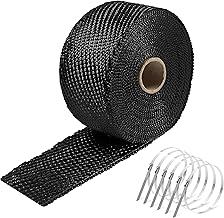
2" x 16FT Exhaust Heat Wrap, 1400°F High Temp Fiberglass Header Wrap Heat Shield
Check Price on Amazon →For components near the firewall or tight spaces, self-adhesive heat reflective tape provides an alternative without the bulk of full wrap.
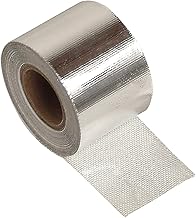
Design Engineering Cool-Tape | Self-Adhesive Heat Reflective Tape - High Temp (up to 400F)| 1.5" x 1
Check Price on Amazon →-
Torque all fasteners to spec. Clamp bolts, flange nuts, and hanger hardware all have specified torque values — check your exhaust kit’s instructions and your JK model year reference guide. Use a quality torque wrench set to hit those numbers precisely.
-
Start the engine and check for leaks. Let it reach operating temperature. Run your hand (carefully, not touching hot metal) or use a smoke-test around every joint. A ticking or hissing sound indicates an exhaust leak — address it before driving.
Maximise Your Cat-Back Upgrade: Supporting Mods for the JK
A cat-back exhaust alone improves sound and removes some backpressure restriction — but pairing it with an intake and a tune is where most JK owners report the most noticeable improvement in throttle response and overall drivability. The exhaust and intake work as a system; freeing up one side of the airflow equation while the other remains restricted limits the gains from either mod.
Cold Air Intake
For 2012–2018 JK and JKU owners on the 3.6L Pentastar, the Rough Country Cold Air Intake is a popular, cost-effective starting point. It replaces the factory airbox with a larger-diameter tube and a reusable filter element, allowing the engine to breathe more freely under load.
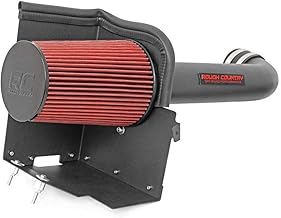
Rough Country Cold Air Intake for 2012-2018 Jeep Wrangler JK | 3.6L - 10550A
Check Price on Amazon →If budget allows and you want a step up in filtration and flow, the NextGen Cold Air Intake with a high-flow cotton filter is worth considering — it’s a more premium option with a name-brand filter element.
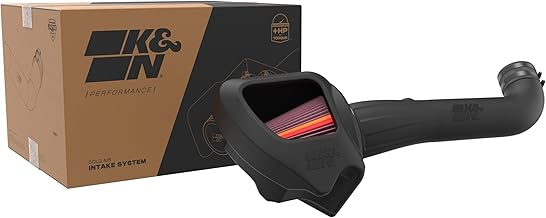
NextGen Cold Air Intake System: High-Flow Cotton Filter: Compatible with 2012-2018 JEEP: Wrangler, W
Check Price on Amazon →Throttle Body Spacer
The Rough Country Throttle Body Spacer for the 3.6L JK/JL/JT bolts between the throttle body and intake manifold. It’s a simple mod that many owners include as part of an intake stack, though results vary depending on other mods in place.

Rough Country Throttle Body Spacer for Jeep Wrangler JK/JL&JT | 3.6L - 10561,Black
Check Price on Amazon →ECU Tune
After any exhaust plus intake combination, retuning the ECU is strongly recommended. The factory fuel map was calibrated for stock airflow. A modified intake and exhaust changes the air/charge dynamics enough that a tune can help the engine take advantage of the improved breathing — and prevent running lean under hard acceleration.
The Superchips Flashcal F5 is compatible with 2007–2018 Jeep JK Wranglers and offers in-cab tuning with a handheld programmer. It’s the kind of tool that pays for itself when you’ve spent real money on exhaust and intake hardware.

SUPERCHIPS FLASHCAL F5 IN-CAB TUNER,GASOLINE,COMPATIBLE WITH 2007-2018 JEEP JK W
Check Price on Amazon →For other performance-adjacent upgrades worth stacking, the best LED headlights for Jeep Wrangler JK and the Rubicon vs Sport vs Sahara trim comparison are both worth reading alongside your exhaust research.
Know Your JK: The Haynes Manual Every DIY Owner Should Have
Every JK owner doing their own wrenching should have a workshop manual within reach. The Haynes Repair Manual covering 1987–2017 Jeep Wrangler models (2WD and 4WD, 4-cylinder and 6-cylinder gas engines) includes torque specs, wiring diagrams, and step-by-step procedures that generic YouTube videos often skip or get wrong.
For exhaust work specifically, the torque specs for flange hardware and hanger bracket bolts are in there — the same kind of specs that prove critical any time you’re doing significant undercarriage work, including something like fitting best 37-inch tires where axle and suspension torque values matter enormously.
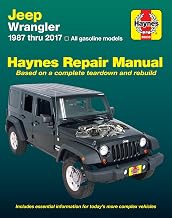
Jeep Wrangler 4-cyl & 6-cyl Gas Engine, 2WD & 4WD Models (87-17) Haynes Repair Manual (Does not incl
Check Price on Amazon →At $35, it’s one of the highest-value reference tools you can keep in the garage for a JK build.
Frequently Asked Questions: Cat-Back Exhaust for Jeep JK
These are the questions JK owners ask most often about cat-back exhaust upgrades — answered directly, without hedging where the facts are clear.
Will a cat-back exhaust void my Jeep JK warranty?
A cat-back exhaust alone does not automatically void your Jeep JK warranty. Under the Magnuson-Moss Warranty Act, a manufacturer must demonstrate that the aftermarket part caused a specific failure before denying warranty coverage for that system. However, if an exhaust leak leads to an oxygen sensor issue and the dealer can link the two, that related repair could be affected. Keep receipts and install documentation.
Does a cat-back exhaust require a tune on the 3.6L Pentastar?
A cat-back exhaust by itself generally does not require a tune on the 3.6L Pentastar. The ECU can self-correct for minor changes in backpressure through the oxygen sensors. However, once you pair the exhaust with a cold air intake — which changes incoming airflow more significantly — a tune becomes worth doing to optimize the combined setup.
What is the difference between cat-back and axle-back exhaust?
A cat-back exhaust replaces everything from the catalytic converter outlet to the tailpipe tip; an axle-back only replaces the section behind the rear axle — typically just the muffler and tip. Cat-back systems offer more flow improvement and sound change. Axle-backs are cheaper and easier to install but deliver more modest results. For a JK where you want meaningful performance and sound changes, cat-back is the correct category. If you’re already planning wheel upgrades alongside this, check the best wheels for Jeep Wrangler JK to coordinate your build timeline.
How long does a cat-back exhaust install take on a Jeep JK?
Most DIY installers complete a JK cat-back swap in two to four hours. That assumes the factory fasteners come off without a major fight. High-mileage rigs with corroded hangers or seized clamps can stretch that to a full afternoon. Pre-soaking all hardware with penetrating oil the night before is the single most effective way to keep to the shorter estimate.
Will a cat-back exhaust make my JK drone on the highway?
Whether a cat-back causes highway drone depends heavily on the muffler design and resonator configuration. Single-chamber straight-through mufflers — popular for aggressive sound — are more prone to a resonant frequency that creates cabin drone at certain RPM bands, typically 65–75 mph for the JK. Systems that include a resonator section are specifically designed to eliminate this. If you do highway miles regularly, or you frequently travel with a soft top (which offers less sound isolation), prioritize a resonated cat-back design.
Final Verdict: Choosing the Best Cat-Back Exhaust for Your Jeep JK
Picking the best cat-back exhaust for your Jeep JK comes down to four clear decision points, and getting them right means you won’t be doing this job twice. Here’s the short version:
- Confirm your engine and year first — 3.8L (2007–2011) and 3.6L Pentastar (2012–2018) are not interchangeable fitments
- Choose 304 stainless with 2.5-inch mandrel-bent tubing for longevity and balanced flow
- Match sound character to your use — resonated systems for highway commuters, straight-through for trail-focused builds
- Verify with a decibel meter, not marketing language — the TopTes TS-501B gives you real data
Have your tools sorted before the day of install. Jack stands, penetrating oil, a calibrated torque wrench, and high-temp gasket sealer are the non-negotiables. None of them cost much, and skipping any one of them is where installs go sideways.
Once the exhaust is on, consider the supporting mods — a cold air intake and an ECU tune are the logical next steps that let the cat-back do its best work. The gains compound. For a full overview of your Wrangler’s baseline capabilities before modifying, revisit the JK Buyers Guide. And if you’re still comparing specific exhaust systems side by side, the full cat-back exhaust system comparison is your next stop.
For other exterior upgrades to pair with this build, best grill inserts for Jeep JK rounds out the front-end refresh nicely.
Free: JK Fluids at a Glance
Every fluid, spec and capacity for the 2007-2018 Wrangler JK on one page, plus a cut-out glovebox card. Checked against the owner's manuals. From the JK Service Kit.
Email me the download and new guides when they are published. Unsubscribe anytime. Privacy Policy.
Allan
I'm Allan. I own a 2014 Jeep Wrangler JKU and I research the hell out of every mod before I touch it. When I've fitted something to my own Jeep, I say so. Everything else is researched from manufacturer specs and other owners' reports. No sponsored fluff.
Learn more about me →Free: JK Fluids at a Glance
Every fluid, spec and capacity for the 2007-2018 JK on one page, plus a glovebox card.
Email me the download and new guides when they are published. Unsubscribe anytime. Privacy Policy.
Related Articles
Jeep JK Regear vs Locker: Which Upgrade Comes First?
Ask ten JK owners which comes first — a regear or a locker — and you'll get the same answer from nine of them: regear first, locker second.

Jeep JK Towing Capacity: What Can Your Wrangler Actually Pull?
Your Jeep JK can tow more than you might think — but probably less than you want to. The factory ratings are straightforward: 2,000 lbs for the 2-door...
How to Choose Tire Size for Jeep Jk Lift Kit Compatibility
Lift kit and tire size compatibility is straightforward in concept but trips up a lot of JK owners in practice: the amount of suspension height you add...